Wow, Europe Household Electric Bills Estimated to Jump by $2 Trillion Next Year, That’s 12% of Their GDP


Posted originally on the conservative tree house on September 6, 2022 | Sundance

What is predicted to happen in Europe is just stunning, literally stunning.

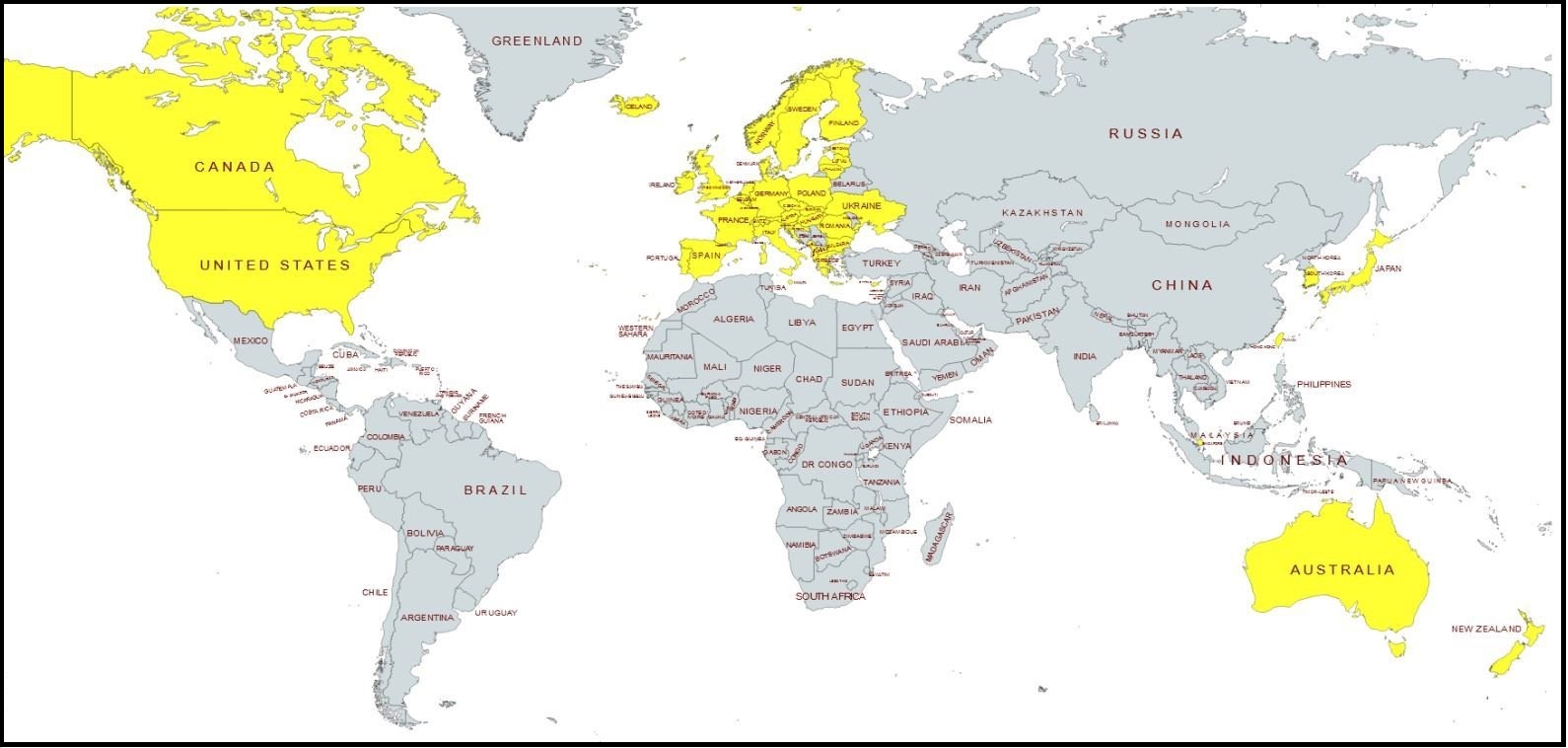
♦Context – According to official data from the World Bank, the combined Gross Domestic Product (GDP) of the European Union was just over $17 trillion US dollars in 2021. That is the last calculated measure.  The combined GDP value of European Union represents roughly 12.78 percent of the world economy.
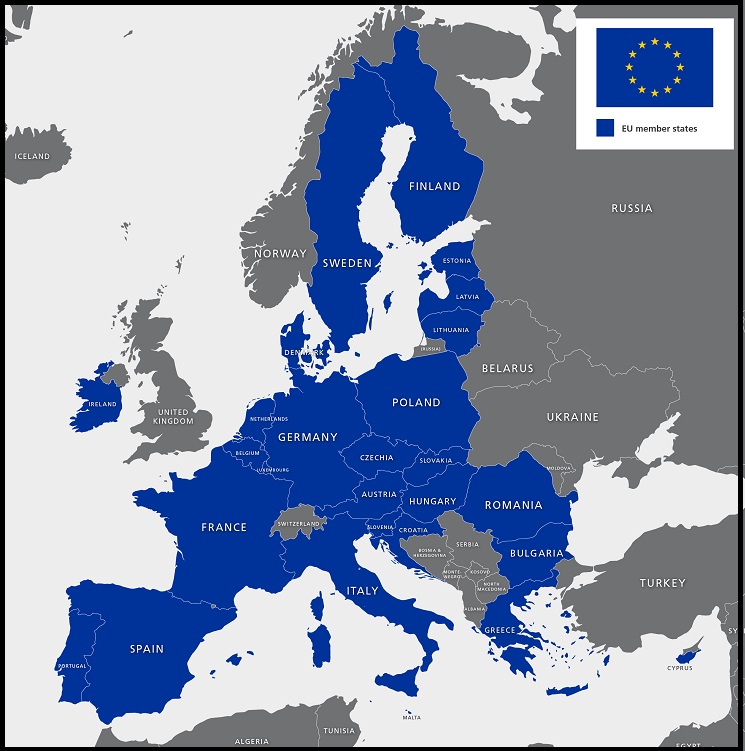
According to analysts for Goldman Sachs, the current energy crisis in Europe has increased electricity prices at a rate that is increasing almost daily.  Within the data it is now estimated that households within the EU will pay an additional $2 trillion for electricity in the next year.

Put that $2 trillion into context with their GDP, and that scale of energy cost would be wiping out 12% of the purchasing strength within the total EU economy.  Forget about buying anything else, if this analysis is correct Europeans will be buying food and energy, nothing else.

If you consider what that means, it is bordering on full economic collapse of western Europe.

What is being described above is what we posited when we outlined the impact of the “Energy Economy” {Go Deep}.  When you suck 12% of the purchasing power out of an economic engine simply to maintain the status of current energy use, everything else starts to collapse.

Also keep in mind we are only talking about the direct impact of $2 trillion in electricity cost.  The downstream consequence is far greater because everything created, produced, or manufactured, including food, is dependent on electricity – which will drive the final cost to produce of all those products even higher.

The damage is almost unimaginable in scale.

[Fortune] – European households should brace for an expensive winter owing to the continent’s deepening energy crisis that will likely send electricity and heating bills soaring.

Energy affordability in Europe is reaching a “tipping point” that could peak next year, with total spending on bills across the continent growing by 2 trillion euros ($2 trillion), a Goldman Sachs research team, led by Alberto Gandolfi and Mafalda Pombeiro, said in a note published Sunday.

Many European households are already feeling the bite of a steadily worsening energy crisis, brought on by Russian natural gas producers intermittently pausing flows along the critical Nord Stream pipeline following Western sanctions this year.

Energy bills at some restaurants and coffee shops have already more than tripled this year, but with threats looming that natural gas supply from Russia could become even tighter as the Ukraine War rages on, analysts warn that Europe’s coming struggles are set to rival some of the worst energy crises on record.

“The market continues to underestimate the depth, the breadth, and the structural repercussions of the crisis,” the Goldman Sachs analysts wrote. “We believe these will be even deeper than the 1970s oil crisis.” (read more)

The economic contagion will not be isolated to Europe.

The impacts to the social fabric are also almost unquantifiable in scale.

Example: What happens to migration patterns when economic migrants are now considered a threat to scarce resources?

While the US is not quite in the same level of energy desperation, what we were discussing last week is an example of the problem we too may face.

Let’s say you are an average USA Main Street household with an income around $100,000/yr, and you now face an increase in electricity rates from $300 to $500 due to Joe Biden’s new national energy policy known as the Green New Deal.  That’s $200 more per month for this initial economic/energy “transition” moment.

That extra $200/month equates to $2,400 per year.

That $2,400 per year is static economic activity.  Meaning nothing additional was created, and nothing additional was generated.  The captured $2,400 is simply an increase in the price of a preexisting expense.

Take that expense and expand it to your community of 100 friends and family households.  The $2,400 now becomes $240,000 in cost that doesn’t generate anything.  $240,000 is removed from the community economy.  $240,000 is no longer available for purchasing other goods or services within this community of 100 households.

The economic purchasing power of the 100-household community is reduced by $240,000 per year.

Take that expense and expand it to your county of 10,000 households.  Now you are reducing the county economic activity by $24 million.  In this county of 10,000 households, $24 million in economic transactions have been wiped out.  Meals at restaurants, purchases of goods and services, or any other spending of the $24 million within the county of 10,000 households (approximately 25,000 residents) has been lost.

Now expand that expense to a larger county, quantified as a mid-size county, of 50,000 households.  The mid-sized county has lost $120 million in household economic activity, simply to sustain the status quo on electricity rates.  Nothing extra has been generated. $120 million is lost.  The activity within the county of 50,000 households shrinks by $120 million.

Expand that expense to a large county of 100,000 households, and the lost economic activity is $240 million.

Expand that expense to a small state of 1 million households (2.5 million residents), and the lost economic activity is $2.4 billion.

Expand that expense to a state with 5 million households (approximately 12 million residents) and the economic cost is $12 billion in lost economic activity unrelated to the expense of maintaining the status-quo on electricity use.   This state loses $12 billion in purchases of goods and services, just to retain current energy use.

These examples only touch on household expenses.  The community, county and state business expenses for offices, supermarkets, stores, etc. are in addition to the households quoted.

Meanwhile the Gross Domestic Product (GDP) of the community, county and state, remains static because the GDP is calculated on the total value of goods and services generated in dollar terms.  The appearance of a static GDP is artificial.  In real Main Street terms, $12 billion in economic activity is lost, but the price or increased value of electricity hides the drop created by the absence of goods and services purchased.

Fewer goods and services are purchased and consumed.  However, statistically the inflated price of electricity gives the illusion of a status quo economy.

Now expand that perspective to a national level and you can see our current economic condition.

All of this is being done under the justification of “climate change.”

Previously I would have said this level of economic impact in Europe would lead to a total revolt against the government.  However, with the backdrop of the recent COVID lockdowns and government control mechanisms in mind, and looking at the citizen compliance that took place in response to those government mandates, it is now more likely the citizens in Europe will simply bow to the energy control mechanisms of the governing authority.

It’s almost as if the COVID compliance effort was the test…

UK Energy Bills Expected to Rise 80% in October


Armstrong Economics Blog/BRITAIN Re-Posted Sep 1, 2022 by Martin Armstrong

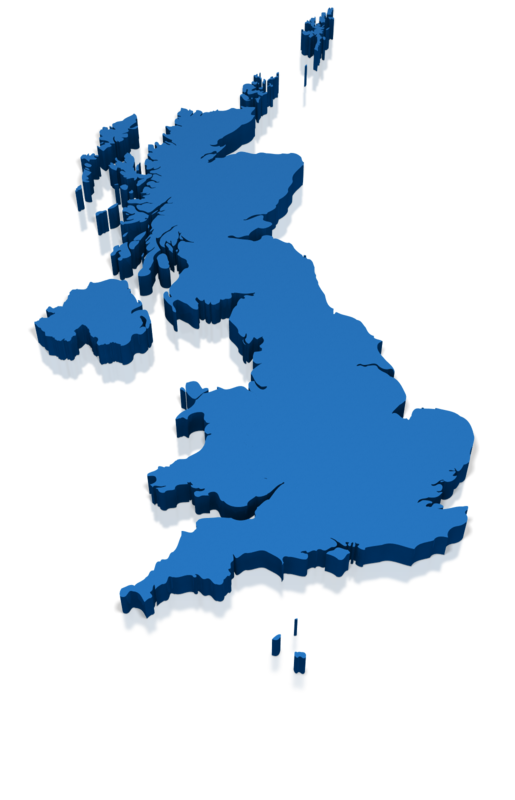
The entire West will face higher energy prices due to climate initiatives and Russian sanctions. The British energy regulator Ofgem released a troubling report citing that the average household will pay $4,200 on energy over the next year, compared to the current $2,330 annual average.

The UK raised its energy price cap in April by 54% and is expected to raise it once more this October by 80%. “This will be devastating for many families,” Jonathan Brearley, chief executive of Ofgem, told the BBC. “The difficult news I have to give today is that prices look like they are continuing to rise.” This is a drastic understatement.

An Ipsos poll found that one in 10 people already find it “very difficult” to afford energy costs over the past three months, and two in 10 found it “fairly difficult.” Over a third have installed a smart meter, and two in five have tried price comparison websites to no avail. People are already unable to afford energy costs, and 29% admitted to dipping into savings to do so, while another 15% said they missed payments entirely.

The term “fuel poverty” is now commonplace and is used for households that spend over 10% of their net income on energy bills. The University of York forecast that two-thirds of households in the UK will face fuel poverty by the beginning of next year. Families with children are the most vulnerable. This is a direct result of lawmakers pushing the climate change agenda with ZERO alternative solutions in addition to blindly supporting Ukraine at the expense of their own people.

The UK has a Refugee Problem


Armstrong Economics Blog/BRITAIN Re-Posted Aug 19, 2022 by Martin Armstrong

Migrants are risking their lives by boarding small boats to cross the English Channel to the UK. Over 600 people on 14 ships reached Britain last Saturday alone. About 1,843 illegal immigrants crossed into the UK in 2019, but that number quickly multiplied to 28,526 in 2021. Now, the nation is bracing for 60,000 undocumented illegal immigrants in 2022.

The government does not know how to handle the giant influx. Former Prime Minister Boris Johnson did recognize the problem, but his strategies failed. Brexit allowed us to take back control of legal immigration by replacing free movement with our points-based system, we are also taking back control of illegal immigration, with a long-term plan for asylum in this country,” Johnson said in a prepared speech. Yet, the woke crowd will not let the UK expel immigrants despite not having the capacity to handle such a sharp uptick in arrivals.

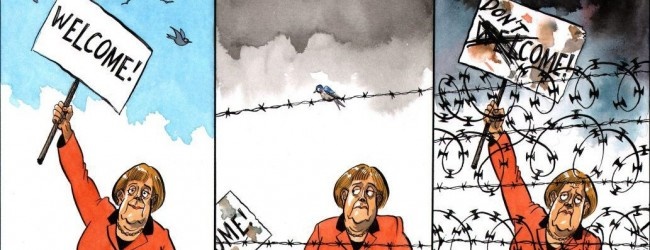
There was the failed flagship Rwanda policy that suggested flying migrants to Rwanda, Africa. One flight was attempted before it was grounded at the last minute by the European Court of Human Rights. Some in the UK blame France for allowing migrants to pass their waters into the UK. The real culprit is former German Chancellor Angela Merkel, who opened Germany up to all Syrian refugees and, therefore, the EU’s borders to any asylum seeker years ago. The Mediterranean nations in the EU have been asking for help to no avail.

The UK has more options since Brexit but must tread lightly. The Royal Navy cannot simply sink ships filled with women and children. Smugglers are running the seas and navigating these small boats to UK shores from the EU or Turkey. The potential of a life sentence for smuggling does not seem to be enough of a deterrent. The UK has a broken asylum system that needs to be fixed as the radical uptick in undocumented arrivals is unsustainable.

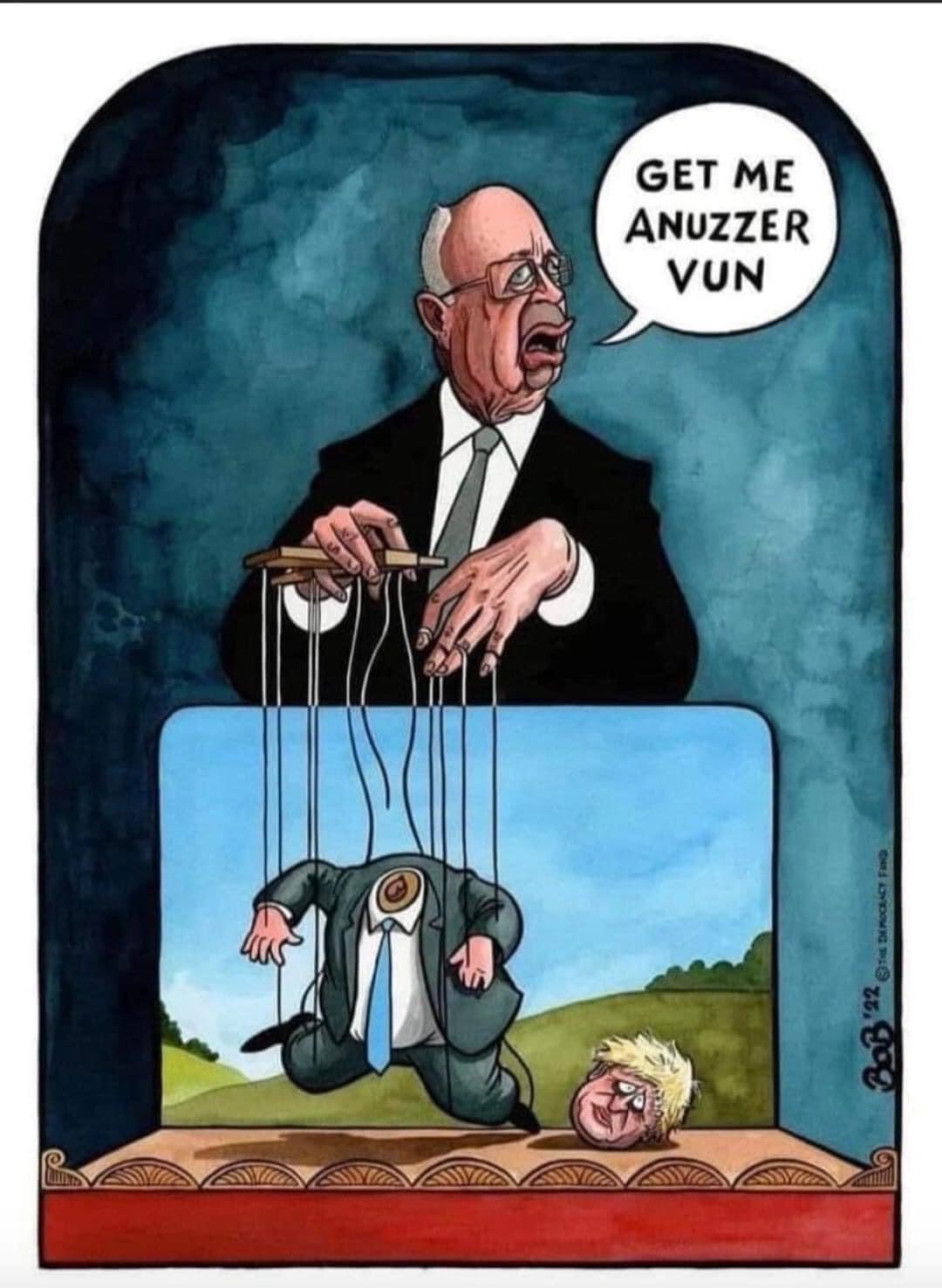
Schwab’s Puppet Falls?


Armstrong Economics Blog/Humor Re-Posted Jul 8, 2022 by Martin Armstrong

The Declaration for the Future of the Internet


Armstrong Economics Blog/BigTech Re-Posted May 3, 2022 by Martin Armstrong

The internet has become the main source of social interaction, entertainment, and media. Almost everything we do is tied to the internet, which was once a free space. Governments across the world are now attempting to control the world wide web. In fact, the US, EU, and 32 other nations have announced a “Declaration for the Future of the Internet.”

The declaration claims to promote “interconnected communications” and “democracy, peace, the rule of law, sustainable development, and the enjoyment of human rights and fundamental freedoms.” They would like to make the internet accessible to everyone, and while this may sound good and well on the surface, the motive behind this declaration is to give governments full control over the internet.

The fine print reads:

“Over the last two decades, however, we have witnessed serious challenges to this vision emerge. Access to the open Internet is limited by some authoritarian governments and online platforms and digital tools are increasingly used to repress freedom of expression and deny other human rights and fundamental freedoms. State-sponsored or condoned malicious behavior is on the rise, including the spread of disinformation and cybercrimes such as ransomware, affecting the security and the resilience of critical infrastructure while holding at risk vital public and private assets.”

“Disinformation” is the new hot-button word for government censorship. Uncoincidentally, this declaration comes the same week that US President Biden arranged a “Disinformation Governance Board” with members who solely support his agenda and are willing to hide his lies. “Disinformation” allows governments to determine what is factual.

“Online platforms have enabled an increase in the spread of illegal or harmful content that can threaten the safety of individuals and contribute to radicalization and violence. Disinformation and foreign malign activity is used to sow division and conflict between individuals or groups in society, undermining respect for and protection of human rights and democratic institutions.”

Governments across the globe are on board with the Great Reset, and censoring society’s main medium of connectivity will provide them with the power to dumb down the masses and track the opposition. Countries that openly censor their internet such as Russia and China have not signed this declaration, as they do not care if their censorship is packaged in a nice collaborative declaration with other nations. At least the internet users in those nations are aware that what they read online is censored. The truth will always exist, but it will be harder to find it in the future.

Just to Let you Know Shortages of CASH Developing & Silver


Armstrong Economics Blog/Opinion Re-Posted Mar 10, 2022 by Martin Armstrong

I went to the bank for other reasons, and since I was there, I asked for 10k in cash. They said I had to order it. I asked what they could give me, and they replied that there was a limit of 2k. I said I just wanted the cash in case of power grid failures, cyberattacks, and war. The bank teller said that is why everyone is asking for cash these days.

Then speaking to bullion dealers, they said people are coming in to sell their silver bullion coins from Russia. They said people are panicking and do not want to have silver bullion. Quite astonishing, if I do say.

I then ran and bought a spare laptop just in case for as this all continues, chips will vanish, and computers will end up like cars — selling for over list when you can even get them.