Now that politicians have secured their positions in the elections prepare for the promises to fade. These people will say anything for our vote with no intention of following through. Biden has already announced that they will no longer accept student loan forgiveness applications. A Texas court barred future applications a day after the election – coincidence?
In fact, there is a website tracking Biden’s political promises, albeit not the most accurate. So far, he has kept only 22% of promises made during his campaign – at most. Many of these promises benefit absolutely no one, such as nominating the first black woman to the US Supreme Court, new fuel standards, increasing COVID testing, and rejoining the World Health Organization (WHO). That’s where his administration has placed their energy as if the entire world isn’t crumbling under their rule.
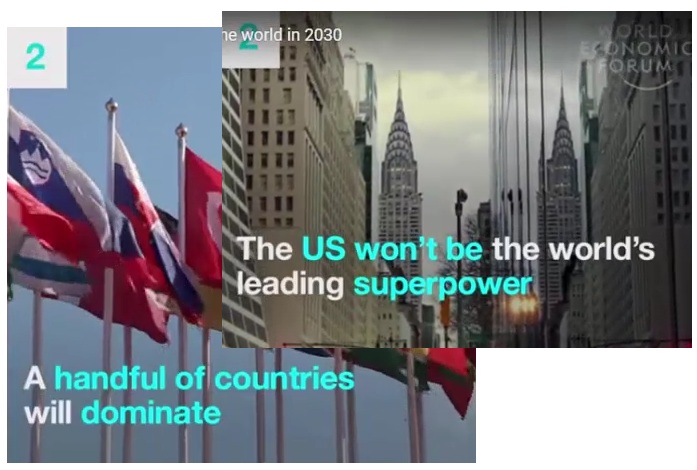
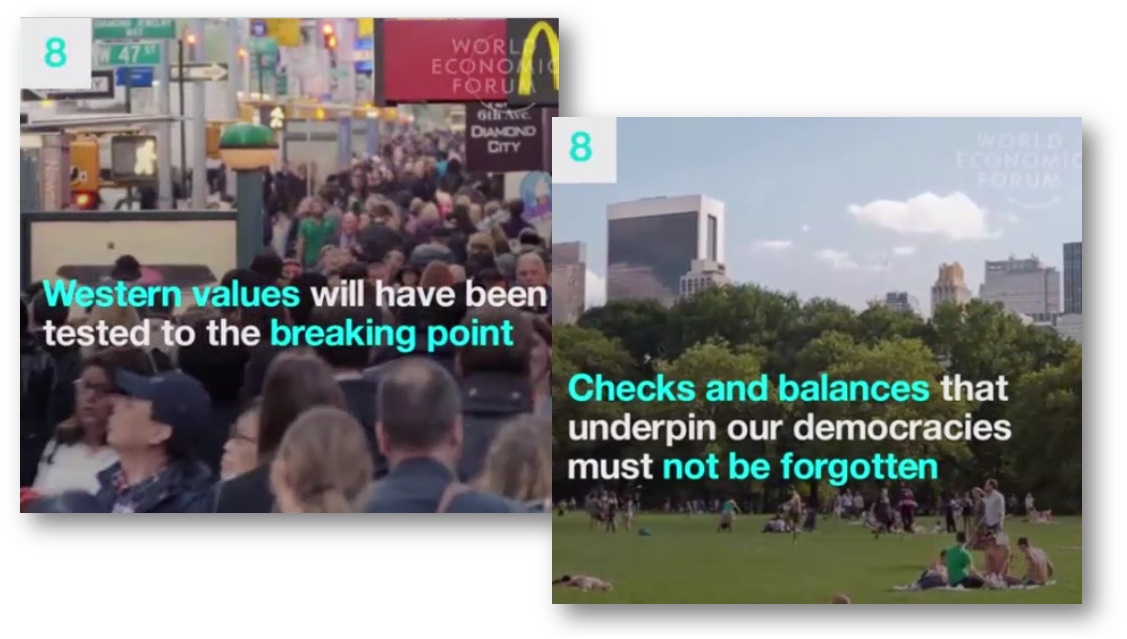
The website downplayed his broken promises after listing them at only 1%. He certainly broke his promise to “Build Back Better” – well… actually, he is following that plan accordingly. He has handed over America to the World Economic Forum on a silver platter. International objectives far outweigh domestic policies. The domestic policies in place and asinine spending packages have only made America less competitive and have hurt the pockets of not only the American people but the global economy.
Conservatives did not experience the red wave that they were hoping to see. Voting trends historically show the youth voting in favor of Democrats. As the quote often attributed to John Adams goes, “If You Are Not a Liberal at 25, You Have No Heart. If You Are Not a Conservative at 35, You Have No Brain.”
Pretending to champion one-voter issues with the backing of celebrities adds to this trend. A new NBC poll examined the exit polling data from voters between 18 and 29 (12% of the electorate) and 63% voted Democrat, while only 35% in this age range voted Republican.
People turn to the Republican Party as time goes on. Those 30 to 44 (21% of the electorate) voted 51% in favor of Democrats and 47% in favor of Republicans. The next age bracket, 45 to 64 (39% of the electorate), voted 44% in favor of Democrats and 54% in favor of Republicans. Those 65 and older (28% of the electorate) voted 43% Democrat and 55% Republican.
As we can see, support for conservative leadership grows with age and wisdom.
Posted originally on the conservative tree house on November 12, 2022 | sundance
For his weekly monologue Neil Oliver outlines the reality of the British government no longer pretending to represent the people of the United Kingdom, but openly represents corporations and the interests of multinationals.
While the general topic of a disconnected governing body is referenced toward how the U.K. government is disregarding the opinion of the British citizens, the overarching theme outlined by Oliver also applies to the United States. WATCH:
(Transcript) – Does Britain still exist? Or is it being dismantled to make way for something else?
Obviously, there are some square miles of dry land off the coast of mainland Europe still going by the name of Britain. Britain is still on the map.
As a for instance, if you pay a people smuggler some thousands of bucks and say, take me to Britain, he will know where you mean and will transport you to a rendezvous with a British border force vessel or an RNLI lifeboat financed by donations from the British public, and either will cheerfully ferry you to the British coast where you will be collected and taken to a fine hotel and given food, money and access to all the facilities a person might need all of it paid for by taxes from those same British people millions of British people who are themselves painfully short of money and struggling to feed themselves and heat their homes.
Those taxes are predicted to rise, so that more of our money might be flushed out of Britain, away from the British, towards those deemed more deserving.
… but does that name, Britain, still define a sovereign country in any meaningful sense?
The crisis on the south coast is only part of a bigger problem. These islands of ours offer free accommodation, three meals a day and cash – no questions asked – plus more chance of bagging a council house than anyone actually born here. Who wouldn’t jump at the chance? But the setting aside of the border to make way for thousands of new arrivals every day is only a symptom of a homegrown sickness.
Ironically, in the aftermath of all the damage done to the personal immune systems of millions, billions of people worldwide, by the policies and medical practices of the past two years, Britain herself has been similarly weakened, deep down:
Instead of keeping the country safe and well those entities supposed to function like the nation’s immune system parliament, the institutions of state the civil service, the judiciary, the police have turned on the British people instead, and upon the structures that ought to protect us from harm. Like someone suffering from auto-immune disease, our national immune system is now destroying the healthy cells which is to say us, the British people.
Any country is a fiction when you get right down to it. For continued existence, every country depends on enough of the people who happen to occupy that space sharing the same idea about where they live. If enough people believe in the existence of Britain – and are prepared to give their all to maintain Britain – then Britain prevails. If the day comes when too many have forgotten what Britain is, or simply don’t care if she exists or not, then Britain is no more. The dry land will still be there, the roads and buildings, but that is all.
This is the time of remembrance, when we claim … claim to honour the ancestors who gave the last full measure of devotion to protect this country and see it handed on intact to future generations: “When you go home, tell them of us and say … For your tomorrow, we gave our today.”
Those words are graven in stone all over this country.
Today’s leaders have no loyalty to Britain or the British – none that I can see. Maybe a few still FEEL some loyalty – but are just too demoralised or scared to declare it, far less to do anything about it.
Whatever loyalties the rest of them have, on both sides of the aisle … they lie elsewhere, not honestly declared.
For one thing, they are loyal to those entities that DO make all the meaningful decisions, which is to say the markets and the banks. It was the markets that wanted rid of Liz Truss and Kwasi Kwarteng and so they went.
Now we have Rishi Sunak – the prime minister none of us voted for and therefore don’t want. Like Jeremy Hunt – blatantly the markets’ choice of chancellor – his loyalties lie anywhere but with Britain and the British. Imagine how both men drool at the prospect of a CBDC and the surveillance society it will force upon us.
If we are led by figures committed to objectives that are against our interests – are we even obliged to obey their diktats when they are undoing everything Britain has been?
Are the needs and wants of the British people to be set aside in favour of the needs and wants of everyone else, anyone else in the world?
I ask those questions sincerely.
Since we’re talking about the markets and the banks, we might as well focus on what it’s all about, all of this upset and upheaval, which is control … control of the people via control of our money.
At a time when British people are struggling in ways that have been unknown to millions for a very long time, a vast mountain of the money they pay in tax is being shoveled elsewhere. For the crime of having been born in the home of the industrial revolution that changed the world for the better and lifted billions of people out of poverty, this latest generation of British people is to be punished, diminished, made dependent upon a State that openly despises us and treats us with contempt.
Setting aside, for example, the fact that China has pumped out more pollution in the last 8 years than Britain managed in the 220 years since the Industrial Revolution began … more of the taxes paid by British people might be handed to the Developing World … perhaps China included, who knows … as our penance for making it possible for 8 billion people to be alive in the world at the same time … courtesy of cheap, efficient energy, plentiful food and all the benefits born of the modern medicine and technology OUR ancestors’ efforts made possible.
The fire kindled here more than 200 years ago made life better, made life possible, for billions. And in return we are to be mugged in broad daylight, our wallets emptied, and our hard-earned cash handed to anyone around the world that wants it.
A good whack of China’s recent output of CO2 came from burning coal to make our wind turbines and the rest of the vanity projects that let our remotely-controlled leaders spout lies about cutting emissions, but hey-ho … never let the facts get in the way of a good global scam.
Back to the point, British money … earned by hard-working, struggling British people … is being funnelled out of Britain and into the wider world as fast as the leaders can make it flow. Cynic that I am, I conclude that all possible efforts are being made to impoverish and so destroy once and for all that upstart aspirational middling class whose very existence so infuriates today’s rulers.
Natural law is summarised in three words: do not steal. It underpins all lawful behaviour. Do not steal the life of another … do not steal the private property of another … do not steal the product of a worker’s labour, which is to say taxation … do not steal a person’s rights. Do not steal. It’s simple. But that simple foundation of lawful society has been set aside for the benefit and enrichment of the few.
Every day and more and more, those calling themselves our leaders are stealing everything. They look us in the eye and steal from us. During lockdown they stole our rights and liberties … they stole the livelihoods of millions … they stole mental and physical wellbeing. They stole the way things used to be. They are stealing the futures we had planned for our children.
There is a line of Latin that goes:
Quis custodiet ipsos custodes?
It means, who will guard the guards themselves? Those words focus our attention on the situation that arises when people with the power to supervise others are not, themselves, subject to the same scrutiny. It applies also when those who entitle themselves to make the law, also empower themselves to enforce the punishments. That is the definition of tyranny that our constitution was shaped to prevent.
At a time when British people are struggling in ways that have been unknown to millions for a very long time, a vast mountain of the money they pay in tax is being shovelled elsewhere, says Neil Oliver GB News
There’s a Covid enquiry out there. The same people that caused all the harm are now deciding if they did the right thing or not. I think we all know what conclusions they will draw. I ask again, Who will guard the guards themselves?
The UK Border Force – in place to protect and maintain the border – might as well be working in partnership with the people smugglers. The same company involved in border control has the government contract for housing asylum seekers. This is a conflict of interest alongside an inversion of their role.
The police – a citizen police force supposed to protect the British public does next to nothing to keep law-abiding citizens safe from real, violent crime and instead monitors what people say on social media. When they’re not being thought police, they either dance the Macarena with protesters the State likes or take the baton to those it doesn’t.
SO, WHAT SHOULD WE DO NOW?
Philosopher Thomas Hobbes wrote about how, without observance of right and wrong, human life was, “solitary, poor, nasty, brutish and short”. He concluded that such chaos was ended only if individuals agreed, via a social contract, to surrender some liberty to a sovereign on condition that that sovereign would keep them safe.
Who is honouring their part of our social contract now? We, the people, have been doing so … not least because, legally, we have no option.
It is interesting to recall the words of the American declaration of independence:
“Life, Liberty and the pursuit of Happiness … that to secure these rights, governments are instituted among Men, deriving their just powers from the consent of the governed … that whenever any Form of Government becomes destructive of these ends, it is the Right of the People to alter or to abolish it, and to institute new Government, laying its foundation on such principles and organizing its powers in such form, as to them shall seem most likely to affect their Safety and Happiness.”
I say that by their actions over the last many years, our leaders have made the social contract null and void. They are not protecting our freedoms and rights – nor Britain herself.
On the contrary, they are working in league with others to remove those rights and freedoms and to unmake Britain. If they will not honour the social contract, then why should we?
While we were distracted our governments assumed outrageous powers over us. Body and mind we are being crushed and numbed.
The time for accepting all of this has long passed.
Here’s the thing: where should OUR loyalties lie now?
With those who by their actions have made plain they respect us not a jot?
… or with each other, those who have seen through the lies and the transparent grasping for power and control. On this Remembrance weekend I would honour those who gave their lives for a free world and a country called Great Britain.
Posted originally on the conservative tree house on November 12, 2022
There was always a strong suspicion the woke corporations were holding back negative employment intentions until after the midterm elections.
Well, as expected, the U.S. multinationals are starting to announce advanced downsizing.
(CNBC) – Tens of thousands of tech workers have been laid off within days, as tech giants including Meta, Twitter, Salesforce and others shed headcount going into the final stretch of the year. At least 20,300 U.S. tech workers were let go from their jobs in November, and more than 100,000 since the beginning of the year, according to Layoffs.fyi, which tracks layoffs in the field.
Tech workers reported huge drops in confidence in their job security through the summer, as news of layoffs, hiring freezes and rescinded offers put a damper on what’s so far been a worker-driven Covid pandemic recovery.
But the latest headlines are all converging at once as businesses course-correct on over-hiring and acknowledge how rising interest rates are thwarting their growth plans, says ZipRecruiter chief economist Julia Pollak. (more)
Nov 11 (Reuters) – Walt Disney Co (DIS.N) is planning to freeze hiring and cut some jobs as it strives to move the Disney+ streaming service to profitability against a backdrop of economic uncertainty, according to a memo seen by Reuters on Friday.
Chief Executive Bob Chapek sent the memo to Disney’s leaders, saying the company is instituting a targeted hiring freeze and anticipates “some small staff reductions” as it looks to manage costs. (read more)
As noted by Yahoo News, a “wave of layoffs” has begun that encompasses dozens of medium and large corporations [SEE HERE].
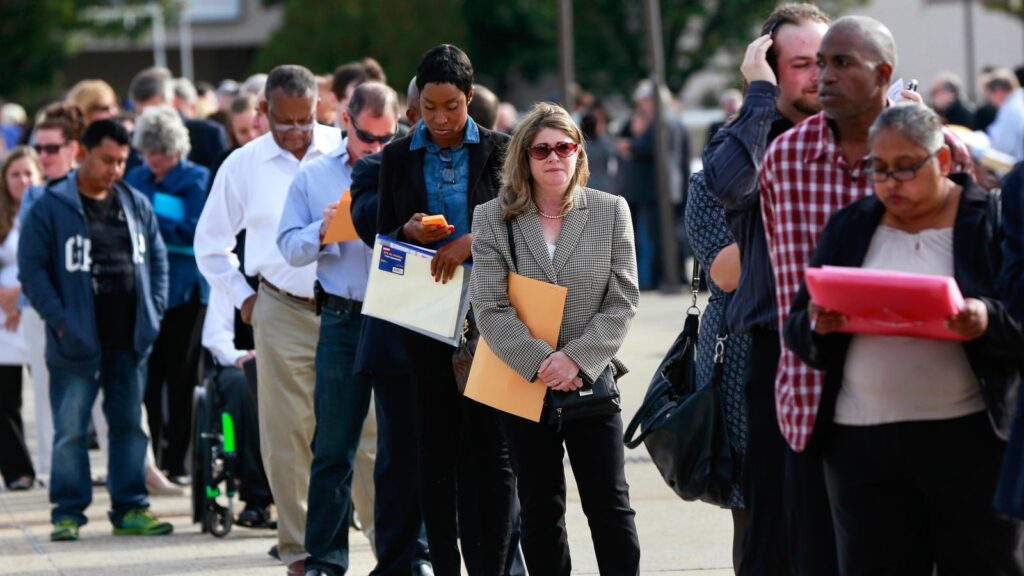
The layoffs, outlined in Yahoo, cover real estate, tech companies, banking, finance, automakers, EV startups, and brick and mortar stores like 7-11 and GAP. It should not come as a surprise, but it is sad to see, nonetheless.
Within the economy, a great pretending can only last so long… then reality hits.
The skilled trades should likely end up in the best employment situation, with the tech sector the worst. Service industries are also one of the first sectors hit when employment becomes an issue.
With rising interest rates, high inflation, excessive inventories, a shrinking production economy, extreme energy costs and diminished disposable income as a result of inflation and gas prices, there was going to come a time when it all starts to congregate. 2023 looks to be the year when economic pretenses collapse under the weight of having to admit a recession exists.
Once again your caution proved to be warranted. 2020 looks like it was a dry run for how Democrats will hold onto power….vote harvesting and the Dominion Systems.
I wondered what the week of November 7 would be about. Now it seems we have the answer.
MS
REPLY: I do not have the luxury of personal opinion. My job is to relay what the computer is projecting. It just did not show this idea of a Red Wave. The computer showed that the Republicans could take the House, but not the Senate. This will only help to keep the polarization of the United States. The left simply hates the right and this is what will eventually lead to civil unrest and the break up of the United States.
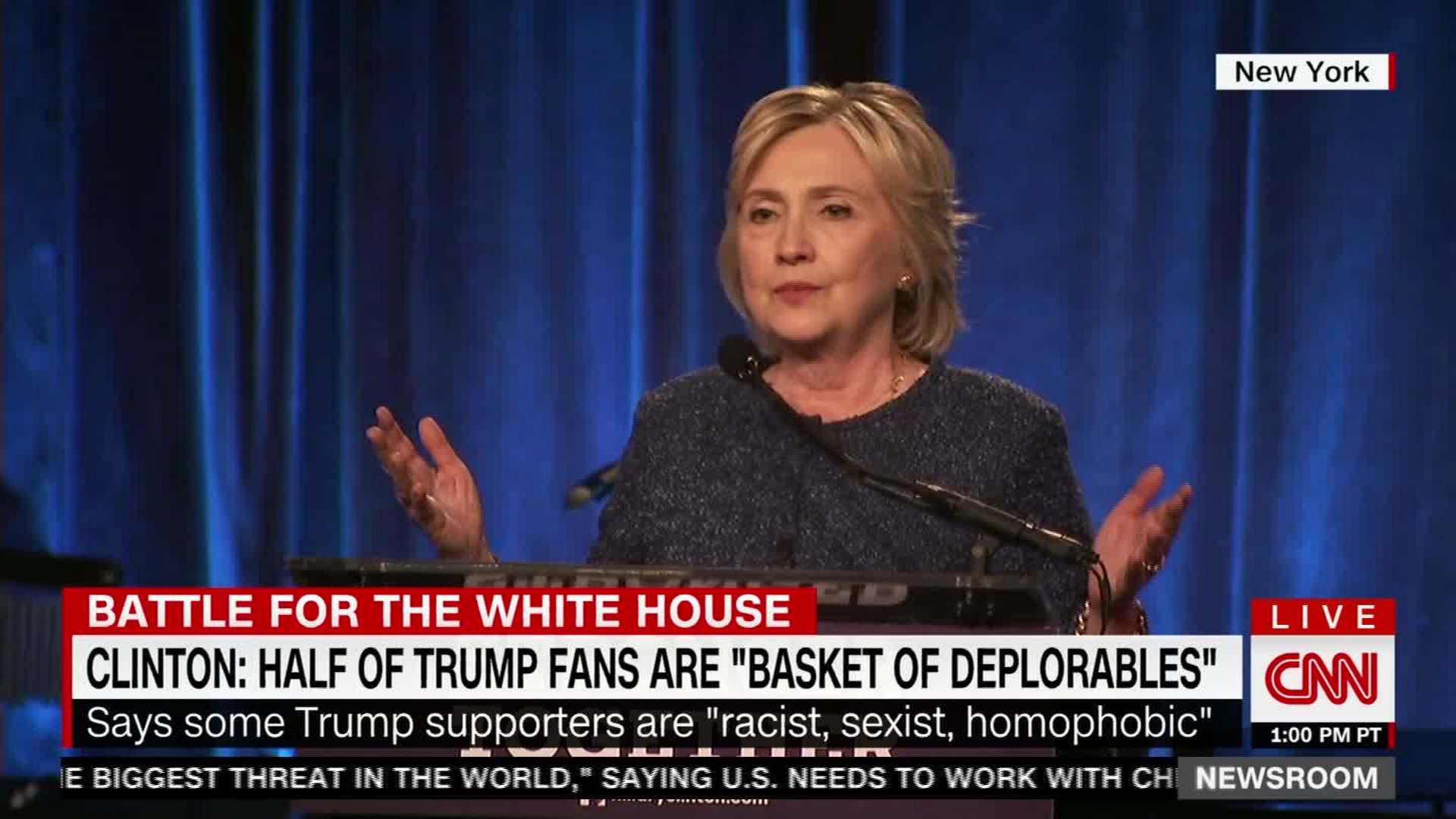
This hatred began with Hillary calling Republicans “deplorable” and her blaming Putin for her own failed policies which are what the younger girls in our office call Feminine Nazis. She was so 1960’s women’s lib that girls should be drafted into the military which resulted in so many younger girls being anti-Hillary. But the hatred she had from the gender wars of the ’60s and blaming Putin after creating the fake Russian dossier on Trump set in motion this great divide. The Democrats still believe that Putin rigged the 2016 election. There is no changing that. It is not just the far right that believed in rigged elections. The Democrats still cling to the same idea.
The net result of this war between the left v right is the end of the United States. There is absolutely no reason to have a single nation where one side gets to oppress the other every 4 years. As Lincoln said, a country divided cannot stand.
This election is more than what our computer projected. The future demise of the United States would not unfold without the country being deeply divided. The Democrats now believe the people are ready to surrender everything for climate change and want world war III and the destruction of Russia. After all, what I hear from behind the curtain is that those Russians are right-wing religious fanatics who are against abortion and LGBT. They need to be wiped from the face of the earth. They have made this both a claimed war for democracy (tyranny) and religion against the far-right. That hatred of demonizing Russia is the critical link for the projection of 2032.
Nobody will accept elections as being fair from here on out. Welcome to the new age of economic enslavement and absolute tyranny all for Climate Change and then their push for the one-world government headed by the United Nations. They needed Biden who will sign whatever they put in front of him. They need the UN because no single country can fight climate change.
The end of any democratic right to vote is their agenda.
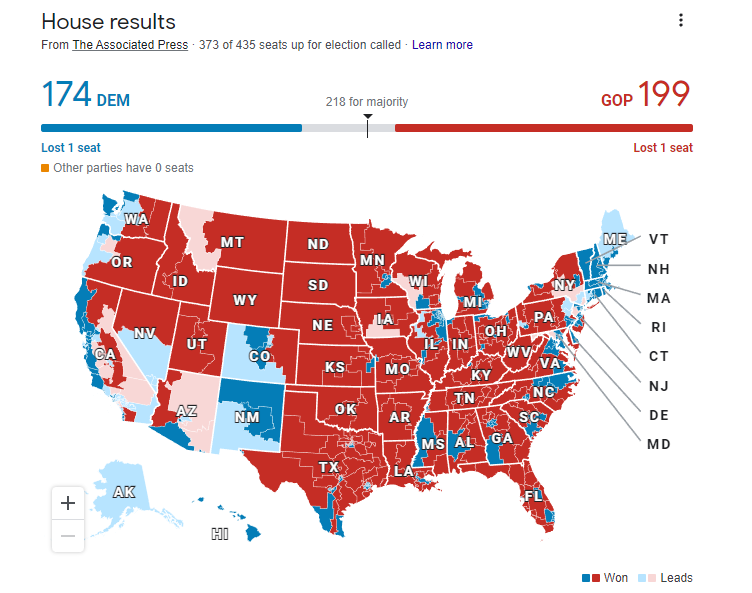
While the results are not final, where it stands now is unfortunately in line with what our computer has been projecting. The Senate will most likely remain in Democratic hands and the House may flip to the Republicans. Worse still, this will only embolden the Democrats and this Climate Change War along with unleashing World War III. However, this merely reaffirms what our computer has been projecting with serious civil unrest next year. The Democrats will push their radical agenda now in full force for they will not represent the country and the middle of the road, but their left-wing agenda. This will lead to dramatic civil unrest. You cannot have such a thin majority oppress the other side. We did not see this red wave that many were forecasting. The US is on schedule for a decline and fall by 2032. We needed a sharply divided nation to accomplish this end result. We got it!
This is why all the Greek philosophers from Socrates to Plato were against democracy. It allowed a thin majority to become tyrannical. This is what we are experiencing and it is why our computer is showing massive civil unrest next year. Republics, however, always die from suicide. Caesar was forced to cross the Rubicon because of the massive internal corruption. We will see the same fate that took down the Roman Republic. The collapse of the Roman Republic was also set in motion by a massive debt crisis. History always repeats.
At the World Economic Conference in 2021, the Armstrong Socrates model predicted that 2022 was going to be volatile and chaotic featuring a strong US dollar, a huge move in interest rates, a major bond market decline, fertilizer and food shortages, as well as escalating geopolitical tensions in Ukraine.
What now? Socrates forecast that 2023 will be more volatile and chaotic, featuring violent moves across all markets as monetary and geopolitical tensions and debt problems intensify.
At this year’s World Economic Conference, November 11-13, Martin Armstrong will talk about what’s next for the US dollar and other currencies, the liquidity/credit crisis, as well as price targets for oil, gold, stocks, bonds/interest rates, and stocks.
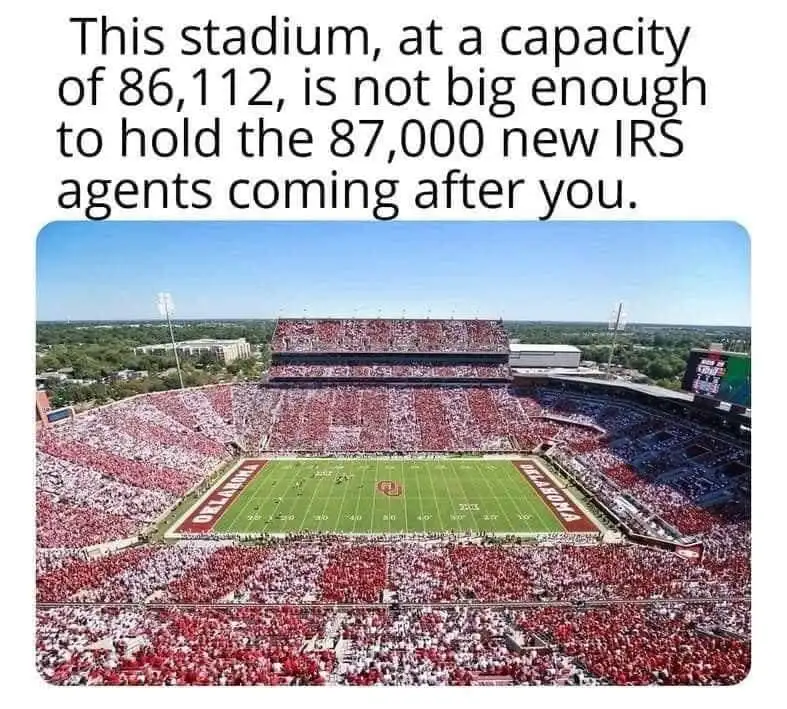
Biden’s IRS army of 87,000 new armed recruits is coming under fire by the Republican party. Sen. Chuck Grassley (R-Iowa) and Sen. Jon Thune (R-SD) are working on a bill that would require Congress to approve IRS spending. Both men also sit on the House-Senate Joint Committee on Taxation. Biden would like to spend $80 billion on his IRS army over the next decade to shake down American taxpayers.
“Our bill will ensure that the IRS is answerable to the American people in how it uses this money and will force it to forfeit funds every day it’s not in compliance,” Grassley said. “If our bill becomes law, the Biden administration’s IRS would have to answer to the American people, not Washington bureaucrats,” Thune added. The American people fund the IRS, and it is only right that they vote on how their money is spent. In fact, they should vote on whether there is a need for the IRS at all.
If the bill passes, the IRS must explain how they use their money every year. Funding to the IRS would be withheld if they failed to comply. If Congress turns red this November, this measure is likely to pass. This would be a great first step in a long overdue overhaul of the entire US tax system, which is designed to be as complex as possible so that the government can squeeze funds out of every citizen.
Thank you to the reader who sent in this hilarious image. Despite all the incoming data and price instability, some expected the Fed to pivot on its stance. Even BlackRock reportedly told advisers to expect “pivot language” at the last Federal Open Market Committee meeting. They were hoping that the Fed would announce a looser stance for the December meeting despite conditions failing to improve.
The markets correctly anticipated a 75 bps hike for November. Jerome Powell said that incoming data from the last meeting has led the central bank to believe that rates will edge HIGHER than originally anticipated. PCE rose 6.2% over the past 12 months, with core PCE rising by 5.1%. Long ago after Powell changed his “transitory” stance, he reiterated that the Fed’s main goal is to bring levels back to the 2% target. Price stability is the top priority – period.
“As I’ve said in the last two press conferences, it will become appropriate to slow the pace of increases, as we approach the level of interest rates that will be sufficiently restrictive to bring inflation down to our two percent goal. There is significant uncertainty around that level of interest rates. Even so, we still have some ways to go, and incoming data since our last meeting suggest that the ultimate level of interest rates will be higher than previously expected,” the chairman reiterated.
The central bank realizes that the situation will only worsen. “Restoring price stability is essential to set the stage for achieving maximum employment and stable prices in the longer run. The historical record cautions strongly against prematurely loosening policy. We will stay the course, until the job is done,” Powell commented. His Q&A after the announcement only reiterated his extremely hawkish stance (see video above).
Powell said the Federal Reserve is honing in on three main factors: 1) how fast to tighten policy, 2) how high to raise rates, 3) how long to remain on the current course. Powell said they would move “expeditiously” to move rates, especially given the low starting point. He believes that incoming data justifies ongoing rate hikes, and his estimate is higher than what was announced in September. Finally, he said they might have a discussion on when to loosen policy, but there was an emphasis on the word discussion.
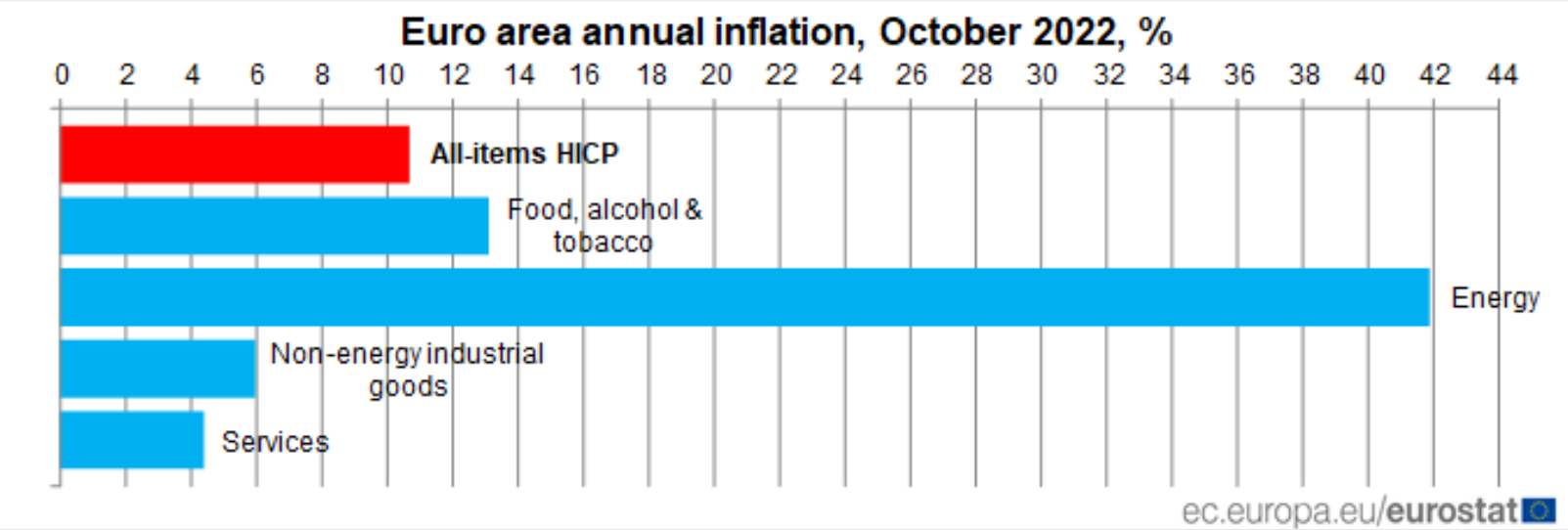
Inflation in the Eurozone hit a new record in October, according to Eurostat who reported a 10.7% rise. That marks an increase from September’s 9.9% posting and an all-time high since Eurostat began compiling Eurozone data in 1997. The European Central Bank (ECB) attempted to curb inflations with another 75 bps hike last week. The ECB knows that inflation is here to stay. They recently changed their annual inflation target for next year to 5.8% compared to the 3.6% they were predicting three months ago. They can’t release the actual figures without causing a panic.
Economic growth “slowed significantly in the third quarter of the year and we expect a further weakening in the remainder of this year and beginning of next year,” ECB head Christine Lagarde warned. Inflation is hitting some countries harder than others. Estonia (22.4%), Latvia (21.8%), and Lithuania (22%) all experienced nearly double the average inflation rate this October.
The downturn will not be equal across the Eurozone. The managing director of the International Monetary Fund (IMF), Kristalina Georgieva, is warning that half of the 19 countries in the bloc will fall into a recession. “Europe is affected more severely by the increase of energy prices. The heat on European economies is such that we actually expect half of the countries in the eurozone to experience at least two quarters of negative growth. In other words, a recession,” she said, without naming the countries,” Georgieva warned. She further stated that the IMF’s pre-pandemic projections compared to current projections differ by a loss of half a trillion euros.
“I am not going to sugar-coat it: 2023 will be tougher than 2022. Next winter for Europe may be even harsher than this winter,” she declared. “Why? Because European policymakers acted very swiftly to fill gas storage. If conditions remain as they are with Russia not providing gas to Europe, how is this gas storage going to be filled next year?”
Another question comes to light – can Europe remain untied amid a serious recession? The ECB will use the same strategy in an attempt to fix the broken system for the entirety of the Eurozone instead of looking at each individual economy. Let’s not forget that deeply indebted countries will only face higher costs that they likely will not be able to repay. The ECB dug its grave in 2014, and they do not have the tools to handle the current crisis. It is easy for Europe to appear as a united front when there is peace and prosperity. The real test will come when everything crashes down, and fairness goes out the window.
I have created this site to help people have fun in the kitchen. I write about enjoying life both in and out of my kitchen. Life is short! Make the most of it and enjoy!
This is a library of News Events not reported by the Main Stream Media documenting & connecting the dots on How the Obama Marxist Liberal agenda is destroying America









 Centinel2012