US Treasury to Print $500 Bills?


Posted originally on Aug 7, 2025 by Martin Armstrong |  

500dollarbillUSD

Rumors are circulating that the United States may begin to print $500 bills. The US Bureau of Engraving and Printing began printing $500 bills in 1861 until 1945, formally discontinuing them in 1969 when Nixon moved to close the gold window. The US Treasury has since required banks to send all $500 bills back to them to be destroyed, as the government claimed higher-denominated notes paved the way for criminal activity.

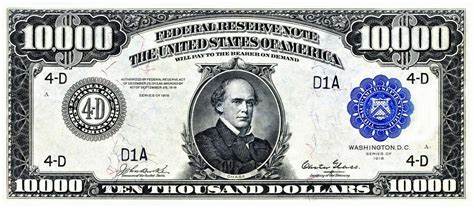
Collectors know that the US Treasury issued $1,000, $5,000, $10,000, and even $100,000 notes once upon a time. The $100,000 bill featured President Woodrow Wilson and was issued as a gold certificate from 1934 to 1935. That particular bill was not publicly circulated. No citizen needed to use such currency in day-to-day transactions. The $10,000 note was primarily used for transactions between domestic Federal Reserve Banks, as digitalization had not yet occurred, and they needed an efficient way to move capital.

The rumors about the $500 bill’s revival are not wholly unfounded. Rep. Paul Gosar (R-Ariz.) introduced a bill in 2024 to reintroduce the $500 bill, replacing William McKinley’s image with Donald Trump’s. This was more than political pandering; besides, Congress would certainly never approve of a note featuring Donald Trump’s image. However, the government could be enticed to reintroduce higher-denominated notes due to INFLATION. This is precisely why the penny will be discontinued, as it represents absolutely nothing and is a reminder that our currency is becoming increasingly devalued.
10000dollarbillUSD

A new $500 bill would mirror historical currency debasement as we saw in Rome under Diocletian, for example, which comes before a collapse. Printing higher-denomination notes is not just a reflection of price increases, but a sign that the people are losing trust in the value of the USD. Now, even the highest-denominated cash note will not get one far, paving the way for digitization as cash becomes an inconvenient burden. If the US were not eager to digitize banking, we would undoubtedly see higher-denominated notes in circulation once again to mask the effects that inflation has had on the value of the dollar.

America has never canceled its currency, and all of these notes are still deemed legal tender, although they are far more valuable to collectors than their face value. The Federal Reserve does not currently have plans to print the $500 bill despite rumors. The goal is to move the nation to digital currency, and cash is becoming increasingly worthless in transactions. Still, providing a limited-edition $500 note would not be unheard of in today’s economic landscape.

Four EU Nations Announce $1 Billion Arms Deal with US


Posted originally on Aug 7, 2025 by Martin Armstrong |  

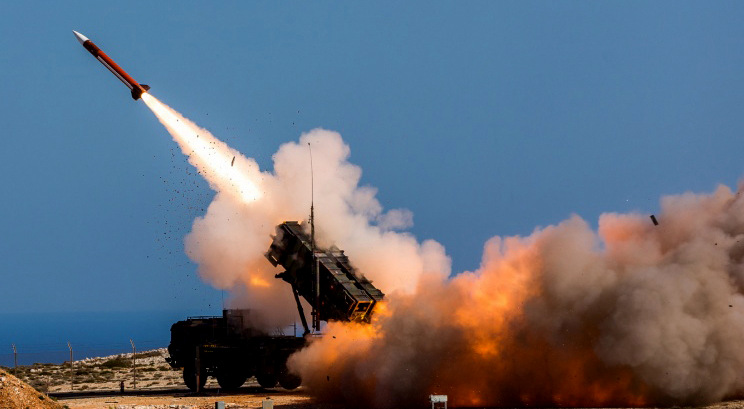
PatriotMissile

The European Union pivoted its stance on US defense as soon as the funds began to flow to Ukraine again. Although leaders like Macron and Merz previously warned against relying on the US for aerospace and defense, four EU nations have announced a $1 billion arms deal with the US through a new initiative devised by the US and NATO.

It’s either that or leave Ukraine without weapons,” one NATO official, speaking on condition of anonymity as they aren’t authorized to speak on the record, told RFE/RL in regard to purchasing from the US. “I think on the European side there is a hard realization that this has to happen in some fashion or another.” This comes after the Ukraine Defense Contact Group, an alliance of 50 nations, held a virtual meeting at the end of July to decide how they would continue funding the proxy war.

The Dutch government agreed to spend around $576 million on US Patriot missile defense systems for Ukraine. Sweden, Denmark, and Norway plan to spend another $500 million on American defense collectively. “By supporting Ukraine with determination, we are increasing the pressure on Russia to negotiate,” Dutch Defence Minister Ruben Brekelmans posted on X. “The more Russia dominates Ukraine, the greater the danger to the Netherlands and our NATO allies,” he said. Continually arming the opponent is not going to open the door to peace negotiations. It only alerts Russia that it must continue fighting for the foreseeable future, as this war is NOT against Ukraine but against the entire NATO alliance.

Swedish Defence Minister Pal Jonson said his nation plans to offer $275 million toward the deal. “Ukraine is not only fighting for its own security, but also for our security,” Jonson declared. Of course, all of this spending of public funds is being done under the premise of national security. European governments are lying to their people. They know Russia has no plans or desire to invade Europe, as there is nothing to gain by doing so.

NATO Secretary General Mark Rutte, the former Dutch prime minister, praised the northern European nations for their willingness to invest. “Since the earliest days of Russia’s full-scale invasion, Denmark, Norway and Sweden have been steadfast in their support for Ukraine. I commend these allies for their quick efforts to get this initiative off the ground,” Rutte said in a statement. As a reminder, all NATO members must up their spending to 5% of GDP, although they previously could not even meet the 2% target.

Santa Claus Mask

These deals will now go through the Priority Ukraine Requirements List (PURL), created by NATO and the US. Basically, Ukraine writes a list for Santa, or in this case, the US, listing its most requested weapons of choice. NATO’s Supreme Allied Commander Europe (SACEUR) then approves of the wish list and tells US manufacturers to deliver Ukraine anything it desires. The Netherlands’ half-billion-dollar purchase was the first gift basket to go through this program.

PURL plans to send $10 billion worth of American-manufactured arms to Ukraine. But the US is not Santa, and there are no elves creating weapons. Lockheed Martin and Raytheon are increasing their production of Patriot missiles, following Rutte’s suggestion that NATO nations will supply Ukraine with at least 17. NATO nations are required to pay upfront for their gifts to Ukraine to bypass the typical US arms sales process. The taxpayers did not vote to send $10 billion to Ukraine, but NATO and EU nations are beholden to unelected bureaucrats who dictate the rules.

“It Will Shatter The Modern Democrat Party.” Alex DeGrasse On Russiagate Investigations


Posted originally on Rumble By Bannon’s War Room on: August 5, 2025

Brazil Protest LIVE: Demonstration in Support of Former Brazilian President Bolsonaro


Posted originally on Rumble By Bannon’s War Room on: August 3, 2025

Consumer Sentiment Not Indicative of Consumer Spending


Posted originally on Aug 4, 2025 by Martin Armstrong 

American Consumer

Consumer sentiment remained elevated for the second consecutive month but remains worse than in December 2024, according to the University of Michigan’s Surveys of Consumers. Sentiment rose 1.6% in July from June, reaching a reading of 61.7 from 60.7. However, overall sentiment has been 17% beneath December’s reading, although it rebounded from April’s low when the market experienced a sharp downturn due to tariff fears.

“Although recent trends show sentiment moving in a favorable direction, sentiment remains broadly negative,” Surveys of Consumers Director Joanne Hsu said in the report. “Consumers are hardly optimistic about the trajectory of the economy, even as their worries have softened since April 2025.”

Inflationary fears declined for the second consecutive month as well, dropping from 5% in June to 4.5% in July after peaking at 6.6% in May, again, as a result of tariff uncertainty. Consumers believe inflation will wane in the long run for the third consecutive month, with the figure declining from 4% in June to 3.4% in July, which marks the lowest reading in 2025.

The Consumer Confidence Index, as reported by the Conference Board, rose 2 points to 97.2 in July, and June’s figure was revised to 95.2. The short-term outlook on the Expectations Index rose 4.5 points to 74.4, yet has been below the recession threshold of 80 since February. Business and labor market conditions, as measured by the Present Situation Index, fell 1.5 points to 131.5.

Yet, the Kansas City Fed noted that consumer sentiment is no longer an accurate reading for consumer spending. “Recent data suggest consumer sentiment has been declining for the past several months, signaling a potential slowdown in spending. However, most measures of actual spending, such as core retail sales and PCE, have remained relatively stable. This discrepancy raises the question of how useful consumer attitudes are in predicting actual spending,” the Fed questioned, later concluding, “Consistent with evidence from the prior 30 years, the near-term outlook for spending growth looks similar regardless of whether we account for the recent weakening in consumer sentiment.”

Federal Reserve Chair Jerome Powell also stated “the link between sentiment data and consumer spending has been weak. It’s not been a strong link at all…it wouldn’t be the case that we’re looking at [consumer sentiment] and just completely dismissing it. But it’s another reason to wait and see.”

Consumers are continually pessimistic, albeit less so, as prices remain elevated. We saw a sharp downturn in consumer sentiment with the peak in inflation during 2022. However, regardless of how one feels about the economy, consumers are forced to spend more on less. The FOMC will no longer use consumer sentiment as a strong gauge for future spending or GDP calculations since the correlation remains weak.

Retail and Tech Jobs At-Risk in the US


Posted originally on Aug 4, 2025 by Martin Armstrong 

Technology

US employers have reduced their workforce more in the first seven months of 2025 than in all of 2024. The DOGE cuts to the public sector were the primary driver of layoffs; however, there has been a notable drop in retail and technology positions in the private sector.

July alone saw 62,000 jobs reduced from the workforce, a 30% increase from June and 140% from July 2024. Over 806,000 positions were removed from January to July, surpassing the 761,358 job cuts in all of 2024.

Public sector positions in government saw the largest reduction at 292,294 positions. The current administration implemented the largest public sector reduction in modern US history by offering over 2 million government employees a buyout. Around 65,000 people accepted the buyout offer within the first two weeks alone. Additionally, DOGE halted grant funding to various NGOs and non-profits, leading to 17,826 fires, which amounts to a 413% annual reduction. None of these positions contributed to the US GDP.

The private sector shed 33,000 positions in June 2025, marking the first contraction in the private sector in nearly two years. For 2025 overall, the sectors facing the steepest layoffs are technology (-89,251) and retail (-80,487).

A few major tech companies implemented large layoffs this year such as Intel (-21,000), Microsoft (-15,000), PayPal (-2,500), and HP (-2,000). The advancement of Artificial Intelligence has led to a drastic reduction in workers in the technology sector, with some reports believing that AI is replacing around 491 tech jobs per day. We’ve seen a 36% decline in tech jobs this year compared to last as technology advances. Another issue has been outsourcing positions to places like India. The US outsourced 300,000 tech-based jobs overall to India as offshoring trends continue. Not only is labor cheaper, but India produces over 1.5 million engineering graduates annually. Visa restrictions have less of an impact as remote work is commonplace.

Retail experienced the second-largest decline in private sector roles with a 249% annual decline. Brick and mortar stores are deteriorating as another casualty of creative destruction as consumers prefer to spend online. Various articles are blaming tariffs and price increases for the drop in retail positions, but consumers are simply spending less. Around 20,000 retail positions were lost to AI automation, especially for basic roles and inventory management. American consumers have never rebounded from the increased cost of living. Credit card delinquencies and bankruptcies continue to reach new highs, and every survey indicates that households are spending more on less and focusing their resources on the basics.

Technology and retail are sensitive to advancements in AI. Offshoring has drastically cut competitiveness for American workers in tech. There is an offshoring corporate tax penalty of 28% but it is safe to assume that this figure will rise. As for AI, the government hasn’t found a way to tax robotic systems, but rest assured they will find a way.

“Bolsonaro Is On Trial For His Life.” Ana Paula Henkel On Political Persecution In Brazil


Posted originally on Rumble By Bannon’s War Room on: August 1, 2025

EPA Pivots on Dangers of Greenhouse Gases


Posted originally on Jul 30, 2025 by Martin Armstrong 

Climate Change CO2 Global Warming

The Environmental Protection Agency determined in 2009 that greenhouse gases were endangering life on our planet. The agency put forth a study to promote the passing of the Clean Air Act, enabling the government to regulate energy. The EPA under Trump is now seeking to overturn this study as scientists now believe that greenhouse gases are not harmful to humans.

The Supreme Court ruled in Massachusetts v. EPA that the government is required to regulate and monitor carbon dioxide and other greenhouse gas emissions, as mandated by the Clean Air Act. The EPA under the Obama Administration declared in 2009 that greenhouse gases posed a serious risk to public health and welfare. In May 2009, Obama implemented the first national policy to reduce greenhouse gas emissions from cars and trucks. Since then, every sector using any form of fossil fuel has been targeted by government. The American Recovery and Reinvestment Act under Obama, a much smaller-scale version of the Inflation Reduction Act under Biden, allocated $7 billion to the EPA to clean up the environment. The EPA experienced record-breaking funding in 2010 when it was awarded $10.5 billion to address climate change. The government has since gained control over the entire energy sector, weaponizing an allegedly potential threat to gain control.

The ”endangerment finding” from 2009 may be overturned. “This long-overdue finding cements 2009’s place in history as the year when the United States Government began seriously addressing the challenge of greenhouse gas pollution and seizing the opportunity of clean-energy reform,” then-EPA Administrator Lisa Jackson said in announcing the decision. Reversing the 2009 decision would reverse regulations that the president stated has “imposed trillions of dollars of costs on Americans.”

“The Obama administration said that carbon dioxide, when mixed with a bunch of other well-mixed gasses, greenhouse gasses, that it contributes to climate change. How much? They don’t say… they say that climate change engenders human health, so because of these different mental leaps… then there were all sorts of vehicle regulations that followed,” Environmental Protection Agency Administrator Lee Zeldin stated. “This has been referred to as basically driving a dagger into the heart of the climate change religion.”

Zeldin said that the Democrats used climate change scare tactics to “basically regulate out of existence” fossil fuels. He projects this massive regulation effort will save American taxpayers $1 trillion.

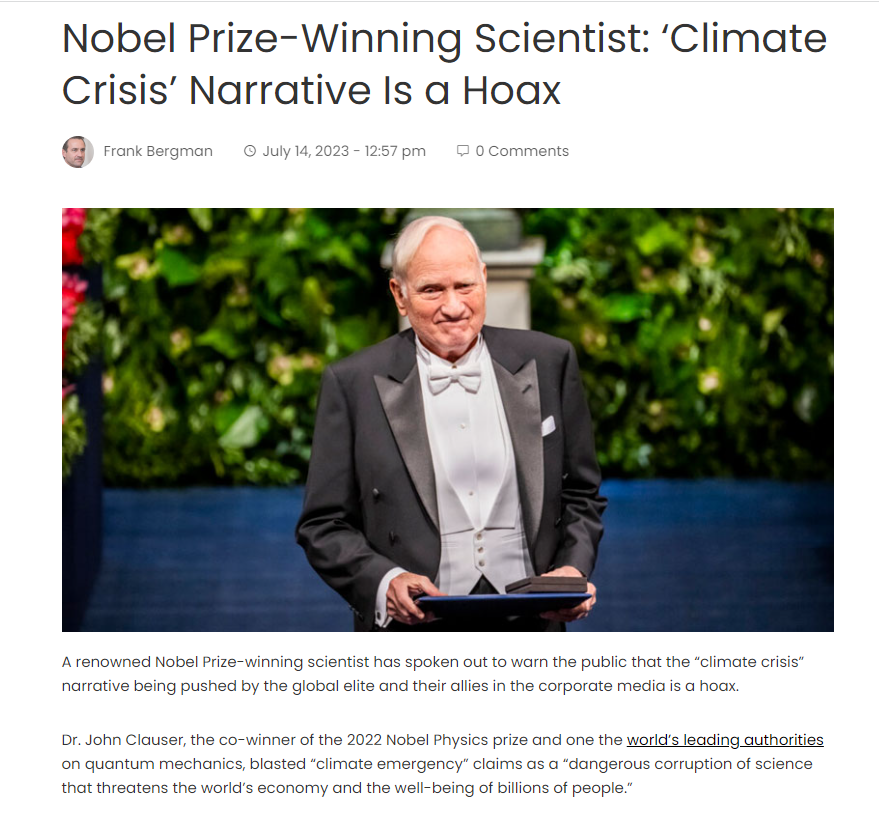
2023_07_14_20_54_50_Nobel_Prize_Winning_Scientist_Climate_Crisis_Narrative_Is_a_Hoax_Slay_News

“Even if the United States eliminated all of its greenhouse gas emissions, it would have little to no measurable effect on global temperatures,” Daren Bakst, director of the Center for Energy and Environment at the Competitive Enterprise Institute admitted.

Look how far the agency was willing to go to stifle the production of emissions. They were seeking to limit our individual freedoms from banning cars to stoves and far-left climate zealots suggesting the government monitor everyone’s carbon footprint. America lost its energy independence between Obama and Biden and it was all tied into the globalist agenda of the Great Reset. Every nation that has adhered to climate change policies is experiencing an energy crisis for which they have no solution. You simply cannot eliminate fossil fuels without a reliable alternative and you definitely cannot significantly limit carbon emissions without changing life as we know it.

Critics believe the measure is merely to support Big Oil and permit coal and gas plants to pollute the environment. Trump did declare an energy emergency at the start of his presidency, famously saying “drill baby, drill,” as a nudge to begin extracting oil once more. The truth of the matter is that fossil fuels are essential for our survival. The EPA deliberately exploited the threat of greenhouse gases to grant the government authoritative power over energy.

Canadian Officials Continue Wondering Why Trump Administration Projects Ambivalence Toward U.S-Canada Trade Deal


Posted originally on CTH on July 29, 2025 | Sundance

The reality of the U.S-Canada economic relationship and the position of President Donald Trump is not that difficult to understand if you take all the disparate datapoints and quotes from Trump and put them into context.

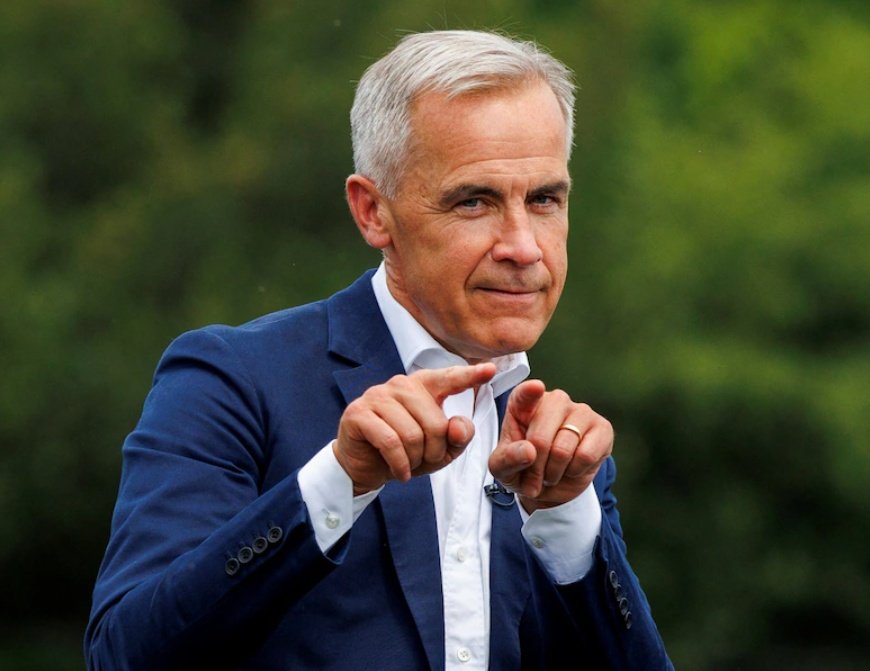
During a White House meeting with Mark Carney, President Trump essentially told the Canadian Prime Minister why he was in no hurry to get to a deal with Canada.

The 35% tariffs on non-USMCA goods are going to trigger on August 1st, because the main priority of Trump -looking toward Canada- is to dissolve the USMCA.

During the May 6th oval office meeting with Carney, President Trump was discussing the USMCA and said:  “As you know it terminates fairly shortly. It gets renegotiated fairly shortly.” … “This was a transitional deal, and we’ll see what happens, we’re going to start renegotiating that” … “I don’t know if it serves a purpose anymore.”  …. “And the biggest purpose it served was, we got rid of NAFTA.”

To understand why President Trump wants to dissolve the USMCA {SEE HERE}.  To understand the technical value of dissolving the USMCA {SEE HERE}.  It’s not a complicated economic analysis; it’s common sense.

Currently, approximately 60% of the traded goods and services between the U.S. and Canada are covered by the USMCA; the remaining 40% will be hit by tariffs on August 1st at a 35% rate.

When the USMCA is renegotiated, predictably dissolved in favor of two bilateral trade agreements – one for Mexico and one for Canada, all of the U.S-Canada trade sectors will be part of the enlarged free trade negotiation.  As a result, there is absolutely no motive to engage in trade discussions now.

♦ President Trump’s position is essentially to talk about the details when the USMCA is dissolved; hence, the ambivalence.

Politico is noting the Canadian trade team simply doesn’t understand this. “[D]espite months of back and forth, the terms for a deal have not yet been set, a senior government source said, with the White House informing the Canadian side that Trump is more focused on securing deals with other partners like India.

(Politico cont..) […] Earlier this month, Canada conceded that any deal with Trump is likely to include tariffs.

Carney’s government wants stability around the tariffs Trump invoked using Section 232 of the Trade Expansion Act.

They are crushing Canada’s auto, steel, aluminum and forestry industries. Trump also plans to hit imported copper with 50 percent tariffs starting Aug. 1 — with semiconductor and pharmaceutical imports likely to follow.

Canada ultimately wants the tariffs eliminated or lowered to a fixed level that doesn’t fluctuate, the senior government official said. “If we know what world we’re going into, then we can have better plans and policies to attract investment.”

Canada’s premiers say the unpredictability is punishing the economy.

“Private investment is not growing because everybody’s on pause,” Quebec Premier François Legault told reporters last week. “They are waiting to see what will happen. I’ve been in business — it’s about the worst thing you can have is uncertainty.” (read more)

The certainty the Canadians are looking for can be found easily if they stop pretending.

(1) U.S. tariffs against non-USMCA products from Canada will go into effect on August 1st.  (2) As soon as the USMCA is reopened, it will be dissolved.  (3) After the USMCA dissolution, a bilateral free trade agreement between the USA and Canada will be negotiated.

Every current effort by Canada to change the nature of the trade system, between now and the reopening of the USMCA (to dissolve it), is futile.

Again, I’m not exactly sure why this reality is so challenging for the Canadian govt to understand.

“So, you’re saying there’s a chance.”

PRINCE: “This Is The Kind Of Stuff That Kicks Off A Revolution”


Posted originally on Rumble By Bannon’s War Room on: July 28, 2025