Germany to Separate North v South by 2030


QUESTION:

Martin,

Following the recent State elections in Saxony, Brandenburg and Thuringia which reflected voter disillusionment and discontent with the CDU and SPD how do you view the German political scene to the 2021 Federal election?

JR

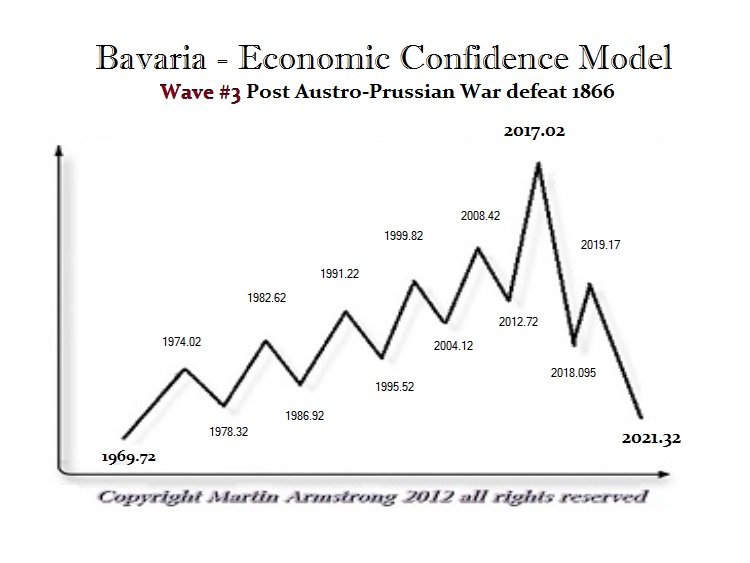
REPLY: Bavaria came into existence in 1806 when Napoleon abolished the Holy Roman Empire. It was at this time that Bavaria’s land area was greatly expanded. Our cyclical model on Bavaria suggests that it will separate from northern Germany by 2030. This will be inspired by the austerity policies that have devastated the local economy. However, this will only be augmented by the difference in religion between Protestant v Catholic. That was also a factor in why Bavaria joined with Austria, which was also Catholic, in the Austro-Prussian War that resulted in Bavaria’s defeat in 1866. Bavaria had to cede several Lower Franconian districts to Prussia.

The Bavarian conservative party, the CSU, lost its absolute majority once the Economic Confidence Model turned in 2017 during the subsequent election in 2018. Meanwhile, the Greens emerged as the second-largest political force in southern Germany. Additionally, the Eurozone sovereign debt crisis is impacting the municipal level and the austerity policies imposed by the north continue to brew civil discontent. The loss of the CSU in Germany undermined the survivability of Merkel which instigated her demise.

The civil unrest will turn upward sharply when this current wave concludes 2021.32. The eventual separation of Germany will most likely unfold by 2030 at the earliest.

The Coming British Elections


QUESTION: I know you were rather close to Sir Alan and Prime Minister Thatcher. I also know you are close to a number of politicians here in Britain. I was at your Edinburgh conference where they introduced you as a seventh-generation Edinburgh Scotsman I found very interesting rather than an American. You are famous here in political circles for many forecasts with the latest being the BREXIT victory. Do you have any insight into the December election? It is getting crazy here with two former Labour MPs declaring that they planned to vote for the Conservative Party because they said Labour’s leader, Jeremy Corbyn, was unfit to be prime minister. Then Tom Watson quit because of Corbyn’s policies over Brexit and his anti-Semitism. But the Conservatives seem to be less reliable as well. I think Nigel Farage may surprise a lot of people in this election. What does Socrates say?

GB

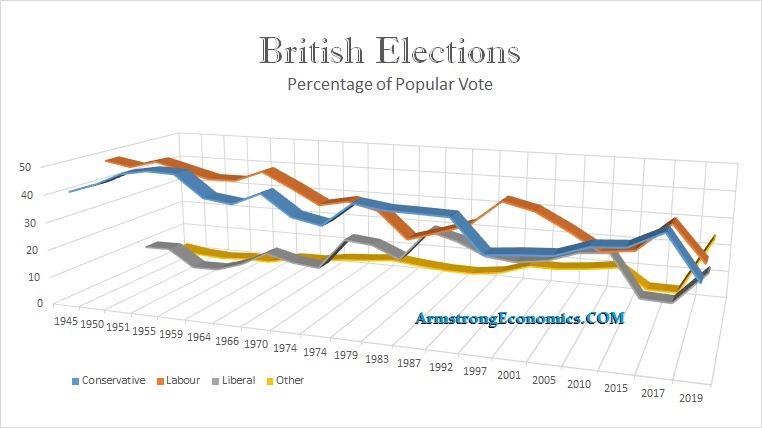
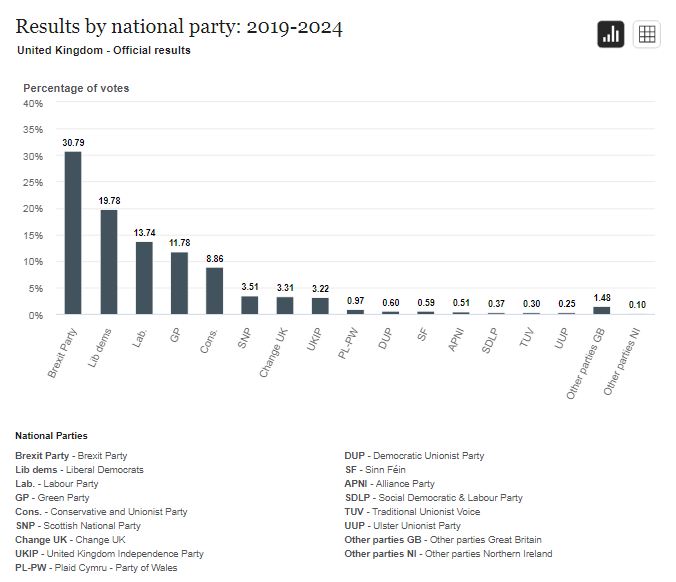
ANSWER: That is an interesting question. It is hard to map because of such a diverse breakdown in the “other” category. There is no question that Nigel’s party came out on top in the EU general elections. As we can see from the chart at the top, both Labour and the Conservatives are declining and there is a rise in both the Liberal Dems and “other” against the establishment so to speak. This is part of the global trend many outside the USA call the Trump Revolution. They are not referring to something that Trump did himself. Instead, this is a global trend against established political parties everywhere.

My advice to Johnson would be to cut a deal with Nigel’s Brexit Party. There is a trend underway that is bigger than most suspect. I know Nigel has no designs on being Prime Minister. However, fate will determine the roll of the dice. Nigel may end up in a position he did not wish to be in.

We will try to refine the models to do a proper forecast. Keep in mind that the “other” category is due for a strong showing and this will most likely be Nigel’s party. Also keep in mind that his Brexit Party does not hold any seats in Parliament at this time. That will change.

Bolivia’s Ex-President Flees to Mexico


Our model has been accurately forecasting the rise in civil unrest against governmental corruption on a worldwide basis. In Bolivia, ex-President Morales has fled to exile in Mexico. Previously, he was overthrown by the military under the pretext of electoral fraud. The country is drifting into political chaos. Bolivia happens to be home to the state-owned lithium industry, which is critical to driving electrical power by the global warming crowd. Bolivia has had a history of revolutions since 1781. The previous was 1949.

British Labour Party – The Greatest Threat to Britain


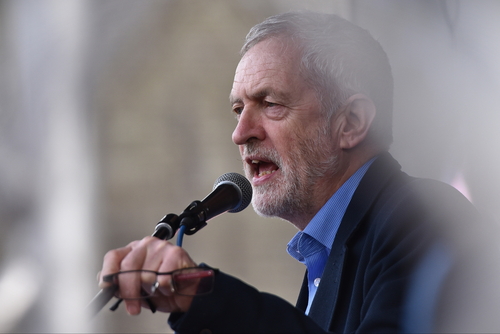
There is absolutely no question that Jeremy Corbyn and the Labour Party poses a greatest threat to Britain than Brexit. Corbyn said, “Nurses, teachers, shop workers, builders, just about everyone is finding it harder to get by, while Morgan Stanley’s CEO paid himself £21.5m last year and UK banks paid out £15bn in bonuses.” What he fails to consider is that the solution is not to raise taxes on CEOs, the solution is to reduce government. Even if they seized 100% of CEO salaries, it would not pay the expenses for a single day. But they love to point to some individual rich person and make it sound like all will be well if they just seize his money.

Socialism is dead. Before income taxes pre-World War II, the wife could stay home and raise the children. Today, that is not a possibility for most people. It takes two salaries to pay for the very same living standard pre-World War II. The more government pretends to do something, the greater the cost of government becomes. Every time they introduce some new tax, they hire more people and create more regulations for that specific tax. It is simply an endless process where now about 40% of the civil workforce is dependent upon government, which means they do not produce anything that contributes to the GDP of a nation.

Corbyn has boasted that the Labour Party is a threat to the rich. All he will do is send a massive migration from Britain. We have already been getting questions about moving companies and their domicile to the USA, as has been taking place even with major public companies in Canada

Supreme Court Hears Oral Arguments on DACA Case Tomorrow…


Tomorrow the Supreme Court will hear oral arguments on the case: “DHS -vs- Regents of University of California“, also known as the DACA case: Deferred Action for Childhood Arrivals.  DACA was instituted by a President Obama ‘executive action’, not an ‘executive order’.

The Obama Office of Legal Counsel (OLC) did not fully support the constitutional framework around the effort to protect a sub-set of illegal aliens; and therefore the originating presidential action was not an official ‘executive order’, a technicality that could end up as part of the argument(s).  The same issue existed within DAPA (Deferred Action for Parents of Arrivals), and was ruled unconstitutional by a divided SCOTUS.

Amy Howe at SCOTUS Blog has a great encapsulation of the case and current status:

In 2012, the Obama administration established a program known as Deferred Action for Childhood Arrivals (DACA), which allows undocumented young adults who came to the United States as children to apply for protection from deportation.

Applicants who meet a variety of criteria – for example, who have graduated from high school or served in the military and do not have a serious criminal record – must pay a fee of nearly $500 in total, submit (among other things) their fingerprints and home address and undergo a background check.

In the past seven years, nearly 800,000 people have obtained protection from deportation under DACA, which permits them to work legally in this country and gives them access to other benefits like health insurance and driver’s licenses. In 2017, the Trump administration announced that it would end the DACA program; in November, the Supreme Court will hear oral argument in a challenge to that decision. (read more)

In September of 2017 President Trump released a statement outlining how the administration would work with congress on immigration legislation toward a final disposition for those who fall under the DACA construct.

Unfortunately, Pelosi and House Democrats ultimately rebuked an immigration reform package they viewed was too heavy on enforcement and too much of an impediment to their preferred open-border platform.  By January 2018 the negotiations collapsed.

While the oral arguments are tomorrow, it is unlikely there will be a SCOTUS ruling on the current DACA case until sometime later in 2020 (summer).  Which will likely put DACA at the center of the 2020 election.

President Trump has previously been open to affording immigration protection for those who fall under DACA as part of a package for structural immigration reform.   However, it is very likely Speaker Pelosi and the DNC will rebuke any legislative effort in their continued push to politicize the “dreamers”, and trick young voters into supporting democrat candidates.

Turning to the legality of the government’s decision to end DACA, the government explains that it had several different reasons to shut the program down, all of which were entirely reasonable. First, it reiterates, it believed that the program was illegal, so that keeping it in place would be “sanctioning an ongoing violation of federal immigration law by nearly 700,000 aliens.” And not only did the government believe that DACA violates federal law, but the 5th Circuit had in fact struck down the two related policies.

Particularly in light of the program’s “legally questionable” provenance and the announcement by Texas and other states that they would challenge DACA, the government believed that the best course was to go forward with an “orderly wind-down” on its own terms rather than taking its chances defending the program in court and risking the possibility that the program could be abruptly shut down.

It was also, the government observes, “entirely sensible” for it to determine that, even if it could have continued DACA, it would be better to do so “only with congressional approval and the political legitimacy and stability that such approval entails.” After all, even then-President Barack Obama, when announcing DACA, had indicated that the program was only intended as a “temporary stopgap measure.”

Instead, the government concluded, it opted to return to the pre-DACA system of reviewing requests for protection from deportation on a case-by-case basis. “One can agree or disagree with that judgment,” the government suggests, “but it is not remotely specious.” (more)

Larry Schweikart@LarrySchweikart

DACA lands before Supreme Court: Showdown over Trump bid to end ‘Dreamer’ program https://fxn.ws/34UpXHf 

Time for the Court to end this garbage.

DACA lands before Supreme Court: Showdown over Trump bid to end ‘Dreamer’ program

The long-running battle over the Trump administration’s bid to end the Obama-era program for young undocumented immigrants known as “Dreamers” will land before the Supreme Court on Tuesday.

foxnews.com

280 people are talking about this