Jerome Powell Says Fed Effort to Make U.S. Economy Smaller Will Create “Some Pain” for Americans During Biden Transition to Clean Energy


Posted originally on the conservative tree house on August 26, 2022 | Sundance

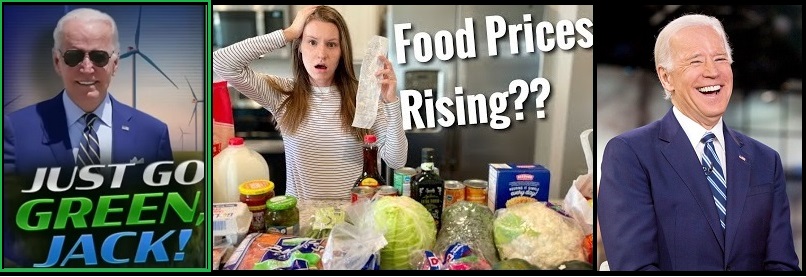
When Chairman Powell says things are really, really going to suck as monetary policy tries to support Biden’s goals to reduce energy supplies, will people believe him?

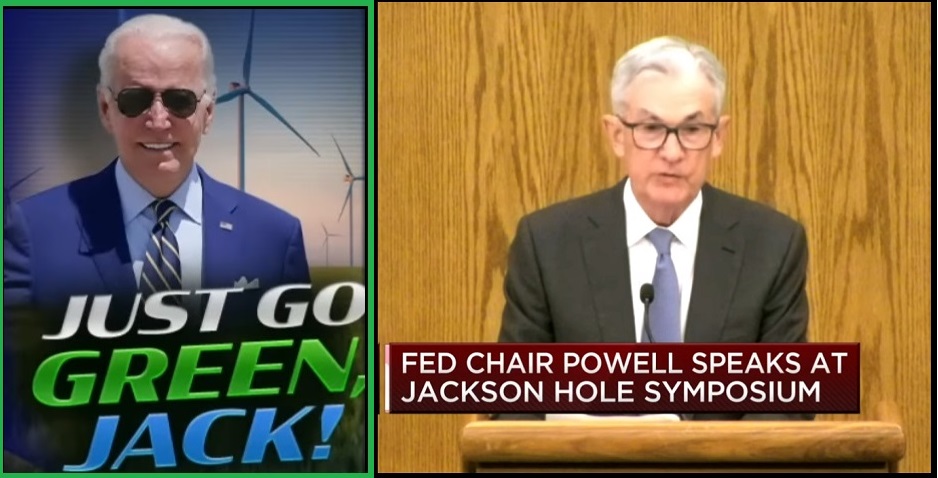
The agenda of the federal reserve was clearly outlined today in the remarks from Chairman Powell in Jackson Hole, Wyoming.  The Fed chair is trying to manage the economic policy transition by reducing economic activity to match intentionally diminished energy supplies.  Lowering economic activity drops demand for energy. Unfortunately, as admitted by Powell today, this means a period of “some pain” for Americans as the central banks join together in an effort to lower consumption.  WATCH:

What does “some pain” mean?  It means lower incomes, higher prices, lowered standards of living and more scarce resources.   During this transition to owning nothing and being happy about it, the pain is your wealth being stripped as the economy is intentionally diminished.

We will not be able to afford much; we won’t be able to afford the foods we want; we will not be able to purchase anything except the essentials, and those essentials will cost much more; we won’t be able to vacation, travel, or enjoy recreational activities; we won’t be able to afford any indulgences; but at the end of the process, we will learn to live more meager existences based on lowered expectations needed for sustaining the planet.   Pay no attention to the elites who don’t have those concerns, comrade.

[Transcript] – POWELL: “At past Jackson Hole conferences, I have discussed broad topics such as the ever-changing structure of the economy and the challenges of conducting monetary policy under high uncertainty. Today, my remarks will be shorter, my focus narrower, and my message more direct.”
The Federal Open Market Committee’s (FOMC) overarching focus right now is to bring inflation back down to our 2 percent goal. Price stability is the responsibility of the Federal Reserve and serves as the bedrock of our economy. Without price stability, the economy does not work for anyone. In particular, without price stability, we will not achieve a sustained period of strong labor market conditions that benefit all. The burdens of high inflation fall heaviest on those who are least able to bear them.

Restoring price stability will take some time and requires using our tools forcefully to bring demand and supply into better balance. Reducing inflation is likely to require a sustained period of below-trend growth. Moreover, there will very likely be some softening of labor market conditions. While higher interest rates, slower growth, and softer labor market conditions will bring down inflation, they will also bring some pain to households and businesses. These are the unfortunate costs of reducing inflation. But a failure to restore price stability would mean far greater pain.

The U.S. economy is clearly slowing from the historically high growth rates of 2021, which reflected the reopening of the economy following the pandemic recession. While the latest economic data have been mixed, in my view our economy continues to show strong underlying momentum. The labor market is particularly strong, but it is clearly out of balance, with demand for workers substantially exceeding the supply of available workers. Inflation is running well above 2 percent, and high inflation has continued to spread through the economy. While the lower inflation readings for July are welcome, a single month’s improvement falls far short of what the Committee will need to see before we are confident that inflation is moving down.

We are moving our policy stance purposefully to a level that will be sufficiently restrictive to return inflation to 2 percent. At our most recent meeting in July, the FOMC raised the target range for the federal funds rate to 2.25 to 2.5 percent, which is in the Summary of Economic Projection’s (SEP) range of estimates of where the federal funds rate is projected to settle in the longer run. In current circumstances, with inflation running far above 2 percent and the labor market extremely tight, estimates of longer-run neutral are not a place to stop or pause.

July’s increase in the target range was the second 75 basis point increase in as many meetings, and I said then that another unusually large increase could be appropriate at our next meeting. We are now about halfway through the intermeeting period. Our decision at the September meeting will depend on the totality of the incoming data and the evolving outlook. At some point, as the stance of monetary policy tightens further, it likely will become appropriate to slow the pace of increases.

Restoring price stability will likely require maintaining a restrictive policy stance for some time. The historical record cautions strongly against prematurely loosening policy. Committee participants’ most recent individual projections from the June SEP showed the median federal funds rate running slightly below 4 percent through the end of 2023. Participants will update their projections at the September meeting.

Our monetary policy deliberations and decisions build on what we have learned about inflation dynamics both from the high and volatile inflation of the 1970s and 1980s, and from the low and stable inflation of the past quarter-century. In particular, we are drawing on three important lessons.

The first lesson is that central banks can and should take responsibility for delivering low and stable inflation. It may seem strange now that central bankers and others once needed convincing on these two fronts, but as former Chairman Ben Bernanke has shown, both propositions were widely questioned during the Great Inflation period.1 Today, we regard these questions as settled. Our responsibility to deliver price stability is unconditional. It is true that the current high inflation is a global phenomenon, and that many economies around the world face inflation as high or higher than seen here in the United States.

It is also true, in my view, that the current high inflation in the United States is the product of strong demand and constrained supply, and that the Fed’s tools work principally on aggregate demand. None of this diminishes the Federal Reserve’s responsibility to carry out our assigned task of achieving price stability. There is clearly a job to do in moderating demand to better align with supply. We are committed to doing that job.

The second lesson is that the public’s expectations about future inflation can play an important role in setting the path of inflation over time. Today, by many measures, longer-term inflation expectations appear to remain well anchored. That is broadly true of surveys of households, businesses, and forecasters, and of market-based measures as well. But that is not grounds for complacency, with inflation having run well above our goal for some time.

If the public expects that inflation will remain low and stable over time, then, absent major shocks, it likely will. Unfortunately, the same is true of expectations of high and volatile inflation. During the 1970s, as inflation climbed, the anticipation of high inflation became entrenched in the economic decisionmaking of households and businesses. The more inflation rose, the more people came to expect it to remain high, and they built that belief into wage and pricing decisions. As former Chairman Paul Volcker put it at the height of the Great Inflation in 1979, “Inflation feeds in part on itself, so part of the job of returning to a more stable and more productive economy must be to break the grip of inflationary expectations.”2

One useful insight into how actual inflation may affect expectations about its future path is based in the concept of “rational inattention.”3 When inflation is persistently high, households and businesses must pay close attention and incorporate inflation into their economic decisions. When inflation is low and stable, they are freer to focus their attention elsewhere. Former Chairman Alan Greenspan put it this way: “For all practical purposes, price stability means that expected changes in the average price level are small enough and gradual enough that they do not materially enter business and household financial decisions.”4

Of course, inflation has just about everyone’s attention right now, which highlights a particular risk today: The longer the current bout of high inflation continues, the greater the chance that expectations of higher inflation will become entrenched.

That brings me to the third lesson, which is that we must keep at it until the job is done. History shows that the employment costs of bringing down inflation are likely to increase with delay, as high inflation becomes more entrenched in wage and price setting. The successful Volcker disinflation in the early 1980s followed multiple failed attempts to lower inflation over the previous 15 years. A lengthy period of very restrictive monetary policy was ultimately needed to stem the high inflation and start the process of getting inflation down to the low and stable levels that were the norm until the spring of last year. Our aim is to avoid that outcome by acting with resolve now.

These lessons are guiding us as we use our tools to bring inflation down. We are taking forceful and rapid steps to moderate demand so that it comes into better alignment with supply, and to keep inflation expectations anchored. We will keep at it until we are confident the job is done.” [Transcript End]

Three Minutes of Pure Sunlight, The Truth and The Constitution are President Trump’s Weapons


Posted originally on the conservative tree house on August 26, 2022 | Sundance

Attorney and former Constitutional Law Clerk for Justice Gorsuch, Mike Davis, highlights the reason why the U.S. Dept of Justice and FBI will never allow their fabricated political case against President Trump to ever reach a courtroom.  This is a must watch

.

Davis nails everything in that first three minutes, including the background motives of the DOJ, FBI and even congressional oversight authorities like the Senate Select Subcommittee on Intelligence, to desperately fear the evidence held by President Trump in Mar-a-Lago.   All of the events are a massive cover-up effort to retrieve evidence of their own wrongdoing.

CTH knows part of what is in those boxes being discussed because CTH assembled a 4-year, 600-page, brief pointing directly to the location of the agency silos that contained the documents. Essentially a roadmap and specific index showing where the documents are, what they are titled, who is the agency holding them and how it is all connected.

Copies of that brief were distributed to ensure a very visible record was always known.  The truth has no agenda.  Yes, you followed that effort, and I can tell from the activity of the stakeholders discussed, that evidence is a part of the trail Main Justice is trying to quash…. but it’s too late.

Declassification Memorandum ]

Court Releases Heavily Redacted 38-Page FBI Affidavit Used to Justify Raid on President Trump Home


Posted originally on the conservative tree house on August 26, 2022 | Sundance

U.S. Magistrate Bruce Reinhart accepted the proposal from the U.S. Dept of Justice (DOJ) to release, in heavily redacted form, the underlying affidavit used to justify the search warrant issued by Reinhart to raid President Trump’s home in Florida. The DOJ tailored the redactions and Reinhart accepted the modifications without issue. The affidavit has now been released to the public.   [SEE HERE for Pdf Form]  – Mar-a-Lago Raid Affidavit

We are reviewing the just-released documents and will be providing more analysis shortly.

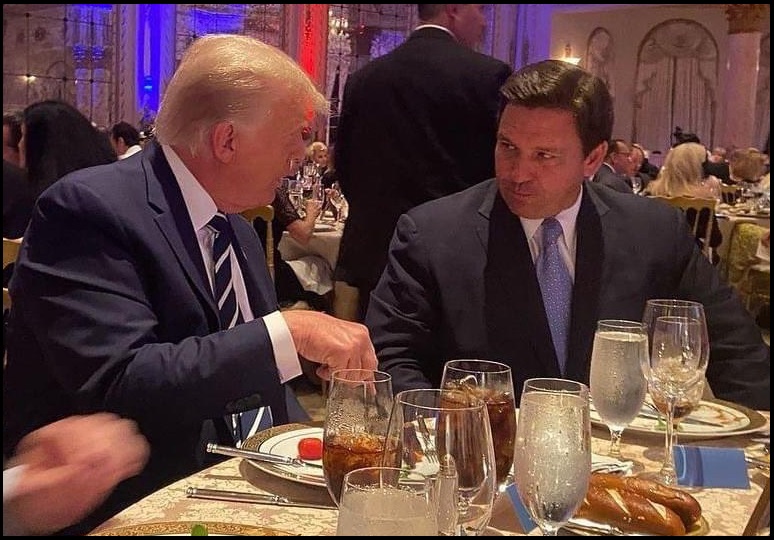
DeSantis Beats Trump on Fundraising – However, Donor Financials Highlight Corporate Version vs Grassroots Version of The Republican Party


Posted originally on the conservative tree house on August 25, 2022 | Sundance 

A solid dive by Law.Com and Daily Business Review into the background of who is financing Donald Trump versus who is financing Ron DeSantis should help to clarify the nature of the difference between them.

President Trump is funded primarily from massive amounts of small contributions from small donors, the MAGA base.

Governor Ron DeSantis is funded primarily by a small group of exclusive Wall Street corporations, billionaires and hedge fund managers, and almost no small donors.

Essentially, if you are thinking about MAGA populism -vs- corporate republicanism; well, there’s the issue in easiest to understand data form.

Additionally, the new managers of DeSantis have recently noticed the vulnerability and hired firms to try and stimulate small donor amounts in an effort to avoid the jaw dropping difference in average donation.  A strategy deployed by Jeb Bush in 2015.    Pay attention to the names giving large donations to DeSantis and you will see: (a) where the economic policy distinction comes from; and (b) where the RDS branding and consulting image is coming from.

Business Daily Review – Republican Florida Gov. Ron DeSantis has raised more money than Donald Trump since the former president left office, relying on deep-pocketed donors rather than the small-dollar contributors he’ll need if he seeks the White House in 2024.

DeSantis … has amassed $142 million from the start of 2021 through Aug. 5 this year from donors such as the hedge fund billionaires Ken Griffin and Paul Tudor Jones.  That tops the $136 million Trump collected over a slightly shorter period.

Unlike Trump, who relies largely on a network of small-dollar donors to fund his postpresidential political operations, DeSantis has raised the bulk of his money from a small number of wealthy donors writing him giant checks. That gives him plenty of money for his reelection effort in Florida, where laws allow unlimited contributions.

But it also raises doubts about the level of grassroots support for DeSantis and suggests he’ll have to widen his fundraising base for any presidential bid because federal rules limit direct contributions to candidates to just $2,900 per donor.

About 500 donors have given $50,000 or more to Friends of Ron DeSantis, his political action committee which under Florida law can accept donations in unlimited amounts, accounting for $88 million of his fundraising haul. His big donors come from finance and real estate, health care and construction and a wide range of other businesses, a Bloomberg analysis of Florida campaign finance filings shows.

By contrast, donors who made contributions of less than $200 accounted for $8 million, or just 6%, of his haul. Unlike Trump, who’s raised $74 million or 54% of his total from January 2021 through June 30 from small-dollar donors, DeSantis doesn’t send multiple, daily fundraising pitches to supporters. Recently his campaign went a month without sending a text message to potential donors who signed up to receive them.

His top 500 donors include 10 billionaires, including Citadel’s Griffin, who moved his hedge fund’s headquarters to Miami from Chicago 14 months after giving $5 million. Other contributors include Tudor Jones, the chief executive officer of Tudor Investment Corp., Home Depot Inc. co-founder Bernard Marcus and Thomas Peterffy, the chairman of Interactive Brokers Inc. (read more)

Ron DeSantis has done a great job in Florida, mostly on social impact issues.  However, on a national policy level, specifically on a presidential level for 2024, the donor influence becomes troubling.

Issues around school choice, school boards, woke policy and social issues in general are easier to handle for voters at a local level.  City, county and state representatives, and the elections they come from, are the people and places where voters can make a substantive difference in their own outcome.

As a parent or individual you have the ability to fight back against social and ideological issues at a city, county and state level.   However, when it comes to issues of national economics, international trade policy and national energy policy, those battles happen at the federal level.  That’s where the President of the United States has a major influence.

As examples, the price of gasoline and energy are influenced by the president through regulatory policy.  Similarly, international trade agreements, economic policy and monetary policy, have consequences for domestic investment, economic growth, jobs, employment, wage growth and expanded domestic wealth.

Simply put, the president has a strong impact on the nation, and the people within it, from an economic perspective.

All modern republicans are incapable of executing a policy that is pro-U.S. worker, because every modern republican is a beneficiary of Wall Street, hedge funds and multinational corporate contributions; exactly like those outlined for Ron DeSantis.  As a consequence, economic policy adverse to the interests of Wall Street, Banks, hedge funds and multinational corporations do not come from modern republican politicians.

This dynamic reflects the distinction that made Donald Trump unique.

Unlike traditional republicans, Donald Trump and Bernie Sanders both agreed on the problem.  Where they disagreed was the solution.

Donald Trump used domestic economic policy tools like trade tariffs and countervailing duties to change the corporate behavior of the multinationals.  Bernie Sander’s approach is to regulate the corporations and force a behavior change.

Put another way, Bernie wants to change the economic referees, while Trump’s approach is to change the economic rules of the game and let the teams play it.

You might remember a large percentage of Bernie Sanders voters joined team Trump in 2016.  That’s because both teams agreed on the problem within our national economic situation.   The result was MAGA, a massive coalition of working-class voters, based on economics, that cuts through every social distinction of race, color, sex, orientation, etc.  The issue that binds the MAGA voters together is economic policy.

Florida Governor Ron DeSantis is a good governor for Florida, and he should be reelected easily.  However, do not fool yourself into believing the massive coalition of MAGA voters would ever transfer to a corporate republican.  It will not. EVER.

When people ask me who should come in after Trump, my answer is simple….  Show me the economic nationalist.

If there isn’t another one,… well, what does that tell you about the Republican party?

Last point.  Florida republicans have a major blind spot they keep ignoring and DeSantis is very lucky Charlie Crist doesn’t have the resources to exploit it.

Housing costs, rents and homeowners’ insurance in Florida have skyrocketed.  In some places home insurance has tripled just this year; yes, tripled.  Energy costs also increased massively in Florida, in many areas electricity rates have doubled.  Water utility costs in Florida have consistently been the highest in the nation due to the nature of the infrastructure and rapid expansion of the population.  Additionally, property tax costs -even with homestead protections- are a serious issue for lots of voters.

Put those economic issues, all being ignored by the governor’s office – as he campaigns around the country to raise his national profile, on top of high gasoline and food prices and DeSantis is very vulnerable on the way Floridians feel about their economic security.

Focusing on wokeism and social issues is an option when economic issues are not in crisis.  However, focusing on social issues while ignoring the economic pain and crisis, and you find yourself looking detached. aloof and vulnerable to political attack….. Then again, a typical republican.

.

The Managing of DeSantis HERE

The Branding of DeSantis HERE

The Selling of DeSantis HERE

US Embezzles an Additional $3 Billion to Ukraine


Armstrong Economics Blog/Corruption Re-Posted Aug 26, 2022 by Martin Armstrong

America has pledged to embezzle (donate) another $3 BILLION into Ukraine. The Associated Press claims that this money will be used for equipment and training Ukrainian troops. Additional NATO countries are also offering additional funds, such as Germany who pledged an additional $500 million to the proxy war. Yet, America is donating more money than any other NATO country to a non-NATO country. How does this benefit American taxpayers? Answer – it does not. It steals resources from our nation as the average American grapples with record-high inflation amid a recession that is expected to worsen into next year.

This is taxation without representation. Joe Biden is not reaching into his personal wallet to funnel money into Ukraine. The defense contractors, US and Ukrainian governments are finding a way to line their pockets with these large “donations.” America has already sent 19 packages of weapons from the Defense Department’s arsenal to Ukraine. So far, the US has sent $10.6 billion to Ukraine to fund what many are calling the new “forever war.”

The last US census stated there were 123.6 million households in the US. At $13.6 billion total, this means that every household in the nation could have donated $110 directly to Ukraine. Zelensky is basking in the funding and fame. He has indicated that he intends to provoke Russia and worsen relations. He originally wanted to protect the Donbas region, but now he also wants Crimea to be fully within Ukraine. There is no winning this war as it has become too profitable for the people behind the curtain.

Biden’s Student Loan Forgiveness Bribe


Armstrong Economics Blog/Education Re-Posted Aug 26, 2022 by Martin Armstrong

While many are praising Biden for maintaining his campaign promise to cancel student debt, others are furious that the costs will be passed on to the taxpayers. Even Mitt Romney accused Biden of bribing voters before the midterms. “Biden’s student loan forgiveness plan may win Democrats some votes, but it fuels inflation, foots taxpayers with other people’s financial obligations, is unfair to those who paid their own way & creates irresponsible expectations,” the perhaps most liberal Republican senator wrote on Twitter.

Under the plan, borrowers earning under $125,000 annually will receive a $10,000 debt cancelation, while Pell Grant recipients will see a $20,000 reduction. The Penn Wharton School conducted a study in which they believe this program will cost the average taxpayer $2,000. The study found:

"We estimate that a one-time maximum debt forgiveness of $10,000 per borrower will cost around $300 billion for borrowers with incomes less than $125,000. This cost increases to $330 billion if the program is continued over the standard 10-year budget window. Eliminating the borrower income limit threshold produces a 10-year cost of $344 billion. Increasing the maximum amount forgiven to $50,000 per borrower increases the total cost to as much as $980 billion."

Yet, this does nothing to prevent predatory lending, albeit dismissing some interest on loans. This does not reinstate Glass Stegall, the provision that Bill Clinton erased to make student debt non-dischargeable in the case of bankruptcy. In fact, Clinton’s top financial advisor, Larry Summers, believes that this measure will increase inflation. “It consumes resources that could be better used helping those who did not, for whatever reason, have the chance to attend college. It will also tend to be inflationary by raising tuitions,” Summers wrote on his Twitter page. He also warned against continuing the moratorium of benefits expected to last until the end of the year.

Some state that we should be happy for those who are receiving relief, but the true culprits are the predatory lenders offering asinine interest rates and the universities that continually raise their fees. It also causes a disconnect between classes as those who chose trade school or blue-collar roles to avoid college fees will not be too fond of this initiative. It certainly will not help America’s plea to recruit more military personnel either. This is a temporary solution to a deeper problem.

The Inflation Reduction Act – A Change We Don’t Believe In


Armstrong Economics Blog/Inflation Re-Posted Aug 26, 2022 by Martin Armstrong

President Biden agreed to waste billions on the Democrat-supported Inflation Reduction Act. According to a survey of 1,500 Americans as presented by the Epoch Times, neither Democratic nor Republican citizens believe this expensive act will combat rising prices.

Respondents were asked if they believed that the bulk of the package, the $369 billion set aside for climate change initiatives, would reduce inflation. Only 13% said they believed fighting climate change would combat inflation, while 26% admitted they had no clue. Yet, 38% replied by saying it will increase inflation, and an additional 22% think it will have no impact.

Only 8% of Republicans polled agreed with the act (no voting Republican lawmakers supported the measure), while 23% of Democrats were in favor. Around 68% of Republicans warned that the bill would increase inflation; 40% of Independents agreed, as did 17% of Democrats.

This leads one to believe that the measure would never have passed if the taxpayers had the opportunity to vote on how their money was spent. The Congressional Budget Office admitted that the measure would have a negligible effect on inflation. Currently, American households are paying an additional $717 per month due to inflation. This act will only cause Americans to be treated as criminals by the growing and armed IRS, which is training to use lethal force against civilians. Audits will soar, small and medium businesses will suffer, and no one besides those supporting the Green agenda will benefit from the Inflation [Expansion] Act.

Study, No Quantifiable Benefits from COVID Treatment Drug Paxlovid for People Aged 40 to 65


Posted originally on the conservative tree house on August 25, 2022 | Sundance 


In April 2022, the Biden administration ordered 20 million doses of Pfizer’s antiviral Covid-19 treatment called Paxlovid.

Now a study published in the New England Journal of Medicine shows the medication shows “no measurable benefit” for the treatment of COVID-19 in patients 40 to 65-years of age.

WASHINGTON — Pfizer’s COVID-19 pill appears to provide little or no benefit for younger adults, while still reducing the risk of hospitalization and death for high-risk seniors, according to a large study published Wednesday.

The results from a 109,000-patient Israeli study are likely to renew questions about the U.S. government’s use of Paxlovid, which has become the go-to treatment for COVID-19 due to its at-home convenience. The Biden administration has spent more than $10 billion purchasing the drug and making it available at thousands of pharmacies through its test-and-treat initiative.

The researchers found that Paxlovid reduced hospitalizations among people 65 and older by roughly 75% when given shortly after infection. That’s consistent with earlier results used to authorize the drug in the U.S. and other nations.

But people between the ages of 40 and 65 saw no measurable benefit, according to the analysis of medical records. (read more)

“Huh, imagine that”…

Tucker Carlson and Harmeet Dhillon Discuss Facebook Suppression of Hunter Biden Laptop Story


Posted originally on the conservative tree house on August 25, 2022 | Sundance

During a segment on his broadcast this evening, Fox News host Tucker Carlson interviewed Center for American Liberty founder and lawyer, Harmeet Dhillon about how Facebook censored and supressed he Hunter Biden laptop story just before the 2020 election. {Direct Rumble Link} – WATCH:

.

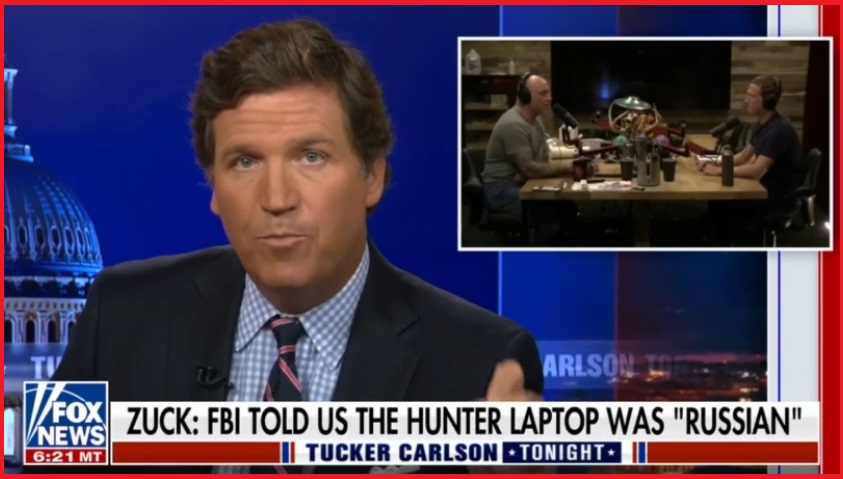
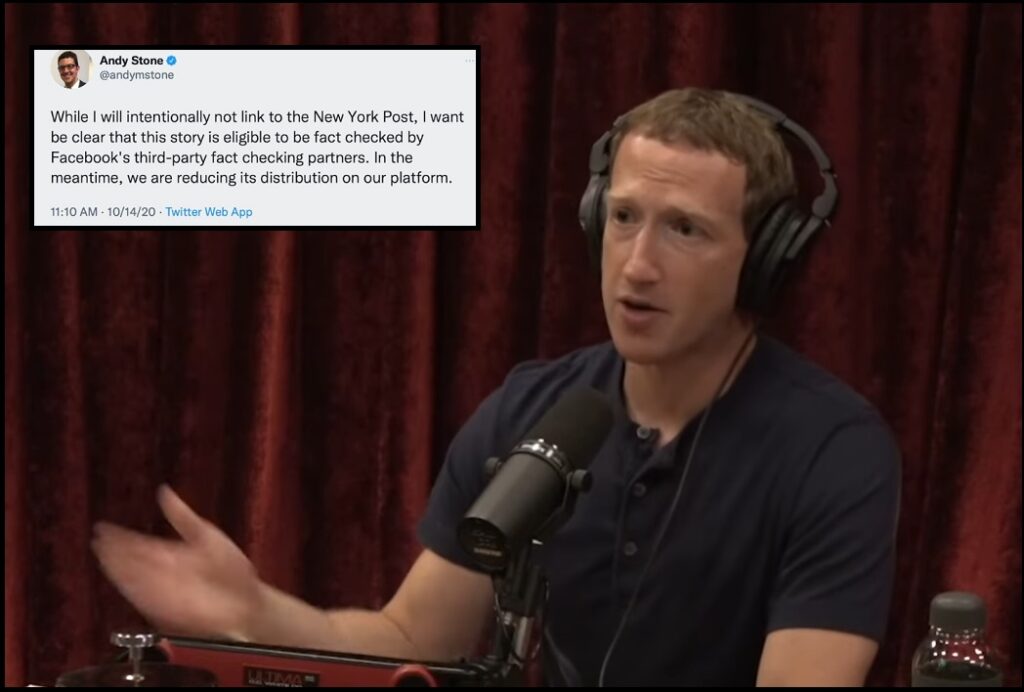
Interesting, Facebook CEO Mark Zuckerberg Implies FBI Told Platform to Intercept Hunter Biden Laptop Story


Posted originally on the conservative tree house on August 25, 2022 | Sundance

During a discussion with Joe Rogan, Facebook CEO Mark Zuckerberg was asked about the removal of content, specifically citing the example of the pre-2020 election Hunter Biden laptop story.  In his response Zuckerberg says the background context is important because the FBI came to Facebook and told them Russian disinformation was about to drop, just before the New York Post article was published.

This discussion comes on the heels of an FBI whistleblower approaching the Senate Judiciary Committee with evidence the Washington DC field office was specifically working to coverup any discoveries around the Hunter Biden laptop (per Chuck Grassley).   Add the Zuckerberg statement to the whistleblower claim and the resounding implication is the FBI taking advanced proactive measures to stop information they deem adverse to the interests of democrats.  The issue surfaces at 05:00 of the video below.  WATCH (prompted):

.