Posted originally on Rumble on Brightbart New Network on: Mar 15, on 5:30 am EST


QUESTION: NASA believes that this next solar maximum will be less than the last. Do you agree with that, or should I ask Socrates to agree with that? My second question is the coming asteroid. They say it will hit the earth in 2032. Is that part of Socrates’ forecast?
Fred
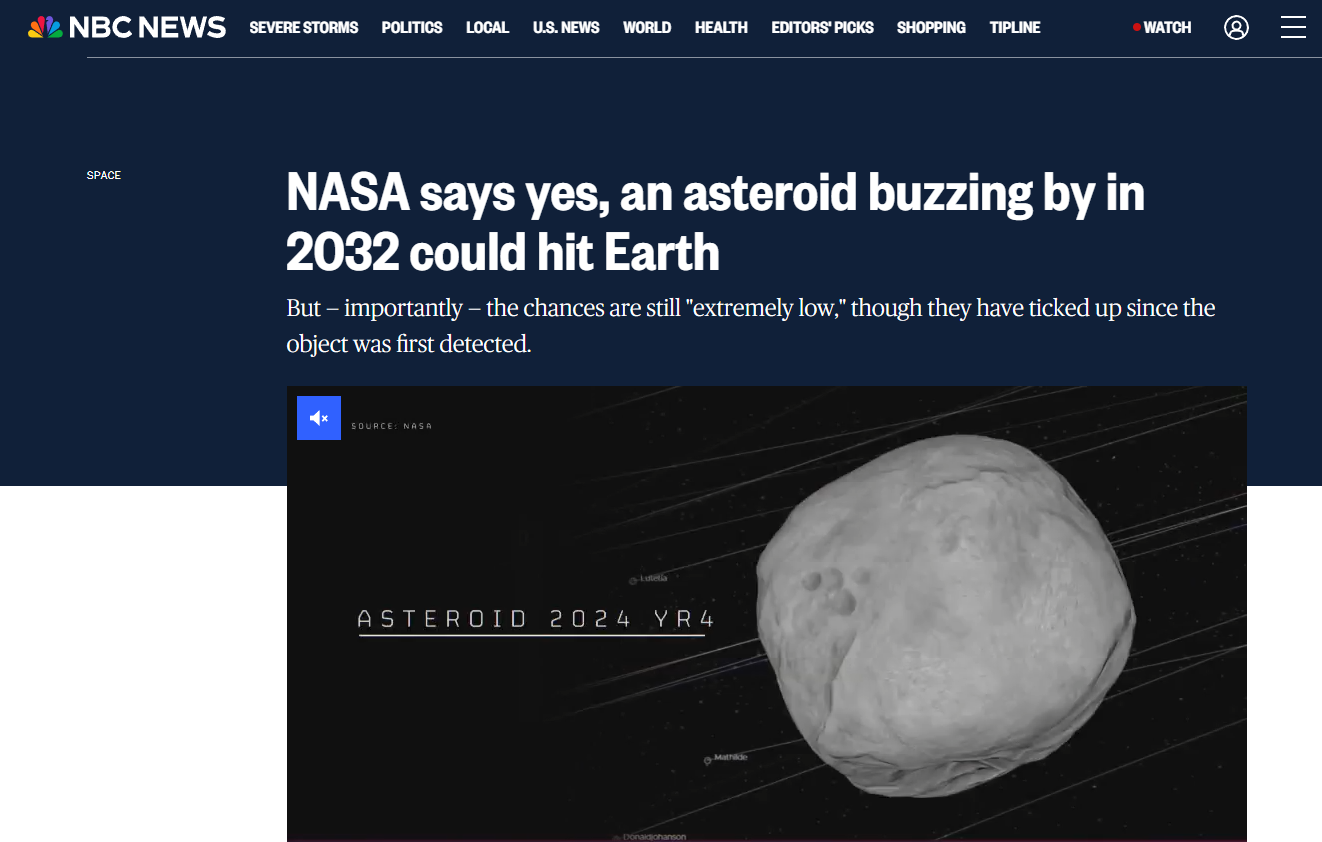
ANSWER: Well, as for the asteroid hitting the Earth in 2032, they are playing it down really hard, like it has less than 3%. However, they are already looking at ways to try to destroy it because the odds are much higher than they are telling you. All I can say is that the 8.6-year cycle functions on a fractal basis, and it is extremely accurate. The precession of the equinox is nearly 25,800 years in duration, and that is 3 x 8.6. The fact that this is arriving in 2032 may simply be destiny and part of the universe’s timing.
Now, as to the next solar cycle, we show it should arrive here in 2025, but our computer disagrees with NASA, and it should be stronger than the last. This is the trend into 2032 for solar energy to intensify, meaning more significant flares and possible disruption to power grids, etc. This will be part of the trend into 2032 that will also impact the commodity markets.


Canadians are outraged at US President Donald Trump’s repeated threats to annex Canada. Canadian consumers began boycotting American products and are now boycotting America in general as tourism sank by nearly a quarter this February. Statistics Canada reported a 23% decline in trips via car from the US this February, marking the second consecutive monthly decline, while trips to the US by air declined 2.4%.
Based on personal conversations with Canadian friends, I do not believe this decline is simply correlated with the falling Canadian dollar or unfavorable exchange rate. The US was the top travel destination for Canadian tourists, and many state and local economies depend on those tourism dollars. Canadian license tags nearly equate to US tags in the spring and summer months down here in Florida. Yet, Canadians are genuinely outraged by Trump’s comments on their nation becoming a US state and want to boycott the US and anything manufactured here. I have even heard of companies canceling conferences in the US due to tensions.
Hotel reservations near the Canadian border have seen notable decreases as well. Niagara Falls, New York, reported a 8.1% decline in Saturday night bookings and Bellingham, Washinton, recently saw a 10.8% dip. Canadian travel agency Flight Centre rang the alarm that booking to the US in February plummeted an alarming 40% YoY.
There were over 20.4 million visits to the US from Canada in 2024, aiding in $20.5 billion in spending. The US Travel Association believes a 10% decline in Canadian tourism could shed $2.1 billion from the US economy and cost up to 14,000 jobs. The association noted that if the current trend continues, the US economy will lose at least $4 billion in tourism. Tourism states like Florida, New York, Nevada, Texas, and California will experience the worst repercussions of this travel boycott.
Canada is a sovereign nation, and the people wish to keep it that way. We had an excellent relationship with our neighbors to the north despite political warfare. Now, it seems as if anti-American sentiments are growing across Canada since President Trump has been keen on potentially annexing it.
For our Canadian readers— as you know with Trudeau and now Carney, our leaders do not always speak on behalf of those they claim to represent. Americans have no desire to annex Canada. In fact, the majority on both sides of the political spectrum thought Trump was simply mocking Trudeau when he proposed making Canada a state. The majority of Americans respect Canada’s sovereignty and wish we could lay this topic to rest already.
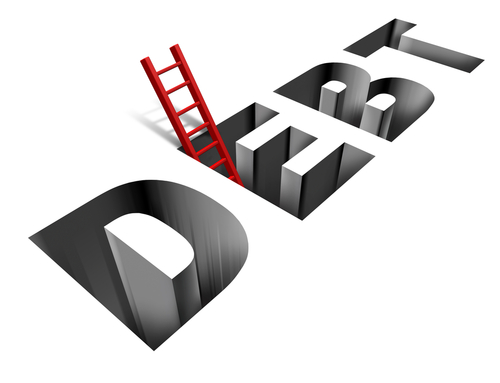
American households have been unable to pay off their debts. The Federal Reserve Bank of New York recently reported that household debt has reached a new all-time high at $18.04 TRILLION.
Americans acquired an additional $93 billion in outstanding payments during Q4 of 2024, with half of this debt finding its way onto high interest credit cards. Credit card debt has also reached a record high at $1.21 trillion. I reported in January that credit card defaults his a 14-year high after skyrocketing by 50% in a one-year period.
Donald Trump said during his campaign that he would like to cap credit card interest fees at 10%, perhaps for a temporary period. There are now bipartisan calls for companies to lower fees, with Congresswomen like AOC and Anna Paulina Luna both championing a 10% credit card cap.
Prior to the pandemic, Americans paid $120 billion annually in credit card interest fees from 2018 to 2020, amounting to $1,000 annually per household. In 2022, consumers were paying $105 billion in interest as it has become the main cost behind having a credit card. Rates on credit cards have doubled in a mere decade from 12.9% in 2013 to 22.8% in 2023.
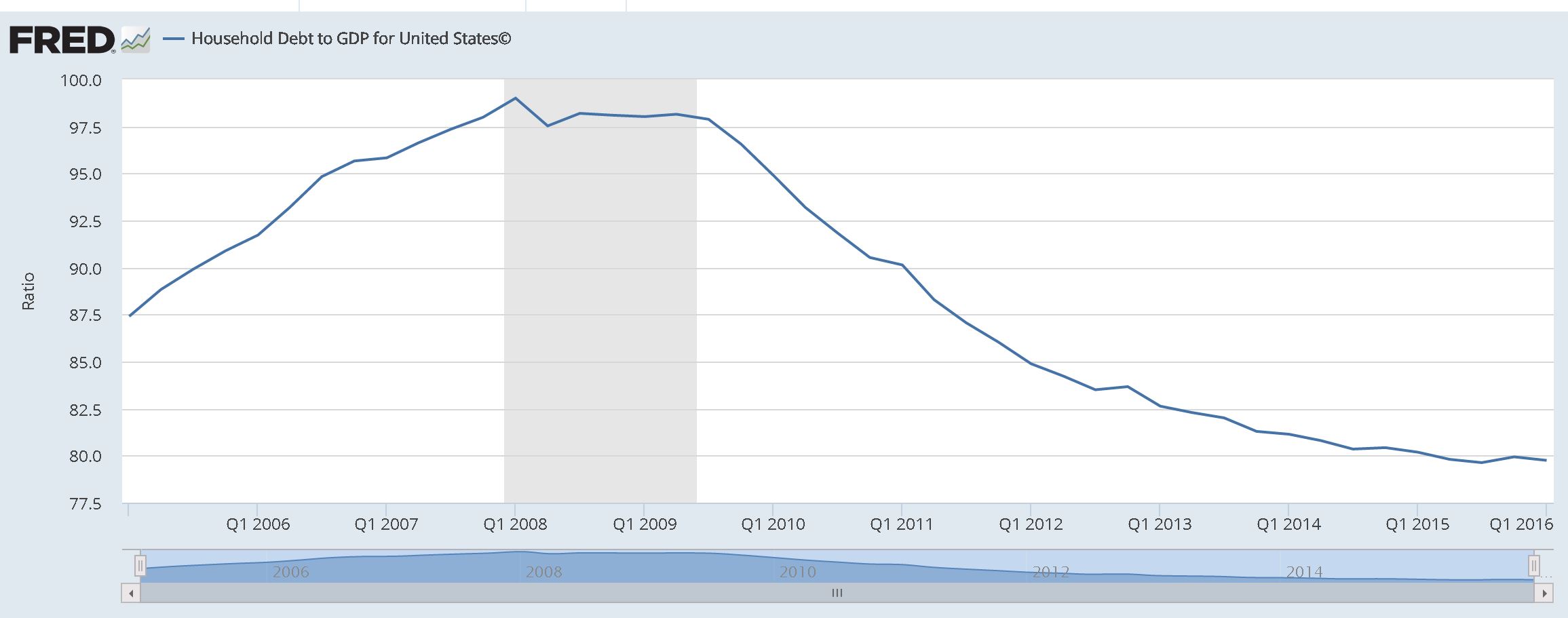
The Federal Reserve Bank of New York’s February 2025 Survey of Consumer Expectations also found that Americans are highly concerned about missing payments, falling into delinquency, or losing their livelihoods. Consumers foresee inflation spreading across the board. In February 2026, the general public believes gas will rise by 3.7%, food by 5.1%, rentals by 6.7%, and medical costs by 7.2%.
Then, around 14.6% of Americans said they believed they would miss a minimum debt payment over the next three months. Americans have not expressed this much concern about missing payments since the early pandemic days of April 2020, when the mainstream media insisted the world was coming to an end.
Aggregate delinquency rates rose 0.1% over a one-quarter period. Mortgage balances increased by $11 billion, hitting $12.6 trillion by December 2024. When choosing between home or auto payments, consumers are prioritizing shelter. Auto loan balances also experienced an $11 billion increase, rising to $1.66 trillion in Q4 2024, but serious delinquencies on auto payments have risen substantially.
Student loan balances increased by $9 billion, and now sit at $1.62 trillion. Students who once thought their loan debt would be forgiven have been notified that their future social security payments will be garnished by the government if they fail to pay.
Most households are a few missed payments away from financial ruin. In fact, 47%, nearly half, of American households currently live paycheck to paycheck. Americans are in an extremely delicate financial situation right now, and this looming debt crisis will not disappear.

Tariffs are on, tariffs are off, tariffs are delayed—the confusion surrounding world trade has Americans on edge. The University of Michigan’s sentiment survey for March shows a massive plunge in consumer confidence “across all groups by age, education, income, wealth, political affiliations, and geographic regions.”
Consumer sentiment dipped 11% for the month to 57,9, marking the third consecutive monthly decline and the lowest level since historically high inflation in 2022. Americans believe inflation will soon rise to 4.9%, an increase from the 4.3% predicted last month.
“Many consumers cited the high level of uncertainty around policy and other economic factors; frequent gyrations in economic policies make it very difficult for consumers to plan for the future, regardless of one’s policy preferences,” Joanne Hsu, the survey’s director, said in a release.
Spending patterns mimic this drop in confidence as consumer spending declined in January 2025 for the first time in two years. There is far too much uncertainty in terms of policy, but worse, there is extreme uncertainty surrounding the current cost of living that does not seem to be easing for the average person.
We are in a period of stagflation. During periods of stagflation, the prices of goods and services increase while buying power decreases. Consumers end up spending more on less. Some people have a tough time understanding that we are in a massive deflationary spiral; they think that rising prices mean inflation and not deflation. Then, they mistake stagflation for deflation and wonder why people are spending more on less. They only see prices, not disposable income, and indeed not economic growth and unemployment.
Most expect to see higher prices with tariffs. Then the lack of confidence becomes a self-fulfilling prophecy where we do not see growth as businesses and consumers refrain from investing. It is all about CONFIDENCE.

COMMENT: Martin, I just had to commend you on your capital flow models. Anyone who does not acknowledge that is a fraud and not trustworthy. As your clip showed from 1991, everyone knew you invented that analysis. While others claim that capital is fleeing from the United States to Europe, they are fake news and inaccurate analysts. They do not understand how things work. You are correct about European intimidation to bringing cash and investments home. However, that is only among the regulated institutions that can be threatened. As your computer tracks, capital is being withdrawn globally in preparation for war.
We could not make decisions in our boardroom without consulting Socrates anymore. It is unbiased and that is the most valuable asset in times of such uncertainty.
God bless.
EKL
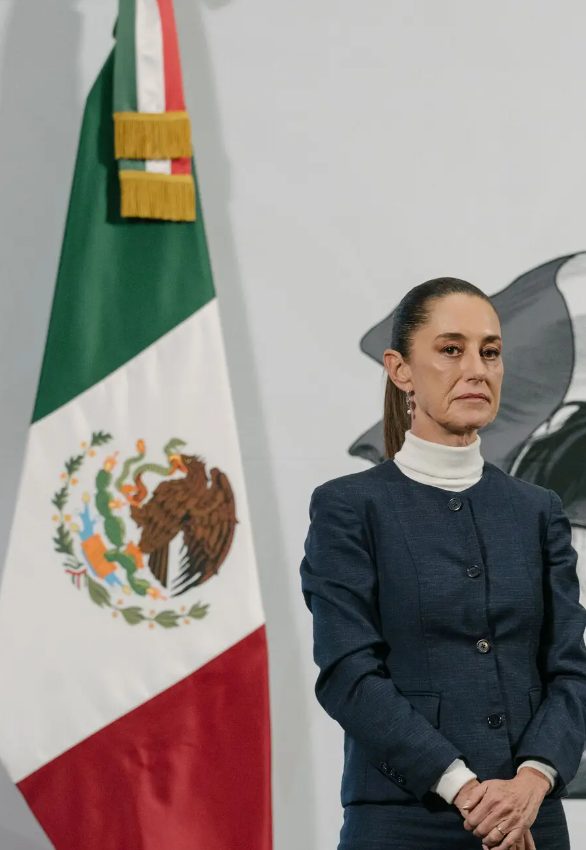
REPLY: Yes, you are correct. We are watching capital contracting into both the United States and Europe. It is even leaving Canada and Mexico. When Claudia Sheinbaum, a leftist, became president on Oct. 1, the first woman to ever govern Mexico, many had their doubts about how she would handle the relationship with the United States, especially if Trump won the election. She has stood up top some calling to enter Mexico and destroy the drug cartels. She opposes that idea, but some believe that there could be a war with Mexico over the drug issue. We see the capital fleeing Mexico based on those rumors right now.

In Canada, there is both capital fleeing and Canadians. This newly unelected PM Carney is only talking about RESIST while he distracts the people from the economic issues. So, exactly what does “resist” mean? More tariffs? Some politicians are claiming Trump will annex Canada. That is simply impossible under US or International law. Economically, this does not bode well for the future.
The issue of Canada becoming the 51st state arose from a conversation in Mar-a-Lago between Prime Minister Trudeau and U.S President Donald Trump.
As Secretary of State Marco Rubio outlined, Trudeau said if President Trump was to make the Canadian government pay reciprocal tariffs, open the USMCA trade agreements to force reciprocity, and/or balance economic relations on non-tariff issues, then Canada would collapse and cease to exist.
In essence, Canada cannot survive as a free and independent north American nation, without receiving all the one-way benefits from the U.S. economy. To wit, President Trump then said, if Canada cannot survive in a balanced rules environment, including putting together their own military and defenses (which it cannot), then Canada should become the 51st U.S state.
This is the first point of contention for the gender-correct qualifications of Canadian Ambassador to the U.S, Kirsten Hillman. Ambassador Hillman appears on Fox News Sunday’ to comment on U.S.-Canada relations, trade negotiations and how a federal election could impact the relationship between the two nations.
Ms. Hillman says Canadians will never give up their sovereignty. Let me repeat the non-pretending reality. If Canada loses all of the one-way benefits it receives from its relationship with the United States, the Canadian system of government and economics collapses.
Closed and non-competitive banking and finance sectors; a small military budget that does not even reach NATO expectations; an assembly or ‘pass through’ economy that doesn’t have heavy industry but instead assembles goods from foreign nations for transport into the United States; one-way excessive tariffs on American products. If these are ended, the lifestyle of the Canadian people immediately changes. Hence Trudeau saying, Canada cannot exist.
At the current rate of economic conflict, the Canadian dollar will lose 50% of its value by mid-summer 2025. This is the unavoidable reality Ms Hillman and the Canadian left-wing government will not openly discuss.
The only way for Canada to be a sovereign nation unattached to the United States, is if they drop all of their climate-change initiatives, drop their liberal economic rules and regulations, begin a system of heavy industry production again and get back to using cheap energy production as the fuel to drive it.
Canada would then need to discontinue most social welfare programs and instead divert that money to their military budget.
The leftist economic policies are why the Canadian banking system has to be closed, and all competition removed from the internal banking and finance equation. If reciprocity is demanded and enforced, Canada collapses; it’s that simple.

I have created this site to help people have fun in the kitchen. I write about enjoying life both in and out of my kitchen. Life is short! Make the most of it and enjoy!
De Oppresso Liber
A group of Americans united by our commitment to Freedom, Constitutional Governance, and Civic Duty.
Share the truth at whatever cost.
De Oppresso Liber
Uncensored updates on world events, economics, the environment and medicine
De Oppresso Liber
This is a library of News Events not reported by the Main Stream Media documenting & connecting the dots on How the Obama Marxist Liberal agenda is destroying America
Australia's Front Line | Since 2011
See what War is like and how it affects our Warriors
Nwo News, End Time, Deep State, World News, No Fake News
De Oppresso Liber
Politics | Talk | Opinion - Contact Info: stellasplace@wowway.com
Exposition and Encouragement
The Physician Wellness Movement and Illegitimate Authority: The Need for Revolt and Reconstruction
Real Estate Lending
 Centinel2012