Cascading Trouble for FTX Crypto Exchange Leads to Inquiries of Campaign Donations to Democrats and Regulators


Posted originally on the conservative tree house on November 12, 2022 | sundance

FTX crypto currency exchange CEO Sam Bankman-Fried is a major donor to multiple progressive causes and politicians. This week as FTX starts to collapse, the financial system underneath the exchange looks more like a Ponzi scheme falling apart.

The CEO had been a major donor to regulators on Capitol Hill, and the tentacles of FTX extend to Ukraine where Sam Bankman-Fried was operating to support the Ukraine government with crypto currency collections and donations. The FTX corporation and CEO Sam Bankman-Fried is now under multiple investigations.  Here’s the 90-second recap of the current dynamic. WATCH:

.

(Via Daily Caller) Sam Bankman-Fried, prolific Democratic donor and ex-CEO of now-bankrupt cryptocurrency exchange FTX, funded the campaigns of members of Congress overseeing the Commodity Futures Trading Commission (CFTC), one of the key bodies tasked with regulating the crypto industry and the subject of Bankman-Fried’s aggressive lobbying.

Bankman-Fried’s FTX is currently under investigation by the CFTC and the Securities and Exchange Commission (SEC) after Bankman-Fried allegedly moved $10 billion in client assets from his crypto exchange to his trading firm Alameda Research, and a liquidity crisis at his exchange which prompted the company to file for bankruptcy. However, prior to the agency’s probe, Bankman-Fried aggressively courted the CFTC – and funded several key lawmakers charged with overseeing the agency, pouring cash into their campaign coffers. (read more)
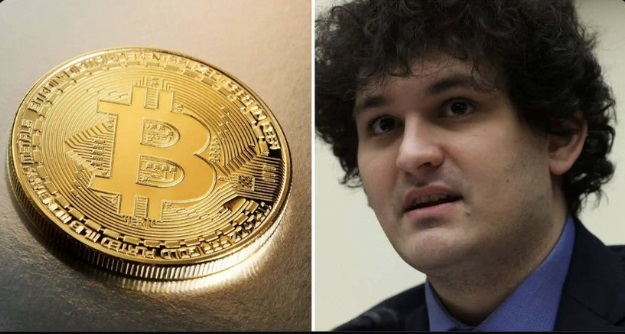
(Via CoinDesk) The past week has seen a dizzying downward spiral for Sam Bankman-Fried’s huge crypto empire. Bankman-Fried’s FTX crypto exchange has paused withdrawals, and a tentative bailout from rival Binance appears to be kaput. That could put depositor funds at risk, and certainly spells a major setback for not only Bankman-Fried but for the cryptocurrency industry as a whole.

These downfalls aren’t rare in crypto, which is subject to extreme boom-bust cycles. But FTX and Bankman-Fried are unique in the stature they achieved before self-immolating. Over the past three years, FTX has come to be widely regarded as a reputable exchange, despite not submitting to U.S. regulation. Bankman-Fried has himself become globally influential, thanks to his thoughts on cryptocurrency regulation and his financial support for U.S. electoral candidates – not necessarily in that order.

These narratives about both FTX and Bankman-Fried are now clearly dead in the water, given recent evidence that everything was not as it seemed at the exchange, or at Bankman-Fried’s other firm, Alameda Research. (read more)
Dear Tyrants, You’re LOSING!


ProgressiveTruthSeekers Published originally on Rumble on November 9, 2022

We are the good people who base their values on evidence and appreciate civil discourse. Challenges are a good thing; they strengthen us and forge our identities. They free us from complacency and limited thinking. They free us from living life on autopilot. When challenged, live in grace; no fear, no retreat, no surrender. You are not alone, and we SO got this!

Big Picture, 2022 Midterm Elections Highlight the Distinct Difference Between Ballots and Votes


Posted originally on the conservative tree house on November 9, 2022 | Sundance 

As the political discussion centers on the 2022 wins and losses from the midterm election, one thing that stands out in similarity to the 2020 general election is the difference between ballots and votes.  It appears in some states this is the ‘new normal.’

Where votes were the focus, the Biden administration suffered losses.  Where ballots were the focus, the Biden administration won.

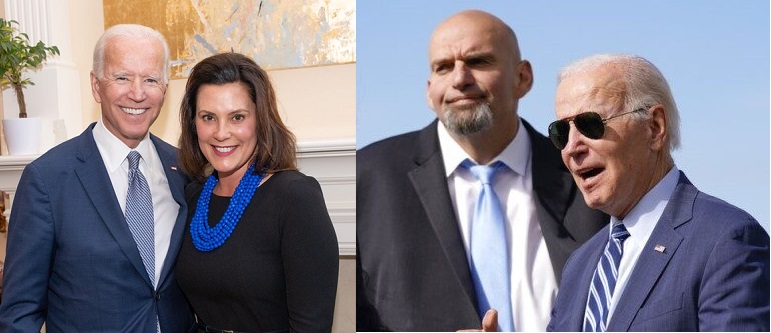
Perhaps the two states most reflective of ‘ballots’ being more important than ‘votes’ are Michigan and Pennsylvania.  Despite negative polling and public opinion toward two specific candidates in those states, Michigan Governor Gretchen Whitmer and Pennsylvania Senate candidate John Fetterman achieved victories.

Whitmer and Fetterman were not campaigning for votes, that is old school. Instead, the machinery behind both candidates focused on the modern path. The Democrat machines in both states focused on ballot collection and ignored the irrelevant votes as cast.

Since the advent of ballot centric focus through mail-in and collection drop-off processes, votes have become increasingly less valuable amid the organizers who wish to control election outcomes.  As a direct and specific result, ballot collection has become the key to Democrat party success.

The effort to attain votes for candidates is less important than the strategy of collecting ballots.

It should be emphasized; these are two distinctly different election systems.

The system of ballot distribution and collection is far more susceptible to control than the traditional system of votes cast at precincts.

A vote cannot be cast by a person who is no longer alive, or no longer lives in the area.  However, a ballot can be sent, completed and returned regardless of the status of the initially attributed and/or registered individual.

While ballots and votes originate in two totally different processes, the end result of both “ballots” and “votes,” weighing on the presented election outcome, is identical.

While initially the ballot form of election control was tested in Deep Blue states, through the process of mail-in returns under the guise and justification of “expanding democracy,” a useful tool for those who are vested in the distinction, I think we are now starting to see what happens on a national level when the process is expanded.

The controversial 2020 election showed the result of making ‘ballots’ the strategy for electoral success.  Under the justification of COVID-19 mitigation, mail-in ballots took center stage.  Ballot harvesting by Democrat operations was one term for the outcome.

Democrat party officials and political activist groups knew how to exploit the opportunities within the new system of ballot distribution and collection, and when you combine that with a massive legal pressure campaign to accept any and all forms of ballots, well, you can see how they are dependent.

Now that ballot collection has been shown to be a much more effective way to maintain political power, Democrats in a general sense are less focused on winning votes and more focused on gathering ballots.

When ‘ballot organization’ becomes more important than ‘vote winning,’ you modify your electoral campaign approaches accordingly.  It might sound simplistic, but inside the distinct difference between ballots and votes you will find why refusing debates is a successful strategy.

If you are trying to win votes you could never fathom campaign success by refusing to debate an opponent.  However, if your focus is centered around ballot collection, the debate is essentially irrelevant.

It’s time for voters to start seeing the difference between elections decided by ballots and elections decided by votes.  Perhaps the 2022 midterm election will awaken people to the two completely different election systems.

You can vote at any scale you want, but when ballots are more important than votes – the election will always favor the former.

Michigan and Pennsylvania voters are likely very unhappy today, while Michigan and Pennsylvania ballot providers are smiling.

If Democrats had to win individual ‘votes’ to gain election success, they would be at a disadvantage.  As long as Democrats only need to gather ‘ballots’, they have a path to winning elections.  The processes of electioneering are all modified accordingly.

Campaigning, advertising, promoting, debating, hand-shaking, crowd attendance and venues for rallies, along with physically meeting people and convincing them of your worth, are only important if you are trying to win votes.

Fortunately for Democrats, modern electioneering does not require these arcane efforts. So, in the larger picture of what you see in elections, they have stopped wasting time and doing them.  Haven’t you noticed? It really is that simple.

2022 WEC: In the Dollar We Trust


Armstrong Economics Blog/World Economic Conference Re-Posted Nov 8, 2022 by Martin Armstrong

At the World Economic Conference in 2021, the Armstrong Socrates model predicted that 2022 was going to be volatile and chaotic featuring a strong US dollar, a huge move in interest rates, a major bond market decline, fertilizer and food shortages, as well as escalating geopolitical tensions in Ukraine.

What now? Socrates forecast that 2023 will be more volatile and chaotic, featuring violent moves across all markets as monetary and geopolitical tensions and debt problems intensify.

At this year’s World Economic Conference, November 11-13, Martin Armstrong will talk about what’s next for the US dollar and other currencies, the liquidity/credit crisis, as well as price targets for oil, gold, stocks, bonds/interest rates, and stocks.

Give yourself an “unfair” advantage over the markets by joining us at this year’s conference remotely or in person. Meet Martin Armstrong – have your questions answered and get the best roadmap for 2023 and beyond in the investment business.