
Armstrong Economics Blog/Economics
Re-Posted Apr 10, 2019 by Martin Armstrong

QUESTION: Dear Mr. Armstrong,
I have a question that might interest not just me but also other blog Readers:
In your blog Posts you write that you expect that we will have a hard landing going into 2020.
My question is: What does that mean for the Dow? Do you expect the dow to correct into 2020 more that 20%.
Thank you for your work and best Regards,
A
ANSWER: The hard landing is economic and will have its greatest impact outside the USA. While central banks have sold US Treasuries in an attempt to keep the dollar down, the private sector has been pouring assets into the USA and particularly the Dow. Our capital flows have tracked a significant shift in global capital flows into the USA especially from Europe. That should come as no surprise given the chaos in BREXIT as well as the May elections.
We still do not see a major correction in the Dow. We have been undergoing a shift from public to private assets on a global scale. Therefore, the hard landing will be more economically based and central banks will try to do something, as in lowering rates, but they have run out of bullets. The Fed has tried to back off on rates after buying into the problem of a hard landing outside the USA. The ECB has been on its hands and knees, pleading with the Fed not to raise rates when they will have to continue their QE programs or face sovereign debt defaults.
Preferred v Ordinary Shares
Armstrong Economics Blog/Q&A
Re-Posted Apr 10, 2019 by Martin Armstrong

QUESTION: Hi Martin,
What are your thoughts on preferred shares? Especially the ones with good quality DBRS ratings. Will they survive the downturn or will they fail?
Thx
FS
ANSWER: Ordinary and preference shares are a claim on corporate earnings and assets. Dividends for ordinary shares may be irregular and indefinite, whereas preference shareholders will receive a fixed dividend which will accrue usually if the payments are not made in one term. Ordinary shareholders are in a riskier position than preference shareholders since they are the last to receive their share in the event of liquidation. That may not be a concern in a blue chip company. Nevertheless, they also are open to the possibility of a higher dividend during times when the firm is doing well in contrast to preferred shared with fixed income.
Preferred shares can be looked upon as a hybrid debt where you have a claim on the assets, but like a loan, it has a fixed rate. Ownership of preference shares offers advantages and disadvantages. On one hand, it provides a higher claim on earnings, assets, and fixed dividends. On the other, it limits voting rights and the possibility for growth in dividends in times when the company is financially sound.
The good companies will generally survive. This is a collapse in government – not the private sector
Fear of Inflation & Sterilization
Armstrong Economics Blog/Economics
Re-Posted Apr 9, 2019 by Martin Armstrong

QUESTION: Mr. Armstrong; you were friends with Milton Friedman. Do you agree with his view that the Great Depression was caused in part by the Fed refusing to expand the money supply? Isn’t Quantitative Easing expanding the money supply yet it too has failed to create inflation. Would you comment on this paradox?
Thank you for your thoughtful insight.
P
ANSWER: Yes, this certainly appears to be a paradox. This results from the outdated theory of economics which completely fails to grasp the full scope of the economy and how it functions. This same mistake is leading many down the path of MMT (Modern Monetary Theory) which assumes we can just print without end and Quantitative Easing proves there will be no inflation. They are ignoring the clash between fiscal policy carried out by the government and monetary policy in the hand of the central banks. This is a major confrontation where central banks have expanded the money supply to “stimulate” inflation. Governments are obsessed with enforcing laws against tax evasion and it is destroying the world economy and creating massive deflation.
In 1920, Britain legislated a return to the gold standard at the prewar parity to take effect at the end of a five-year period. That took place in 1925. Britain based its decision in part on the assumption that gold flows to the United States would raise price levels in Britain and limit the domestic deflation needed to reestablish the pre-war parity. In fact, the United States sterilized gold inflows to prevent a rise in domestic prices. In the 1920s, the Federal Reserve held almost twice the amount of gold required to back its note issue. Britain then had to deflate to return to gold at the pre-war parity. Milton saw that the Fed failed to monetize the gold inflows, fearing it would lead to inflation. So what we had back then was the opposite roles. This predates income tax being applied to everyone so there was no hunt for taxes on the part of the government. The scale was tipped because the Fed was imposing deflation by sterilizing the gold inflows.
Conversely, following World War I, France had counted unrealistically on German reparations to balance its budget. When they did not materialize, it used inflation as a tax to finance expenditures. In 1926, France pulled back from the brink of hyperinflation. Unlike Britain, France’s inflation had put the old parity hopelessly out of reach. Consequently, France returned to gold but at a parity which undervalued the franc. Fearing inflation, France sterilized its gold inflows to prevent a rise in prices declining to monetize the gold.
Therefore, all the theories behind MMT are once again wrong for they are only looking at one side of the equation. Today, simply stashing money in a safe deposit box is illegal and considered to be money laundering. The government can justify itself in confiscating your assets even after you paid your taxes.
Therefore, in the ’30s, Milton’s criticism of the Fed was justified because there was no massive hunt for taxes from the fiscal side. Today, we have the fiscal policies hunting capital resulting in a contraction economically (declining in investment) while you have QE just funding the government – not the private sector. It is a different set of circumstances today v 1930s.
Austria Moves to Tax Online Companies
Armstrong Economics Blog/The Hunt for Taxes
Re-Posted Apr 8, 2019 by Martin Armstrong

The EU has been unable to agree on taxing the internet. As a result, Austria went ahead and passed its own digital tax this week on revenues earned by online companies in their country. The entire problem with this type of taxation is the burden of accounting. This means that the online world will be forced to file taxes in every country with a matrix of tax rates and specifications. Small business will be the ones impacted the most and they will more likely just ban their products for sale in various countries.
Governments are going broke. They will never stop to look at the ramifications their actions have caused within the global economy.
Climate Change with Lord Monckton

Published on Aug 9, 2018
Viscount Christopher Monckton – Climate of Genocide

25 NASA Scientists Question the Sanity of the Global Warmists

Published on Jan 26, 2018
German Economy Turning Down Hard into 2020
Armstrong Economics Blog/Germany
Re-Posted Apr 6, 2019 by Martin Armstrong

The German economy is what holds up Europe. The data on the industrial sector in Germany is out and it has disappointed everyone once again with production dropping 0.8% month-on-month in January 2019. January’s contraction was driven by a steep drop in capital goods output and a fall in intermediate goods production. However, consumer goods production did manage to increase moderately.
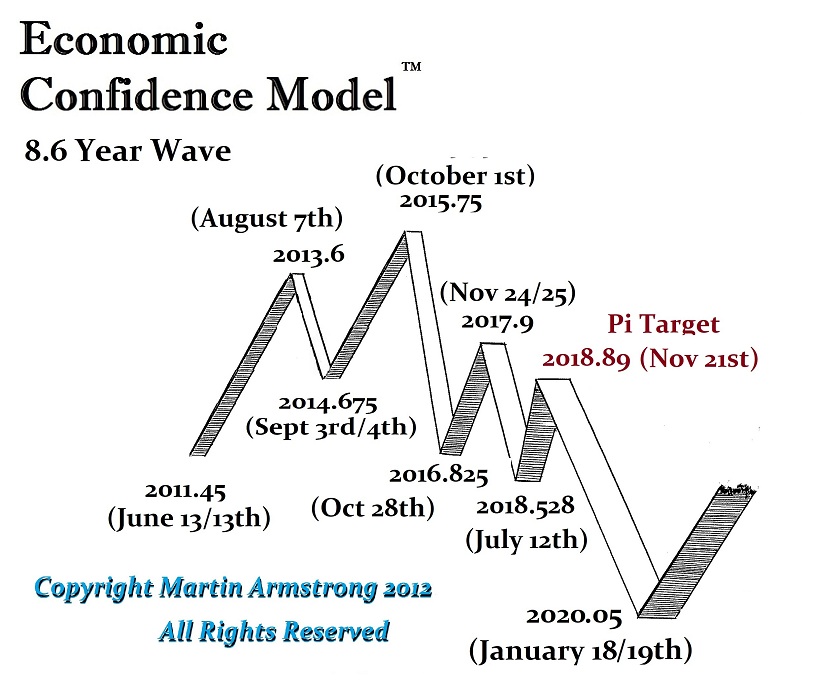
On a year over year basis, industrial output fell 3.3% in January, which was an even sharper contraction than December’s revised 2.7% drop (up from -3.9%). These numbers are clearly in line with our model showing a hard landing into the bottom of the Economic Confidence Model in early 2020. A no-deal for Britain will impact the German economy even more as car sales, which are already declining, will come into question.
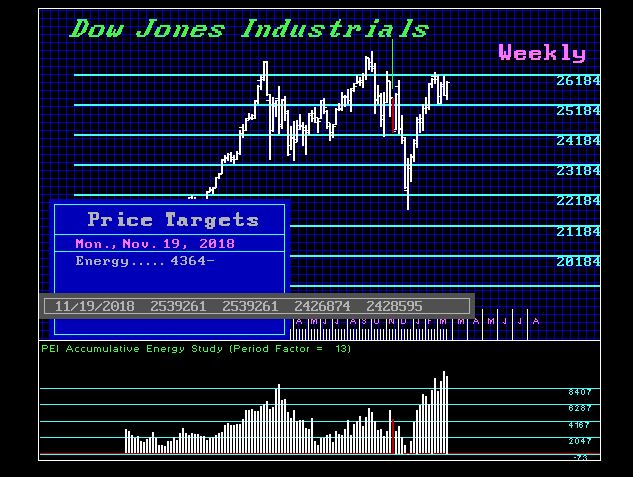
The Pi Target (2018.89) marked the dramatic shift in capital flows. In the Dow, it marked the beginning of the correction and the bottom in Energy came 5 weeks later. Everything we have checked seems to have shifted at that point in time, setting the stage for the hard landing. The economic numbers all began to decline noticeably in the fourth quarter of 2018.
Global Warming Hits London
Armstrong Economics Blog/Climate
Re-Posted Apr 6, 2019 by Martin Armstrong

It actually snowed in London this past April. Heavy snow caused sheer chaos across much of the UK. The snow and hail even hit London where it rarely ever snows. I remember there was a dusting of snow one day back in 1985, and the city came to a halt. There was no snow removal equipment and people took the day off to run around and take pictures.
This winter is something that does not want to leave and is overstaying its welcome. Unfortunately, the winters will get longer and the summers shorter. If this trend extends beyond 2020, you better buy some extra long-underwear. They still sell it in sporting good shops for skiing.
Prayers For President Trump During West Coast Travel…
April 5, 2019
With anxiety visible amid the DC crew now contemplating accountability for their failed soft-coup attempt, we enter a dangerous phase. After all, 40 federal law enforcement agents openly participated in the effort; along with more than a dozen members of the Department of Justice. What does that tell us about the fidelity of the FBI and DOJ to their oath of office? What does that tell us about their current intentions?
A security breech at Mar-a-lago. Increased threats from media and politicians hyping anxiety/anger toward President Trump. The ongoing Mueller team sedition effort. Excuses and justifications of violence against Americans wearing red ball caps. Trillions at stake from economic policies antithetical to the multinationals and Big Club lobbyists.
…And today the President’s schedule is a logistical security challenge [SEE HERE] President Trump travels to California (several stops), and Las Vegas Nevada.

“And Moses said to the people, ‘Do not be afraid. Stand still, and see the salvation of the LORD, which He will accomplish for you today. For the Egyptians whom you see today, you shall see again no more forever. The LORD will fight for you, and you shall hold your peace.” Exodus 14:13-14
9:30AM THE PRESIDENT departs the White House en route to Joint Base Andrews
9:40AM THE PRESIDENT arrives at Joint Base Andrews
9:50AM THE PRESIDENT departs Washington, D.C., en route to El Centro, CA
11:40AM PDT THE PRESIDENT arrives at Naval Air Facility El Centro
11:50AM PDT THE PRESIDENT departs El Centro, CA, en route to Calexico, CA
12:10PM PDT THE PRESIDENT arrives at U.S. Border Patrol Calexico Station
12:15PM PDT THE PRESIDENT participates in a roundtable on immigration and border security, Calexico, CA
1:00PM PDT THE PRESIDENT departs U.S. Border Patrol Calexico Station en route to the New Border Wall, Calexico, CA
1:10PM PDT THE PRESIDENT arrives at the New Border Wall, Calexico, CA
1:15PM PDT THE PRESIDENT visits the New Border Wall, Calexico, CA
1:50PM PDT THE PRESIDENT departs Calexico, CA, en route to El Centro, CA
2:15PM PDT THE PRESIDENT arrives at Naval Air Facility El Centro, El Centro, CA
2:25PM PDT THE PRESIDENT departs El Centro, CA, en route to Los Angeles, CA
3:15PM PDT THE PRESIDENT arrives at Los Angeles International Airport, Los Angeles, CA
3:25PM PDT THE PRESIDENT departs Los Angeles International Airport en route to the Santa Monica Airport Landing Zone, Santa Monica, CA
3:35PM PDT THE PRESIDENT arrives at Santa Monica Airport Landing Zone, Santa Monica, CA
3:45PM PDT THE PRESIDENT departs Santa Monica Airport Landing Zone en route to a private residence, Santa Monica, CA
4:00PM PDT THE PRESIDENT arrives at a private residence, Beverly Hills, CA
4:45PM PDT THE PRESIDENT participates in a round-table with supporters, Beverly Hills, CA
5:45PM PDT THE PRESIDENT delivers remarks at a joint fundraising dinner, Beverly Hills, CA
6:20PM PDT THE PRESIDENT departs the private residence en route to Santa Monica Airport Landing Zone, Beverly Hills, CA
6:35PM PDT THE PRESIDENT arrives at Santa Monica Airport Landing Zone, Santa Monica, CA
9:10PM PDT THE PRESIDENT arrives at Los Angeles International Airport, Los Angeles, CA
9:20PM PDT THE PRESIDENT departs Los Angeles, CA, en route to Las Vegas, NV
10:25PM THE PRESIDENT arrives at McCarran International Airport, Las Vegas, NV
10:35PM THE PRESIDENT departs McCarran International Airport en route to the RON
10:50PM THE PRESIDENT arrives at the RON, Las Vegas, NV
(Link)
[**fyi, it looks like there might be an error in the schedule around 6:35pm to 9:10pm. The interval time doesn’t make sense.]


