DAVID MALPASS: “To Finish The Job We Need A Total Fed Overhaul.”


Posted originally on Rumble By Bannon’s War Room on: July 25, 2025

Phillip Patrick: “There Is A Standoff Happening Between The Fed And The Administration.”


Posted originally on Rumble By Bannon’s War Room on: July 25, 2025

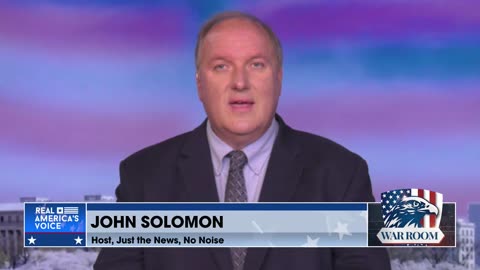
JOHN SOLOMON: “The Engineer In Chief Is President Obama, He Can’t Run From The Evidence Anymore.”


Posted originally on Rumble By Bannon’s War Room on: July 24, 2025

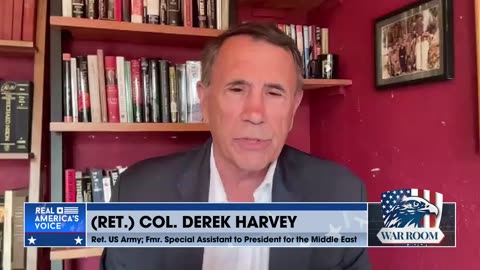
Ret. Col. Harvey: There Are Still Classified Annexes Including Hillary’s Plan To Link Trump To Putin


Posted originally on Rumble By Bannon’s War Room on: July 24, 2025

“It’s A Forcing Function.” Steve Bannon Calls On Tulsi Gabbard To Join More WH Press Briefings


Posted originally on Rumble By Bannon’s War Room on: July 24, 2025

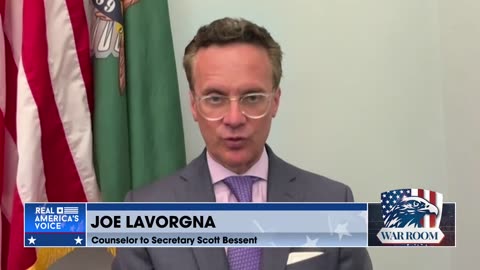
LAVORGNA: Biden Printed Money, Trump Fueled Real Growth With Pro-Business Policy


Posted originally on Rumble By Bannon’s War Room on: July 22, 2025

Cash Accepted Here – Payment Choice Act


Posted originally on Jul 23, 2025 by Martin Armstrong 

cashless society electronic money

Senators Kevin Cramer (R-ND) and John Fetterman (D-PA) have introduced bipartisan legislation, the Payment Choice Act, which would require businesses to accept cash payments. Money is merely the medium of exchange that someone is willing to accept for goods or services. Businesses across America have inadvertently contributed to the push toward a cashless society by refusing to accept cash as a form of payment.

“Any person engaged in the business of selling or offering goods or services at retail to the public who accepts in-person payments at a physical location … shall accept cash as a form of payment for sales made at such physical location in amounts up to and including $500 per transaction,” the measure stipulates, in part.

The war on cash is part of the broader agenda to eliminate all financial privacy and control every transaction. Refusing to accept cash is not merely a business decision but a step toward a totalitarian digital monetary system. Why bother with cash if you cannot use hard currency to pay for goods and/or services? Governments and central banks are pushing digital currencies to track, tax, and control every penny in circulation. If businesses start denying cash, they’re doing the state’s dirty work for them unintentionally.

Certain businesses prefer the convenience of credit cards and not all payment systems are equipped to accept cash. Yet, as Senator Cramer stated in his argument when proposing the bill, physical cash is legal tender, and businesses are limiting consumer choice by forcing the use of debit and credit cards for transactions. Then you have businesses that pass on the 3% transaction fee to consumers, adding to inflationary pressures. “Do you accept cash?” has become a common courtesy, as consumers are aware of the need to travel with a card to ensure purchases. Naturally, governments have cracked down on businesses that only accept cash, as they assume these businesses are attempting to avoid taxation. This is the first piece of legislation that actually supports the consumer over the government it is refreshing to see it gain bipartisan support.

The bill makes exceptions for businesses that have “a sale system failure” or those that do not have enough cash available to provide change. In fact, companies would not be required to accept $50 or $100 bills under this legislation to prevent the latter. It is quite disappointing to see the freedoms many are willing to relinquish in the name of convenience.

Once cash is gone, you’ll have no ability to opt out. So yes, we need to protect cash, and that may require legal guarantees that it remains a valid and accepted form of payment.

Canada Accepts They’re Not Going to Get a Trade Deal Before 35% Tariffs Kick In


Posted originally on CTH on July 22, 2025 | Sundance 

I’ll repeat it as much as needed, until it sinks in.

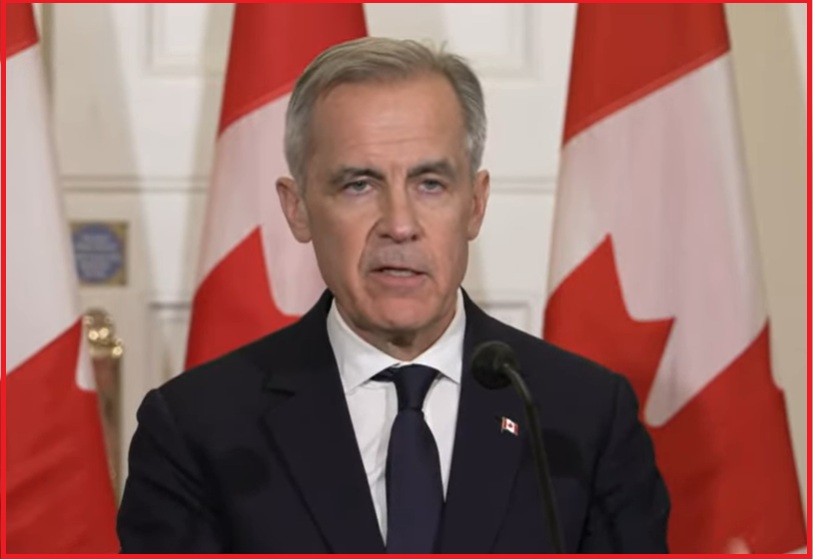
The U.S-Canada trade deal status is simply a no-brainer. President Trump will answer questions about Canada and tariffs, he’ll put people into seats to discuss trade with the Canadian delegation, and he’ll give every outward appearance of being favorable to Prime Minister Mark Carney…. BUT…

In the background, Trump is simply waiting for the USMCA timeline to trigger a renegotiation. President Donald Trump is ambivalent to the trade partnership with Canada. This moot-status reality is why there’s no substantive engagement.

‘No deal’ -until USMCA redo- is a win for President Trump.

For some bizarre reason that I simply cannot fathom, almost every Canadian politician seems entirely oblivious to this reality. Instead, Canadian Trade Minister Dominic LeBlanc and Mark Carney’s chief-of-staff, Marc-André Blanchard are once again coming to DC to ride their bicycles in slow circles at the bottom of the White House driveway while staring in the windows.

An article in Politico notes the Canadian premiers are now accepting the August 1st deadline will pass without any agreement, and the 35% reciprocal tariffs on non-USMCA products (meaning a lot of stuff) is going to trigger.

Literally, everything from Canada that has a non-USMCA component is going to be tariffed. Think about all the stuff from China, Asia (writ large) and Europe that Canada assembles for finished goods. All of that stuff will be subject to the tariffs.

That said, there’s good news coming from the recent meeting between Prime Minister Carney and the Premiers. Within their statement they use the term “developing large infrastructure projects.” That’s Canadian political codespeak for them realizing they are going to have to get back to regular energy development, raw material use/refinement and ACTUAL MANUFACTURING.

Canada is going to have to bring back their ‘dirty’ industrial jobs.

For our Treehouse friends in Canada, this is very good news. The Canadian assembly economic model has to change in order to get compliant with U.S. trade rules. THAT’S TRUMP’S ENTIRE POINT!

The environmentalists within Canada will not like this, but economically they will have no choice; it’s the only way to avoid a complete economic depression.

HUNTSVILLE, Ontario — Prime Minister Mark Carney and Canada’s premiers are tempering expectations that they’ll strike a new economic and security deal with Donald Trump by the end of the month.

“We would like to have the ideal deal, as fast as possible. But what can we get?” Quebec Premier François Legault said Tuesday. “You almost need to ask Donald Trump, and I’m not even sure he knows himself what he wants.”

It’s a shift in tone from the premiers and Carney, who ran for election on his economic record, arguing he’d be the best person to negotiate with the president. But Canada is finding it harder than it looks.

Carney met the premiers in Muskoka, cottage country north of Toronto, to update them on Canada-U.S. negotiations.

As the leaders emerged from a three-hour meeting, they downplayed hopes of an Aug. 1 deal, arguing that achieving a “good deal” is more important than hitting a deadline.

[…] As the negotiations continue, the premiers spent Tuesday carving out a strategy to offset the economic impact of Trump’s tariffs on the aluminum, steel, auto and lumber sector. They spoke about developing large infrastructure projects, breaking down trade barriers between provinces and encouraging a “buy Canadian” approach. (READ MORE)

Canada is going to go into a deep economic recession; there’s no way to avoid it.  However, if they restart their industrial base, drop the ridiculous ‘green’ energy stuff, start exploiting their own natural resources and train an apprentice generation -just like we are trying to do- then Canada can bounce back stronger than ever.

We know there are Canadian wolverines who understand this concept; we saw thousands of them in the Truckers’ vaccine strike.  Make Canada Great Again, by Making Dirty Jobs Great Again, eh?

Joe Allen On Geneva U.N. Conference: “None Of The Frontier Labs Were Represented”


Posted originally on Rumble By Bannon’s War Room on: July 21, 2025

Institutions Decreasing Real Estate Purchases


Posted originally on Jul 22, 2025 by Martin Armstrong 

Real Estate

Investors continue to snap up residential properties, as real estate has evolved into an investment class of its own. New reports show that between 2020 and 2023, investors were responsible for 18.5% of home purchases. In the first three months of 2025, investors composed 27% of all residential properties, marking the highest share in half a decade, according to BatchData.

High mortgage rates, coupled with high property values, have caused many would-be buyers to reconsider their purchases. Investors have fewer constraints, leading to the purchase of 265,000 residential properties during Q1, or a 1.2% YoY rise. However, we are seeing a decrease in institutional investments in real estate. The big money is not looking at real estate in this environment. Although investors accounted for 1.2 million homes in 2024, only 20% of the 86 million single-family homes in America are investor-owned.

Mom-and-pop investors who own between one and five homes purchased 85% of all investor-owned residential properties, with those owning between six and ten properties securing 5% of the market. Institutions owning 1,000 or more properties account for only 2.2% of investor-owned homes.

Purchasing real estate amid record-low rates was a no-brainer for investors, and institutions in particular, who had the liquidity to outbid competitors with cash offers. As interest rates rise, the cost of financing becomes prohibitive even for institutions. Institutions rely on leverage to enhance returns, and when borrowing costs rise, the math simply doesn’t work anymore. Real estate is an illiquid asset. In a world moving toward capital controls and rising geopolitical tensions, institutions are reallocating toward assets with more mobility. Capital is no longer looking at real estate as a long-term store of value. It’s moving into tangible assets that are more liquid—commodities, energy, gold, and equities.

The available real estate inventory is at its highest level since the pandemic, but the sector has become stagnant as homes sit on the market for far longer. So while institutions have the capital, interest rates aside, they are not looking at mere rental or flipping income. People investing in real estate in this environment are seeking a modest additional income.

Institutions are not interested in buying and holding tangible assets in a volatile environment where returns are not guaranteed. Look at New York City, for example—people are fleeing ahead of an incoming socialist local government that has promised to raise taxes on top earners. Real estate is no longer the safe bet it once was due to a lack of confidence in future regulation.