The Psychology Behind Consumer Spending and Hedonic Adaptation


Armstrong Economics Blog/Behavioral Economics Re-Posted Oct 18, 2021 by Martin Armstrong

Consumer debt in the US reached $14.88 trillion in 2020, according to Experian’s consumer debt study. That is a $3 trillion increase in the past decade, and spending in 2021 has only amplified. Nearly 42% of US adults have reported falling deeper into debt since March 2020, and according to a survey by BankRate.com, 2,400 of 1,297 adults had credit card debt of which 47% contributed that debt to the pandemic. Credit card debt is difficult to crawl out from, with the average APR well above 16%. Even more alarming is that 54% of adults hold on to their credit card debt for at least a year, and with that rising interest, it will take years to pay it off (if ever).

Inflation is not deterring retail sales in the US. I have stated that other countries line up to sell their exports to America, making the US the top consumer economy, and the top economy overall as consumer spending accounts for two-thirds of GDP. Even with inflation up 5.4% YoY in September, retail sales spiked 0.7% despite analysts’ at the Dow predicting a -0.2% decline. Why?

Of course, people must spend to meet their basic living expenses, and those expenses have spiked in every area from food, energy, to real estate. However, there is additional spending occurring post-pandemic as optimism rises. People hoard when they fear the future. Without taking into account other factors, people are beginning to spend again because the easing restrictions and vaccinations has led them to believe that their future financial situations will brighten.

A study on the psychology of consumer spending points to interesting aspects of human nature (Carter T.J. (2014) The Psychological Science of Spending Money). “There is obviously the direct monetary cost, but also the opportunity cost: all of the other ways that one could have spent this money must now be foregone. Thus, a more psychological definition of the psychological act of spending money would be a simultaneous loss (of money and opportunity) and gain (of some good or service) for oneself and/or someone else that one chooses to undertake based on some beliefs about future hedonic states,” as noted by a 2014 study on consumer behavior (Bijleveld E., Aarts H. (eds) The Psychological Science of Money. Springer, New York, NY. https://doi.org/10.1007/978-1-4939-0959-9_10). The study found that the act of spending itself is “hedonically neutral,” and they used the analogy that “dropping $20 down a storm sewer would feel worse than finding $20 on the street would feel good.”

However, anticipated v anticipatory emotions come into play before acquiring new physical possession, be it a stock in your portfolio or a new iPhone in your pocket. On anticipation, we may feel a natural high as “we decide whether and how to spend money based on how we anticipate the various courses of action will make us feel.” (Mellers et al., 1999 ; Shiv & Huber, 2000). Anticipatory emotions are what we experience when we actually acquire the purchase (e.g., we may feel happiness after purchasing equity that we expect to profit on or guilty after buying a candy bar).

The study dissects consumers into different categories, but for the sake of keeping the blog post a reasonable length, let’s go right to the source – hedonic adaptation (e.g., after positive (or negative) events (i.e., something good or bad happening to someone), and a subsequent increase in positive (or negative) feelings, people return to a relatively stable, baseline level of affect (Diener, Lucas, & Scollon, 2006). “Focusing only on the immediate spike in happiness and ignoring the subse-quent [sic] decline means that the anticipated experience—the one on which people base their expectations, and thus, their decisions—may be quite different from the actual experience, increasing the chances of disappointment.” So, we may experience a short spike in dopamine after a purchase, but that high may wear off. The pain of payment affects all consumers, but interestingly, paying with a credit card temporarily mitigates the negative feelings associated with a payment:

“Cash payments are immediate and visceral—the money literally leaves your hands and becomes some-one [sic] else’s possession. Credit cards, on the other hand, are abstract and distant; they allow you to put off the pain of paying until next month, often while enjoying the benefit immediately. Spending money this way may seem painless, and almost certainly does reduce the negative anticipatory emotions that might prevent one from making a purchase, but it only forestalls the inevitable. When the end of the month rolls around and the credit card bill comes due, that pain may actually be magnified because the pleasure you experienced is already in the past.”

Cash transactions are becoming an ancient relic, and if the government had its way, we likely wouldn’t pay in cash at all. As online buying rises in popularity and people opt to pull out their plastic cards rather than physical paper, the initial cost of the purchase may not resonate. Retail therapy is in itself a hedonic act that may provide short-term happiness but often leads to buyers’ remorse when the purchase cost outweighs the benefits. It is important to note the risks associated with this move into a cashless society. The immediate impact of a purchase may not be felt for some time, at which it may be too late. As they say, when you’re in a (debt) hole, stop digging.

Stagflation is Here


Armstrong Economics Blog/Economics Re-Posted Oct 18, 2021 by Martin Armstrong

QUESTION: When do we talk about stagflation?

F

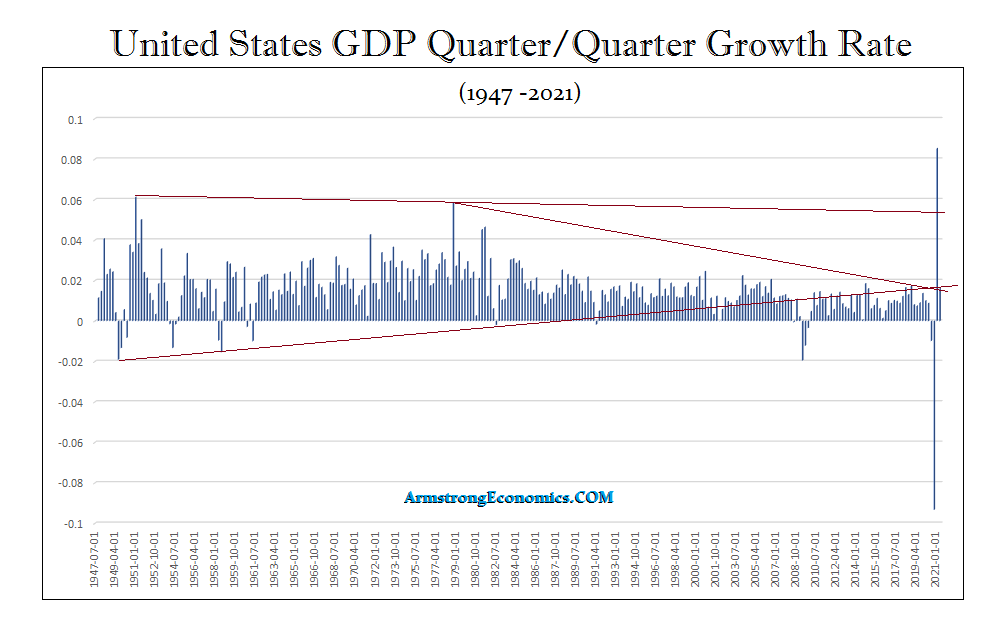
ANSWER: We are already experiencing it. Normally, the standard definition of “stagflation” has been explained as slow economic growth with relatively high unemployment/or economic stagnation that takes place with rising prices. Some have also defined it as a period of inflation combined with a decline in the gross domestic product (GDP).

Stagflation became a term that defined the 1970s because economic growth was still positive, but the rate of inflation was far greater due to the price shock of the OPEC embargo. Because of the Democrats constantly pushing to raise taxes, they sent corporations fleeing offshore, and it was NOT merely because of the tax rate. I testified before the House Ways & Means Committee on taxation and they wanted to know why NO American company got a contract from China like constructing the Yellow River Dam. I explained that German companies were NOT taxed on worldwide income, and as such, they were already 40% less than an American company because Americans pay taxes on worldwide income, and the ONLY other country to that was Japan. Thus, American companies moved offshore, NOT because labor was cheaper, but so they could complete.

As a result, I provided our analysis that showed when we allocated trade according to the flag of the company instead of where something was manufactured, then the US had a trade surplus instead of a trade deficit. Trump understood that and offered a one-time tax deal to bring their profits home. The Democrats screamed because they wanted 40% in taxes. But they would not bring the money home and so they got 0%.

Currently, as we move into 2024, this entire COVID scam has seriously disrupted the supply chain. Companies shifted to Just-In-Time inventory systems to save on financing an inventory. But then COVID lockdowns came and this resulted in chronic shortages.

So your answer is we are already in a STAGFLATION mode because inflation will surpass economic growth. With the dramatic tax increases the Democrats want to shove down the economy’s throat, all we will see is a decline in economic growth with rising prices thanks to chronic shortages. So we get the worst of two worlds.

The Democrats are deliberately pushing the World Economic Forum agenda and are actively trying to confiscate wealth while simultaneously crushing the economy to Build Back Better. Just like George Bush Jr took the blame for the Iraq war, which was all Cheney, Biden will go down in history as the patsy for this foreign infiltration of the United States to change our economy into a Marxist wonderland.

Sunday Talks, Lee Smith: Autocratic Scrutiny Begins Right Here at Home


Posted originally on the conservative tree house on October 17, 2021 | Sundance | 82 Comments

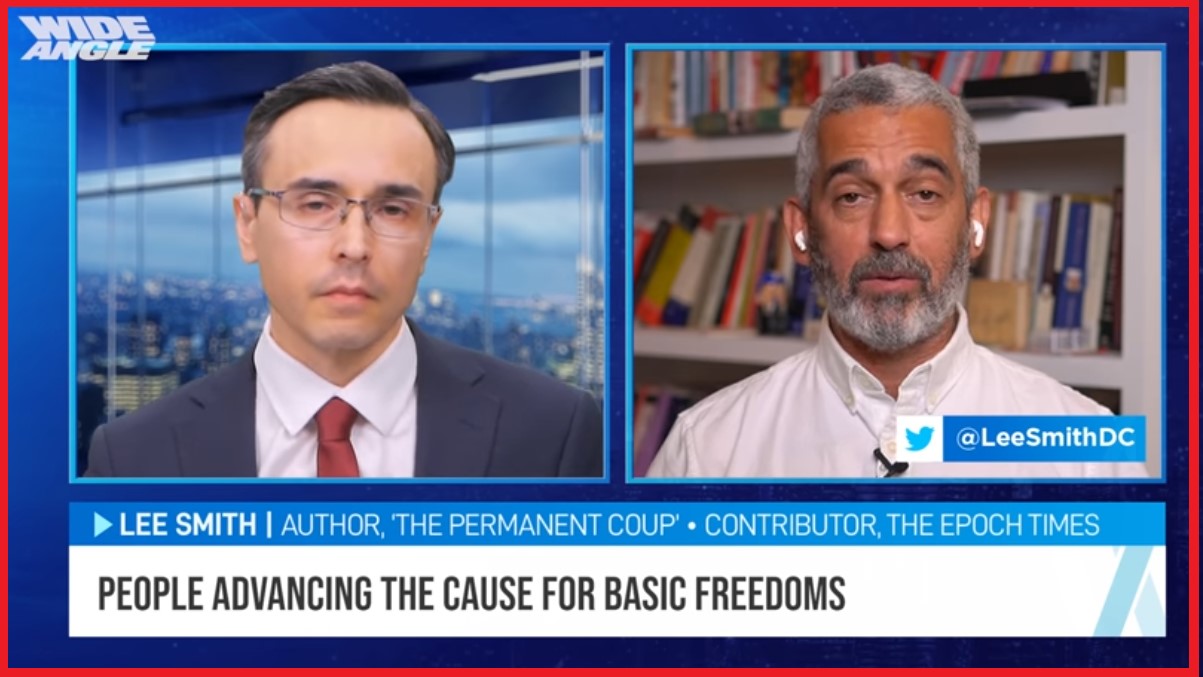
Lee Smith is the one American journalist who really understands the dynamics at the heart of the issues we face.  In my opinion he is likely the best thinking journalist and writer in the nation at this moment in time.   Lee doesn’t spend time waxing philosophically about the significant challenges being faced by ordinary Americans, instead he cuts right to the heart of the subject and frames his arguments and insight in terms that appeal to logic and commonsense; a no BS approach.

In this interview Smith gives his perspective on China and a host of topics.  Smith smartly contrasts the typical views toward China against the backdrop of an autocratic government that is currently operating at the top of the executive branch and in many states across the nation.  Scrutiny is rightfully deserved right here in the U.S, “If we’re looking abroad to resist or push back against autocratic measures, we should be looking much more closely here at home.”

When the discussion moves into the conversation around the vaccine, Lee Smith nails all the points.  Fantastic points raised about the U.S. social fabric, legal structures and the need for a connective tissue to bind the members of the Rebel Alliance. This interview is well worth 22 minutes of your time.  WATCH:

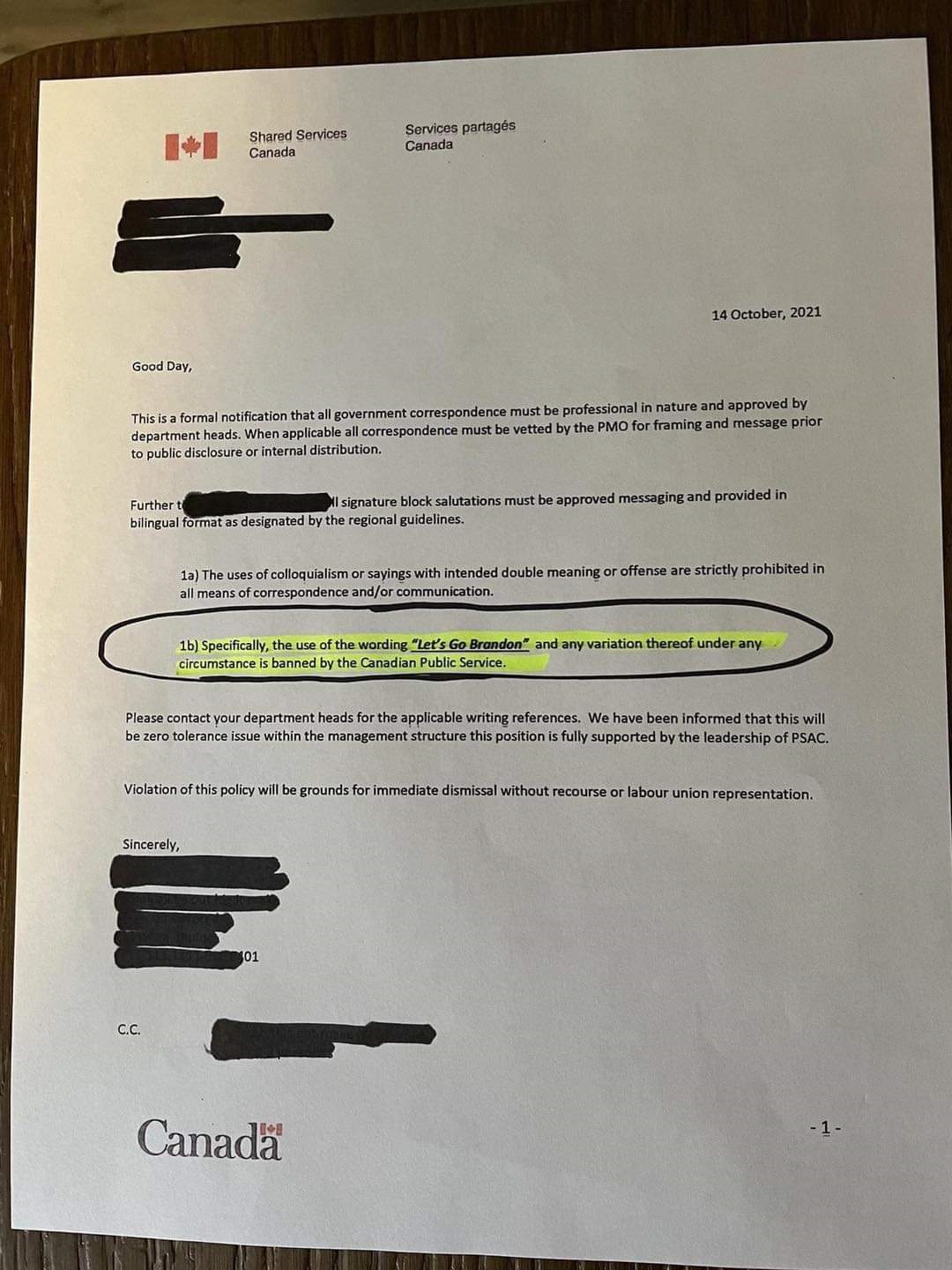
PM Trudeau and Canadian Government Ban Phrase “Let’s Go Brandon” From Any Government Correspondence


Posted originally on the conservative tree house on October 17, 2021 | Sundance | 141 Comments

There’s a funny irony in the Canadian government putting the forbidden phrase “Let’s Go Brandon” into a formal notification letter to government employees telling them not to use the phrase “Let’s Go Brandon“, or they will face “immediate termination without recourse”.

(SOURCE)

Ridicule is an important weapon…

Physicians Asst. Whistleblower Reveals Hospital Intake With 90 Percent Vaccinated Patients and Hospital Administration Refusing to Report Adverse Events


Posted originally on the conservative tree house on October 17, 2021 | Sundance | 198 Comments

The central statistic in this whistleblower story is important.  In a community with a 50% vaccination rate, 90% of the hospital admissions were vaccinated patients, and most of the critical care hospital intakes were within 14 days of the patient taking the vaccine.   An alarmed physicians assistant began reporting those issues into the Vaccine Adverse Event Reporting system until the hospital administration stepped in to stop her from recording the frequency.   She felt obligated to become a whistleblower:

“Deborah Conrad, a hospitalist physicians assistant on the frontlines of the pandemic, pulls back the curtain on the complete lack and disregard in her hospital for reporting Covid vaccine injury to VAERS, this country’s only mechanism to track the safety of these rushed-to-market, mandated products. In riveting detail, including emails & recorded phone conversations, Conrad exposes the internal push to turn a blind eye to injuries and “toe the company line” that this vaccine is safe.”  WATCH VIDEO HERE

Whistleblower Story –  Deborah Conrad, convinced her hospital to carefully track the Covid-19 vaccination status of every patient admitted to her hospital. The result is shocking.

As Ms. Conrad has detailed, her hospital serves a community in which less than 50% of the individuals were vaccinated for Covid-19 but yet, during the same time period, approximately 90% of the individuals admitted to her hospital were documented to have received this vaccine.

These patients were admitted for a variety of reasons, including but not limited to COVID-19 infections. Even more troubling is that there were many individuals who were young, many who presented with unusual or unexpected health events, and many who were admitted months after vaccination. (read more)

Transportation Secretary Pete Buttigieg Highlights The Important Challenges of Deepened Importance Becoming Increasingly Important


Posted originally on the conservative tree house on October 17, 2021 | Sundance | 295 Comments

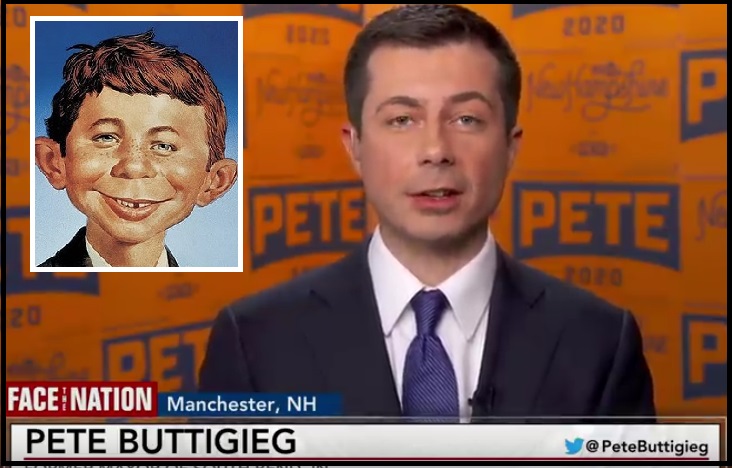
No politician in history -sans Carly Fiorina- is as intellectually deficient on any policy yet resoundingly skilled at parseltongue sentence structures as Alfred E. Newman, aka Transportation Secretary Pete Buttigieg.

The ability to speak in structured sentence soundbites, that mean absolutely nothing, was and is his forte.

When Barack Obama and James Clyburn were organizing the pathway for Joe Biden in the 2020 election, they reached out in March to the remaining candidates and told each of them they were going to withdraw.   Each candidate was given an offer they could not refuse along with a question of what terms it would take to get them out of the race and support the avatar that was/is Joe Biden.

Having watched the Buttigieg snap-n-pop candidacy, it was obvious his terms involved getting an innocuous job that would provide him and his husband enough graft to facilitate their lifestyle.  Obama and Clyburn offered Alfred E. Newman the job of Secretary of Transportation. Pete Buttigieg’s curriculum vitae included that he held a drivers license, so he gleefully exclaimed his qualifications and accepted the job.

The guy is an absolute doofus; a soy version of Greta Thunberg, who is incapable of speaking about anything that makes any sense.  He is a caricature of the person who thinks they know something, so they speak in weird sentences that amount to total gibberish.   WATCH:

“What I can tell you is that we are doing everything for the short term and the long term and we will work through the factors that present themselves as challenges in the terms that we encounter on everything.  … The significant problems are not problem of insignificance because they are not important problems, they are significant challenges because of the importance of their significance and we are addressing them in both long and short term solutions. … This is important, not just morally but also economically, because the challenges are what we need to recognize as important maintenance issue challenges.”  

Sunday Talks – No You’re Not Crazy, YOU are a Doer


Posted originally on the conservative tree house on October 17, 2021 | Sundance | 391 Comments

Often on Sundays, we take snippets of media political discussion and deconstruct the false premise while overlaying the reality ignored by the propaganda.  This is not that.

In this short Sunday talk, we share the voice of a nurse who is very centered in the issues we face and share her wisdom, advice and encouragement.  “Patriot Nurse discusses the nature of compliance and human servitude. When you’re looking around and everyone else seems to be complying, don’t feel bad for being the lone man standing.”  WATCH:

Expanding on the outlook to overlay the issues surrounding forced vaccines in the workplace and all the propaganda therein.  Allow me to share some insight about YOUR value and YOUR worth from the perspective of a person who spent a lifetime engaged in complex systems with large numbers of people.

It may be an uncomfortable or politically incorrect thing to say in modern times; however, twenty percent of the workers in your system of employment deliver eighty percent of the productivity.  Yes, 20% of the workforce around you delivers 80% of the result.  This natural truth has been consistent for decades, and within that truism is the nature of man.

What you need to remember is.. If you are reading this, YOU are almost certain to be part of that twenty percentile that your employer or system operator depends on.  You are a doer.

You are likely one of the top performers at your job.

You are the person they rely upon.

YOU are the most critical worker in a system that is mostly comprised of less productive people – and that fundamental truth is the important part to remember when you consider the impact of non compliance with the vaccine mandate.

If doers do not perform their function, it is not the same as the generic Sally Smith not showing up to work.  The twenty percent of the workforce that are doers produce eighty percent of the result.   Ask any leader within any large organization or operation and they will affirm this basic truth.

Doers are smart, they are beyond average in intelligence, and once they understand the mission objective they will solve problems independently.   Doers are not sheep.  They are smart enough to do independent research and become well skilled and knowledgeable on any issue that is elevated in importance.

Doers don’t just dive into a project without thinking. They control their enthusiasm long enough to formulate wise objectives and figure out a production plan in order to succeed in whatever they’re set to do. Doers give themselves enough time to think and plan, but they don’t stand around debating, they SOLVE.

Doers challenge the status quo, looking for ways to improve their task efficiency. Doers do not skimp on quality despite their drive to accomplish tasks. Though they thrive on increased productivity, and enjoy seeing improvements quantified, doers make sure to retain and improve standards for quality.

Doers are self-motivated. They look forward to working hard and they keep an internal score on their own accomplishments. Doers are proficient at their tasks, and they have an exceptional work ethic. They fuel their internal drive by setting more and more challenging goals for themselves and seek continuous improvement.

Doers don’t sit around waiting for someone to tell them what to do. Doers accomplish goals and objectives with a speed and efficiency that is often annoying for those who do need to be told what to do. Doers tend to move on quickly to the next task at hand right after they finish their last one. However, doers also appreciate pausing to review their success and they enjoy watching reasonable celebration for achievement – but they don’t dwell on it, they self-motivate to the next goal.

These traits likely sound familiar to you because YOU are a doer. YOU are part of the critical 20 percent of the larger group who accomplish 80 percent of the work. So, when you contemplate that only 20% of the workforce may stand resolute in their independent thoughts for not accepting a forced medical intervention as a condition for employment; remember, that twenty percent are the most critical of critical workers.

That 20% of independent, self-motivated, exceptionally productive – perhaps to a fault at times, workforce are the backbone of any operation, institution, system or workplace. Those who own or manage the workplace know exactly who that 20% are; and they will not want to lose the doers.

The employers and managers will not want to lose the doers, because they know the doers are the ones who can keep hundreds of plates spinning on sticks without being told which plate is wobbling; and which plate needs attention. Those who are in charge of keeping the plates spinning know the system will collapse if they are only left with plate spinners who need to be told which stick needs attention. The bosses know they will exhaust themselves having to give constant direction to the non-doers.

You are not crazy.

You are a doer.

YOU are critical.

Now, it is time for you to leverage your work ethic by reminding the system operator that you are not participating in the madness of the forced vaccinations. Believe me, if the bosses (writ large) know the doers are not going to comply, they will radically modify their own perspectives on any mandate.  The system cannot lose the doers.

THAT my friends is how critical you are.

….Leverage that!

Workers Walking Out Over Vaccines


Armstrong Economics Blog/Vaccine Re-Posted Oct 17, 2021 by Martin Armstrong

Maine & it Anti-First Amendment Effort to Destroy the Constitution


Armstrong Economics Blog/Rule of Law Re-Posted Oct 17, 2021 by Martin Armstrong

The U.S. District Court Judge Jon Levy denied a motion for a preliminary injunction that argued the mandated vaccines violated the 1964 Civil Rights Act because it does not include a religious exemption. The mandate does include a medical exemption for those who cannot be vaccinated for medical reasons. After the whistleblower from Pfizer has revealed that aborted fetus tissue has been used in creating the vaccine, it is really shocking to see how judges are simply ruling in favor of the government. When the rule of law collapses, then the only recourse historically is violence. There can be no civilization with dictatorships.

The Court of Appeals refused to grant an injunction which on the surface is also refusing to honor the First Amendment religious freedom guarantee. I have not read their brief, but it appears that this argument is not good enough. I still believe that the ONLY way to defeat this tyranny is to tie it to the right to privacy and abortion. I would then subpoena Pfizer to deliver all information connected to their use for tissues that are buying from abortions. They are not going to want that info out.

Then subpoena all the records from the FDA and CDC and well and Fauci to reveal all “donations” from Pfizer and Maderna. Also, subpoena ALL lobby efforts of both to see which politicians they now own.

Tie this to the right to Privacy for if a woman has the right to determine what to do with her body, then we should have the right to decide what to also put in our bodies

URGENT ➤ BILL GATES MARBURG 2022 PLAN EXPOSED


First published on BITCHUTE at 07:46 UTC on October 14th, 2021.