Posted originally on the CTH on April 2, 2023 | Sundance
Jim Jordan appeared on Sunday Morning Futures with Maria Bartiromo to discuss his perspective on the indictment of President Donald Trump by a politically motivated Manhattan District Attorney, and the potential for the House Judiciary Committee to question DA Alvin Bragg. WATCH:
The only way these radical leftists are going to slow down is if Republican State AG’s and local DA’s start prosecuting Democrats for similar issues. Match them one-for-one on every attempted case. Bring the system to its knees and show the political opposition that there’s no benefit to this political targeting.
Now is not the time for words, letters and half-measures. We are on a war footing now. The GOP state and local officials need to act like it!
Posted originally on the CTH on February 28, 2023 | Sundance
It’s not just the United Kingdom, but as we await the latest figures from monthly U.S. data, the statistics from the U.K. are hitting the newswires. According to Reuters, food inflation in the U.K. is currently 17.1% The primary driver of the skyrocketing food costs is the energy cost associated with the fast turnover categories.
With prices increasing 17.1% yet net sales only increasing 8.1%, there is a substantial impact in unit food sales. British customers are buying much less to offset the fact they are paying much more. This trend is not just in the U.K. we have seen the same trend in U.S. data as families are being squeezed at the grocery store.
The prices on name branded products like Kraft and Heinz are leading the escalating food prices. Just last week I noticed 6oz Kraft Philadelphia cream cheese was $6.99, and a 24 oz. bottle of Heinz ketchup at over $8. Dairy products are leading the way with the most rapid increases in price. It appears that we are entering the fourth wave of food inflation currently.
LONDON, Feb 28 (Reuters) – British grocery inflation hit 17.1% in the four weeks to Feb. 19, another record high, dealing the latest blow to consumers struggling with a cost-of-living crisis, industry data showed on Tuesday.
Market researcher Kantar said prices are rising fastest in markets such as milk, eggs and margarine. It said UK households now face an additional 811 pounds ($978) on their annual shopping bills if they don’t change their behaviour to cut costs.
“This February marks a full year since monthly grocery inflation climbed above 4%. This is having a big impact on people’s lives,” Fraser McKevitt, head of retail and consumer insight at Kantar, said.
He said its research found that rising grocery prices are the second most important financial issue for the public behind energy costs. Also a quarter of people say they’re struggling financially, versus one in five this time last year.
[…] Kantar said that sales of own label products were up by 13.2% in February, well ahead of growth in branded products, which are generally more expensive, of 4.6%.
Kantar said UK grocery sales increased 8.1% over the 12 weeks to Feb. 19, masking a drop in volumes when accounting for inflation. (read more)
The last estimate for U.S. data (January ’23) is in the chart below. We should get the February data the first week in March.
QUESTION: I found it really interesting how you have used the coinage to ascertain the costs of wars and to confirm the history. You have shown coins that show even the opening of the Colosseum. Are there any that record the plagues in history?
Thank you for a free and interesting site.
PV
REPLY: Ancient coins have been used throughout the centuries. Here is a Roman Sestertius of the Roman Port of Ostia. Saint Peter’s Square is the entrance to St Peter’s. Bernini actually copies the idea of the two colonnades from Nero’s coin. Some did not understand the history and claimed that Bernini was symbolizing the embracing maternal arms of the Catholic Church. It was the Port of Ostia which was the entrance to Rome for all the ships around the world. Thus, Bernini used the Port of Ostia to symbolize that this was the entrance for all Christians from around the world.
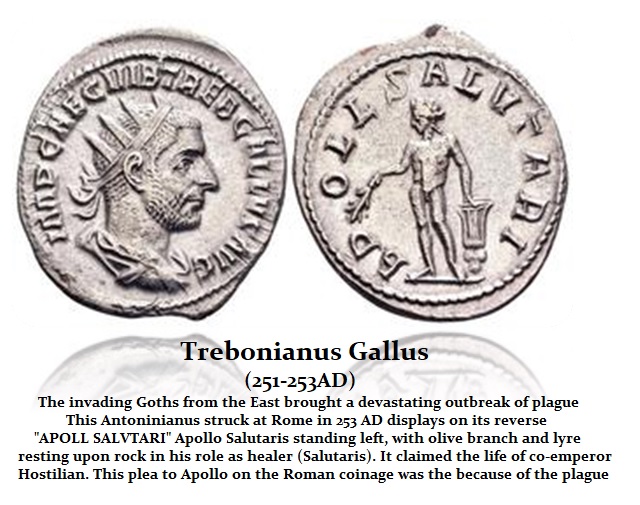
There was a great plague that infected Rome which was brought from Asia exactly as was the case by invading armies who brought the Black Plague during the 14th century. Emperor Trajan Decius (249-251AD) and his oldest son Herennius Etruscus (251AD) were killed in battle against the invading Goths. His youngest son, Hostilian (251AD) died of the plague.
This coin was issued by Trebonianus Gallus (251-253AD) appealing to Apollo Salutaris who was believed to have been the god of healing. This was the Plague of Cyprian that infected the Roman Empire from about 249 to 262 AD. It takes its name from St. Cyprian, who was the bishop of Carthage. He was a historian who witnessed and described the plague. It is not known precisely what it was. But from the description, it may have been smallpox, measles, and perhaps a viral hemorrhagic fever along the lines of the Ebola virus. What we do know is that this plague weakened Rome during the 3rd century causing a widespread decline in the workforce. That resulted in food shortages for a lack of manpower to produce food for the Roman army itself. This contributed greatly to the collapse of the 3rd century.
The Antonine Plague of 165 to 180AD, was the first known pandemic impacting the Roman Empire. It was most likely contracted by soldiers who were returning from campaigns in the Near East and spread throughout the empire. Historians generally believe the plague was smallpox or possibly measles. In 169 AD, the plague most likely took the life of Roman Emperor Lucius Verus. It appeared, according to ancient sources, during the Roman siege of the Mesopotamian city of Seleucia in the winter of 165–166. According to the Roman historian Cassius Dio at the time, the disease broke out again nine years later in 189 AD. That time he said it caused up to 2,000 deaths per day in the city of Rome. The total death count at the time ranged between 5 and 10 million. About 25T of those who contracted the plague died. This amounted to about 10% of the population.
A third major plague struck during the 6th century. Research has been conducted on skeletons that have survived. It has been confirmed that DNA from Yersinia pestis—the same bacterium responsible for the Black Death—was the cause of the Justinianic plague. This plague also became a pandemic that spread throughout the Mediterranean region and beyond.
What is significant about this plague is that it took place during a Volcanic Winter. There were the great volcanic eruptions that created the extreme weather events of 535–536AD during the reign of the Byzantine Emperor Justinian I (527-565AD). A mysterious cloud appeared over the Mediterranean basin according to the historian Procopius of Caesarea (Procopius Caesarensis; c. 500-560 AD) who wrote: “The sun gave forth its light without brightness, and it seemed exceedingly like the sun in eclipse, for the beams it shed were not clear.” This was a volcanic cloud that blocked the sun. But it was not a volcano in that region. The cloud’s appearance created climate cooling for more than a decade. Crops failed, and there was widespread famine. This also sets in motion a pandemic known as thePlague of Justinian (541-542), which swept through the Eastern Roman Empire killing 5,000 to 10,000 people per day in Constantinople.
War has been the catalyst for disease. Why? The movement of populations from one region to another has historically spread disease. Even when the Europeans visited America, they brought diseases that killed many Indians. Likewise, Europeans who had sex with Indian women brought back to Europe Syphilis which did not previously exist in Europe. The Black Plague of the 14th century was brought about by the invading Tartars in Crimea. They began catapulting dead bodies into the Italian fort which then panicked and took the disease back to Europe.
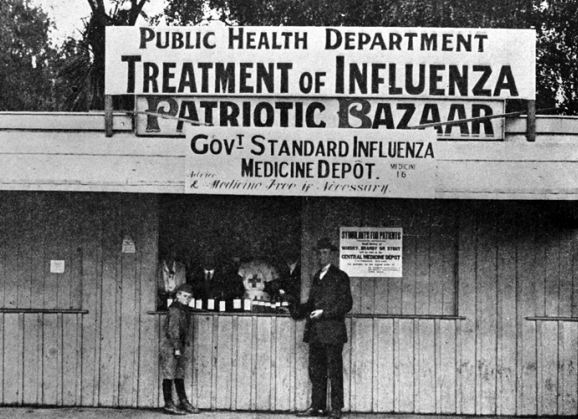
The Spanish flu pandemic of 1918, the deadliest in history, infected an estimated 500 million people worldwide—about one-third of the planet’s population—and killed an estimated 20 million to 50 million victims, including some 675,000 Americans. Once again, it coincided with World War I.
What we must be on guard against as our World Leaders are pushing to war once again, this one will engage the entire world. The likelihood of another major pandemic will be huge. What will it be this time? Normally, we should expect it to be the Black Plague. However, with the genetic manipulation and gain of function these people have been toying with, we cannot rule out that this time will be along the lines of COVID where the vaccines failed to prevent anyone from contracting COVID and actually made most more vulnerable in the future.
Posted originally on the CTH on February 6, 2023 | Sundance
John Boyd Jr., President of the National Black Farmers Association appears on Newsmax TV to discuss the ongoing issue of higher farm input costs. Energy costs, fertilizer costs, fuel costs as well as all packing and distribution costs that are associated with petroleum manufacturing, are continuing to drive farm costs throughout the supply chain.
After a review of the current farm output status, there is a very strong possibility we will see the fourth wave of food inflation hit this spring, in combination with several manufacturing and production facilities. Again, the lack of consumer spending on durable goods has moderated the price in hard goods (supplies up, demand down); however, the highly consumable products like food, fuel and energy continue to experience upward price pressure as a direct result of Biden energy policy. WATCH:
.
If consumers could eat missiles and weapons, the U.S. government would be offsetting the costs. Unfortunately, for actual farming products, there is no government attention, policy or support. Apparently, food is still not considered a national security issue.
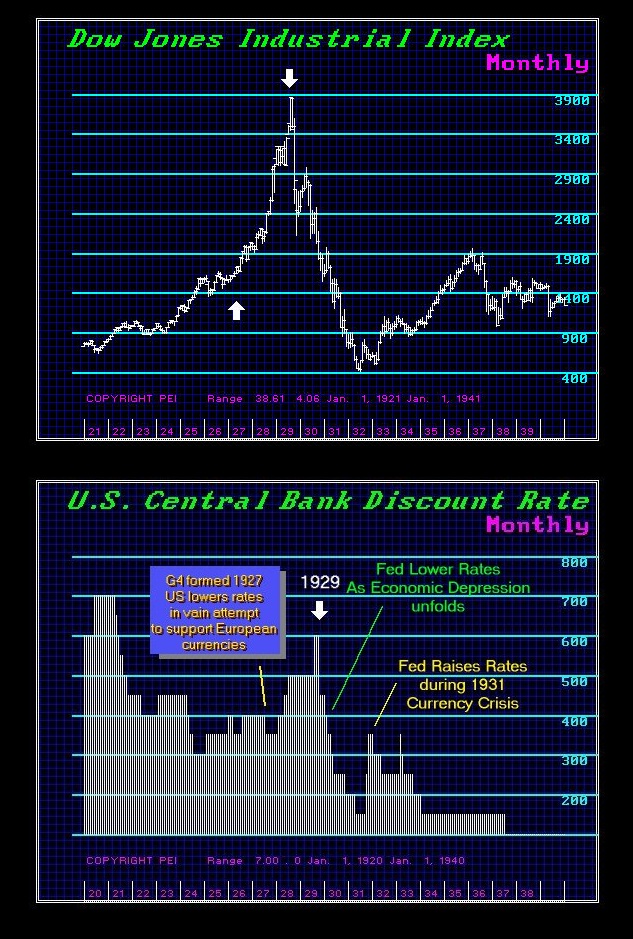
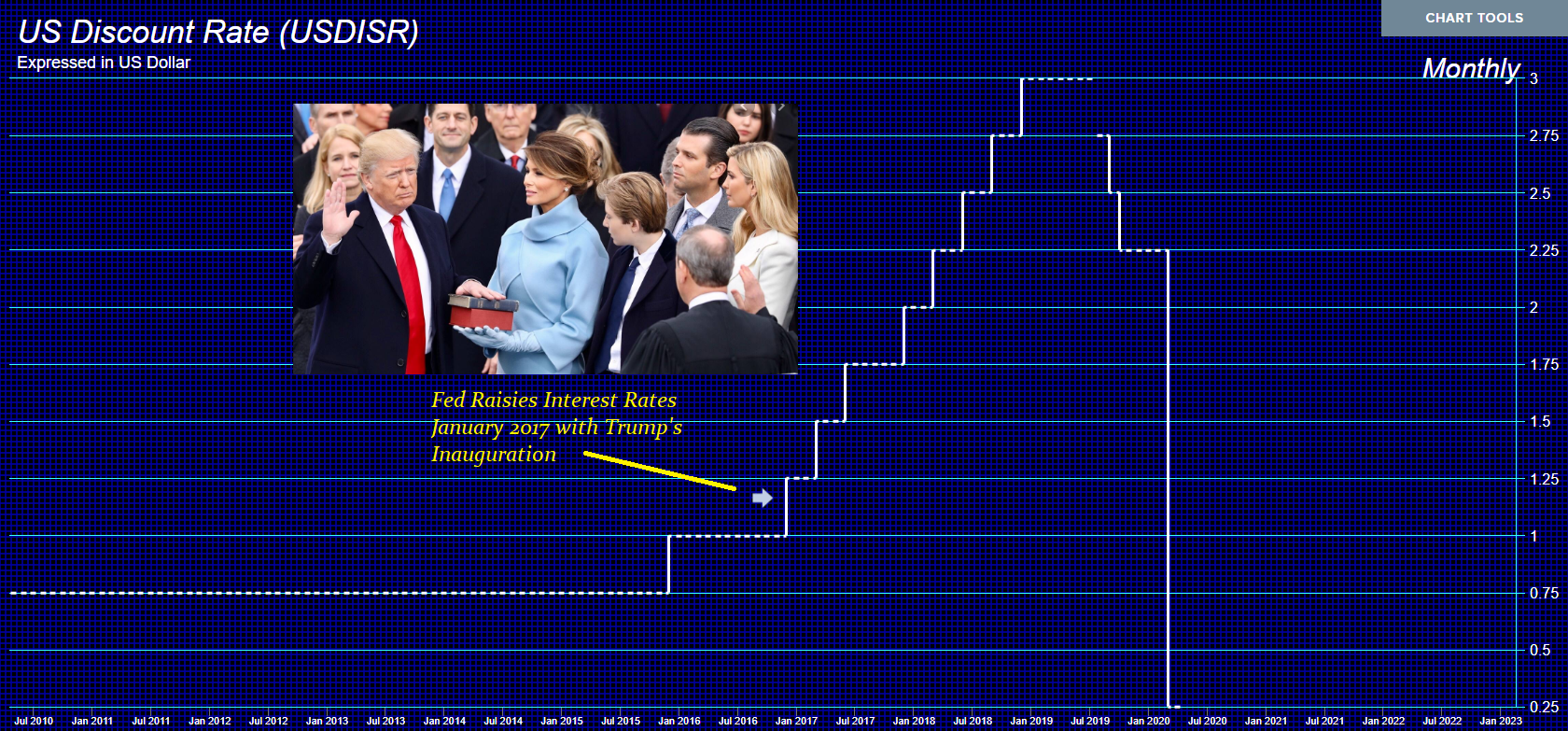
The Federal Reserve raised the benchmark by 25 bps, as expected. The Fed fully understands that the manipulation of the CPI is a necessary aspect both for containing government benefits and understating inflation also results in high tax revenues. The market loves hope, and as a result, they focused on the warning that we’ll be in restrictive territory for just a bit longer. Most still believe that there will be a slowdown in inflation just ahead.
The Fed’s cautionary commentary saying that the “disinflation process” has started triggered shares to jump ending up 1%. This shows how insane the analysis had become that they cheer a recession and think that lower interest rates are bullish for the stock market. Obviously, they just listen to the talking heads on TV and have never bothered to look at reality. When interest rates decline, so has the stock market. Interest rates rose for the entire Trump Rally, and they crashed during the Great Recession of 2007-2009. For the life of me, I just shake my head when the talking heads cheer lower rates and spread doom and gloom with higher rates.
Posted originally on the CTH on January 30, 2023 | Sundance
This is a topic we have covered extensively, and it is great to see Tucker Carlson questioning the sudden alignment of various elements that are creating a very real food insecurity problem.
The #1 factor in the shortage of food production is the newly emboldened ‘western energy policy‘ and the impact energy has on everything from field (fertilizer) to fork (distribution). Other factors include government policy that blocks food development (Dutch, Irish and Sri Lanka Farmers), a sudden uptick in food facilities having major fires and damage, and a series of issues with the feed that goes into the production of proteins.
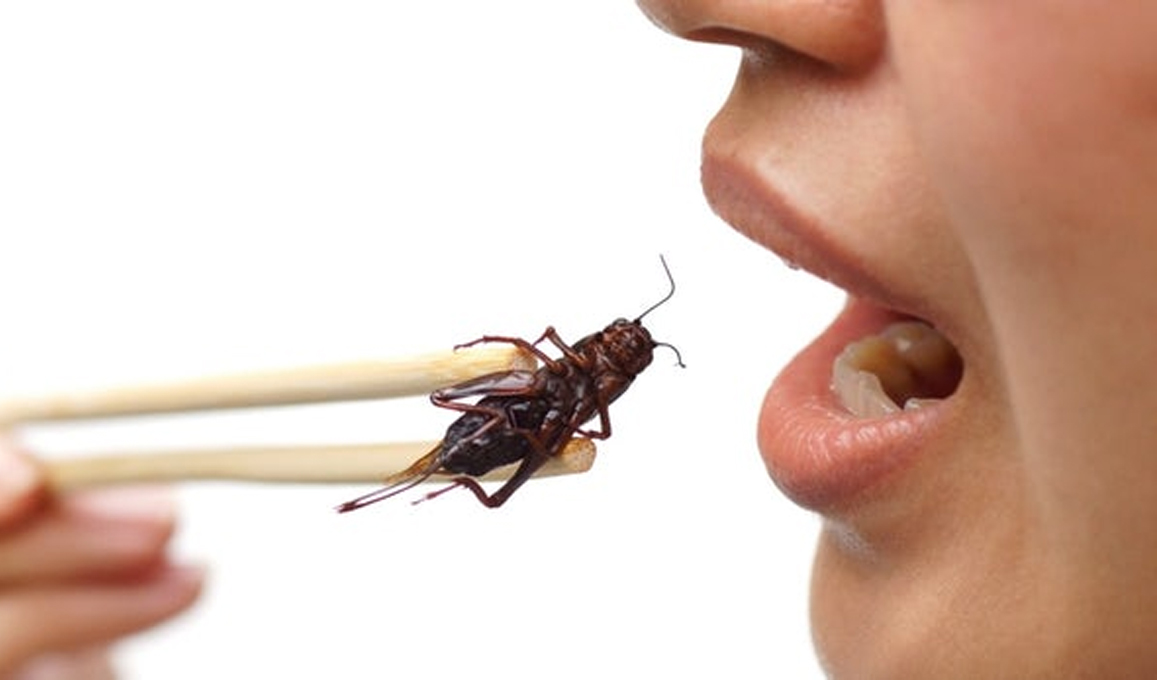
This is all happening as the advancement of insects as a more “sustainable” protein replacement is being advanced by the same western governments. However, if you happen to notice that all of the issues travel in the same direction, you are a conspiracy theorist, or something. WATCH:
We have been watching the predictable outcomes surrounding the western government shift to change energy policy for almost two years. Approximately a year ago we first said, “the absence of food will change things.”
As energy resources like natural gas were curtailed the resulting price increase and subsequent shortage of fertilizer was discussed in great detail well in advance.
Now, we are starting to see exactly what those warning voices were talking about.
An interesting article in ZeroHedge Saturday [SEE HERE] draws attention to how the media can no longer try to ignore the created global food crisis.
ZeroHedge – People on the other side of the planet are dropping dead from starvation right now, but most people don’t even realize that this is happening. Unfortunately, most people just assume that everything is fine and dandy. If you are one of those people that believe that everything is just wonderful, I would encourage you to pay close attention to the details that I am about to share with you. Global hunger is rapidly spreading, and that is because global food supplies have been getting tighter and tighter.
If current trends continue, we could potentially be facing a nightmare scenario before this calendar year is over. (read more)
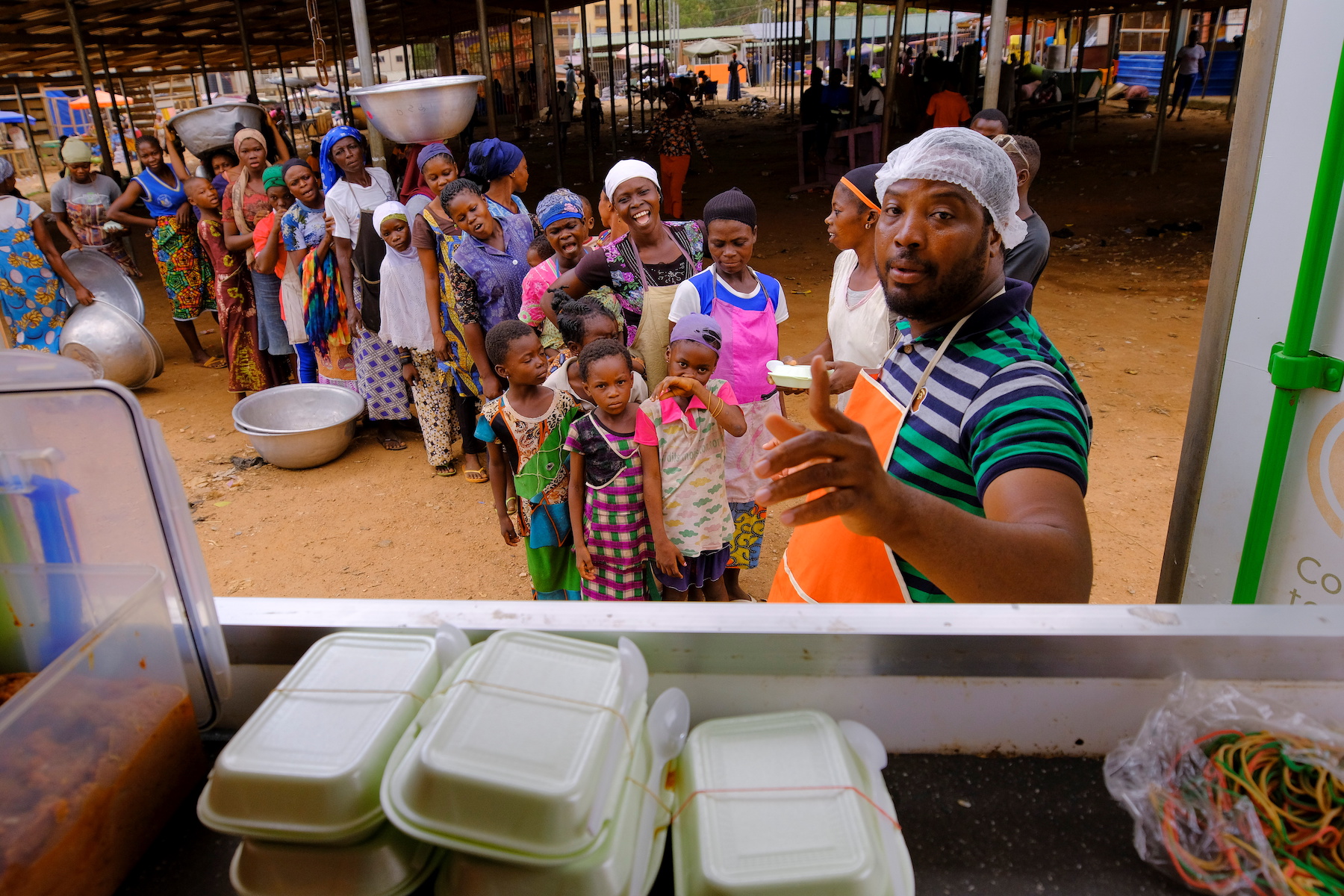
The article then goes on to detail the issues and food shortages in Pakistan, India and the entire African continent. Factually, according to media reports on the region, the worst food crisis in history is happening – yet most U.S. and European Union media are avoiding it. The famine is happening in almost complete western silence.
Keep in mind, none of this is unexpected. In fact, the G7 countries discussed the pending problem in mid 2022, yet no one took any steps to avoid it.
Vladimir Putin’s military action against eastern Ukraine had nothing to do with the severe food shortages and inflation in Sri Lanka {link}. Nor did Russia have any influence over the Dutch government trying to stop food production {link}. Additionally, Putin had no control over Justin Trudeau’s decision to limit harvest yields by blocking the use of nitrogen-based fertilizer {link}. More importantly, it was not Vladimir Putin who forced all the western politicians to sign up for a new ‘climate friendly’ energy program that is destroying the ability of western farms to generate higher yield crops.
You do not need to be a farmer to understand that nitrogen/phosphorus-based industrial fertilizer has been the reason why farm yields have generated massive amounts of food on a global basis. The United States, Canada, the U.K. and places like the Netherlands have massively increased their ability to generate food for export, in large part due to the success of improved fertilizer and crop saving modern pesticides. Take those farming advancements away under the guise of climate change and you get Sri Lanka, Pakistan and now the African Continent.
Those western climate and energy policies create downstream consequences. The decision to chase a new global energy policy under the name “Build Back Better,” in combination with short-sighted EU sanctions against Russia, and you get food shortages.
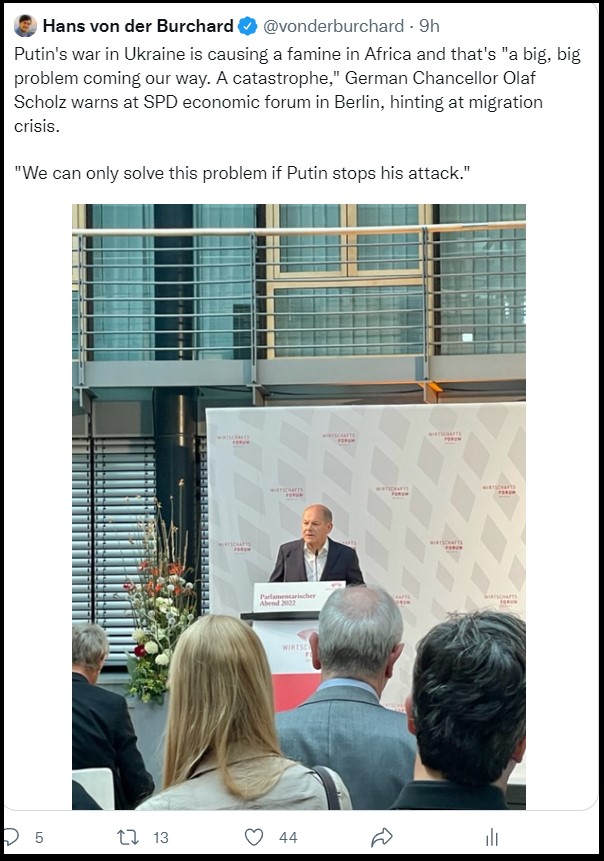
It was not Vladimir Putin who told British Prime Minister Boris Johnson and German Chancellor Olaf Scholz their proactive recommendation to switch from crop-based biofuels to human food would be blocked. That G7 decision was made by Justin Trudeau and Joe Biden. {link} Even more significantly, it was not Russia who threatened the multinational energy companies about investing in Africa for expanded natural gas supplies for their fertilizer needs. That threat came from the same western government alliance, per their instructions from the World Economic Forum group {link}.
It was predictable {JUNE 21st} {June 30th} and {July 6th} that western government leaders would seek to avoid responsibility for the food crisis they created, and throughout the latter part of 2022 we saw western media trying, desperately, to frame Russia for global food shortages in order to protect western politicians.
I said this in July of last year and as the consequences now surface it is even more critical to understand.
Joe Biden, NATO, the G7, the European Union, the World Bank, USAID, and every western leader in the United States and Europe stated in early and mid 2022 there will be food shortages in 2023.
They did not say there might be shortages; their statements were emphatic, there will be shortages.
Accept this basic cornerstone. Then ask why not a single proactive step has been taken by any of the aforementioned institutions or governments to alleviate what they declare is a certainty. Why?
Simple question, “why?”
If all of the western nations, non-govt organizations and heads of state, are aware of a coming food crisis, why is there no proactive response?
It is a question that even the most hardcore leftists will not answer, because there is only one answer. No action is being taken because they do not want to take action. No effort to avoid the crisis is being done, because they do not want the crisis avoided.
Peel all the layers of obfuscation and causation away, and what we find is the epicenter of the food shortage is directly the result of the Build Back Better agenda. A post-pandemic western government deliberate decision to radically change global energy development. In succinct terms, the climate change agenda.
However, regardless of how you feel about the validity of “climate change,” the cause of diminished food supplies is purposeful. It is not climate change causing food shortages. It is the purposeful action taken under the guise of mitigating climate change that is causing the shortage of food.
The collective Build Back Better energy policy of western governments’ is the reason for massive increases in energy costs, massive oil price jumps, gasoline price increases, significant increases in chemical costs, increases in diesel fuel costs, shortages of fertilizer created using natural gas, and the end result is lower crop yields, higher farming costs and eventually, food shortages. They knew this.
All of the organizations and government who have been decrying the future shortage of food, know it is the radical shift in energy resource development that is creating the crisis. This acceptance of reality begins the framework to understand just how entrenched and committed these western leaders are toward their beloved climate change agenda.
We are only just now beginning to see the first aspects of the food shortage. However, once the issue becomes unavoidable the western leaders will not and cannot accept the blame for what they have done. They will blame-cast, excuse and justify what is surfacing.
Food shortages will be blamed on the Ukraine conflict, Russian aggression, climate change and any various iteration of justification that does not identify the true cause, their energy ideology.
I’m not so sure that people fully understand what the entire system of western government would be willing to do to avoid being blamed for avoidable death on a potential scale that is quite alarming. All of the western leaders, institutions and governments are on the same boat. They are all in this together.
(June 22, 2022) – (Reuters) – The European Union is divided on how to help poorer nations fight a growing food crisis and address shortages of fertilizers caused by the war in Ukraine, with some fearing a plan to invest in plants in Africa would clash with EU green goals.
The need for food “clashes with EU green goals.”… Let that sink in.
Food shortages have historically contributed to revolutions more so than just international war. Poor grain harvests led to riots as far back as 1529 in the French city of Lyon. During the French Petite Rebeyne of 1436. (Great Rebellion), sparked by the high price of wheat, thousands looted and destroyed the houses of rich citizens, eventually spilling the grain from the municipal granary onto the streets. Back then, it was to go get the rich.
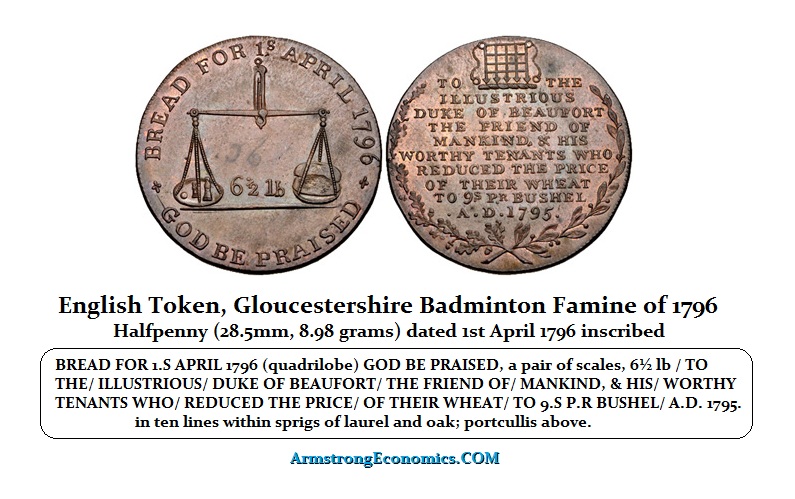
There was a climate change cycle at work and today’s climate zealots ignore their history altogether for it did not involve fossil fuels. The climate got worse at the bottom of the Mini Ice Age which was about 1650. It really did not warm up substantially until the mid-1800s. During the 18th century, the climate resulted in very poor crops. Since the 1760s, the king had been counseled by Physiocrats, who were a group of economists that believed that the wealth of nations was derived solely from the value of land and thereby agricultural products should be highly priced. This is why Adam Smith wrote his Wealth of Nations as a retort to the Physiocrats. It was their theory that justified imperialism – the quest to conquer more land for wealth; the days of empire-building.
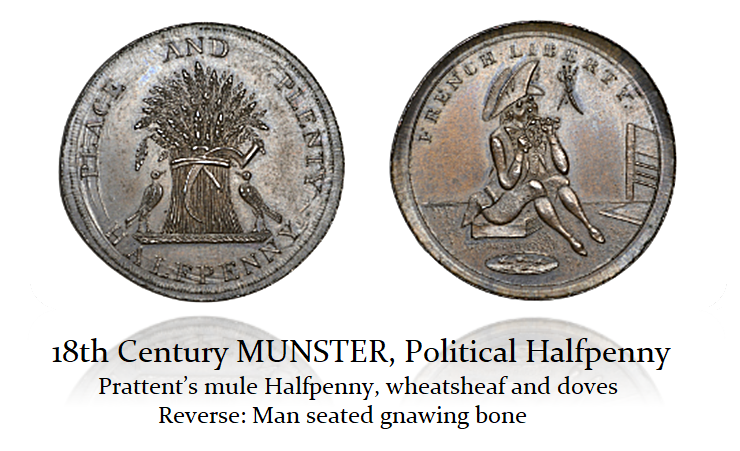
The King of France had listened to the Physiocrats who counseled him to intermittently deregulate the domestic grain trade and introduce a form of free trade. That did not go very well for there was a shortage of grain and this only led to a bidding war – hence the high price of wheat. We even see English political tokens of the era campaigning about the high price of grain and the shortage of food to where a man is gnawing on a bone.
Voltaire once remarked that Parisians required only “the comic opera and white bread.” Indeed, bread has also played a very critical role in French history that is overlooked. The French Revolution that began with the storming of the Bastille on July 14th, 1789 was not just looking for guns, but also grains to make bread.
The price of bread and the shortages played a very significant role during the revolution. We must understand Marie Antoinette’s supposed quote upon hearing that her subjects had no bread: “Let them eat cake!” which was just propaganda at the time. The “cake” was not the cake as we know it today, but the crust was still left in the pan after taking the bread out. This shows the magnitude that the shortage of bread played in the revolution.
In late April and May of 1775, the food shortages and high prices of grain ignited an explosion of such popular anger in the surrounding regions of Paris. There were more than 300 riots and looking for grain over just three weeks (3.14 weeks). The historians dubbed this the Flour War. The people even stormed the place at Versailles before the riots spread into Paris and outward into the countryside.
The food shortage became so acute during the 1780s that it was exacerbated by the influx of immigration to France during that period. It was a period of changing social values where we heard similar cries for equality. Eventually, this became one of the virtues on which the French Republic was founded. Most importantly, theFrench Constitution of 1791 explicitly stipulated a right to freedom of movement. It was mostly perceived to be a food shortage and the reason was the greedy rich. Thus, a huge rise in population was also contributed in part by immigration whereas it reached around 5-6 million more people in France in 1789 than in 1720.
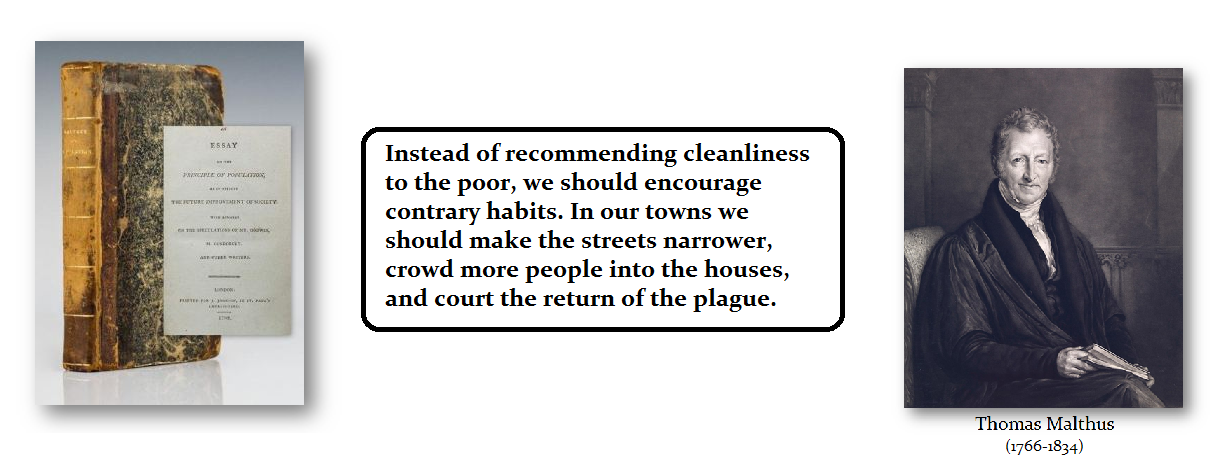
Against this backdrop, we have the publication by Thomas Malthus (1766-1834) An Essay on the Principle of Population was first published anonymously in 1798. He theorized that the population would outgrow the ability to produce food. We can see how his thinking formed because of the Mini Ice Age that bottomed in 1650. All of this was because of climate change which instigated food shortages. Therefore, it was commonly accepted that without a corresponding increase in native grain production, there would be a serious crisis.
The refusal on the part of most of the French to eat anything but a cereal-based diet was another major issue. Bread likely accounted for 60-80 percent of the budget of a wage-earner’s family at that point in time. Consequently, even a small rise in grain prices could spark political tensions. Because this was such an issue, and probably the major cause of the French Revolution among the majority, Finance Minister Jacques Necker (1732–1804) claimed that, to show solidarity with the people, King Louis XVI was eating the lower-class maslin bread. Maslin bread is from a mix of wheat and rye, rather than the elite manchet, white bread that is achieved by sifting wholemeal flour to remove the wheatgerm and bran.
That solidarity was seen as propaganda and the instigators made up the Marie Antoinette quote: Let them eat cake. . Then there was a plot drawn up at Passy in 1789 that fomented the rebellion against the crown shortly before the people stormed the Bastille. It declared “do everything in our power to ensure that the lack of bread is total, so that the bourgeoisie are forced to take up arms.”
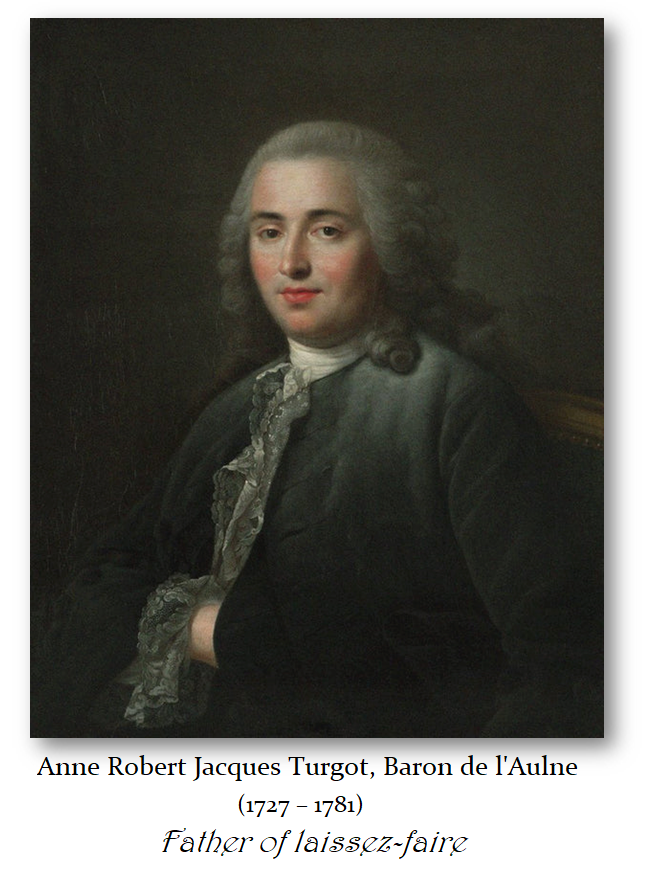
It was also at this time when Anne Robert Jacques Turgot (1727-1781), Baron de l’Aulne, was a French economist and statesman. He was originally considered a physiocrat, but he kept an open mind and became the first economist to have recognized the law of diminishing marginal returns in agriculture. He became the father of economic liberalism which we call today laissez-faire for he put it into action. He saw the overregulation of grain production was behind also contributing to the food shortages. He once said: “Ne vous mêlez pas du pain”—Do not meddle with bread.
The French Revolution overthrew the monarchy and they began beheading anyone who supported the Monarchy and confiscated their wealth as well as the land belonging to the Catholic Church. Nevertheless, the revolution did not end French anxiety over bread. On August 29th, 1789, only two days after completing the Declaration of the Rights of Man and of the Citizen, the Constituent Assembly completely deregulated domestic grain markets. The move raised fears about speculation, hoarding, and exportation.
Then on October 21st, 1789, a baker, Denis François, was accused of hiding loaves from sale as part of a conspiracy to deprive the people of bread. Despite a hearing which proved him innocent, the crowd dragged François to the Place de Grève, hanged and decapitated him, and made his pregnant wife kiss his bloodied lips. Immediately thereafter, the National Constituent Assembly instituted martial law. At first sight, this act appears as a callous lynching by the mob, yet it led to social sanctions against the general public. The deputies decided to meet popular violence with force.
So, food has often been a MAJOR factor in revolutions. We are entering a cold period. Ukraine has been the breadbasket for Europe. Escalating this war will also lead to accelerating the food shortages post-2024. It is interesting how we learn nothing from history. Wars are instigated by political leaders while revolutions are instigated by the people.
Posted originally on the CTH on January 22, 2023 | sundance
We have been watching the predictable outcomes surrounding the western government shift to change energy policy for almost two years. Approximately a year ago we first said, “the absence of food will change things.”
As energy resources like natural gas were curtailed the resulting price increase and subsequent shortage of fertilizer was discussed in great detail well in advance.
Now, we are starting to see exactly what those warning voices were talking about.
An interesting article in ZeroHedge Saturday [SEE HERE] draws attention to how the media can no longer try to ignore the created global food crisis.
ZeroHedge – People on the other side of the planet are dropping dead from starvation right now, but most people don’t even realize that this is happening. Unfortunately, most people just assume that everything is fine and dandy. If you are one of those people that believe that everything is just wonderful, I would encourage you to pay close attention to the details that I am about to share with you. Global hunger is rapidly spreading, and that is because global food supplies have been getting tighter and tighter.
If current trends continue, we could potentially be facing a nightmare scenario before this calendar year is over. (read more)
The article then goes on to detail the issues and food shortages in Pakistan, India and the entire African continent. Factually, according to media reports on the region, the worst food crisis in history is happening – yet most U.S. and European Union media are avoiding it. The famine is happening in almost complete western silence.
Keep in mind, none of this is unexpected. In fact, the G7 countries discussed the pending problem in mid 2022, yet no one took any steps to avoid it.
Vladimir Putin’s military action against eastern Ukraine had nothing to do with the severe food shortages and inflation in Sri Lanka {link}. Nor did Russia have any influence over the Dutch government trying to stop food production {link}. Additionally, Putin had no control over Justin Trudeau’s decision to limit harvest yields by blocking the use of nitrogen-based fertilizer {link}. More importantly, it was not Vladimir Putin who forced all the western politicians to sign up for a new ‘climate friendly’ energy program that is destroying the ability of western farms to generate higher yield crops.
You do not need to be a farmer to understand that nitrogen/phosphorus-based industrial fertilizer has been the reason why farm yields have generated massive amounts of food on a global basis. The United States, Canada, the U.K. and places like the Netherlands have massively increased their ability to generate food for export, in large part due to the success of improved fertilizer and crop saving modern pesticides. Take those farming advancements away under the guise of climate change and you get Sri Lanka, Pakistan and now the African Continent.
Those western climate and energy policies create downstream consequences. The decision to chase a new global energy policy under the name “Build Back Better,” in combination with short-sighted EU sanctions against Russia, and you get food shortages.
It was not Vladimir Putin who told British Prime Minister Boris Johnson and German Chancellor Olaf Scholz their proactive recommendation to switch from crop-based biofuels to human food would be blocked. That G7 decision was made by Justin Trudeau and Joe Biden. {link} Even more significantly, it was not Russia who threatened the multinational energy companies about investing in Africa for expanded natural gas supplies for their fertilizer needs. That threat came from the same western government alliance, per their instructions from the World Economic Forum group {link}.
It was predictable {JUNE 21st} {June 30th} and {July 6th} that western government leaders would seek to avoid responsibility for the food crisis they created, and throughout the latter part of 2022 we saw western media trying, desperately, to frame Russia for global food shortages in order to protect western politicians.
I said this in July of last year and as the consequences now surface it is even more critical to understand.
Joe Biden, NATO, the G7, the European Union, the World Bank, USAID, and every western leader in the United States and Europe stated in early and mid 2022 there will be food shortages in 2023.
They did not say there might be shortages; their statements were emphatic, there will be shortages.
Accept this basic cornerstone. Then ask why not a single proactive step has been taken by any of the aforementioned institutions or governments to alleviate what they declare is a certainty. Why?
Simple question, “why?”
If all of the western nations, non-govt organizations and heads of state, are aware of a coming food crisis, why is there no proactive response?
It is a question that even the most hardcore leftists will not answer, because there is only one answer. No action is being taken because they do not want to take action. No effort to avoid the crisis is being done, because they do not want the crisis avoided.
Peel all the layers of obfuscation and causation away, and what we find is the epicenter of the food shortage is directly the result of the Build Back Better agenda. A post-pandemic western government deliberate decision to radically change global energy development. In succinct terms, the climate change agenda.
However, regardless of how you feel about the validity of “climate change,” the cause of diminished food supplies is purposeful. It is not climate change causing food shortages. It is the purposeful action taken under the guise of mitigating climate change that is causing the shortage of food.
The collective Build Back Better energy policy of western governments’ is the reason for massive increases in energy costs, massive oil price jumps, gasoline price increases, significant increases in chemical costs, increases in diesel fuel costs, shortages of fertilizer created using natural gas, and the end result is lower crop yields, higher farming costs and eventually, food shortages. They knew this.
All of the organizations and government who have been decrying the future shortage of food, know it is the radical shift in energy resource development that is creating the crisis. This acceptance of reality begins the framework to understand just how entrenched and committed these western leaders are toward their beloved climate change agenda.
We are only just now beginning to see the first aspects of the food shortage. However, once the issue becomes unavoidable the western leaders will not and cannot accept the blame for what they have done. They will blame-cast, excuse and justify what is surfacing.
Food shortages will be blamed on the Ukraine conflict, Russian aggression, climate change and any various iteration of justification that does not identify the true cause, their energy ideology.
I’m not so sure that people fully understand what the entire system of western government would be willing to do to avoid being blamed for avoidable death on a potential scale that is quite alarming. All of the western leaders, institutions and governments are on the same boat. They are all in this together.
(June 22, 2022) – (Reuters) – The European Union is divided on how to help poorer nations fight a growing food crisis and address shortages of fertilizers caused by the war in Ukraine, with some fearing a plan to invest in plants in Africa would clash with EU green goals.
The need for food “clashes with EU green goals.”… Let that sink in.
I have created this site to help people have fun in the kitchen. I write about enjoying life both in and out of my kitchen. Life is short! Make the most of it and enjoy!
This is a library of News Events not reported by the Main Stream Media documenting & connecting the dots on How the Obama Marxist Liberal agenda is destroying America










 Centinel2012