Posted originally on the conservative tree House on August 28, 2022 | Sundance
Retired Admiral James Stavridis was the former NATO Supreme Allied Commander who conducted Secretary Hillary Clinton’s war in Libya without congressional authorization. Stavridis represents the military side of the State Dept war machine, while Michael McFaul, former U.S. Ambassador to Russia, represents the diplomatic side.
Hopefully, more Americans are awake now to the nature of U.S. foreign policy as it relates to who controls the use of our military. Most modern interventions are conducted from within the U.S. State Dept using joint elements of the CIA that operate within it. The State Dept and CIA now control all pentagon operations and direct U.S. missions.
Once we accept how this modern process of global influence works, then we understand how and why Mike Pompeo moved from CIA to State during the Trump administration. Pompeo was the ‘mitigator,’ the person installed to block President Trump from interfering in this construct. What Bill Barr was to the DOJ, Pompeo was for the State Dept. It’s always uncomfortable to look at the Deep State with clear eyes.
As you review the propaganda; and there is no doubt this is pure propaganda as pushed by NBC today on Meet the Press; keep in mind that U.S. operators are deeply embedded inside Ukraine to facilitate goals of the State Dept proxy war against Russia. New York Times – … [E]ven as the Biden administration has declared it will not deploy American troops to Ukraine, some C.I.A. personnel have continued to operate in the country secretly, mostly in the capital, Kyiv, directing much of the vast amounts of intelligence the United States is sharing with Ukrainian forces, according to current and former officials.
.
As noted in the interview, albeit with parseltonge to obscure the reality of the situation and keep the American public thinking sending more money and weapons into Ukraine will change the outcome – it won’t, Russia has dug in throughout Donbas and now controls eastern Ukraine. Donbas was always the goal of Vladimir Putin as a buffer against Western use of Ukraine.
Ukraine is to the United States what North Korea is to China; both are fully controlled proxy states. Western media keep pretending that Ukraine is not the playground for the U.S. government. However, the larger reality is clear and accepting that reality explains why the U.S. government is funding the Ukraine government. Meanwhile Vladimir Putin is clear-eyed and has no problem watching the U.S. go bankrupt trying to keep Ukraine afloat.
Once you understand the U.S. government strings and puppets, the pantomime is no longer fun to watch.
Posted originally on the conservative tree house on August 28, 2022 | Sundance
Former House Speaker Newt Gingrich knows a thing or ten about the DC Deep State, and he appeared on television with Mark Levin to deliver a stark opinion about the current course of action by a comprehensively corrupt and politicized DOJ and FBI. {Direct Rumble Link}
From the perspective of Mr. Gingrich the institutional system within Washington DC is “playing for keeps” with “no interest in the law,” in their effort to keep Donald Trump from challenging the corrupt system now controlling the U.S. government. Unfortunately, I agree with the prediction. WATCH:
.
As soon as the Washington DC FBI sent agents to Florida, everything changed. If you stand back and look at the national political events from an objective perspective, the connections between the executive agencies and the national political apparatus starts taking on a new clarity.
Additionally, when you overlay the tepid initial response from a newly managed Florida Governor, then look at his national rollout, you can see a specifically constructed series of events intended to give an alternative for the MAGA outrage vote.
The RNC club donors and deep political operatives have been in a full national push position for Ron DeSantis which was triggered immediately after the August 8th raid on Mar-a-Lago.
For five days immediately following the raid, DeSantis remained locked down and silent in a political bunker until he emerged on August 14th in Arizona, complete with a new press office and management team. The timing, the series of events, the branding shift and the lack of response to the FBI raid is simply too coincidental to be happenstance.
This doesn’t mean Ron DeSantis himself knew of the raid in advance; but someone in the DC Republican advisory apparatus with influence over DeSantis did know it was coming. He was prepared to go quiet. That explains the behaviors, and lack therein, that followed.
That entire sequence of events in Florida, including the branding and book drop by alternative media (Ben Shapiro) was a big tell; it indicated a closely coordinated RNC club operation.
In the days/weeks that followed, DeSantis has been very careful to avoid any mention of the Mar-a-Lago raid, or criticism of the DOJ, Main Justice, or FBI. Instead, he has followed an easy route to punch soft targets like Anthony Fauci and the social inequity of Biden’s college tuition debt forgiveness.
With 94% of Ron DeSantis funding coming from multinational corporations, Wall Street hedge funds and billionaires, it is easy to see where the control mechanisms are as the club masters look to take down Trump and retain control of U.S. economic, monetary and trade policy. [SEE HERE] Ultimately, that economic system is what the Wall Street donors are paying to control. Remember, there are trillions at stake.
In hindsight we can see the GOPe path that led to the inflection point of the August 8th raid. However, all of these players have one major hurdle. They have gone all in against Donald Trump, and he is the one-person strong enough, and skilled enough, to outwit them.
Additionally, President Donald J Trump has the law, the constitution, the truth, and ultimately the largest portion of the awakened nation on his side.
Yes, I agree with Newt Gingrich that they are “playing for keeps.” However, when all of the enemy is finally visible, that’s when the righteousness of natural sunlight becomes the strongest weapon.
Donald Trump may have a lot of human flaws, but authenticity, honesty and a genuine desire to do the very best for our nation is not among them.
Donald Trumps is not a deceptive person. He is one of the most transparent people that history could ever record. When fighting against deception and skullduggery, that transparency transfers into honest, deliberate and authentic communication; ultimately becoming a natural weapon against his opposition.
I am reminded of President Trump at the 2016 RNC nomination convention, when he said nothing except to walk into the arena while Ted Cruz was imploding in a grand and visible display of his lack of character and political dishonesty. Candidate Donald Trump didn’t say a word, his appearance was an atomic sledgehammer all by itself.
President Donald Trump has natural gifts and instincts that have transferred well into politics, despite criticism of his tendency to grant benefit of doubt.
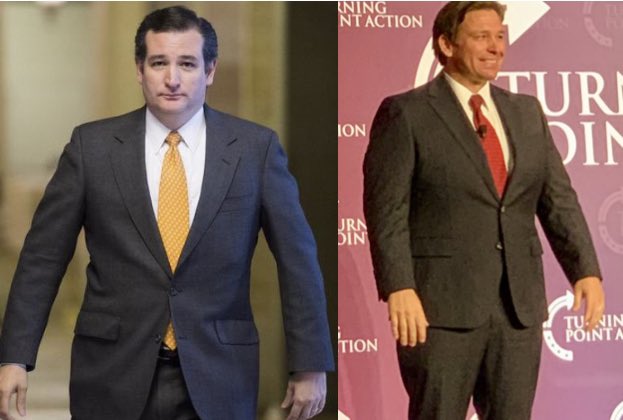
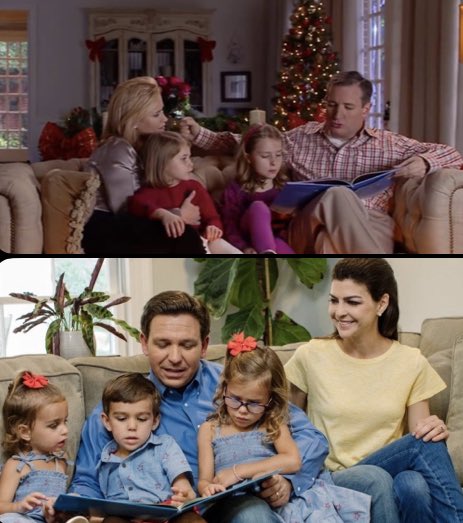
I can’t quite put my finger on it, but somehow, I sense that Ron DeSantis and Ted Cruz will soon have even more in common.
Posted originally on the conservative tree house on August 26, 2022 | Sundance
Buried inside Section 5114(b)(4) of the National Defense Authorization Act for Fiscal Year 2022 was a repeal of 1994 law that required the U.S. State Department to publish an annual list of arms sales to foreign countries. The “World Military Expenditures and Arms Transfers” report (WMEAT) put sunlight every year on what weapons the U.S. was selling to foreign countries.
Conveniently timed with the $60+ billion aid package to Ukraine, the U.S. State Dept, now says the WMEAT report will not be published any longer. If a person was to believe the Ukraine arms deals were essentially money laundering operations, well, this announcement by the State Dept. might be interpreted as a way to hide it. [LINK]
State Dept – WMEAT 2021, which the Department of State published in December 2021, is the final edition of World Military Expenditures and Arms Transfers (WMEAT). Section 5114(b)(4) of the National Defense Authorization Act for Fiscal Year 2022 repealed the 1994 statutory provision that required the Department of State to publish an edition of WMEAT every year. Consistent with this repeal, the Department of State will cease to produce and publish WMEAT.
Copies of all editions of WMEAT dating from 1974 to 2021 remain publicly accessible as Adobe PDF or Excel spreadsheet documents (LINK)
Posted originally on the conservative tree house on August 26, 2022 | Sundance
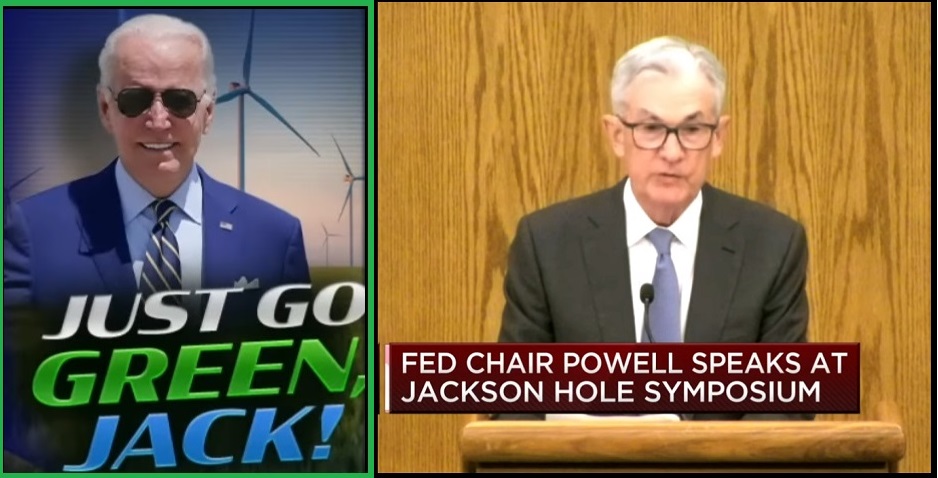
When Chairman Powell says things are really, really going to suck as monetary policy tries to support Biden’s goals to reduce energy supplies, will people believe him?
The agenda of the federal reserve was clearly outlined today in the remarks from Chairman Powell in Jackson Hole, Wyoming. The Fed chair is trying to manage the economic policy transition by reducing economic activity to match intentionally diminished energy supplies. Lowering economic activity drops demand for energy. Unfortunately, as admitted by Powell today, this means a period of “some pain” for Americans as the central banks join together in an effort to lower consumption. WATCH:
What does “some pain” mean? It means lower incomes, higher prices, lowered standards of living and more scarce resources. During this transition to owning nothing and being happy about it, the pain is your wealth being stripped as the economy is intentionally diminished.
We will not be able to afford much; we won’t be able to afford the foods we want; we will not be able to purchase anything except the essentials, and those essentials will cost much more; we won’t be able to vacation, travel, or enjoy recreational activities; we won’t be able to afford any indulgences; but at the end of the process, we will learn to live more meager existences based on lowered expectations needed for sustaining the planet. Pay no attention to the elites who don’t have those concerns, comrade.
[Transcript] – POWELL: “At past Jackson Hole conferences, I have discussed broad topics such as the ever-changing structure of the economy and the challenges of conducting monetary policy under high uncertainty. Today, my remarks will be shorter, my focus narrower, and my message more direct.”
“The Federal Open Market Committee’s (FOMC) overarching focus right now is to bring inflation back down to our 2 percent goal. Price stability is the responsibility of the Federal Reserve and serves as the bedrock of our economy. Without price stability, the economy does not work for anyone. In particular, without price stability, we will not achieve a sustained period of strong labor market conditions that benefit all. The burdens of high inflation fall heaviest on those who are least able to bear them.
Restoring price stability will take some time and requires using our tools forcefully to bring demand and supply into better balance. Reducing inflation is likely to require a sustained period of below-trend growth. Moreover, there will very likely be some softening of labor market conditions. While higher interest rates, slower growth, and softer labor market conditions will bring down inflation, they will also bring some pain to households and businesses. These are the unfortunate costs of reducing inflation. But a failure to restore price stability would mean far greater pain.
The U.S. economy is clearly slowing from the historically high growth rates of 2021, which reflected the reopening of the economy following the pandemic recession. While the latest economic data have been mixed, in my view our economy continues to show strong underlying momentum. The labor market is particularly strong, but it is clearly out of balance, with demand for workers substantially exceeding the supply of available workers. Inflation is running well above 2 percent, and high inflation has continued to spread through the economy. While the lower inflation readings for July are welcome, a single month’s improvement falls far short of what the Committee will need to see before we are confident that inflation is moving down.
We are moving our policy stance purposefully to a level that will be sufficiently restrictive to return inflation to 2 percent. At our most recent meeting in July, the FOMC raised the target range for the federal funds rate to 2.25 to 2.5 percent, which is in the Summary of Economic Projection’s (SEP) range of estimates of where the federal funds rate is projected to settle in the longer run. In current circumstances, with inflation running far above 2 percent and the labor market extremely tight, estimates of longer-run neutral are not a place to stop or pause.
July’s increase in the target range was the second 75 basis point increase in as many meetings, and I said then that another unusually large increase could be appropriate at our next meeting. We are now about halfway through the intermeeting period. Our decision at the September meeting will depend on the totality of the incoming data and the evolving outlook. At some point, as the stance of monetary policy tightens further, it likely will become appropriate to slow the pace of increases.
Restoring price stability will likely require maintaining a restrictive policy stance for some time. The historical record cautions strongly against prematurely loosening policy. Committee participants’ most recent individual projections from the June SEP showed the median federal funds rate running slightly below 4 percent through the end of 2023. Participants will update their projections at the September meeting.
Our monetary policy deliberations and decisions build on what we have learned about inflation dynamics both from the high and volatile inflation of the 1970s and 1980s, and from the low and stable inflation of the past quarter-century. In particular, we are drawing on three important lessons.
The first lesson is that central banks can and should take responsibility for delivering low and stable inflation. It may seem strange now that central bankers and others once needed convincing on these two fronts, but as former Chairman Ben Bernanke has shown, both propositions were widely questioned during the Great Inflation period.1 Today, we regard these questions as settled. Our responsibility to deliver price stability is unconditional. It is true that the current high inflation is a global phenomenon, and that many economies around the world face inflation as high or higher than seen here in the United States.
It is also true, in my view, that the current high inflation in the United States is the product of strong demand and constrained supply, and that the Fed’s tools work principally on aggregate demand. None of this diminishes the Federal Reserve’s responsibility to carry out our assigned task of achieving price stability. There is clearly a job to do in moderating demand to better align with supply. We are committed to doing that job.
The second lesson is that the public’s expectations about future inflation can play an important role in setting the path of inflation over time. Today, by many measures, longer-term inflation expectations appear to remain well anchored. That is broadly true of surveys of households, businesses, and forecasters, and of market-based measures as well. But that is not grounds for complacency, with inflation having run well above our goal for some time.
If the public expects that inflation will remain low and stable over time, then, absent major shocks, it likely will. Unfortunately, the same is true of expectations of high and volatile inflation. During the 1970s, as inflation climbed, the anticipation of high inflation became entrenched in the economic decisionmaking of households and businesses. The more inflation rose, the more people came to expect it to remain high, and they built that belief into wage and pricing decisions. As former Chairman Paul Volcker put it at the height of the Great Inflation in 1979, “Inflation feeds in part on itself, so part of the job of returning to a more stable and more productive economy must be to break the grip of inflationary expectations.”2
One useful insight into how actual inflation may affect expectations about its future path is based in the concept of “rational inattention.”3 When inflation is persistently high, households and businesses must pay close attention and incorporate inflation into their economic decisions. When inflation is low and stable, they are freer to focus their attention elsewhere. Former Chairman Alan Greenspan put it this way: “For all practical purposes, price stability means that expected changes in the average price level are small enough and gradual enough that they do not materially enter business and household financial decisions.”4
Of course, inflation has just about everyone’s attention right now, which highlights a particular risk today: The longer the current bout of high inflation continues, the greater the chance that expectations of higher inflation will become entrenched.
That brings me to the third lesson, which is that we must keep at it until the job is done. History shows that the employment costs of bringing down inflation are likely to increase with delay, as high inflation becomes more entrenched in wage and price setting. The successful Volcker disinflation in the early 1980s followed multiple failed attempts to lower inflation over the previous 15 years. A lengthy period of very restrictive monetary policy was ultimately needed to stem the high inflation and start the process of getting inflation down to the low and stable levels that were the norm until the spring of last year. Our aim is to avoid that outcome by acting with resolve now.
These lessons are guiding us as we use our tools to bring inflation down. We are taking forceful and rapid steps to moderate demand so that it comes into better alignment with supply, and to keep inflation expectations anchored. We will keep at it until we are confident the job is done.” [Transcript End]
America has pledged to embezzle (donate) another $3 BILLION into Ukraine. The Associated Press claims that this money will be used for equipment and training Ukrainian troops. Additional NATO countries are also offering additional funds, such as Germany who pledged an additional $500 million to the proxy war. Yet, America is donating more money than any other NATO country to a non-NATO country. How does this benefit American taxpayers? Answer – it does not. It steals resources from our nation as the average American grapples with record-high inflation amid a recession that is expected to worsen into next year.
This is taxation without representation. Joe Biden is not reaching into his personal wallet to funnel money into Ukraine. The defense contractors, US and Ukrainian governments are finding a way to line their pockets with these large “donations.” America has already sent 19 packages of weapons from the Defense Department’s arsenal to Ukraine. So far, the US has sent $10.6 billion to Ukraine to fund what many are calling the new “forever war.”
The last US census stated there were 123.6 million households in the US. At $13.6 billion total, this means that every household in the nation could have donated $110 directly to Ukraine. Zelensky is basking in the funding and fame. He has indicated that he intends to provoke Russia and worsen relations. He originally wanted to protect the Donbas region, but now he also wants Crimea to be fully within Ukraine. There is no winning this war as it has become too profitable for the people behind the curtain.
President Biden agreed to waste billions on the Democrat-supported Inflation Reduction Act. According to a survey of 1,500 Americans as presented by the Epoch Times, neither Democratic nor Republican citizens believe this expensive act will combat rising prices.
Respondents were asked if they believed that the bulk of the package, the $369 billion set aside for climate change initiatives, would reduce inflation. Only 13% said they believed fighting climate change would combat inflation, while 26% admitted they had no clue. Yet, 38% replied by saying it will increase inflation, and an additional 22% think it will have no impact.
Only 8% of Republicans polled agreed with the act (no voting Republican lawmakers supported the measure), while 23% of Democrats were in favor. Around 68% of Republicans warned that the bill would increase inflation; 40% of Independents agreed, as did 17% of Democrats.
This leads one to believe that the measure would never have passed if the taxpayers had the opportunity to vote on how their money was spent. The Congressional Budget Office admitted that the measure would have a negligible effect on inflation. Currently, American households are paying an additional $717 per month due to inflation. This act will only cause Americans to be treated as criminals by the growing and armed IRS, which is training to use lethal force against civilians. Audits will soar, small and medium businesses will suffer, and no one besides those supporting the Green agenda will benefit from the Inflation [Expansion] Act.
Now a study published in the New England Journal of Medicine shows the medication shows “no measurable benefit” for the treatment of COVID-19 in patients 40 to 65-years of age.
WASHINGTON — Pfizer’s COVID-19 pill appears to provide little or no benefit for younger adults, while still reducing the risk of hospitalization and death for high-risk seniors, according to a large study published Wednesday.
The results from a 109,000-patient Israeli study are likely to renew questions about the U.S. government’s use of Paxlovid, which has become the go-to treatment for COVID-19 due to its at-home convenience. The Biden administration has spent more than $10 billion purchasing the drug and making it available at thousands of pharmacies through its test-and-treat initiative.
The researchers found that Paxlovid reduced hospitalizations among people 65 and older by roughly 75% when given shortly after infection. That’s consistent with earlier results used to authorize the drug in the U.S. and other nations.
But people between the ages of 40 and 65 saw no measurable benefit, according to the analysis of medical records. (read more)
Posted originally on the conservative tree house on August 25, 2022 | Sundance
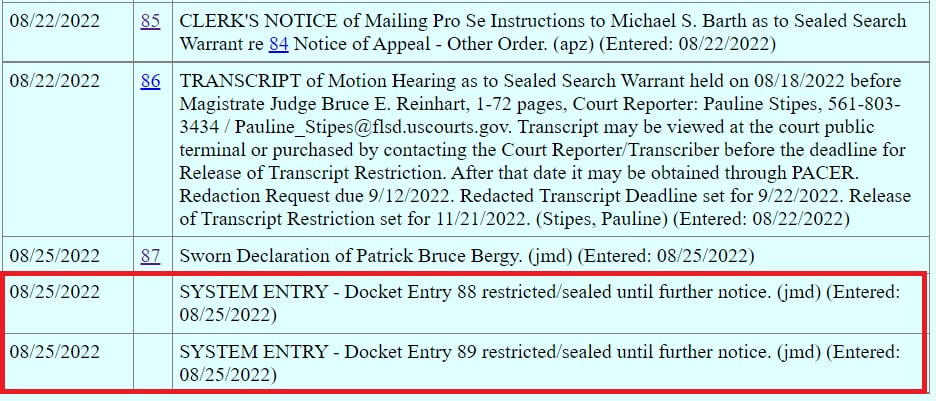
The DOJ had until noon today to submit their proposed redactions to the search warrant used in the Mar-a-Lago raid in order for the documents to be made public. Highlighting the effort of Main Justice to delay any sunlight, the DOJ waited until the last moment to submit their filing.
With the DOJ submission in hand, Florida Magistrate Judge Bruce Reinhart will now review the proposal and decide which, if any, parts of the affidavit will now be released to the public. Judge Reinhart was the judge who originally signed-off on the search warrant. It is likely he will go along with the redactions, although there is a slight possibility, he may propose an alternative.
Lawyers for media have requested the full unredacted release of the affidavit, and representative of President Trump have also requested a full unredacted release. Unfortunately, that scenario is extremely unlikely.
It seems as if everyone is supplying Ukraine with money and weapons. I would not blink if I saw Russia itself had provided Ukraine with weapons as everything has become so absurd. Yet, nothing seems to be enough. Ukrainian Foreign Minister Dmytro Kuleba called out the two European countries that have not supplied weapons for the proxy war. “With the exception of Hungary and Austria, the supply of weapons to Ukraine is not a taboo for any other European country, although it was (before),” said Kuleba.
Levente Magyar, Hungary’s Deputy Minister of Foreign Affairs, explained their reasoning for staying neutral. “Unlike many Western partners, we have experienced for ourselves what it is like to confront this huge Eastern state. At the same time, Hungary itself will not supply weapons — this is our strategic position. However, third countries can use our territory,” Magyar noted. Hungary simply does not wish to engage in war with a large Eastern power. They are protecting the Hungarian population living in the far-western Transcarpathia region from Russian attacks.
Austria has also committed to neutrality and has made that clear since the beginning of the war. First, Austria is not officially a NATO country and does not have that protection. According to Al Jazeera, 80% of Austrians do not want any involvement in the Western alliance. We all know of a certain dictator who grew up in Austria and started the last world war. Austria attempted to act as a diplomat between the East and West, with Chancellor Karl Nehammer visiting Moscow earlier in the year. The trip produced no results.
Both nations have offered humanitarian resources or opened their borders to Ukrainian refugees. They should not be shamed for steering clear of war. Look at their not so distant histories. The oldest generations have experienced untold suffering. There is no benefit for either country to become involved in a growing global conflict.
I have created this site to help people have fun in the kitchen. I write about enjoying life both in and out of my kitchen. Life is short! Make the most of it and enjoy!
This is a library of News Events not reported by the Main Stream Media documenting & connecting the dots on How the Obama Marxist Liberal agenda is destroying America














 Centinel2012