Posted originally on Apr 15, 2025 by Martin Armstrong
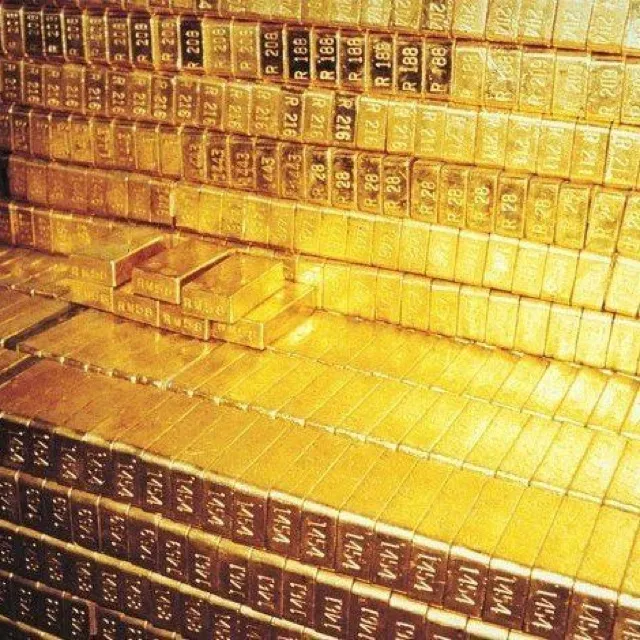
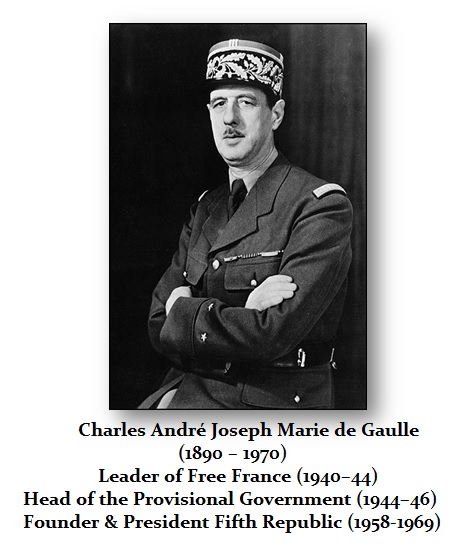
There is much speculation about Germany withdrawing its gold holdings from the United States. We have seen this occur in recent history. In the 1960s, French President Charles de Gaulle began challenging the U.S. dominance in the global monetary system. Gold typically flows where capital feels safe, but in this case, France repatriated its gold from the US due to political tensions.
In 1965, French President Charles de Gaulle withdrew his ministers from the Council of the EU, thereby constituting a de facto veto over all decisions, which became known as the “Empty Chair Crisis.” Several issues regarding European political integration led to the Empty Chair Crisis. There was a push at that time to create the quasi-federalization of Europe. De Gaulle believed that national governments should move towards integration. Still, he did not agree with the Commission’s attempt to create some new super-central state or a federalized Europe, extending powers of the EU beyond national borders as we have today, which Margaret Thatcher also opposed.
President Charles de Gaulle has proposed the Fouchet Plan was a plan back in 1961 to create a new grand design for Europe. Charles de Gaulle wanted to develop a three-power directorate, consisting of France, Britain and the United States. The idea was to form a new ‘Union of States’, as an alternative to the European Communities (EC). De Gaulle feared a loss of French national influence in the EC as there was a drive to federalize Europe back then.
After the failure of the Fouchet Plan and De Gaulle’s veto of the United Kingdom’s application for EC membership, the Commission attempted to move towards integration by proposing an idea that would combine the Common Agricultural Policy (CAP), the European Parliament, and Commission. De Gaulle supported the creation of the CAP and favored its enactment. However, he disagreed with the Parliament’s new role, the Commission’s strength, the shift towards federalization and a central state, and the budget proposals for financing the CAP. De Gaulle made it a condition that majority voting with a right to veto must exist if France was to participate in the EC. When de Gaulle was denied a more intergovernmental Commission or voting and veto rights, the French representative left the Council of Ministers thereby creating the Empty Chair Crisis.
The Luxembourg Accord was an agreement reached in January 1966 to resolve the “Empty Chair Crisis,” which had caused a stalemate within the European Economic Community. Then on June 21, 1966, de Gaulle withdrew France in a shocking move, taking its troops from the North Atlantic Treaty Organization (NATO). This decision, led by French president Charles de Gaulle, complicated relations between the U.S. and Europe amidst clashing American and Communist spheres of influence. Though France remained politically in NATO, its actions cast doubt on the organization’s future as a counter to Soviet military power and control back then.
From 1963 to 1966, France secretly implemented Operation Vide-Gousset to repatriate 3,313 tons of gold reserves from the Bank of England and the New York Federal Reserve. It took over 44 boat trips and 129 flights to export the gold back to the Banque de France. Since France converted its dollar holdings into gold, the French made out well when the dollar fell during the Bretton Woods period and lost 96% of its value against gold. France then withdrew from the London Gold Pool in 1966 after recovering its gold holdings to force the US to endure heavier losses.
France’s actions caused a gold run with nations eagerly reducing their holdings at the New York Fed. West Germany reclaimed 1,200 tons of gold. Switzerland increased gold purchases from both the US and UK, but did so more discreetly than France to avoid political upheaval. By 1971, before the gold window closed, the United Kingdom requested $3 billion in gold conversions from the US. This may have been the final move that pushed Nixon to act. The Netherlands and Belgium also began exporting gold holdings from the US at this time.
US gold stock fell from $22.7 billion in 1950 to $12 billion by 1971. On August 15, 1971, President Nixon closed the gold window, ending the convertibility of the dollar into gold. The 1971 closing of the gold window by Nixon cut the link to gold, ending Bretton Woods.
“The speculators have been waging an all-out war on the American dollar,” Nixon declared, and to “protect the dollar from the attacks of the international money speculators” would take “bold action.”
“I have directed [Treasury] Secretary Connolly to suspend temporarily the convertibility of the dollar into gold.”
France’s actions were a catalyst to the inevitable decision to close the gold window, but not the sole cause. Yet, as we are seeing today, the primary reason that nations would like to withdraw their holdings comes down to politics. Charles de Gaulle said that the dollar was “monumentally over-privileged” and moved to hurt the USD. The incoming German government is now looking to withdraw their holdings from the US solely due to their distaste for America.
Posted originally on Apr 15, 2025 by Martin Armstrong
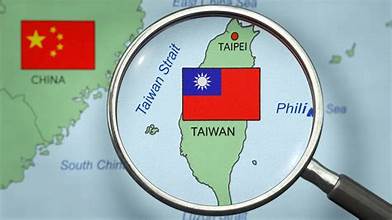
China and the United States are accustomed to trade wars. China is handling it as a business matter, but the bigger perceived threat is America’s involvement in the Taiwan Strait. The Chinese Defense Ministry issued a statement declaring that the United States has threatened national security by providing F-16 fighter aircraft to the Philippines and Taiwan.
“The United States stands strong with our allies and partners in the Indo-Pacific, and we continue to take decisive actions to counter threats, enhance economic resilience, and advance shared interests,” a spokesperson for the U.S. State Department told Newsweek.
Strengthening Taiwan and the Philippines is part of America’s ongoing military strategy first established during the Cold War to protect the US against the Soviet Union and China. These nations are within the First Island Chain, which America perceives as its first line of defense against China if war were to occur. The Ryukyu Islands, the Japanese archipelago, Borneo, and the Kuril Islands are also included in this plan that spans from the Kamchatka Peninsula in the northeast to the Malay Peninsula. The US is prepared to enforce blockades in the event of conflict and has maintained a presence in the area.
The People’s Liberation Army Navy (PLAN) has become the world’s largest surface fleet. China is prepared to deploy nuclear submarines, aircraft carriers, and advanced missile systems to fight back against the US and its allies in this region.
In fact, China recently carried out a large-scale naval exercise across the First Island Chain. Around 90 vessels and fighter jets practiced patrolling this area, specifically near Taiwan. The PLA Rocket Force now has ballistic and air-breathing missiles that it believes can destroy the US Navy.
Last month, Taipei purchased 66 new F-16/D Block 70 fighter jets from the US. Manila placed an order for 16 F-16C Block 70/72 fighter jets along with other military supplies earlier in April. America maintains that it is maintaining its promises from the 1979 Taiwan Relations Act, which promises to provide Taiwan with “defensive weapons.”
“The proposed sale of this equipment and support will not alter the basic military balance in the region,” said the US Defense Security Cooperation Agency after providing military aid to the Philippines. The 1951 mutual defense treaty states that an attack on the US or the Philippines in the Pacific would propel both nations into war.
The tensions surrounding this area are far more concerning than the tariff issue. China believes that the US is threatening its sovereignty by dismissing the One China policy and attempting to deter China from overpowering the region. The US believes it is taking appropriate countermeasures to protect itself and its allies against Chinese aggression. As pressures build, both nations are prepared to boost their presence and defense spending in the region.
Posted originally on Apr 15, 2025 by Martin Armstrong
The United States has about 330 million people, and one in every $3 spent in world trade is by American Consumers. Europe has 450 million people, but it still clings to Marxism, is highly regulated, and is very anti-entrepreneurial. Trump fails to grasp here that trade wars will NOT even the score. The global consumer market seems to be ignored. As I have explained, the Current Account, which people call the trade account, also includes all interest and dividends on stocks, bonds, and investments. In theory, if China bought 100% of the US national debt, then the perceived trade deficit from interest of $1 trillion would flow to China, and this has nothing to do with jobs or manufacturing anything.
Let’s clarify trade. The United States has the largest economy in the world, so it’s the top contributor to global consumer spending. China would be next, followed by countries like Japan, Germany, the UK, India, and so on. Note that China is already the #2 consumer-based economy. Europe is far too Marxist, and it still clings to the old theories of Mercantilism. The average German has less net wealth than an Italian, yet they are the biggest economy.
In recent years, the global GDP has been around $100 trillion. Depending on the economy, consumer spending typically makes up about 60-70% of a country’s GDP. So, if we take 65% of $100 trillion, that’s about $65 trillion in global consumer spending annually in theory. Now, breaking this down by country. The US GDP is around $25 trillion. If US consumer spending is about 68% of GDP, that would be roughly $17 trillion. Therefore, the US share would be 17/65, approximately 26%. That means we have a US consumption-driven economy.
China’s GDP is around $18 trillion. However, consumer spending as a percentage of GDP is lower, maybe around 40%, because their economy is more investment—and export-driven. So 40% of $18 trillion is $7.2 trillion. That would be about 11% of the global total ($7.2T / $65T).
Let’s compare this to Japan’s GDP, which is about $4.9 trillion. Consumer spending there is higher as a percentage, maybe around 55%, so $2.7 trillion. That’s roughly 4.15% globally.
Germany’s GDP is around $4.2 trillion. With consumer spending at around 50% of GDP, that’s $2.1 trillion, so 3.2% globally.
India’s GDP is approximately $3.4 trillion. Consumer spending accounts for a larger part, maybe 60%, so the total is $2.04 trillion, which is about 3.14% of the global total.
The UK’s GDP is about $3.1 trillion. Consumer spending at 60% would be $1.86 trillion, so around 2.86%.
France’s GDP is $2.9 trillion. Consumer spending at 55% gives $1.6 trillion, about 2.46%.
Brazil’s GDP is $2.0 trillion. If consumer spending is 60%, that’s $1.2 trillion, so 1.85%.
Italy’s GDP is $2.1 trillion. Consumer spending at 60% would be $1.26 trillion, around 1.94%.
Canada’s GDP is $2.0 trillion. Consumer spending at 57% gives $1.14 trillion, which is 1.75%.
South Korea’s GDP is $1.7 trillion. Consumer spending at 50% is $0.85 trillion, so 1.3%.
Russia’s GDP is around $1.8 trillion. If consumer spending is 50%, that’s $0.9 trillion, about 1.38%.
Australia’s GDP is $1.6 trillion. Consumer spending at 55% would be $0.88 trillion, 1.35%.
Consequently, the total for these top countries is around 59.65%, leaving about 40.35% for the rest of the world. This is all based on rough estimates. Then we also have nominal GDP vs. PPP (Purchasing Power Parity). However, consumer spending in nominal terms is usually what’s used for such global comparisons, further complicating our exercise.
Another consideration: The figures I used for consumer spending as a percentage of GDP might not be accurate for each country. For example, China’s consumer spending as a percentage of GDP has been increasing but was historically lower. According to the World Bank, in 2022, China’s household final consumption expenditure was about 38% of GDP. The US was around 68%, Japan about 55%, Germany 52%, India was around 59%, UK 63%, France 54%, Brazil 64%, Italy 61%, Canada 57%, South Korea 48%. So my initial estimates were somewhat close but may need adjustment.
US: 25T GDP * 68% = 17T
China: 18T * 38% = 6.84T
Japan: 4.9T * 55% = 2.695T
Germany: 4.2T * 52% = 2.184T
India: 3.4T * 59% = 2.006T
UK: 3.1T * 63% = 1.953T
France: 2.9T * 54% = 1.566T
Brazil: 2.0T * 64% = 1.28T
Italy: 2.1T * 61% = 1.281T
Canada: 2.0T * 57% = 1.14T
South Korea: 1.7T * 48% = 0.816T
Russia: 1.8T * 52% = 0.936T (assuming 52%)
Australia: 1.6T * 55% = 0.88T
Spain: 1.4T * 58% = 0.812T
So total consumer spending from these 14 countries is approximately $41.389 trillion out of about $65 trillion globally.
Now, converting each country’s consumer spending to a percentage of global:
US: 17 / 65 = 26.15%
China: 6.84 / 65 ≈ 10.52%
Japan: 2.695 / 65 ≈ 4.15%
Germany: 2.184 / 65 ≈ 3.36%
India: 2.006 / 65 ≈ 3.09%
UK: 1.953 / 65 ≈ 3.00%
France: 1.566 / 65 ≈ 2.41%
Brazil: 1.28 / 65 ≈ 1.97%
Italy: 1.281 / 65 ≈ 1.97%
Canada: 1.14 / 65 ≈ 1.75%
South Korea: 0.816 / 65 ≈ 1.26%
Russia: 0.936 / 65 ≈ 1.44%
Australia: 0.88 / 65 ≈ 1.35%
Spain: 0.812 / 65 ≈ 1.25%
Others: 36.3%
Please remember that these percentages are estimates of global consumer spending by country based on GDP and consumption patterns. The United States is the largest consumer-based economy in the world, and about 26% of total world spending involves the American consumer. China is only 10.5%, and Japan is at 4.1%. Europe comes in at around 12%.
In summary, China is actively trying to build a more consumer-based economy, with policies and trends supporting this shift. However, structural and demographic challenges might slow this transition into 2028. The progress is evident, but it’s a work in progress. After 2032, they hold the potential to surpass the United States as the financial capital of the world. The problem in the United States is that the Democrats keep trying to oppress the economy like Europe, imposing socialistic goals that are not economically efficient.
Key Evidence of China’s Transition:
Rising Consumption Share of GDP:
Household consumption contributed 53% of GDP in 2023, up from ~35% in 2010. While still lower than the U.S. (~68-70%), this marks significant growth.
Services and high-tech industries are expanding, reflecting demand for healthcare, education, and entertainment.
Policy Shifts:
“Dual Circulation” Strategy:
Emphasizes domestic consumption (internal circulation) alongside international trade, reducing reliance on exports.
Social Reforms:
Efforts to strengthen social safety nets (pensions, healthcare) aim to lower household savings rates, freeing income for spending.
Urbanization and Middle-Class Growth:
Over 60% of China’s population now lives in cities, fostering a consumer class with higher disposable income.
E-Commerce and Digital Economy:
China leads globally in e-commerce (e.g., Alibaba, JD.com) and digital payments, facilitating consumer spending. The digital economy accounts for ~40% of GDP.
Challenges to a Consumer-Driven Model:
Structural Imbalances:
Investment and exports still dominate (e.g., state-led infrastructure, real estate). Transition requires rebalancing toward the private sector and services.
Household debt
has risen to ~62% of GDP (2023), potentially constraining spending.
Demographic and Social Factors:
Aging Population: By 2035, 30% of citizens will be over 60, likely increasing savings and reducing consumption.
Income Inequality: Rural-urban gaps and uneven wealth distribution limit broad-based consumption growth.
Geopolitical and Economic Risks:
Trade tensions and global demand volatility (e.g., post-COVID, U.S.-China decoupling) pressure China to prioritize domestic demand.
Real estate sector
Slowdowns could dampen consumer confidence.
China is deliberately building a consumer-based economy through policy reforms, urbanization, and digital innovation, rejecting the European mercantilist economic philosophy. While progress is evident, structural hurdles, such as reliance on investment aging demographics, mean the transition will be gradual but ongoing. The government’s success in addressing these challenges will determine the pace and sustainability of this shift. China’s economy remains a hybrid model, blending consumption growth with traditional drivers like state investment.
The current account is a key component of a country’s balance of payments, recording international transactions in goods, services, income, and transfers. It consists of four main components:
Trade in Goods (Visible Trade):
Exports and imports of tangible products (e.g., machinery, vehicles, electronics).
The balance of trade in goods is often referred to as the “merchandise trade balance.”
Trade in Services (Invisible Trade):
Exports and imports of intangible services (e.g., tourism, financial services, education, consulting, transportation).
Combined with trade in goods, this forms the trade balance (goods and services).
Primary Income (Income Flows):
Cross-border income from investments and employment:
Investment income: Dividends, interest, profits from foreign investments (e.g., dividends from overseas stocks).
Compensation of employees: Wages, salaries, or benefits earned by workers in a foreign country (e.g., remittances from expatriates).
Secondary Income (Current Transfers):
One-way transfers where no goods, services, or assets are exchanged in return:
Remittances: Money sent by migrants to their home country.
Foreign aid/grants: Government transfers (e.g., disaster relief, development aid).
Pensions, gifts, or donations: Transfers between individuals or organizations.
A Trade War based on just the gross of the Current Account does NOT reflect our trade deficit or surplus.
Foreign investors overall own roughly 10-20% of Manhattan’s high-end residential properties (e.g., condos), with Europeans constituting a significant but minority share of this group. For example, if Europeans account for 30-40% of foreign-owned properties, their stake might be 3-8% of Manhattan’s luxury residential market. While exact figures are elusive, Europeans likely own 3-7% of Manhattan’s total real estate, with higher concentrations in luxury residential and prime commercial sectors. This is only an estimate and not definitive. Any income, such as rents, on that property will flow out through the current account and will appear as a trade deficit when it has NOTHING to do with trade.
As of 2023, approximately 23-24% of the total U.S. national debt is held by foreign entities. This calculation is based on foreign holdings of around $7.4 trillion out of $31.4 trillion at the time. Therefore, of about $1 trillion in interest expenditures. Thus, about $230+ billion is flowing out through the current account that has nothing to do with trade. The major holders of US national debt include Japan, China, and the United Kingdom.
Understanding these components is now CRITICAL in the middle of a trade war. The sale of US debt will go through the capital account, but it will reduce the interest paid to foreigners that go through the current account, creating the illusion of a trade deficit. I disagree with Trump’s formulas, and the risk of a permanent trade war with China is now assured unless he gets on a private phone call. You cannot make public demands against China for then they cannot back down based on their culture.
Posted originally on Apr 14, 2025 by Martin Armstrong
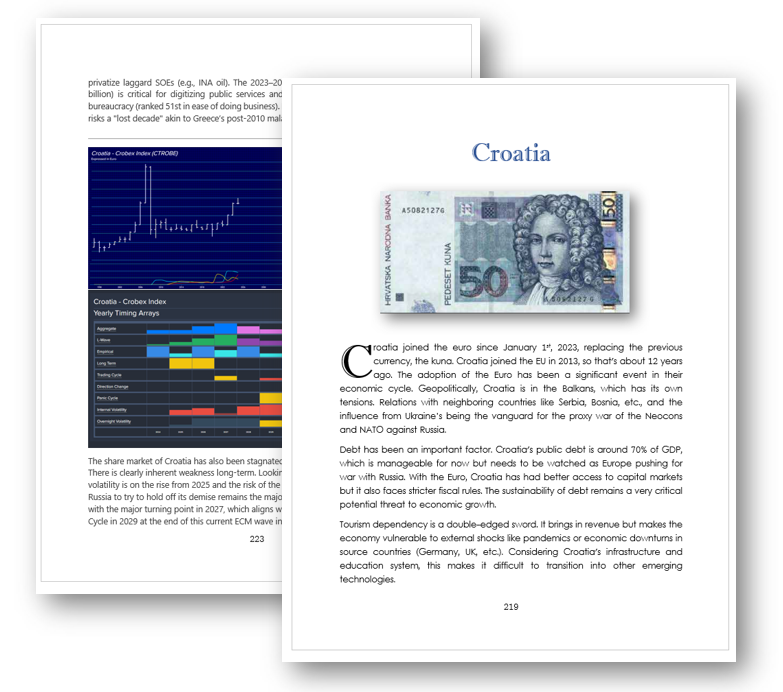
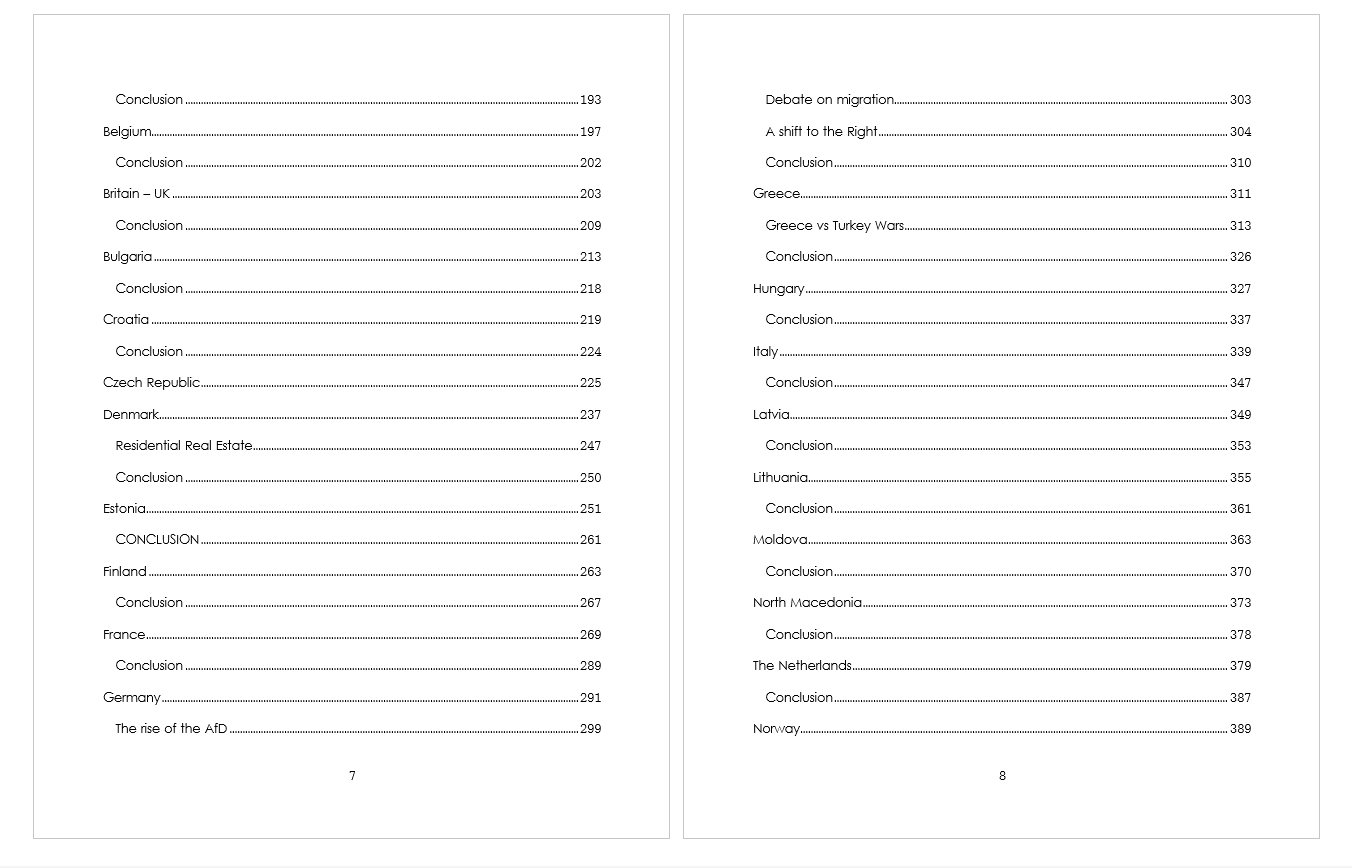
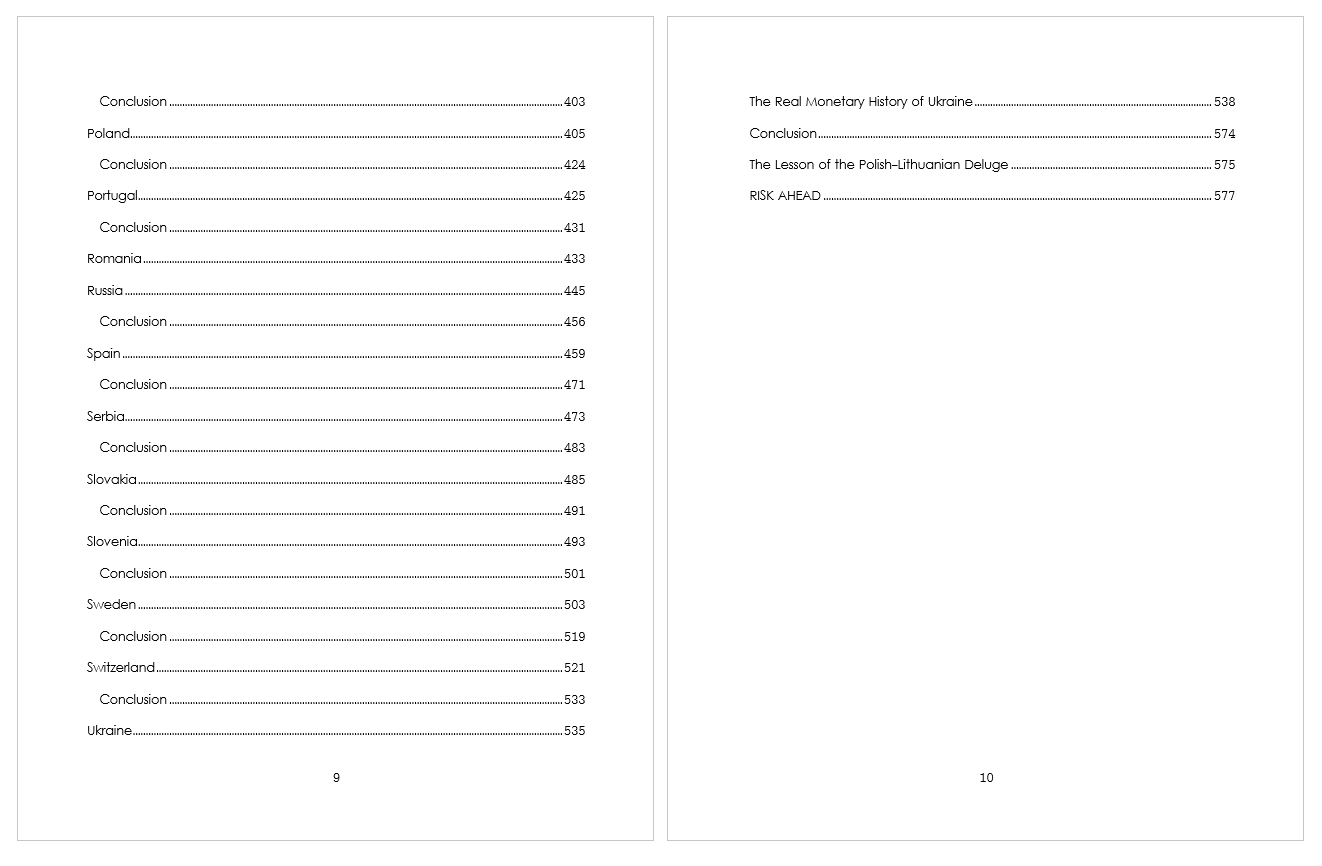
Our Institutional Report covering Europe’s countries with their forecasts generally out to 2032 has been a monumental effort. We greatly appreciate your patience, but this is vital for the decision-making for future investment in Europe. Things are certainly different from the past. Countries like Sweden and Switzerland, which had been neutral during previous world wars, have surrendered their neutrality and will not prove a safe harbor for capital during this conflict. Sweden has joined NATO and even sent jets to Poland. Switzerland gave up all foreigners with accounts and seized over $8 billion of accounts belonging to Russians, abandoning its historic traditions.
This report covers countries that nobody else even covers.
This also addresses the War with Russia & The eventual breakup of the EU itself
577 Pages fully illustrated with Charts and Arrays Per County, covering Currency and share markets
This Report is massive, and the price is $10,000 per institution.
(Please email to let us know how many reports you may need)
Posted originally on CTH on April 15, 2025 | Sundance
Speaking from Buenos Aires, Treasury Secretary Scott Bessent talks about President Donald Trump’s tariff policies, countries trying to work out new trade deals, Argentina paying off its swap line with China and the need for the U.S. to focus on central America to block Chinese expansion. WATCH:
Posted originally on CTH on April 15, 2025 | Sundance
Stephen Miller works earnestly to stop the nonsense narrative created by Democrats and left-wing corporate media in the deportation case of Kilmar Abrego Garcia.
As noted by Miller, a DOJ embed Lawfare operative, purposefully and with malicious political intent, inserted into a court filing that Garcia was “mistakenly” deported. As we have outlined, there are many such lawfare cells embedded in the DOJ awaiting their moment to detonate and disrupt the Trump administration; the Garcia narrative is an example of a singular detonation from within Main Justice by a singular cell, there are hundreds still waiting.
A frustrated Miller tries to educate the Fox pundit on the background of the case, which is completely different from the background the Fox pundit keeps repeating to the audience. WATCH (prompted):
.
It is frustrating to watch the White House have to react to all the issues created by the DOJ embeds, while simultaneously watching praise being heaped upon Attorney General Pam Bondi while she fails to root out the corrupt Lawfare operatives within her agency that create the issues the White House has to respond to.
Posted originally on CTH on April 15, 2025 | Sundance
Attorney General Pam Bondi makes her 76th appearance on Fox News to discuss the deportation of MS13 gang member Kilmar Abrego Garcia to El Salvador.
The Democrats and left-wing media allies are furious that Garcia has been deported despite two judges previously issuing a deportation order. Garcia is a citizen of El Salvador who has been returned to the nation of his citizenship. WATCH:
Posted originally on CTH on April 14, 2025 | Sundance
El Salvador President Nayib Bukele has been a key strategic ally for the Trump administration in support of the deportation and repatriation of hundreds of criminal aliens and gang members from the region.
Beginning in 2012, supported by President Obama, thousands of criminal gang members from south and central America flooded into the USA. In 2017, President Trump began to secure the border; however, in 2021 Joe Biden made the entry of alien gang members even easier. In 2025, President Trump is utilizing President Bukele and his maximum detention centers in El Salvador to reverse the flow and remove the gangs.
President Bukele has initiated major criminal justice reform in the nation of El Salvador, liberating millions of people who were terrorized by the criminal element. Today President Trump thanked Bukele for his partnership in the White House and held an open press assembly. WATCH:
Posted originally on CTH on April 14, 2025 | Sundance
White House National Economic Council Director Kevin Hassett appears on Fox Business to discuss President Donald Trump’s tariff agenda, semiconductor imports, the administration working on new trade deals and the impact of the global trade reset on China.
Happy warrior Kevin Hassett notes numerous countries are ready to sign new deals with the USA and there will likely be some group announcements very soon. WATCH:
.
Hassett also answered questions outside the White House to the media pool.
I have created this site to help people have fun in the kitchen. I write about enjoying life both in and out of my kitchen. Life is short! Make the most of it and enjoy!
This is a library of News Events not reported by the Main Stream Media documenting & connecting the dots on How the Obama Marxist Liberal agenda is destroying America