Leading Edge of Field to Fork Inflation Starts to Arrive in September Producer Price Index


Posted originally on the conservative tree house on October 12, 2022 | Sundance 

The “Producer Price Index” (PPI) is essentially the tracking of wholesale prices at three stages: Origination (commodity), Intermediate (processing), and then Final (to wholesale). Today, the Bureau of Labor and Statistics (BLS) released September price data [Available Here] showing another 8.5% increase year-over-year in Final Demand products at the wholesale level.  However, that’s not the bad news in this data.
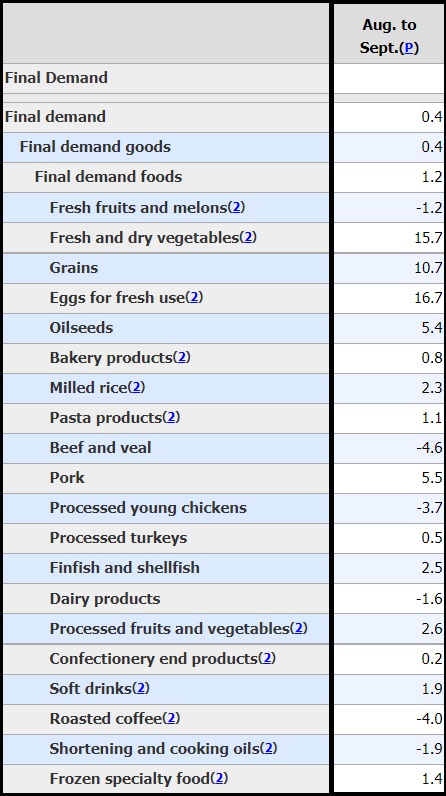
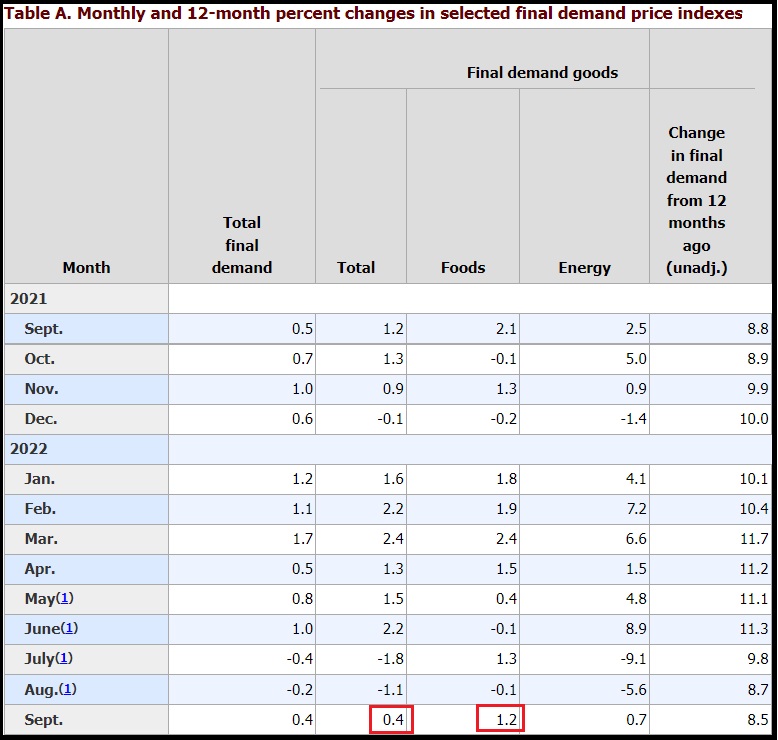
While the overall September PPI was higher than expected at 0.4%, the Final Demand Producer Price for food products in September was a whopping 1.2% (14.4% annualized).

The BLS notes the driver by saying, “a major factor in the September increase in prices for final demand goods was a 15.7-percent advance in the index for fresh and dry vegetables. Prices for diesel fuel, residential natural gas, chicken eggs, home heating oil, and pork also moved higher.”

That’s a 15.7% increase in price, in one month, for fresh and dry vegetables.  Annualized that’s a rate of price increase of 188.4% for vegetables.   Remember the warning about farm costs (energy, fertilizer, fuel) driving field to fork inflation at harvest?  This is the leading edge of that third wave of food price increases.

I have modified BLS Table-2 to focus specifically on food costs.  The data is on left.

You will note that ‘row crops’ are the big drivers along with grain and seed products.  This is exactly as we predicted it would be because those specific farming costs are the ones with greatest increase from energy, fuel, fertilizer, weed and insect control, and diesel costs.

All of those higher costs have been growing in the fields and will now surface at harvest.   The higher farm costs transfer from the field to the fork via the food supply chain.  This is only the leading edge of the price increase.

In October 2021 we first warned of the food price increases coming in distinct waves.  The first was Jan, Feb and March 2022.   The second wave was May through July 2022.  This third wave will be bigger than the first two and starts arriving this month, October 2022.

People laughed at me when I said in late 2022 eggs were going to reach .50¢ EACH ($6/doz).

Well, in September the price of fresh eggs jumped 16.7% in a single month.  That’s an annualized rate of price increase for eggs over 200%.

With hindsight you can clearly see the three waves of food price increases (BLS Table A):
Get ready and shop smart.

The October, November and December price increases in the grocery store are going to make the prior fresh food increases look small, as the full increased costs of farming operations starts to arrive at the supermarket.   Unfortunately, this will coincide with a wave of gasoline price increases, and the prices of natural gas are already skyrocketing.

.
Optimistic Gubernatorial Candidate Kari Lake Discusses Election Day in Arizona


Posted originally on the conservative tree house on August 2, 2022 | sundance

Republican gubernatorial candidate Kari Lake discusses primary election day today in Arizona.  {Direct Rumble Link} Most polls show Trump endorsed Kari Lake with a significant lead over the establishment candidate Karrin Taylor Robson; however, the GOPe apparatus (including Brett Baier) has been promoting push-polls that show a much closer race.

Ms. Lake appears on Steve Bannon’s war room podcast to discuss.  WATCH:

White House Covid Vaccine Summit: A Good Day for Big Pharma


Arnie Mazer Writer at TrialSite News where it was originally posted on Jul. 26, 2022, 6:30 p.m.

Opinion Article

The White House hosted a “Summit on the Future of the Covid-19 Vaccine” on Tuesday featuring a combination of administration officials, scientists, and executives from the pharmaceutical industry. The summit was chaired by Dr. Ashish Jah, the White House Covid-19 Response Coordinator. Attendees included Dr. Anthony Fauci, the director of the National Institute of Allergy and Infectious Diseases (NIAID), as well as Dr. Francis Collins, the former head of the National Institutes of Health (NIH). Also in attendance were the representatives of pharmaceutical companies, including Moderna and Pfizer. There is no question the advent of vaccines blunted the complete force of the Covid-19 pandemic as Fauci pointed out in his address to the group. He said that “vaccines have saved over 2 million lives and prevented 17 million hospitalizations” even though the World Health Organization pointed out, initially, the vaccines were not distributed equitably among poor nations while the pharmaceutical companies were reaping profits. But the emphasis of the Summit was on how vaccines will be developed and distributed.  

Big Pharma at the Summit

In his opening remarks, Dr. Jah extolled vaccines, saying they are “truly a miracle of human ingenuity and 70% of Americans are now vaccinated.” But Jah also said vaccines “need to be better.” Fauci talked about science and manufacturing working together to make sure vaccines are distributed equally and the private sector and science are working together to advance vaccine technology. Additionally, it was pointed out the Biden Administration is committed to the development of new vaccines. Fauci then presented slides of the projects the NIH was funding and developing with vaccine manufacturers. 

Included in this was a “Mosaic Approach,” a new form of vaccine that takes on multiple parts of the virus and could help protect against future Covid variants. Participating in the summit were Paul Burton of Moderna and Angela Hwang of Pfizer. Fauci’s presentation of the future of vaccines included the idea that vaccines need to be updated because the Covid virus is continually mutating.  

He emphasized the partnership between academia and the private sector. As effective as Fauci’s speech was, it also seemed as if he was giving free advertising to the drug companies with the idea of maximizing the benefits of the partnership of science and technology.  The transformative power of the new generation of vaccines continued to be pointed out and regional manufacturing of vaccines was repeatedly pointed to as a way to get more shots in arms. This point came from both Ashish Jah and Angela Hwang. Regional manufacturing and licensing is a way for pharmaceutical companies to increase profit. Moderna’s Paul Burton said manufacturing is a key part of the future, and the company had recently made deals to build new plants in Australia, the United Kingdom, Canada, and Kenya. In the future, vaccines will be administered through nasal sprays and patches. Angela Hwang pointed out that “probably two and a half billion people have received the Pfizer vaccine. That’s an incredible wealth of real-world evidence that we’re sitting on… I think that we have a great opportunity to also help us to understand, how can we design new therapies.” Hwang added Pfizer is “happy to be on this journey.”

mRNA Vaccines Originated with the Department of Defense

The summit gave a history of the mRNA vaccine and said the potion originated through a part of the Department of Defense known as the Defense Advanced Research Projects Agency (DARPA). The development of the vaccine came as a result of research to help American troops if they’d been exposed to biological warfare on the battlefield. Through that program and others, DARPA had been doing the groundwork for the United States to produce a rapid cure for a pathogen like Covid-19 for years. The pharmaceutical companies capitalized on developed technology and took it further. 

Transparency Emphasized

Summit panels continually talked about the fact not enough of the population has been vaccinated, and Dr. Francis Collins claimed the pandemic exposed the vulnerability of the American health care system. Collins said there was a need to build public trust even though, initially, the vaccines were not “distributed with equity.” This included the fact that the World Health Organization’s (WHO) Covid-19 Vaccines Global Access (COVAX) has to do a better job of vaccine distribution through what was termed an “allocation framework”.  In closing, Dr. Ashish Jah emphasized, again, the importance of public and private partnerships. The summit was, overall, informative and a great day for the pharmaceutical companies. 

The impact of such governmental backing of just a few companies most certainly reinforces the market brand. The presenters didn’t do much reflection as to what they could have done better during the pandemic. Rather, industry and government collaboration on more advanced vaccines suggests the government will increasingly be involved in helping fund the few winners of the vaccine and drug development business.

Tucker Carlson Delivers Monologue on the Odd Nancy Pelosi Trip to Tiawan


Posted originally on the conservative tree house on August 2, 2022 | Sundance

As he outlines the controversial trip by Nancy Pelosi to Tiawan, Tucker Carlson asks many questions that people are thinking. {Direct Rumble LinkWATCH:

Global Recession Spreads, European Factory Activity Contracts in July, Japanese Factory Activity Also Drops


Posted originally on the conservative tree house on August 1, 2022 | Sundance 

In addition to the contraction in South Korean manufacturing announced last night, European manufacturing and factory activity is also contracting with less output, higher buildup of inventory and fewer orders for finished goods.  The global recession is being measured fast and furious.

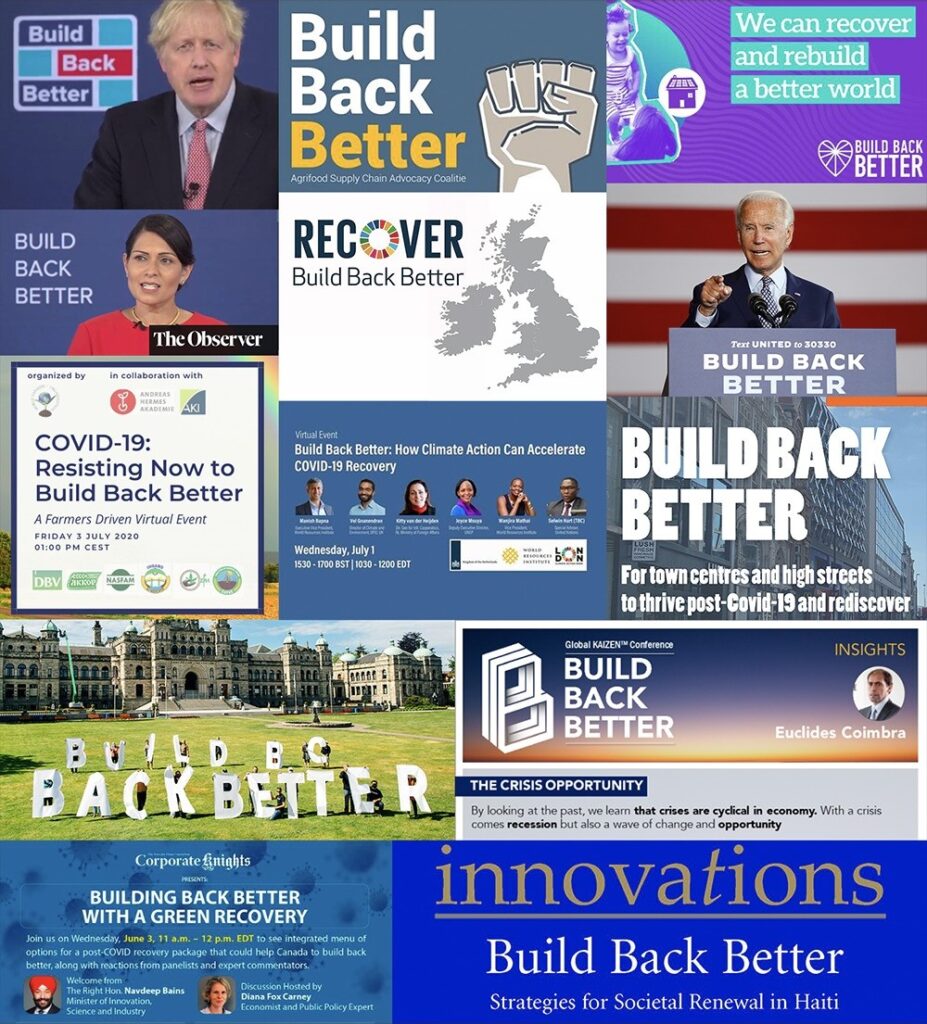
Every economic outcome is connected to a purposeful decision by the leaders of western industrialized nations to follow the Build Back Better climate change agenda.  Higher energy costs, an outcome of the collective policy to stop new production of coal, oil and gas, which has transferred into higher food prices, farm prices, gasoline prices, heating and cooling prices as well as electricity rates, is forcing consumers to stop purchasing non-essential products.

The sale of durable goods collapsed in the first half of this year; however, no policymakers or bankers wanted to admit it and they kept saying there was an excess of demand.  Now, with fewer customers for durable goods in the market, global manufacturing and factory outputs are dropping fast.  Eventually the central planners are going to have to admit their pretended demand does not exist.

While there is a natural lag in the activity, the rate of factory contraction will be proportionate to rate of the drop in demand.  Meaning we have only just begun to see the manufacturing decline that lags a few months behind consumer activity.

LONDON, Aug 1 (Reuters) – Manufacturing activity across the euro zone contracted last month with factories forced to stockpile unsold goods due to weak demand, a survey showed on Monday, adding to concerns the bloc could fall into a recession.

S&P Global’s final manufacturing Purchasing Managers’ Index (PMI) fell to 49.8 in July from June’s 52.1, just ahead of a preliminary reading of 49.6 but its first time below the 50 mark separating growth from contraction since June 2020.

An index measuring output, which feeds into a composite PMI due on Wednesday and seen as a good gauge of economic health, sank to a more than two-year low of 46.3. In June it was 49.3.

“Euro zone manufacturing is sinking into an increasingly steep downturn, adding to the region’s recession risks. New orders are already falling at a pace which, excluding pandemic lockdown months, is the sharpest since the debt crisis in 2012, with worse likely to come,” said Chris Williamson, chief business economist at S&P Global. (read more)

The WEF directed politicians are trying to bring energy demand down to match the energy shortage they have created. The various western government leaders, Biden included, want/need a recession to drop energy demand. The central banks and federal reserve are supporting the policymakers by driving up interest rates into the recession.

The combined effort leads to a shrinking of the global economy.

By lowering the economic activity and forcing their western nations into a joint collaborative and intentional recession, the central planners hope to offset the inflation they created by blocking coal, oil and gas production. By intentionally collapsing demand, the prices of excess non-essential goods will drop; however, there will be no one to purchase those goods at any price because global employment in a global recession is tenuous at best. This is the spiral they are trying to manage.

TOKYO (Reuters) – Japan’s manufacturing activity expanded at the weakest rate in 10 months in July, as pressure from rising prices and supply disruptions hurt output and new orders, suggesting a solid post-pandemic economic recovery is still some way off.

The final au Jibun Bank Japan Manufacturing Purchasing Managers’ Index (PMI) dipped to a seasonally adjusted 52.1 in July from the previous month’s 52.7 final.

That marked the slowest pace of growth since September last year, and was slightly lower than a 52.2 flash reading.

[…] Manufacturing activity suffered from contractions in output and overall new orders as well as a slower expansion in the backlog of work, the PMI survey showed.

[…] But a government official also warned downside risks for output remained as parts supply delays lingered. That is one of many reasons why the Bank of Japan remains resolutely committed to its ultra-low policies despite a global trend of rising interest rates to fight rampant inflation. (more)

It’s incredible how they various western leaders and bankers can still say there is too much demand, when every single economic indicator clearly shows that all consumer purchasing of non-essential goods and services has stopped.

We are seriously looking at a future employment scenario that might be as bad as it was during the economic lockdowns in the pandemic.  This time all of the unemployment will have been created by intentional climate change policy.

These ideologues are seriously disconnected from the pain they are inflicting.

Biden Thinks Americans Received $8K Stimulus Checks


Armstong Economics Blog/Politics Re-Posted Aug 1, 2022 by Martin Armstrong

There are slips of the tongue, but President Biden cannot speak freely without a teleprompter. Every time he goes off script, he embarrasses his country. The president of the free world has no idea what is going on, and his mental health continues to decline publicly. The American Rescue Plan sent a trivial amount of money to Americans making under $75,000 annually at the expense of taxpayers. The government had no way to pay for this $1.9 trillion plan but implemented $1,400 checks on two separate occasions to pacify the people. Joe Biden thinks he provided Americans with $8,000.

Biden believes the public should ignore inflation and feel grateful for the imaginary money. “There’s reason to be down but I started thinking about it … the first year, we were able with the rescue plan, we were able to send them a check for eight grand,” the president said. “I mean a check. Beyond that by the way, there was more than that.” Biden then chimed in about his middle-class experience, which occurred decades ago when the US economy was unrecognizable compared to today. “That’s a lot of money, and so it helped save a lot of people in terms of getting thrown out of their home and rental housing and a whole range of things,” he said. He used the example of someone earning $120,000 receiving the imaginary $8,000 check, despite anyone in that income bracket being ineligible for a stimulus check.

The president cannot remember basic facts about his own policies. Biden belongs in a home for the elderly and senile, not the White House.

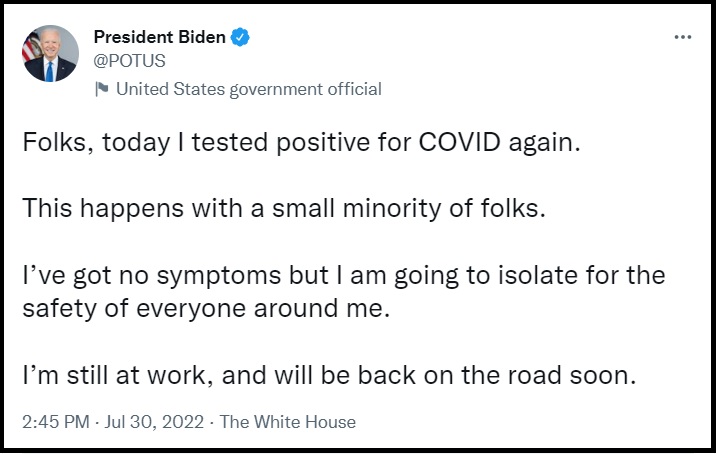
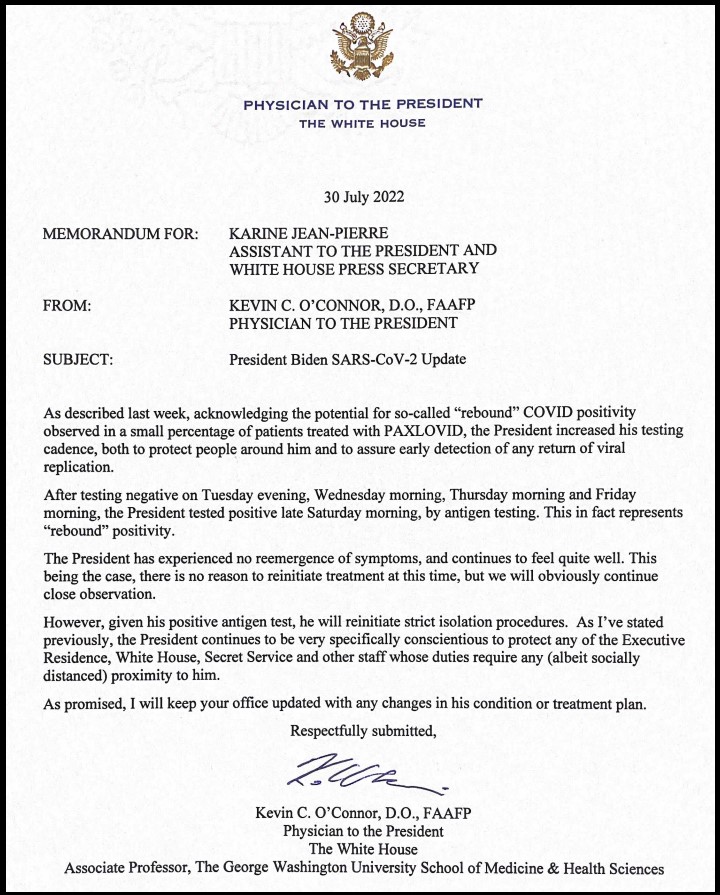
Double Vaxxed, Double Boosted, Loaded with Paxlovid, Joe Biden Gets COVID Again


Posted originally on the conservative tree house on July 30, 2022 

Well, isn’t that convenient.   Sorry folks, I can’t come out and take questions, I’ve got the Rona again.

[SOURCE]

Only the second thing that has been positive during his tenure.

[Source Link pdf]

Fed Preferred Inflation Index Jumps 6.8% in June, Largest Increase in Four Decades


Posted originally on the conservative tree house on July 29, 2022 | Sundance 

The federal reserve looks carefully at the Personal Consumption Expenditures (PCE) price index when weighting inflation data.  The Bureau of Economic Analysis just released the PCE index for June [DATA HERE] and the results show a 6.8% increase in June from a year ago, the largest jump in four decades.

Wage growth in the second quarter (April, May, June) was generally strong, rising 1.6%.  However, it now looks like the consumption index and the wage indexes are creating their own inflationary spiral.  In addition to supply-side inflation, driven by Joe Biden’s energy costs, the labor costs are now increasing substantially which adds costs on the production side of the economy.

As wages go up to keep pace with supply side inflation, the prices of goods and services produced/handled by those workers also increases.  This is the inflation spiral that can get out of hand quickly.  The major concern (not necessarily expressed by pundits) is the inability of any institutional economic response to offset the originating inflation caused by the energy policy.  The economic team is pretending supply-side inflation created by energy policy doesn’t exist. They are only directing attention to demand side inflation.

As long as energy policy keeps driving the price of electricity, gasoline and petroleum products higher, workers need higher wages.  Those wage increases, while significant in scale, still lag the rising originating prices of the goods; and the wage growth adds to the final costs. Inflation then becomes structurally embedded, hyper-inflation begins.  This looks like the current situation.

The monetary policy makers (fed reserve) can only impact the demand side of the inflationary cycle.  Raising interest rates does reduce demand; however, it also reduces labor at the same time.   Monetary policy cannot impact the originating source of inflation that starts this spiral.  The core issue is Joe Biden’s Green New Deal energy agenda.

WASHINGTON – […] An inflation gauge closely tracked by the Fed jumped 6.8% in June from a year ago, the government said Friday, the biggest such jump in four decades. Much of the increase was driven by energy and food.

On a month-to-month basis, too, prices surged 1% in June, the biggest such rise since 2005. Even excluding the volatile food and energy categories, prices climbed 0.6% from May to June.

Employees’ wages, excluding government workers, jumped 1.6% in the April-June quarter, matching a record high reached last fall. Higher wages tend to fuel inflation if companies pass their higher labor costs on to their customers, as they often do.

Friday’s figures underscored the persistence of the inflation that is eroding Americans’ purchasing power, dimming their confidence in the economy and threatening Democrats in Congress in the run-up to the November midterm elections.

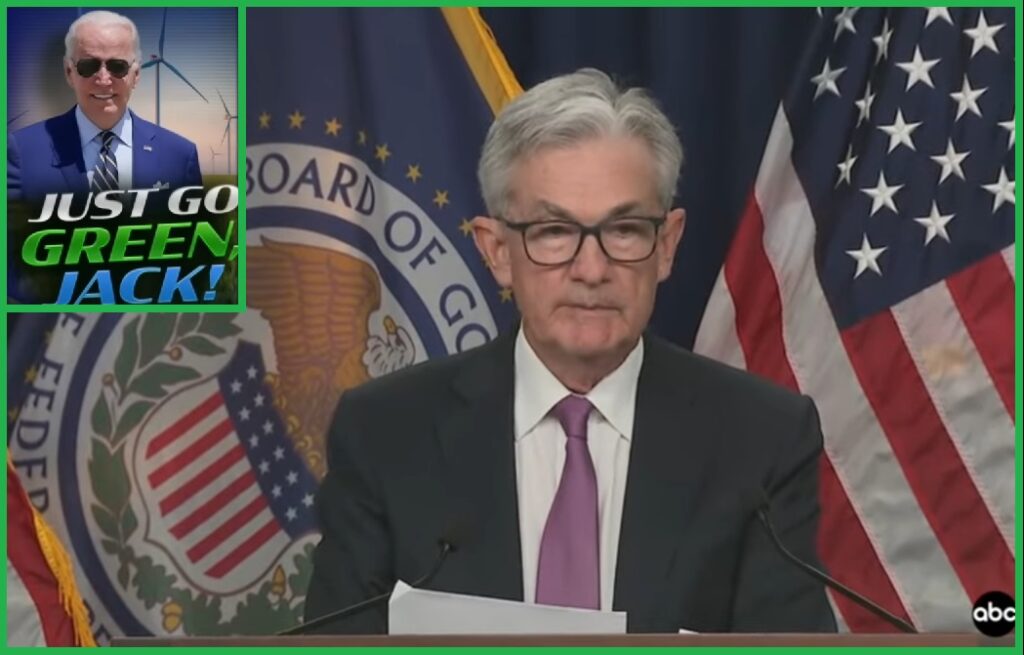
But more persistent drivers of inflation show little, if any, evidence of slowing. The wage data released Friday — a measure known as the employment cost index — indicated that paychecks were still growing at a robust pace. That’s good for workers, but it could raise concerns at the Fed about its effect on prices. Chair Jerome Powell specifically cited this measure during a news conference Wednesday as a source of concern for the the central bank’s policymakers.

“This is a (report) that’s going to keep Fed officials up at night,” said Omair Sharif, president of Inflation Insights. (read more)

U.S. Postal Service Opens Permanent Political Division, Dedicated to the Delivery and Return of Mail-in Election Ballots, DNC Lawyer Mark Elias is Very Happy


Posted originally on the conservative tree house on July 29, 2022 | Sundance 

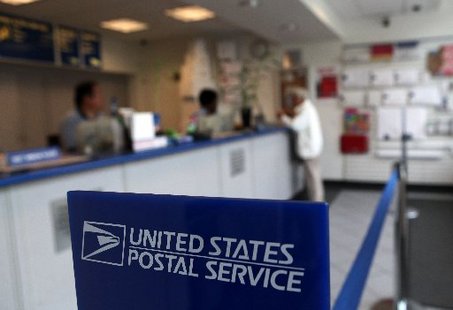
With mail-in ballots becoming a feature of all future elections, the United States government, specifically the United States Postal Service (USPS) is now creating a permanent division inside USPS to control the delivery and return of the election ballots.  Do you know the political affiliation of your mail courier?

As often said, it’s not the vote that matters, it’s the counting…. or in this instance, the collection of the votes that really matters.  Democrat lawyer Mark Elias, in charge of protecting all fraudulent voting initiatives on behalf of the Democrat National Committee, is happy with the news.

Keep in mind the union representing 300,000 U.S. postal workers previously endorsed Democrat Joe Biden for president. The National Association of Letter Carriers, is a fully compromised left-wing division of the USPS.

The USPS has just created a division of NALC employees exclusively to handle mail-in voting, just in time for the mid-term election.

WASHINGTON (AP) — The United States Postal Service is creating a division to handle election mail issues as part of an effort to ensure swift and secure delivery of ballots for the 2022 midterm election, officials said Wednesday.

The idea behind the creation of the Election and Government Mail Services is to have a permanent division dedicated to dealing with election matters, instead of handling issues one at a time as in the past.

Adrienne Marshall, executive director of the division, said Wednesday that the services will oversee “election mail strike teams” in every local and district community to address any problems that might arise.  “We are fully committed to the secure and timely delivery of the nation’s election mail,” she said. (read more)

“Swift and secure delivery”?

“I told ya,… and they spent all that time looking at mules and machines”…

Shrinking the Economy is a Feature, Not a Flaw – Massive Layoffs and Unemployment Likely Hits in September


Posted originally on the conservative tree house on July 29, 2022 | Sundance 

The distance between Wall Street and Main Street has never been as brutally obvious as it is today.  It is simply stunning to watch the cheerleading and casual nature of the economic and financial pundits as they speak esoterically about how policies intended to reduce the U.S. economy are so wonderful.

Seriously, the disconnect in life impact has never been as stark.  At least in previous times of economic contraction there was a smidgen of appreciation for the pain that unemployment and rising costs bring to the blue collar and middle-income working class.  In this new era, the financial stress and visible outcomes of destroyed families are simply shrugged aside as if these are abstract consequences.

In this segment former Federal Reserve vice-chair Randal Quarles, notes with a casual flippance how the economic policies of the Biden administration are simply doing what needs to be done in order to intentionally reduce the U.S. economy.  Sure, massive unemployment, in direct correlation to the scale of the inflation that precedes it, is almost certain, but hey…. the economy must be collapsed if the Build Back Better, Green New Deal, agenda is to be fully implemented. WATCH:

Maybe this flippancy seems starker because those who consider themselves outside the collateral damage impact zone were not visible in prior generations.  Perhaps it is because modern technology and the information era allows us to see conversations that were previously only described in print newspapers and journals.  Whatever it is, the shameless disconnect between the unaffected rulers and the proles who have to live with the consequences are far more visible today than before.

Smiling while describing a future where working men are emasculated by their inability to support their families. Smiling and shrugging while explaining a landscape where moms are worried about how to feed their children, as the checkbook in the household creates a type of stress these ‘betters’ have likely never experienced, is almost psychotic in its detachment.

Desperation is not a good situation for any society.

Worse yet, laughing in the face of desperation leads to the type of outcomes that eventually hits the ‘betters.’

[ SOURCE ]