The 1943 Copper Penny a Flop? Or just Over Hype by Heritage Auctions?


QUESTION: I read that the Heritage auction of the penny they said would bring $1.7 million was a flop. Any indication as to why? Or is it just the firm trying to pawn something for big bucks?

HK

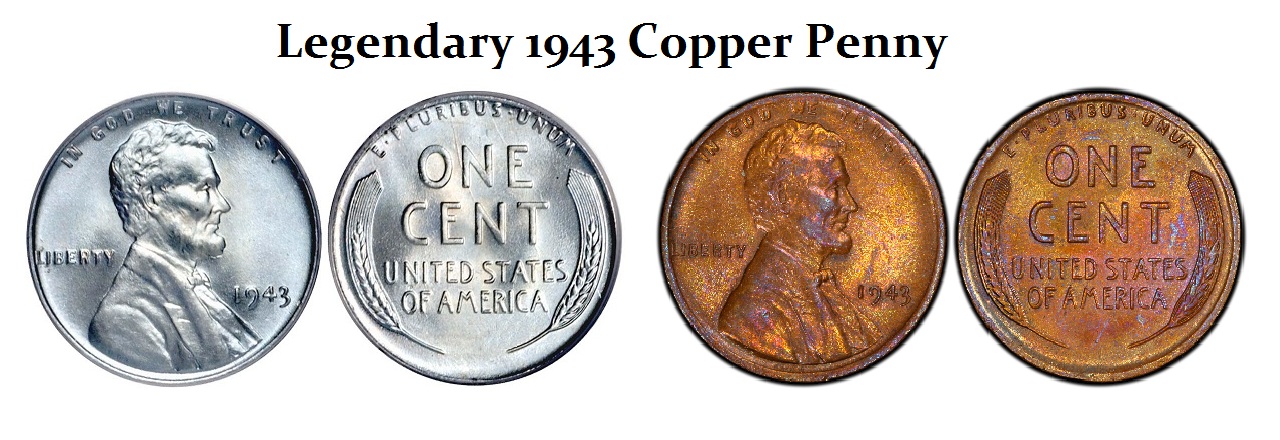
ANSWER: I have no idea why Heritage would have claimed the coin would bring $1.7 million. It is not that rare. There are about 40 to 45 known 1943 copper cents from the Philadelphia Mint. The general assumption is that they were struck by accident when there were some copper blank planchets still remaining in the press hopper when production began on the new steel pennies.

Now as far as sales go, there was a 1943 copper cent which was first offered for sale back in 1958, which sold for more than $40,000, or so it was claimed. Subsequently, there was one sold for only $10,000 at an ANA convention in 1981. The highest amount ever paid for this error previously was $82,500 back in 1996.

There was only one copper 1943 penny known from the Denver Mint which did sell they claim for $1.7 million by Legend Numismatics of Lincroft, New Jersey. I would not guarantee that price personally. US coins tend to get really hyped. This unique coin, not publicly known to exist until 1979, was certified PCGS MS64BN. If Heritage was claiming their penny should bring $1.7 million which was from the far more common hoard of Philadelphia, I really question such expertise. The Heritage example sold for only $204,000, which is a modest advance over the last sale of $82,500 back in 1996.
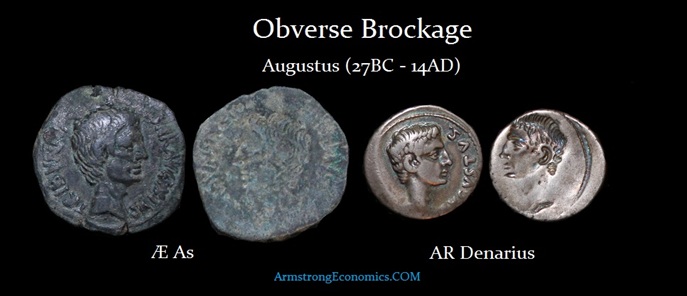
The culture in American coins is strikingly different. American collectors seem to prize errors. A brockage is an error coin where one side is normal, but the other side instead of the reverse displays the obverse again, but incuse or in a negative mirror-like form. Brockage errors are caused when an already minted coin sticks to the coin die and impresses onto another blank pressing a mirror image of the other coin into the blank.

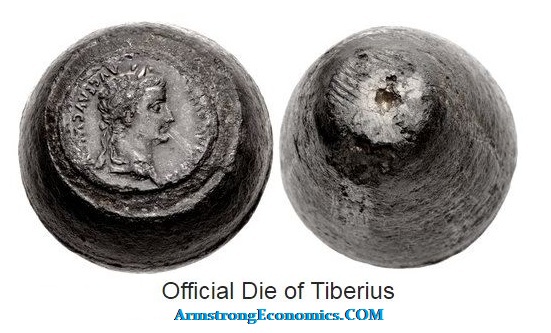
Brockage errors coins are rare. However, they do not bring significant premiums. A nice Augustus(27BC-14AD) denarius may bring $1,000+ whereas the Brokage will bring about $500 as illustrated above. Here is an extremely rare official Roman die of Emperor Tiberius (14-37AD) with precisely this problem of a silver denarius stuck to the reverse die.
This die of Tiberius is UNIQUE and was discarded because of the brokage error coins it would have produced which would have appeared like the Augustus denarius illustrated above. There are only about 12 official Roman dies that have survived.

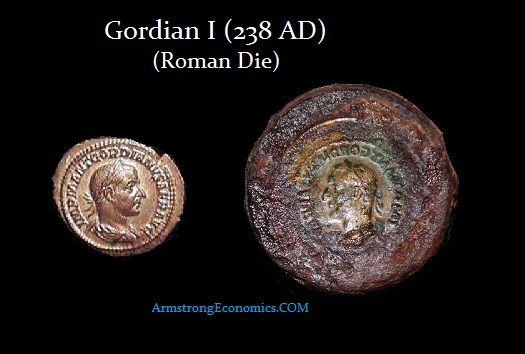
Here is Another genuine Roman die of an extremely rare Emperor Gordian I (238AD) who reigned for only 21 days. Obviously, this die was discarded because he did not last in office very long.

There is a completely different culture outside of American coins. Such an error would never bring such premiums. In ancient coins, the premiums attained are for high quality.
The Coming Launch of Socrates


QUESTION: Marty,
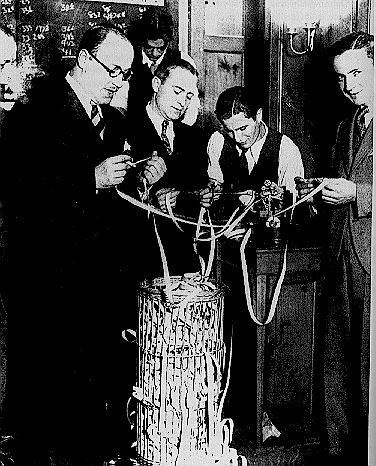
Back in 2015 when they closed the Chicago MERC after 167 years, you did a piece about how flashing screens do not provide the same “feel” as tape watching and floor trading. You also mentioned in that piece that “after Socrates, you will recreate something you always wanted to do” in relation to bringing “feel” back into trading.
My question is; given all the directions you are being pulled- is this still something you aspire to undertake?
I grew up tape watching, and despise blinking screens…it’s a lost art and would welcome anything you might undertake in this area.
Rw

ANSWER: Absolutely. We are getting ready for the first launch very soon. The intention is to expand the system to intraday. We are in negotiations with a data-provider to make the system live intraday with reversals and timing on an hourly basis. Trust me. It has been this initial launch that has been delayed by banks changing rules causing us to have to re-write the payment systems three times. Then we have completely different rules for outside North America so it required then setting up another whole new payment system. Then we have been having to set up yet a third for China. This has all been driven by this Hunt for Taxes.

It will be that intraday version that will be sound. Also in Phase-Two of our launch, we will be looking at providing a download version that will link back into our system so you can just talk to it and it will answer. We just cannot do that level of sophistication over the internet.

Revealed: False Flag Attack on GOP Senate Hopeful


Published on Jan 9, 2019

SUBSCRIBED 120K

The New York Times now reports a second stealth attack by Progressives aimed at tarring former Judge Roy Moore during his 2017 Senate race. Bill Whittle wrestles with how to fight an opponent who fights dirty, and what Judge Moore should have done to combat the allegation. Bill Whittle Now is a production of the Bill Whittle network of Members who contribute their own money to ensure these conversations make a cultural impact. Become a Member today at http://BillWhittle.space/subscribe

Germany Slips into Recession Following the Economic Confidence Model


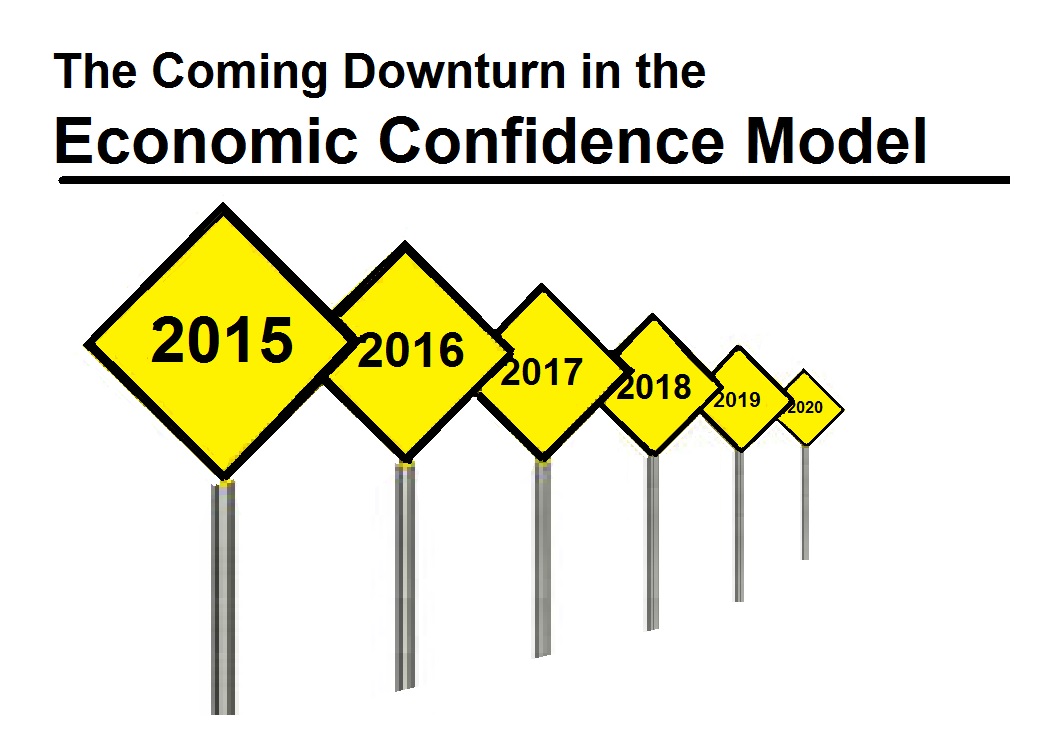
COMMENT: Mr. Armstrong; Your ECM has been amazingly accurate. Not only did real estate peak, but it is now official, Germany is in a recession.

Great job

HW

REPLY: There is an accurate business cycle that unfolds but you must step back and observe it from a global perspective. The Economic Confidence Model has a long track record.  The numbers are shocking. For 8 out of 12 months in 2018, German production has declined. On average, manufacturing declined 4.1% in November and energy production decline 3.1% in November. Even new construction has declined 1.7%.

May EU Elections Promising to be Major Issue


Two more politicians in France have abandoned Macron and joined the right party of LePen ahead of the May European elections. Our sources in France are clearly revealing that the Yellow Vest movement has had a profound impact on politics. Macron’s promises to raise taxes on the rich are falling short because that just never seems to result in lower taxes for anyone else.

Our models are shaping up to show May as the major turning point here in 2019. This will have a profound impact on European share markets as well as the currency. Meanwhile, the EU is really at war with Poland and its policies have been outright deliberately intent on punishing Poland. This is leading to the development of a new coalition causing Ital and Poland to join together against Brussels to form their own anti-EU league.

Things, that make other things, make sense…


In hindsight it is quite clear the professional political class had two approaches toward candidate Donald Trump:

♦ Approach #1 was to eliminate him: see spygate, surveillance, FBI, DOJ and CIA operations to destroy the threat etc.; the Special Counsel Mueller investigation is an ongoing continuance of that primary approach.

♦ Approach #2 was an effort involving the republican side of the deep state apparatus, who could be deployed as a controlling influence, on the inside.  [These would be the same people who earlier constructed the failed 2016 campaign ‘splitter strategy’ to help nominate Jeb Bush.]  Ongoing decepticon turnover, in opposition to the Trump policy implementation, seemingly reflects the consequences of the secondary approach.

While in charge of the transition team, Vice-President-elect Pence relied heavily on former Bush Secretary of State Condi Rice for cabinet and administration recommendations:

(Link)

Condi Rice recommended: Rex Tillerson, HR McMaster, Nikki Haley and James Mattis.

FLASHBACK – In the months prior to the September 11th, 2001 attack, Condi Rice was the National Security Adviser to President Bush:

On July 10, 2001, two months before the attacks on the World Trade Center and the Pentagon, then-CIA Director George J. Tenet met with his counterterrorism chief, J. Cofer Black, at CIA headquarters to review the latest on Osama bin Laden and his al-Qaeda terrorist organization. Black laid out the case, consisting of communications intercepts and other top-secret intelligence showing the increasing likelihood that al-Qaeda would soon attack the United States. It was a mass of fragments and dots that nonetheless made a compelling case, so compelling to Tenet that he decided he and Black should go to the White House immediately.

Tenet called Condoleezza Rice, then national security adviser, from the car and said he needed to see her right away. There was no practical way she could refuse such a request from the CIA director.

For months, Tenet had been pressing Rice to set a clear counterterrorism policy, including specific presidential orders called “findings” that would give the CIA stronger authority to conduct covert action against bin Laden. Perhaps a dramatic appearance — Black called it an “out of cycle” session, beyond Tenet’s regular weekly meeting with Rice — would get her attention.  (read more)