As it appears the US is marching toward war, what is notable this time, unlike what happened in the run-up to US participation in WW2, was the sense of isolationism in this country. Roosevelt was clearly walking a fine line, knowing there was no stomach for US involvement in Europe. US involvement in WW1 also started out similarly with many in the US, in particular those of Irish descent who opposed helping the British in their battle in Europe. Wilson, another Democrat, also walked the straight and narrow, professing neutrality which history shows was a lie. Later, his 14 points, the forerunner to an imposed peace on Germany, would backfire. The League of Nations would die off.
But today, unlike the prior two world wars, both democrats and republicans appear to embrace an escalation in conflict. And with an old, decrepit mannequin in the WH, it looks like there’s nothing stopping this push toward war. Republicans especially are a total disgrace. They stabbed Trump in the back repeatedly or let him twist in the wind for 4 years and for the first two when they were the majority party…did little to show their one chance to lead. Trump did more for peace than any president since Kennedy. Trump at least tried to engage Xie, met with the North Korean leader and focused more on building up the US domestic economy. He tore up US participation in these climate pacts. He focused on building the wall to stem the flow of illegals crossing the border. Her met with the Mexican president and forced his counterpart to accept an arrangement that kept illegals inside Mexico pending and petitions later to the US government for entry based on their applications. And for all this, he was the target for a fraud based on collusion to get elected with Russian help. Which turned out to be baseless. Later, he was implicated in the Jan 6 insurrection…courtesy of both parties. Which itself was a total fabrication.
Both Dems and R’s are now marching lockstep toward war. It’s no wonder public opinion toward the government is sinking to all-time lows. In both parties. Both of which will be swept away in the years ahead for betraying this country on so many levels.
MS
REPLY: Hillary, started this whole mess by launching the fake dossier and blaming Putin for interring in the election. She managed to convince 70% of Democrats that Russia was the enemy. RussiaGate, despite being discredited, set in motion this hatred for Russia. Still, 65% of Americans support Ukraine when in fact what they are doing is relying on a border drawn by Kruschev for administrative purposes and demanding that the Donbas is their territory when NEVER for even a single day have Ukrainian people ever been the majority in that region. This is a land grab and nothing more that is engulfing the entire world all because our idiot politicians want to destroy the world economy so they can blame it on war and default on all the debt.
I get hate mail and death threats from Ukrainian Nazis pretty regularly now. This only shows that we are historically on the wrong side. In WWII, we fought against the Nazo movement. This time, we support ethnic cleansing.
Americans fled here to escape the political chaos and warmongering in Europe. So when WWI and WWII took place, the American people saw no reason to go support a political movement that they had fled. Indeed, FDR’ solemn campaign promise was no boys would be sent to fight in a foreign war. That is why he did everything possible to get Japan to attack Pearl Harbor for that was the ONLY way to overcome the anti-war position of Americans. They have done the same to get Russia to act to protect the Donbas from the Ukrainians who began the civil war.
FDR repeated that solemn promise in Boston which was predominantly Irish. They refused to defend Britain openly recalling what the English did to the Irish. That was why FDR needed Japan to attack Pearl Harbor. Today, they needed Russia to launch its special operation which was absolutely legal under the United Nations Rules for he was protecting the Donbas, not seeking to conquer Ukraine.
All of those memories of past wars are long gone. Today, we cheer on war because we think it will be like watching Iraq on CNN after nightly dinner. As they say:
Posted originally on the CTH on February 12, 2023 | Sundance
Appearing on Face the Nation with Margaret Brennan, House Foreign Affairs Committee Chairman, Mike McCaul, discusses the ongoing Biden administration battle in the sky with balloons, objects and various Unidentified Flying Objects (UFO’s).
McCaul identifies China as the most likely culprit for sending the spy and surveillance equipment over North America, claiming the timing of the spycraft arrival against the backdrop of the military revealing the latest stealth bomber, the “B-21 Raider,” does not seem coincidental.
Additionally, because of course he does, Chairman McCaul notes that if we do not continue to send billions to Ukraine, then China and Russia will continue sending spy missions over the United States. The way we defeat the UFO’s is to send more money to Ukraine. That’s his logic, and he’s sticking to it. WATCH:
MARGARET BRENNAN: We go now to Congressman Michael McCaul. He is the Chairman of the House Foreign Affairs Committee. Good morning to you.
REPRESENTATIVE MICHAEL MCCAUL (R-Texas): Morning, Margaret. Thanks for having me.
MARGARET BRENNAN: I want to start on this unusual activity, three takedowns in eight days. In the case of the spy balloon, this was Chinese surveillance, according to the administration. On Friday, they put restrictions on six Chinese companies that allegedly helped China’s military build that balloon. Is this the right move, to just try to make it harder for them to get U.S. technology, or does Congress need to do something that’s more broad?
REPRESENTATIVE MICHAEL MCCAUL: Well, it’s certainly the right move.
It will be one of my number one priorities, as the chairman of the Foreign Affairs Committee in this Congress, to stop the export of technology to China that then goes into their most advanced weapons systems, in this case, a sophisticated spy balloon that went across three nuclear sites, I think it’s important to say, in plain view of the American people, you know, in Montana, the triad site, air, land, and sea nuclear weapons.
In Omaha, the spy balloon went over our Strategic Command, which is our most sensitive nuclear site. It was so sensitive that President Bush was taken there after 9/11. And then, finally, Missouri, the B-2 bomber, that’s where they are placed. It did a lot of damage.
MARGARET BRENNAN: Is that what U.S. intelligence told you? They have been saying they mitigated the impact.
REPRESENTATIVE MICHAEL MCCAUL: They say they mitigated it.
But my assessment, and — and I can’t get into the detail of the intelligence document — is that, if it was still transmitting going over these three very sensitive nuclear sites, I think — I think, if you look at the flight pattern of the balloon, it tells a story as to what the Chinese were up to as they controlled this aircraft throughout the United States.
Going over those sites, in my judgment, would cause great damage. Remember, a balloon could see a lot more on the ground than a satellite.
MARGARET BRENNAN: So, you said you want to try to stop the export of technology that can be used by China’s military.
As a conservative, though, how much — this has to make you a little uncomfortable to have government try to control private business investment. How do you do that?
REPRESENTATIVE MICHAEL MCCAUL: Well, we have what’s called an entities list. The Department of Commerce had jurisdiction over the office within their — the Department of Defense has one.
We need to harmonize those, make it more security-focused. You know, capital flows is one issue, but technology exports into China that they use to turn — that maybe eventually turn against us, we have to stop doing that.
And I think we can do it by sectors. They do it by companies now. Obviously, they identified the six. I think, shockingly, when the balloon was recovered, it had American-made component parts in there with English on that. It was made — you know, parts made in America that were put on a spy balloon from China. I don’t think the American people accept that.
MARGARET BRENNAN: Do you believe that this was a strategic choice by Xi Jinping’s government in Beijing, or do you believe that it was just the left and right hand not knowing what was going on?
REPRESENTATIVE MICHAEL MCCAUL: When I saw the sites that it was flying over, it was very clear to me this was an intentional act. It was done with provocation to gather intelligence data and collect intelligence on our three major nuclear sites in this country.
Why? Because they’re looking at what — what is our capability in the event of a possible future conflict in Taiwan? They’re really assessing what we have in this country. I find it extraordinary the timing of this flight as well, right before the State of the Union speech, and also right before Secretary Blinken was scheduled to meet with Chairman Xi.
I think it was very much an act of belligerence on their part. And perhaps they don’t care what — what the American people think about that.
MARGARET BRENNAN: Before I let you go, I want to ask you.
You voted in the last Congress to provide a lot of assistance to Ukraine. But, this past week, at least 10 of your members, Republican members, introduced a bill called the Ukraine Fatigue Resolution to try to cut off aid.
How hard is it going to be to have a Republican-led House continue to help Ukraine?
REPRESENTATIVE MICHAEL MCCAUL: I still believe, Margaret, there are many, on both sides of the aisle, a majority of the majorities in support of this.
We have — we have factions on the left and right that do not support Ukraine…
MARGARET BRENNAN: This WAS a Republican bill.
REPRESENTATIVE MICHAEL MCCAUL: … assistance, and that will probably continue.
Right. And I do think, for me, particularly, it’s — we have to educate, where has the money gone? You know, the audits that are in place right now, there are four of them on Ukraine funding. And we have to explain, why is Ukraine so important?
You know, what happens in Ukraine impacts Taiwan and Chairman Xi, that China’s aligned with Russia, Iran and North Korea against freedom, democracy in the West. And I think that’s a debate we’ll have, but I still feel very confident that we will give them the assistance they need.
MARGARET BRENNAN: Yes.
REPRESENTATIVE MICHAEL MCCAUL: I would like to see it faster, so they can win this faster.
MARGARET BRENNAN: So, you — you think Matt Gaetz, Marjorie Taylor Greene, others who signed this need to be educated?
REPRESENTATIVE MICHAEL MCCAUL: I — you know, look, we took Marjorie Taylor Greene into a briefing.
She was satisfied, I thought, with what — the controls that have been put in place on the spending. But I don’t think that they will be — ever be persuaded that this cause is something that they would support.
I think they have this false dichotomy that somehow we can’t help Ukraine beat back the Russians, who invaded their country and — and secure the border. We can do both. We’re a great nation. And the fact of the matter is, unfortunately, this administration has chosen not to secure the border. He can’t even control and secure our airspace now, it looks like.
MARGARET BRENNAN: Congressman McCaul, thank you for your time today.
REPRESENTATIVE MICHAEL MCCAUL: Thanks, Margaret. Thanks for having me.
Posted originally on the CTH on February 8, 2023 | Sundance
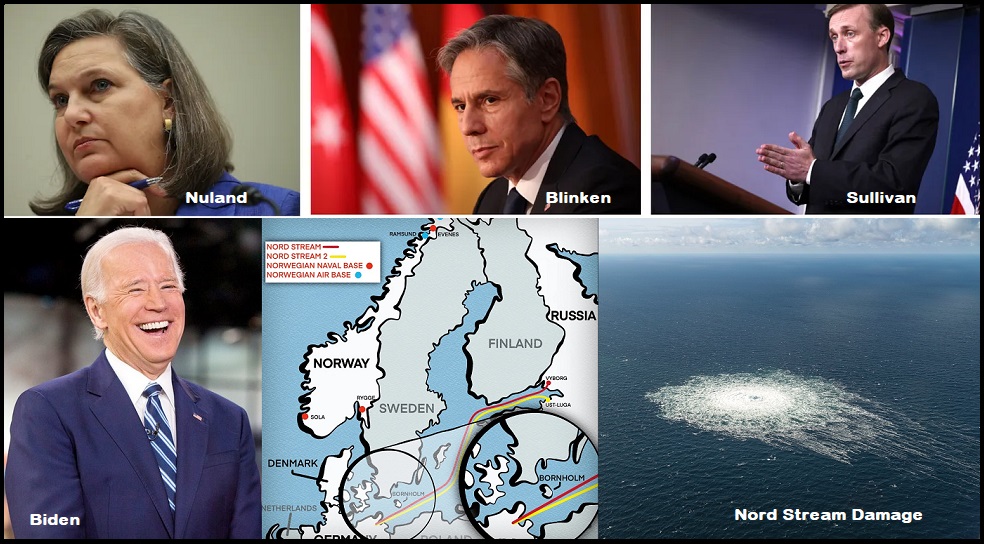
One of the things about big lies is the sheer weight they create, and the effort needed to maintain them. Everyone of reasonably intelligent disposition knew the Russians did not blow up their own Nord Stream gas pipeline last year; they had no motive to do so. All indications were always that the U.S. government conducted the operation and then obfuscated blame toward Russia.
Investigative journalist Mr. Seymour Hersh now writes a comprehensive outline showcasing just how the Biden operation to destroy Nord Stream was conducted. [SEE HERE]
[Seymour Hersh] […] “In December of 2021, two months before the first Russian tanks rolled into Ukraine, Jake Sullivan convened a meeting of a newly formed task force—men and women from the Joint Chiefs of Staff, the CIA, and the State and Treasury Departments—and asked for recommendations about how to respond to Putin’s impending invasion.
It would be the first of a series of top-secret meetings, in a secure room on a top floor of the Old Executive Office Building, adjacent to the White House, that was also the home of the President’s Foreign Intelligence Advisory Board (PFIAB). There was the usual back and forth chatter that eventually led to a crucial preliminary question: Would the recommendation forwarded by the group to the President be reversible—such as another layer of sanctions and currency restrictions—or irreversible—that is, kinetic actions, which could not be undone?
What became clear to participants, according to the source with direct knowledge of the process, is that Sullivan intended for the group to come up with a plan for the destruction of the two Nord Stream pipelines—and that he was delivering on the desires of the President.” (read more)
As the article notes, initially in the planning stage, Joe Biden and his administration were all in for the operation, assuming of course the resulting action -essentially a declaration of war- came with plausible deniability.
What is unclear, despite all the details revealed, is whether in the final decision-making Joe Biden actually had anything to do with it; or whether the dark handlers running his covert administration from the Intel and State Dept., felt they had enough prior approval to just carry out the order without him.
As a reminder, in late September 2022, Joe Biden denied the U.S. involvement…. He lied.
(Via CBS) – […] President Biden called the damage to the Nord Stream natural gas pipelines “a deliberate act of sabotage,” rebuking Russia’s claim that the West was responsible for the explosions. The president said Friday that divers would eventually be sent to the pipelines, which were designed to bring gas from Russia to Europe, to determine what happened.
“It was a deliberate act of sabotage and the Russians are pumping out disinformation and lies,” Biden said.
“At the appropriate moment, when things calm down, we’re going to be sending divers down to find out exactly what happened. We don’t know that yet exactly,” he added. (read more)
For the U.S. to deliberately attack the Nord Stream gas pipeline, that is a direct act of war against a sovereign country, Russia.
The coverup of this story is going to make the coverup of all prior Obama/Biden stories pale in comparison.
Posted originally on the CTH on February 2, 2023 | Sundance
This is so critically important to the understanding of the core, central element where the globalism atom splits and the resulting destruction begins, that I must pause all personal recovery efforts -immediately- and explain. This is an incredible example of where corporations and government merge. This is the atom split. This is the root, the nub, the place where “trillions at stake” takes context.
Strong HatTip to Gateway Pundit for this exceptional video and example {Direct Rumble Link Here}. The understanding comes via a Canadian dairy farmer, who, like thousands of other farmers around the world, is a private business under government control. This example is about dairy, specifically milk, however, the underlying premise goes much further.
This is modern corporatism, the nexus of govt intervention, regulations and the multinational exploitation of industry. This is also the globalist example that shows how the concepts of “capitalism” and “free markets” have been destroyed. First, watch the video:
What you are witnessing in that video is something we have talked about at length for years.
Influential people, politicians (rules) and corporate leaders (profits), both with vested financial interests in the process, have sold a narrative that global manufacturing, global sourcing, and global production is the inherent way of the future. The same voices claimed the American economy was/is consigned to become a “service-driven economy.”
What was always missed in these discussions is that advocates selling this global-economy message have a vested financial and ideological interest in convincing the information consumer it is all just a natural outcome of economic progress.
It’s not.
It’s not natural at all. It is a process that is entirely controlled, promoted and utilized by large conglomerates, lobbyists, purchased politicians and massive multinational corporations.
To understand who opposes President Trump, Jair Bolsonaro, or any economic nationalist, specifically because of the economic leverage against multinational corporations their policy creates, it becomes important to understand the objectives of the global and financial elite who run and operate the institutions. The Big Club.
Understanding how trillions of trade dollars influence geopolitical policy we begin to understand the three-decade global financial construct they seek to protect. That is, global financial exploitation of national markets.
FOUR BASIC ELEMENTS:
♦Multinational corporations purchase controlling interests in various national outputs (harvests and raw materials), and ancillary industries, of developed industrial western nations. {example}
♦The Multinational Corporations making the purchases are underwritten by massive global financial institutions, multinational banks. (*note* in China it is the communist government underwriting the purchase)
♦The Multinational Banks and the Multinational Corporations then utilize lobbying interests to manipulate the internal political policy of the targeted nation state(s).
♦With control over the targeted national industry or interest, the multinationals then leverage export of the national asset (exfiltration) through trade agreements structured to the benefit of lesser developed nation states – where they have previously established a proactive financial footprint.
For three decades economic “globalism” has advanced, quickly. Everyone accepts this statement, yet few actually stop to ask who and what are behind this – and why?
Every element of global economic trade is controlled and exploited by massive institutions, multinational banks and multinational corporations.
Institutions like the World Trade Organization (WTO), World Bank and International Monetary Fund (IMF), control trillions of dollars in economic activity. Underneath that economic activity there are people who hold the reins of power over the outcomes. These individuals and groups are the stakeholders in direct opposition to principles of America-First national economics.
The modern financial constructs of these entities have been established over the course of the past three decades. When you understand how they manipulate the economic system of individual nations you begin to understand why they are so fundamentally opposed to President Trump.
In the Western World, separate from communist control perspectives (ie. China), “Global markets” are a modern myth; nothing more than a talking point meant to keep people satiated with sound bites they might find familiar; but the truth is ‘global markets’ have been destroyed over the past three decades by multinational corporations who control the products formerly contained within global markets. This is the function of the World Economic Forum.
The same is true for “Commodities Markets.” The multinational trade and economic system, run by corporations and multinational banks, now controls the product outputs of independent nations. The free market economic system has been usurped by entities who create what is best described as ‘controlled markets’.
Bulletpoint #1:♦ Multinational corporations purchase controlling interests in various national elements of developed industrial western nations.
This is perhaps the most challenging to understand. In essence, thanks specifically to the way the World Trade Organization (WTO) was established in 1995, national companies expanded their influence into multiple nations, across a myriad of industries and economic sectors (energy, agriculture, raw earth minerals, etc.).
This is the basic underpinning of national companies becoming multinational corporations.
Think of these multinational corporations as global entities now powerful enough to reach into multiple nations -simultaneously- and purchase controlling interests in a single economic commodity.
A historic reference point might be the original multinational enterprise, energy via oil production. (Exxon, Mobil, BP, etc.)
However, in the modern global world, it’s not just oil; the resource and product procurement extend to virtually every possible commodity and industry. From the very visible (wheat/corn) to the obscure (small minerals, and even flowers).
Bulletpoint #2 ♦ The Multinational Corporations making the purchases are underwritten by massive global financial institutions, multinational banks.
During the past several decades national companies merged. The largest lemon producer company in Brazil, merges with the largest lemon company in Mexico, merges with the largest lemon company in Argentina, merges with the largest lemon company in the U.S., etc. etc. National companies, formerly of one nation, become “continental” companies with control over an entire continent of nations.
…. or it could be over several continents or even the entire world market of Lemon/Widget production. These are now multinational corporations. They hold interests in specific segments (this example lemons) across a broad variety of individual nations.
National laws on Monopoly building are not the same in all nations. Most are not as structured as the U.S.A or other more developed nations (with more laws). During the acquisition phase, when encountering a highly developed nation with monopoly laws, the process of an umbrella corporation might be needed to purchase the targeted interests within a specific nation. The example of Monsanto applies here.
Bulletpoint #3 ♦The Multinational Banks and the Multinational Corporations then utilize lobbying interests to manipulate the internal political policy of the targeted nation state(s).
In underdeveloped countries the process of buying a political outcome is called bribery. Within the United States we call it lobbying. The process is exactly the same.
With control of the majority of actual lemons the multinational corporation now holds a different set of financial values than a local farmer or national market. This is why commodities exchanges are essentially dead. In the aggregate the mercantile exchange is no longer a free or supply-based market; it is now a controlled market exploited by mega-sized multinational corporations.
Instead of the traditional ‘supply/demand’ equation determining prices, the corporations look to see what nations can afford what prices. The supply of the controlled product is then distributed to the country according to their ability to afford the price. This is essentially the bastardized and politicized function of the World Trade Organization (WTO). This is also how the corporations controlling WTO policy maximize profits.
Back to the lemons. A corporation might hold the rights to the majority of the lemon production in Brazil, Argentina and California/Florida. The price the U.S. consumer pays for the lemons is directed by the amount of inventory (distribution) the controlling corporation allows in the U.S.
If the U.S. lemon harvest is abundant, the controlling interests will export the product to keep the U.S. consumer spending at peak or optimal price. A U.S. customer might pay $2 for a lemon, a Mexican customer might pay .50¢, and a Canadian $1.25.
The bottom line issue is the national supply (in this example ‘harvest/yield’) is not driving the national price because the supply is now controlled by massive multinational corporations.
The mistake people often make is calling this a “global commodity” process. In the modern era this “global commodity” phrase is particularly nonsense.
A true global commodity is a process of individual nations harvesting/creating a similar product and bringing that product to a global market. Individual nations each independently engaged in creating a similar product.
Under modern globalism this process no longer takes place. It’s a complete fraud. Massive multinational corporations control the majority of production inside each nation and therefore control the global product market and price. It is a controlled system.
EXAMPLE: Part of the lobbying in the food industry is to advocate for the expansion of U.S. taxpayer benefits to underwrite the costs of the domestic food products they control. By lobbying DC these multinational corporations get congress and policy-makers to expand the basis of who can use EBT and SNAP benefits (state reimbursement rates).
Expanding the federal subsidy for food purchases is part of the corporate profit dynamic.
With increased taxpayer subsidies, the food price controllers can charge more domestically and export more of the product internationally. Taxes, via subsidies, go into their profit margins. The corporations then use a portion of those enhanced profits in contributions to the politicians. It’s a circle of money.
In highly developed nations this multinational corporate process requires the corporation to purchase the domestic political process (as above) with individual nations allowing the exploitation in varying degrees. As such, the corporate lobbyists pay hundreds of millions to politicians for changes in policies and regulations; one sector, one product, or one industry at a time.
These are specialized lobbyists.
EXAMPLE: The Committee on Foreign Investment in the United States (CFIUS)
CFIUS is an inter-agency committee authorized to review transactions that could result in control of a U.S. business by a foreign person (“covered transactions”), in order to determine the effect of such transactions on the national security of the United States.
CFIUS operates pursuant to section 721 of the Defense Production Act of 1950, as amended by the Foreign Investment and National Security Act of 2007 (FINSA) (section 721) and as implemented by Executive Order 11858, as amended, and regulations at 31 C.F.R. Part 800.
The CFIUS process has been the subject of significant reforms over the past several years. These include numerous improvements in internal CFIUS procedures, enactment of FINSA in July 2007, amendment of Executive Order 11858 in January 2008, revision of the CFIUS regulations in November 2008, and publication of guidance on CFIUS’s national security considerations in December 2008 (more)
Bulletpoint #4 ♦ With control over the targeted national industry or interest, the multinationals then leverage export of the national asset (exfiltration) through trade agreements structured to the benefit of lesser developed nation states – where they have previously established a proactive financial footprint.
The process of charging the U.S. consumer more for a product, that under normal national market conditions would cost less, is a process called exfiltration of wealth. This is the basic premise, the cornerstone, behind the catchphrase ‘globalism‘.
It is never discussed.
To control the market price some contracted product may even be secured and shipped with the intent to allow it to sit idle (or rot). This is where the dumping of the milk comes into play. None of this is a market driven outcome. All of this is being controlled by guiding hands of politicians, rule makers, and the partnership with the private sector corporations.
It’s all about controlling the price and maximizing the profit equation. We are discussing food and agricultural production, but the issue (the process of control) covers far more than just food, farming and Ag in general. It’s everything folks. Everything.
To gain the same $1 profit a widget multinational might have to sell 20 widgets in El-Salvador (.25¢ each), or two widgets in the U.S. ($2.50/each).
Think of the process like the historic reference of OPEC (Organization of Petroleum Exporting Countries). Only in the modern era massive corporations are playing the role of OPEC and it’s not oil being controlled, thanks to the WTO it’s almost everything.
Again, this is highlighted in the example of taxpayers subsidizing the food sector (EBT, SNAP etc.), the multinational corporations can charge domestic U.S. consumers more.
Ex. more beef is exported, red meat prices remain high at the grocery store, but subsidized U.S. consumers can better afford the high prices.
Of course, if you are not receiving food payment assistance (middle-class) you can’t eat the steaks because you can’t afford them. (Not accidentally, it’s the same scheme in the ObamaCare healthcare system)
Agriculturally, multinational corporate Monsanto says: ‘all your harvests are belong to us‘. Contract with us, or you lose because we can control the market price of your end product.
The downside is that once you sign that contract, you agree to terms that are entirely created by the financial interests of the larger corporation, not your farm. Additionally, the rule makers (govt), are working hand in glove with the corporations who control the outcome.
The multinational agriculture lobby is massive. We willingly feed the world as part of the system; but you as a grocery customer pay more per unit at the grocery store because domestic supply no longer determines domestic price.
Within the agriculture community the (feed-the-world) production export factor also drives the need for labor. Labor is a cost. The multinational corps have a vested interest in low labor costs. Ergo, open border policies. (ie. willingly purchased republicans not supporting border wall etc.).
This corrupt economic manipulation/exploitation applies over multiple sectors, and even in the sub-sector of an industry like steel. China/India purchases the raw material, coking coal, then sells the finished good (rolled steel) back to the global market at a discount. Or it could be rubber, or concrete, or plastic, or frozen chicken parts etc.
The ‘America First’ Trump-Trade Doctrine upsets the entire construct of this multinational export/control dynamic. Team Trump focus exclusively on bilateral trade deals, with specific trade agreements targeted toward individual nations (not national corporations).
‘America-First’ is also specific policy at a granular product level looking out for the national interests of the United States, U.S. workers, U.S. companies and U.S. consumers.
Under President Trump’s Trade positions, balanced and fair trade with strong regulatory control over national assets, exfiltration of U.S. national wealth is essentially stopped.
This puts many current multinational corporations, globalists who previously took a stake-hold in the U.S. economy with intention to export the wealth, in a position of holding contracted interest of an asset they can no longer exploit.
Perhaps now we understand better how massive multi-billion multinational corporations and institutions are aligned against President Trump. In essence, Donald Trump is the anti-WEF weapon of the American people.
They will even organize a western corporate war against Russia to stop anyone from blocking their financial goals.
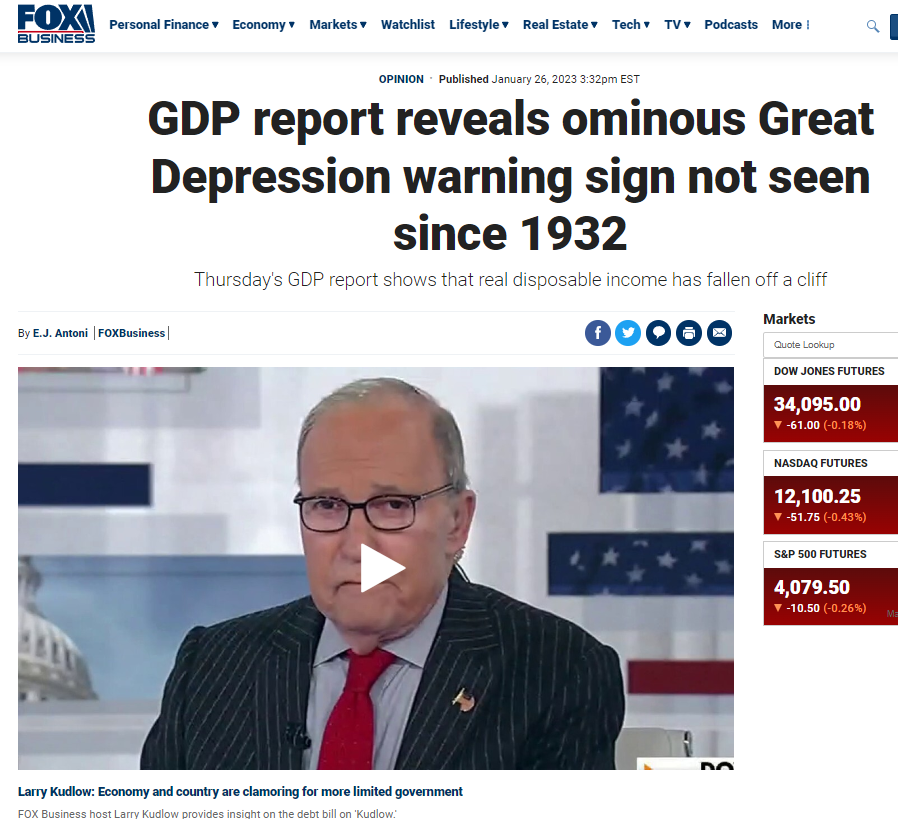
Fox Business is reporting that economic conditions are much worse than you are being told. Unfortunately, this is the conclusion when you have ZERO understanding of the historical trends and economic conditions. It is true that the shortages of COVID have caused prices to rise faster than economic growth and most incomes. Therefore, they conclude that our standard of living has been rapidly declining. The number reveals that more than one-third of all U.S. young adults are being supported in part by their parents. Thanks to COVID, this disrupted society far greater than anyone is reporting. In addition to the shortages because of the lockdowns, by the end of 2020, more than half of young adults in America were living with one or both parents. That statistic actually exceeded the record high of the Great Depression.
Here is the worst part of this analysis. Many are jumping on the bandwagon claiming that the decline in real disposable income has been the largest since 1932 and therefore, this is a warning sign of a Great Depression is coming. They seem to be focused on the fact that the GDP report showed a significant decline in real disposable income, which fell over $1 trillion in 2022. Now let’s look closer!
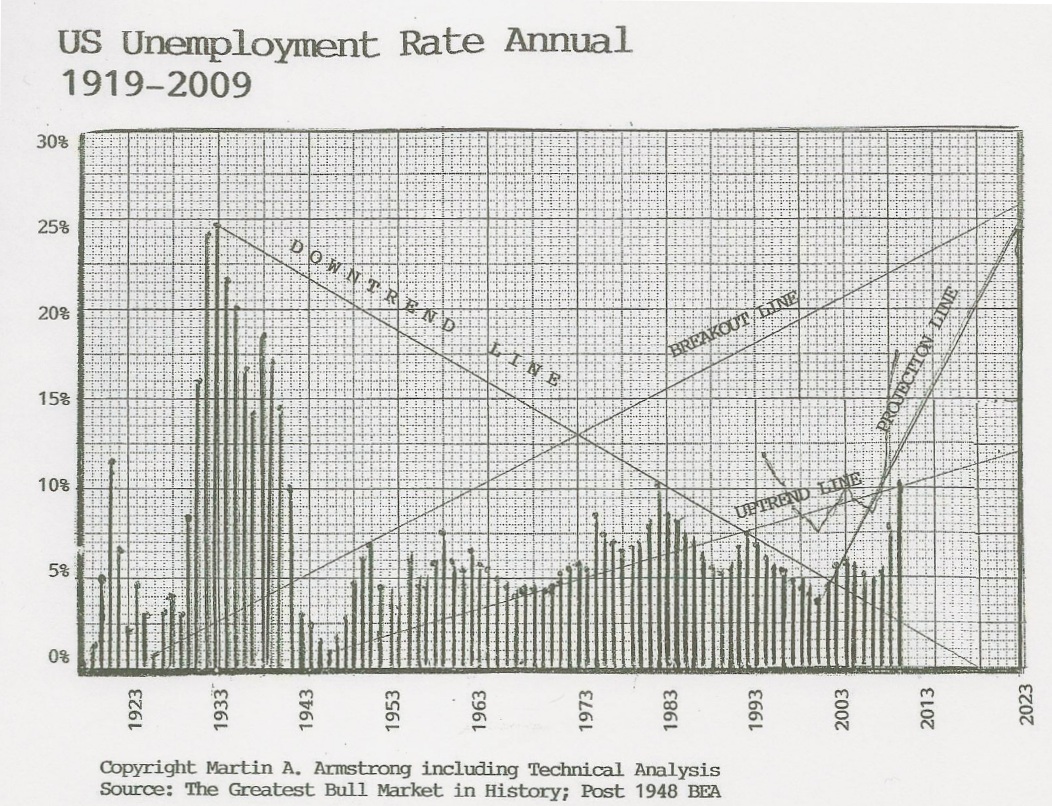
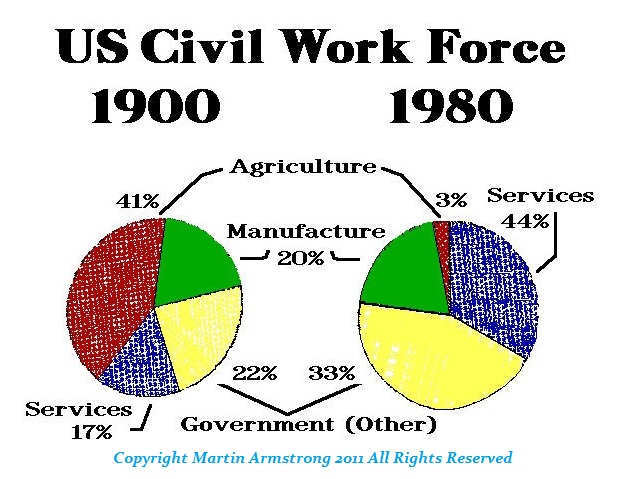
First of all, the entire reason why unemployment rise to 25% during the latter part of the Great Depression was the Dust Bowl. Why? At that time, about 40% of the civil workforce was still agrarian. The Dust Bowl meant job loss. If you could not even plant crops, there was no need for people to pick crops.
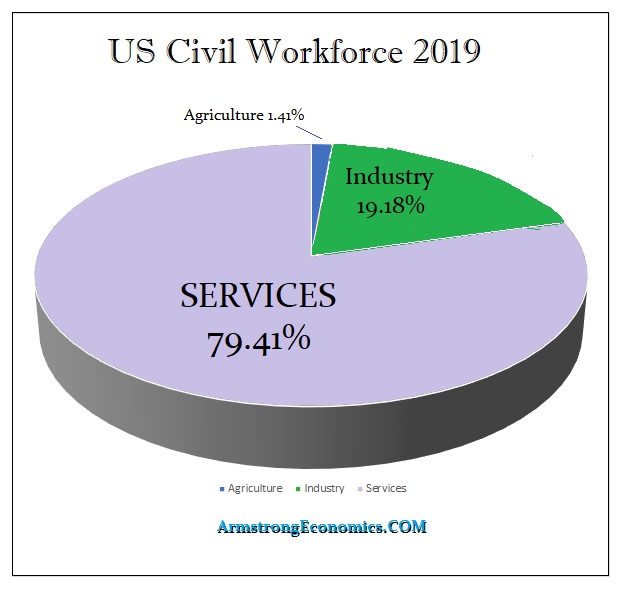
Service during the Great Depression accounted for 17% of the workforce compared to 44%+ today. Government, federal, state, and local, was 22% of the civil workforce during the Great Depression compared to 33% by 1980. Things have continued to evolve and by 2019, services represent 79.41%. Agriculture is now a tiny fraction of what it once was – 1.41%.
In the USA, at the state level, their share of the civil workforce varies greatly. Florida is at about 11.3% compared to New Mexico which is 22.5% – a government employee’s paradise. The lowest is Michigan at 10.1%.
During the Great Depression, the entire reason for the collapse in disposable income was the collapse in agriculture which created a collapse in income due to massive unemployment. That is totally different from the crisis we have today.
Here we have rising prices due to shortages and then central banks raising interest rates in a fool’s quest to stop inflation when it is not based on speculation. Moreover, the biggest borrower is the government, and rising interest rates will only increase their exposure to keep rolling over the debt. Therefore, governments have been borrowing year after year. What happens when the public no longer buys their debt? Real disposable income has been collapsing for completely different reasons since 1932. Here we have the costs of everything rising and then these people want war with Russia and China. Every war since the start of recorded history has resulted in inflation. Add to this, the total insanity of trying to end climate change by outlawing fossil fuels at a time when the climate is prone to getting colder.
We are already witnessing riots around the world BECAUSE of inflation. During the Great Depression, people were suffering from DEFLATION. So comparing just that statistic of a decline in personal income and projecting we now face a Great Depression, does not even qualify to be classified as analysis. That is no different from someone warning that carrots must be lethal because everyone who has ever eaten a carrot has obviously died.
Food shortages have historically contributed to revolutions more so than just international war. Poor grain harvests led to riots as far back as 1529 in the French city of Lyon. During the French Petite Rebeyne of 1436. (Great Rebellion), sparked by the high price of wheat, thousands looted and destroyed the houses of rich citizens, eventually spilling the grain from the municipal granary onto the streets. Back then, it was to go get the rich.
There was a climate change cycle at work and today’s climate zealots ignore their history altogether for it did not involve fossil fuels. The climate got worse at the bottom of the Mini Ice Age which was about 1650. It really did not warm up substantially until the mid-1800s. During the 18th century, the climate resulted in very poor crops. Since the 1760s, the king had been counseled by Physiocrats, who were a group of economists that believed that the wealth of nations was derived solely from the value of land and thereby agricultural products should be highly priced. This is why Adam Smith wrote his Wealth of Nations as a retort to the Physiocrats. It was their theory that justified imperialism – the quest to conquer more land for wealth; the days of empire-building.
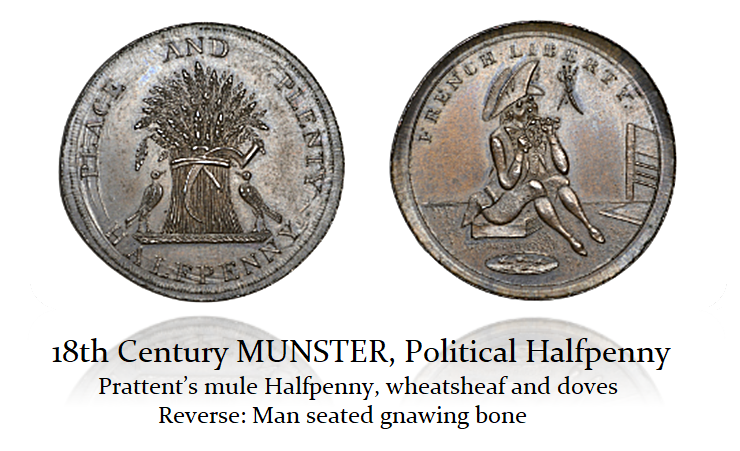
The King of France had listened to the Physiocrats who counseled him to intermittently deregulate the domestic grain trade and introduce a form of free trade. That did not go very well for there was a shortage of grain and this only led to a bidding war – hence the high price of wheat. We even see English political tokens of the era campaigning about the high price of grain and the shortage of food to where a man is gnawing on a bone.
Voltaire once remarked that Parisians required only “the comic opera and white bread.” Indeed, bread has also played a very critical role in French history that is overlooked. The French Revolution that began with the storming of the Bastille on July 14th, 1789 was not just looking for guns, but also grains to make bread.
The price of bread and the shortages played a very significant role during the revolution. We must understand Marie Antoinette’s supposed quote upon hearing that her subjects had no bread: “Let them eat cake!” which was just propaganda at the time. The “cake” was not the cake as we know it today, but the crust was still left in the pan after taking the bread out. This shows the magnitude that the shortage of bread played in the revolution.
In late April and May of 1775, the food shortages and high prices of grain ignited an explosion of such popular anger in the surrounding regions of Paris. There were more than 300 riots and looking for grain over just three weeks (3.14 weeks). The historians dubbed this the Flour War. The people even stormed the place at Versailles before the riots spread into Paris and outward into the countryside.
The food shortage became so acute during the 1780s that it was exacerbated by the influx of immigration to France during that period. It was a period of changing social values where we heard similar cries for equality. Eventually, this became one of the virtues on which the French Republic was founded. Most importantly, theFrench Constitution of 1791 explicitly stipulated a right to freedom of movement. It was mostly perceived to be a food shortage and the reason was the greedy rich. Thus, a huge rise in population was also contributed in part by immigration whereas it reached around 5-6 million more people in France in 1789 than in 1720.
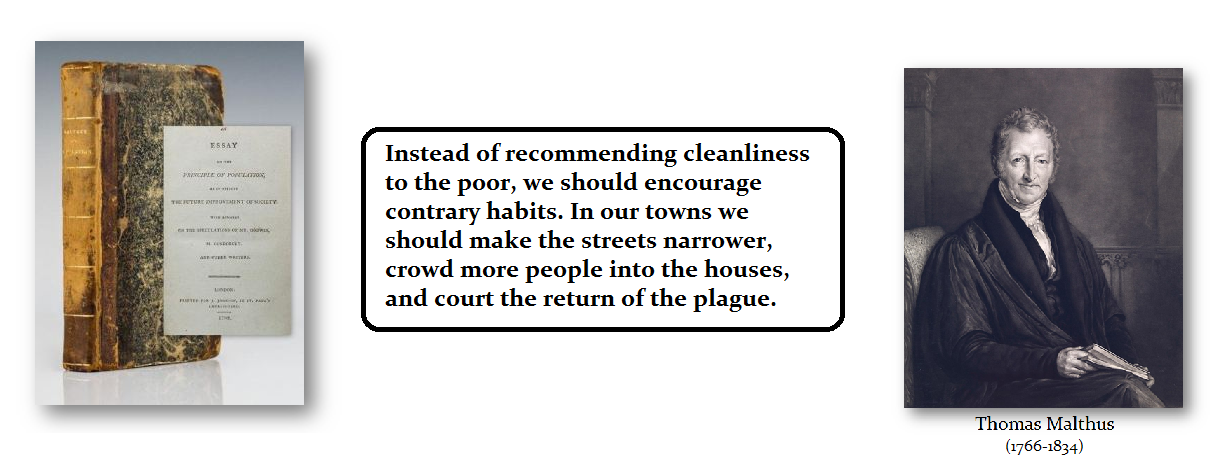
Against this backdrop, we have the publication by Thomas Malthus (1766-1834) An Essay on the Principle of Population was first published anonymously in 1798. He theorized that the population would outgrow the ability to produce food. We can see how his thinking formed because of the Mini Ice Age that bottomed in 1650. All of this was because of climate change which instigated food shortages. Therefore, it was commonly accepted that without a corresponding increase in native grain production, there would be a serious crisis.
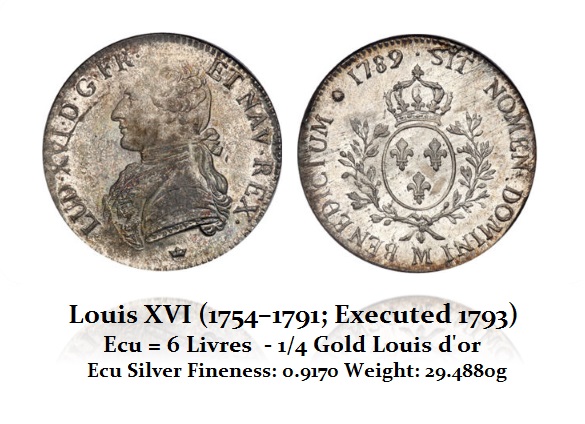
The refusal on the part of most of the French to eat anything but a cereal-based diet was another major issue. Bread likely accounted for 60-80 percent of the budget of a wage-earner’s family at that point in time. Consequently, even a small rise in grain prices could spark political tensions. Because this was such an issue, and probably the major cause of the French Revolution among the majority, Finance Minister Jacques Necker (1732–1804) claimed that, to show solidarity with the people, King Louis XVI was eating the lower-class maslin bread. Maslin bread is from a mix of wheat and rye, rather than the elite manchet, white bread that is achieved by sifting wholemeal flour to remove the wheatgerm and bran.
That solidarity was seen as propaganda and the instigators made up the Marie Antoinette quote: Let them eat cake. . Then there was a plot drawn up at Passy in 1789 that fomented the rebellion against the crown shortly before the people stormed the Bastille. It declared “do everything in our power to ensure that the lack of bread is total, so that the bourgeoisie are forced to take up arms.”
It was also at this time when Anne Robert Jacques Turgot (1727-1781), Baron de l’Aulne, was a French economist and statesman. He was originally considered a physiocrat, but he kept an open mind and became the first economist to have recognized the law of diminishing marginal returns in agriculture. He became the father of economic liberalism which we call today laissez-faire for he put it into action. He saw the overregulation of grain production was behind also contributing to the food shortages. He once said: “Ne vous mêlez pas du pain”—Do not meddle with bread.
The French Revolution overthrew the monarchy and they began beheading anyone who supported the Monarchy and confiscated their wealth as well as the land belonging to the Catholic Church. Nevertheless, the revolution did not end French anxiety over bread. On August 29th, 1789, only two days after completing the Declaration of the Rights of Man and of the Citizen, the Constituent Assembly completely deregulated domestic grain markets. The move raised fears about speculation, hoarding, and exportation.
Then on October 21st, 1789, a baker, Denis François, was accused of hiding loaves from sale as part of a conspiracy to deprive the people of bread. Despite a hearing which proved him innocent, the crowd dragged François to the Place de Grève, hanged and decapitated him, and made his pregnant wife kiss his bloodied lips. Immediately thereafter, the National Constituent Assembly instituted martial law. At first sight, this act appears as a callous lynching by the mob, yet it led to social sanctions against the general public. The deputies decided to meet popular violence with force.
So, food has often been a MAJOR factor in revolutions. We are entering a cold period. Ukraine has been the breadbasket for Europe. Escalating this war will also lead to accelerating the food shortages post-2024. It is interesting how we learn nothing from history. Wars are instigated by political leaders while revolutions are instigated by the people.
Posted originally on the CTH on January 22, 2023 | sundance
We have been watching the predictable outcomes surrounding the western government shift to change energy policy for almost two years. Approximately a year ago we first said, “the absence of food will change things.”
As energy resources like natural gas were curtailed the resulting price increase and subsequent shortage of fertilizer was discussed in great detail well in advance.
Now, we are starting to see exactly what those warning voices were talking about.
An interesting article in ZeroHedge Saturday [SEE HERE] draws attention to how the media can no longer try to ignore the created global food crisis.
ZeroHedge – People on the other side of the planet are dropping dead from starvation right now, but most people don’t even realize that this is happening. Unfortunately, most people just assume that everything is fine and dandy. If you are one of those people that believe that everything is just wonderful, I would encourage you to pay close attention to the details that I am about to share with you. Global hunger is rapidly spreading, and that is because global food supplies have been getting tighter and tighter.
If current trends continue, we could potentially be facing a nightmare scenario before this calendar year is over. (read more)
The article then goes on to detail the issues and food shortages in Pakistan, India and the entire African continent. Factually, according to media reports on the region, the worst food crisis in history is happening – yet most U.S. and European Union media are avoiding it. The famine is happening in almost complete western silence.
Keep in mind, none of this is unexpected. In fact, the G7 countries discussed the pending problem in mid 2022, yet no one took any steps to avoid it.
Vladimir Putin’s military action against eastern Ukraine had nothing to do with the severe food shortages and inflation in Sri Lanka {link}. Nor did Russia have any influence over the Dutch government trying to stop food production {link}. Additionally, Putin had no control over Justin Trudeau’s decision to limit harvest yields by blocking the use of nitrogen-based fertilizer {link}. More importantly, it was not Vladimir Putin who forced all the western politicians to sign up for a new ‘climate friendly’ energy program that is destroying the ability of western farms to generate higher yield crops.
You do not need to be a farmer to understand that nitrogen/phosphorus-based industrial fertilizer has been the reason why farm yields have generated massive amounts of food on a global basis. The United States, Canada, the U.K. and places like the Netherlands have massively increased their ability to generate food for export, in large part due to the success of improved fertilizer and crop saving modern pesticides. Take those farming advancements away under the guise of climate change and you get Sri Lanka, Pakistan and now the African Continent.
Those western climate and energy policies create downstream consequences. The decision to chase a new global energy policy under the name “Build Back Better,” in combination with short-sighted EU sanctions against Russia, and you get food shortages.
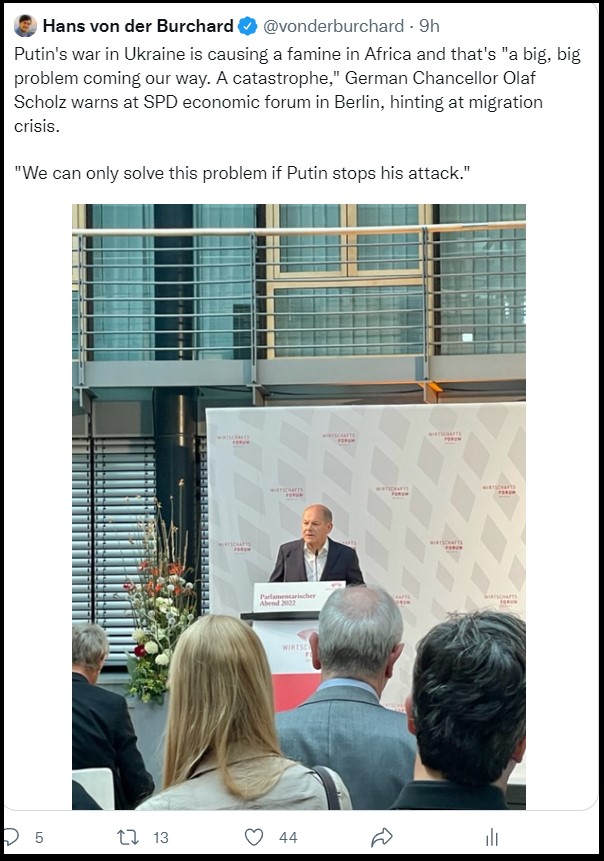
It was not Vladimir Putin who told British Prime Minister Boris Johnson and German Chancellor Olaf Scholz their proactive recommendation to switch from crop-based biofuels to human food would be blocked. That G7 decision was made by Justin Trudeau and Joe Biden. {link} Even more significantly, it was not Russia who threatened the multinational energy companies about investing in Africa for expanded natural gas supplies for their fertilizer needs. That threat came from the same western government alliance, per their instructions from the World Economic Forum group {link}.
It was predictable {JUNE 21st} {June 30th} and {July 6th} that western government leaders would seek to avoid responsibility for the food crisis they created, and throughout the latter part of 2022 we saw western media trying, desperately, to frame Russia for global food shortages in order to protect western politicians.
I said this in July of last year and as the consequences now surface it is even more critical to understand.
Joe Biden, NATO, the G7, the European Union, the World Bank, USAID, and every western leader in the United States and Europe stated in early and mid 2022 there will be food shortages in 2023.
They did not say there might be shortages; their statements were emphatic, there will be shortages.
Accept this basic cornerstone. Then ask why not a single proactive step has been taken by any of the aforementioned institutions or governments to alleviate what they declare is a certainty. Why?
Simple question, “why?”
If all of the western nations, non-govt organizations and heads of state, are aware of a coming food crisis, why is there no proactive response?
It is a question that even the most hardcore leftists will not answer, because there is only one answer. No action is being taken because they do not want to take action. No effort to avoid the crisis is being done, because they do not want the crisis avoided.
Peel all the layers of obfuscation and causation away, and what we find is the epicenter of the food shortage is directly the result of the Build Back Better agenda. A post-pandemic western government deliberate decision to radically change global energy development. In succinct terms, the climate change agenda.
However, regardless of how you feel about the validity of “climate change,” the cause of diminished food supplies is purposeful. It is not climate change causing food shortages. It is the purposeful action taken under the guise of mitigating climate change that is causing the shortage of food.
The collective Build Back Better energy policy of western governments’ is the reason for massive increases in energy costs, massive oil price jumps, gasoline price increases, significant increases in chemical costs, increases in diesel fuel costs, shortages of fertilizer created using natural gas, and the end result is lower crop yields, higher farming costs and eventually, food shortages. They knew this.
All of the organizations and government who have been decrying the future shortage of food, know it is the radical shift in energy resource development that is creating the crisis. This acceptance of reality begins the framework to understand just how entrenched and committed these western leaders are toward their beloved climate change agenda.
We are only just now beginning to see the first aspects of the food shortage. However, once the issue becomes unavoidable the western leaders will not and cannot accept the blame for what they have done. They will blame-cast, excuse and justify what is surfacing.
Food shortages will be blamed on the Ukraine conflict, Russian aggression, climate change and any various iteration of justification that does not identify the true cause, their energy ideology.
I’m not so sure that people fully understand what the entire system of western government would be willing to do to avoid being blamed for avoidable death on a potential scale that is quite alarming. All of the western leaders, institutions and governments are on the same boat. They are all in this together.
(June 22, 2022) – (Reuters) – The European Union is divided on how to help poorer nations fight a growing food crisis and address shortages of fertilizers caused by the war in Ukraine, with some fearing a plan to invest in plants in Africa would clash with EU green goals.
The need for food “clashes with EU green goals.”… Let that sink in.
Posted originally on the CTH on January 17, 2023 | sundance
There has always been a general shaping and interpretation surrounding economic news, specifically as it relates to the impact of pricing on consumers and corporations. However, against the backdrop of supply side inflation, the financial gaslighting from the Wall Street Journal stands out at the top.
Without pretending, and looking directly at the Main Street reality, CTH has outlined inflation as a matter of monetary and energy policy. From that standpoint the timing and scale of price increases (inflation measured over time) was predictable. Our current status is an inflationary plateau, where prices remain high but stabilize for likely two quarters.
What the Wall Street Journal outlines as a “shopper rebellion against high prices” is complete hogwash. Notice in the construct of the narrative, the demand side (consumers) is identified as the cause of diminished revenue & profits for corporations. They continue pretending that inflation was not driven by energy costs.
(WSJ) – […] Many companies raised their prices substantially last year to offset higher fuel costs and higher prices for ingredients, parts and labor. As fuel prices have dropped and pandemic supply-chain snarls have eased, some of those costs have come down.
That is a good sign for the economy. It suggests that some inflation in the past year resulted from extreme supply-demand imbalances brought on by the pandemic and the war in Ukraine and which are now fading.
Notice the transparent lack of mentioning ‘energy policy’ as the inflation driver.
[…] The study, by economists at the Federal Reserve Bank of Kansas City, found that higher markups—the gap between what a firm charges and what it costs to produce an item—were a major driver of inflation in 2021.
They concluded that companies in some cases were raising prices in 2021 in anticipation of future cost pressures, rather than because of market power or outsize demand. Andrew Glover, a senior economist at the Federal Reserve Bank of Kansas City who was involved in the study, doesn’t expect prices to fall this year, he said, but he anticipates that the pace of increase will continue to slow.
Inflation is the rate of increase over time. We have experienced two years of massive price increases. Yes, the rate of those increases will moderate, this is the plateau, but the price will never drop. The current prices are a direct result of fixed energy policy.
[…] Unit sales of food and beverages fell 3% last year, but on a dollar basis they rose 10%. That showed consumers were willing to pay higher prices for groceries but bought fewer items.
[…] “People need to eat,” said Krishnakumar Davey, a president at IRI. Shoppers are nonetheless buying less when possible and, in many cases, buying less expensive versions of necessities such as toilet paper and laundry detergent. (read more)
Meanwhile the Fed is worried that wages will be forced to increase. Here is the real worry for the Wall Street Journal, “If consumers believe high prices will persist, they could seek bigger raises, and businesses, seeing higher labor costs, could continue raising prices.” Yes, workers, forward inflation is your fault.
Government policy drives up prices, but workers needing wage increases to pay for those higher prices… well, that is not acceptable to the government, comrade proles.
Posted originally on the CTH on January 5, 2023 | Sundance
That slow grinding creak you hear in the background; that’s the U.S. economic engine running without oil and beginning that slowdown phase just before it stutters and stalls completely. Alas, the pretending continues…
As noted by the Wall Street Journal, an economic gaslighting institution with a central mission to maintain pretenses, “business surveys show U.S. factory activity declined in December, the Institute for Supply Management and S&P Global both said this week. Separately, S&P Global said Thursday that U.S. services-sector businesses reported a decline in output for the third month running in December.” This comes as “U.S. imports dropped more, by 6.4% on the month, as Americans cut back on holiday-related purchases, including items from other countries such as computers and autos.”
Keep in mind, November retail sales—which included consumer spending at stores, online and at restaurants—fell 0.6% from the prior month for their biggest decline of 2022, according to the Commerce Department. Manufacturing output declined in November as well, the Fed reported, while U.S. home sales fell for a record 10th straight month.
Into this mix of economic metrics, driven by a collapse in disposable consumer income and high energy prices, now we begin to see the number one business expense being curtailed.
(Market Watch) […] Amazon.com Inc layoffs will affect more than 18,000 employees, the highest reduction tally revealed in the past year at a major technology company as the industry pares back amid economic uncertainty.
The Seattle-based company in November said that it was beginning layoffs among its corporate workforce, with cuts concentrated on its devices business, recruiting and retail operations. At the time, The Wall Street Journal reported the cuts would total about 10,000 people. Thousands of those cuts began last year. (more)
Amazon is not alone, “Vimeo said Wednesday that it will cut its workforce by 11% as part of a broader effort to reduce costs, citing deteriorating economic conditions” (link). Additionally, Salesforce Inc. is laying off 10% of its workforce and reducing its office space in certain markets, extending a brutal period for tech job cuts into the new year.”
We can anticipate more reports like this from Reuters, “Samsung Electronics Co Ltd’s quarterly profit will likely plunge 58% to its lowest in six years as a global economic downturn saps demand for electronic devices and clouds the outlook for the memory chip industry. With consumers and businesses reducing spending and investment in the face of high inflation and climbing interest rates, smartphone makers and other clients held back memory chip orders, while smartphones sold for less as demand suffered, analysts said.”
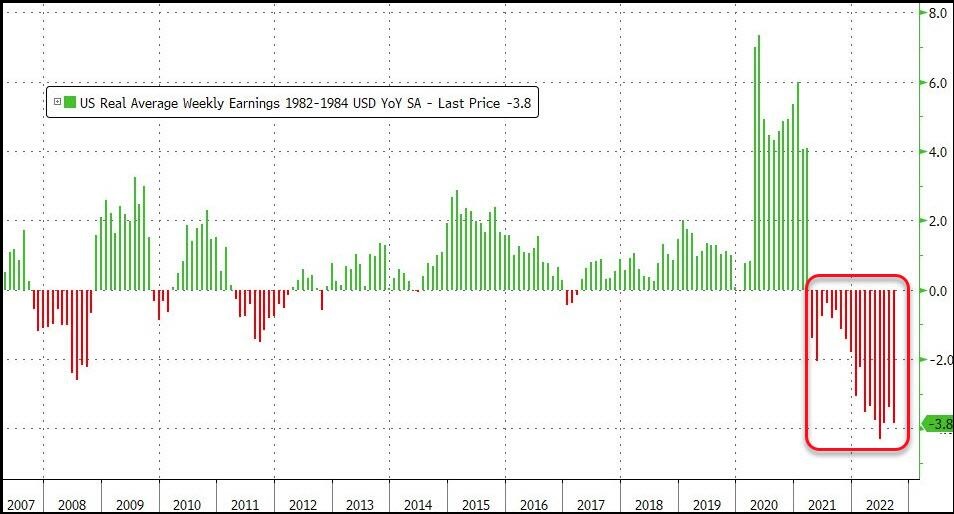
Electronics, cars, furniture, durable goods of all types and varieties are plummeting in sales. Consumers are being squeezed by inflation, housing, energy and food costs, and spending priorities are being reevaluated yet again. Compare the impact on ‘real wages’ -vs- the 2007/2008 economic crisis.
From a purely fraudulent accounting perspective, however, the drop in U.S. imports will help boost calculations of U.S. economic growth in the fourth quarter because trade deficits subtract from overall output, or gross domestic product.
U.S. consumers not purchasing imported goods makes the health of the U.S. economy look less bad; but it’s an illusion akin to smiles in the bread lines.
In other economic news, I did some real estate analysis over the past several days and it’s safe to say there is a steep downward trajectory in the data I use. Again, home values are nuanced on a regional level, but my model is pretty close in averaging.
If buyers do not absorb the seller’s loss in equity (which no one should ever do), in my SWFL area a $450k home listing is going to sell around $380k at the high side (actual value based on economic indicators and buyer ability). That rough estimate, while slightly offset due to general inflation, should trend nationally over the next 12 to 18 months. That means macro home prices dropping around 15 to 20% nationally over the next 12 months.
If you are a home buyer, put your offers around 15 to 20% below current asking price without any emotional attachment to it. Don’t flinch, remain ambivalent and walk away if refused. The recovery to current price will take around a decade. If you are a seller and get an offer within -10% of asking, consider yourself lucky and jump on it.
Posted originally on the CTH on January 2, 2023 | Sundance
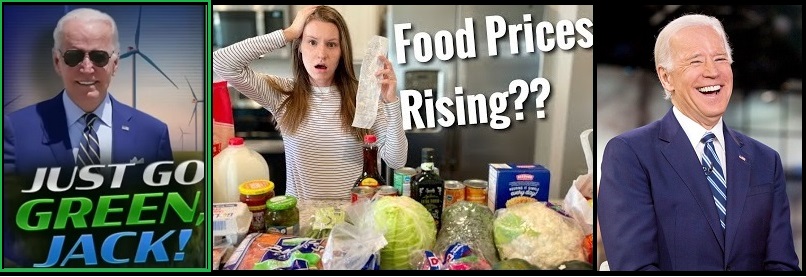
It’s almost painful to go to the grocery store today, not just because the prices for everything are so high, but also because seeing the stress amid the working-class shopping is palpable. Unfortunately, while we may have a momentary plateau on current pricing, there’s a strong possibility another wave of higher prices is yet to come.
At the core of the issue are energy prices which continue to rise. The immediate cycle of energy price hikes, a direct consequence of political policy, has lessened somewhat and we are now in that slow tick upward as the pressure on oil, gas, heating and electricity prices continues.
Michael Burry, famous for his predictions in/around the U.S. housing market, is noticing the same thing as CTH. “Inflation peaked. But it is not the last peak of this cycle,”he said. “We are likely to see CPI lower, possibly negative in 2H 2023, and the US in recession by any definition. Fed will cut and government will stimulate. And we will have another inflation spike. It’s not hard.”
Peak demand side inflation is long in the rearview mirror, but the peak of supply side inflation is questionable at best – I would say it’s a plateau, not a peak.
The price of goods, including industrialized and processed raw materials from China are going to increase again – and simultaneously become less consistent in availability. This is going to make prices extremely volatile in 2023.
Essentially, everything around price is tenuous as the western economies absorb the full impact of this Build Back Better energy policy, and into this foray comes China with production and processing challenges as a result of COVID bubbles being removed. We are seeing this problem right now in the pharmaceutical industry and with ordinary medicines becoming scarcer on store shelves.
With the macro economy showing a consumer collapse in spending on goods, the economy will contract again. However, the prices of essential products continue to sustain upward pressure. What does this look like in real terms? Less income amid the workforce and consistently higher prices. We need to be as prepared for this scenario as humanly possible.
Many people have written with sincere appreciation for the CTH forecasts delivered in the fall of 2021. I am thankful to have been of benefit to those who could take proactive measures to avoid the economic issues we faced in 2022. However, I am worried now.
I am worried because the downside to this economic contraction is going to hit the already tenuous and barely surviving middle class the worst. There’s only so much a person/family can do to offset rising energy costs. I listen to this woman’s voice, and it crushes me because I know and feel that pain (Twitter video):
I know just about every reader on these pages can relate to how financial fear can eat you from the inside. The life game of trying to figure out how to get from one week to the next, keep a roof over your head and keep the kids/grandkids safe and fed is fraught with trepidation. I get it. Believe me, I get it…. But you just gotta keep going; whatever it takes.
2023 is going to be rough for many working families and people on fixed incomes.
Then look to help/assist the neighbors, then the community, etc. But start by being proactive at home and do not isolate. Fear, worry, trepidation, foreboding etc, is worse when internalized. Do not swallow it – reach out to a loving God, pray, release it, and then embrace the central purpose in life, fellowship.
I have created this site to help people have fun in the kitchen. I write about enjoying life both in and out of my kitchen. Life is short! Make the most of it and enjoy!
This is a library of News Events not reported by the Main Stream Media documenting & connecting the dots on How the Obama Marxist Liberal agenda is destroying America

















 Centinel2012