Rethinking Economics


The BBC wrote a piece on the failure of economics. “Many non-economists will say that the economists must have been stupid not to realise what was wrong with their subject. All that I’ve set out here should have been obvious,” the article commented. Indeed, the field of economics has been really a disaster because people are still trying to manipulate it and create the land of Utopia. They assume the power to control and eliminate the business cycle exists, which began with Karl Marx.

We have people focusing on the disparity of income who argue that is the whole problem. Nobody seems to have a mirror or is willing to just look at themselves. Nobody will even question why governments are borrowing year after year with no intention of ever paying anything off. We constantly have fights over raising debt ceilings that will always have to be raised. The question is never asked: “Do we have to revise both the monetary system and the political system to prevent massive civil unrest?” This battle waged by the left to subjugate the right only leads to violence.

LAGOM – “Just the Right Amount” & European War


QUESTION: Hi Martin,

The Rome WEC was a real eye-opener for me. Thank you for coming over to Europe. Especially the reports you released in advance of the conference. “The Fate Of Europe” pdf was especially informative. You’re explaining the structural defects of the EU make it clear it really is a doomed project, and just a matter of time before it, helped along by the ECB, descends into chaos.

Upon arriving home in Sweden I noticed this poster for a Swedish MEP candidate.

”Lagom” is the Swedish notion of the middle way. Not too much, not too little. Basically, blending in and being inoffensive. On the one hand, it’s cute, on the other hand, it’s sad. He’s clearly passionate about his political philosophy, but even if elected, there is Juncker, Tusk, and Verhofstadt waiting in Brussels to dictate to him what he has to do, and the structural flaws of the EU that make it all moot anyway.

Rome had this quality of crumbling neglect about it, like nothing had been repaired in 20 years. Unlike Sweden, that dutifully reinvests a lot of the tax revenue it collects back in infrastructure, Rome appeared starved of money and dying.

What does the computer say about civil unrest and war in Europe? I have the gnawing feeling it’s coming.

BIK

P.S. Thank you for Socrates and your life’s work.

ANSWER: Oh yes. I am familiar with Lagom. My interpretation would be “just the right amount,” so he is a skeptic partially. Unfortunately, the tension should begin to become more pronounced starting in 2020 going into 2022. I am not sure it would be a war, but certainly a rising trend toward independence.

Fear of Jeremy Corbyn Becoming Prime Minister in UK is a Threat to the Pound


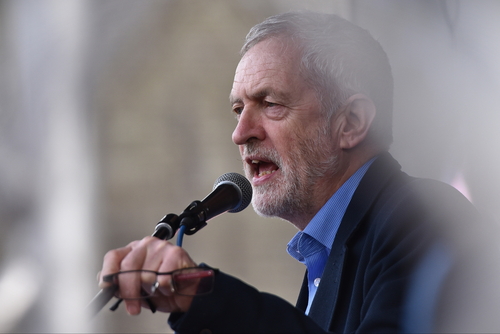
There is a lot going on in Britain. Many fear that Jeremy Corbyn will now win because Theresa May has made a real mess of BREXIT. Consequently, the Telegraph is reporting that Britain’s wealthiest individuals are preparing to leave the country. The fear that Corbyn will take over Britain as the prime minister is rising. He is so left-wing that the #1 question coming from the UK is whether a win for Jeremy Corbyn could be the reason the computer has been projecting the fall of the British pound back to 1985 levels. It is clear that Corbyn just hates the rich. What he preaches has failed, but it does not matter. People like him just feel better hurting others.

Prime Minister May plans to submit another proposal but she is just resubmitting the same ideas rephrased. If she fails this time, the conservatives will ask her to resign. That could take place in June/July giving rise to some very interesting volatility overall.

Sweatshop Wages and Third-World Workers: Are the Wages Worth the Sweat?


Published on Jun 7, 2011

SUBSCRIBE 191K
Prof. Ben Powell discusses the economics of sweatshops. He begins with a few photos and personal travel stories to demonstrate typical working conditions in third world countries. He then discusses the economic forces that determine working conditions and wages. Looking at empirical data, he finds that sweatshop workers earn higher wages than non-sweatshop workers in their respective third world country. He concludes with recommendations to activists who want to actually help sweatshop workers. Credits: This lecture was delivered in 2009 at the Metropolitan State College of Denver School of Business, as part of the Exploring Economic Freedom Lecture Series, directed by Prof. Alexandre Padilla. This video was produced and directed by Scott Houck, and edited by Adrienne Christy. Video production provided by the Educational Technology Center at Metropolitan State College of Denver. Video used by LearnLiberty.org with permission.

Australian Conservatives Win by Thin Margin


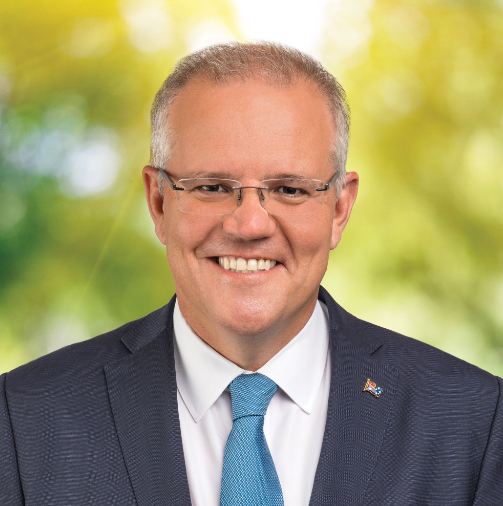
Australia’s center-right government won a surprise victory over the left. Voters backed the center-right government in a slowing economy for another three years and rejecting the opposition’s progressive agenda which has been really pretty out there at times. Despite trailing in most opinion polls for years, Scott Morrison’s Liberal-National coalition won attacking Labor’s pledge to take tougher action on climate change and strip tax perks from wealthy Australians. Many are calling Labour’s loss for its leader Bill Shorten, the shock of all time up there with the loss of Hillary Clinton because the polls just got it wrong again.

Debt Loops Rationale and Effects


Published on Oct 25, 2010

SUBSCRIBE 4.8M
Positive and negative effects of China’s devaluing of their currency More free lessons at: http://www.khanacademy.org/video?v=XB…

Introduction to Balance Sheets | Housing | Finance & Capital Markets | Khan Academy


Published on Mar 15, 2008

SUBSCRIBE 4.8M
Using a home purchase to illustrate assets, liabilities and owner’s equity. Created by Sal Khan.

Present Value 4 (and discounted cash flow) | Finance & Capital Markets | Khan Academy


Published on Sep 6, 2008

SUBSCRIBE 4.8M
Lets change the discount rates depending on how far out the payments are. Created by Sal Khan. Watch the next lesson: https://www.khanacademy.org/economics… Missed the previous lesson? Watch here: https://www.khanacademy.org/economics… Finance and capital markets on Khan Academy: If you gladly pay for a hamburger on Tuesday for a hamburger today, is it equivalent to paying for it today? A reasonable argument can be made that most everything in finance really boils down to “present value”. So pay attention to this tutorial.

Present Value 2 | Interest and debt | Finance & Capital Markets | Khan Academy


Published on Sep 6, 2008

SUBSCRIBE 4.8M
More choices as to when you get your money. Created by Sal Khan. Watch the next lesson: https://www.khanacademy.org/economics… Missed the previous lesson? Watch here: https://www.khanacademy.org/economics… Finance and capital markets on Khan Academy: If you gladly pay for a hamburger on Tuesday for a hamburger today, is it equivalent to paying for it today? A reasonable argument can be made that most everything in finance really boils down to “present value”. So pay attention to this tutorial.

Introduction to present value | Interest and debt | Finance & Capital Markets | Khan Academy


Published on Sep 5, 2008

SUBSCRIBE 4.8M
A choice between money now and money later. Created by Sal Khan. Watch the next lesson: https://www.khanacademy.org/economics… Missed the previous lesson? Watch here: https://www.khanacademy.org/economics… Finance and capital markets on Khan Academy: If you gladly pay for a hamburger on Tuesday for a hamburger today, is it equivalent to paying for it today? A reasonable argument can be made that most everything in finance really boils down to “present value”. So pay attention to this tutorial. About Khan Academy: Khan Academy offers practice exercises, instructional videos, and a personalized learning dashboard that empower learners to study at their own pace in and outside of the classroom. We tackle math, science, computer programming, history, art history, economics, and more. Our math missions guide learners from kindergarten to calculus using state-of-the-art, adaptive technology that identifies strengths and learning gaps. We’ve also partnered with institutions like NASA, The Museum of Modern Art, The California Academy of Sciences, and MIT to offer specialized content. For free. For everyone. Forever. #YouCanLearnAnything Subscribe to Khan Academy’s Finance and Capital Markets channel: https://www.youtube.com/channel/UCQ1R… Subscribe to Khan Academy: https://www.youtube.com/subscription_…