BRAT: “Long-Run Productivity Has Been Declining For 70 Years. Trump Reversed That.”


Posted originally on Rumble By Bannon’s War Room on: July 22, 2025

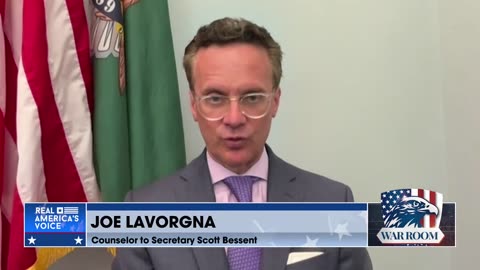
LAVORGNA: Biden Printed Money, Trump Fueled Real Growth With Pro-Business Policy


Posted originally on Rumble By Bannon’s War Room on: July 22, 2025

Ground Beef Prices on the Rise


Posted originally on Jul 23, 2025 by Martin Armstrong 

Dairy Cow

Ground beef is the new egg as the media has turned its attention to a new grocery item impacted by inflation. The average price for a pound hit $6.12 in June, up 12% YoY, and the highest price recorded since the government began collecting data in the 1980s.

Some news outlets blame tariffs on Brazil that have not yet gone into effect, but Brazil only imports 5-7% of the overall supply. The United States chiefly supplies itself with ground beef, with domestic production accounting for 75-80% of the overall supply. The problem is that the US has had six consecutive years of herd contraction, and the current supply is unable to meet demand. As of January 2025, cattle inventory reached 86.7 million head, 1% down YoY, and the smallest inventory since 1951.

Cattle Herd

One must recall how the previous administration was pushing forth the net-zero emission agenda. Farmers willingly reduced herd size to avoid threats of taxation. From 2021 to 2022, the EPA touted a 2% drop in methane from enteric fermentation, but that was primarily due to shrinking beef cattle populations.

Weather was also a main driver as droughts that began around 2020 in abundant farm areas cut down cattle size. Overall inflation has caused the cost of food to soar for farmers as well, with feeder cattle prices up 9% YoY.

The US increased beef imports by 24% from 2023 to 2024 to offset domestic constraints. Australia supplies around 7% to 10% of all beef, followed by Brazil, with New Zealand accounting for 3% to 4% of the supply, Uruguay for 2% to 3%, and Argentina with 1% to 2% of the total supply. Still, America is largely self-sufficient in supplying ground beef.

Now this is simply the ground beef supply as live cattle is a different trade. Naturally, the US looks to its neighbors, Mexico and Canada, for live imports, with Canada supplying 15% to 20% of live cattle and Mexico supplying up to 15%. Even though the US has the lowest head inventory on record since 1951, the majority of live cattle used to create ground beef is domestic. Now, Mexico has a massive screwworm outbreak from late 2024 to the present day. The US suspended all live cattle imports from Mexico in May to prevent the disease from spreading, which lasted into July and impacted peak seasons.

Ground beef prices are up due to an imbalance in supply and demand. The headlines are blaming Trump tariffs for this inflation without understanding that prices naturally rise when demand outweighs supply.

Spaniards Demand Mass Deportation


Posted originally on Jul 23, 2025 by Martin Armstrong 

Spain.Houses.RealEstate

The people of every Build Back Better nation have been suffering the repercussions of open border policies. Civil unrest has erupted in nearly every European nation as the people refuse to sit idle as their demographics forcibly change. A recent survey in Spain by El Mundo found that 70% of Spaniards support mass deportation.

Among the PP Party, 92% of respondents stated that the government needed to implement a mass deportation program. Even the Socialist Party, which supported open border policies, sees that it is no longer feasible, with 57% stating they now favor mass deportations. Only the far-left Sumar Party, far smaller than the main parties in the nation, would like to leave the borders open, with 67% rejecting deportations.

Spain was once a transit country for migrants to reach other destinations. As government policy shifted to be favorable to migrants, those illegally entering chose to stay in Spain. Since 2020, Spain has experienced an astounding 650% increase in family reunification visas, according to the Ministry of Inclusion, Social Security, and Migration. These are merely the people on record who were granted permission to stay and do not account for those illegally living within Spain’s borders.

Permits were granted to 43,848 people in March 2020. Exactly five years later, Spain granted permits to 328,841 people. These people claim to have family ties to legal citizens or residents, and the permits grant them temporary residency that can be renewed.

Spain experienced a 96% surge in illegal entries between January and June 2024. The majority (167%) of illegal migrants are finding their way to the mainland through the Canary Islands, with the majority of migrants coming from West African nations such as Mali, Senegal, and Morocco. The journey is extremely dangerous, and while figures are unknown, it is believed that 10,000 people died attempting to cross the Mediterranean or Atlantic to the promised land of Spain. There has also been a concerning uptick in unaccompanied minors, with over 6,000 finding their way to the Canary Islands by August 2024. No one can protect these children from exploitation and trafficking because open border policies are an illegal practice granted permission to operate by leftist governments.

Prime Minister Pedro Sánchez’s liberal government favors open border policies and approved a plan to grant 900,000 illegal immigrants legal status over the next three years. Those 10,000 people died because his policies state that people may stay if they find their way into the nation. He does not care that the people of Spain are demanding closed borders.

Spain’s birth rate is the lowest on record since 1941 at 1.19 per woman. The government believes that the nation will need 25 million new migrants over the next 30 years to maintain the workforce and social welfare systems. Mass replacement theory is real.

Top bureaucrat Hillary Clinton admitted the concept: “It’s all in there—the return to the nuclear family, the return to being a Christian nation, return to producing a lot of children, which is sort of odd since the people who produce a lot of children are immigrants.” This ties into the Marxist concept of terminating the nuclear family and undermining religion.

Spain and every other open border nation will become unrecognizable if policy does not change.

Cash Accepted Here – Payment Choice Act


Posted originally on Jul 23, 2025 by Martin Armstrong 

cashless society electronic money

Senators Kevin Cramer (R-ND) and John Fetterman (D-PA) have introduced bipartisan legislation, the Payment Choice Act, which would require businesses to accept cash payments. Money is merely the medium of exchange that someone is willing to accept for goods or services. Businesses across America have inadvertently contributed to the push toward a cashless society by refusing to accept cash as a form of payment.

“Any person engaged in the business of selling or offering goods or services at retail to the public who accepts in-person payments at a physical location … shall accept cash as a form of payment for sales made at such physical location in amounts up to and including $500 per transaction,” the measure stipulates, in part.

The war on cash is part of the broader agenda to eliminate all financial privacy and control every transaction. Refusing to accept cash is not merely a business decision but a step toward a totalitarian digital monetary system. Why bother with cash if you cannot use hard currency to pay for goods and/or services? Governments and central banks are pushing digital currencies to track, tax, and control every penny in circulation. If businesses start denying cash, they’re doing the state’s dirty work for them unintentionally.

Certain businesses prefer the convenience of credit cards and not all payment systems are equipped to accept cash. Yet, as Senator Cramer stated in his argument when proposing the bill, physical cash is legal tender, and businesses are limiting consumer choice by forcing the use of debit and credit cards for transactions. Then you have businesses that pass on the 3% transaction fee to consumers, adding to inflationary pressures. “Do you accept cash?” has become a common courtesy, as consumers are aware of the need to travel with a card to ensure purchases. Naturally, governments have cracked down on businesses that only accept cash, as they assume these businesses are attempting to avoid taxation. This is the first piece of legislation that actually supports the consumer over the government it is refreshing to see it gain bipartisan support.

The bill makes exceptions for businesses that have “a sale system failure” or those that do not have enough cash available to provide change. In fact, companies would not be required to accept $50 or $100 bills under this legislation to prevent the latter. It is quite disappointing to see the freedoms many are willing to relinquish in the name of convenience.

Once cash is gone, you’ll have no ability to opt out. So yes, we need to protect cash, and that may require legal guarantees that it remains a valid and accepted form of payment.

New Jersey District Judges Use Arcane Rule to Block U.S Attorney Alina Habba


Posted originally on CTH on July 22, 2025 | Sundance

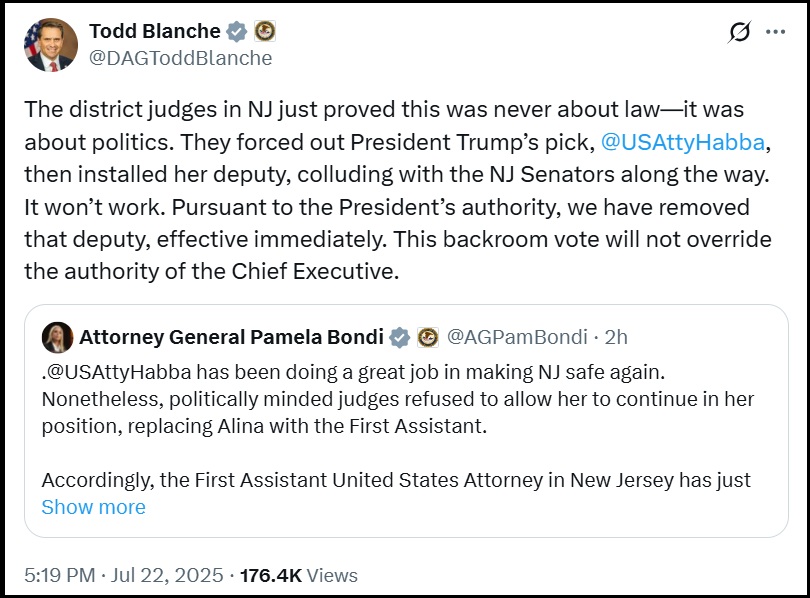
Boy howdy, this judicial activism is reaching new heights. Federal judges in New Jersey invoked a rarely used judiciary power to remove interim U.S. Attorney Alina Habba, installing her top assistant as the state’s top prosecutor. However, hours later the Trump administration responded by removing Habba’s deputy.

[SOURCE]

This is where Majority Leader John Thune can come into play and push for a faster track confirmation of Habba through the senate.

POLITICO – Federal judges declined to keep President Donald Trump’s former personal attorney as New Jersey’s top federal prosecutor, exercising an arcane statute to rebuff the Trump administration’s wishes.

New Jersey district court judges voted to not let interim U.S. Attorney Alina Habba stay on the job after her 120-day interim term expires, instead picking prosecutor Desiree Leigh Grace, according to a court order posted to the judiciary’s website.

[…] “President Trump has full confidence in Alina Habba, whose work as acting U.S. Attorney for the District of New Jersey has made the Garden State and the nation safer,” White House spokesperson Harrison Fields said in a statement. “The Trump Administration looks forward to her final confirmation in the U.S. Senate and will work tirelessly to ensure the people of New Jersey are well represented.”

[…] the Trump administration could make a countermove to remove Grace and even try to get Habba her old job back by appointing Habba to be the first assistant U.S. attorney since that official can become acting U.S. attorney if there is a vacancy. (read more)

Canada Accepts They’re Not Going to Get a Trade Deal Before 35% Tariffs Kick In


Posted originally on CTH on July 22, 2025 | Sundance 

I’ll repeat it as much as needed, until it sinks in.

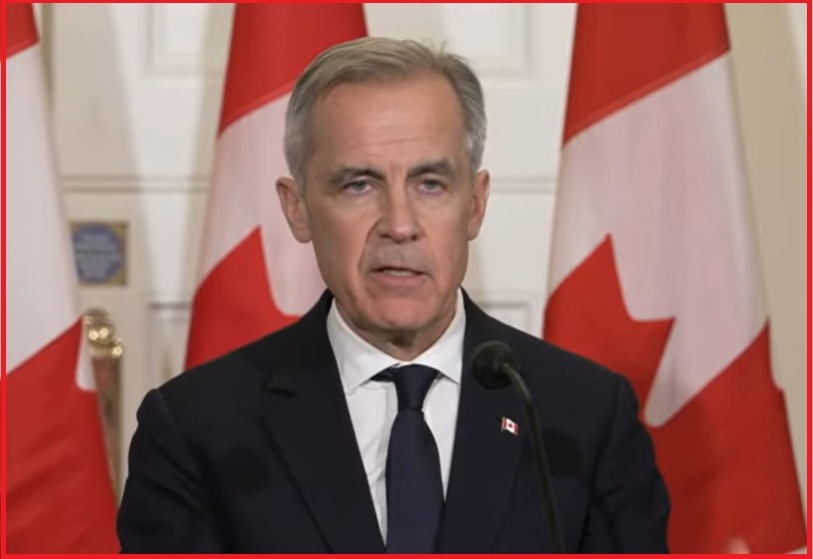
The U.S-Canada trade deal status is simply a no-brainer. President Trump will answer questions about Canada and tariffs, he’ll put people into seats to discuss trade with the Canadian delegation, and he’ll give every outward appearance of being favorable to Prime Minister Mark Carney…. BUT…

In the background, Trump is simply waiting for the USMCA timeline to trigger a renegotiation. President Donald Trump is ambivalent to the trade partnership with Canada. This moot-status reality is why there’s no substantive engagement.

‘No deal’ -until USMCA redo- is a win for President Trump.

For some bizarre reason that I simply cannot fathom, almost every Canadian politician seems entirely oblivious to this reality. Instead, Canadian Trade Minister Dominic LeBlanc and Mark Carney’s chief-of-staff, Marc-André Blanchard are once again coming to DC to ride their bicycles in slow circles at the bottom of the White House driveway while staring in the windows.

An article in Politico notes the Canadian premiers are now accepting the August 1st deadline will pass without any agreement, and the 35% reciprocal tariffs on non-USMCA products (meaning a lot of stuff) is going to trigger.

Literally, everything from Canada that has a non-USMCA component is going to be tariffed. Think about all the stuff from China, Asia (writ large) and Europe that Canada assembles for finished goods. All of that stuff will be subject to the tariffs.

That said, there’s good news coming from the recent meeting between Prime Minister Carney and the Premiers. Within their statement they use the term “developing large infrastructure projects.” That’s Canadian political codespeak for them realizing they are going to have to get back to regular energy development, raw material use/refinement and ACTUAL MANUFACTURING.

Canada is going to have to bring back their ‘dirty’ industrial jobs.

For our Treehouse friends in Canada, this is very good news. The Canadian assembly economic model has to change in order to get compliant with U.S. trade rules. THAT’S TRUMP’S ENTIRE POINT!

The environmentalists within Canada will not like this, but economically they will have no choice; it’s the only way to avoid a complete economic depression.

HUNTSVILLE, Ontario — Prime Minister Mark Carney and Canada’s premiers are tempering expectations that they’ll strike a new economic and security deal with Donald Trump by the end of the month.

“We would like to have the ideal deal, as fast as possible. But what can we get?” Quebec Premier François Legault said Tuesday. “You almost need to ask Donald Trump, and I’m not even sure he knows himself what he wants.”

It’s a shift in tone from the premiers and Carney, who ran for election on his economic record, arguing he’d be the best person to negotiate with the president. But Canada is finding it harder than it looks.

Carney met the premiers in Muskoka, cottage country north of Toronto, to update them on Canada-U.S. negotiations.

As the leaders emerged from a three-hour meeting, they downplayed hopes of an Aug. 1 deal, arguing that achieving a “good deal” is more important than hitting a deadline.

[…] As the negotiations continue, the premiers spent Tuesday carving out a strategy to offset the economic impact of Trump’s tariffs on the aluminum, steel, auto and lumber sector. They spoke about developing large infrastructure projects, breaking down trade barriers between provinces and encouraging a “buy Canadian” approach. (READ MORE)

Canada is going to go into a deep economic recession; there’s no way to avoid it.  However, if they restart their industrial base, drop the ridiculous ‘green’ energy stuff, start exploiting their own natural resources and train an apprentice generation -just like we are trying to do- then Canada can bounce back stronger than ever.

We know there are Canadian wolverines who understand this concept; we saw thousands of them in the Truckers’ vaccine strike.  Make Canada Great Again, by Making Dirty Jobs Great Again, eh?

President Trump Announces Trade Agreement with Philippines – 19% Reciprocal Tariff Rate


Posted originally on CTH on July 22, 2025 | Sundance

Following an oval office meeting and later discussion with Philippine President Ferdinand Marcos, President Trump announced a trade agreement has been reached.

President Ferdinand Marcos, of the Philippines, is just leaving the White House, with all of his many Representatives. It was a beautiful visit, and we concluded our Trade Deal, whereby The Philippines is going OPEN MARKET with the United States, and ZERO Tariffs. The Philippines will pay a 19% Tariff. In addition, we will work together Militarily. It was a Great Honor to be with the President. He is Highly Respected in his Country, as he should be. He is also a very good, and tough, negotiator. We extend our warmest regards to the wonderful people of The Philippines! (link)

Additionally, the White House has announced a trade agreement with Indonesia for a similar 19% tariff rate.

WHITE HOUSE – Today, the United States of America (the United States) and the Republic of Indonesia (Indonesia) agreed to a Framework for negotiating an Agreement on Reciprocal Trade to strengthen our bilateral economic relationship, which will provide both countries’ exporters unprecedented access to each other’s markets.  The Agreement on Reciprocal Trade will build upon our longstanding economic relationship, including the U.S.-Indonesia Trade and Investment Framework Agreement, signed on July 16, 1996.

Key terms of the Agreement on Reciprocal Trade between the United States and Indonesia will include:

  • Indonesia will eliminate approximately 99 percent of tariff barriers for a full range of U.S. industrial and U.S. food and agricultural products exported to Indonesia.
  • The United States will reduce to 19 percent the reciprocal tariffs, as set forth in Executive Order 14257 of April 2, 2025, on originating goods of Indonesia, and may also identify certain commodities that are not naturally available or domestically produced in the United States for a further reduction in the reciprocal tariff rate.
  • The United States and Indonesia will negotiate facilitative rules of origin that ensure that the benefits of the agreement accrue primarily to the United States and Indonesia.
  • The United States and Indonesia will work together to address Indonesia’s non-tariff barriers that affect bilateral trade and investment in priority areas, including exempting U.S. companies and originating goods from local content requirements; accepting vehicles built to U.S. federal motor vehicle safety and emissions standards; accepting FDA certificates and prior marketing authorizations for medical devices and pharmaceuticals; removing certain labeling requirements; exempting U.S. exports of cosmetics, medical devices, and other manufactured goods from certain requirements; taking steps to resolve many long-standing intellectual property issues identified in USTR’s Special 301 Report; and addressing U.S. concerns with conformity assessment procedures.  Indonesia will work to address barriers for U.S. exports, including through the removal of import restrictions or licensing requirements on U.S. remanufactured goods or their parts; the elimination of pre-shipment inspection or verification requirements on imports of U.S. goods; and the adoption and implementation of good regulatory practices.
  • The United States and Indonesia have also committed to address and prevent barriers to U.S. food and agricultural products in the Indonesian market, including exempting U.S. food and agricultural products from all import licensing regimes, including commodity balance requirements; ensuring transparency and fairness with respect to geographical indications; providing permanent Fresh Food of Plant Origin (FFPO) designation for all applicable U.S. plant products; and recognizing U.S. regulatory oversight, including listing of all U.S. meat, poultry, and dairy facilities and accepting certificates issued by U.S. regulatory authorities.
  • Indonesia has committed to address barriers impacting digital trade, services, and investment.  Indonesia will provide certainty regarding the ability to transfer personal data out of its territory to the United States.  Indonesia has committed to eliminate existing HTS tariff lines on “intangible products” and suspend related requirements on import declarations; to support a permanent moratorium on customs duties on electronic transmissions at the WTO immediately and without conditions; and to take effective actions to implement the Joint Initiative on Services Domestic Regulation, including submitting its revised Specific Commitments for certification by the World Trade Organization (WTO).
  • Indonesia commits to join the Global Forum on Steel Excess Capacity and take effective actions to address global excess capacity in the steel sector and its impacts.
  • Indonesia commits to protecting internationally recognized labor rights.  Indonesia will, among other commitments, adopt and implement a prohibition on the importation of goods produced by forced or compulsory labor; amend its labor laws to ensure that workers’ rights to freedom of association and collective bargaining are fully protected; and strengthen enforcement of its labor laws.
  • Indonesia commits to adopt and maintain high levels of environmental protection and to effectively enforce its environmental laws, including by taking measures to improve forest sector governance and combat trade in illegally harvested forest products; encourage a more resource efficient economy; accept and fully implement the WTO Agreement on Fisheries Subsidies; and combat illegal, unreported, and unregulated fishing and illegal wildlife trade.
  • Indonesia will remove restrictions on exports to the United States of industrial commodities, including critical minerals.
  • The United States and Indonesia are committed to strengthening economic and national security cooperation to enhance supply chain resilience and innovation through complementary actions to address unfair trade practices of other countries, and through cooperation on export controls, investment security, and combatting duty evasion.
  • In addition, the United States and Indonesia take note of the following forthcoming commercial deals between U.S. and Indonesian companies:
    • Procurement of aircraft currently valued at 3.2 billion USD.
    • Purchase of agriculture products, including soybeans, soybeans meal, wheat, and cotton with an estimated total value of 4.5 billion USD.
    • Purchases of energy products, including liquefied petroleum gas, crude oil, and gasoline, with an estimated value of 15 billion USD.

In the coming weeks, the United States and Indonesia will negotiate and finalize the Agreement on Reciprocal Trade, prepare the Agreement for signature, and undertake domestic formalities in advance of the Agreement entering into force.

DNI Tulsi Gabbard Responds to Former President Obama’s Denials and Deflection


Posted originally on CTH on July 22, 2025 | Sundance

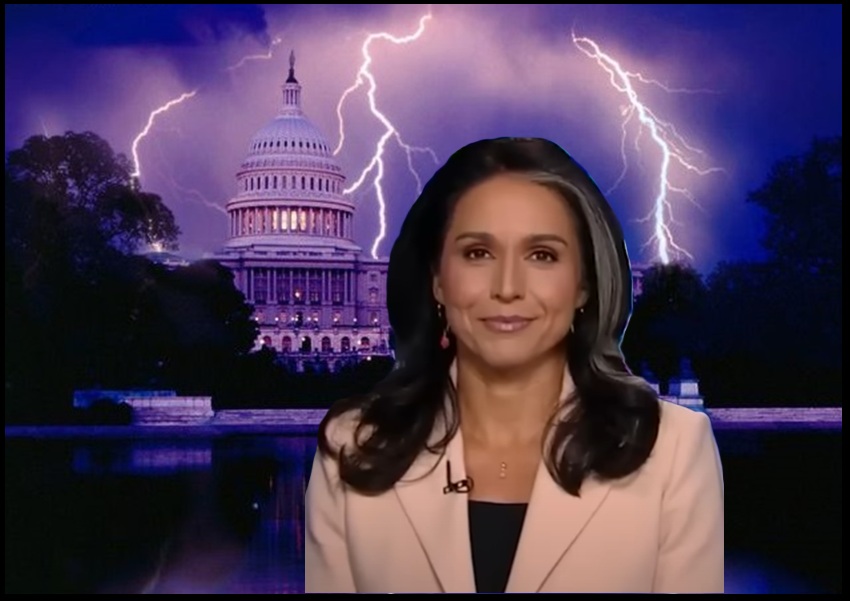
Director of National Intelligence, Tulsi Gabbard, responds to the deflection and denial of weaponized government and intelligence agencies by former President Barack Obama.

As noted in the comments by DNI Tulsi Gabbard, “Led by President Obama, there was an effort to create a document that would serve as a foundation for what would be a years-long coup against President Trump.”

While it is unlikely any of the evidence currently in the record will lead to accountability upon President Obama himself, there is much easier legal exposure underneath him amid the underlings that carried out the operation.

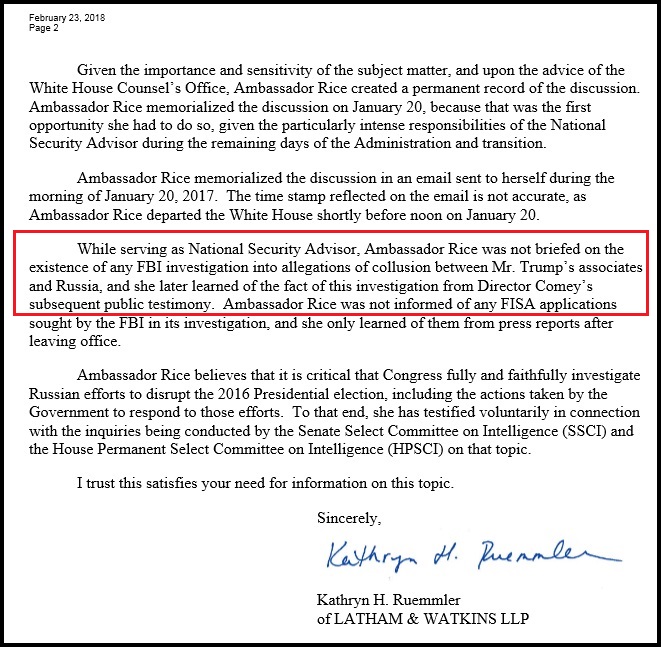
Susan Rice is first and foremost at risk along with former White House Counsel Katheryn Ruemmler.  Interestingly, Ruemmler became Susan Rice’s personal attorney after the Obama administration ended.   Both Rice and Ruemmler are on record denying knowledge of the FBI investigation of President Trump.

According to the newly declassified and released documents, and according to congressional testimony by FBI Director James Comey on March 20, 2017, both Rice and Ruemmler lied about their knowledge.

Barack Obama Releases a Statement After DNI Tulsi Gabbard and President Trump Outline the Conspiracy to Target Trump


Posted originally on CTH on July 22, 2025 | Sundance

Former President Barack Obama has released a statement following both DNI Tulsi Gabbard and President Trump outlining the Obama administration’s conspiracy operation to target Donald Trump in 2016 and beyond.

Obama’s office said in a statement, “Out of respect for the office of the presidency, our office does not normally dignify the constant nonsense and misinformation flowing out of this White House with a response. But these claims are outrageous enough to merit one. These bizarre allegations are ridiculous and a weak attempt at distraction.”

“Nothing in the document issued last week undercuts the widely accepted conclusion that Russia worked to influence the 2016 presidential election but did not successfully manipulate any votes. These findings were affirmed in a 2020 report by the bipartisan Senate Intelligence Committee, led by then-Chairman Marco Rubio.” (link)