Food shortages have historically contributed to revolutions more so than just international war. Poor grain harvests led to riots as far back as 1529 in the French city of Lyon. During the French Petite Rebeyne of 1436. (Great Rebellion), sparked by the high price of wheat, thousands looted and destroyed the houses of rich citizens, eventually spilling the grain from the municipal granary onto the streets. Back then, it was to go get the rich.
There was a climate change cycle at work and today’s climate zealots ignore their history altogether for it did not involve fossil fuels. The climate got worse at the bottom of the Mini Ice Age which was about 1650. It really did not warm up substantially until the mid-1800s. During the 18th century, the climate resulted in very poor crops. Since the 1760s, the king had been counseled by Physiocrats, who were a group of economists that believed that the wealth of nations was derived solely from the value of land and thereby agricultural products should be highly priced. This is why Adam Smith wrote his Wealth of Nations as a retort to the Physiocrats. It was their theory that justified imperialism – the quest to conquer more land for wealth; the days of empire-building.
The King of France had listened to the Physiocrats who counseled him to intermittently deregulate the domestic grain trade and introduce a form of free trade. That did not go very well for there was a shortage of grain and this only led to a bidding war – hence the high price of wheat. We even see English political tokens of the era campaigning about the high price of grain and the shortage of food to where a man is gnawing on a bone.
Voltaire once remarked that Parisians required only “the comic opera and white bread.” Indeed, bread has also played a very critical role in French history that is overlooked. The French Revolution that began with the storming of the Bastille on July 14th, 1789 was not just looking for guns, but also grains to make bread.
The price of bread and the shortages played a very significant role during the revolution. We must understand Marie Antoinette’s supposed quote upon hearing that her subjects had no bread: “Let them eat cake!” which was just propaganda at the time. The “cake” was not the cake as we know it today, but the crust was still left in the pan after taking the bread out. This shows the magnitude that the shortage of bread played in the revolution.
In late April and May of 1775, the food shortages and high prices of grain ignited an explosion of such popular anger in the surrounding regions of Paris. There were more than 300 riots and looking for grain over just three weeks (3.14 weeks). The historians dubbed this the Flour War. The people even stormed the place at Versailles before the riots spread into Paris and outward into the countryside.
The food shortage became so acute during the 1780s that it was exacerbated by the influx of immigration to France during that period. It was a period of changing social values where we heard similar cries for equality. Eventually, this became one of the virtues on which the French Republic was founded. Most importantly, theFrench Constitution of 1791 explicitly stipulated a right to freedom of movement. It was mostly perceived to be a food shortage and the reason was the greedy rich. Thus, a huge rise in population was also contributed in part by immigration whereas it reached around 5-6 million more people in France in 1789 than in 1720.
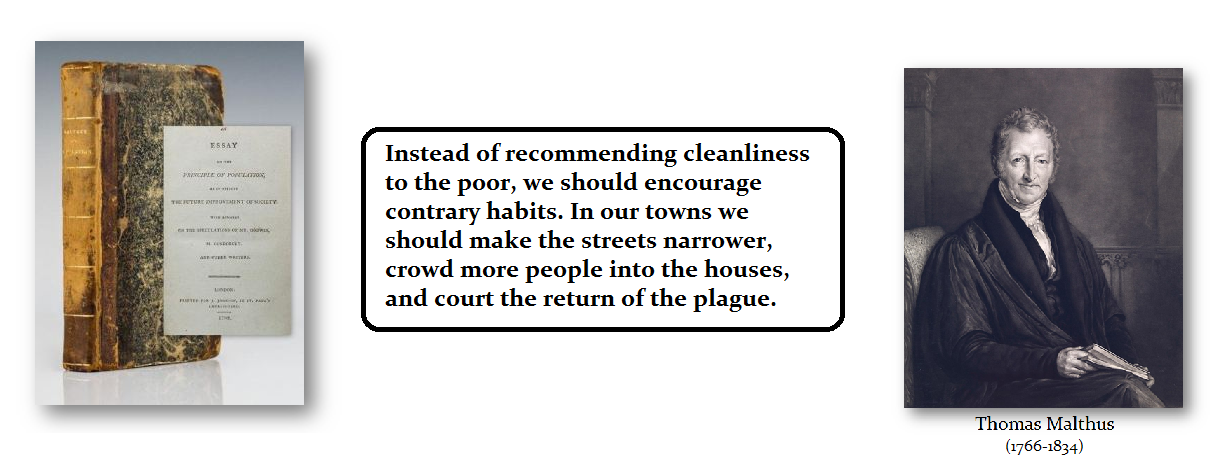
Against this backdrop, we have the publication by Thomas Malthus (1766-1834) An Essay on the Principle of Population was first published anonymously in 1798. He theorized that the population would outgrow the ability to produce food. We can see how his thinking formed because of the Mini Ice Age that bottomed in 1650. All of this was because of climate change which instigated food shortages. Therefore, it was commonly accepted that without a corresponding increase in native grain production, there would be a serious crisis.
The refusal on the part of most of the French to eat anything but a cereal-based diet was another major issue. Bread likely accounted for 60-80 percent of the budget of a wage-earner’s family at that point in time. Consequently, even a small rise in grain prices could spark political tensions. Because this was such an issue, and probably the major cause of the French Revolution among the majority, Finance Minister Jacques Necker (1732–1804) claimed that, to show solidarity with the people, King Louis XVI was eating the lower-class maslin bread. Maslin bread is from a mix of wheat and rye, rather than the elite manchet, white bread that is achieved by sifting wholemeal flour to remove the wheatgerm and bran.
That solidarity was seen as propaganda and the instigators made up the Marie Antoinette quote: Let them eat cake. . Then there was a plot drawn up at Passy in 1789 that fomented the rebellion against the crown shortly before the people stormed the Bastille. It declared “do everything in our power to ensure that the lack of bread is total, so that the bourgeoisie are forced to take up arms.”
It was also at this time when Anne Robert Jacques Turgot (1727-1781), Baron de l’Aulne, was a French economist and statesman. He was originally considered a physiocrat, but he kept an open mind and became the first economist to have recognized the law of diminishing marginal returns in agriculture. He became the father of economic liberalism which we call today laissez-faire for he put it into action. He saw the overregulation of grain production was behind also contributing to the food shortages. He once said: “Ne vous mêlez pas du pain”—Do not meddle with bread.
The French Revolution overthrew the monarchy and they began beheading anyone who supported the Monarchy and confiscated their wealth as well as the land belonging to the Catholic Church. Nevertheless, the revolution did not end French anxiety over bread. On August 29th, 1789, only two days after completing the Declaration of the Rights of Man and of the Citizen, the Constituent Assembly completely deregulated domestic grain markets. The move raised fears about speculation, hoarding, and exportation.
Then on October 21st, 1789, a baker, Denis François, was accused of hiding loaves from sale as part of a conspiracy to deprive the people of bread. Despite a hearing which proved him innocent, the crowd dragged François to the Place de Grève, hanged and decapitated him, and made his pregnant wife kiss his bloodied lips. Immediately thereafter, the National Constituent Assembly instituted martial law. At first sight, this act appears as a callous lynching by the mob, yet it led to social sanctions against the general public. The deputies decided to meet popular violence with force.
So, food has often been a MAJOR factor in revolutions. We are entering a cold period. Ukraine has been the breadbasket for Europe. Escalating this war will also lead to accelerating the food shortages post-2024. It is interesting how we learn nothing from history. Wars are instigated by political leaders while revolutions are instigated by the people.
Posted originally on the CTH on January 26, 2023 | Sundance
Tucker Carlson covered the Project Veritas story about a Pfizer executive talking about the pharmaceutical company engineering new COVID strains via a process of modifying the virus called “directed evolution.” After the monologue segment, Tucker Carlson interviews Dr. Robert Malone. {Direct Rumble Link} WATCH:
The full crazy video of the Project Veritas confrontation with Jordon Trishton Walker, Pfizer’s Director of Research and Development, Strategic Operations – mRNA Scientific Planner, is below.
Posted originally on the CTH on January 26, 2023 | Sundance
The pundits are noting the man who never expends political capital on an issue where he might lose, has finally expended some political capital. However, what the pundits don’t realize is this has all be gamed-out, strategized and planned by the people who manage Ron DeSantis. {Direct Rumble Link}
First, Mike Lindell announced he was going to challenge Ronna McDaniel for the RNC chair. This sent a shockwave through the Big Club because the potential for support from President Trump loomed over the Lindell announcement. America-First Mike Lindell is not controlled by corporate money, Wall Street, the multinationals or billionaire Big Donors who ultimately control the RNC as a big private club.
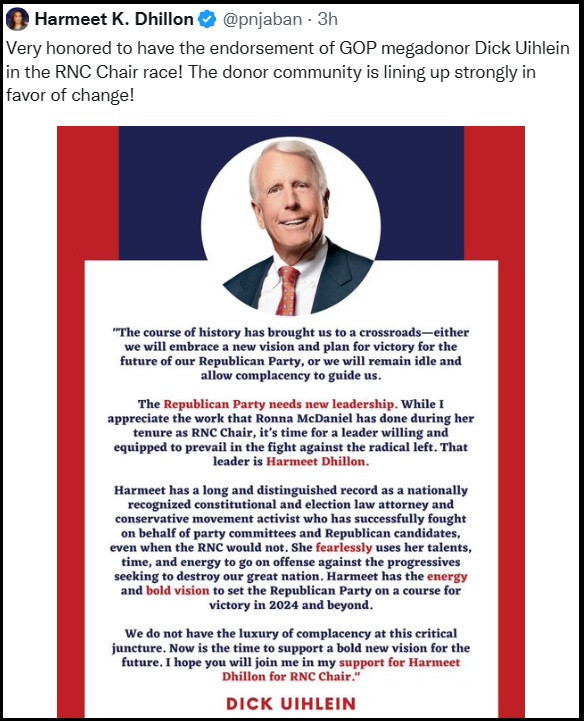
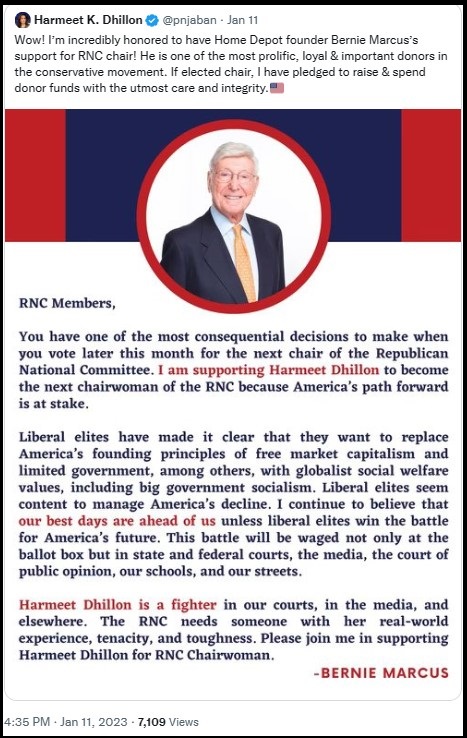
So, what happened?… Facing the possibility that Ronna McDaniel might be unseated, a week after Lindell’s announcement, Harmeet Dhillon steps into the picture.
Dhillion is a tenured Big Club member and voice for the billionaire class who fund her. Remember, Dhillon was paid over $1 million by the RNC, separate and above any costs connected to the Trump legal defense fund. Dhillon makes her money from the RNC, and if Lindell won the chairmanship, in addition to her friend losing the seat, Dhillon was financially at risk. Dhillon enters the race as an insurance policy, on behalf of the Big Club donors.
Notice that this interview is pre-taped. Charlie Kirk (TPUSA) the same group who organized the national campaign blitz after DeSantis’ 5 days in the bunker, strategically timed after the Mar-a-Lago raid, pre-tapes an interview with Ron DeSantis where the managed principal endorses Harmeet Dhillon for RNC chair. On the eve of the RNC vote, the interview is aired for maximum exposure. All of this is planned, coordinated, strategized and mapped out in advance. WATCH:
It’s not organic. All of this is scripted. All of it. Every bit of it. Harmeet Dhillon is already part of the DeSantis Big Club operation. The RNC roadmap in 2008 was for John McCain. The RNC roadmap for 2012 was for Mitt Romney. The RNC roadmap for 2016 was for Jeb Bush, and the RNC, Big Club, Wall Street, Billionaire and multinational corporate roadmap in 2024 is for Ron DeSantis. None of this is organic. All of this is scripted.
Once you see the strings….
Ironically, while advocating for Harmeet Dhillon, Ron DeSantis compares the ideology of Washington DC with the extreme left-wing ideology of Harmeet Dhillon’s hometown, San Francisco. lolol I bet the background manager squinted a little at that remark.
The Big Money that Steven Crowder was talking about in his media conflict with The Daily Wire, that’s the big money behind TPUSA. It’s all a conglomeration of Big Banks and multinational financial institutions, all operated within the same ideological outlook, that are behind the financial system that Charlie Kirk must adhere to.
Charlie Kirk, just like Ben Shapiro, is a puppet to the people in power with the money. They all have something in common.
All of these networked interests and stakeholders must make sure the RNC as a Big Club organization, is protected from those like Mike Lindell who they do not control. That’s the essential underpinning of all of this. The same stakeholders who were/are opposed to Donald Trump but were forced to back down a little after he became president.
It’s all about the money folks. That’s all this is about… Multiple millions for the RNC, multiple billions for the donor class on Wall Street and multiple trillions for the multinationals who operate in combination with government.
There are trillions at stake, and everything is about the economics of the thing.
Posted originally on the CTH on January 25, 2023 | Sundance
The Biden administration is pushing the United States into war against Russia to protect Washington DC’s political and financial interests in Ukraine. None of this is a surprise as both Republican and Democrat politicians in DC continue to use Ukraine as a money laundering operation for key U.S. stakeholders.
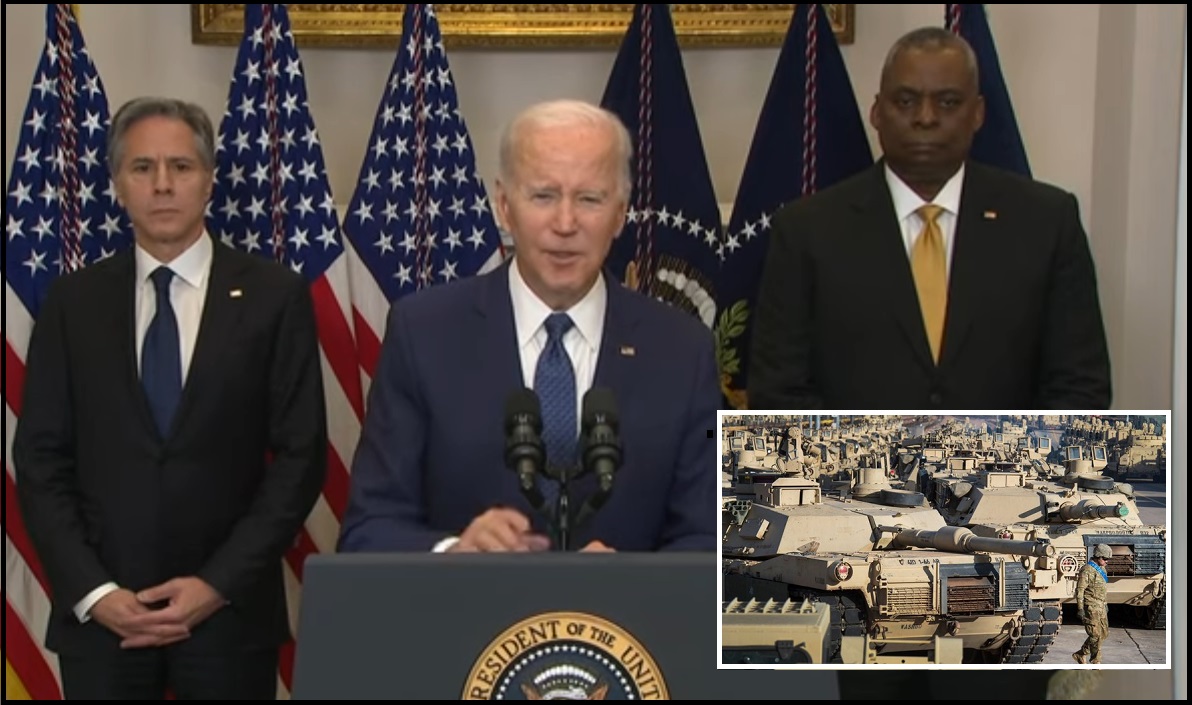
Today Joe Biden announced he is sending 31 ‘Abram Tanks’ from the U.S. arsenal into Ukraine to further push the United States into direct conflict with Russia. The potential for direct U.S. military engagement in Ukraine is now just a matter of formality, as the Abram’s tanks will be accompanied by military advisors, trainers, and the processes to sustain and maintain them on the battlefield. WATCH:
[Transcript] – […] “today, I’m announcing that the United States will be sending 31 Abram tanks to Ukraine, the equivalent of one Ukrainian battalion.
Secretary Austin has recommended this step because it will enhance the Ukraine’s capacity to defend its territory and achieve its strategic objectives.
The Abrams tanks are the most capable tanks in the world. They’re also extremely complex to operate and maintain, so we’re also giving Ukraine the parts and equipment necessary to effectively sustain these tanks on the battlefield.
And we begi- — we’ll begin to train the Ukrainian troops on these issues of sustainment, logistics, and maintenance as soon as possible. Delivering these tanks to the field is going to take time, time that we’ll see — we’ll use to make sure the Ukrainians are fully prepared to integrate the Abram tanks into their defenses.
We also closely coordinated this announcement with our Allies. (read more)
We are being pushed into a war that few Americans want.
This is getting out of hand mostly because the Russians are defeating Ukraine in the war. Without the U.S. operators and material involved, Ukraine cannot win. However, the Biden administration view Ukraine as a U.S. proxy in Europe, and as such all of the corrupt DC systems are in alignment to continue escalating this conflict.
This is happening against the backdrop of Ukraine officials being caught stealing money given to Ukraine to fight the war.
None of this is good, and it is likely to get worse.
WASHINGTON DC – […] The decision to provide the tanks marks a stunning reversal for the Biden administration, which had previously argued they would be of little benefit to Ukraine.
But the decision to send the Abrams tanks helped get Germany to move forward with a separate effort to provide Leopard tanks to Ukraine, which the U.S. had seen as benefitting Kyiv.
German Chancellor Olaf Scholz announced Wednesday that Berlin would send Leopard tanks to Ukraine and allow for other European nations to also send the German-made tanks to Kyiv. (more)
For his weekly monologue, Neil Oliver outlines the insufferable fools that are constructing the path to Agenda 2030 and the World Economic Forum dictates that form the baseline to “save the planet” from climate change.
As you listen or read the word picture that Oliver paints, you might remember the CTH article from over a decade ago about what the “fundamental change” Barack Obama was outlining, really meant. Well, here we are, a decade closer to the utopian goal – and the picture is now close enough for all to see. WATCH:
[Transcript] – Nothing less than our way of life is under threat now. A population distracted by propaganda about one existential threat after another – pandemics, nuclear war, climate crisis – is being herded into an unrecognizable future.
What was done in the name of Covid was grotesque – a violation of the rights of billions of people. Having seen what they can get away with, our so-called leaders have moved on, broadening their scope, as greedy for more as kids left unsupervised in a sweetie shop.
What is happening now, all around us, is the relentless erosion not just of our rights and liberties, but of our lives. It is so blatant – what’s happening – it’s hard to see it for what it is, which is bare-faced daylight robbery.
After Covid, the C-word that’s supposed to be on everyone’s lips … drummed into us night and day by the same complicit media that drives everything else … is climate – Climate crisis, in fact. Two c-words for the price of one.
From all sides, we are bombarded with predictions of the end of the world. Predictions, remember? Computer modelling … the crystal-ball-gazing of the scientific world.
If you believe the predictions and “the science” … by which I mean the pronouncements of scientists and global corporations … the same corporations champing at the bit for all the government grants and contracts to get all tooled up for making expensive wind turbines, solar panels, liquid hydrogen processing plants … and all those batteries … gazillions of batteries filled with the Earth’s rarest metals and minerals.
The important word to notice there is rare, in that, if they’re rare now what’s it going to be like in 20 years’ time when all the existing stuff needs replaced and multiplied in number by a factor of 10 or 100, or a thousand?
if you believe that science, unquestioningly, if you can’t or won’t see vested interests at work, it may already be too late for you.
We are to sacrifice everything on the promise of jam tomorrow. Pain for a decade until the as-yet non-existent technology is invented and fills all the yawning gaps … try selling that business pitch on Dragon’s Den. “I don’t know what I’m going to invent, but if you all give me your money, your way of life and your children’s futures, this time next decade we’ll all be farting through silk.”
They get away with it, because of the message relentlessly pumped out. The message pumped out morning, noon and night that we filthy, mostly white creatures of the West have, with our greedy consumption of fossil fuels since the industrial revolution, all but set the world on fire.
If we don’t stop now … or preferably yesterday, they squeal … the blue planet will shortly be a blackened lump of charcoal leaving only a smoking trail as it hurtles lifeless through the universe.
By now, generations of people in the West have been raised to accept this grim premonition as holy writ.
Children are crying themselves to sleep at night on account of their certainty that the planet won’t continue to exist long enough for them to grow up.
This ingrained, endemic terror is the breeding ground for the insanity of Net Zero … and the suicide note for millions that is Agenda 2030.
Generations alive today have been raised to believe that the planet and entire populations YET TO BE are far, far more important than THEY are now. Those alive today are of no concern whatever when compared to the well-being o fantasy people of the future, who will inhabit a Utopia made possible by the impoverishment and immiseration of all of us here right now.
Collectively we are the first pancake – the throw-away.
When I say we are being robbed of our way of life, I could as justifiably say our children are being raised to accept that their being alive AT ALL is the biggest part of the problem. What the planet wants most of all, we are told, is to be rid of most of us, like too many flies in summer.
All around the world, birth rates are dropping as fast as a piano falling out of a window.
The living populations of many nations are not producing enough people to replace them after they die. If nothing is done to slow this run-away train … to drive the birth of many, many more babies every year … entire nations face inevitable extinction.
Worse than our way of life being under threat, life itself is being sacrificed to ensure the future of planet Earth.
The message fed to our children is Satanically dark – that they are nothing more than blight upon the world … meat-eating, resource-consuming, fossil-fuel-dependent parasites.
Once you contemplate the consequences of those poisonous seeds, the motivations behind anti-human notions like Agenda 2030 and Net Zero become obvious.
Look around now:
Take, for instance, the idea of the 15-minute city (20-minute cities in Scotland because First Minister Nicola Sturgeon always has to convince herself she’s doing something different from England). That’s another foot in the door by Mr Global.
Together with the clamp down on cars … the ideology that started with congestion zones but that has metastasised into a multi-faceted determination to make the privacy and convenience of independent travel a thing of the past … the idea of limiting our horizons to within walking distance of our houses is about preparing us for smaller, meaner lives lived under perpetual scrutiny. Papers, please!
Critics say it’s all very well if you actually already live in a city but ask “What about those in small towns, villages, or in isolated homes in the countryside?”
If you ask me, that’s to miss the point of 15-minute cities entirely. If you ask me, the evolution in the minds of the powers that be, like those little emperors gathered in Davos, where the Alpine air must be thick with the smell of spent aviation fuel from hundreds of private jets and, if reports are to be believed, the cologne worn by the thousands of sex-workers who have arrived in town for no apparent reason whatsoever.
The Daily Mail ran with the headline: Prostitutes gather in Davos for annual meeting of global elite – where demand for sexual services rockets during economic summit … The grand plan of those priapic masters of the universe will see us herded out of the countryside, out of the villages and into those cities already built and others yet to be.
The direction of travel I detect will set aside the countryside for other purposes that us little people ought not to bother our pretty little heads about. Probably growing all the biofuel required for all those private jets, who knows?
In the future we’ll all be city mice and the country mice will be just another extinct species, like the cattle, pigs and sheep.
The fear works best on children – and so much of the rest of the change to our way of life targets children first.
Last week I read about Edinburgh being the first city in Europe to commit to getting meat off the menu in schools. Choice about what we eat is, obviously, another fundamental part of life that is being set aside without so much as a by your leave.
But the Utopian future is meatless, make no mistake, at least for the likes of us that can’t afford to attend Davos in our private jets, or else made of some abomination grown in 3-D printers in labs and sold to us as meat.
And who’s going to go meat-free first? The kids of course. Those of us with kids know the truth of school meals, especially in primary schools. Jamie Oliver can bang on all he likes about revolutionising that aspect of the school day, but the reality of meat-free lunches in most primary schools will be chips, pizzas, more chips, and those hyper-processed chemistry set experiments they call vegan sausages, the ones with the ingredients list of unpronounceable additives on the back that’s as long as the Old Testament. And more chips.
Like rising damp that creeps, or an airborne virus, new laws are being conjured into existence all around us, all of them shaped to profoundly alter our lives while we’re conveniently distracted by a suspicious new pathogen and the threat of Armageddon caused either by nuclear war or the planet bursting into flames on account of too many burping cows and homes that are warm in the winter.
As well as a way of life, old certainties dictated by nature herself are being erased. Always, always it’s about attacking the foundations of the family. Mothers are not necessarily women anymore. Women are certainly not a sex anymore, at least not as far as our elected representatives in Parliament are concerned. In a move so fast you might break your neck trying to keep up with it, women are designated as something men can choose to be when it suits them, less an adult human female, more a state of mind in a dress and a pair of court shoes.
When I was a lad, the future was going to be about world peace and teleporting to Mars for summer holidays. Instead, it’s turned out to be about no more plane flights unless you’re a billionaire, mass vaccinations not for health but to qualify for a digital ID, burgers made of insects, bikes instead of cars, a forever war in Europe and biological men urinating next to little girls in the Ladies toilets.
The reams of new legislation are creeping up on us from all sides. They’ve demonised those on strike just in time to secure public support for new laws against striking.
Oil billionaires funded the climate crisis glue-downs and soup-throwing performances in art galleries just long enough to usher in new laws limiting the right to public protest.
Sliding in as well is the Online Harms Bill, a full-throated attempt to take freedom of speech by the scruff of the neck and throw it down the waste chute as well.
The World Health Organisation – second biggest funder, the Bill Gates Foundation, don’t forget – together with member states, is working towards a new Pandemic Treaty that might mean that next time – and Gates has put a hard pencil line around the year 2025, in which he predicts there will be a real doozie – it will be the WHO and not the elected governments of sovereign nations that call the shots when it comes to vaccine mandates, lockdowns, travel restrictions and all the rest.
They’re legislating about how we heat our homes – or rather how we don’t heat them: heat pumps that everyone with even a sketchy understanding of the laws of physics and the nature of the climate in the Northern latitudes knows won’t work, no more gas boilers.
How long before they really do come for the wood burners, the coal fires and the gas stoves as well? How long before they decide they really will deny us every last one of the things that give us independence … herding us away from a past in which our heating and cooking is powered by fuels that can’t be cut off remotely with just the flick of a switch on a Smart Meter. How long have we got?
Health, freedom to move around our towns – and around our world – the right to protest and dissent, the right to withhold our labour, freedom of speech, the nature of the food we eat, the right to refuse to accept a medical intervention, what it means to be women and men.
The race is on. Our so-called leaders, all pumped up on the adrenaline of lockdowns and mandates, have sprinted out of the blocks for the ultimate round of Supermarket Sweep. Into their trolleys, they plan to heap every last aspect of the lives we have had.
They think they’ve got us scared enough to accept the whole damned lot of it.
Posted originally on the CTH on January 22, 2023 | Sundance
West Virginia Senator Joe Manchin appears with his good friend Chuck Todd for an interview about ongoing political events to include the debt ceiling.
As Manchin and Todd finish each other’s sentences, the discussion hits on the upcoming debt ceiling battle. Manchin surprisingly pulls out the purple card and states the super-secret thing that no one in DC will admit. The last federal budget was signed into law September 2008, for fiscal year 2009. From that moment forward, there has been nothing except continuing resolutions and omnibus spending bills [SIDENOTE: this approach was by design by Obama/Pelosi].
This 12-year timeline includes the entire tenure of House Speaker Paul Ryan, former Budget Committee Chair, who now uses the absence of the budget as a tool to advance his outside impression that DC is fiscally reckless, insert pearl clutching here. I digress. Manchin is positioning himself as the ‘purple’ option for 2024. WATCH (or read):
[Transcript] – CHUCK TODD: And joining me now is Senator Joe Manchin of West Virginia. Senator Manchin, welcome back to Meet the Press.
SEN. JOE MANCHIN: Chuck, it’s always good to be with you.
CHUCK TODD: Look, I want to get into the debt ceiling. I want to get into all this stuff. But I — we got some developments overnight with those classified documents, an FBI search — the White House said it was coordinated with the FBI. But we’ve now had an FBI search of former President Trump. Now we have an FBI search into President Biden’s residence. What’s your assessment of how the president has handled the situation?
SEN. JOE MANCHIN: Well, I mean, it’s just hard to believe that in the United States of America, we have a former president and a current president that are basically in the same situation. How does this happen? You know, only thing I can tell you, Chuck, is when I go into the SCIF with the secure documents, they always ask, “Are you clean?” when you walk out. They want to make sure you’re not carrying anything out. You know, and it might be a mistake. You might just put it in your other papers, but you double-check right there. To be held accountable and responsible is what we all are. And to put those in unsecured spaces is irresponsible.
CHUCK TODD: Do you see similarities, or do you see more differences in how President Trump versus how President Biden —
SEN. JOE MANCHIN: I’m not going to make —
CHUCK TODD: — has handled this?
SEN. JOE MANCHIN: — that decision, but I think that Merrick Garland did the right thing by putting the special counsel.
CHUCK TODD: You do?
SEN. JOE MANCHIN: And I think that we should wait until the special counsel, rather than making this a political circus. Let them find out the facts. What — was one more damaging? Are they both about the same, did not cause any problem, or is one more reckless and irresponsible than the other? I can’t answer that question, but I think the special counsel will do a better job than the politicians and the political circus that is going to follow.
CHUCK TODD: President Biden said he had no regrets in how he handled this. Do you have any advice for him on how he should handle this going forward?
SEN. JOE MANCHIN: Oh, I think he should have a lot of regrets. Yeah. I would —
CHUCK TODD: What are those —
SEN. JOE MANCHIN: I would think that. I said, “Whoever’s responsible.” I mean, if I hold people accountable, and I use — whether my chief of staff or, you know, my staff, who, that were doing this, that I’m looking at, then I’m going to hold someone accountable. But basically, the buck stops with me.
CHUCK TODD: So you think he should be out there, “Look, I mess — I messed up –”
SEN. JOE MANCHIN: That’s all. Just say —
CHUCK TODD: “Maybe I didn’t do it.” Just say it —
SEN. JOE MANCHIN: — “I made a mistake.”
CHUCK TODD: Just fall on your sword here?
SEN. JOE MANCHIN: We’re all human.
CHUCK TODD: Yeah.
SEN. JOE MANCHIN: We make mistakes. I can tell you I don’t think anyone intended, he sure didn’t intend for it to fall in wrong hands and use it against our country. I know they didn’t intend that to happen. Could it have happened? I don’t know. And yeah, you just might as well say, “Listen, it’s irresponsible. It was something we should’ve had a better check and balance on.”
CHUCK TODD: Now, former President Trump defied a subpoena. So in that sense, the, the way each has handled it is different.
SEN. JOE MANCHIN: Yes.
CHUCK TODD: Do you acknowledge that?
SEN. JOE MANCHIN: Absolutely. Much different than the other. One’s saying, “Okay, I hope I didn’t make any mistakes.
CHUCK TODD: Right.
SEN. JOE MANCHIN: — I hope no one’s compromised. I hope we didn’t hurt our country.” And the other one says, “Ugh, no. I know it didn’t. Believe me.” Well, you know what? What they said, verify? You have to verify.
CHUCK TODD: Trust but verify?
SEN. JOE MANCHIN: Trust but verify. Let’s find out. And that’s what the special counsel’s —
CHUCK TODD: And that’s what you want here? Both special counsels to sort of resolve this?
SEN. JOE MANCHIN: First of all, every one of us, in our life, have to be held accountable and responsible for our actions because people want accountability. And they want basically when you’re held accountable, are you responsible or not? If you are, would you — can you fix that? Did you make a mistake? Fine. You’re, you know —
CHUCK TODD: And that’s what you think – the president needs to get out there and just get in front of this?
SEN. JOE MANCHIN: Cicero, Cicero said, “To err is human.” You’re a human being. You’re going to make mistakes. Did you intend to make it? Did you intend to harm somebody? Did you intend to basically do an irresponsible thing? I don’t think — hopefully, neither one of them did.
CHUCK TODD: Right.
SEN. JOE MANCHIIN: But it sure turned out to be irresponsible.
CHUCK TODD: Let’s talk about the debt ceiling. You’re — as always, you’re trying to find a compromise, middle ground.
SEN. JOE MANCHIN: Yeah.
CHUCK TODD: I know your instinct here. But why should Republicans get the benefit of the doubt on the debt ceiling here, considering that it’s a — that they’re sort of manufacturing a crisis that’s a bit unnecessary right now?
SEN. JOE MANCHIN: Well, first of all, if one side thinks that the other one’s more responsible for the debt at $31.4 trillion, that’s, that is totally not accurate and it’s deceptive. We’re all responsible. We’ve got a $31.4 trillion debt. It’s a runaway debt, and no one’s holding themselves accountable. And basically, I think you said it, use the budget process. I’ve been here 12 years. We haven’t had a budget yet.
CHUCK TODD: Yeah. I — that’s what I don’t get here.
SEN. JOE MANCHIN: We haven’t had a budget yet.
CHUCK TODD: And that’s what I question —
SEN. JOE MANCHIN: Yeah, you should.
CHUCK TODD: — you want to do this special committee here.
SEN. JOE MANCHIN: I’m —
CHUCK TODD: And I’m sitting here going, “Why add more “bureaucracy?” We have a budget committee. We have two budget committees. We have a Joint Committee on Taxation. We have all these different committees that have already been created to deal with this process. Why can’t we use the congressional bureaucracy that exists?
SEN. JOE MANCHIN: We have 12 appropriations committees —
CHUCK TODD: They’re —
SEN. JOE MANCHIN: They’re supposed to do their job. Why don’t you basically put a time certain on —
CHUCK TODD: Right.
SEN. JOE MANCHIN: — what you can do and what you can’t and when you do it? I can’t speak for that. I was a former governor of the state of West Virginia.
CHUCK TODD: Right.
SEN. JOE MANCHIN: I was responsible for a balanced budget amendment and basically staying within the realms of my Constitution. So, you know, I met every week. Every week like clockwork they walked in my office on a Tuesday or Wednesday and sit down and go over it. You’re either going to be — have to make some cuts now, make some adjustments now, so we end the year with a balanced budget or a surplus. There’s nothing that holds us accountable. Nothing at all. We can say, “Oh, we’re going to do it.” As I’ve said before, 12 years, haven’t had a budget. That’s ridiculous.
CHUCK TODD: So, let me — you want to do this sort of, that you and Senator Romney, to have committee that deals with the trust fund issues. But right now, neither party wants to touch – I mean, in that sense, Donald Trump came out, and certainly Democrats, nobody wants to touch Social Security or Medicare.
SEN. JOE MANCHIN: Well, first of all —
CHUCK TODD: So how do you separate those two out and deal with our fiscal problems?
SEN. JOE MANCHIN: Why would you scare the bejesus out of people that are basically going to say — in West Virginia, I’ve got 60% of my population that that’s all they have is Medicare and Social Security. You think I’m going to go down that path and put them in jeopardy? No. But there are so much other things, the basically wasteful spending, that can be corralled in without scaring the bejesus, depending on what political side you’re on.
CHUCK TODD: Let me ask you about wasteful spending, because one of the three most hypocritical words I hear are “waste, fraud and abuse.” Right. Everybody says, “Oh, waste, fraud, and abuse.”
SEN. JOE MANCHIN: And it’s all there. It’s all there.
CHUCK TODD: Okay, but waste, fraud, and abuse aren’t going to balance the budget, ok? At the end of the day, there are going to have to be choices that have to be made. What is something that ought to be on, on, in the decision of, “You know, maybe we’re spending too much”?
SEN. JOE MANCHIN: Well, we know we’re spending too much because we’re not balancing our budget and —
CHUCK TODD: But on what?
SEN. JOE MANCHIN: — we have more debt. The bottom line is, it’s in the eyes of the beholder. That’s the problem that we have. Five-hundred-and-thirty-five people said, “Well, yeah. What you’re doing is wasteful, Chuck. I think you ought to cut that.” And you’re going to say, “Okay, Joe. How about yours?”
CHUCK TODD: But your, your spending that you think is mandatory, another person thinks is wasteful or abuse.
SEN. JOE MANCHIN: Yeah. Just think, for every dollar, just get it down, break it down to the dollar. Is there any savings within that dollar you think that is wasteful or abuse that we could at least have a target to set? Is it a penny? Is it five pennies? Is it a nickel? Where is it?
CHUCK TODD: But here’s what gets lost here, is nobody will put anything on the table. Everybody says, “We’ve got to cut spending.” Well, what? And nobody wants to articulate —
SEN. JOE MANCHIN: Well, the process —
CHUCK TODD:– the what.
SEN. JOE MANCHIN: Chuck, you hit it dead on the head. The process isn’t working. How come we’re not held accountable to have – to have the appropriation bills done at a certain time before the end of the fiscal year?
CHUCK TODD: You tell me.
SEN. JOE MANCHIN: Well, that’s what I —
CHUCK TODD: I mean –
SEN. JOE MANCHIN: You know –
CHUCK TODD: – what does Chuck Schumer say? What does Mitch McConnell
SEN. JOE MANCHIN: You know what happens? It rolls over into an omnibus bill at the end and everything’s thrown into it. “Okay. Here we got it, guys. That’s it.” It makes no sense.
CHUCK TODD: So what should – it sounds like you actually think the debt ceiling is a moment we should use to focus on —
SEN. JOE MANCHIN: Well, if you’re going to use the debt ceiling for anything except for theatrics, okay, which is what probably might happen for a while, we’re going to pass the debt ceiling. You are exactly correct.
CHUCK TODD: Right.
SEN. JOE MANCHIN: It has to pass. You know, we have the currency of it, you know – the good faith of the United States dollar and the currency of the world. You just can’t let it default and basically hold us in jeopardy from where we stand in the world, world order. With that being said, is how do you get to it? Do you use this moment? Do you come to a reason – responsibility? What are we paying for interest now? For ten years, it was zero. It was funny money. Were not – you know, it doesn’t put any burden. We’re just raising debt, but we’re not basically harming how we have to meet that debt through our interest payments. Now we’re talking real money on an interest basis. We’re almost, up to what our defense budget is, paying in interest.
CHUCK TODD: I guess I come back to, and I don’t think you have the answer either, which is what is the moment to force this conversation?
SEN. JOE MANCHIN: This is a moment if, if Kevin McCarthy coming in – coming in new says, “Okay, this is – it’s serious,” and he takes it from the standpoint. And he knows —
CHUCK TODD: What does he need to do that you would take him seriously in this?
SEN. JOE MANCHIN: Well, you know, Chuck —
CHUCK TODD: Do you know what I mean by that? Like, how do you know when he’s being serious, and how do you when he’s paying politics?
SEN. JOE MANCHIN: Well, the bottom line is he has a hell of a – heck of a political hand that’s not, not very good right now. He’s not holding a lot, if you will. And he has ten or 12 that’s pretty much out there. He has to make a decision how he wants to govern and how he ought to these next two years in this 118th Congress. You know – I just – it was amazing. I just saw that the Ohio legislature, I don’t know if you paid any attention to that —
CHUCK TODD: I did. Yeah.
SEN. JOE MANCHIN: The Ohio legislature, which is Republican-controlled –
CHUCK TODD: Yeah.
SEN. JOE MANCHIN: – basically chose their new speaker, a Republican, with as many, if not more votes, from the Democrats because they wanted someone they can work with. That’s a coalition. Why can’t we put coalitions together here?
CHUCK TODD: Well, that’s —
SEN. JOE MANCHIN: The moderate, centrist Democrats coming over and working, whoever’s the majority, and saying, “You don’t have to bow and cow-tail to the extremes.”
CHUCK TODD: Yeah. You don’t have to worry about primaries. A lot of your colleagues have to worry about primaries. Isn’t that why this —
SEN. JOE MANCHIN: Let me tell you —
CHUCK TODD – doesn’t happen?
SEN. JOE MANCHIN: – one more thing. I’ve got to be honest with you, Chuck. If it’s all about the election, the next election, you know, that’s the worst thing that could happen to us.
CHUCK TODD: You just came from Davos.
SEN. JOE MANCHIN: Yeah.
CHUCK TODD: There’s a moment, I don’t know if you realized, that went viral between you and Senator Sinema. I want to show the moment here. I want to ask you about it. You guys are high-fiving. I think we’ll show it again here. It was right after she was talking about the filibuster.
SEN. JOE MANCHIN: Yeah.
CHUCK TODD: Is that what you were high-fiving about?
SEN. JOE MANCHIN: Yeah, that was – I think, you know, after that. I saw her hand go up and I said, “Sure” because here, the two of us are committed to protecting the filibuster, which I think protects checks and balances on the executive branch. So if you have a Democrat, Democrat, Democrat – president, House and Senate – and you have a strong president, basically leader of the party, then you don’t have a check and balance because I can guarantee you the House and Senate will roll wherever the president wants. I – and I’ve said this before. I appreciate the Republican senators and the leadership of the minority leader at that time, McConnell, majority leader at that time – with Donald Trump every day beating on him, “Get rid of the filibuster.” You’ve got 53, 54 Republicans, and he would not. And I appreciate that. And I told Harry Reid we should not have done it when we did it in 2013. But to come back now, the checks and balances aren’t there. It makes and forces them to work together. Think what we’ve accomplished in the 117th, the most divided Congress we’ve ever had, and we did more substantial bills, I think that’s going to be transformational.
CHUCK TODD: You think those first two years of Biden and this Democratic Congress is going to be historic?
SEN. JOE MANCHIN: I think it’s going to be transformational and historical, yes, because here you had a bipartisan infrastructure bill we haven’t done for years.
CHUCK TODD: Yeah.
SEN. JOE MANCHIN: You had then on top of that the CHIPS Act, which will bring manufacturing back so we don’t have supply chains that we’re depending on that aren’t loyal and trustworthy. And then we have the Inflation Reduction Act, which is going to give us – it’s been misaligned because this administration basically said it’s environmental, environmental, environmental. That bill is designed to be energy security, Chuck. And energy security is exactly what we need.
CHUCK TODD: And you’re frustrated that the White House won’t say the phrase “energy security”?
SEN. JOE MANCHIN: They will not use the word, and they haven’t. I’m begging you all, please. Energy security. We have to have fossil. We do it better and cleaner than anywhere in the world. And we can be energy secured for ten years, and also be able to invest in technology of the future.
CHUCK TODD: Is this an agenda you can run for reelection on in West Virginia?
SEN. JOE MANCHIN: Oh, most certainly because we’re seeing right now, I’ve got a battery plant coming in. I’ve got basically hydrogen coming in that direction. We’ve got expansion. And we’re raising our coal with carbon capture sequestration. We’ve got basically methane capturing using gas. We have people that are fighting continuously. And you have to have the pipeline to move this product. And it’s going to be needed. If not, you’re going to end up like Europe. And that’s where I didn’t want to rub it into them, but Europe took an approach that they’re going to say, “We’re going to have cap-and-trade.” And we’re going to be basically charging you a carbon tax.” I’ve said, “I’m not going to support that and vote for it because I think it doesn’t work.” So I took the approach, and basically we wrote this bill with incentives. And it was working. And that’s why they were all upset. That’s why the chancellor and that’s why presidents of other countries were very upset on this bill and concerned about it.
CHUCK TODD: If you run for office in 2024, are you going to run as a Democrat?
SEN. JOE MANCHIN: Chuck, I haven’t made a decision what I’m going to do in 2024. I’ve got two years ahead of me now to do the best I can for the state and for my country.
CHUCK TODD: What are – what’s on the table? Is reelection on the table?
Posted originally on the CTH on January 22, 2023 | Sundance
The likely Chairman of the House Permanent Select Committee on Intelligence (HPSCI), Mike Turner (R-OH), appears on CBS Face the Nation with DC stenographer for the regime, Margaret Brennan.
You know the left wing of the DC political operation is riddled with angst, when Margaret Brennan goes tilt, stomps her heels and throws the proverbial coffee pot across the table. The only thing missing was Margaret pounding the table and yelling ‘curse you villain.‘ The unbiased pretenses are chucked right out the window here. The interview is a little funny. WATCH:
[Transcript] – MARGARET BRENNAN: We go now to Ohio Congressman Mike Turner, he is expected to head up the House Intelligence Committee. Good morning to you.
REP. MIKE TURNER: Good morning Margaret, thank you for having me.
MARGARET BRENNAN: So we have this development in regard to the further materials that were found at President Biden’s Delaware home. What is your reaction? And what does it signify to you that no one realized that this classified material was missing, some of it dating back to his Senate years?
REP. TURNER: This is really incredible. And as you know, congratulations to you, we would not know anything about this if it hadn’t been that CBS had broken this story. The White House nor the Department of Justice had shared any of the information with the public. And this really is one matter, we wouldn’t have this issue if it hadn’t been for Biden’s Attorney General did- making the decision to raid former President Trump’s house looking for- for classified documents that were being held there. What’s amazing about all this is it takes us to the question of why were these documents here? Well, now that we learned that some of these go back to his Senate time, you know, clearly he’s- he’s become a serial classified document hoarder. Why did he have these? Who did he show them to? I mean, the only reason you can think of as to why anyone would take classified documents out of a classified space at home is to- is to show them to somebody. Who did he show them to? This is going to be crucial, I think, to the special counsel’s investigation, is why did the president have these documents? Who did he show them to him? And is it connected to the Biden family businesses?
MARGARET BRENNAN: Well, you know, the differences of course, too. I want to talk about the Biden situation. But just to clarify, when you reference President Trump, there were 300 classified documents, there was a warrant, there was refusal to comply in terms of handing things over and the White House and the president’s lawyer are pointing out that in the case of Biden, he granted permission, and this was consensual for the DOJ to come in and search. Does the fact that the Justice Department conducted the search signify anything more to you and do you have any insight into the sensitivity of the documents?
REP. TURNER: Sure, absolutely. I think this looks more like a cover up than an investigation.
MARGARET BRENNAN: Do you have any facts to back up your- your allegations that he was hoarding things in terms of intention to take classified material versus it’s been characterized that it was somehow accidental? Do you have any insight into what these materials were?
REP. TURNER: Well, they didn’t fly to his home without him. They went on a train with him from the- his Senate offices and then in boxes that he was in charge of. The chain of custody here is going to be important, because we know that these were in Joe Biden’s hands and Joe Biden’s control, then ended up behind his Corvette in his garage and in his office, that he did not control and also throughout his house, so the special counsel is gonna have to deal with the issue of what was the chain of custody? Who had these? Why did he take them to begin with? When did he get them? When was he handed these documents? And what did he do with them? And this is a real critical question to all this, why did he have these documents to begin with? And that is why the special counsel’s work is going to be really important, because I can think of no reason why the president should have taken home, as a senator or as vice president, any classified documents that clearly have no protection. They’re available and open to anybody.
MARGARET BRENNAN: You have also before this development asked for a briefing from the Director of National Intelligence. You set a deadline of Thursday, do you have any further reason to believe they will meet that deadline, that you will get any insight into these materials?
REP. TURNER: Well we’ll have to see, but what’s critical here–
MARGARET BRENNAN: They haven’t responded?
REP. TURNER: –And this is very important, this is what’s very important to all of this, Margaret, and that is the FBI and the national archivists were working completely independent of the intelligence community, or the Department of Defense. They claim this was all an issue of national security, but they did not speak to anyone who’s involved in national security.
MARGARET BRENNAN: So no response yet from the intelligence community?
REP. TURNER: I have not received a response, no.
MARGARET BRENNAN: Okay. I also want to ask you what leadership looks like with Republicans in charge. You are also on House Oversight.
REP. TURNER: Right.
MARGARET BRENNAN: Of the 26 Republican members on the committee, 19 of them denied the results of the 2020 election. Your colleagues now include Marjorie Taylor Greene, Paul Gosar, Andy Biggs, Lauren Boebert, Scott Perry. They all played critical roles in – in the former president’s attempts to overturn the 2020 election results. Do you have any concerns about working with these lawmakers? I mean, you’re very much a centrist.
REP. TURNER: Well, you know, even on the Democrat side, there’s been a number of people who objected to President Bush’s reelection and voted against certifying his election.
MARGARET BRENNAN: I am asking about you, your party, and your colleagues.
(CROSSTALK)
REP. TURNER: There’s a long history of both sides, having raised issues, including, you recall, the- Al Gore taking President Bush’s election all the way to the Supreme Court.
(CROSSTALK)
MARGARET BRENNAN: You are not an election denier by CBS standards just to be clear.
REP. TURNER: I am not, and I work with both sides of the aisle, and there are election deniers on both sides of the aisle.
MARGARET BRENNAN: You are comfortable with all those individuals I just rattled off and the fact that the majority of the Republicans on this committee denied the election results. Is that what you are saying?
REP TURNER: What I’m comfortable with is -the electorate are very smart. And these people have been sent to Congress to represent their districts and to be part of the congressional debate-
MARGARET BRENNAN: Yes.
REP TURNER: -to lead us to what’s going to be bipartisan, bicameral resolutions. We have a split government right now, Republicans control the House, the Senate is controlled by the Democrats, you have a Democrat president. We’re going to have a lot of debate and discussions. And I think this is going to be a very fruitful period for- for Congress and for our country, because it’s going to have to be bipartisan, bicameral, and I believe that the president in opening negotiations with Republicans is beginning to start that process.
MARGARET BRENNAN: What is actually possible in this bipartisan, bicameral situation? What can you actually get legislation through on?
(CROSSTALK)
REP. TURNER: Depending on what the pending- what the president’s willing to do, I think it’s unlimited. Right? We have really tough issues right now. We have out of control inflation. We have an open border and record people crossing our border.
MARGARET BRENNAN: What about gun control?
REP. TURNER: We have -we have the issue of Russia, and certainly in Ukraine, and certainly China, I think we’re going to have a number of issues that we’re going to have to deal with.
MARGARET BRENNAN: All right, Congressman Turner, we have to leave it there today.
Posted originally on the CTH on January 18, 2023 | Sundance
There is something predictable about Main Street economics, eventually what you see around you overwhelms the great pretending. CTH has been outlining the state of the consumer economy in great detail for quite a while, and though it is difficult to note when the outcomes will surface, eventually they do surface. [Reminder Here]
CONTEXT. CTH outlined the moment when the purchasing power of the U.S. middle class actually began contracting. It was March and April of 2021 when that Rubicon was crossed. We saw it in the second and third quarter data from 2021, but few were willing to admit.
What changed in those two months back in ’21 was a dramatic drop in the “unit sales” of stuff within the consumer economy. The drop in unit sales was hidden because it happened simultaneously with the first wave of massive spike in prices. Prices rose so fast the sales data was giving an artificial impression of sales growth, but in the background the actual unit sales dropped. Those analysts correcting and adjusting historic data to ‘inflation adjusted terms’ are now noticing.
Additionally, and not coincidentally – because the metrics are connected, you will note this line from the Wall Street Journal review of the producer price index. “The producer-price index, which generally reflects supply conditions in the economy, rose 6.2% in December from a year earlier, the Labor Department said Wednesday, the slowest annual pace since March 2021.” In essence, the current rate of wholesale price increase on materials is now returning to the rate of price increase that happened in the period when prices spiked. Again, this is predictable.
Inflation is the measure of the ‘rate’ of price increase over time. March and April of 2021 were the beginning of the first inflationary spike.
Driven almost entirely by the supply side shock from Biden energy policy, in the subsequent 20 months the rate of price increase skyrocketed, peaked August 2022, and now the rate of increase starts returning. This does not mean price declines; this means the rate of growth in the price increase is lessening.
This is a cyclical outcome.
After 20 months of dropping unit sales, a result of massive price increases; and as the rate of inflation now starts to moderate created by the cyclical nature of it; what we now see is the inability of the price increases to continue hiding the drop in unit sales. [Background pdf Data] Total retail sales data is now exposed and that’s why we will see this increasing story about negative sales data as the inflation cycle plateaus.
(Via Wall Street Journal) – Retail spending fell in December at the sharpest pace of 2022, marking a dismal end to the holiday shopping season as rising interest rates, still-high inflation and concerns about a slowing economy pinched American consumers.
Purchases at stores, restaurants and online, declined a seasonally adjusted 1.1% in December from the prior month, the Commerce Department said Wednesday. Sales were also revised lower in November and have fallen three of the past four months.
The decline in retail spending late last year adds to signs that the U.S. economy is slowing. Hiring and wage growth eased in December, U.S. commerce with the rest of the world declined significantly in November, and existing-home sales have fallen for 10 straight months. The Federal Reserve said Wednesday that industrial production slumped in December, led by weakness in the manufacturing industry.
S&P Global downgraded its estimate for fourth-quarter economic growth by a half percentage point to a 2.3% annual rate after Wednesday’s data releases. Economists surveyed by The Wall Street Journal this month expect higher interest rates to tip the U.S. economy into a recession in the coming year.
“The lag impact of elevated inflation weighs heavily on U.S. households, it’s very clear that the median American consumer is still reeling from the loss of wages in inflation-adjusted terms,” said Joseph Brusuelas, chief economist at RSM US LLP. “We’re moving towards what I would expect to be a mild recession in 2023,” he added. (read more)
When the Baghdad Bob economic pretenders say, “mild recession,” anticipate something more akin to a mild nuclear meltdown, something with breadlines and soup kitchens.
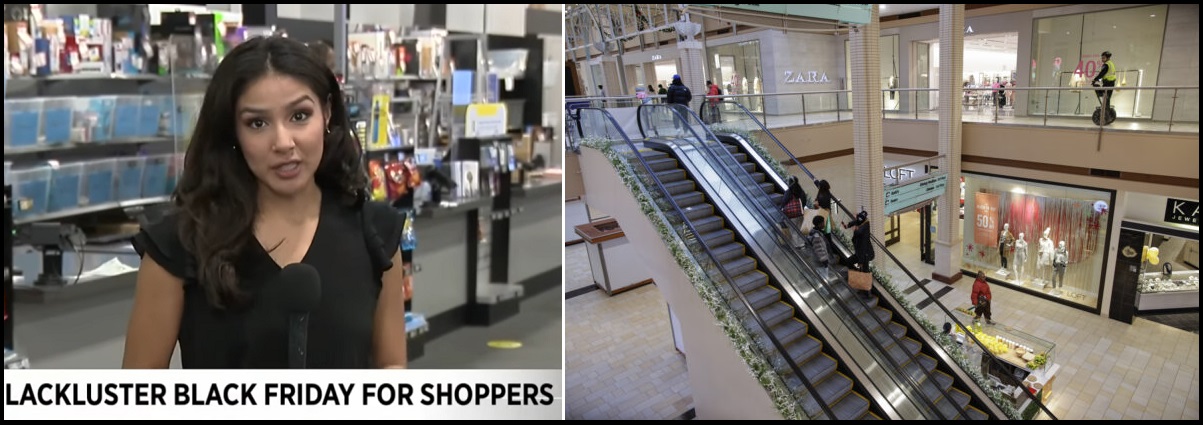
Now, you must keep in mind that almost every financial media outlet used the same Retail Federation talking point about anticipating an 8% increase in holiday sales last year. [Reminder] Apparently, collective pretenses must be maintained. Meanwhile, news crews and camera crews were having a desperate time finding any holiday shopping to use as background footage for the claims that sales were strong. Here we are in January and the pretending has hit reality.
Negative retail sales in November and December when prices are roughly +10% over the prior year, means the unit sales collapse was far more dramatic…. Far more.
Trying to survive policy driven price increases in housing costs, energy costs, electricity costs, home heating, food and fuel costs has forced consumers to reevaluate purchasing decisions. Consumer demand for non-essential items has collapsed, and Americans are dig deep into their savings just to sustain unavoidable expenses. Eventually, pretending this is not happening is going to run into the wall of reality.
On one hand the leaders of large multinationals must pretend everything is splendid; after all, the only acceptable position they can articulate is to support interest rates being raised because demand is just too darned high…. pretending. But on the other hand – those same suppliers and multinationals are furiously trying to calculate how to avoid being stuck with billions worth of unsold inventory and idle industrial equipment.
I have created this site to help people have fun in the kitchen. I write about enjoying life both in and out of my kitchen. Life is short! Make the most of it and enjoy!
This is a library of News Events not reported by the Main Stream Media documenting & connecting the dots on How the Obama Marxist Liberal agenda is destroying America


















 Centinel2012