QUESTION: Mr. Armstrong; I did my own research on the 1998 Russian collapse. All the big names lost billions. Even the New York Times reported that George Soros lost $2 billion. You were the only one who made money so it made sense that you were named hedge fund manager of the year in 1998. My question is this. Since all the big names were involved in the Russia trade which took down Long-Term Capital Management, is this why you call them the “club” for they all do seem to be involved in the same trade?
DU
ANSWER: Correct. This is also why they try to prevent people from listening to me. They are convinced that the reason they lost was that I was too influential and had too many institutions listening to me. That absurdity is what they ran to the government with, so I was then accused of “manipulating” the world economy. They all lost after I warned them and refused to join in their takeover of Russia I believe I was given the nod by the Clintons. They told me they had the IMF in their back pocket and they would continue to fund Russia. I warned them that the IMF got their funding from governments and they were not going to back it.
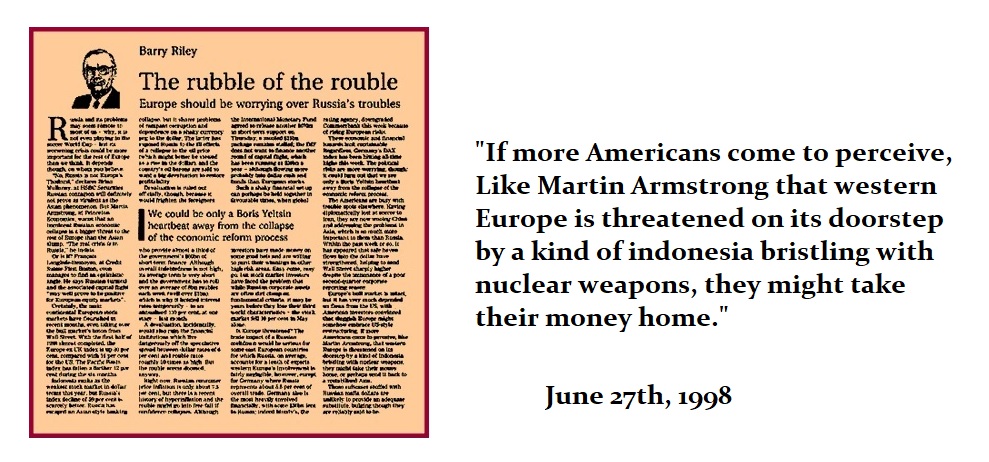
The Russian financial crisis hit Russia on the 17th of August 1998. Our World Economic Conference was held in London that June. Our forecast was then published by the London Financial Times on the front page of the second section.
They did not give up. After they got the Federal Reserve to bail them out, they then focused on setting up Yeltsin and got him to divert $7 billion in IMF loans. Even CNN reported the money was stolen from the IMF.
Edmond Safra’s Republic National Bank ran to the Department of Justice and then reported that a $7 billion money laundering scheme just went through Bank of New York. They attempted to blackmail Yeltsin to step down and appoint their guy; Yeltsin then turned to Putin. It was the US bankers, with the support of the Clintons, who first tried to interfere into Russian elections. This is why Putin was not friendly to Clinton and said Mueller could come to question anyone in Russia he liked, provided Russia could question Americans including Bill Browder who was Safra’s partner in Hermitage Capital.
While “The Forecaster” was shown even on TV throughout Europe, Canada, and Asia, the question is WHY was it banned in the United States? If it was just a conspiracy theory, they could care less. When something strikes closer to home, they ban it.
I appreciate that I may not always agree with what you write but I listen and examine and respect your viewpoint. You, in turn, have answered my many questions and discussed my comments with respect in return.
This makes me worry that the ability to discuss problems in a straightforward and thoughtful way may not be possible in the future.
Keep up the good work
F
REPLY: In order to be an international adviser, the very first lessons I learned was (1) listen to everyone, and (2) view the world through their eyes.
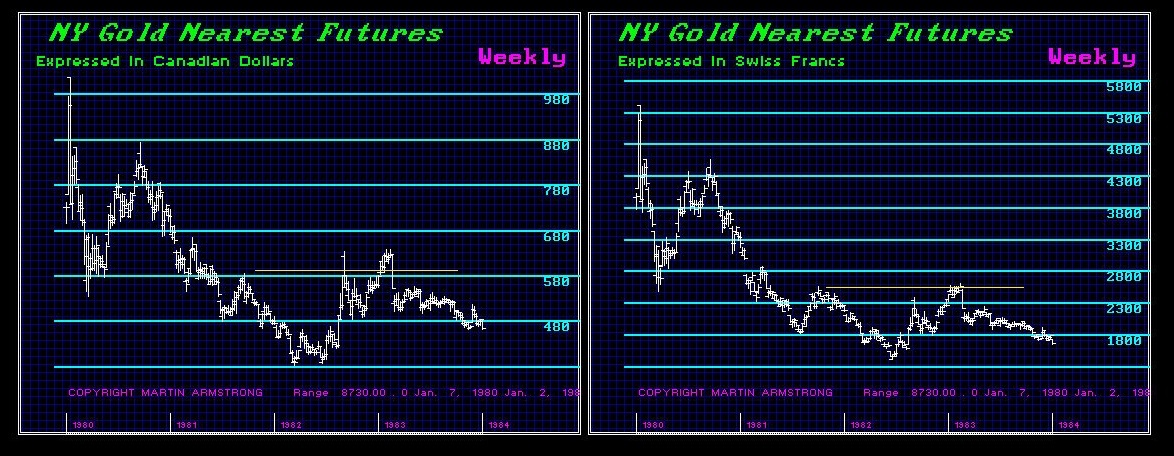
I was giving a lecture in Geneva to a small group of institutions back in 1982 but some had flown in from other countries. One was from Canada and the exchange was quite interesting. I had provided the forecasts on the individual currencies and then I moved to the commodities. The Canadian asked so he should be a buyer of gold and I said yes. The on Swiss institution said yes but your forecast on the Swiss franc would mean I would lose money.
When I looked at it in terms of each perspective it was clear. The rally in gold would be impressive only in US$ and CD$ so it was a buy for the Canadian and a sell for the Swiss. Indeed, the rally into 1983 was a strong rally for gold in US$ and CD$, but not in Swiss.
We all have a view and money to each of us is still a mental calculation based upon our home currency. To even do my job, I have to be able to see the world from all perspectives. We are all human and we will all act in our own self-interest.
My clients have trained me. Having to deal with many crises around the world forced me to see the world through global eyes. This is why MY DEFINITION of what constitutes a bull market is something which rises in ALL CURRENCIES!!!!!
We will all never agree for we will always see things through our own pair of glasses. Never forget, others will respond in the same way.
My philosophy is very simple. There should be no law which compels others to act in a way I believe if correct provided their actions do not harm anyone else. I leave you alone and you leave me alone and we can all get along. I object to politics that seeks to exploit class warfare for historically that has ALWAYS, and without exception, led to civil wa
This is another one of the rare interviews where an American CEO calls out the specifics of how Wall Street greed created the China problem that pummeled Main Street.
Cambria CEO Marty Davis discusses the root of the trade issues with China and President Trump’s efforts to address the problem. He accurately calls attention to the origin of the issue; and then brilliantly explains the current consequences of decisions made by an alignment of Wall Street interests and powerful U.S. politicians.
CTH readers will notice a significant amount of similarity in the words and phrases Mr. Davis uses to describe the issues. This guy gets it.
This is well worth nine minutes of your time. Mr. Davis really gets it, and is not afraid to call the baby ugly. His criticisms are so spot-on accurate they made Maria Bartiromo uncomfortable in broadcast. These things are usually not said. Must Watch:
Boy howdy if ever there was an article that showed the layers and ramifications of President Trump’s global trade reset, this is a good one. The multinational media do not want American voters to understand the dynamic, because if we did people would catch-on to how the global economy was structured upon removal of U.S. wealth…
Reuters is reporting on a significant drop in German industrial orders, and they specifically point to diminished orders from the U.K (small part) and China (big part) as the cause. However, the analysis stops at the part where China’s lack of industrial orders is the leading contribution to retraction in the German export sector.
What the financial analysis does not approach (ie. the third rail of multinational corporate admission that must never be outlined), is the reason why Chinese orders for German industrial goods have dropped.
The problem for China, and ultimately for Germany, is that Trump’s trade reset has stopped a big amount of U.S. wealth from arriving in Beijing. Simultaneously, Beijing is countering Trump’s tariffs by devaluing their currency. The rebound economic impact is doubled. China has: (1) less income; and (2) less value within their own currency.
Where does this dynamic show up?…. Anytime China is going to buy something.
China’s currency devaluation makes their exports cheaper; however, at the same time it makes any of their imports more expensive. As a consequence China buys less… and that now exhibits in lower purchases of German stuff. See how that happens?
So yeah, the ramifications for Merkel’s German economy -twice as bad as originally forecast- are based on China fighting Trump. The fact that China is bleeding cash, and has simultaneously dropped the value of their currency, means China can’t buy stuff.
All of those nations who were counting on Chinese purchases are now going bananas. This is why the multinationals blame Donald Trump… and to make matters even worse – the U.S. economy is thriving, while they watch from the sidelines. It’s a delicious dynamic.
For more than three decades global economies have grown by removing wealth from the United States. The U.S. multinationals have countered the economic arguments by claiming those global economies have purchased U.S. treasuries; but that means we trade our current wealth for future debt.
President Trump has reversed this dynamic. We are repatriating our national wealth through new trade policies, and will pay for any incurred foreign debt by expanding our own economy and controlling our own destiny.
BERLIN (Reuters) – Weaker demand from abroad drove a bigger-than-expected drop in German industrial orders in July, suggesting that struggling manufacturers could tip Europe’s biggest economy into a recession in the third quarter.
Germany’s export-reliant economy is suffering from slower global growth and business uncertainty caused by U.S. President Donald Trump’s ‘America First’ trade policies and Britain’s planned, but delayed, exit from the European Union.
Contracts for ‘Made in Germany’ goods fell 2.7% from the previous month in July, data showed on Thursday, driven by a big drop in bookings from non-euro zone countries, the economy ministry said. That undershot a Reuters consensus forecast for a 1.5% drop.
“The misery in manufacturing continues. The decline in new orders significantly increases the risk of a recession for the German economy,” VP Bank analyst Thomas Gitzel said.
Germany’s gross domestic product contracted by 0.1% quarter-on-quarter in the second quarter on weaker exports, with the decrease in foreign sales mainly driven by Britain and below average demand from China.
“The danger is great that negative growth will also be recorded in the third quarter,” Gitzel added. (read more)
CTH readers are well versed in the dynamics of the Panda mask -vs- Dragon motives of China. Therefore we are able to discuss events without the MSM financial filter; which is narrated specifically to the benefit of multinational interests. Always keep that in mind.
Everything needed to understand the latest panda narrative from Beijing is identified in this simple paragraph:
(Beijing) […] The talks were supposed to have resumed this month but China’s commerce ministry said Vice Premier Liu He, Beijing’s pointman on trade, agreed to October in a phone call with US Trade Representative Robert Lighthizer and Treasury Secretary Steven Mnuchin on Thursday. (more)
First, anything from Vice Premier Liu He is panda-speak; he is a tool in the process of Chinese narrative engineering. All former trade negotiation authority held by Liu He was stripped by Chairman Xi Jinping. Commerce Minister Zhong Shan is the real voice of Xi and the Beijing authority.
Second, what exactly is Beijing selling? An “October phone call”…. and that manipulates markets for the multinationals on Wall Street. A friggin’ announcement of a phone call?
Beijing is attempting to stop the financial bleed; the organization and planning of exits from the Chinese manufacturing system. Notice the U.S. media ran to the typeset pushing quoted reports from Beijing, not quoting reports from the USTR office or U.S. trade team. Again, the quote from the Associated Foreign Press (AFP):
…”China and the United States will resume trade talks in Washington in early October, Beijing said on Thursday”…
President Trump will not block, refute or diminish, this specifically sold Beijing narrative because it increases the U.S. stock market valuation. However, no-one who really pays attention to the dance should put any weight behind the announcement. It’s pure panda.
The U.S. position is the same. U.S. interests doing business in China should ‘get out’. Those who choose to remain in China; and/or those who choose to join with Beijing in selling false-hope in a temporary effort to prop up their multinational stock values; will eventually run into the brick wall of reality.
We can discuss this here, because the dance has been so visible for so long we know the music before it plays…. ie. ‘conduct your affairs accordingly’.
Today’s jump in the stock market; the part centered around this announcement from Beijing; is based on a false premise.
Beijing is bleeding cash. Beijing is attempting to get to 2020 and will deploy all resources to eliminate President Trump. Beijing is trying to save their economic model and stop the exodus from their manufacturing base.
There will be no U.S-China trade deal.
Any U.S. corporation who makes a decision based on the false-hope implied in the Chinese messaging is going to hit a world of hurt when it all comes crashing down.
ADP Payroll analysis for August reflects continued strong gains in the jobs market beating all expectations from the financial pundits. The official government stats will be released tomorrow (private and public sector); in the interim the ADP payroll of private sector job creation shows that Main Street continues to be very strong.
(Reuters) U.S. private employers added 195,000 jobs in August, above economists’ expectations, a report by a payrolls processor showed on Wednesday.
Economists surveyed by Reuters had forecast the ADP National Employment Report would show a gain of 149,000 jobs, with estimates ranging from 110,000 to 175,000.
Private payroll gains in July were revised down to 142,000 from an originally reported 156,000 increase. The report is jointly developed with Moody’s Analytics.
The ADP figures come ahead of the U.S. Labor Department’s more comprehensive non-farm payrolls report on Friday, which includes both public and private-sector employment. (more)
CTH would advise not to place too much emphasis on negative ISM manufacturing order index statistics now that a complete U.S-Global trade reset is underway.
Right now global supply chains are in a state of flux as manufacturers are moving production based on tariffs and geopolitical issues.
As the component manufacturing is moving from one place to another; and as manufacturers evaluate their supply chain stability; there are going to be swings in purchase orders based on shifts in production facilities. This is an expected dynamic that is necessary if President Trump is to succeed in pressuring product manufacturers to move operations.
The multinational Wall Street media will hype any downward component manufacturing fluctuation during this process, but the fluctuation itself doesn’t speak to any lessening of demand; merely shifted operations and shifting contracts (ie. purchase orders).
The internal U.S. economy is very strong. It’s the U.S. companies, multinationals, that rely on external operations for their end-product production income that are tentatively positioned.
Main Street is thriving; Wall Street is in flux. This is the exact opposite of two prior decades where Wall Street was thriving and Main Street was in flux. Why?…
Prime Minister Borris Johnson had wanted an election on October 15, but Labour and other opposition MPs would not back the move while the option of a no-deal Brexit on October 31 remained open to the PM. The House of Lords said it would pass the legislation by Friday.
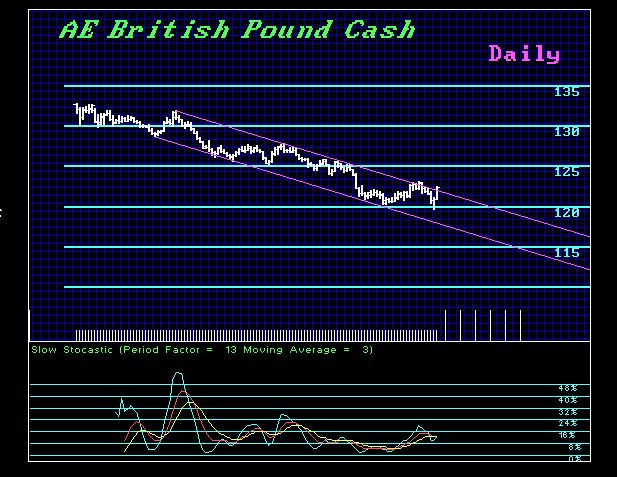
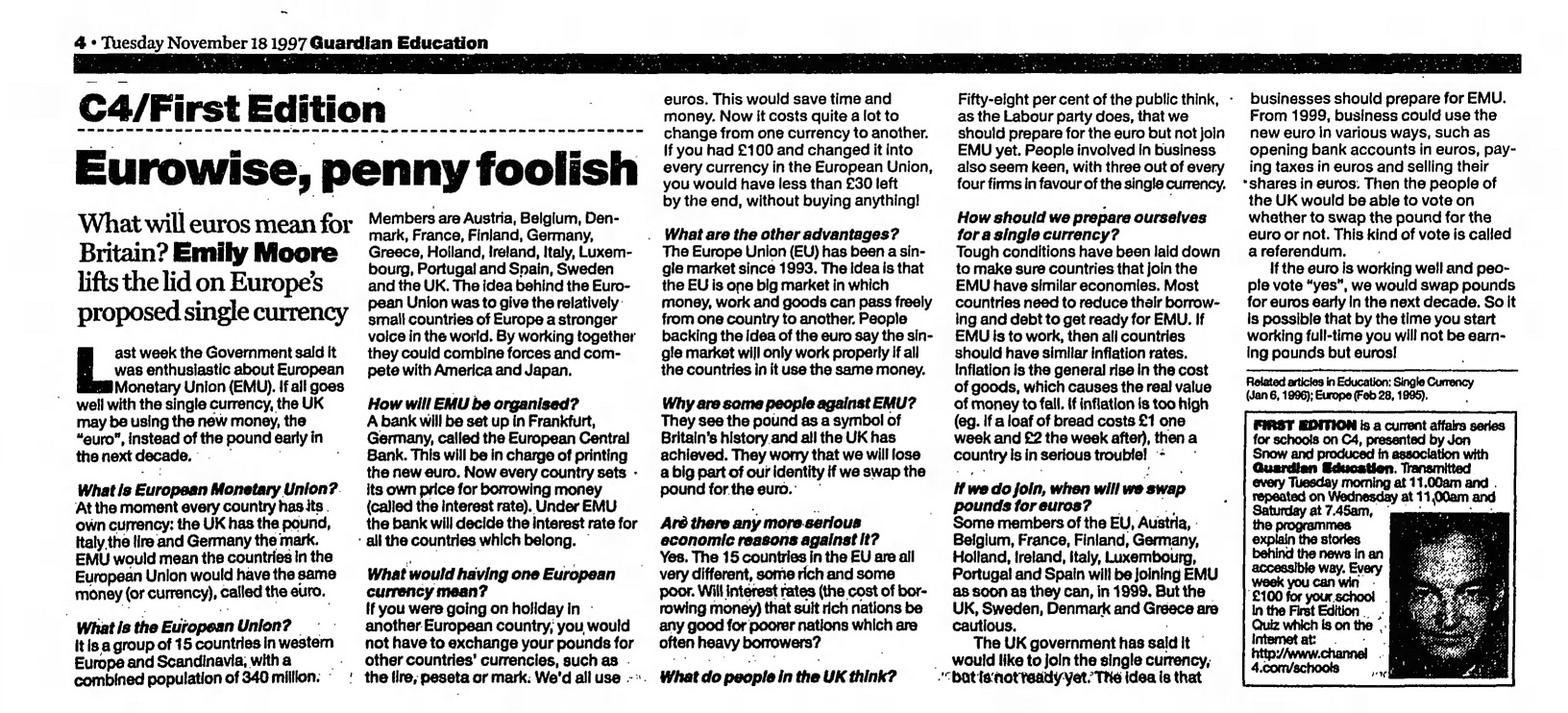
The British pound rallied on the defeat of the PM clinging to the notion that leaving the EU is somehow bad for Britain. It remains the same old dire predictions they used back in the nineties when Britain was not going to surrender the pound and adopt the euro.
While our models indeed pinpointed a Directional Change with rising volatility into the week of 9/16, the pound has held the October 2016 for now, but a close for September below 12350 keeps the pound in check.
This idea of trade being so important is really quite insane. Nevertheless, Trump has not helped by trying to create jobs with his trade negotiations. China will listen to the US news which will show Trump losing 2020 even if you put a monkey up as the Democratic candidate. The press is so against Trump that they will turn this trade issue into real insanity. Likewise, this aids those in Britain desperate to keep their perks and pensions in place so they are selling out Britain for personal gain using the same issue as trade.
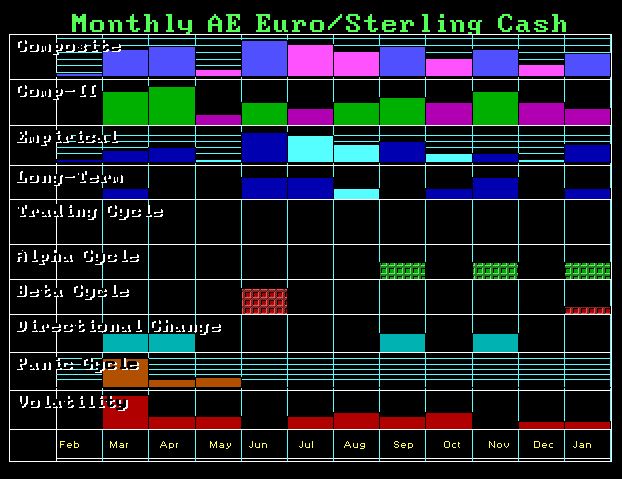
So far the Euro/Sterling Cross has been following the forecast array perfectly. The low was March followed by the breakout May/June with a Directional Change due in September. The next target is November followed by January.
What is very clear is that the financial markets are far more afraid of Labour taking power than BREXIT. We do not see any reversal of fortune for the pound and its long-term decline before 2021. Labour has become extreme. They will most certainly destroy the capital formation in Britain perhaps once and for all.
QUESTION: Do you think that Cambridge Analytica actually had any influence in creating BREXIT given the controversy that they were hired but then not? Can such influence actually change elections?
DK
ANSWER: As Nigel Farage noted at our Rome WEC in early 2019, our computer forecast BREXIT when nobody else did. Our computer does not even look at polls nor does it have any way of influencing the masses. Its sole input is economic trends globally which includes all the various trading free markets. That said, the real question is are we deluding ourselves that the media or firms such as Cambridge Analytica can even influence people to start with?
I have told the story how at the very day of the top in interest rates back in 1981, my mother and her sister went to the bank and bought 10 year CDs paying 20%. They never asked me. There was never a discussion between me and them regarding interest rates. All on their own they went to the bank and locked in money for 10 years. I then asked them why they made that decision? They said at 20%, they didn’t think they would see that high of a rate again.
The average person is driven more by what they see and feel on the street than in the news. All the stats show that less than 60% of adults even bother to watch the news. It has been declining with about 50% of U.S. adults now get news regularly from television, which is down from 57% a year prior in early 2016.
Our computer forecasts the start of what we called Big Bang that began 2015.75. That was more than just the beginning of crazy negative interest rates and the start of the Sovereign Debt Crisis, which is becoming painfully obvious at the state and local levels. The crisis will expand into the federal levels probably around 2021-2022 in Europe and then Japan. Back in 1985, we also warned that the 2016 election would be the first time a third party could possibly win the presidency. Well, that was clearly the Trump Revolution. How was this forecast even possible? The start of this Economic Confidence Model wave was 1985.65. Add Pi, 31.4 years, and we come to 2017.o5 to the day that Trump was sworn in.
This pi interval is where political change often takes place. In the wave which peaked in 1929, the start was 1882.45; add pi and we arrive on November 6, 1913. That was the precise day that Mohandas Karamchand Gandhi (1869-1948) began the decline of the British Empire.
By the end of World War I which began the next year, the United States had displaced Britain as the financial capital of the Western world.
The next wave began 1934.05 (January 17/18). It was precisely the 17th when the German salute of raising the right hand was introduced by the Prussian Economic and Labour Ministry. Then on the 24th of January, Alfred Rosenberg became the ideological supervisor of the Nazi Party. It was Rosenberg who pushed the anti-Semitic and racial ideologies using what Hitler had written in ‘Mein Kampf’ as the basis for his ideas.
While Hitler expounded his own ideas, there is little doubt that he was influenced by some of Rosenberg’s beliefs. Hitler would not achieve full dictatorial power until after the death of Hindenburg in August 1934. It took just 17 days thereafter when Hitler combined the office of President and Chancellor while the army swore a pledge to Hitler personally rather than to the nation.
These Pi intervals mark the beginning of a political change. Manipulating the people does not create these changes. It is the economics behind the events. The harsh reparation payments on Germany and punishing the people for their leaders in World War I only set the stage for Hitler. It is ALWAYSeconomics which create political change. It was 1933 which not only brought Hitler up in Germany but FDR in the USA and the New Deal as well as Mao in China.
The computer in its forecasts would never be able to accomplish these results if it relied upon opinion polls which are often wrong. The way to influence people is economics. CNN and its fake news are preaching to those who would never vote for any Republican. The pools were all manipulated for both BREXIT and the 2016 election. Our computer is the ONLY forecast that got both correct without human opinion – just economics. Why do you think the press will NEVER report our forecasts? They want opinions not a computer.
What I have learned is straight forward. Given a specific time interval, humans will simply respond in the same manner consistently. Government abuses their power and over-tax and over-regulate in a quest to maintain control. In that process, they inevitably seal their own fate and thus governments die by their own hand. There is simply no exception. Undermine the economy and everything else will change accordingly.
The jaw-dropping elitism expressed by British members of parliament continued today as globalists in the Conservative Party joined with globalists in the Labour Party and passed a bill in the UK House of Commons to block no-deal Brexit. Their goal is to handcuff Prime Minister Boris Johnson from leaving the EU on October 31st. [Backstory Here]
The multinational banks and financial elite have poured money toward the anti-Brexit politicians (both parties) and deployed all media efforts in an attempt to stop the U.K from leaving the European Union despite the majority of British who voted to leave in 2016.
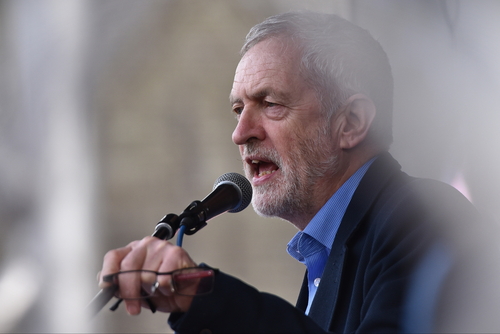
The latest move by the elitist group, led by far-left Jeremy Corbyn, forces the U.K. to say in the EU until an agreement to exit the EU is affirmed. However, the actual purpose of the bill is to empower the EU never to agree to *any* terms of Brexit, thereby keeping the U.K. in the EU forever.
Boris Johnson has requested a mid-October general election so the British people can remove the elitist politicians. However, two-thirds of those same politicians would have to agree to allow a vote that would eliminate their position. Therefore, the pontificating elite are also blocking any effort at a snap election. It’s a mess.
Right now the upper chamber (House of Lords) has threatened to filibuster the lower chamber (House of Commons) bill in an effort to help their Prime Minister. However, there is also a possibility Prime Minister Johnson could intentionally just ignore the law (if passed), proceed toward a no-deal Brexit and force Parliament to vote him out of office; which would trigger the general election vote the Prime Minister is seeking.
It’s a classic case of elitist politicians trying all parliamentary rules to override the majority vote of the people in the country.
Two centuries ago the masses would have already taken arms against their overseers, stormed the gates and hung the politicians from Tower Bridge. Unfortunately, in 2019 it’s less likely to happen… Although if the elitist politicians keep this up, well, you never know.
(Via AP) – In a second straight day of parliamentary turmoil, the House of Commons voted by 327-299 in favor of an opposition bill to block a no-deal Brexit, sending it to Parliament’s upper chamber, the House of Lords.
Even so, the bill’s fate is unsure. With Johnson set to suspend Parliament for several weeks starting next week, pro-Brexit peers in the Lords are threatening to try to stop it by filibustering until time runs out.
“There is very little time left,” said Labour Party lawmaker Hilary Benn as he introduced the opposition bill. “The purpose of the bill is very simple: to ensure that the United Kingdom does not leave the European Union on the 31st of October without an agreement.”
The bill would require the government to ask the EU to delay Brexit until Jan. 31, 2020, if it can’t secure a deal with the bloc by late October.
The lawmakers hope to pass the bill into law — a process that can take months — by the end of the week, because Johnson plans to suspend Parliament at some point next week until Oct. 14.
Johnson became prime minister in July by promising to lead Britain out of the EU, breaking the impasse that has paralyzed the country’s politics since voters decided in June 2016 to leave the bloc. But he is caught between the EU, which refuses to renegotiate the deal it stuck with May, and a majority of British lawmakers opposed to leaving without an agreement. Most economists say a no-deal Brexit would cause severe economic disruption and plunge the U.K. into recession. (read more)
Perhaps nothing personifies the elitist outlook more than this letter from Phillip Lee a member of Boris Johnson’s own party who is resigning because the Prime Minister continues to listen to the unwashed people, disregard the elites and pursue Brexit.
…”the twin diseases of populism and English nationalism”?
Dr Lee is apoplectic that any politician might listen to the British people.
MP Phillip Lee openly states any British person who wants to leave the EU is suffering from a disease of wrongful thought; and accuses them of British patriotism. How dare they be so bold….
The open elitist worldview is really quite remarkable.
The Associated Press
✔@AP
·
BREAKING: UK House of Commons passes bill to block no-deal Brexit, sending it to upper chamber of Parliament. Follow @AP‘s developing Brexit coverage. http://apne.ws/7s3srfZ
Brexit
News from The Associated Press, the definitive source for independent journalism from every corner of the globe.
apnews.com
Alan Wilton@Alanpw1955
Blocking no deal Brexit means we either accept any deal the rest of EU deems appropriate, which of course will be entirely to their advantage, or we don’t leave the EU at all. Either way we’re screwed and U.K. democracy is dead and buried. We need to kick out the traitors.
Earlier today President Trump announced a program for federal grants to combat opioid addiction. Following the announcement the President took questions from the assembled media pool. [Video and Transcript Below]
.
[Transcript] – THE PRESIDENT: Thank you very much, everybody. And thank you very much for being here with us, at the White House, for a very important announcement — something we’ve worked extremely hard on.
Today, the Department of Health and Human Services is awarding $1.8 billion in new grant money to fight the opioid epidemic — something we’ve had quite a bit of success on and we’re continuing. And I think you’ll be amazed at the results. We’ve been doing this from pretty much the beginning, but really emphasis over the last year and a half.
These funds will be delivered to the communities where the help is most needed.
Joining us this afternoon is the Secretary of HHS, Alex Azar; Dr. Robert Redfield, Director of the Centers for Disease Control and Prevention; and some other of our friends in the room that have been so instrumental. We’ll be introducing them in a little while. Thank you both for your devotion, in particular, to building a drug-free future for our nation.
We’re on our way; it sounds like a big statement. And it’s a problem that every country is having, or most countries, certainly. But it’s something that I saw firsthand during the campaign, and I couldn’t believe when I looked at certain states, in particular, how bad it was. We want a safe and healthy future for every American family. That’s what I said we’d do and that’s what we’re in the process of doing.
From reforming the way we treat kidney disease, to increasing price transparency, ending the HIV epidemic — that’s an incredible thing; we think within a period of 10 years, Alex, we will have that in quite good shape. We think maybe ended. If you would’ve said, “Ending the HIV epidemic within 10 years,” people wouldn’t have known what you were even talking about if we would’ve said it two years ago. But we’re well on our way.
And reducing high drug prices — which is something that my administration is very focused on. And we’ve had the best year we’ve had in over 51 years. We actually brought drug pricing down this year — this last year. First time that’s happened in 51 years.
So my administration is focused on confronting the healthcare, and healthcare challenges, and American suffering that other administrations, frankly, have forgotten. We’re doing things that other administrations did not focus on at all. In this effort, nothing is more important than defeating the opioid and addiction crisis.
The $1.8 billion in funds we’re awarding today will be distributed to all 50 states through the Substance Abuse and Mental Health Services Administration and the Centers for Disease Control and Prevention. It’s very exciting. They’ll be used to increase access to medication and medication-assisted treatment and mental health resources, which are critical for ending homelessness and getting people the help they deserve. So many problems are caused by this problem.
These grants will also support state and local governments in obtaining high-quality, comprehensive data so that we can help the most people and save the most lives, which is what we’re doing.
My administration is determined to use every resource at our disposal to smash the grip of addiction. In October 2017, my administration declared a nationwide public health emergency, directing agencies to use every resource in their arsenal to overcome the deadly plague of opioid abuse.
Since then, we’ve secured a record $6 billion in new funding to respond to this emergency. Last year, we provided $90 million to prevent youth substance abuse, and I signed the SUPPORT for Patients and Communities Act — the largest-ever legislative effort to address a drug crisis in our nation’s history.
By the end of this month, HHS will have awarded a record $9 billion to expand access to prevention, treatment, and recovery services to states and local communities during my administration. And they’re doing a great job locally when they get the funds. They didn’t have the money; they didn’t have the funds. But some of the states have done an incredible job once they got the funds. And great results.
We passed the CRIB Act, which allows Medicaid to help mothers and their babies, who are born physically dependent on opioids, by covering their care in residential pediatric recovery facilities.
To break the cycle of addiction, we must prevent young Americans from trying drugs in the first place. For this reason, we launched a nationwide public ad campaign to educate young people about the dangers of misusing prescription opioids. This campaign has already reached 58 percent of young adults.
And you won’t see the results of this for a couple of years — two, three, four years — but the results are going to be there. They’re really powerful ads. So you won’t see it quickly, but people watching it — young people watching it, we’re putting them on the right programming, I think. But young people watching these ads and what happens to people very descriptively, I think they’re not going to be using drugs so easily. You’ll see the results in the future.
To cut off the supply of ultra-lethal narcotics at the source, my administration has also prioritized stopping the influx of fentanyl from China.
And just over the last week, I want to thank Mexico, the Mexican government, their great President of Mexico, for helping us. They had a record catch a week ago of fentanyl that came in from China.
And, as you know, we have 26,000 Mexico troops on our border. And they’re also bringing their numbers way down. It’s — we were with the Commissioner a little while ago, the Secretary, and it’s down over 50 percent from last year. So they’re really making a lot of progress. But the Mexican government has been great. So we have 26,000 soldiers from Mexico guarding our border.
Now, if we’d have the same help from the Democrats, we could get legislation passed so easily, so quickly, that we wouldn’t even need that kind of help from Mexico. But we really do appreciate it. First time that’s ever happened where Mexico has helped us at the border. And they’re helping us in a very big way. Far bigger than anybody thought even possible.
We’ve dramatically stepped up enforcement actions across the board, seizing more than 21,000 kilograms of heroin and nearly 8,000 kilograms of fentanyl since the beginning of [DEL: 2011 :DEL] [2017]. And the biggest one was last week.
In 2018, our High Intensity Drug Trafficking Area program disrupted or dismantled almost 3,000 drug trafficking organizations. During that operation, the Department of Justice seized enough fentanyl to kill over 100,000 Americans. And that’s not much, if you look; it’s a little bit. This much can kill 100,000 people. It’s — it’s terrible. It’s incredible. And we’re getting a lot of it stopped.
The Department is prosecuting more fentanyl traffickers than ever before — we’ve never prosecuted so many, and we’re going for the maximum penalty, which is a long time — and targeting seizures in areas most impacted by the crisis.
As a result of our aggressive efforts at every level of government, last year, America experienced the first nationwide decline in drug overdose deaths in nearly three decades. So that one is 30 years. So we’ve brought down drug prices for prescription drugs; that’s over 50 years. And the overdose deaths in nearly three decades. That’s something.
In the last two years, overdose deaths have fallen by 24 percent in Ohio, 24 percent in Pennsylvania, 8 percent in West Virginia, 20 percent in Iowa, 16 percent in Kentucky, and 10 percent in New Hampshire — all areas that have incredible problems with exactly what we’re talking about.
But the battle has only just begun. We must continue fighting side-by-side to stop the menace once and for all. Together, we’ll save thousands and thousands of our fellow Americans and the families of so many people.
We’ll not rest until every American child can grow up free of the menace of drugs, empowered to realize their full and unlimited potential. So many lives are stopped cold by drugs, whether it’s death or just a ruined life. Because, in many cases, you have ruined lives because of drugs. They never recover. They never recover.
And now I’d like to ask Secretary Azar to say a few words about the new funding. It’s a record number. You add it all together and people never thought they’d see a thing like this, but we’re making tremendous headway and I want to thank everybody with me today.
And, Secretary, if you could say a few words. Thank you. Thank you very much.
SECRETARY AZAR: So thank you, Mr. President, for your dedication to this challenge. As you mentioned today, HHS is dispersing $1.8 billion in grants to help states and local communities combat our nation’s crisis of opioid addiction and overdose.
That includes $932 million in grants from the Substance Abuse and Mental Health Services Administration led by Dr. Ellen McCance-Katz to provide flexible funding for state governments to support prevention treatment and recovery services in ways that meet their state’s needs. That can mean everything from expanding the use of medication-assisted treatment in criminal justice settings, or in rural areas via telemedicine, to youth-focused, community-based prevention efforts, recovery supports like employment coaching, and support for the distribution of naloxone.
We’re also releasing the first round of $900 million in grants from the Centers for Disease Control and Prevention led by Dr. Robert Redfield. This money will help states and local communities track overdose data and develop strategies that save lives.
Over the past two years, under President Trump’s leadership, the CDC has dramatically sped up its data reporting. When the President took office, overdose data nationally was only published with a 12-month lag. With the help of better reporting from local health departments, which we are now investing even further in, we’ve gotten that down to six months now.
That’s just one example of the results we’ve seen under this President. A year and a half ago, I joined him in Manchester, New Hampshire, to launch his opioid initiative. He called for action, and that’s what we’ve delivered. And I want to thank Kellyanne Conway; Jim Carroll, our drug czar; as well as my Assistant Secretary for Health, Admiral Brett Giroir, for their leadership of this whole-of-government effort.
The President said we would, quote, “prevent addiction by addressing the problem of overprescribing.” Since the President took office, the total amount of opioids prescribed is now down 31 percent. The President said we need to, quote, “make medically assisted treatment more available and affordable.” Our estimates suggest that in 2016, 921,000 Americans were receiving medication-assisted treatment, the gold standard for treating opioid addiction. In 2019, our estimates suggest we have 1.27 million Americans receiving this treatment, a 38 percent increase.
The President said, quote, “We’re going to [have to] make sure our first responders have access to lifesaving overdose-reversing drugs.” Since he took office, naloxone prescriptions have risen 378 percent.
When the President asked HHS to declare a public health emergency back in 2017, he promised that we’d see more approvals of waivers to help, quote, “unlock treatment for people in need.” They’d come “very, very fast,” he said. And since he took office, we’ve approved waivers for 21 states compared with four under the prior administration.
All of this work, as the President explained, is making a difference and saving lives. I look forward to continuing the fight with President Trump, our team at HHS, and all of our partners at the state and local level. So thank you again, Mr. President, for your leadership of this critical public health initiative.
THE PRESIDENT: Thank you very much. Great job. Thank you.
Admiral, would you like to say something? Please.
ASSISTANT SECRETARY GIROIR: Well, thank you, Mr. President. We’ve combatted this on so many fronts, and I’m privileged to be the Assistant Secretary working in your administration and also leading opioids policy for the Secretary.
So much has been said, but I want to highlight one other piece of the equation. I’m a pediatric ICU doctor by training, and the attention that we have given to children who are born dependent on opioids and other drugs is really unprecedented and absolutely magnificent.
We now have better forms of treatment for these children. We can keep them with their mother so they can both recover together. So, across the board, we have treated this outbreak for what it is: It is a public health emergency.
We are treating it as public health emergency because it is. Addiction is a chronic disease of the brain. If you can hold your breath for 10 minutes, if I ask you to do so, that’s like telling a person to stop using the substances they have a disorder for without appropriate treatment and guidance.
So, again, we continue to move forward. And although deaths are down 5 percent — 5 percent in 2018 compared to 2017; unprecedented — we all know that our battle is just starting. We need to keep all the money flowing. We need to insist on evidence-based practices so that patients and their families get the best possible treatment. And certainly everyone in this administration has the commitment to do that.
Thank you, Mr. President.
THE PRESIDENT: Thank you very much. Thank you. Would you like to say something?
ASSISTANT SECRETARY MCCANCE-KATZ: Thank you, Mr. President. Thank you. I lead the Substance Abuse and Mental Health Services Administration. I’ve been an addiction psychiatrist for 25-plus years. And I’ve watched this epidemic evolve as a clinician.
I feel very proud to be able to work in an administration with the President, with Secretary Azar, and with my colleagues that you see here who all have such dedication to helping the American people with a deadly problem that we are making an improvement for in our communities. And we’ll continue to do that until we get this epidemic under control and until all Americans can be free of opioid addiction.
THE PRESIDENT: Thank you very much.
DIRECTOR REDFIELD: When I first spoke with the President about taking this position, 18 months ago, we talked about the need to save American lives, and the President said, “Be relentless.” And he was talking not only in saving lives from the drugs that are pouring into our country from overseas, but we talked about the need to help people who are suffering from an addiction.
And I’ll never forget that conversation because you were focused on the lives of everyday Americans throughout our country, in urban areas, through rural areas, and said, “We bring a whole-of-government approach.” And as you heard today, that is certainly the approach that Secretary Azar has done; Kellyanne Conway with getting the message out; with the First Lady talking about children.
And so it’s a great honor to be here and to represent, as I go around the country, the views of this President that the most paramount thing that we can do is save American lives. And we’re doing that again yet today. Thank you, Mr. President.
THE PRESIDENT: Thank you very much. Great job. You’ve done a great job.
So we’ve all done a very good job, and I think numbers that nobody would’ve believed when we started. But there’s a lot of dedication. I do want to thank Joe, and Kellyanne, and everybody for what you’ve done.
I want to thank the First Lady. This has been very important to her. She saw it very early on. I think we can say, Kellyanne — and it was a very, very important thing just envisioning the tremendous problems within families caused by not only opioids, but drugs generally. It’s a disaster. And it’s — as I said before, it’s all over the world. It’s a problem all over the world. But we’re hitting it very hard, and I think we’re hitting it very effectively — more effectively than anybody would have thought possible.
And we have some things happening and some things coming out. We’re spending a great deal of money, at my request, on finding a painkiller that’s not addictive, where people go out, and they have a minor problem — they go to a hospital with a broken arm or a bad back, and they come out and they’re drug-addicted, and they have bigger problems than they ever thought possible. Literally, at the end of a week, their whole lives are messed up. Destroyed.
And we’re setting rules and regulations that have had a tremendous impact.
So I just want to thank all of you folks, Secretary, for the job you’ve done. It’s been — it’s really been incredible. The success has been great. But the real success will be, I think, over the next few years. I think we’ll be doubling and tripling our numbers up.
And if we do that, we’re going to go from having a really big problem to having a much smaller problem. I guess there’ll always be something out there, but it’ll be a much, much more manageable, smaller problem. And we’ll have saved a lot of lives and helped a lot of families. And we’ll help people live a normal life, as opposed to the kind of hell they’re living through right now.
So I appreciate your being here. Any questions, please? Yeah, John.
Q Mr. President, on the hurricane, if we could: Is there any consideration being given to mobilizing a Department of Defense task force to the Bahamas, in a similar fashion to the one that was mobilized to Haiti after the earthquake there?
THE PRESIDENT: Yeah. Well, we are. In fact, the Coast Guard is over there in a very big way now. I think we have almost eight helicopters — between six and eight. We’ll have eight there very shortly.
It’s a tremendous tragedy. It’s — so far, I mean, they found some pretty bad things, as you probably have heard. But the numbers are still — if you look at that, the numbers are still much smaller than anybody would have believed. But we’re, at the request of the government. And even without the request, but the government has requested — the governor of the Bahamas. And we are over there in a very big way with the Coast Guard. And we’ll also be sending quite a few more people.
We also have to watch, though, what’s happening with Georgia and South Carolina, North Carolina. It’s on its way up, so we have to see where it hits, how it hits.
We got very, very lucky in Florida, as you know, John. We talked about that a little while ago. Florida was going to take a direct hit — go right through into the Gulf. And, really, that would have been a tragedy. And it made that right turn that a lot of people didn’t expect. Very few people expected that to happen. And not only a right; it stayed fairly far away.
So Florida is in great shape, and now we’re going to go through some tremendous states. And we’re going to see how they do. But, so far, it’s staying away. We think it could come on in South Carolina — come very much more onshore. We’ll see what happens.
But — so we have to keep our guard up. We have — we’re watching that. But we’re also very much helping the government of the Bahamas.
Q Any idea the size of the military response? Secretary Esper was talking —
THE PRESIDENT: They’re putting it all — yeah. They’re putting —
Q Secretary Esper was talking about clearing runways. Things like that.
THE PRESIDENT: Right. He’s doing that now, and we’re doing that now. The runways were — I mean, mostly topical. The runways weren’t badly hurt, other than tremendous debris, as you saw. So we’re clearing runways. We’re having a lot of food brought in.
We’re taking some of the — we were very well set up in Puerto Rico. And we didn’t have to worry about it because fortunately it missed Puerto Rico, but we’re taking some of the supplies from other places, including Florida, where we didn’t have to use them. And we’re going to be bringing them over to the Bahamas, where they really need it very badly, because that was a very hard hit.
Yes.
Q Mr. President, you showed us the map earlier of the initial forecast.
THE PRESIDENT: Yeah.
Q And it appeared to have been, I guess, edited, or something, to include Alabama. Can you explain how that change was made? Did that forecast —
THE PRESIDENT: No, I just know — yeah.
Q Did that forecast include Alabama?
THE PRESIDENT: I know that Alabama was in the original forecast. They thought it was get it — as a piece of it. It was supposed to go — actually, we have a better map than that, which is going to be presented, where we had many lines going directly — many models — each line being a model. And they were going directly through. And, in all cases, Alabama was hit — if not lightly, in some cases pretty hard. Georgia, Alabama — it was a different route. They actually gave that a 95 percent chance probability.
It turned out that that was not what happened; it made the right turn up the coast. But Alabama was hit very hard, and was going to be hit very hard, along with Georgia. But under the current, they won’t be. Georgia will be, possibly. We’re going to see. We’re right — we’re right at that point right now.
But I think Georgia is going to be in great shape. Everyone is going to be in great shape because we’re going to take care of it regardless. Regardless.
But the original path was through Florida. That was probably three days — I think that’s probably three or four days old. The original path that most people thought it was going to be taking — as you know, was right through Florida, where, on the right, would have been Georgia, Alabama, et cetera.
Q And that map that you showed us today — it looked like it almost had like a Sharpie (inaudible).
THE PRESIDENT: I don’t know. I don’t know. I don’t know.
Q Okay.
THE PRESIDENT: Yes.
Q Walmart is discontinuing sale of certain ammo after the recent shootings. Do you think they’re making a smart decision?
THE PRESIDENT: That’s up to Walmart. Hey, they’re very smart. They had a tremendous quarter. They just announced tremendous numbers, which tells you how well our country is doing. That’s sort of like the ultimate poll. But Walmart announced numbers that were shockingly good. I’m very proud of them, from that standpoint.
From the standpoint of what they’re doing with ammunition and guns, you’d have to talk to them. That’s up to them.
Q Do you think it could help deter future shootings, or at least the damage from future shootings?
THE PRESIDENT: Well, I don’t know. They feel that what they did is the right thing, and they can do what they have to do. We’re working with Congress, I can tell you. A lot of people are working on different scenarios, and we’re going to see how it all comes about and what happens.
But Walmart — they did what they did. What I’m happy about Walmart is they announced such great numbers. It shows how well our economy — our economy is doing very well.
China wants very much to make a deal. We’ll see. They had the worst year in over 50. You know, they had a year that was a disaster for them. Millions of jobs have been lost. Their supply chain has been destroyed or it’s soon to be destroyed. I don’t think they can continue onward like that.
But let’s see whether or not they want to make a deal. I can tell you, they want to make it. Let’s see if they can get to the table.
Q Mr. President, in terms of what’s coming together in these talks with Congress, and in the wake of Odessa and El Paso and Dayton and a myriad other shootings, what kind of direction is that heading in now, in terms of background checks, in terms of mental health —
THE PRESIDENT: Right.
Q — keeping guns out of the hands of people who shouldn’t have (inaudible)?
THE PRESIDENT: Well, a lot of people are coming back, as you know, John. A lot of people are coming back, and they’re back, in many cases. And there’s tremendous talk going on as to exactly the subject you’re talking about. Many different concepts and many different things, including mental health — which is, to me, a very important element of it.
And we’ll be having — well, I already have — I mean, I’ve been having a lot of phone discussions and some meetings with different people in the Senate and in House of Representatives. And we’ll be making some pretty good determinations pretty soon. We’re in touch with a lot of different people.
There were many proposals put forward. I heard 29 different proposals. So there’s no lack of proposal. We’ll have to see what happens.
Q What do you support?
THE PRESIDENT: I support safety for our citizens. I support keeping guns out of the hands of sick people, mentally-ill people. And I also support something having to do with mental illness. We have to get these people off the streets.
And I was saying very strongly: When I was young, we had mental institutions in New York. And the governor and governors closed most of them. And those people are on the street, other than a few of the institutions for people that have very, very severe — unbelievably severe mental illness. They closed so many of those institutions — that happened to a lot of other places. And they closed them for cost reasons. It was during not-great times and they closed them for cost reasons. And I think that it’s a big — it’s a big problem.
And we have to have, at least to a certain extent, some of those institutions have to be — in a new form — opened up.
Okay?
Q If it took closing some of the loopholes in background checks and maybe even extending the waiting period, would you support that?
THE PRESIDENT: Well, we’re going to take a look. We — that’s a proposal, certainly, by some. We’re going to be looking at a lot of things, and hopefully coming up with something that’s bipartisan. It has to be bipartisan. But hopefully, we’ll come up with something that’s bipartisan.
And I will say this: If you look at background checks and if you look at some of — even the more severe and comprehensive ideas that are being put forward — it wouldn’t have stopped any of the last few years’ worth of these mass shootings, which is a problem.
You look back and you look back at them, and you could go back 15 or 20 years, and many of them wouldn’t have been stopped by the kind of things — and they’re pretty — some of them are pretty severe. It wouldn’t have stopped very much of it.
With that being said, we’re looking at some things that are very strong and we have to do it on a bipartisan way. And we’re going to see what happens, John. We’re going to see what happens. Hopefully something good will come out of it. We will know fairly soon.
Again, a lot of talk is going on. A lot of people coming back. And it’s going to be very interesting. But people want to come to a solution if we can.
Q Mr. President, so are you saying the time is now, sir, for something to happen with guns? Because you’re saying there’s a lot of talk —
THE PRESIDENT: I would like to see — yes. I would like to see, April, something happen. I would like to see it happen soon. We’ve put together a task force at the White House with a lot of good people — a lot of good, talented people. A lot of people that really understand both sides of the issue. You know, you have two sides to this issue. And they’re coming to somewhat of a conclusion.
Now, they’re meeting with the Senate. They’re meeting with the House. And we’ll see if something can happen. But we would certainly like to see that happen.
Yes.
Q Do you think — will you get backlash from the NRA, sir?
THE PRESIDENT: Maybe. Maybe. It’s all right.
Q You don’t mind that?
THE PRESIDENT: We have to do what’s right. No. We’re going to do what’s right. I respect the NRA greatly. They were very nice to me. They supported me. And I have — I do — I have great respect for them. They love our country.
But we’re going to do what’s right.
And you know what? The NRA wants to do what’s right, too. I really believe that. I think the NRA wants to do what’s right. I hope so.
Please.
Q Mr. President, can you speak to your involvement in the Vice President’s plans to stay at a Trump property in Ireland during his trip?
THE PRESIDENT: Well, I had no involvement, other than it’s a great place. It’s Doonbeg. I own it. It’s in Ireland. It’s beautiful. It’s wonderful.
And he had — his family lives there, which is really amazing. Mike — his family has lived there for many decades. In fact, one of the first things he said to me is that he knew I had this terrific place in Doonbeg, in Ireland. And he said to me, “You know, my family lives in Doonbeg.” Meaning, in that area, that certain area of — it’s a beautiful area in Ireland.
But from what I understood, he was going there. Then I heard he was going there but I didn’t — it wasn’t my idea for Mike to go there. Mike went there because his family is there. That’s my — that’s my understanding of it.
Q You didn’t suggest that he stay —
THE PRESIDENT: No, I didn’t. I don’t suggest anything. I don’t suggest it, and nor did I with the Attorney General. I never spoke to the Attorney General about using my hotel. I have a lot of hotels all over the place and people use them because they’re the best. I mean, you know, they’re the best.
And I know the Attorney General is using it, as I read in the paper. I never — to this day, I haven’t spoken to him about it. But he’s using the hotel.
And people like my product, what can I tell you? I can’t help it. But, you know. And I guess they say, “We want to stay at a place that’s better than someplace else.”
But with Mike Pence, we never spoke about it. And with Bill I never spoke about — Attorney General Barr. We never spoke about it. But that’s what they choose.
Yes.
Q Sir, on Afghanistan: Are you ready to sign the peace deal with the Taliban anytime — anytime soon?
THE PRESIDENT: Well, we’ll see. We’re going to be talking to them. We’re continuing to talk. We’ve been there 19 years. We’ve done tremendous work. We could win it very quickly if I’m — I’ve said this many times — if I’m willing to kill 10 million people in the course of a week or two, we could win that thing very quickly. I’m not looking to kill people in that case or in any other case, frankly. We could win that very quickly.
It has not been easy for our country because we’re really serving as policemen more than we are anything else. We’re like policemen in Afghanistan.
But we’re talking to the Taliban. We’re talking to the government. We’ll see if we can do something. It’s been a long time. We have great warriors there. We have great soldiers. But they’re not acting as soldiers. They’re acting as policemen and that’s not their job. That’s not their job.
So we’d like to get at least a big proportion of them home. We also have NATO troops there. We’d like to bring a big portion of them home. So we’re talking to the Taliban; we’re talking to the government. We’ll see what happens. We’re also talking to Iran. And we’re also talking to North Korea.
We have — look, when I took over, I was given a lot of bad hands by previous administrations. And I say that as plural — “previous administrations.” I was given a lot of things.
I was given North Korea, where, as you know, President Obama said, “That’s going to be the hardest problem.” And he said some very tough things about North Korea, that he thought it was going to be a problem. That hasn’t turned out to be that kind of a problem. But who knows? You know, again, I always say, “Who knows what’s going to happen?” But the relationship is good. We’ll see what happens.
But you look at Iran. That was a disaster. They were going to have a nuclear weapon fairly shortly, because, you know, the agreement that was signed with John Kerry and President Obama — that agreement was expiring in a very short period of time. You can’t do an agreement for a short period of time. Pay $150 billion — $1.8 billion in cash — and you have — in cash. And you just can’t do that. So they paid $150 million — 150. Think of that. And how can you do — how could you possibly do a thing like that? They paid all of that money in cash. All of that money. It was plane loads of money in cash, and you can’t do it.
So they made a deal that was a crazy deal. And what people don’t understand: The deal was almost — it’s getting ready to expire in a very short number of years. So we’re going to see what happens. But Iran is not the same country it was and — not at all. Not at all.
But take a look at the kind of money you’re talking about, where you have that kind of money. And look what we got for it. We got nothing. We got nothing. All of that money and we got nothing. And all of those lives.
So I think that Iran wants to talk very strongly, and I think that a lot of people want to talk. I tell you, China wants to talk. China wants to talk. So we have a lot of good things going.
Anything else?
Q Mr. President, on Afghanistan, is there any scenario in which the Taliban does not regain control in Afghanistan?
THE PRESIDENT: Well, I don’t want to talk about it from that standpoint, John. We’re going to see what happens. We’re looking to draw down our troops. We’ve had — we’ve been there 19 years, almost. And that’s a long time. And they fought, and at certain points could’ve won, if we wanted to win. But a lot of times, we go in not to win; we go in as almost police forces.
But you look at that, and you look at other things we’re involved in with — you know, as an example, Iran, where you make a payment, like you made, and you end with nothing. We do things that are things that I disagree with. And I guess that’s probably why I’m here and somebody else isn’t here. And we’re making progress on all of it.
And, by the way, the economy is doing very well. But even if the economy didn’t do well — as an example, with China, I’d have to do the China thing anyway, even if the economy — because it was time. It was time.
You know, the United States cannot continue to lose $500 billion a year. This has gone on for many, many years. And it was time. Somebody should’ve done something. President Obama should’ve. President Bush should’ve. President Clinton should’ve. Both Bushes. But they decided not to. They left it to me.
Q If the Taliban were to regain control in Afghanistan, would that take us back to exactly where we were pre-9/11?
THE PRESIDENT: I think that it will be much different. I think that, having gone in — I was not a fan of going into the Middle East. I think it was a bad decision. I don’t “think.” Now it’s been proven. It’s been a bad — going into Iraq was an incredibly bad decision. That’s my opinion; I’ve said it for a long time.
Q Was going into Afghanistan a mistake?
THE PRESIDENT: It was not as bad, but it would’ve been — it could’ve been handled a lot differently. I think time has proven that. But it could’ve been handled a lot differently.
But we’re in very major discussions. They may or may not happen. You know, there’s no guarantee that they’re going to happen. We’re dealing with the government also. If you watched a show called “60 Minutes” from about two years ago, I remember exactly what was said by your leader of the government, that, if the United States wasn’t there, he’d be there for a very short period of time. He wouldn’t be able to sustain himself. That’s not a good situation either.
We have to stay there in order for them to sustain themselves. Well, eventually, we have to get out. So why is he saying that? And that was a — that really made a point. That was two years ago. Maybe even a little bit longer.
But I watched that statement, and I said, “Wow, that tells you something. That tells you something.” But that’s not a good situation.
So that’s basically the story. We have a lot of things going that are very good. The economy is doing great. But whether it did or not, the things we’re doing are much more important.
And, in particular, if you look at Iran — how that’s going — I think it’s going fine. I think it’s going good. I tell you they want to — they want to talk. They’re in a much different position than they were two and half, almost three, years ago. When I came into office, they were the number one source of terror in the world. And even the money that they’re giving to terror organizations is way down because they don’t have so much money. All of that — all of those billions of dollars given by the previous administration, that money has been long spent. It’s long gone. And they want to see if they can do something.
Because Iran can be a great country, and North Korea can be a great country. They can be great. We’re not looking for regime change. We’ve learned that lesson a long time ago. They can be great countries. We’ll see what happens.
But there’s a lot of — a lot of talking going on right now. And I think a lot of it is going to be — and maybe all of it is going to happen in some very important deals.
Yes, go ahead. April?
Q Mr. President, back on China. Before you even became President, the relationship with this nation and China was complicated. And now, tensions have escalated with a war of words.
THE PRESIDENT: I don’t think it’s complicated, April. I think it’s very simple. We can’t be ripped off by China anymore. You know, I think he understands that. I actually think our relationship now is much less complicated than it was previous to me, when they were ripping off our country.
Q So here’s the question: Are you concerned with the back and forth, with the war of words, with China — that they could possibly, one day, call our debt due and it could destabilize our economy? Have you ever thought about —
THE PRESIDENT: No, I’m not worried about it at all. They have approximately a trillion dollars. That’s a trickle compared to what we do. And, plus, interest rates are very low. We’ve never been at a position where we’ve had more people wanting to invest in our bonds. Never. It sets — we’re setting records.
Interest rates are so low. It’s the lowest interest rate we’ve ever paid. I mean, we’re paying a number that we haven’t paid — I don’t believe we’ve ever paid it this low. We have some refinancings that are coming due soon, and they’re going to be so oversubscribed like you’ve never seen before.
So if somebody wanted to get their debt — you know, when their — first of all, their debt has to come due. You know, when their debt comes due, if they didn’t want to renew or re-up, as they say on Wall Street, that would be fine with us, because we can refinance that very easily.
There’s never been a time where more money has come into our country. People want it for security; they want it for safety. They want it for a little interest. Very little interest. But they want the security and the safety. And we’ll have no trouble. There’s nothing anybody is going to be doing. We’re in a very strong position. Really strong position. Probably, in terms of refinancing, the strongest position we’ve ever been in. Okay?
Thank you, April. John? Thank you.
Q The other thing I would think of, sir, along those lines, is: If China decided to close down the South China Sea, what could the United States do about it? Because there are enough missiles there to do serious damage to the 7th Fleet (inaudible).
THE PRESIDENT: Well, yeah, I know, John. I don’t want to talk about that. Look, we have a lot of very strong allies, and we’re doing a lot of allies very big favors by even being over there. We’re spending a lot of money to help Japan. We’re spending a lot of money to help South Korea, the Philippines. We have — we spend a lot of money to help a lot of people. And in many cases, in some cases — but many cases — these people don’t do so much for us.
And — but we are — we’re helping a lot of people throughout the world that have never appreciated it. We’ve never had a leader that demanded that they appreciate it. I’m saying you have to appreciate it.
But I think it’s a hypothetical. I think it’s highly unlikely. But if something would happen, you’ll be the first to know. Okay? Thank you, John.
Thank you, everybody. Thank you very much. Thank you.
I have created this site to help people have fun in the kitchen. I write about enjoying life both in and out of my kitchen. Life is short! Make the most of it and enjoy!
This is a library of News Events not reported by the Main Stream Media documenting & connecting the dots on How the Obama Marxist Liberal agenda is destroying America








 Centinel2012