Posted originally on the conservative tree house on June 6, 2022 | Sundance
[Hat Tip Gateway Pundit for capturing the interview] Earlier this evening Tucker Carlson used his opening monologue to highlight recent examples of the two-tiered justice system within Washington DC. {Direct Rumble Link}
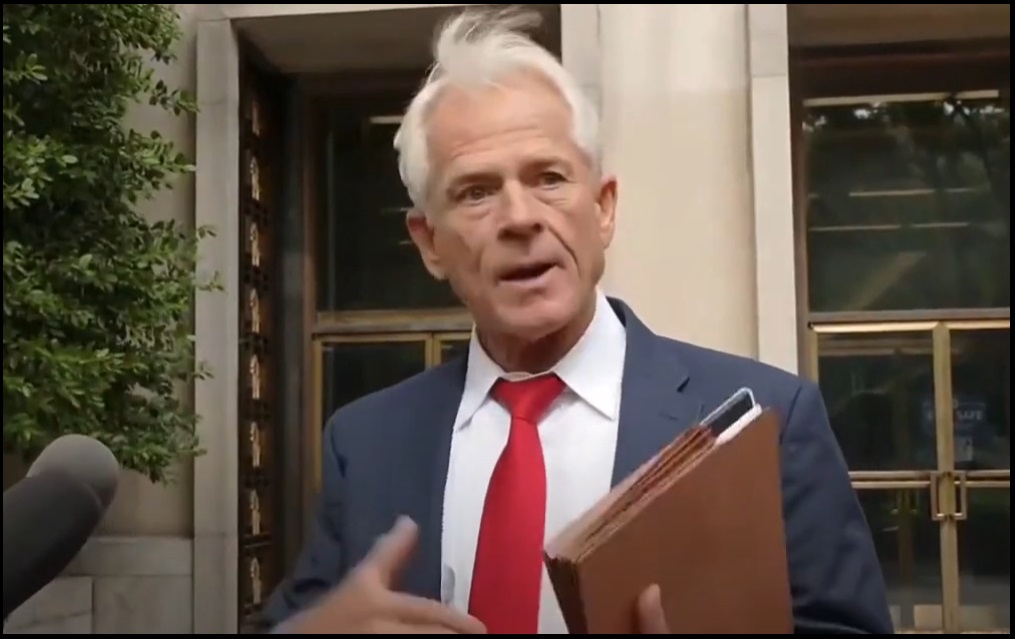
At the conclusion of the monologue, Carlson interviews former Senior President Trump economic and trade advisor Peter Navarro. Mr. Navarro explains more details about the background of his contact with the J6 committee and the DOJ/FBI. WATCH:
Posted originally on the conservative tree house on June 6, 2022 | Sundance
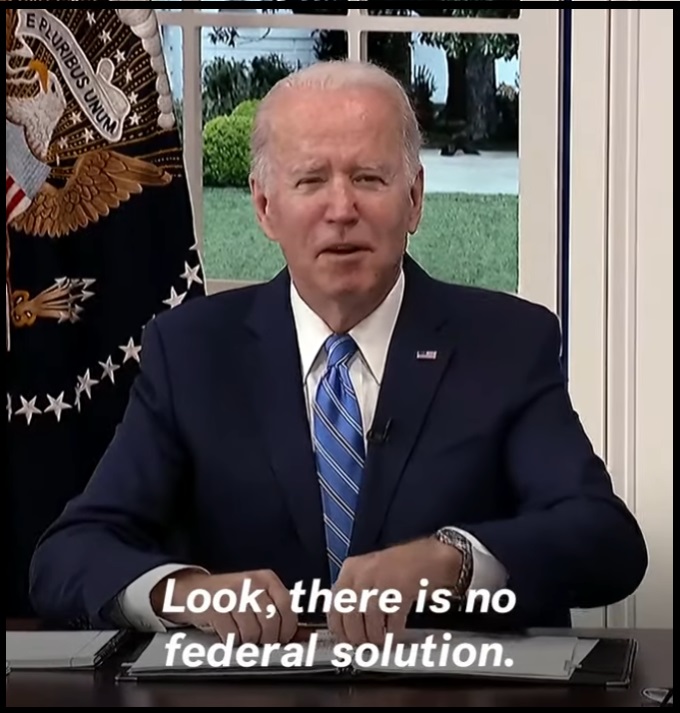
Earlier today, Joe Biden, working toward the agenda of Elizabeth Warren, Bernie Sanders, Wall Street multinationals, and the radical climate change activists within the far left of the socialist democrat party, declared a national emergency around the issue of U.S. energy prices and policies. [SEE HERE]
On the front side of the justification, the people in control of the Biden administration, claim that current and future increases in energy prices are likely to do severe damage to the economy and the lives of all Americans. However, in the background of the issue, this is the ‘never let a crisis go to waste’ phase of an energy crisis the administration has intentionally created.
The real goal is to fundamentally transform the foundation of the U.S. economy away from fossil fuels and into a new era of clean renewable energy. This is what all of the Biden cabinet officers now refer to as the “economic transition” phase.
Joe Biden’s executive announcement today is the triggering of increased federal government control over the United States energy system.
Ideological government intervention, completely disconnected from the free market, is facilitated by the declaration of a federal national emergency:
[WHITE HOUSE] – Today, President Biden is authorizing the use of the Defense Production Act (DPA) to accelerate domestic production of clean energy technologies – unlocking new powers to meet this moment. Specifically, the President is authorizing the Department of Energy to use the DPA to rapidly expand American manufacturing of five critical clean energy technologies:
Solar panel parts like photovoltaic modules and module components;
Building insulation;
Heat pumps, which heat and cool buildings super efficiently;
Equipment for making and using clean electricity-generated fuels, including electrolyzers, fuel cells, and related platinum group metals; and
Critical power grid infrastructure like transformers.
In deploying the DPA, the Biden-Harris Administration will strongly encourage the use of strong labor standards, including project labor agreements and community benefits agreements that offer wages at or above the prevailing rate and include local hire provisions. The Administration also will strongly encourage projects with environmental justice outcomes that empower the clean energy transition in low-income communities historically overburdened by legacy pollution.
Following this announcement, the White House and the Department of Energy will convene relevant industry, labor, environmental justice, and other key stakeholders as we maximize the impact of the DPA tools made available by President Biden’s actions and strengthen domestic clean energy manufacturing. (more)
The Biden administration then immediately triggered the Defense Production Act for the U.S. government to: (a) suspend tarrifs; and (b) take control over procurement for all key components needed in the transition from fossil fuel to solar energy. The products will come from Southeast Asia as the main hub of solar equipment is not located within the United States. DPA Excerpt:
[…] exported from the Kingdom of Cambodia, Malaysia, the Kingdom of Thailand, and the Socialist Republic of Vietnam, and that are not already subject to an antidumping or countervailing duty order as of the date of this proclamation, and to temporarily extend during the course of the emergency the time therein prescribed for the performance of any act related to such imports. (read more)
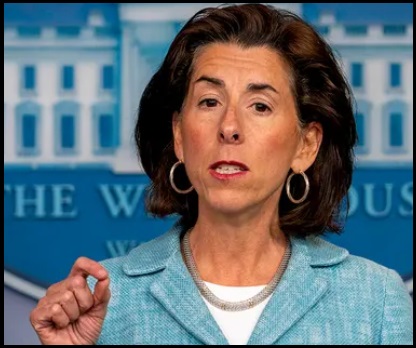
The DPA emergency authorities have been given to the Dept of Commerce and the people working under Commerce Secretary Gina M. Raimondo, the former governor of Rhode Island. Each of the DPA’s released today targets specific components of the solar industry [SOURCE LINK].
Obviously, this massive shift in the governmental takeover of energy development is part of facilitating the aforementioned “Green New Deal.” The approach follows a pattern that is transparent for those who are capable of accepting things as they are, not as we would wish them to be.
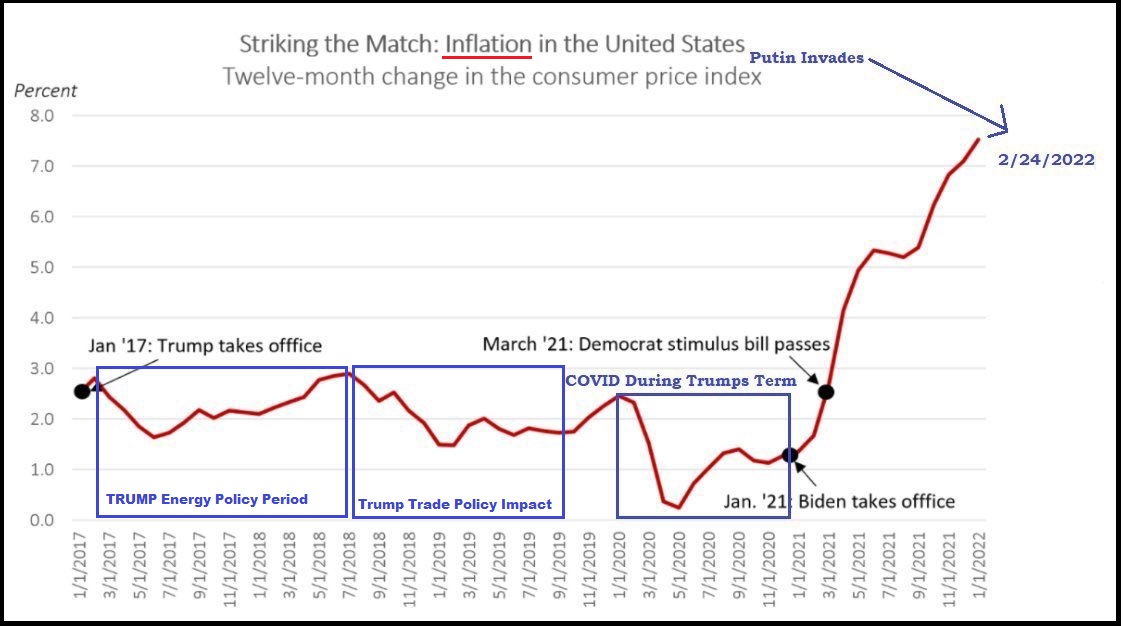
Joe Biden shut down domestic energy development, cancelled pipelines, cancelled leases, retracted the ability to drill in ANWAR (Alaska), and triggered massive new regulatory approaches from the Commerce, Interior and Energy departments. The resulting increases in oil, natural gas, gasoline, electricity and energy costs overall – which became fuel on the furnace of inflation, have now created the energy crisis that Joe Biden is declaring a national emergency to solve.
Biden himself has no idea what is happening; he is simply following the instructions of the policy operators who are in control of the administration. It is the people in the circles of Elizabeth Warren, Bernie Sanders and the climate change activists within the DC bureaucracy that are executing the nuts-and-bolts shifts. They tell Biden what to do, and he cluelessly does it. We are the people who end up paying the price for their effort.
It would appear the primary goal is to push everything as fast as possible beyond an infrastructure threshold that could be reversed if/when the radicals are rebuked by the victims, us.
The democrat-socialists are ‘all-in‘ on this economic kamikaze mission.
The radicals took off on inauguration day with a nuclear economic device and only enough fuel for a one-way trip. They are nearing their destination.
Posted originally on the conservative tree house on June 6, 2022 | Sundance
Last Friday the Biden administration raised the mandatory amount of biofuel, specifically ethanol, that must be blended within the U.S. gasoline supply. The previous amount of 10% (summer blend) was raised to a year-round 15% (waiver) by the Environmental Protection Agency (EPA). This is likely to lead to two sets of bigger issues, less food and higher gas prices.
♦ First issue. – The Renewable Fuel Standard (RFS) is a government mandate, passed in 2005 and expanded in 2007, that requires growing volumes of biofuels to be blended into U.S. transportation fuels like gasoline and diesel every year. Approximately 40 percent of corn grown in the U.S. is used for ethanol. Raising the amount of ethanol required in gasoline will result in the need for more biofuel (corn). With farming costs and outputs already under pressure this could be problematic.
♦ Second issue – The EPA enforces the biofuel standard by requiring refineries to submit purchase credits (known as Renewable Identification Numbers, or RINs) to the Environmental Protection Agency (EPA) proving the purchases. This enforcement requirement sets up a system where the RIN credits are bought and sold by small refineries who do not have the infrastructure to do the blending process. They purchase second-hand RIN credits from parties that blended or imported biofuels directly. This sets up a secondary income stream, a trading market for the larger oil companies, refineries and importers.
The RIN credit trading platform is similar to what we might expect to see if the ‘Carbon Trading’ scheme was ever put into place. However, now that summer biofuel requirements for blended gasoline have gone from 10% to 15%, the price of the RIN credits will likely jump. This will cost refineries billions in additional expenses,…. which will mean the cost of the gasoline from the refineries will increase,….. which will mean the cost of the gasoline at the pump will go higher.
The EPA theory is that RIN credits should be expensive thereby forcing all oil refineries to invest in infrastructure that makes the blended fuel. All of the infrastructure from the refinery to the gas station would need to be modified to facilitate the new 15% RFS standard. Again, higher prices at the pumps as a result of oil companies and refineries needing to spend billions on upgrades. Which brings us to issue number three.
♦ Third Issue – “Ethanol is a valuable source of octane in finished gasoline, but it is chemically different than petroleum gasoline and cannot be used in concentrations above 10 percent in small engines — like outboard boat motors, motorcycles, lawnmowers, generators or chain saws — or in any cars made before 2001. Complicating matters further, most cars on the road today still aren’t warrantied to run on gasoline with more than 10 percent ethanol. Retail stations also must have compatible infrastructure in order to sell gasoline with higher ethanol blends.” This issue is known within the industry as “The Blend Wall.”
The net result of Joe Biden’s EPA raising the mandatory amount of biofuel that must be present in the U.S. gas supply is this:
(1) Less food as more corn is needed for ethanol.
(2) Higher prices for finished and blended gasoline.
(3) Vehicle engines breaking down at a much higher rate.
The predictable Biden outcome is the absolute worst scenario for the middle-class.
WASHINGTON – “The American Fuel & Petrochemical Manufacturers group, which represents refineries, called the 2022 figure “bewildering and contrary to the administration’s claims to be doing everything in their power to provide relief to consumers.” The group said unachievable mandates will increase fuel production costs and keep consumer prices high.” (more)
The Securities and Exchange Commission (SEC) is warning investors against popular “meme stocks.” Yet, they have gone too far by offering direct trading advice. Specifically, the SEC produced a video (see below) about GameStop (GME) that has retail investors reeling.
GameStop was certainly trading in volatile territory during Q1 2021. A group of online retail investors promoted the stock and allegedly were partially responsible for causing Melvin Capital hedge fund to lose 53% of its capital in January. The short squeeze seems to be highly exaggerated and the four largest asset managers in the world owned 39% of GameStop at the time. Those who traded properly, or simply got lucky, profited off of the volatility, but, obviously, that is not recommended for the amateur investor.
The problem here is that the SEC is trying to deter the retail investor to protect the hedge funds. The SEC should not be telling the public which stocks to avoid and I do not believe the shareholders of GME or other “meme stocks” will be happy with this advice.
Inflation does not discriminate based on income. According to a new Bloomberg report, over one-third of Americans earning at least $250,000 annually are living paycheck to paycheck. Only 5% of the nation earns over $250,000 per year, and this is who the politicians would call “the rich.” One in ten noted that they struggled to cover their household expenses in April.
This is especially true for Millennials who lack decades of savings and were forced to purchase housing and other big-ticket items at the historically high price levels. Among those earning $250,000 or more per year, 55.4% of Millennials reported living paycheck to paycheck compared to 26% of Boomers. In the $100,000 to $150,000 income range, 63% of Millennials reported an inability to save compared to 26% of Boomers.
Living paycheck to paycheck comes with the risk of slipping into debt. The Federal Reserve recently reported that 78% of Americans believed they were living comfortably financially, but they may be seeing the situation through rose-colored glasses. One in nine respondents from the same Fed survey admitted that they could not afford a mere $400 emergency expense. In this current economy, the wise are reassessing their spending as inflation is not expected to decline anytime soon.
As calls to repeal the Second Amendment continue, Americans have been buying guns at a record pace. Over 1 million civilians purchased firearms in the month of May alone, marking a record-breaking streak of 34 months of increased sales. Although the left would like the world to believe that there are no restrictions on buying guns, the majority of people who applied were not eligible. The FBI reportedly conducted 2.4 million background checks last month alone.
Gun sales in Canada have spiked as well after tyrant Trudeau announced plans to ban sales under Bill C-21. Numerous gun shops reported selling out of handguns entirely after the PM announced that it will become illegal to buy, sell, transfer or import handguns anywhere.” There are 2,500 gun retailers in Canada, and all of those shops are expecting to go out of business within months if not weeks. Exactly 55,000 guns were imported into Canada last year, but that legal trade will be prohibited.
People want to feel protected. The underground market for guns will surge in Canada, and these guns will become untraceable. Criminals especially will find a way to buy and distribute firearms with zero restrictions. The ban will not erase demand.
The American view during the 70s was more concerned about gold rather than the value of the dollar against world currencies. Most Americans never traveled to Europe so their impression of currencies was the Canadian dollar which was about par with the dollar that Americans would encounter when visiting Niagra Falls. I remember as a kid the family would drive up there and we would cross the border for the best view from the Canadian side. That was probably my first experience with a foreign currency other than ancient Roman coins when I bought my first one for $10 when I was probably 10 years old.
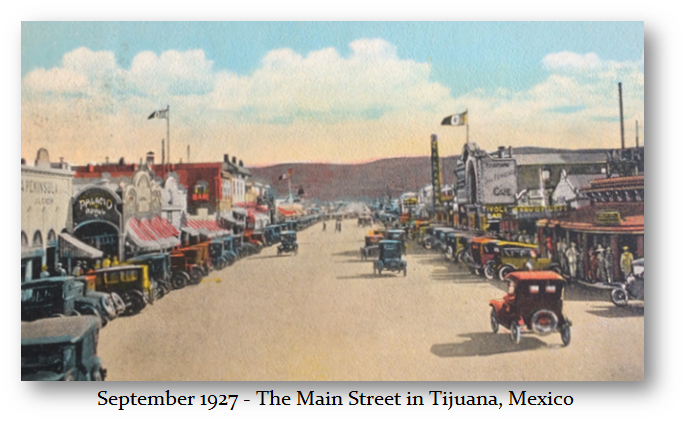
The other hot spot outside the United States was crossing the border to visit Tijuana in Mexico. That was a real hot spot largely promoted due to the Prohibition Days during the Roaring 20s. The Mexican peso was just this cheap thing that nobody really understood and they never understood how to count their change.
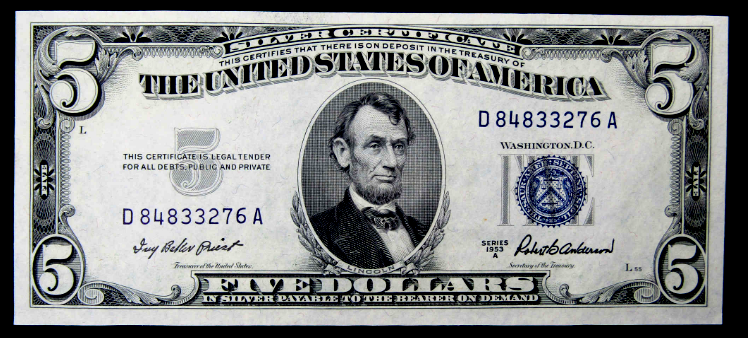
It was Roosevelt who confiscated gold from the banks and created a two-tier system whereby gold was used for international transactions, but silver was used for domestic currency backing until Kennedy ended the silver standard in 1965. Because gold was illegal to own except in coins dated 1947 or before, Americans really had little exposure to foreign currencies. They did not see the foreign exchange rate of the dollar during the 70s and 80s, it was all about gold. I even had a conversation with Paul Volcker who was focused not on the inflation rate as much as he too was obsessed with the rise in the price of gold from $35 in 1971 to $875 on January 21st, 1980 which he saw as the real inflation measurement.
As for the Europeans, they were focused on the dollar and the collapse of Bretton Woods. They were all buying gold after March 1968 when the first crack in Bretton Woods took place allowing a parallel free market in gold in Europe. That was the birth of a two-tier monetary system. Overall, the Europeans were pushing the price of gold up in terms of dollars.
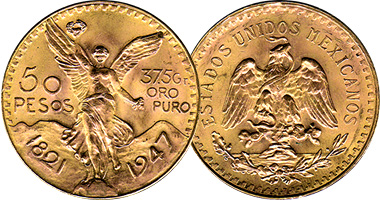
It was a wild time during the 70s. Because I was in New Jersey, the three major gold refineries were there. I was dealing with Englehard which ended up being Phibro post-1975 which took over Solomon Brothers. Before 1975, Americans could buy gold in coin form as long as it bore a date of 1947 and before. Austria, Hungary, and Mexico were the big sellers of gold. They were restricting coins with old dates so Americans could buy gold before 1975.
So I was in the thick of things back then insofar as trading was concerned. I had European clients in Gold and I dealt with all the Swiss banks at the time. By sheer fate, being a market maker in gold, taught me a lot. Gold was the first financial instrument for futures trading beyond currencies. The US bonds began trading in 1977 and S&P500 futures came in during 1985.
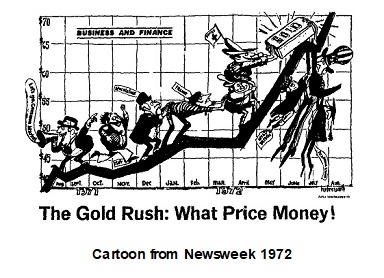
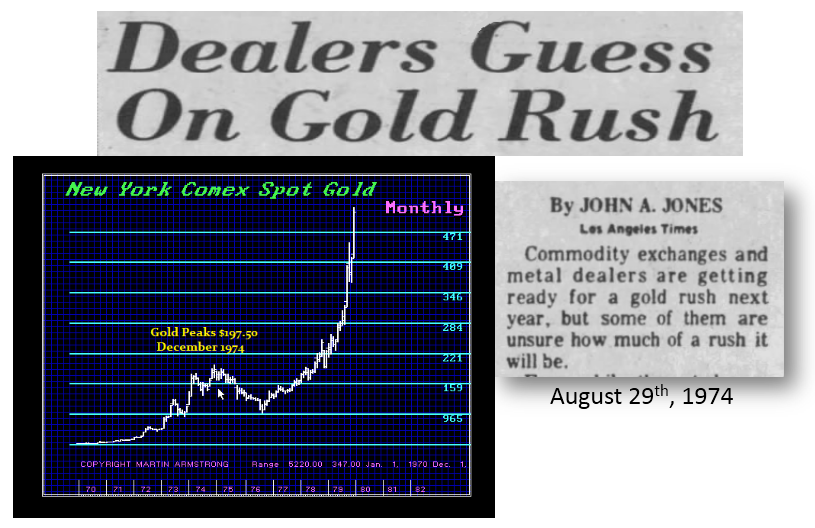
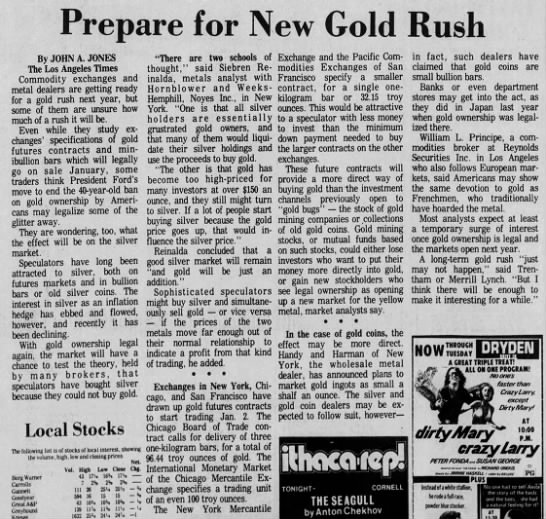
Gold rallied into 1974 on ANTICIPATION of Americans were going to run out and buy gold. They were expecting a gold rush. Being in the business, I never got one phone call about buying gold because it would be legal. Everyone who believed in gold had been buying gold coins all along.
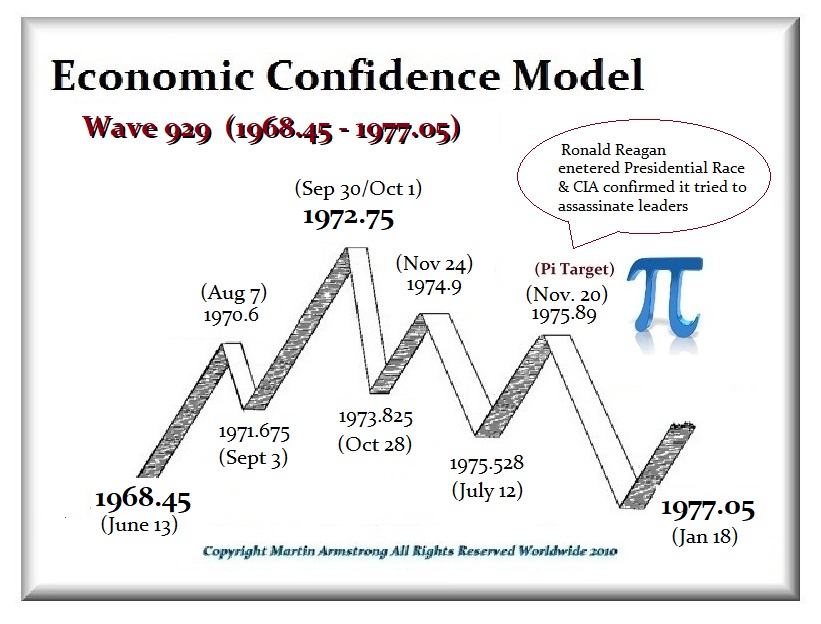
The talk of the town was that gold would go to $500 as soon as the Americans were allowed to buy on January 1st, 1975. I sold gold short at the top mainly on a fundamental basis. I did not see any new demand. My Economic Confidence Model said it was a high. But I traded based on my observations.
I watched gold collapse back down to about $100 going into 1976. This is when after watching the ECM for 6 years, I went with it. I opened a new store in the Quakerbride mall and I signed a 10-year lease with a personal guarantee and I got them to eliminate the CPI clause. After all, the talk then was about another depression.
I watched 1968 was the first crack in Bretton Woods and the birth of the two-tier monetary system. The Organization of the Petroleum Exporting Countries (OPEC) oil embargo was a decision to stop exporting oil to the United States. Then-president Richard Nixon appeared particularly concerned that Arab nations might impose a selective embargo on the United States for its pro-Israel policy. He was correct. Oct. 19, 1973, was the official start of the embargo when the Middle East countries announced a 5% production cut per month in response to the Yom Kippur war between Egypt and Israel. They saw Israel’s victory in that war, was because of aid from the United States. The embargoing nations then threatened that the cuts would be restored once Israel withdrew from Palestine and Jerusalem. Obviously, that never happened.
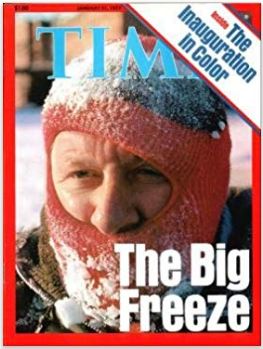
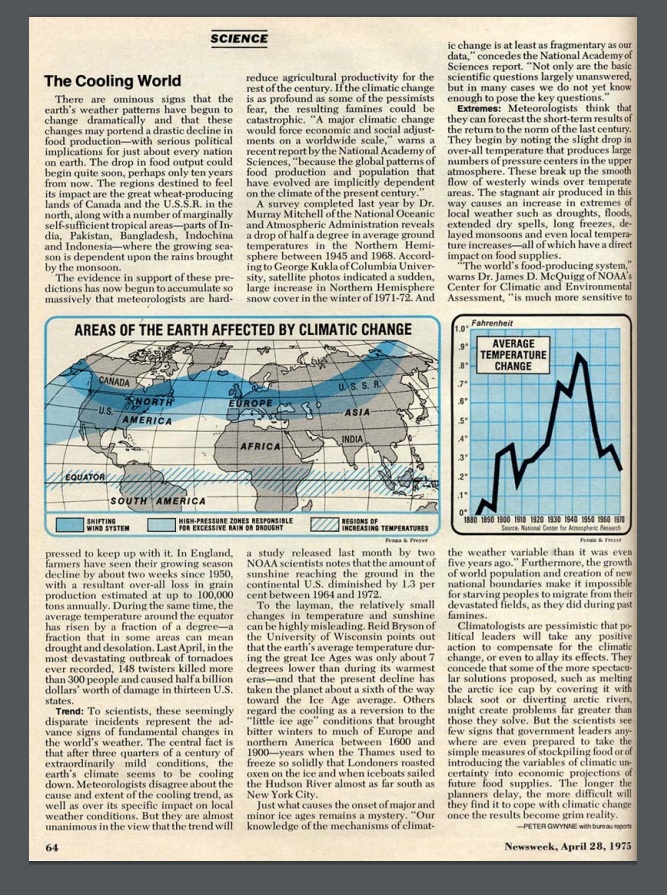
As always, we MUST look at the CONTEXT of the period. First, the climate consensus was that we were heading to a new Ice Age – not global warming. That meant there would be a higher demand for oil to stay warm in winter. In 1971 and 1972, fears began to grow in the developed world that if we were not already running out of energy supplies, we would soon as additional nations adopt western industrial structures.
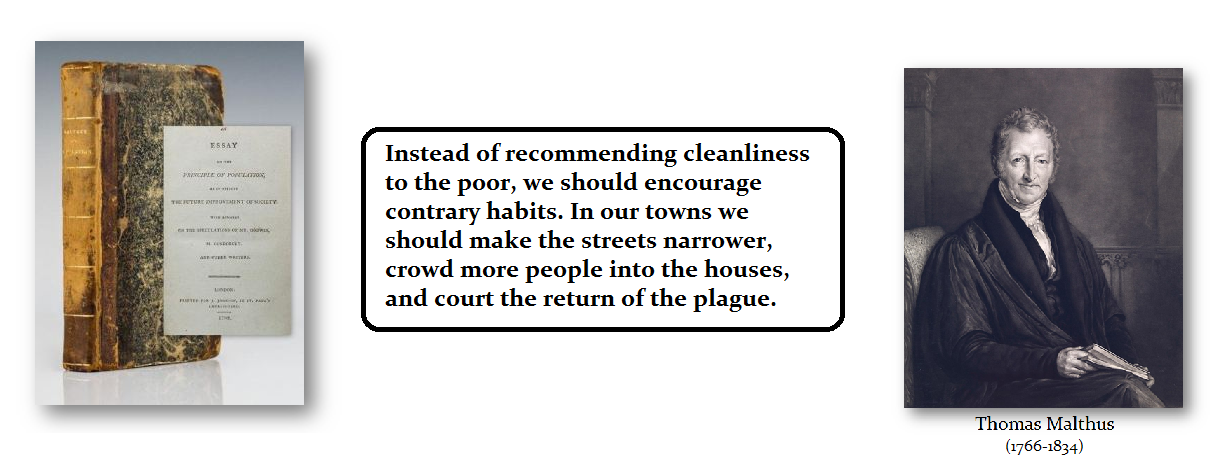
Thomas Malthus (1766-1834) warned the population would outgrow the food production so we needed to curtail the growth of the population and advocated deliberately creating a plague among the poor to reduce their number. If you ever really read Malthus, you can see the influence he has still had on people like Bill Gates, George Soros, and Klaus Schwab.
Thus, in 1976 I went with the ECM. That was the wild wave of inflation and the very top of the next wave turned out to be 1981.35 which was the day of the high in interest rates.
What I learned was that none of the fundamentals mattered in the end. Gold would decline with inflation at times and rally at other times. It was more complex than that. The final rally from the $400 level to $875 had nothing to do with inflation, that was the invasion of Russia into Afghanistan.
Posted originally on the conservative tree house on June 5, 2022 | Sundance
The first round of public J6 Committee hearings is scheduled to begin this upcoming week on Thursday, June 9th. To highlight the intent of the committee hearings, they will not be held during regular congressional business hours, instead the committee has decided to hold the hearings at 8:00pm ET each day; an effort to reach a prime-time television audience. Yup, that tells us how insufferably scripted, produced and directed the DNC fiasco has become.
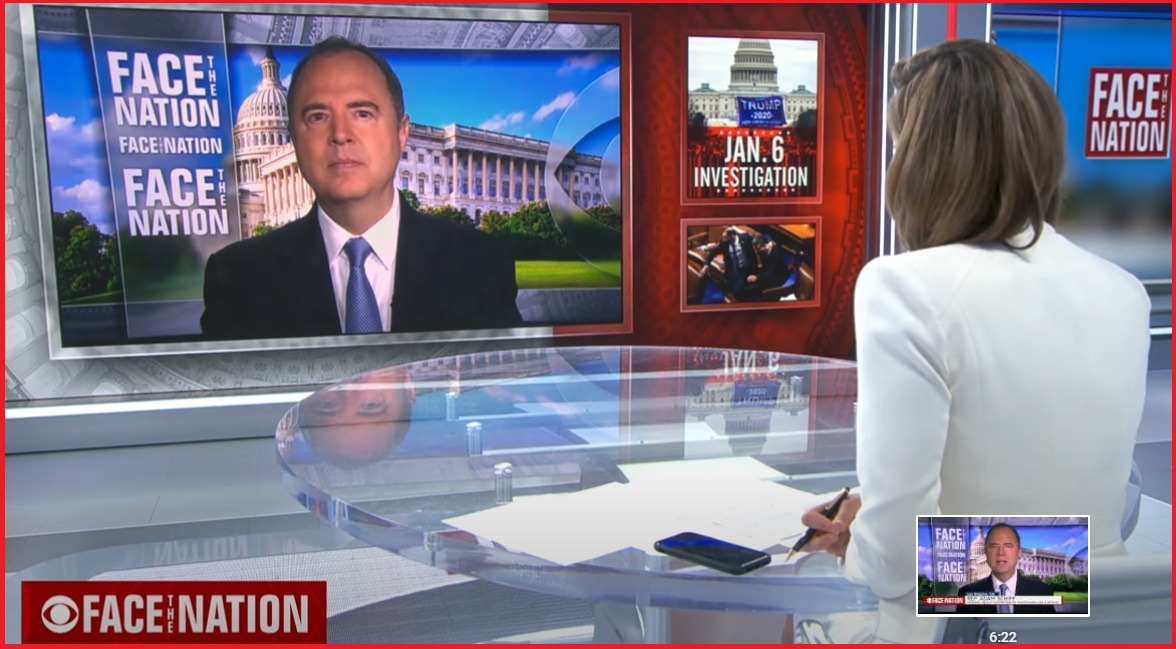
To help set the stage for the performance, the advanced J6 marketing team scheduled Adam “Shifty” Schiff, the likely candidate to replace House leader Nancy Pelosi in the minority after she announces her retirement post November 2022 shellacking, to appear with the bubble-headed propagandist for the regime, Margaret Brennan on CBS Face the Nation. [The Transcript is Here] WATCH:
Shifty Schiff calls the 2020 election, “the first non peaceful transfer of power in our history,” pretending not to know that President Trump’s inauguration day in Washington DC, January 20 2017, consisted of a full-scale riot of DNC and Democrat activists; including looting, arson and destroyed property. Meanwhile while Hollyweird/DNC activists put genitalia on their heads and screamed around town.
Then again, Democrats must pretend in order to retain the false premise of their ideological arguments. Of course, the DC Democrats also know their subservient media stenographers will never call them out on their nonsense, so they do it more openly.
[Transcript] MARGARET BRENNAN: You wear a lot of hats, but I want to ask you about the January 6 committee that you serve on. The Justice Department, as you know, on Friday decided not to prosecute the former chief of staff, Mark Meadows, or social media director, Dan Scavino, for refusing to cooperate with your committee. We know the committee said that was puzzling. Is it your understanding that- that these men are immune from all prosecution?
REP. SCHIFF: No, they’re not. And it is very puzzling why these two witnesses would be treated differently than the two that the Justice Department is prosecuting. There is no absolute immunity. These witnesses have very relevant testimony to offer in terms of what went into the violence of January 6, the propagation of the big lie, and the idea that witnesses could simply fail to show up. And when the statute requires the Justice Department to present those cases to the grand jury, they don’t, is deeply troubling. We hope to get more insight from the Justice Department, but it’s a- I think, a grave disappointment, and could impede our work if other witnesses think they can, likewise, refuse to show up with impunity.
MARGARET BRENNAN: Is it because these two men had such close proximity to President Trump? Is the executive privilege argument actually applying here?
REP. SCHIFF: That- that shouldn’t be the explanation here because of course there are great many things these witnesses can testify with no even plausible claim of executive privilege. They were both involved in campaign matters. They both have documents that they could offer. None of this is protected by privilege and the idea that you can simply refuse to show up rather than show up and say as to this question, I’m going to exert a privilege, that just invites others to be in contempt of Congress or be in contempt of judges around the country, in other courtrooms, and I think it’s a very dangerous precedent to set.
MARGARET BRENNAN: New York Times was first to report, CBS has confirmed, that Mike Pence’s chief of staff, Marc Short, actually warned the Secret Service and the lead agent protecting the vice president the day before January 6 that he thought the president would turn on the vice president and that it would pose a direct security risk. We know Mr. Short plans to testify himself before your committee. Is that sufficient? Do you need to hear from the Vice President?
REP. SCHIFF: Margaret, we’re not commenting on specific witnesses so I can’t confirm or deny who will appear before us. I can say that certainly one of the themes that we will be fleshing out is the- the fact that in advance of the 6th, that there was an understanding of the propensity for violence that day, of the participation of white nationalist groups, of the effect that the continued propagation of this big lie to rile up the country and rile up the president’s base was likely to lead to violence. So you will see that theme among the narratives that will be exhibited during these hearings. But as to a particular witness, I really can’t comment.
MARGARET BRENNAN: But if you don’t deliver a bombshell on Thursday, don’t you run the risk of losing the public’s attention here?
REP. SCHIFF: Our goal is to present the narrative of what happened in this country, how close we came to losing our democracy, what led to that violent attack on the 6th? The American people, I think, know a great deal already. They’ve seen a number of bombshells already. There’s a great deal they haven’t seen. But perhaps most important is the public hasn’t seen it woven together, how one thing led to another, how one line of effort to overturn the election led to another and ultimately led to terrible violence, the first non peaceful transfer of power in our history. So we want to tell that comprehensive narrative, and we’re aiming at people and audience, frankly, that still has an open mind about these facts. We want to counter the continuing propagation of big lies. And that’s- that’s what our goal is.
MARGARET BRENNAN: I want to ask you about inflation, which is a problem throughout the country. The San Francisco Fed said that the American Rescue Plan contributed about three percentage points to inflation. It’s not the primary driver, but a contributor to it. In hindsight, do you think Democrats should have structured that $2 trillion package differently? Should it have been smaller?
REP. SCHIFF: No, I don’t think so. And of course, there have been other studies that have reached the- the opposite conclusion that it had an even more minimal impact on inflation. What I do think is the cause–
MARGARET BRENNAN: –It’s a non-political group, you know that.
REP. SCHIFF: Well, no, I understand that. But again, there are studies that show that it had a negligible impact on inflation as well that are also very credible. I think the- the reality is though, and this- this I think is borne out by all the evidence, is there was a global inflationary pressure, global problem with supply chains. Our economy, in fact grew so fast the in United States that that problem is particularly acute, because the demand when we emerged, you know, so quickly from the pandemic, and grew so many jobs, the- the disparity between that demand, and the supply was so pronounced this to lead to this inflation. But people are suffering from it. We’ve got to attack it in every way we can. I think, sadly, the Republicans are getting in our way, because they would rather have the issue of inflation, then really do something about it to help the country and this is what we’re confronting in Congress, and what the administration is battling against.
MARGARET BRENNAN: Well, the administration seems to also be making some foreign policy decisions that keep inflation in mind as well. We know the president is preparing to travel to Saudi Arabia this summer. And he’ll meet with the royal family, including potentially Mohammed bin Salman, the Crown Prince, who U.S. Intelligence said issued that order to kill or capture a US-based writer named Jamal Khashoggi. This is what you said in February of 2021.
REP. SCHIFF ON MSNBC IN FEBRUARY 2021: I think he should be shunned. I think he should be- I don’t think the president should talk with him. I don’t think the President should see him.
MARGARET BRENNAN: Should the President still go to Saudi Arabia and meet with the Crown Prince?
REP. SCHIFF: In my view, no. I wouldn’t go. I wouldn’t shake his hand. This is someone who butchered an American resident, cut him up into pieces and in the most terrible and premeditated way. And until Saudi Arabia makes a radical change in terms of human rights, I wouldn’t want anything to do with him. Now, I understand the degree to which Saudi Arabia controls oil prices. I think that’s a compelling argument for us to wean ourselves off of reliance on foreign oil and on oil more globally, so we don’t have despots and murderers calling the shots. But no, I wouldn’t go and- and If I had to go to the country for some other reason, I wouldn’t meet with the Crown Prince, I think he should be shunned.
MARGARET BRENNAN: So there is no way to justify a trip like this, if it is an attempt to get Saudi Arabia to put more oil on the market and lower gas prices?
REP. SCHIFF: Well, in my view, we should make every effort to low- lower oil prices, but going hand-in-hand to someone who’s murdered American resident would not be on my list. And I would want to see Saudi Arabia, lower their oil prices- or increase their production rather. I’d want to see them make changes in their human rights record. I want to see them hold people accountable, that were involved in that murder, and in the torture of other detainees before I would extend that kind of dignity to Saudi Arabia or its leadership.
MARGARET BRENNAN: Chairman Schiff, thank you for your time today. We’ll be right back. [LINK]
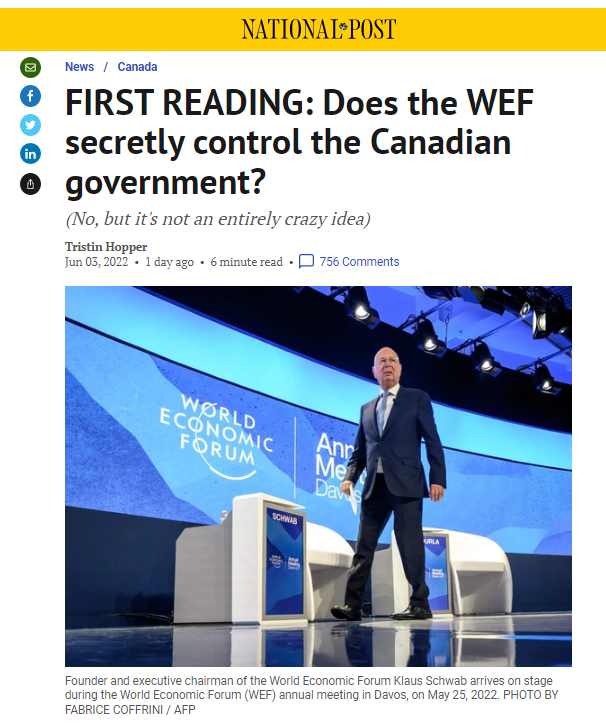
The Canadian National Post has reported on the rising concern that the World Economic Forum is making all the calls as to what the Canadian government should do. They admitted that this question has “gained remarkable currency among Canadian[s]” particularly since the events of the Freedom Convoy. While they concluded that the WEF is not controlling Canada, implying this insanity is all the brainchild of Trudeau, they admitted that “it’s not entirely crazy to jump to the conclusion that an international cabal of ultra-elitists is secretly pulling the strings on world affairs (particularly when they keep claiming as much).”
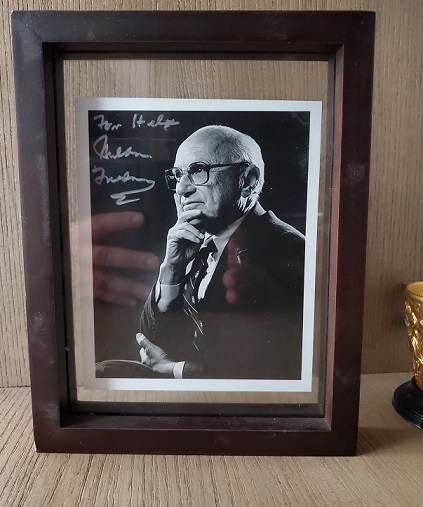
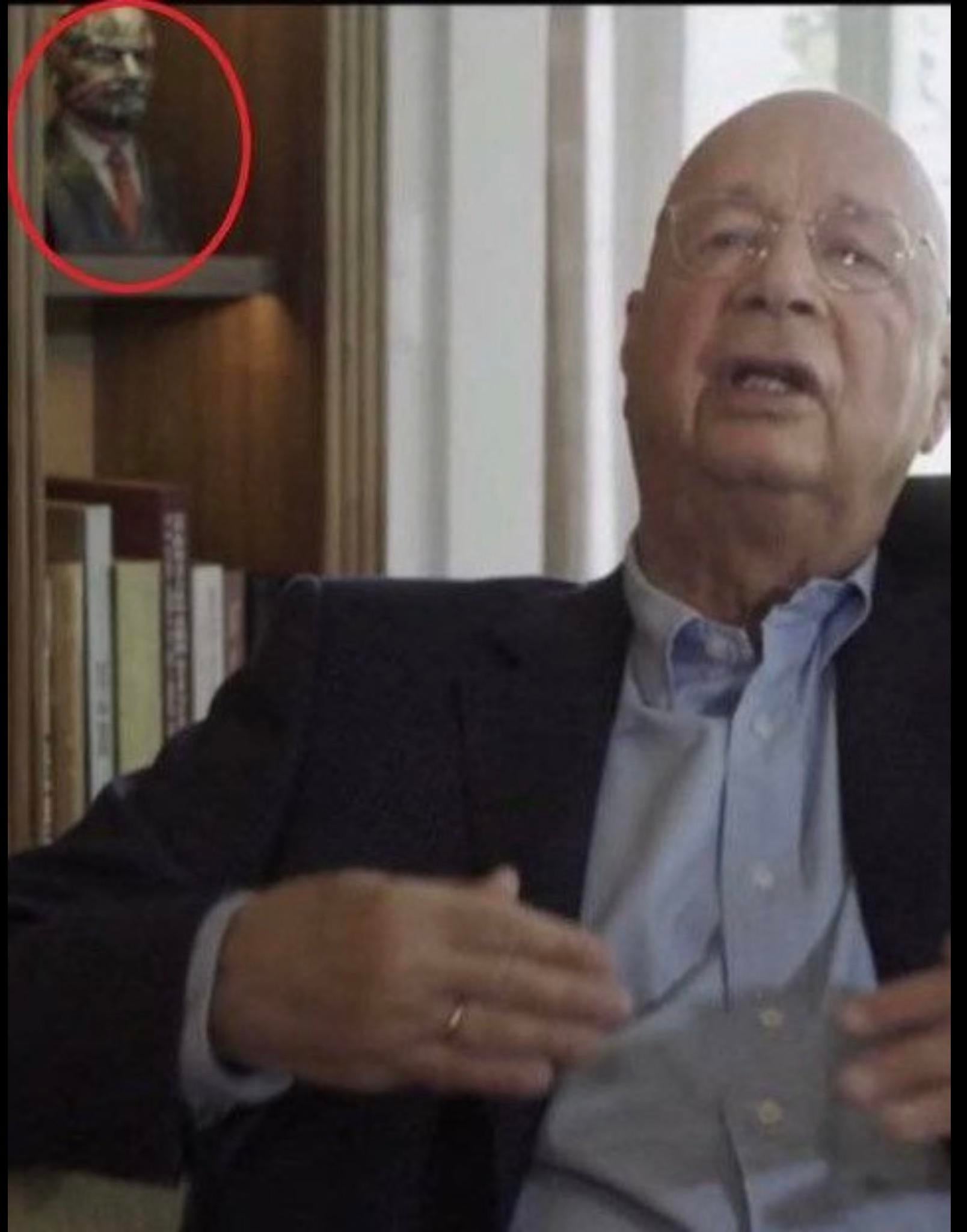
I recently finished another documentary where I was actually asked: “Would you debate Schwab?” I answered “Yes!” I explained that throughout my career, I have been butting heads with academics worldwide. The ONLY one I met who was actually interested in how the world functioned was Milton Friedman who I cherish his autographed photo I keep on my shelf – not a bust Lenin as is the case with Schwab, which really is on his shelf.
I was impressed with Milton Friedman who came to listen to me speak in Chicago. When I was finished, he came up and said: “Hello. I’m Milton Friedman. That was the best speech I ever heard.” I was probably the largest foreign exchange adviser in the world. That is what made my company so famous. I have told the story before that prior to 1985, I was in Geneva having lunch with the head of one of the major banks in Switzerland. I had prepared a list of names like European Advisers I was going to open an office in Europe. I asked his advice on what name to use. He told me to name one European analyst. I was embarrassed for I could not. I apologized and said I’m sure there must be, but I just did not know of any. He chuckled and said there were none.
He then explained to me how currency had become political so no analyst working for a bank would dare say that their currency would decline. That would have been a political statement against the government. After World War II, politicians used their rise in the currency as a political validation that their policy was correct and so vote for them.
He said to me, that the reason everyone uses you is that you “do not give a shit if the dollars goes up or down!” He explained to me why we had become so big on a global scale. As an American, saying the dollar would decline or rise was not a political assault upon the government. Nobody ran for office claiming the dollar was up against the Mexican Peso so vote for me! They would have e been laughed off the stage. It was another lesson in life that you cannot judge others by yourself.
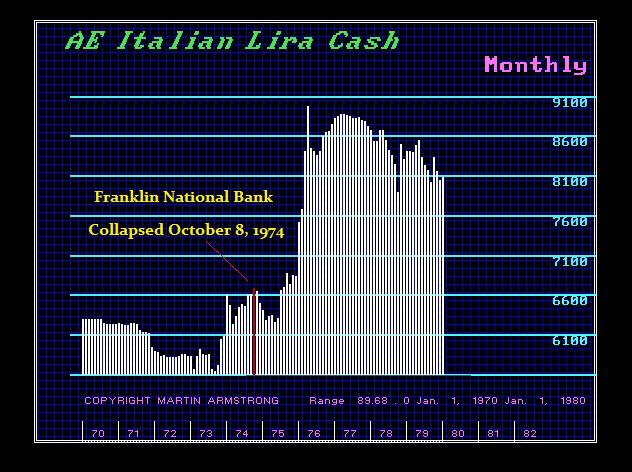
As fate would have it, I had a client who was a senior VP at Franklin National Bank, which was once the United States’ 20th largest bank. Most people have no idea but in 1951, it was Franklin National Bank in Long Island, New York, that issued the first card that most resembles today’s general-use credit cards. For the first time, customers could purchase items and pay them off quickly or be charged interest if the debt carried over. Participating merchants had to pay a fee for each card purchase. By 1952, about 28,000 customers and 750 businesses had signed up for the card which eventually became the Mastercard. The concept started spreading that same year when a bank in Michigan licensed the charge card program from Franklin. The idea was so popular, that in 1958, American Express launched its first charge card.
On October 8, 1974, it collapsed in obscure circumstances, involving connections to the Italian Michele Sindona who was alleged to be a Mafia banker. It was at the time the largest bank failure in the history of the country. Because I knew futures and international finance, I was asked to take a look at the problem the bank had. The bank failed on a 10% move in the Italian Lira. Nobody seemed to understand international finance back then. Currency futures began trading on May 16th, 1972 following failed negotiations to reestablish a fixed exchange rate system. Thus being a trader, my client Walter Zenergle, asked if I could take a look at the problem. it was clear, that nobody yet understood about hedging risks except those of use who were traders.
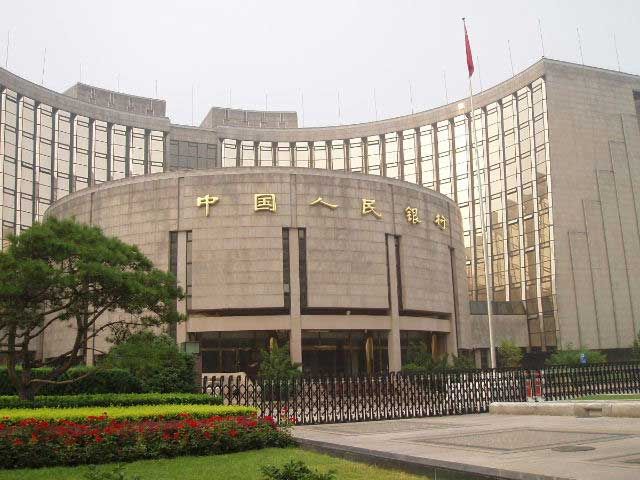
The academics dealt in theory. Traders had to learn from their mistakes. After the failure of Franklin National Bank, it seemed that whenever there was an issue with currency, I seemed to get the call. When the Asian Currency Crisis hit in 1997, I was asked to come to Bejing to meet with the central bank. I was surprised that they had not called in some academic from Harvard. But went I got there, I discovered they had sent their people to work around the world on trading desks. They then returned to run the central bank. When I was asked by guys in the Fed and the US Treasury what was my impression of the Chinese central bank, I responded: “I was impressed. They only hired people with experience.”
The problem with academia has always been that it is entirely theory without any real-world experience. That is what impressed me about Milton Friedman. He came to listen to me speak to LEARN what was happening in the real world. Milton had said to me also that day, that I was doing what he only dreamed about. In 1953, he proposed a floating exchange rate system whereby the free markets would impose checks and balances against the policies of the government. Nilton has been the ONLY academic I have ever met that bothered to investigate rather than theorize as did Marx and even Keynes and certainly Schwab.
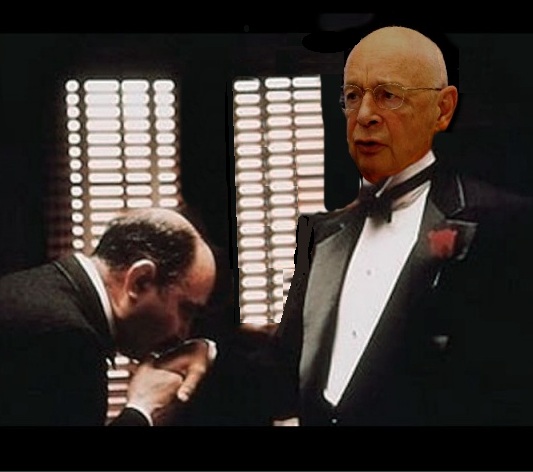
Unfortunately, Trudeau is listening to Schwab. Canada, Australia, and New Zealand as well as Europe are following the directive of Schwab. He is NOT in actual control. But the people running these political bodies are kissing his ring as if he is the godfather of economics.
In a deleted video posted on the World Economic Forum’s website, the group praised the lockdowns for offering a quiet atmosphere.
The dystopian post-apocalyptic setting certainly seemed quiet at times. Here is what the latest lockdown sounded like in Shanghai for those who have already forgotten:
I have created this site to help people have fun in the kitchen. I write about enjoying life both in and out of my kitchen. Life is short! Make the most of it and enjoy!
This is a library of News Events not reported by the Main Stream Media documenting & connecting the dots on How the Obama Marxist Liberal agenda is destroying America






 Centinel2012