Tiananmen Square June 4, 1989 Protests & Massacre!


Frontlines Tiananmen Square 1989 Protest documentary from 1996.

Chinese troops storm through Tiananmen Square in the center of Beijing, killing and arresting thousands of pro-democracy protesters. The brutal Chinese government assault on the protesters shocked the West and brought denunciations and sanctions from the United States.

In May 1989, nearly a million Chinese, mostly young students, crowded into central Beijing to protest for greater democracy and call for the resignations of Chinese Communist Party leaders deemed too repressive. For nearly three weeks, the protesters kept up daily vigils, and marched and chanted. Western reporters captured much of the drama for television and newspaper audiences in the United States and Europe. On June 4, 1989, however, Chinese troops and security police stormed through Tiananmen Square, firing indiscriminately into the crowds of protesters. Turmoil ensued, as tens of thousands of the young students tried to escape the rampaging Chinese forces. Other protesters fought back, stoning the attacking troops and overturning and setting fire to military vehicles. Reporters and Western diplomats on the scene estimated that at least 300, and perhaps thousands, of the protesters had been killed and as many as 10,000 were arrested.

The savagery of the Chinese government’s attack shocked both its allies and Cold War enemies. Soviet leader Mikhail Gorbachev declared that he was saddened by the events in China. He said he hoped that the government would adopt his own domestic reform program and begin to democratize the Chinese political system. In the United States, editorialists and members of Congress denounced the Tiananmen Square massacre and pressed for President George Bush to punish the Chinese government. A little more than three weeks later, the U.S. Congress voted to impose economic sanctions against the People’s Republic of China in response to the brutal violation of human rights.
Catalonia Restores its Own Government


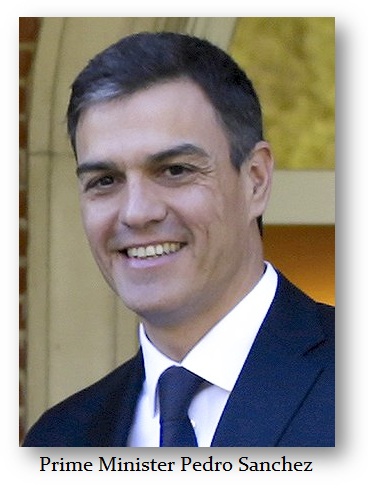
With the collapse of the head of Spain, Spanish Prime Minister Mariano Rajoy, and the change in hands of the state to the Socialist Pedro Sanchez, the Nationalists retook control of Catalonia’s regional government on Saturday. A new cabinet was sworn in ending just over seven months of direct rule from Madrid by Rajoy. The cabinet is now led by Quim Torra, who was a close aide to former Catalonia leader Carles Puigdemont, who the Germans arrested on behalf of Rajoy who wanted him imprisoned for life or outright dead on arrival. The new head of Spain, Pedro Sanchez, has stated he wants talks on Catalonia reversing the policies of Rajoy. However, he has stated that he opposes any independence referendum.

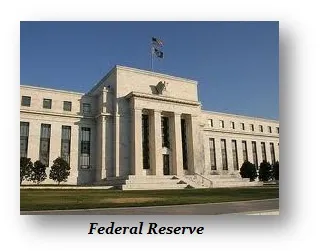
Making Sense of The Federal Reserve


I was given a lecture in Toronto to our institutional clients years ago and the central bank of Canada came with ten people. It was an interesting session because the audience began to ask me questions about what the central banks were looking at to make their decisions. I would answer and then the audience would immediately turn to see their response. It was a really fascinating session that turned me into this quasi-spokesperson for the central banks. I would respond and usually swat down these absurd theories one after another. The head of the Bank of Canada I knew well and the whole table was unbelievable poker-players. They never flinched nor did you get any read from any body language. When it was over, I went up to them and apologized saying I hoped I did not insult them in any way. They reply was astounding: “Marty, I only wish I could tell these fools we do not look at this stuff!”

People attribute the central banks will also sort of theories you would think they were the all-powerful demigods of finance. Decoding what a central bank says is very important. Yet I find all the commentary to be so off the mark it is laughable. The new word the Fed likes to use is its increasing reliance on “transitory” factors to explain the past six-year problem of being unable to reach the Fed’s 2% inflation target. They explain the failure with “transitory price changes” in some components such as health care and financial services. That was in their minutes from the May 1-2, 2018 meeting. When you look closely, price changes become “transitory” on the downside as well as “transitory” when they move on the upside. Indeed, they love to explain trends as “transitory” for that avoids any permanent trend forecast.

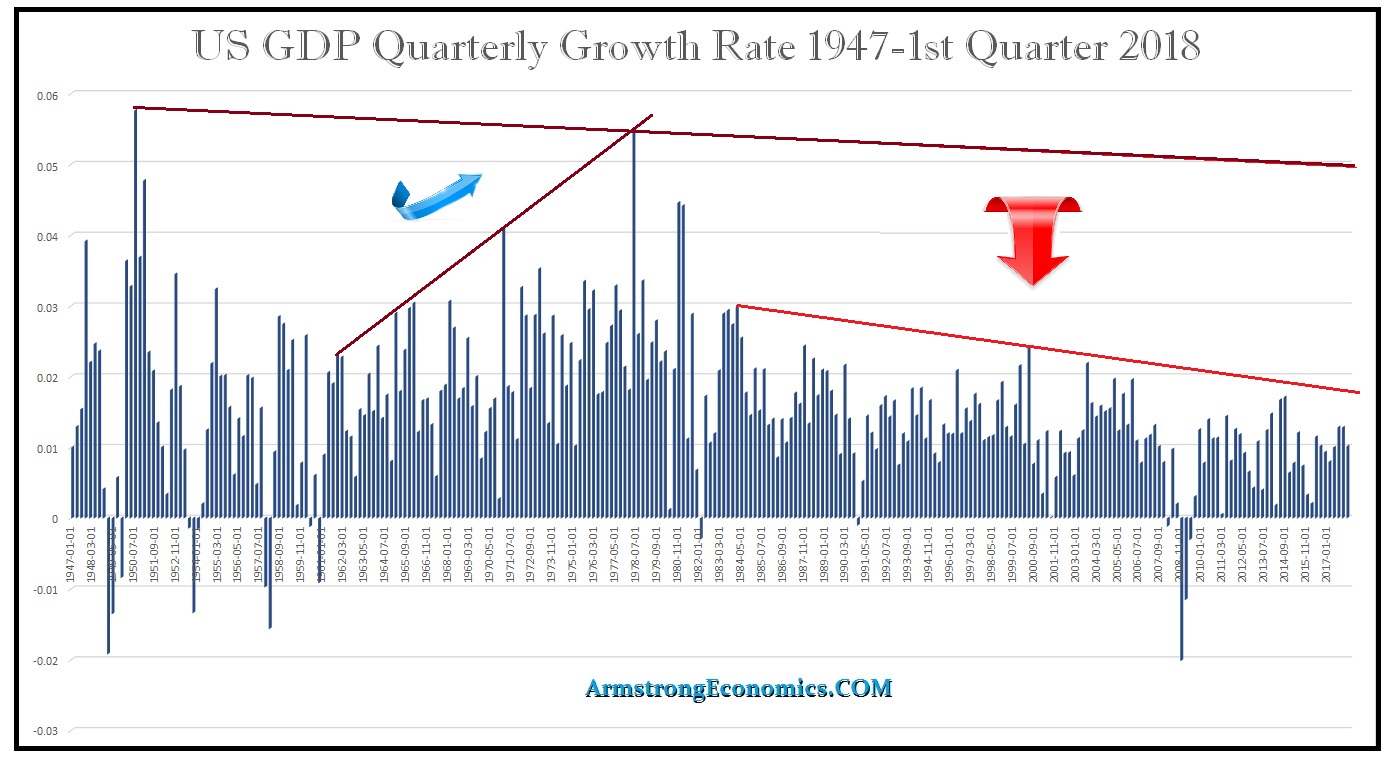
All of this is really just designed to be a distraction. It is the code word they love to explain the “IDK” factor (I don’t Know) because of the weakening business cycle. Step back and plot the growth rate using the Fed’s data since 1947. There was an economic boom between 1960 onward with the “feel good” election of JFK. That peaked in 1978 in nominal dollar terms because we moved to a floating exchange rate system in 1971. Then the dollar soared from 1980 when gold peaked into 1985 creating a massive wave of deflation. As two factors combined, the rise in the dollar and the rise in taxation under the Clintons/Obama, the growth rate has been progressively declining.

Trump sees the trend. His tariff policy is correct insofar as he is trying to address the decline in those areas. However, tariffs are one-sided. He looks at the loss of jobs yet ignores the rise in the standard of living by allowing the consumer to get the best price. If the workers in those areas cannot compete, then lower the taxes for the workers in those industries to enable competition. DO NOT force consumers to pay more for something to subsidize expensive labor. Nobody ever looks at that solution.

The Fed is clearly using code words like “normalize” interest rates BECAUSE they see the crisis brewing in pensions. They are BY NO MEANS raising interest rates because of inflation or expansion in the economy that risks a bubble. The Fed understands the crisis that has resulted from the manipulated low-interest rate policies. They cannot come out and explain the reason rates are rising because we have a pension crisis. So they have used the term “transitory” to explain both ups and downs and “normalize” to warn the marketplace it will continue to raise interest rates and pretend it is about some “transitory” factor you cannot nail down to a hardline explanation.

Is Germany Heading to a Policial Crisis in 2019?


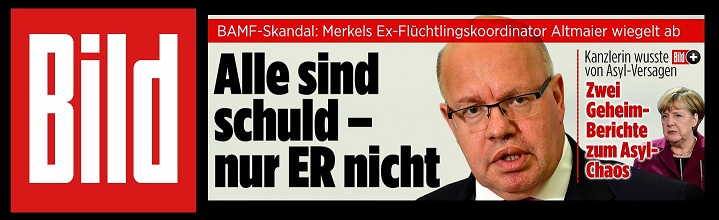
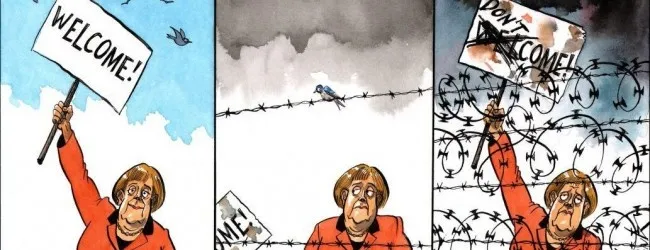
The German Bild newspaper, which has been a staunch supporter of  Chancellor Angela Merkel, has just reported on Sunday with the headline “Merkel knew about asylum failure” demonstrating that her support is declining steadily and the entire refugee crisis in Europe has been her making unilaterally without ever asking the leaders of other member states for their agreement. Frank-Jürgen Weise served as CEO of the Bundesagentur für Arbeit, the German Federal Agency for Employment from 2004 until 2017 and also during 2010 he chaired the ad-hoc Bundeswehr Structural Commission, and from 2015, Weise also headed of the Federal Office for Migration and Refugees. The Bild reports that Merkel knew the disaster she created and that there as “secret documents, which are to be kept under lock and key”.

Apparently, from the beginning of 2017 Weise is said to have found that the new management of the Office “in their professional experience has never experienced such a bad state of authority”. He had criticized the Federal Ministry of the Interior, which was led by Merkel’s confidant Thomas de Mazière, for mismanagement. The agency cannot explain how it can possibly manage the refugees no less consider increasing the refugee numbers. SPD General Secretary Lars Klingbeil calls Merkel’s (CDU) to quickly take a position on the events in the Federal Office for Migration and Refugees (Bamf) position: “Angela Merkel also bears responsibility for the conditions in the Bamf.” 

Merkel became the leader of the Christian Democratic Union (CDU) in Germany in 2000 and then Chancellor of Germany in 2005. Cyclically, it is highly likely that Germany will move into a political crisis once more and Merkel will no longer be head of state in 2019

Chairman Devin Nunes Discusses Trey Gowdy, Spygate, Five-Eyes, the IG Report, and the Mirrored Rabbit Hole….


Intelligence Committee Chairman Devin Nunes appeared earlier today on Fox News with Maria Bartiromo to discuss the ongoing aspects of Spygate etc.  WATCH:

.

As CTH shared over a week ago, the investigative focus has shifted toward a larger backstory within the CIA and professional counterintelligence actors, ie. spies. Within this line of inquiry it is dangerous to take current presentations and overlay them against their historic footprint. Inevitably the discussion leads to contradictions and forces the conversation into the world of mirrored halls filled with purposeful disinformation.

Intelligence professionals use words like “tradecraft” to explain the process of lying, manipulation and falsehood construction as a professional skill-set. It is almost impossible to identify the truth in current claims by those who are skilled in dark arts; especially when you accept they are likely holding motives and intentions that might be 180 degrees in the opposite direction from initial appearances.

There’s a blue-zillion ‘spy infiltration theories‘ floating around the internet in various granular forms. A few are solid and possible, but most appear based on abject nonsense and twisted logic.

The Inspector General report on the FBI and DOJ action in the Clinton investigation is due out this week. In my humble opinion it is best to wait and see what discoveries are within the fact-centric report, and the confirmed underlying evidence, before wandering out into the speculative land of mirrored rabbit holes.

North Korea Replaces Top Three Military Officials….


On the same day Vice-Chairman Kim Yong Chol arrives back in Beijing en route to North Korea from a meeting with President Trump, Yonhap News is reporting that the top three officials in the North Korean military have been replaced:

SEOUL/TOKYO, June 3 (Yonhap) — All of North Korea’s three top military officials are believed to have been replaced, an intelligence source said Sunday, in a move that could be aimed at taming the military ahead of a denuclearization deal with the U.S.

No Kwang-chol, first vice minister of the Ministry of People’s Armed Forces, replaced Pak Yong-sik as defense chief, while Ri Myong-su, chief of the KPA’s general staff, was replaced by his deputy, Ri Yong-gil, according to the source.

These changes are in addition to Army Gen. Kim Su-gil’s replacement of Kim Jong-gak as director of the General Political Bureau of the Korean People’s Army. The replacement was confirmed in a North Korean state media report last month.

Earlier in the day, a Japanese newspaper carried a similar report.

“The North appears to have brought in new figures amid the changes in inter-Korean relations and the situation on the Korean Peninsula as the previous officials lacked flexibility in thinking,” the source said. “In particular, No Kwang-chol has been classified as a moderate person.”

The changes could also be aimed at taming the military because members of the armed forces could object to a denuclearization deal that leader Kim could make in the summit talks with U.S. President Donald Trump set for June 12 in Singapore. (more)

Reuters […] U.S. officials believe there was some dissension in the military about Kim’s approaches to South Korea and the United States….

Secretary Pompeo Recognizes 29th Anniversary of Tiananmen Square Massacre…


Oh boy… subtle like a brick through a window.  Lest there be any debate remaining about the U.S. position toward China in the ongoing Dragon/Panda diplomatic dance, Secretary of State Mike Pompeo just delivered a message.

Against the jousting backdrop of Chinese influence over North Korea; and remembering that U.S. Commerce Secretary Wilbur Ross is –right now– in Beijing discussing the future of U.S. and Chinese trade relations; and understanding that even mentioning the 1989 Tiananmen uprising/massacre is forbidden in China….. well:

On the 29th anniversary of the violent suppression of peaceful demonstrations in and around Tiananmen Square on June 4, 1989, we remember the tragic loss of innocent lives.

As Liu Xiaobo wrote in his 2010 Nobel Peace Prize speech, delivered in absentia, “the ghosts of June 4th have not yet been laid to rest.”

We join others in the international community in urging the Chinese government to make a full public accounting of those killed, detained or missing; to release those who have been jailed for striving to keep the memory of Tiananmen Square alive; and to end the continued harassment of demonstration participants and their families.

The United States views the protection of human rights as a fundamental duty of all countries, and we urge the Chinese government to respect the universal rights and fundamental freedoms of all citizens.  (link)

.

.

.

.

Long time readers may note the importance of this anniversary; while technically the anniversary date is tomorrow, June 4th, I cannot help but see the State Department announcement today, while Secretary Ross is in Beijing, as a message directly targeted to the heart of Beijing.

Thank you Secretary Pompeo, and President Donald Trump

Never forget…

Never…

Trade and Tariffs: Prime Minister Justin Trudeau Full NBC Interview…


The essential argument made by Prime Minister Justin Trudeau during this interview was already addressed in the preview segment prior to broadcast – SEE HERE –  However, here is the full interview as broadcast on NBC Meet The Press with Chuck Todd.

The interview is a typical narrative engineering attempt by Chuck Toad; however, beyond the narrative, for those who pay close attention to the economic issues, there are some key elements which deserve attention:

  • @04:05 Trudeau admits the problem with corporate transshipment of Chinese Steel into the U.S. market – through Canada via the NAFTA loophole.  While Justin from Canada frames the issue from their own national efforts to stop the practice, you’ll note how he avoids taking ownership…. it’s called ‘willful blindness‘.
  • More importantly at @08:17 the topic of NAFTA surfaces. Pay close attention.  Not only does Trudeau speak in past tense (reinforcing the reality that all parties have accepted that NAFTA is essentially dead), but moments later @09:00 he admits the Canadian trade and manufacturing economy is set up as a brokerage (ie. multinational corporate investment) dependent, exclusively dependent, on access to the U.S. market.

WATCH:

.

Once you see the strings on the marionettes, you can never go back to a time when you didn’t notice them.

This ridiculously absurd politicization of the reasoning for U.S. steel and aluminum tariffs, and the political narrative now being pushed by Trudeau is further evidence that NAFTA is now a “dead-man-walking” trade deal. Stick a fork in it, and conduct your financial affairs accordingly, because NAFTA is dead.

If there was any possibility of a renewed deal, and/or if Justin from Canada wasn’t told of the pending doom by his advisers therein, he would never get himself so far out in direct opposition to U.S. President Donald Trump.

The only thing missing is the official U.S. announcement withdrawing from NAFTA… But don’t worry, that announcement is coming. Both Canada and Mexico are fully aware #NAFTA is dead. Their political positioning is now entirely framed around blame casting.

Unfortunately for the politically-minded Justin Trudeau and Foreign Minister Chrystia  Freeland what they both don’t understand is that President Trump doesn’t care about their delicate sensibilities and blame-casting maneuvers. POTUS Trump was elected specifically because he doesn’t apply a political prism in front of economic or national security decisions.

NAFTA is dead, all three countries know it, and the aspect that both Canada and Mexico have only recently become aware of is Trump is in no rush to announce it. President Trump is in no rush to announce it because the effects of withdrawal are already well underway. Investors are not going to invest in Canada and Mexico while the looming uncertainty of a U.S. NAFTA exit looms in the air.

As previously shared, prior to joining the administration NEC Chairman Larry Kudlow knew businessman Donald Trump tangentially. However, now that Kudlow’s got a front row seat to Trump’s trade and economic policy, he too has realized President Trump means what he says.

.

What PM Trudeau doesn’t mention [nor FM Chrystia Freeland ] is that most exported Canadian Steel is actually supply chain U.S. steel as a result of U.S. auto-sector steel being shipped just across the border into Canada to be used in U.S. owned manufacturing plants in Canada and returned to the U.S. in finished goods (vehicles).  Take that away and the entire “Canada exporting steel to the U.S.” narrative is lost.

Canada doesn’t make much steel and aluminum, because the Trudeau-minded do-gooder environmentalists in Canada have killed off their heavy manufacturing industrial base. Which is exactly what President Trump is attempting to ensure doesn’t happen in the United States.

RAW DATA:

Sunday Talks: Maria Bartiromo Interviews Peter Navarro…


White House Director of Trade Policy Peter Navarro appears on Fox News with Maria Bartiromo to discuss U.S. trade policy, steel and aluminum tariffs.

Sunday Talks: Larry Kudlow -vs- Chris Wallace


National Economic Council Chairman Larry Kudlow appears on Fox News with swamp guardian Chris Wallace to discuss North Korea, trade, tariffs and stunningly good economic and jobs results.