
Posted originally on the CTH on January 22, 2023
For his weekly monologue, Neil Oliver outlines the insufferable fools that are constructing the path to Agenda 2030 and the World Economic Forum dictates that form the baseline to “save the planet” from climate change.
As you listen or read the word picture that Oliver paints, you might remember the CTH article from over a decade ago about what the “fundamental change” Barack Obama was outlining, really meant. Well, here we are, a decade closer to the utopian goal – and the picture is now close enough for all to see. WATCH:
[Transcript] – Nothing less than our way of life is under threat now. A population distracted by propaganda about one existential threat after another – pandemics, nuclear war, climate crisis – is being herded into an unrecognizable future.
What was done in the name of Covid was grotesque – a violation of the rights of billions of people. Having seen what they can get away with, our so-called leaders have moved on, broadening their scope, as greedy for more as kids left unsupervised in a sweetie shop.
What is happening now, all around us, is the relentless erosion not just of our rights and liberties, but of our lives. It is so blatant – what’s happening – it’s hard to see it for what it is, which is bare-faced daylight robbery.
After Covid, the C-word that’s supposed to be on everyone’s lips … drummed into us night and day by the same complicit media that drives everything else … is climate – Climate crisis, in fact. Two c-words for the price of one.
From all sides, we are bombarded with predictions of the end of the world. Predictions, remember? Computer modelling … the crystal-ball-gazing of the scientific world.

If you believe the predictions and “the science” … by which I mean the pronouncements of scientists and global corporations … the same corporations champing at the bit for all the government grants and contracts to get all tooled up for making expensive wind turbines, solar panels, liquid hydrogen processing plants … and all those batteries … gazillions of batteries filled with the Earth’s rarest metals and minerals.
The important word to notice there is rare, in that, if they’re rare now what’s it going to be like in 20 years’ time when all the existing stuff needs replaced and multiplied in number by a factor of 10 or 100, or a thousand?
if you believe that science, unquestioningly, if you can’t or won’t see vested interests at work, it may already be too late for you.
We are to sacrifice everything on the promise of jam tomorrow. Pain for a decade until the as-yet non-existent technology is invented and fills all the yawning gaps … try selling that business pitch on Dragon’s Den. “I don’t know what I’m going to invent, but if you all give me your money, your way of life and your children’s futures, this time next decade we’ll all be farting through silk.”
They get away with it, because of the message relentlessly pumped out. The message pumped out morning, noon and night that we filthy, mostly white creatures of the West have, with our greedy consumption of fossil fuels since the industrial revolution, all but set the world on fire.
If we don’t stop now … or preferably yesterday, they squeal … the blue planet will shortly be a blackened lump of charcoal leaving only a smoking trail as it hurtles lifeless through the universe.
By now, generations of people in the West have been raised to accept this grim premonition as holy writ.
Children are crying themselves to sleep at night on account of their certainty that the planet won’t continue to exist long enough for them to grow up.
This ingrained, endemic terror is the breeding ground for the insanity of Net Zero … and the suicide note for millions that is Agenda 2030.
Generations alive today have been raised to believe that the planet and entire populations YET TO BE are far, far more important than THEY are now. Those alive today are of no concern whatever when compared to the well-being o fantasy people of the future, who will inhabit a Utopia made possible by the impoverishment and immiseration of all of us here right now.
Collectively we are the first pancake – the throw-away.
When I say we are being robbed of our way of life, I could as justifiably say our children are being raised to accept that their being alive AT ALL is the biggest part of the problem. What the planet wants most of all, we are told, is to be rid of most of us, like too many flies in summer.
All around the world, birth rates are dropping as fast as a piano falling out of a window.
The living populations of many nations are not producing enough people to replace them after they die. If nothing is done to slow this run-away train … to drive the birth of many, many more babies every year … entire nations face inevitable extinction.
Worse than our way of life being under threat, life itself is being sacrificed to ensure the future of planet Earth.
The message fed to our children is Satanically dark – that they are nothing more than blight upon the world … meat-eating, resource-consuming, fossil-fuel-dependent parasites.
Once you contemplate the consequences of those poisonous seeds, the motivations behind anti-human notions like Agenda 2030 and Net Zero become obvious.
Look around now:
Take, for instance, the idea of the 15-minute city (20-minute cities in Scotland because First Minister Nicola Sturgeon always has to convince herself she’s doing something different from England). That’s another foot in the door by Mr Global.
Together with the clamp down on cars … the ideology that started with congestion zones but that has metastasised into a multi-faceted determination to make the privacy and convenience of independent travel a thing of the past … the idea of limiting our horizons to within walking distance of our houses is about preparing us for smaller, meaner lives lived under perpetual scrutiny. Papers, please!
Critics say it’s all very well if you actually already live in a city but ask “What about those in small towns, villages, or in isolated homes in the countryside?”

If you ask me, that’s to miss the point of 15-minute cities entirely. If you ask me, the evolution in the minds of the powers that be, like those little emperors gathered in Davos, where the Alpine air must be thick with the smell of spent aviation fuel from hundreds of private jets and, if reports are to be believed, the cologne worn by the thousands of sex-workers who have arrived in town for no apparent reason whatsoever.
The Daily Mail ran with the headline: Prostitutes gather in Davos for annual meeting of global elite – where demand for sexual services rockets during economic summit … The grand plan of those priapic masters of the universe will see us herded out of the countryside, out of the villages and into those cities already built and others yet to be.
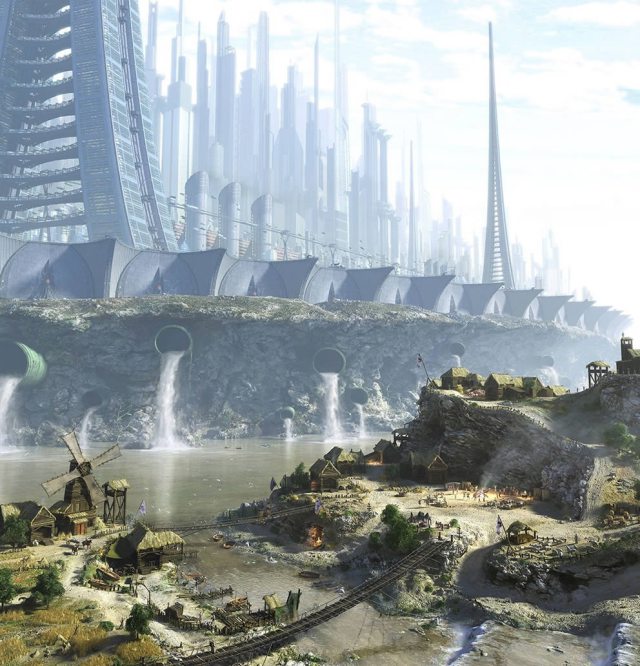
The direction of travel I detect will set aside the countryside for other purposes that us little people ought not to bother our pretty little heads about. Probably growing all the biofuel required for all those private jets, who knows?
In the future we’ll all be city mice and the country mice will be just another extinct species, like the cattle, pigs and sheep.
The fear works best on children – and so much of the rest of the change to our way of life targets children first.
Last week I read about Edinburgh being the first city in Europe to commit to getting meat off the menu in schools. Choice about what we eat is, obviously, another fundamental part of life that is being set aside without so much as a by your leave.
But the Utopian future is meatless, make no mistake, at least for the likes of us that can’t afford to attend Davos in our private jets, or else made of some abomination grown in 3-D printers in labs and sold to us as meat.
And who’s going to go meat-free first? The kids of course. Those of us with kids know the truth of school meals, especially in primary schools. Jamie Oliver can bang on all he likes about revolutionising that aspect of the school day, but the reality of meat-free lunches in most primary schools will be chips, pizzas, more chips, and those hyper-processed chemistry set experiments they call vegan sausages, the ones with the ingredients list of unpronounceable additives on the back that’s as long as the Old Testament. And more chips.
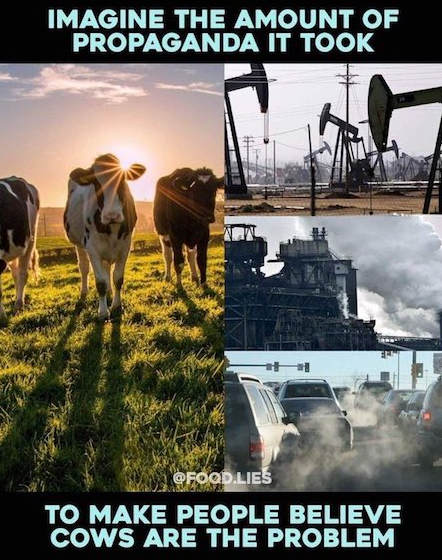
Like rising damp that creeps, or an airborne virus, new laws are being conjured into existence all around us, all of them shaped to profoundly alter our lives while we’re conveniently distracted by a suspicious new pathogen and the threat of Armageddon caused either by nuclear war or the planet bursting into flames on account of too many burping cows and homes that are warm in the winter.
As well as a way of life, old certainties dictated by nature herself are being erased. Always, always it’s about attacking the foundations of the family. Mothers are not necessarily women anymore. Women are certainly not a sex anymore, at least not as far as our elected representatives in Parliament are concerned. In a move so fast you might break your neck trying to keep up with it, women are designated as something men can choose to be when it suits them, less an adult human female, more a state of mind in a dress and a pair of court shoes.
When I was a lad, the future was going to be about world peace and teleporting to Mars for summer holidays. Instead, it’s turned out to be about no more plane flights unless you’re a billionaire, mass vaccinations not for health but to qualify for a digital ID, burgers made of insects, bikes instead of cars, a forever war in Europe and biological men urinating next to little girls in the Ladies toilets.
The reams of new legislation are creeping up on us from all sides. They’ve demonised those on strike just in time to secure public support for new laws against striking.
Oil billionaires funded the climate crisis glue-downs and soup-throwing performances in art galleries just long enough to usher in new laws limiting the right to public protest.
Sliding in as well is the Online Harms Bill, a full-throated attempt to take freedom of speech by the scruff of the neck and throw it down the waste chute as well.
The World Health Organisation – second biggest funder, the Bill Gates Foundation, don’t forget – together with member states, is working towards a new Pandemic Treaty that might mean that next time – and Gates has put a hard pencil line around the year 2025, in which he predicts there will be a real doozie – it will be the WHO and not the elected governments of sovereign nations that call the shots when it comes to vaccine mandates, lockdowns, travel restrictions and all the rest.
They’re legislating about how we heat our homes – or rather how we don’t heat them: heat pumps that everyone with even a sketchy understanding of the laws of physics and the nature of the climate in the Northern latitudes knows won’t work, no more gas boilers.
How long before they really do come for the wood burners, the coal fires and the gas stoves as well? How long before they decide they really will deny us every last one of the things that give us independence … herding us away from a past in which our heating and cooking is powered by fuels that can’t be cut off remotely with just the flick of a switch on a Smart Meter. How long have we got?
Health, freedom to move around our towns – and around our world – the right to protest and dissent, the right to withhold our labour, freedom of speech, the nature of the food we eat, the right to refuse to accept a medical intervention, what it means to be women and men.
The race is on. Our so-called leaders, all pumped up on the adrenaline of lockdowns and mandates, have sprinted out of the blocks for the ultimate round of Supermarket Sweep. Into their trolleys, they plan to heap every last aspect of the lives we have had.
They think they’ve got us scared enough to accept the whole damned lot of it.
Here’s the thing: I am not afraid of them.
I don’t even take them seriously. {End Transcript}















 Centinel2012