The End of the Petrodollar?


Armstrong Economics Blog/World Trade Re-Posted Apr 4, 2023 by Martin Armstrong

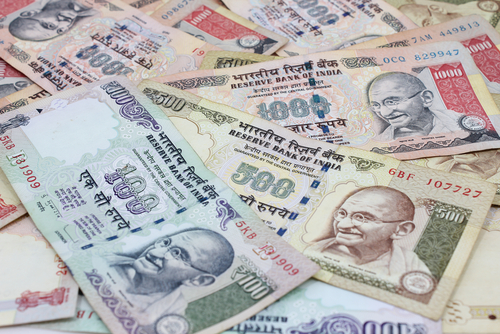
Another oil deal has been initiated without the use of the dollar. The India Ministry of External Affairs (MEA) announced that their latest trade deal with Malaysia would be settled in Indian rupees. “This initiative by the Reserve Bank of India (RBI) is aimed at facilitating the growth of global trade and to support the interests of the global trading community in Indian Rupees (INR),” the formal statement noted.

Indian has benefitted from the West’s distraction from the Ukraine war. The RBI is allowing 18 counties to open Vostro accounts and has been attracting new deals in trade and manufacturing. New Delhi and Moscow have strengthened their relationship as India is not imposing sanctions.  The Indian Commerce Ministry said its five-year plan is to “encourage” the use of the rupee on an international scale, while also planning to expand exports $2 trillion by 2030. Trading in rupees will also allow India to save on conversion spreads and limit the country’s dependence on the volatile dollar.

The BRICs treaty (Brazil, Russia, India, and China) remains strong and oil giants Saudi Arabia and Iran would like to join the partnership. The Saudis stated at the beginning of the year that they were open to settling trade in currencies other than the USD. “There are no issues with discussing how we settle our trade arrangements, whether it is in the US dollar, whether it is the euro, whether it is the Saudi riyal,” Al-Jadaan said during Davos. As we have seen in recent months, Saudi Arabia is aligning itself with China over the US.

The Vietnam war and other government missteps made it impossible for the US to maintain the fixed price of gold established under Bretton Woods. The USD relative to gold fell as the supply of dollars grew, pushing Nixon to abandon the Bretton Woods system entirely. US government debt was rapidly rising as confidence in the dollar plummeted. America needed an enticing way to sell its debt, and that was when Nixon convinced Saudi Arabia, the largest crude exporter, to purchase Treasurys in dollars in exchange for military aid. Hence the “petrodollar” was born. The creation of the Organization of the Petroleum Exporting Countries (OPEC) only further enhanced the dollar’s dominance in energy purchases.

Here we are yet again amid another war and a high budget deficit. The Saudis no longer need protection from America, and siding with Western interests would be a deterrent to its international deals with countries in the BRICs alliance and some in the OPEC+. Despite the green agenda, the world cannot operate without oil. The major oil exporters are now aligning and cutting out the US as their middleman.

Here Comes Pain – OPEC+ Makes Surprise Oil Production Cut Announcement, The Global Cleaving Continues


Posted originally on the CTH on April 2, 2023 | Sundance 

Despite the fact the Western Alliance have created the policy that will deliver pain to their citizens, not a single government leader will look at this move as a bad thing.

The pain will not be felt by the elites, it will only hit the citizenry.  Lowered oil production outputs that drive up gasoline prices and fuel inflationary drivers, expedite the Build Back Better narrative and objective.

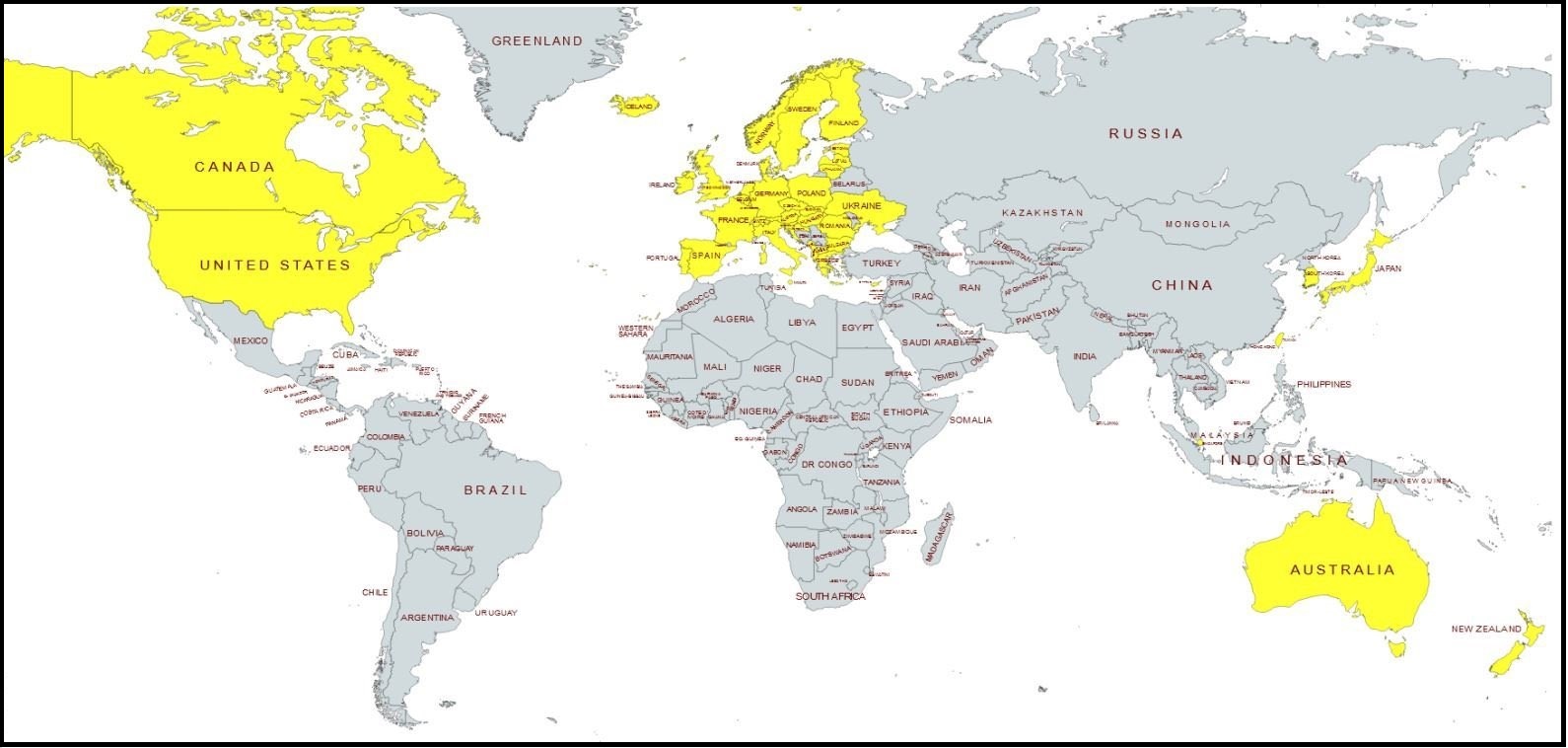
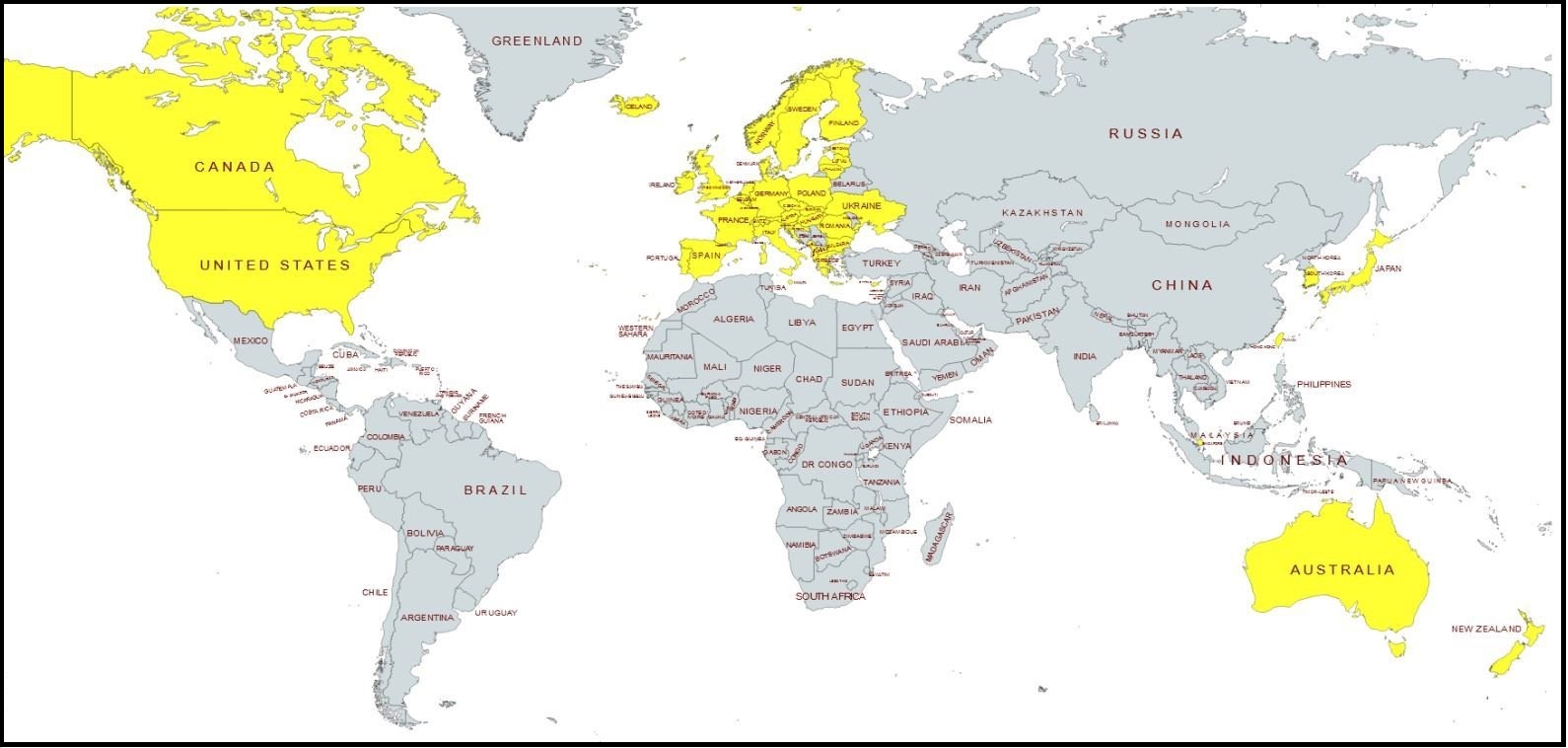
However, that said, in context to this announcement, a pain that will hit the Western economies of the alliance represented in yellow, the last 18 months of moves by Mexico makes President Andres Manuel Lopez-Obrador look remarkably prescient.  The new strategic relationships and trade partnerships between China, Russia, Iran, Saudi Arabia, India and beyond, take on an added geopolitical dimension.

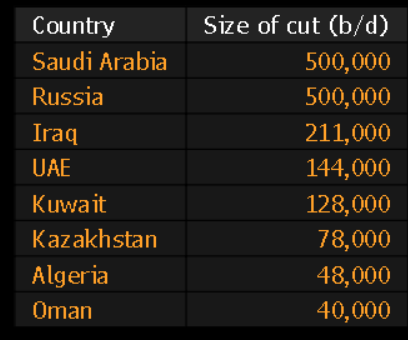
DUBAI, April 2 (Reuters) – Saudi Arabia and other OPEC+ oil producers on Sunday announced further oil output cuts of around 1.16 million barrels per day, in a surprise move that analysts said would cause an immediate rise in prices and the United States called inadvisable.

The pledges bring the total volume of cuts by OPEC+, which groups the Organization of the Petroleum Exporting Countries with Russia and other allies, to 3.66 million bpd according to Reuters calculations, equal to 3.7% of global demand.

Sunday’s development comes a day before a virtual meeting of an OPEC+ ministerial panel, which includes Saudi Arabia and Russia, and which had been expected to stick to 2 million bpd of cuts already in place until the end of 2023.

The latest reductions could lift oil prices by $10 per barrel, the head of investment firm Pickering Energy Partners said on Sunday, while oil broker PVM said it expected an immediate jump once trading starts after the weekend.

“I expect the market to open several dollars higher … possibly as much as $3,” said PVM’s Tamas Varga. “The step is unreservedly bullish.” (read more)

We have been closely monitoring the signs of a global cleaving around the energy sector taking place. Essentially, western governments following the “Build Back Better” climate change agenda stop using coal, oil and gas to power their economic engine, while the rest of the growing economic world continues using the more efficient and traditional forms of energy to power their economies.

Within the BBB western group (identified on map in yellow), the logical consequences are increased living costs for those who live in the BBB zone, and increased prices for goods manufactured in the BBB zone.  In the zone where traditional low-cost energy resources continue to be developed (grey on map), we would expect to see a lower cost of living and lower costs to create goods.   Two divergent economic zones based on two different energy systems.

This potential outcome just seemed to track with the logical conclusion.  The yellow zone also represented by the World Economic Forum, and the gray zone also represented by an expanding BRICS alliance.  Against this predictable backdrop, we have been watching various events unfold – some obvious and some less so.

FLASHBACK to July 2022:

[…] “China’s invitation to the Kingdom of Saudi Arabia to join the ‘BRICS’ confirms that the Kingdom has a major role in building the new world and became an important and essential player in global trade and economics,” Mohammed al-Hamed, president of the Saudi Elite group in Riyadh, told Newsweek. “Saudi Arabia’s Vision 2030 is moving forward at a confident and global pace in all fields and sectors.”

[…] “This accession, if Saudi joins it, will balance the world economic system, especially since the Kingdom of Saudi Arabia is the largest exporter of oil in the world, and it’s in the G20,” Hamed said. “If it happens, this will support any economic movement and development in the world trade and economy, and record remarkable progress in social and economic aspects as Saudi Arabia should have partnerships with every country in the world.” (read more)

That would essentially be the end of the petrodollar, and – in even more consequential terms – the end of the United States ability to use the weight of the international trade currency to manipulate foreign government.  The global economic system would have an alternative.  The fracturing of the world, created as an outcome of energy development, would be guaranteed.

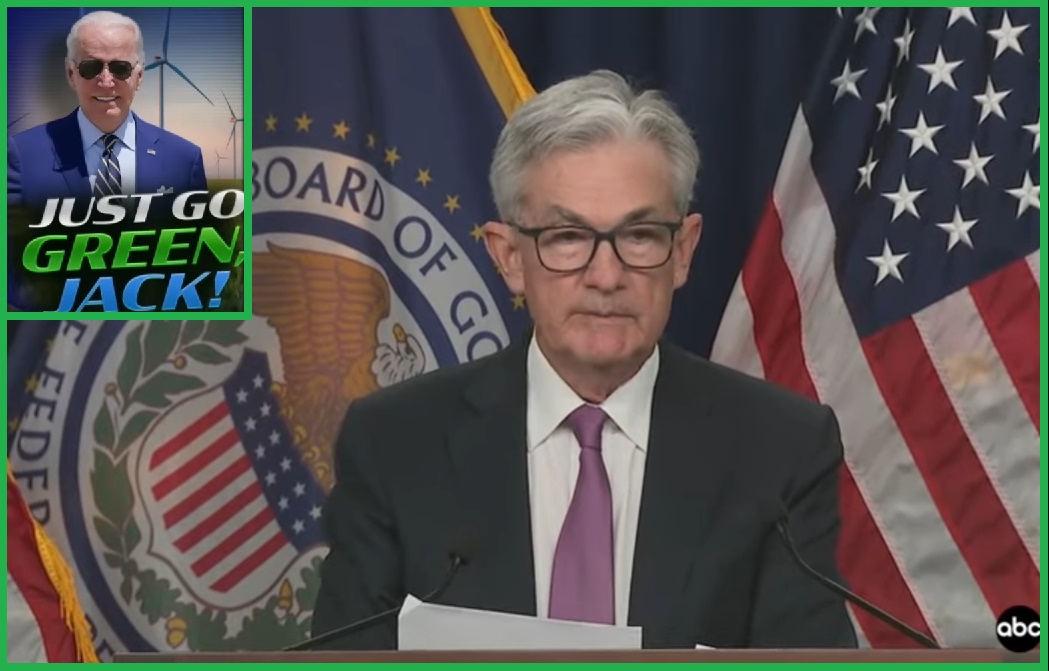
Keep in mind, in early June 2022, Federal reserve Chairman Jerome Powell stated, “Rapid changes are taking place in the global monetary system that may affect the international role of the dollar.”  {LINK}

The Western Alliance (yellow) would be chasing climate change energy policy to power their economies.  The rest of the world (grey), including Mexico, would be using traditional and more efficient energy development.  The global cleaving around energy use would be complete.

This is not some grand conspiracy, ‘out there‘ deep geopolitical possibility, or foreboding likelihood as an outcome of short-sighted western emotion.  No, this is just a predictable outcome from western created events that pushed specific countries to a natural conclusion based on their best interests.

You can debate the motives of the western leaders who structured the sanctions against Russia, and whether they knew the outcome would happen as a consequence of their effort, but the outcome was never really in doubt.  Personally, I believe this outcome is what the west intended. The people inside the World Economic Forum are not stupid – ideological, yes, but not stupid. They knew this global cleaving would happen.

For a deep dive on BRICS, as predicted by CTH, {SEE HERE}.  The bottom line is – the 2022 punitive economic and financial sanctions by the western nations’ alliance against Russia was exactly the reason why BRICS assembled in the first place.

Multinational corporations in control of government are what the BRICS assembly foresaw when they first assembled during the Obama administration.  When multinational corporations run the policy of western government, there is going to be a problem.

In the bigger picture, the BRICS+ assembly are essentially leaders who do not want corporations and multinational banks running their government. BRICS leaders want their government running their government; and yes, that means whatever form of government that exists in their nation, even if it is communist.

BRICS leaders are aligned as anti-corporatist.  That doesn’t necessarily make those government leaders better stewards, it simply means they want to make the decisions, and they do not want corporations to become more powerful than they are.  As a result, if you really boil it down to the common denominator, what you find is the BRICS+ group are the opposing element to the World Economic Forum assembly.

The BRICS team intend to create an alternative option for all the other nations. An alternative to the current western trade and financial platforms operated on the use of the dollar as a currency.  Perhaps many nations will use both financial mechanisms depending on their need.  This is how they replace the U.S. as the global superpower.

The objective of the BRICS group is simply to present an alternative trade mechanism that permits them to conduct business regardless of the opinion of the multinational corporations in the ‘Western Alliance.’

The BRICS team, especially if Saudi Arabia, Iran and Argentina are added creating BRICS+, would indeed be a counterbalance to the control of western trade and finance.  This global cleaving is moving from a possibility to a likelihood.  If Saudi Arabia joins BRICS, the fracture becomes almost certain.

March 29, 2023, CHINESE national oil company CNOOC and France’s TotalEnergies have completed China’s first yuan-settled liquefied natural gas (LNG) trade through the Shanghai Petroleum and Natural Gas Exchange, the exchange said on Tuesday (Mar 28).

Approximately 65,000 tonnes of LNG imported from the UAE changed hands in the trade, it said in a statement. TotalEnergies confirmed to Reuters that the transaction involved LNG imported from the UAE but did not comment further. (read more)

This exchange between the UAE and France is taking place without dollars. If the process continues, the dollar weakens.  In the geopolitical world of currency valuations and trade, this might be considered the Archduke Ferdinand moment for the end of the petrodollar.  The question will become, can they grow this process with OPEC+ support and begin eventually trading oil in yuan?

MEXICO – Three new oil refineries together with new railroads and highways are under construction right now as the government continues positioning itself for energy independence. [Video Here]

The energy plan, which runs counter to the expressed demands of Canada and the United States, includes two regional ‘green’ refineries that will have the ability of turning used cooking oil into fuel.  However, the plan also includes new oil refinery capacity that will permit cheap gasoline independent of the need for Mexican oil to be refined in Texas and returned.

All of the refinery projects are on schedule to be completed by the end of this year and into 2024.  In essence, Mexico will have very cheap gasoline and diesel fuel in the near future.  This was previously outlined as a goal by AMLO in July 2022, and is against the interests of the Biden administration.  Now, those plans are becoming a reality.  Mexico is not joining the North American (Western Alliance) suicide mission of windmills, solar panels and reliance on unstable green energy.

Ever since the July 2022 Oval Office press conference at the White House, CTH has been saying to keep an eye on Mexico, because these energy plans align more with the BRICS nation agenda than the goals and objectives of the World Economic Forum (western nations).

It is not accidental the U.S. government, including our intelligence agencies and DHS, has been seeding a negative overall impression of Mexico ever since.  However, you can see how prescient Mexico has been when contrast against current geopolitical events.

Biden Energy Adviser: We Drained the Strategic Petroleum Reserve to ‘Save the Global Economy’


Sean Hannity Published originally on Rumble on December 6, 2022

Biden Energy Adviser: We Drained the Strategic Petroleum Reserve to ‘Save the Global Economy’

Biden Begs OPEC+ to Delay Vote Until After Midterms


Armstrong Economics Blog/Corruption Re-Posted Oct 17, 2022 by Martin Armstrong

Joe Biden is playing dirty before the midterm elections by urging Saudi Arabia to delay the OPEC+ oil vote until December. The Saudis, who unofficially run OPEC+, do not respect Joe. OPEC+ voted on October 5 to cut oil production despite Joe’s desperate pleas. In a desperate attempt to avoid further embarrassment, Biden asked them to delay the next vote.

The Foreign Ministry of Saudi Arabia replied with a letter rejecting Biden’s requests. The kingdom said they declined Biden’s request in October for purely financial reasons. They reject the idea that they declined on behalf of Russia and said that they are not interfering in international conflicts. Worse, they believe that Biden is promoting the idea that Saudi Arabia is against the United States. In reality, they want to make money and be left alone. Oil is what keeps their kingdom afloat. The letter confirms their relationship with the United States is “strategic” as a trading partner and nothing more.

As for pushing back the next vote, that is not in Saudi Arabia’s interest. They explained that “economic analyses indicate that postponing the OPEC+ decision for a month, according to what has been suggested, would have had negative economic consequences.”

White House officials have confirmed Joe’s election interference. “We presented Saudi Arabia with analysis to show that there was no market basis to cut production targets, and that they could easily wait for the next OPEC meeting to see how things developed,” National Security Council spokesman John Kirby said in a statement. Yet, the White House swears this decision has nothing to do with the midterms.

This sounds like election interference to me.

U.K Energy Reaches Crisis Point, Britain Announces New Oil and Gas Leases and Lifts Moratorium on Fracking


Posted originally on the conservative tree house on September 10, 2022 

There is a particular historical irony in the timing.  On the same day King Charles III ascends the throne, previously Europe’s most isolated from consequence – yet loudest voice in chasing the catastrophic climate change energy policies, the British government is forced to reverse course on years of energy regulations and restrictions.

Britain’s new Prime Minister Liz Truss announced, “a new round of oil and gas licensing will come next week with more than 100 licenses issued. A moratorium on fracking will be lifted and planning permission can be sought where there is local support,” in an urgent emergency effort to lower energy costs for British citizens.

The move comes in combination with a government plan to help citizens and businesses cope with skyrocketing prices for electricity and home heating fuel.  The climate change chickens have come home to roost throughout Europe and the British government is urgently trying to head-off the calamitous consequences.

Inside the media announcements of the Truss plan, the biggest concern expressed is how the financial and multinational banking sector (the ESG investment groups) will respond to the government position. After decades of ideological “green” outlooks flowing into the energy industry, the biggest concern expressed in the financial analysis is how a reversal by such a large economic system will reverberate.

The climate change ideology has a stranglehold on the energy sector of the economy, this move by Great Britain would be the most significant push-back in decades.  The minority green activists are apoplectic that they may lose control over the majority of opinion.  The economics of a reversal in energy policy could reverberate throughout the western alliance, particularly in Europe.  It will be interesting to see whether this shift in U.K. policy has ripple effects in the U.S.

LONDON, Sept 8 (Reuters) – Britain’s move to green-light dozens of new oil and gas fields will leave investors and banks with a tough PR job as Britain struggles to shore up its energy security whilst sticking to its climate commitments.

Starting new oil and gas projects runs counter to the world’s shift away from fossil fuels in the fight against global warming and a commitment at last November’s U.N. climate talks to phase down their use.

Yet runaway inflation amid conflict in Ukraine has forced the hand of new British prime minister Liz Truss as Russian President Putin seeks to use energy as a weapon this winter.

Britain will launch a new round of oil and gas licensing next week with more than 100 licenses issued, part of a wider package of measures to tackle the energy crisis announced by Truss on Thursday.

And Britain’s not alone in reassessing its energy strategy. Germany, for example, has been forced to turn back to even dirtier thermal coal to help fuel its power plants and keep the lights on, hampering short-term efforts to rein in climate-damaging carbon emissions.

But for energy companies and the investors, bankers and insurers that finance them, new investment in fossil fuels also presents a challenge given many have made their own pledges to reach net-zero emissions by mid-century.

“This will absolutely hinder companies’ … ability to hit their climate targets,” said Pietro Bertazzi, global director of policy engagement and external affairs at non-profit environmental disclosure platform CDP. (read more)

This is the first crack in the western alliance and the ‘climate change’ agenda of the World Economic Forum as it relates to energy policy and ultimately control over human life within the alliance.

The war in Ukraine was being used as a justification to explain the consequences of European energy policy, particularly rapidly increasing costs for energy and food, but the war in Ukraine was not the cause.  The true root cause of the exploding inflation and economic mess was the Build Back Better agenda, and the series of policies dictated from within it, that each nation willingly accepted.

Wow, Europe Household Electric Bills Estimated to Jump by $2 Trillion Next Year, That’s 12% of Their GDP


Posted originally on the conservative tree house on September 6, 2022 | Sundance

What is predicted to happen in Europe is just stunning, literally stunning.

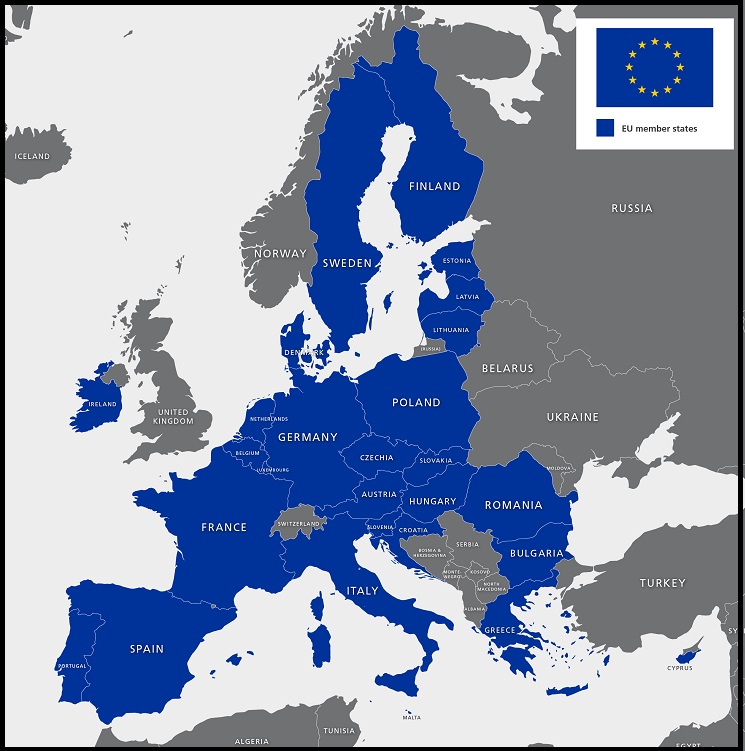
♦Context – According to official data from the World Bank, the combined Gross Domestic Product (GDP) of the European Union was just over $17 trillion US dollars in 2021. That is the last calculated measure.  The combined GDP value of European Union represents roughly 12.78 percent of the world economy.

According to analysts for Goldman Sachs, the current energy crisis in Europe has increased electricity prices at a rate that is increasing almost daily.  Within the data it is now estimated that households within the EU will pay an additional $2 trillion for electricity in the next year.

Put that $2 trillion into context with their GDP, and that scale of energy cost would be wiping out 12% of the purchasing strength within the total EU economy.  Forget about buying anything else, if this analysis is correct Europeans will be buying food and energy, nothing else.

If you consider what that means, it is bordering on full economic collapse of western Europe.

What is being described above is what we posited when we outlined the impact of the “Energy Economy” {Go Deep}.  When you suck 12% of the purchasing power out of an economic engine simply to maintain the status of current energy use, everything else starts to collapse.

Also keep in mind we are only talking about the direct impact of $2 trillion in electricity cost.  The downstream consequence is far greater because everything created, produced, or manufactured, including food, is dependent on electricity – which will drive the final cost to produce of all those products even higher.

The damage is almost unimaginable in scale.

[Fortune] – European households should brace for an expensive winter owing to the continent’s deepening energy crisis that will likely send electricity and heating bills soaring.

Energy affordability in Europe is reaching a “tipping point” that could peak next year, with total spending on bills across the continent growing by 2 trillion euros ($2 trillion), a Goldman Sachs research team, led by Alberto Gandolfi and Mafalda Pombeiro, said in a note published Sunday.

Many European households are already feeling the bite of a steadily worsening energy crisis, brought on by Russian natural gas producers intermittently pausing flows along the critical Nord Stream pipeline following Western sanctions this year.

Energy bills at some restaurants and coffee shops have already more than tripled this year, but with threats looming that natural gas supply from Russia could become even tighter as the Ukraine War rages on, analysts warn that Europe’s coming struggles are set to rival some of the worst energy crises on record.

“The market continues to underestimate the depth, the breadth, and the structural repercussions of the crisis,” the Goldman Sachs analysts wrote. “We believe these will be even deeper than the 1970s oil crisis.” (read more)

The economic contagion will not be isolated to Europe.

The impacts to the social fabric are also almost unquantifiable in scale.

Example: What happens to migration patterns when economic migrants are now considered a threat to scarce resources?

While the US is not quite in the same level of energy desperation, what we were discussing last week is an example of the problem we too may face.

Let’s say you are an average USA Main Street household with an income around $100,000/yr, and you now face an increase in electricity rates from $300 to $500 due to Joe Biden’s new national energy policy known as the Green New Deal.  That’s $200 more per month for this initial economic/energy “transition” moment.

That extra $200/month equates to $2,400 per year.

That $2,400 per year is static economic activity.  Meaning nothing additional was created, and nothing additional was generated.  The captured $2,400 is simply an increase in the price of a preexisting expense.

Take that expense and expand it to your community of 100 friends and family households.  The $2,400 now becomes $240,000 in cost that doesn’t generate anything.  $240,000 is removed from the community economy.  $240,000 is no longer available for purchasing other goods or services within this community of 100 households.

The economic purchasing power of the 100-household community is reduced by $240,000 per year.

Take that expense and expand it to your county of 10,000 households.  Now you are reducing the county economic activity by $24 million.  In this county of 10,000 households, $24 million in economic transactions have been wiped out.  Meals at restaurants, purchases of goods and services, or any other spending of the $24 million within the county of 10,000 households (approximately 25,000 residents) has been lost.

Now expand that expense to a larger county, quantified as a mid-size county, of 50,000 households.  The mid-sized county has lost $120 million in household economic activity, simply to sustain the status quo on electricity rates.  Nothing extra has been generated. $120 million is lost.  The activity within the county of 50,000 households shrinks by $120 million.

Expand that expense to a large county of 100,000 households, and the lost economic activity is $240 million.

Expand that expense to a small state of 1 million households (2.5 million residents), and the lost economic activity is $2.4 billion.

Expand that expense to a state with 5 million households (approximately 12 million residents) and the economic cost is $12 billion in lost economic activity unrelated to the expense of maintaining the status-quo on electricity use.   This state loses $12 billion in purchases of goods and services, just to retain current energy use.

These examples only touch on household expenses.  The community, county and state business expenses for offices, supermarkets, stores, etc. are in addition to the households quoted.

Meanwhile the Gross Domestic Product (GDP) of the community, county and state, remains static because the GDP is calculated on the total value of goods and services generated in dollar terms.  The appearance of a static GDP is artificial.  In real Main Street terms, $12 billion in economic activity is lost, but the price or increased value of electricity hides the drop created by the absence of goods and services purchased.

Fewer goods and services are purchased and consumed.  However, statistically the inflated price of electricity gives the illusion of a status quo economy.

Now expand that perspective to a national level and you can see our current economic condition.

All of this is being done under the justification of “climate change.”

Previously I would have said this level of economic impact in Europe would lead to a total revolt against the government.  However, with the backdrop of the recent COVID lockdowns and government control mechanisms in mind, and looking at the citizen compliance that took place in response to those government mandates, it is now more likely the citizens in Europe will simply bow to the energy control mechanisms of the governing authority.

It’s almost as if the COVID compliance effort was the test…

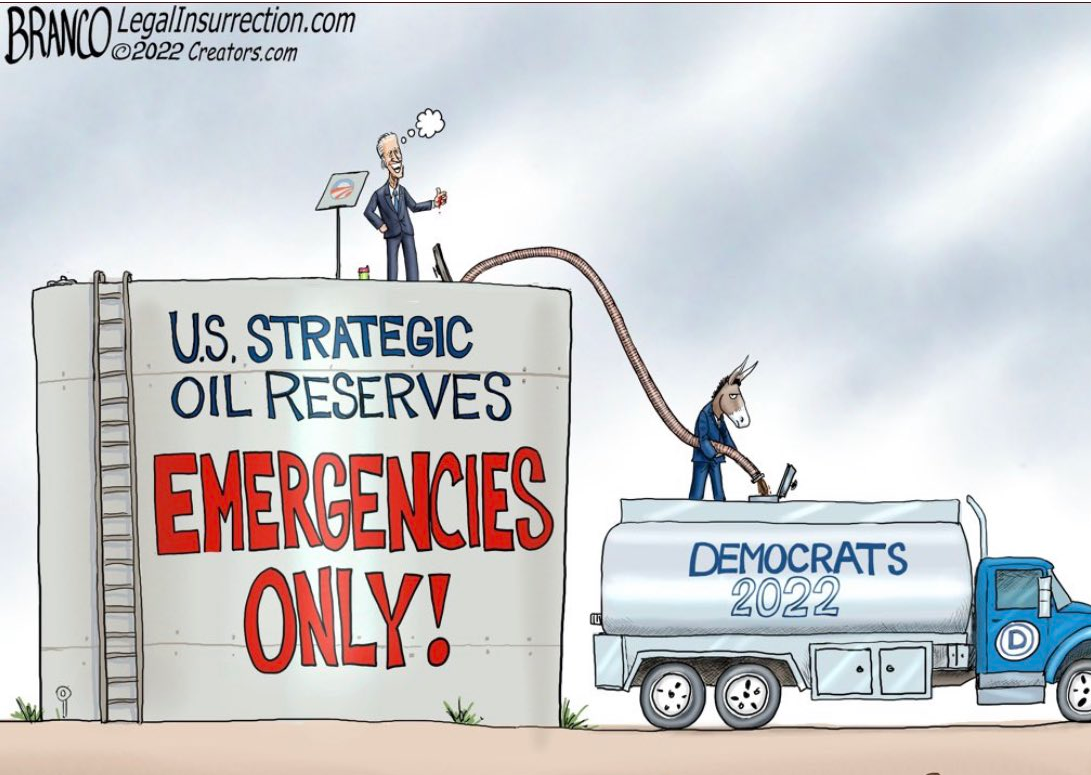
US Emergency Oil Reserves – Gone?


Armstrong Economics Blog/Humor Re-Posted Sep 3, 2022 by Martin Armstrong

Categories: Humor

US Oil Reserves Nearly Depleted


Armstrong Economics Blog/Energy Re-Posted Sep 2, 2022 by Martin Armstrong

The US Strategic Petroleum Reserve (SPR) has been at its lowest level since, ironically, 1984. The reservoirs are composed of four underground sites constructed from salt domes on the Gulf Coasts of Louisiana and Texas. The White House began extracting oil from the emergency reserves to combat rising gas prices. Politicians simply hope that the problem can be patched up for as long as they can remain in power.

In August, the US extracted 18 million barrels of crude. The stockpile now sits at only 450 million, reaching a nearly 40-year low. Additionally, the White House under Biden has been selling off the remaining reserves to foreign refiners. China received nearly a million barrels of oil to a subsidiary of Sinopec, a company that previously received BILLIONS in investments from an equity firm operated by none other than Hunter Biden. In fact, Biden has sold off nearly a quarter of oil reserves this year alone. Is he deliberately trying to create a crisis to spark the Great Reset?

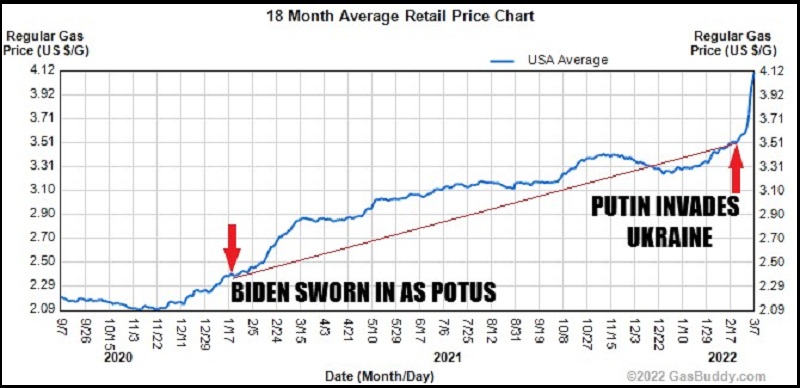
Russia is not to blame for rising gas prices, as a gallon cost a mere $2.28 in December 2020. A year later, after Biden implemented disastrous green policies, the price rose to $3.40. Biden panicked once gas hit $5 in June and began to pull from the reserves to make it seem as if he had a grip on the problem. The government has no solution for the current energy crisis. The best we can hope for is the Republicans coming to power and demanding that domestic production continue immediately.

Using Executive Power Biden Pledges Increases in OSHA Workplace Inspections as Part of Climate Change Compliance System


Posted originally on the conservative tree house on July 20, 2022 | sundance 

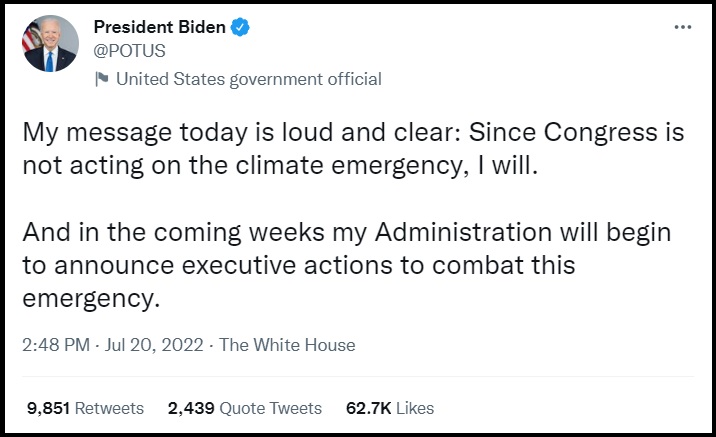
Joe Biden has pledged to increase his use of executive power in order to deconstruct the U.S. energy system and recreate a Green New Deal energy economy using windmills and solar power to generate electricity.  Today, Biden kicked-off the first round of executive orders [READ HERE].

The first round of executive orders is essentially payments to low income Americans for the increased costs of Biden’s new energy programs.  However, for those paying close attention, I would direct you to notice this predictable aspect in the “Fact Sheet” provided by the White House:

…”the Department of Labor’s Occupational Safety and Health Administration (OSHA) has already conducted 564 heat-related inspections, which are focused on over 70 high-risk industries across 43 states. On days when the heat index is 80°F or higher, OSHA inspectors and compliance assistance specialists are engaging in proactive outreach and technical assistance to help stakeholders keep workers safe on the job.”

Overlaying the COVID-19 mandates and executive orders as a guide, I think everyone can see where this is going.

[Go Deeper Here]

.

Prepare for the Biden Blackouts…