How 10% of the People Can Make a Difference & Real Estate’s Role


QUESTION: Dear Marty,
First I would like to thank you for all the help you provide especially for us little guys.
I’m from Barcelona, and happily attended the release of “The forecaster” when you were there a few years ago.
I’m under 30 and working my butt off trying to save what I can while paying rent with my partner on a smallish 50m flat (which has become prohibitevely expensive for young local people as rents are at all time highs).

Following your recomendations I’ve put my small savings into movable assets (US and European equities).
With regards to the chart you posted on Spanish Real Estate I was surprised to see the price still so near the bottom of the Housing Crisis. I live in Barcelona and prices are in most cases near or at all time highs for most of the city neighborhoods (of course in € nominal prices wich have dropped quite a bit in $ terms) but as you move away from the city the recovery has been more modest to say the least.

In Barcelona price increses are mostly due to foregneirs moving in and maybe also because people here don’t ussually invest in the stock market but instead put savings into RE (despite the housing bubble people have a big chunk of retirement savings into real estate).
RE is not cheap to say the least but I’m wondering wether I should contract a 30y fixed mortgage and buy a house. My biggest fears are two:
– If long term mortgages dry up I may find out in mkt to mkt loss positions on the house as prices might collapse.
– If the economy declines I have the risk of maybe being fired but still chained to a mortgage.
I fear the later specially since my father has been recently notified that he is going to get fired. The company he works for has decided to fire all employees who are up to 13y!!! close to retirement age (and will probably replace 1/4 of the workforce with cheaper labor).
Given the above do you think it’s still a good time to buy in the big Spanish cities like Barcelona using a fixed mortgage or that you might be better off renting and waiting for the collapse.
Thank you
A.
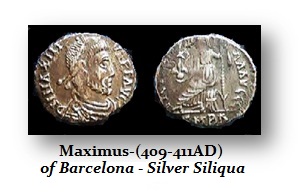
ANSWER: Barcelona is one of the most beautiful cities in Europe. It is even one of the best places to live. In terms of local earning power, yes, rent in Barcelona is high. In terms of international value, they are cheap, which is why you have so many foreign investors who have poured into your city. Even economically, Barcelona is extremely productive and this was in part behind the reason for the separatist movement. It also had its own history of separatist movements from the Roman Empire (see Maximus 409 AD).

You have noticed the foreign buyers. As the euro drops, the value of property will look cheaper to a foreign investor than domestic. If you stay in the city proper region, this will have an international bid based on currency. In real terms, of course, the property will decline in value. However, this is more of a short-term trend. We all need a place to live. If you can buy with a FIXED rate mortgage, then you will be better off and certainly do not do floating rates. The risk with banks remains that they will stop lending on property as loans turn bad and political turmoil unfolds. Soon it will be an issue of whether Spain will stay in the euro, or whether the euro even exists. The property in the rural area will always be cheaper. So it depends upon what your personal goals might be. Rural property where you have a bit of land and can grow some food is not a bad hedge. But it has been getting cold even in Spain, a country that normally supplies Europe with food during the winter.

We will be heading into a currency crisis. Tangible assets are the way to survive. The biggest problem with real estate is that you cannot take it with you. So keep that in mind. We need a place to live so that is the bottom line. You do not want all your wealth in one asset. You are young enough to survive the major government reset. That will happen. I remain hopeful that if enough people understand the causes behind this crash, then we can make a difference and push back against tyranny.

Make no mistake about it. Government will ALWAYS act in its own self-interest to survive. There has NEVER been a single government that has EVER admitted it is wrong. They must always suppress the people to survive. Remember one thing: even in the USA, there were only three presidents who ever won slightly more than 60% of the popular vote. So, about 10% of the people really decide the fate of nations. We do not have to convince 100% or even 50%. We just need that 10% to make a difference.

Sen. Booker: If You Like Your Eggs, You Can Keep Your Eggs


Published on Feb 18, 2019

SUBSCRIBED 121K

Sen. Cory Booker tells VegNews that eating eggs doesn’t “align with his spirit.” He doesn’t want government to regulate your diet. If you like your eggs, you can keep your eggs. He just wants to nudge America toward fake cheese. Yet, if we’re going to save the planet, you need to stop eating meat. Right Angle is a production of the Members at BillWhittle.com, who enjoy Members-Only shows like this

Former FBI Officials React to Andrew McCabe’s Soft Coup Admissions…


Kevin Brock, former FBI assistant director for intelligence, and Terry Turchie, former deputy assistant director of the counterterrorism division, discuss former acting FBI Director Andrew McCabe’s admissions of intent to usurp the presidency.

The Small Coup Group…

The Exodus from Illinois: Causes and Concerns


Published on Mar 10, 2018

SUBSCRIBE 2.8K
From the City Club of Chicago – a panel discussion examines the continuing movement of citizens leaving Illinois for other states. While many blame the state’s politics and slow-growth economy for the exodus, others say it’s more due to older Illinoisans leaving to be in a warmer climate, or nearer their grandchildren. We hear the comments of this panel in a lively examination of the issue..


Victor Davis Hanson – The Mythologies of the 2016 Election


Published on Nov 30, 2016

SUBSCRIBE 42K
Hanson speaks about the 2016 election and the myths surrounding it at the David Horowitz Freedom Center


Published on Nov 30, 2016

SUBSCRIBE 42K
Hanson speaks about the 2016 election and the myths surrounding it at the David Horowitz Freedom Center

SHOCKING: Protestors try to battle D’Souza over Trump’s wall, fail miserably


Published on Feb 16, 2019

SUBSCRIBE 232K
These Leftist protestors are left speechless when D’Souza proves that walls work and Trump is right. — Available now on DVD, Blu-ray, & Digital HD! Order here: https://deathofanationmovie.com/retai… Through stunning historical recreations and a searching examination of fascism and white supremacy, “Death of a Nation” cuts through progressive big lies to expose hidden history and explosive truths. Watch the shocking new trailer now: https://www.youtube.com/watch?v=-Hnvt… Lincoln united his party and saved America from the Democrats for the first time. Can Trump—and we—come together and save America for the second time?

Victor Davis Hanson — The New Old World Order


Published on Oct 14, 2010

SUBSCRIBE 112K
Victor Davis Hanson is a classicist and military historian, professor of classics, and the Martin and Illie Anderson Senior Fellow at the Hoover Institution. He is the author of more than a dozen and a half books. His most recent volumes are Makers of Ancient Strategy: From the Persian Wars to the Fall of Rome, which Dr. Hanson edited, and The Father of Us All: War and History, Ancient and Modern, a volume of Dr. Hanson’s own essays. Beginning with an explanation of why the post-Cold War New World Order is rapidly breaking apart, Victor Davis Hanson sees a world where nations are returning to the ancient passions, rivalries, and differences of past centuries. In light of this world transformation, Hanson looks at key challenges the United States faces around the globe: in Europe, Asia, Russia, Mexico, and Iran.

Report: DOJ Deputy Rod Rosenstein Expected to Depart by Mid March…


Fox News is reporting that Deputy AG Rod Rosenstein is anticipated to resign mid-March and be replaced by a hand-picked deputy by AG William Barr.  Initial reporting is that Jeffrey Rosen will be the replacement.

FOX – Deputy Attorney General Rod Rosenstein is expected to leave his role at the Justice Department by mid-March, a senior DOJ official told Fox News on Monday. (read more)

This timeframe would align with prior reporting that Rosenstein would exit mid-March simultaneous to the completion of the Robert Mueller investigation.

NBC REPORT WASHINGTON — Deputy Attorney General Rod Rosenstein, who had been overseeing the special counsel investigation, plans to step down after Robert Mueller submits his report, according to administration officials familiar with his thinking.

A source close to Rosenstein said he intends to stay on until Mueller submits a report to the Justice Department on the Russian meddling investigation. The source said that would mean Rosenstein would remain until early March. (link)

Jake Gibson

@JakeBGibson

113 people are talking about this

If accurate, Jeffrey Rosen, Barr’s choice as deputy to replace Rod Rosenstein, was an attorney at Kirkland & Ellis, Barr’s former law firm, and is currently deputy transportation secretary.  Interestingly that is a connection to Mitch McConnell via Mitch’s wife Elaine Chao who is the current Transporation Secretary.

Previously Mr. Rosen served General Counsel and Senior Policy Advisor for the White House Office of Management and Budget during the George W. Bush administration. Before that, he was also with the Department of Transportation, serving as General Counsel.

Rosen has a B.A. in economics and a J.D. from Harvard.

Wilbur Ross Completes Section 232 Report – Auto Industry Executives Going Bananas….


Commerce Secretary Wilbur Ross has completed the section 232 investigation on the auto industry, reviewing the sector as a vital economic interest for continued national security.

The content of the investigative finding is unknown. The Commerce Department has privately delivered the 232 report directly to the White House. However, with the possibility of the report empowering President Trump to implement 20 to 25% import auto tariffs industry executives are proactively going bananas.

An important aspect here is that the USMCA (U.S., Mexico and Canada) agreement exempts the trilateral North American pact from any auto tariff fear. If the vehicle consists of 75% North American (USMCA) content, there’s no tariff.

At the 30,000 ft level, the USMCA deal positioned the U.S. and Mexico to retain their current multinational investments; and through a series of sector-by-sector standards on origination the deal simultaneously closed the fatal NAFTA loophole.

The USMCA agreement makes an economic manufacturing partnership between the U.S, Mexico and Canada; and for assembly products third parties will have to produce parts and origination material within the U.S. and Mexico.

U.S.T.R. Lighthizer put some details forward:  ♦The NAFTA Loophole closure is explained in Summary Form HERE; with emphasis on the Auto-Sector.  The key is a 75% part origination level for auto-assembly; and a 40-45% level for parts with a minimum $16/hr wage rate.  The source-origination rate (75%) is even higher than all previously forecast USMCA negotiation predictions.

Example of downstream consequences/benefits:  German auto-maker BMW recently built a $2 billion assembly plant in Mexico (almost complete).  Most of their core parts were coming from the EU (steel/aluminum casting components) and/or Asia (electronics).  Now the assembly plant will have to source 75% of the auto-parts from the U.S. and Mexico, with 45% of those parts from facilities paying $16/hr.

As a direct result of the USMCA agreement BMW made an announcement in November they were exploring additional parts manufacturing facilities within the U.S. for their engines and transmissions.  BMW needs to modify their supply chain and build auto parts in the U.S. and Mexico:

LOS ANGELES (Reuters) – BMW (BMWG.DE) is considering a second U.S. manufacturing plant that could produce engines and transmissions, Chief Executive Harald Krueger said on Tuesday, shortly after a report that U.S. President Donald Trump would impose tariffs on imported cars from next week

Additionally, with the KORUS (Korean-U.S.) bilateral trade deal now cemented there would be no impact to South Korean auto imports (Kia etc) from a 232 decision.  However, any EU, China or Japanese automaker who is not currently inside U.S.M.C.A operations could be subject to an application of a countervailing duty.

Specifically because of the scale of the industry, German Chancellor Angela Merkel is the most at risk from a lack of an overall U.S-EU trade deal.  This potential 232 auto tariff is a big stick to get the EU to the bargaining table.

WASHINGTON (Reuters) – The U.S. Commerce Department sent a report on Sunday to U.S. President Donald Trump that could unleash steep tariffs on imported cars and auto parts, provoking a sharp backlash from the industry even before it is unveiled, the agency confirmed.

Late on Sunday, a department spokeswoman said it would not disclose any details of the “Section 232” national security report submitted to Trump by Commerce Secretary Wilbur Ross. The disclosure of the submission came less than two hours before the end of a 270-day deadline.

Trump has 90 days to decide whether to act upon the recommendations, which auto industry officials expect to include at least some tariffs on fully assembled vehicles or on technologies and components related to electric, automated, connected and shared vehicles.  (read more)

Don’t forget there’s already an existing 25% tariff on imported trucks and SUV’s, that’s why most foreign automakers opened truck and SUV auto-plants in the U.S. over the past two decades.   BMW builds their SUV’s in South Carolina.  Volkswagen builds SUV’s in Tennessee.  Mercedes now builds their SUV’s in Alabama, and Toyota builds in Princeton Indiana as well as Canada.   Volvo has also moved all their SUV building to South Carolina.

It is doubtful President Trump will actually pull-the-trigger on tariffs for cars; however, as said, his ability to do it is a massive stick to get both the EU and Japan to commit to a renegotiated bilateral trade agreement.