Newborn Vaccine Requirement Under Investigation


Posted originally on Sep 22, 2025 by Martin Armstrong |  
Vaccinate Baby

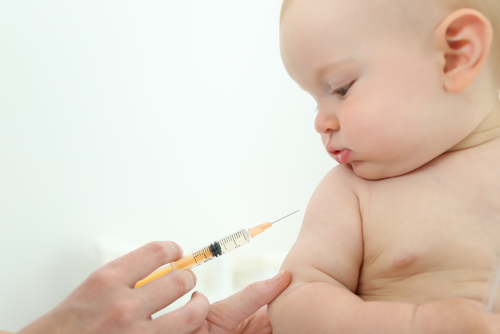
Hepatitis B is transmitted through infected blood and bodily fluids, often through sexual intercourse. Why does the US health system insist that newborns receive a vaccination against an STD at birth? Health and Human Services Secretary Robert F. Kennedy Jr.’s vaccine panel plans to re-evaluate the mandate.

The current recommendation states that newborns should be vaccinated against hepatitis B within the first 24 hours of birth. The Advisory Committee on Immunization Practices, or ACIP, has delayed voting on updated guidelines due to the controversy.

The vaccine panel voted to recommend testing for hepatitis B in pregnant women as the disease can be transferred from mother to baby. Pharmaceutical company Merck, who recently moved a multi-million dollar facility from the UK to the US, insists the vaccine is safe and effective at birth. Yet, there are no concrete studies to show whether or not the risks outweigh the benefits.

This disease is not airborne nor can be passed through coughing, sneezing, or close contact. There must be an exchange of bodily fluid, and the primary infector here would be the mother (vertical transmission). If the disease cannot be spread through anything other than bodily fluid, why is the medical community insistent on a mandate? Parents should have the ability to chose the best course of action for their baby’s health.

Health complications from the vaccine are rare, but never zero. “Six studies reported serious adverse events (SAEs) such as the requirement for escalation of respiratory support. However, these occurred predominantly in high-risk infant populations and were rare (~1%),” a study published by the National Library of Medicine detailed. The study also notes a decreased risk of adverse side effects among newborns vaccinated after one week of birth. Yet, the study also explains the importance of catching the disease early. “Infection in the newborn or during early childhood leads to chronic hepatitis in 95% of infections, whereas infection acquired during adulthood is less likely to lead to chronic disease, with less than 5% of patients in this category.”

“I believe that this vaccine is absolutely critical for babies that are treated,” said member Retsef Levi, who has been vocal about his opposition to RNA vaccines. “But this notion that we sit here with very lousy evidence and argue there is no problem whatsoever [with administering the shot at birth] is not building trust, and it’s not scientific and it’s not what the public here should expect from us.”

The panel is considering updating the recommendation to infants at one month of age. “As people have asked, why would we pick one month? Why two? There’s no evidence that it’s safer at a later time,” Meissner said. “It’s an extremely safe vaccine, a very pure vaccine. So I think we will be creating new doubts in the minds of the public that are not justified.”

Others believe there is insufficient evidence. “I believe that there’s enough ambiguity here and enough remaining discussion about safety, effectiveness, and timing that I believe that a vote today would be premature,” Dr. Robert Malone said.

The bottom line is that we have a string of vaccines pushed upon the population from birth until death that have not been properly tested. Those who fund the studies also profit from the vaccinations, which is precisely the problem. Before Kennedy, no one questioned whether or not the guidelines coming from health agencies were backed by actual science. There were very few vaccination mandates for newborns a few decades ago, and now, babies in America receive FIFTEEN doses of vaccinations during their first year of life—and “the science” cannot clearly show whether these concoctions are “safe and effective.”

The World According to Martin Armstrong – An Amazon Bestseller


Posted originally on Sep 21, 2025 by Martin Armstrong 

KerryLutzBook

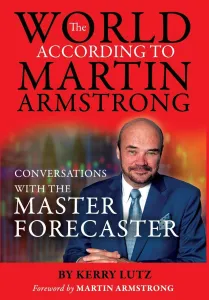
The World According to Martin Armstrong

We’re closing in on 3,000 copies sold — and for good reason. This book has already become an Amazon Bestseller, and it’s the only place you’ll find all of Martin’s major forecasts collected in one volume.

Over the past 14 years, more than 15 of these forecasts have come true — and many are still unfolding right now.

From sovereign debt crises, political upheavals, energy shocks, and the turning points in gold, silver, and equities — it’s all here, straight from the man who built Socrates.

As one reader put it:

“This book is the Rosetta Stone of Martin’s work. To see all the forecasts laid out in one place shows you just how accurate — and how consistent — he’s been.”

Whether you’re a longtime follower or just discovering Armstrong Economics, this is the essential reference to understand the cycles driving our world.

Interview: False Flags to Trigger World War 3?


Posted originally on Sep 21, 2025 by Martin Armstrong |  

Interview: Europe’s Economic Turmoil, Political Uprisings, & Global Tensions


Posted originally on Sep 21, 2025 by Martin Armstrong |  

Interview: Gold, Stocks, Geopolitical & Dollar Surge


Posted originally on Sep 20, 2025 by Martin Armstrong |  

Coffee Prices on the Rise


Posted originally on Sep 19, 2025 by Martin Armstrong |  

Coffee

Coffee prices are the latest grocery item troubling American consumers. The United States is the world’s largest importer of coffee, but produces less than 0.1% of all coffee for domestic consumption, importing over $8.2 billion (1.6 metric tons) of coffee last year alone. The average retail price of coffee spiked 21% in the past year, marking the sharpest rise since the late 1990s.

Tariffs are certainly part of the problem. Brazil produces around 37% of the world’s coffee, but now faces a 50% tariff on coffee beans. The average price of Brazilian coffee now sits around $6 per pound. Brazil also experienced a depleted harvest in 2024-25 due to drought and unfavorable weather conditions. The harvest was 9% beneath traditional levels. Global production rose by 4.3 million bags, but was offset by lower stocks, and prices remained high. The US spent $1.41 billion last year on Brazilian coffee alone, and a 50% tariff in addition to increased prices is causing grocers and retailers to raise prices.

Brazil and Colombia primarily focus on Arabica beans, with Colombia being America’s second-highest importer. In far contrast to Brazil, Colombia’s tariff sits at 10%. Still, the US purchased $1.4 billion in coffee beans from Colombia last year and any levy will be felt by consumers. Colombia’s 2024-25 coffee harvest was extremely robust at 13.2 million bags, a 23% increase from the previous year. Farmers believe production will fall by 5.3% in the coming harvest due to weakening La Nina conditions and heavy rain.

Vietnam supplies 17% of the world’s coffee, but the US mainly relies on South America for imports. Vietnam’s tariff sits at 20% and many roasters have complained that this is affecting their bottom line. Same with Indonesia, which has a 19-32% levy.

Brazilian coffee exports to the US have fallen by nearly 46% since tariffs were imposed. While the US consumed 15% of Brazilian coffee exports, Germany was close behind at 14% and has surpassed the US to become the top buyer. It is undeniable that tariffs on Brazil have caused a spike in US coffee prices, which has been exacerbated by a weak harvest.

Chicago’s Pension Funds are Nearly Insolvent – Incoming $28m Bailout


Posted originally on Sep 19, 2025 by Martin Armstrong |  

Chicago’s money trees are shedding their autumn layers with a new multi-million dollar government payout package for underfunded public pensions. City officials approved a short-term bailout of the Firemen’s Annuity & Benefit Fund to the tune of $28 million to avoid forced asset sales. That is merely the tip of the iceberg, as Chicago’s pension debt has risen 15% over the past five years to an utterly unsustainable $36 billion.

Property taxes currently fund 80% of the city’s pension fund, but are not enough to sufficiently meet payouts. The average pension fund ideally has a funding level of around 70%, and funding beneath 40% is considered nearly insolvent. In Chicago, the top four public pension funds (fire, police, municipal, and laborers), along with the teachers’ pension fund, have a backing ratio between 24% to 43%, with the combined debt now exceeding $53 billion—all of Chicago’s public pension funds have gone bust. Reform measures have been bypassed for years to the point of no return.

Chicago’s pension system carries a debt larger than that of 44 states. Seven Chicago-area pension funds are among the top 10 worst-funded plans in the country. The city already allocates up to 20% of its annual budget toward pensions. Taxpayers are expected to meet all shortfalls, but again, the current level of taxation is not enough to cover the gap.

Lawmakers claim there was a mere system error. Property tax bills were expected to be sent out in June, but will not reach taxpayers until October. The $28 million is intended to act as a temporary band-aid, but the city is almost guaranteed to ask for additional loans and bailouts because the frozen funds are NOT the problem. These funds are a Ponzi scheme, robbing Peter to pay Paul, but the jig is up.

Chicago

Lawmakers recently passed a bill to provide additional pay to Chicago’s retired firefighters and police officers. Politicians are permitted to pass bills to secure votes without actually having a plan in place. The city’s pension bill will rise to $2.76 billion by 2026. There is no money for other public services. Chicago has lost its ability to remain competitive as capital is fleeing increased levies.

Chicago’s overall property tax levy more than doubled in a decade, expanding from $860 million in 2014 to $1.77 billion in 2024. Pension costs directly have risen sixfold over that ten-year span from $478 million in 2014 to $2.75 billion in 2024. The city has redirected every penny collected from property taxes since 2014 into these failing funds, but the pension obligation has surpassed 160% of the annual property tax revenue.

The blame falls on the people rather than the failed politicians. Mayor Brandon Johnson proposed increasing property taxes by $300 million for the current fiscal year, which would mark the largest spike in property taxes in the city’s history. The measure was shot down by the City Council who instead plans to generate $165.5 million with additional taxes and fees in other domains.

In 2021, Mayor Lori Lightfoot demanded a $93.9 million increase in property taxes. Johnson actually campaigned against that measure, and Lightfoot was pressured to drop the tax hike to $42.7 million in 2023. Johnson was elected over Lightfoot for pretending to care about constituents and promising to lower tax burdens.

Their approach has failed. 41% of property taxes were injected into these broken pension funds in 2014 and increased to 80% in 2024. Property taxes more than doubled in that timeframe, but it is nowhere near enough to solve this crisis. Politicians will continue to rob the people with excessive levies to maintain the Ponzi scheme for as long as possible. It is only a matter of time before the city is unable to pay retirees.

The Illinois Constitution does not permit cities to file for Chapter 9 bankruptcy. The state has historically blocked any cuts to payouts regardless of liquidity. The city may one day be forced to beg for a federal bailout, which would force all Americans to pay for decades of reckless mismanagement by financially illiterate politicians.

The 4th Monkey


Posted originally on Sep 18, 2025 by Martin Armstrong |  

4th monkey

Fed Rate Cuts – All About Jobs


Posted originally on Sep 18, 2025 by Martin Armstrong |  

US Unemployment Y Arrary 12 10 24

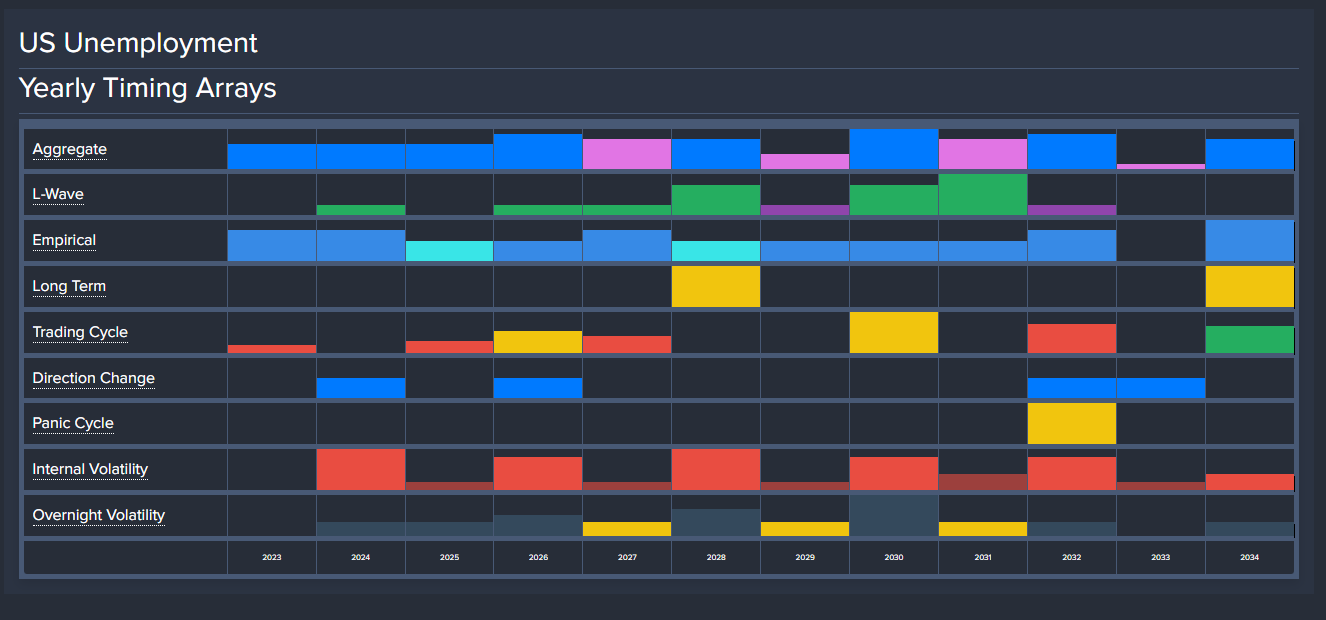
The Federal Open Market Committee voted to lower rates by 25 bps at the September meeting, citing “that downside risks to employment have risen.” I reported in December 2024 that the computer had forecast a decline in employment during the incoming Trump Administration.

Based on the most recent data, the unemployment rate stands at 4.1%, while the measure of discouraged and underemployed workers remains steady at 7.7%. Per usual, the Bureau of Labor Statistics revised its calculations for previous months. August’s growth whittled down to 78,000, and September’s calculation came in at 223,000, marking a total decline of 112,000 reported jobs in those two months.

Unemployment began to rise during the Biden Administration. In fact, not a single job in the private sector was created during the Biden Administration. People blame Trump’s deportation and DOGE efforts for a declining workforce, but that is certainly not the problem. Data indicates that citizens are beginning to rapidly fill roles once taken by migrants. Tariffs are not the problem either, as companies are not hiring for the short term.

Unemployment Y 8 2 24

Workforce softness often leads to lower rates as the Fed mistakenly believes that cheaper borrowing costs will ignite business investment, consumer spending, and strengthen businesses to the point that they need additional employees. Borrowing costs are not the reason why companies are not hiring. CONFIDENCE is the problem, as businesses do not foresee expansion in the near-term, as consumers are grappling with massive debt and an increased cost of living.

The number of unemployed Americans now outnumbers available job openings. Data from July show 7.24 million unemployed Americans compared to 7.18 million job openings, marking the first time that the unemployed have outnumbered the number of available jobs since April 2021. Companies are outsourcing work to places like India or places where humans work with automated AI. Rising wages and regulations, topped with inflation and ever-rising taxes, have created an unfavorable business environment.

Companies are not looking to expand when they are working to stay afloat. Businesses are not eager to take on additional debt, albeit at a lower rate, if they do not see a decent ROI in the future.

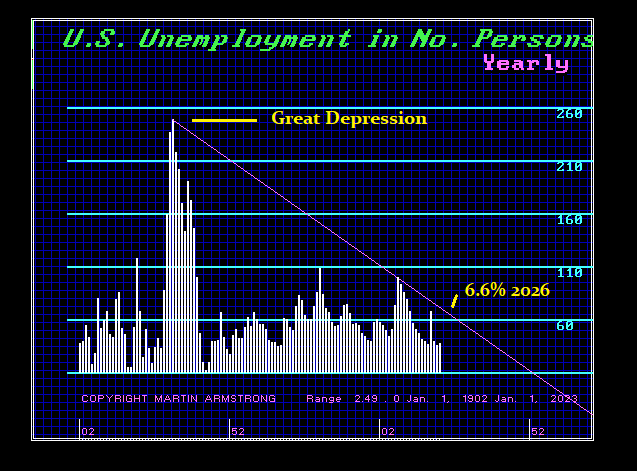
We have a Directional Change in 2026, which is an important near-term turning point. Look forward, and we see 2032 as a Panic Cycle with Directional Changes. The 2029/2030 period looks to be dominated by turmoil. Based on the model, unemployment will spike in the next year to nearly 7%. We are nowhere near Great Depression levels, but there will be a notable uptick in unemployment, coinciding with Panic Cycles globally in nearly every market.

French Pensioners Earn More than Working Adults


Posted originally on Sep 18, 2025 by Martin Armstrong |  

Pension Crisis

The average French pensioner receives a larger payout than working-aged adults. France has one of the highest replacement rate packages of any OECD nation at around 74% of average earnings. The French government spends an astounding 14% of GDP on the unsustainable pension system.

The average pension in France is around €1,626 gross per month, and pensioners earn around 2% more than the working adults propping up those pensions. The average American pensioner earns about a sixth less than working adults, UK retirees earn about a fifth less, while Australians earn around a third less than their working counterparts, according to Fortune. The amount demanded by retirees has increased proportionally over recent years, as have taxes on the working public, who now pay 8.55% of their income into the pension system.

Widespread pension reform protests took place in 2023 when we saw protesters attempt to burn down the BlackRock office in Paris after the retirement age was raised from 62 to 64. “The meaning of this action is quite simple. We went to the headquarters of BlackRock to tell them: the money of workers, for our pensions, they are taking it,” a protestor told a CNN affiliate. The protest was organized and the message was clear. The Parisians are not allowing government mismanagement to change their retirement plans. They have been promised an easy retirement and paid into the system. The government has been unable to fulfill its promises and the people perceive any reforms as an unfair betrayal.

The deficit for pensions is estimated to grow to €15 billion by 2035 and then to around €30 billion a couple of years later. The European Union requires member states to maintain a budget deficit below 3% but only 17 of the 27 members have met that target. French Economy Minister Eric Lombard is eager to lower the public deficit, aiming for 5.4% of GDP in 2025, followed by 3% in 2029.

France is facing a fiscal crisis of its own making. The government has consistently failed to address the core structural issues, instead relying on higher taxes and superficial spending cuts, which only serve to undermine economic growth. The public deficit, now surpassing 5.6% of GDP, is spiraling out of control, and the government’s projections to bring it under the EU’s arbitrary 3% threshold by 2029 are nothing more than wishful thinking. History has shown that governments never truly cut spending—they merely shift the burden through taxation, stifling private sector expansion.

Cover Pension Crisis

This is why politicians want war with Russia as a diversion. They desperately need an excuse in the face of a crumbling monetary system. No one is buying government debt. The solution is to rob the pension funds to eliminate the need to issue bonds to cover expenses. That move will only undermine confidence in the EU and result in further civil unrest. Negative interest rates have robbed savers of income since 2014, but the world refuses to move away from Keynesian economics.

France and the rest of the Western world have a growing aging population paired with a massive decline in birth rates. These nations attempted to open borders to compensate for the lack of workers, but instead, the public became saddled with more debt as they were forced to pay for the newcomers.

Nothing is more inflationary than war, and Macron is eager to send off French troops to Ukraine as he closely aligns with Brussels to spur on the next major war. Confidence will decline, capital will flee, and interest expenditures will continue to rise. France risks a debt crisis that will only accelerate the collapse of the EU’s financial system. As I’ve warned before, the trend is clear: governments refuse to reform until they are left with no choice. The question is not if, but when, France will face the reckoning of its fiscal mismanagement.