Reuters Published originally on Rumble on November 7, 2022
United Nations Secretary General Antonio Guterres told leaders gathered at the start of the COP27 summit in Egypt on Monday (November 7) they face a stark choice: work together now to cut emissions or condemn future generations to climate catastrophe.
Posted originally on the conservative tree house on November 6, 2022 | Sundance
Using the outline of the previous global famine to trace a modern history of desperation and the Live Aid movement rallying of the public to feed the world, Neil Oliver contrasts the current cultural Green Agenda 40 years later and the pending energy crisis.
If millions were at risk in the 1980’s, how many are likely at risk today? Yet the same people, institutions and systems that rallied to save the hungry are right now the same people, institutions and systems willing to inflict more harm as they chase the false climate change agenda. It is an interesting and brutally honest perspective.
Oliver then walks through the looming and predictable consequences as he follows the process to its logical conclusion. WATCH:
I will be discussing all of this and more at the World Economic Conference this weekend (virtual tickets are still available).
Commentary from Greg Hunter:
Legendary financial and geopolitical cycle analyst Martin Armstrong says, “The cheating in the midterm election next week is going to be so great that it is almost impossible to make a prediction. . . . In a fair midterm election, the Republicans would win the House and the Senate.”
So,m what does his Socrates program see for next week? Armstrong, says, “It’s going to be tight, and the Republicans have a shot at taking the House. Technically, they should take the House and the Senate. I am just not sure. The corruption is so bad, it’s crazy. Pennsylvania sent out hundreds of thousands of ballots to people who are not documented or even American. I’ve gotten emails from people in Canada, they are getting mail-in ballots. They mailed them to Canada. . . .Where this ends up, who knows? It’s just so corrupt, it is over the top. It doesn’t matter who wins. Nobody is going to accept this thing, and that is the problem.”
The cheating is going to be so in your face President Trump may not even be able to run for President two years from now. Armstrong contends, “We may not even have an election in 2024. It is not looking very good, and it’s probably because this election is not going to be accepted. When it is so over-the-top corrupt, what do you do for the next one? The United States will not exist after 2032. After 2028 and 2029, we are going to have to redesign a government from scratch. America is being destroyed. Republics always end in absolute corruption. We just saw the same thing happen in Brazil. They staged a major effort to take Bolsonaro out. . . . This is a worldwide effort. They had to get rid of Trump. The other one who stood in their way is Bolsonaro. Then there is Putin (Russia) and Xi Jinping (China). I think you are going to have historians look back at this 50 years from now, and they will call this period ‘The Climate Change Wars’. . . .They are trying to take down as much oil energy capacity as possible.”
Armstrong is still seeing very strong signals on domestic violence everywhere. Armstrong explains, “Our computer is showing it’s going to be a rocket launch for volatility and civil unrest next year.”
Armstrong also contends there will be a major loss of confidence in government around the world. That means gold will start having big demand from big money. Armstrong also predicts, “The whole monetary system as we know it is collapsing. That was what the bond crisis in the UK was about.”
There is much more in the 1-hour and 7-minute interview for 11.5.22.
Posted originally on the conservative tree house on November 4, 2022 | Sundance
Earlier today Joe Biden said he is confident in the midterm election next week because the American voters love the high inflation economic policies he has initiated.
BIDEN: “And I find that — that the thing that gives me the most confidence is the fact that the policies we’ve initiated, people care about. Now, they want more. They write to me, but I don’t know anybody who’s really opposed to us”…
Posted originally on the conservative tree house on November 4, 2022 | Sundance
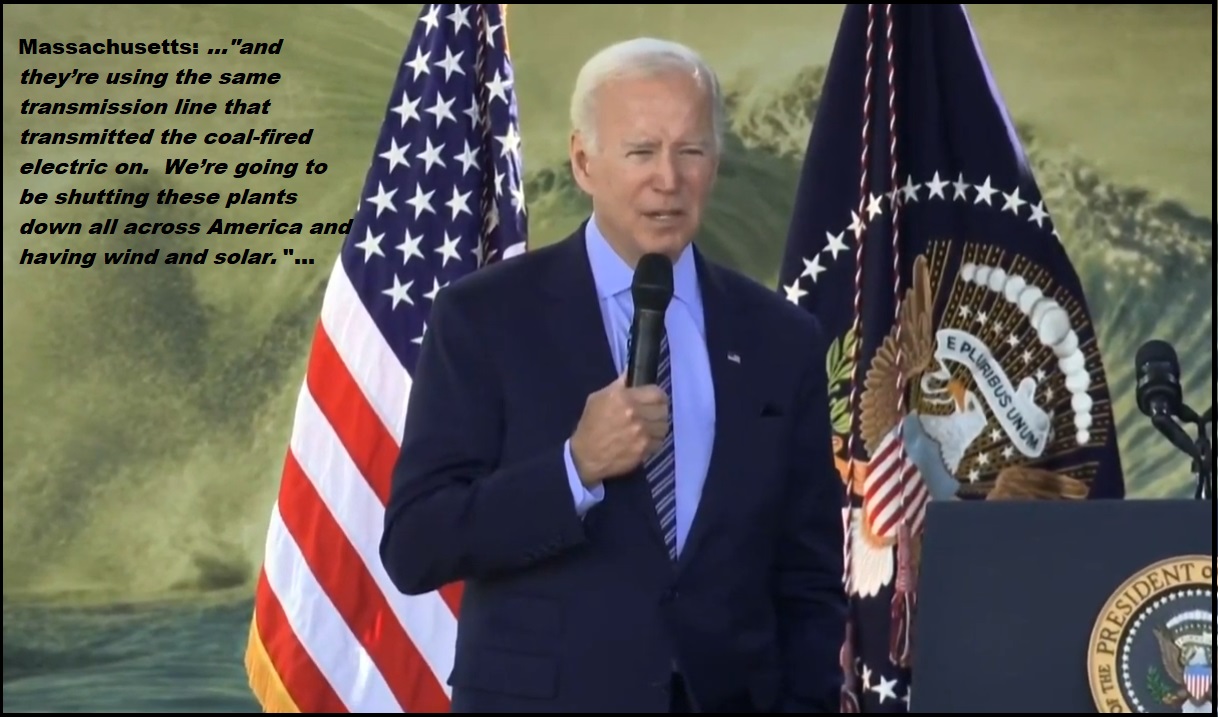
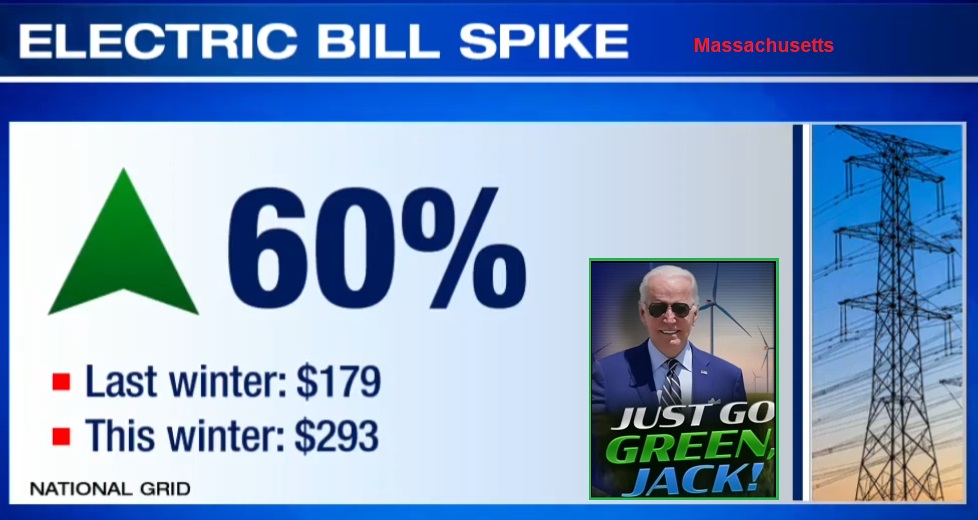
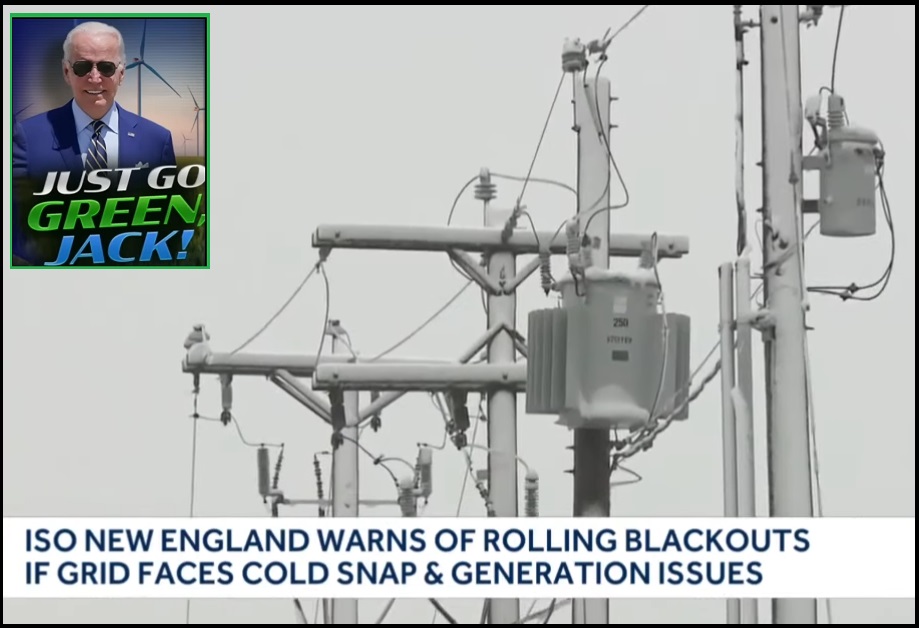
During a speech today, Joe Biden bragged about the example of his visit to a Massachusetts coal-fired plant that was forced to close due to regulation. However, what Biden didn’t mention was the energy provider telling customers to expect a 64% increase in electricity rates effective November 1st.
BIDEN: …”I was just — and so we can accommodate that transition. I was in Massachusetts about a month ago on the site of the largest old coal plant in America. Guess what? It cost them too much money. They can’t count. No one is building new coal plants because they can’t rely on it, even if they have all the coal guaranteed for the rest of their existence of the plant. So it’s going to become a wind generation.
And all they’re doing is — it’s going to save them a hell of a lot of money, and they’re using the same transmission line that transmitted the coal-fired electric on. We’re going to be shutting these plants down all across America and having wind and solar.”… (link)
Massachusetts – […] National Grid said the monthly bill of a typical residential customer using 600 kilowatt-hours of electricity will increase from $179 last winter to about $293 this winter, an increase of about 64%. National Grid said the delivery portion of electric bills will basically remain flat.
“National Grid buys electricity on behalf of its customers from the wholesale power market through a regulatory approved process established 20 years ago. That process has served customers well over the years and provides flexibility for unforeseen events, like limited supplier response to solicitations. But things have fundamentally changed,” Helen Burt, the company’s chief customer officer, said in a statement. “Today, under a sustained, high market price environment, it is challenging to maintain affordable prices. Given that, we think it’s a good time to work with our regulators and other stakeholders to review the process and electricity supply dynamics in the region, with an eye toward reducing price volatility and maintaining a secure, reliable and resilient energy system for the future.”
The company also announced that its natural gas rates are expected to rise on Nov. 1. They said they have a pending proposal with the state Department of Public Utilities that would result in the monthly bill for an average Boston Gas residential heating customer using 115 therms per month of $278, an increase of $50, or 22%, compared to last winter’s rates.
Eversource did announce Wednesday that it has submitted a proposal to the Department of Public Utilities seeking to raise its natural gas rates. They said their average residential customer using 126 therms of gas a month would see an increase of about 38%, or $86 on their natural gas bill over last winter. Those rate increases would take effect Nov. 1. (read m0re)
Oregon is a beautiful picturesque state. Mountains, waterfalls, and beautiful beaches – Oregon was once a desirable place to live. Portland was a promising metropolitan area before politicians completely destroyed the city with light-on-crime policies.
The Portland Business Journal reported that high-earning residents relocated to areas like Deschutes County, Arizona, and Texas. As in all societies, the highest earners who have the ability to relocate are the first to flee crumbling cities. Multnomah County saw a decline of 2,000 taxpayers between 2019 and 2020, but more have likely fled.
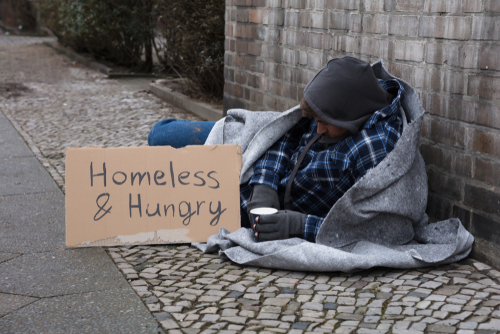
As of June, the average rent in Portland was $1,700, but many will tell you that estimate is low. This is not why homelessness has spiked. Over the past two years alone, the homeless population increased by 25%!Homeless camps have moved into the suburbs as people simply have nowhere to go. The city has attempted to authorize homeless encampment sites in certain areas, but there is not enough room. Portland Mayor Ted Wheeler (D) has done nothing to address the mental health and drug abuse crises at the root of the problem. This is an extremely sad situation, as no one should live in this manner.
The pandemic added to the crisis, but Portland declared a state of emergency back in 2015 due to the drastic number of unhoused people. Oregon legalized hard drugs in February 2021. People may legally carry heroin, cocaine, methadone, oxycodone, and even methamphetamine for personal use. Most users will only face a $100 fine. Drug overdoses rose by 41% in 2020 from the year prior.
As we have seen in many Democrat-run cities, theft is basically legal. The Organized Retail Crime Association of Oregon (ORCAOR) conducted a poll that found 95% of businesses are unhappy with the relaxed crime laws, and 80% admitted theft had risen significantly. “We’ve seen an increase in assaults, in drug use within the stores, threats, individuals threatening with weapons,” said Jeremy Girard, the president of ORCAOR, who conducted the survey in late spring. Around 80% said there was not an adequate police response, but that is because they voted to defund the police and urged them to turn a blind eye to crime.
Businesses are closing, and people are fleeing the city. The Oregon Mayors Association wants to spend $123.5 million annually to prolong the problem rather than address the causes. Another example of poor policies ruining a blue city and asking taxpayers for more funding to throw money at the problem.
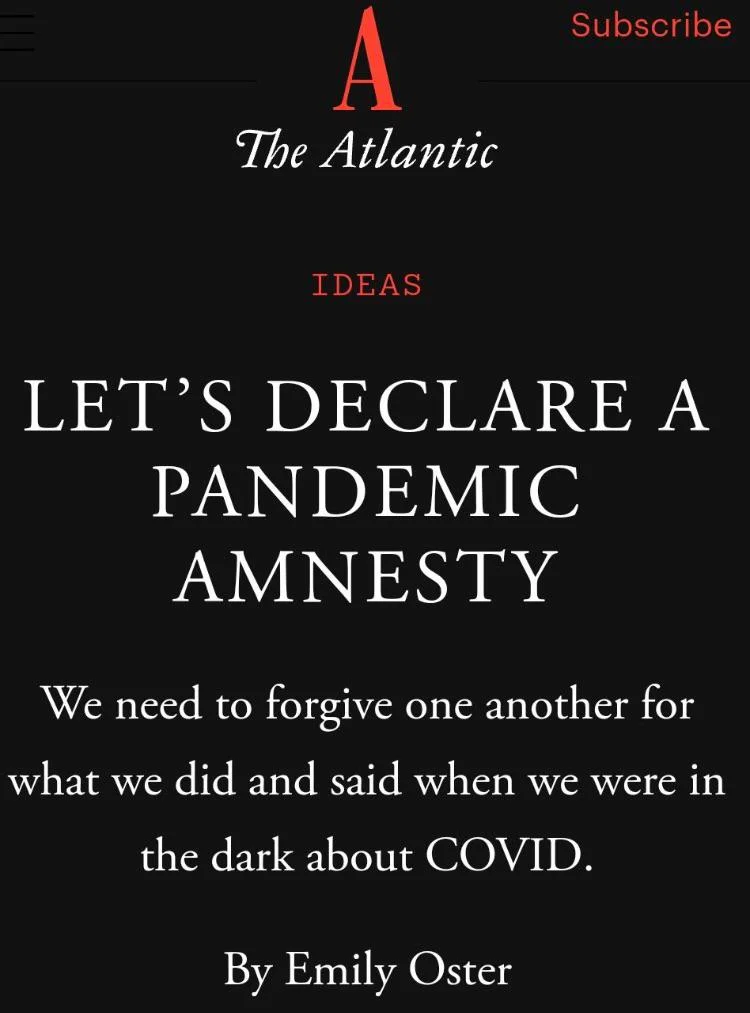
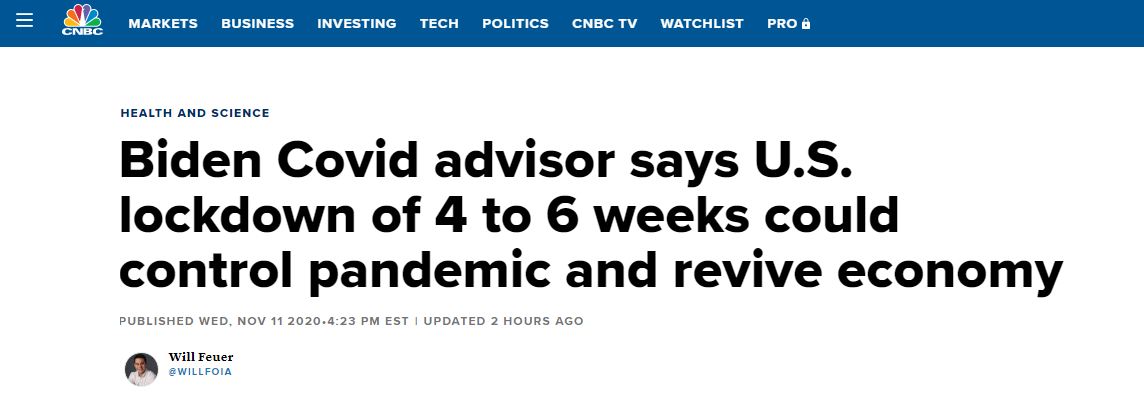
The Atlantic wrote a piece about declaring pandemic amnesty. “We need to forgive one another for what we did and said when we were in the dark about COVID,” Emily Oster wrote. I will not forgive what was done and the permanent damage the COVID zealots caused to the global economy. This was not a simple misunderstanding – it was a deliberate plot to crush the economy and hand all power over to governments.
This goes for the right and left, although the right finally saw that what they were doing was wrong. Trump failed us by implementing Operation Warpspeed and distributing mass vaccines that were not properly tested. Big Pharma was granted full immunity because they knew the vaccines could present issues down the line. America had a strong economy before COVID lockdowns caused mass layoffs, supply shortages, and simply halted life as we once knew it.
Other countries had more severe restrictions, and many felt the need to flee their home country to avoid tyranny. I do not forgive the politicians who forced the masses to take a vaccine against their will simply to participate in society. The unvaccinated were demonized by the politicians who led the masses to believe that COVID was “a pandemic of the unvaccinated,” when that was a blatant lie. Those same politicians frequently broke their own rules because they knew they were baseless. I do not forgive the health agencies who promoted a false agenda and changed definitions and rules at whim. They forced us to cover our faces to simply walk outside despite knowing that masks did not work. I do not forgive the media who fueled the hysteria and banished anyone who questioned “the science.” The fear that spread across the globe was unwarranted.
There should be a trial to discover what actually happened in 2020. The virus’ origins remain a mystery, although it is widely accepted that it did not come about naturally. Children fell behind in school, small businesses closed forever, countless people lost their livelihoods, and mental health issues became more apparent. People were forced into quarantine camps like prisoners in some countries, while others diminished people to their QR codes that restricted their freedom of movement. People DIED.
Despite our current knowledge, governments have refused to let go of the emergency powers granted to them under COVID. How could they ask for forgiveness when this madness is ongoing?
The National Retail Federation estimated that 172 million Americans spent $10.6 billion on Halloween this year, or $100 per person. Around $1.2 billion went into costumes for children, not to be outdone by adults spending $1.7 billion on their own costumes. Around $710 million was spent on pet costumes as well. Around 67% of consumers handed out candy, 51% decorated, 47% wore a costume, 44% carved pumpkins, and 26% participated in a Halloween party. Halloween spending is back to pre-pandemic levels, but inflation is to blame.
Food, candy, pumpkins, décor – all of these items cost significantly more in 2022, but Americans are still willing to spend. Candy alone is up 13.1% from last year, surpassing food inflation at 11.2%.
This is foreshadowing for the Christmas season, which historically is the most lucrative time for retailers and a big boost for overall GDP. Around 25% of all retail spending occurs in November and December each year, but many have already begun holiday shopping as stores are forced to offer more appealing sales. Retailers who fail to profit in the remaining months of 2022 will be forced to downgrade their forecasts and re-evaluate their businesses in the current economy. Layoffs and store closures are likely, and many retailers have already halted hiring. Americans do not have more disposable income to spend on the holidays, but those who can are willing to pay inflated prices to participate in age-old traditions.
Posted originally on the conservative tree house on October 28, 2022 | Sundance
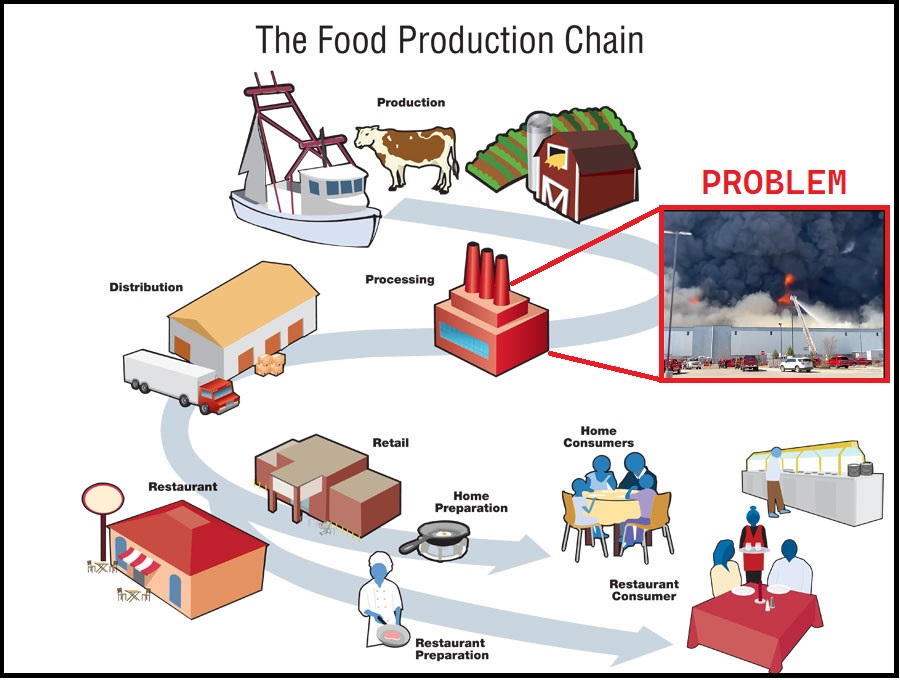
CTH has covered the origin of food inflation since we first raised the alarms in the spring of 2020. A confluence of events starting with the fracturing of the food supply chain (shutting down restaurants, hospitality venues, schools, cafeterias, etc), created the initial major problem. Consumer Packaged Goods (CPG) sold at retail stores could not keep up with demand after 50% of the food supply system was shut down.
Within the U.S. retail food supply chain (350+ million people), manufacturing CPG products relies on a system of staying one to two harvest cycles ahead of demand. However, when restaurants and fresh food venues were closed, very quickly frozen, bulk stored and siloed U.S. food storage systems, the storage needed for CPG products, were emptied.
Long after the time when all food distribution was reopened, the shortages of CPG products continued. You saw the result with empty shelves at the supermarket. It takes a long time (years) for those inventories to refill.
We warned of this in 2020 and then followed the predictable outcome in 2021 and 2022.
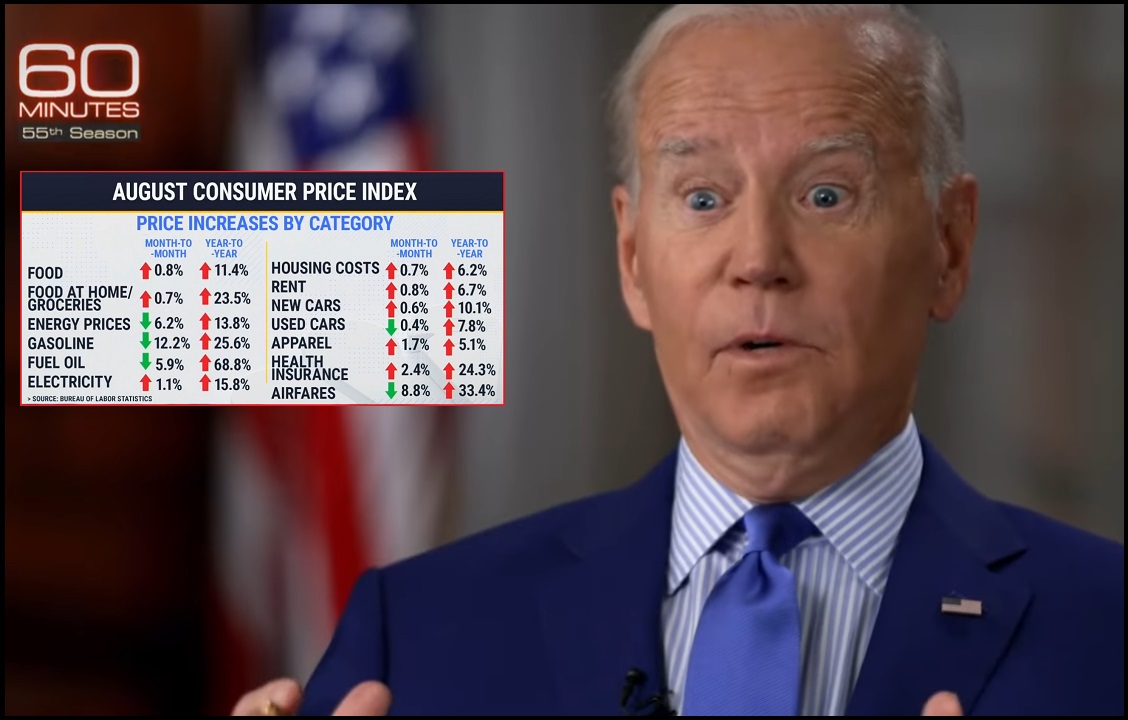
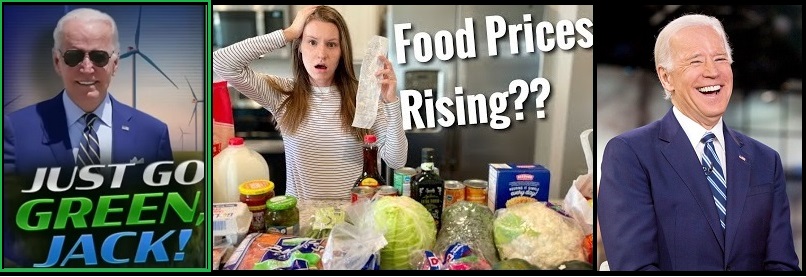
When Joe Biden then shut down the U.S. energy production system in early 2021, the massive increases in energy costs -and the shortages of natural gas- became fuel on the inflationary fire of CPG goods. Again, in October 2021 CTH noted that retail prices were going to rise quickly, and they did.
Throughout 2022 food prices have risen dramatically as the food distribution and processing system was now under pressure from all sides. The shortage of inputs (to refill food storage and warehousing needs) combined with the much higher costs to generate those inputs -the direct result of the exploding energy costs- created massive inflation pressure. The pricing result we are seeing now (third wave of food inflation) is exactly what we have stated, discussed and predicted for more than two years.
While all food costs are skyrocketing, the prices for manufactured or processed food are much higher than the price increases for fresh food.
While both fresh and CPG foods have risen in price due to energy costs, the processing of food uses more energy… and that energy comes at a higher price…. so the CPG inflation is much higher than the fresh half of the supply chain.
In essence, the CPG goods carry higher farming costs plus much higher manufacturing costs.
For those who say, ‘fresh food is healthier‘, you are correct. However, let me also remind you that we cannot feed 350 million people with fresh food alone – and simultaneously export billions of tons of bulk food products like grain, corn and soybeans.
The U.S. food distribution system needs processed food for retail restaurants, cafeteria, lunchrooms and grocery stores. [Ex. Italian restaurants will not start making pasta sauce from tomatoes, and if they did you likely couldn’t afford to eat there.]
So here comes Joe Biden, without a clue in the world of what I just described above. And his food inflation solution?…. well, you just have to hear it yourself to see it. WATCH (01:35, prompted):
.
[Wall Street Journal] – […] The personal saving rate, a measure of how much money people have left over after spending and taxes, fell to 3.1% from 3.4% in August. It is down from 7.9% a year ago as consumers tap their rainy-day funds.
U.S. credit-card balances hit $916 billion in September, returning to prepandemic levels, credit-reporting firm Equifax Inc. said. Balances are up 9% from January and about 23% higher than their pandemic low in April 2021.
A closely watched reading of underlying inflationary pressures, meanwhile, picked up last month and remained near a four-decade high. When stripped of volatile food and energy prices, the PCE price index strengthened to a 5.1% year-over-year increase—the strongest pace since March.
Friday’s report comes on the heels of other data showing consumers’ momentum weakened in the summer months. Consumer spending accounts for roughly two-thirds of total U.S. economic output. (read more)
I have created this site to help people have fun in the kitchen. I write about enjoying life both in and out of my kitchen. Life is short! Make the most of it and enjoy!
This is a library of News Events not reported by the Main Stream Media documenting & connecting the dots on How the Obama Marxist Liberal agenda is destroying America






 Centinel2012