Saudi Arabia to Fund Ukraine?


Posted originally on Jun 14, 2024 By Martin Armstrong 

Never ashamed to beg, world traveler Zelensky landed in Jeddah to meet Saudi de facto ruler Crown Prince Mohammed bin Salman. Saudi Arabia has become the world’s leading oil exporter. Saudi Arabia has positioned itself relatively neutral, working with both Russia and Ukraine in recent years. Saudia Arabia has not stated whether it would join 90 other countries in Switzerland for upcoming peace negotiations, but Zelensky’s impromptu visit is raising eyebrows.

“In Saudi Arabia, I had a meaningful and energetic meeting with His Royal Highness Crown Prince Mohammed bin Salman. We discussed bilateral relations between Ukraine and Saudi Arabia, noting the good progress on previous agreements and our teams’ effective cooperation. We will keep working together,” the Ukrainian president stated, later adding, “”Ukraine is grateful to Saudi Arabia for its support. We value His Royal Highness’ willingness to help restore peace sooner.”

Zelensky has been meeting with world leaders in recent weeks ahead of the summit in Switzerland. Saudi Arabia’s participation could be key in negotiations on behalf of Ukraine. Saudi Arabia invited 40 world leaders, including China, to a summit last August to discuss the war in Ukraine. Saudi has an opportunity to position itself as a stronghold and world leader in its unique “multi-polar” diplomatic approach to the war.

Saudi Arabia has benefitted from the war. It imports massive volumes of Russian oil at a discount and has been able to maintain crude exports amid OPEC+ mandated cuts. Saudia Arabia imported 2.86 million tons of oil from Russia in the first half of 2023 alone, importing only 1.63 millions tons for the entirety of 2022 in comparison. The nation has imported around 193,000 barrels per day from Russia in June, marking a 10x increase from last June. Saudia Arabia joined the BRICS partnership last January and its trade with Russia far surpasses its trade with Ukraine.

It would be in Saudi Arabia’s best interest for this war to continue. Saudia Arabia surpassed Russia for oil exports to China in 2023. The West is willing to buy marked up oil from Saudi Arabia simply to say they did not purchase it directly from Russia. The Saudis are focusing on domestic interests, similar to India, and are willing to arm and trade with both sides.

The Coming Middle East War


Armstrong Economics Blog/Middle East Re-Posted Oct 16, 2023 by Martin Armstrong

QUESTION: Why does Biden never discuss Iran, and the Democrats keep handing money back to Iran to fund their terror against Israelis and Sunnis? Are they trying to creat World War III?

FG

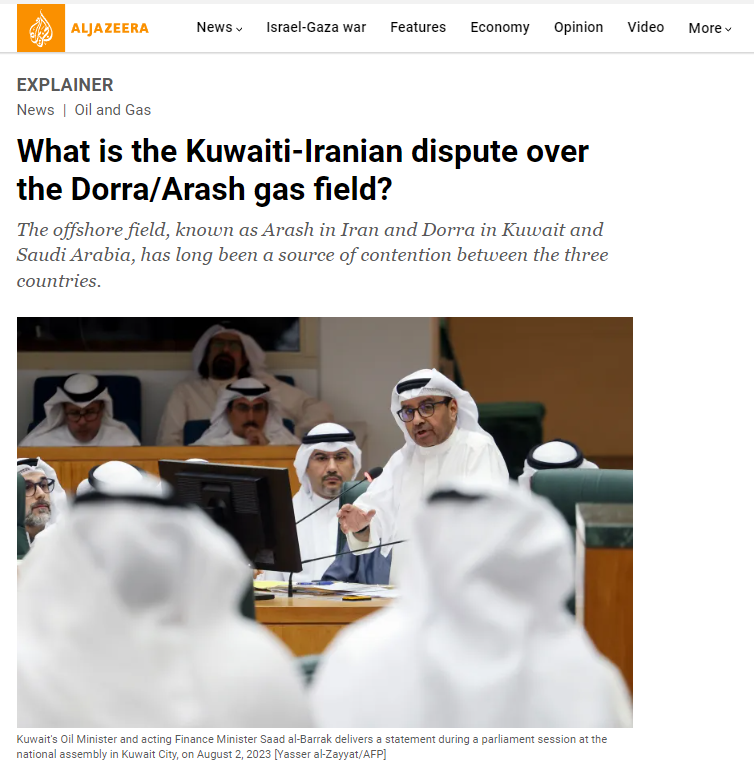
ANSWER: Look, there is much more going on behind the curtain than mainstream media reports. On August 3, 2023, a feud with Iran against Kuwait and Saudi Arabia is in play because they announced they had “exclusive ownership” of the natural resources in the disputed Durra offshore gas field. Iran said it will pursue its rights over the Durra-Arash gas field. Back in July, the dispute between Kuwait and Iran began to escalate as Kuwait condemned purported Iranian drilling plans for the field.

Kuwait and Iran once had longstanding historical ties spanning hundreds of years before oil arrived. The religious Iranian Revolution of 1979 and the Iran-Iraq War in the 1980s broke the tight bond between Iran and Kuwait. There was speculation that some religious groups supported Iran after the revolution. Shia Islam still constitutes about 36.5% of the Kuwaiti citizen population. There is behind-the-scene support for Iran, which some say was the real reason for Husein’s invasion of Kuwait on August 2, 1990.

Nobody wants to talk too much about that since the conquest of Iraq strengthened Iran and unleashed religious terrorism. Blair apologized but still put out the nonsense that had Husein remained in power, he would have threatened world peace when, in fact, he was the only major threat to Iran. This has long left a bad taste in the mouths of many as to why the West has removed Iran’s threats; some believe it has been the desire to create a Middle East War. Hamas knows it is dividing the world and is praying for massive civilian casualties in the wake of an Israeli Response. They are already dividing Northern Africa as some governments have refrained from condemning Hamas’ attacks on civilians.

In urging the evacuation, Israel’s military is trying to minimize Hamas exploiting the death of civilians in Gaza. The IDF said it planned to target underground Hamas hideouts around Gaza City—areas that civilians cannot access. Meanwhile, the Hamas terrorist group has vowed to fight to the last drop of blood and told residents to stay as they try to use civilians for propaganda and shields.

As expected, Lebanese Hezbollah fighters attacked Israeli army posts and a northern border on Sunday. Israel retaliated with strikes in Lebanon. Border clashes are now escalating. Hezbollah intends to open a second front with Israel. We should expect this all to escalate by the first quarter of 2025 on a significant scale.

These people do not understand that such acts by Hamas create the image that all Arabs are the same.  These attacks NEVER accomplish concessions. All they do is promote a vicious cycle of violence with no end. This is why so many Palestinians do not support Hamas, for they see this as making their lives worse – not better. To live in fear of violence is not beneficial to either side. The ONLY solution is negotiation. The same applies in Ukraine; there, too, we have Zelensky refusing to negotiate. Up to 10 million Ukrainians have fled because of Zelensky; at the end of the day, he is destroying Ukraine, and no victory is ever possible. This is the same crisis we have with groups like Hamas and Hezbollah. What do they honestly expect? Do all Jews leave the Middle East?

Oil Prices Surge After Saudi Arabia and Russia Announce Extended Oil Production Cuts Through End of 2023


Posted originally on the CTH on September 6, 2023 | Sundance 

Oil prices shot passed $90/bbl today after Saudi Arabia and then Russia announced a continuance of production cuts through the end of this year.

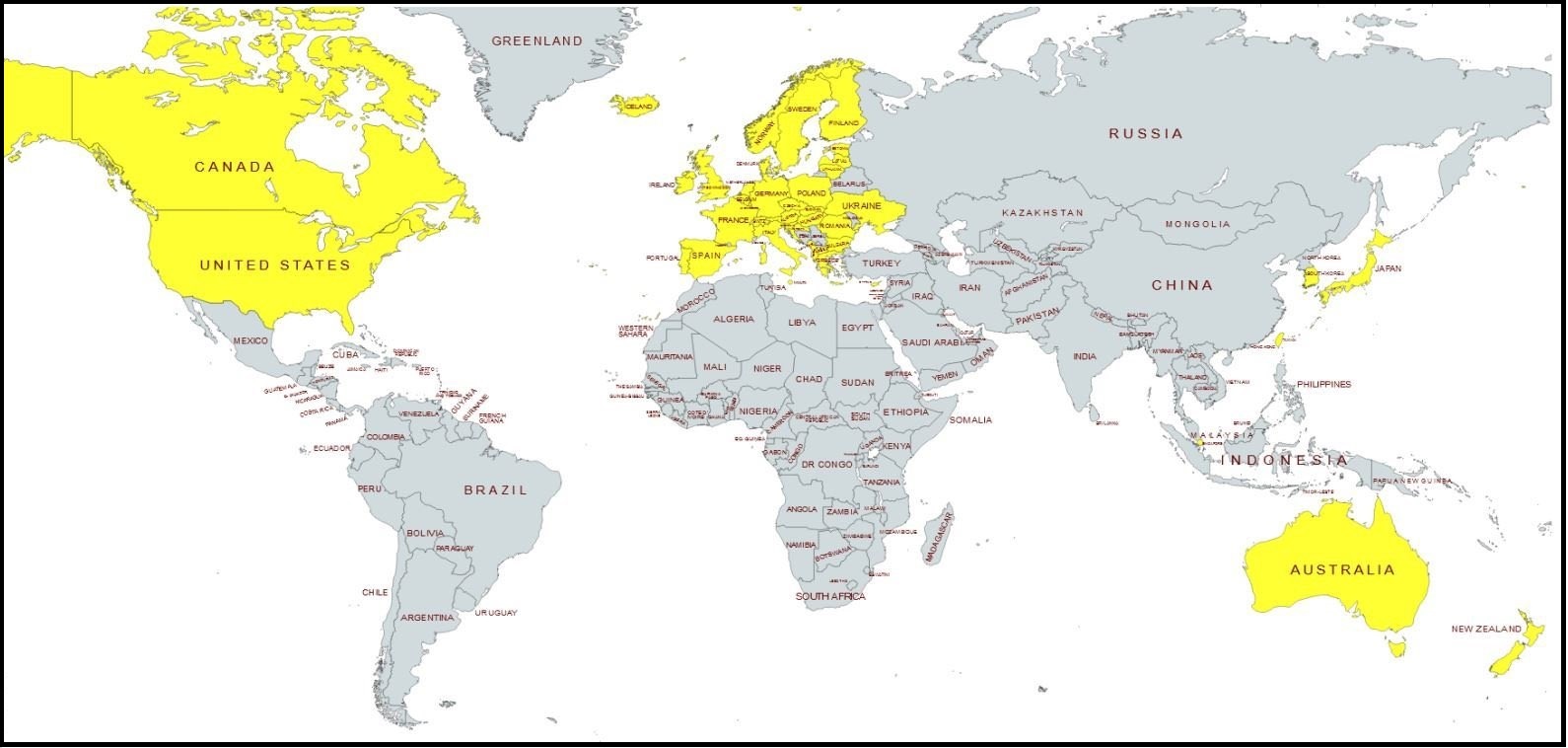
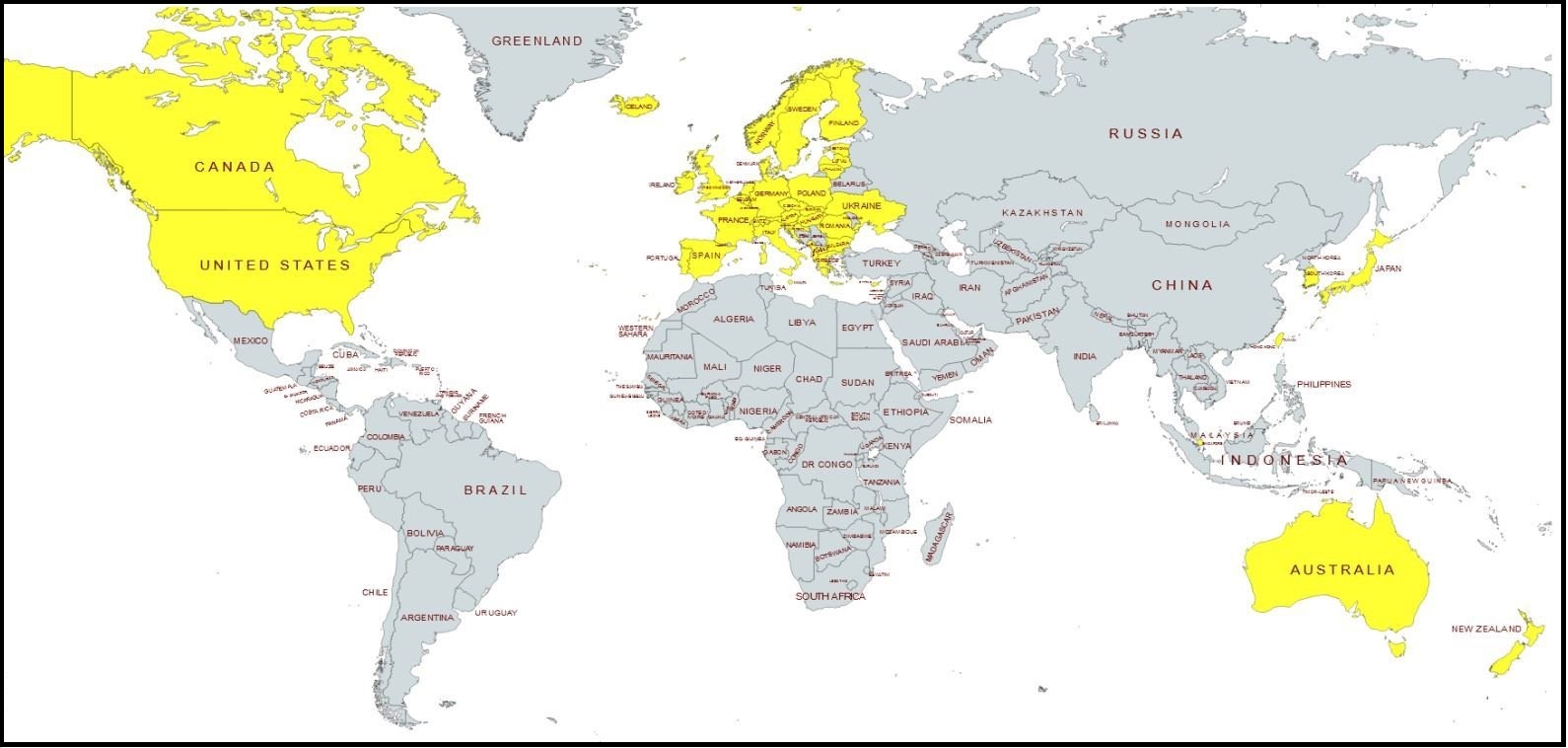
The BRICS alliance is going to deliver some pain to the Western alliance.  Those people living in the yellow zone, with leadership chasing climate change and Green New Deal policies, are going to see more durable inflation as the cost of oil is attached to just about every product and service.

Gasoline, energy products, petroleum products, home heating oil, groceries, everything will cost more as the geopolitical battle continues; but we are supposed to pretend we are unaware of the global political dynamic.

(Zero Hedge) – […] Just after 9am ET, Saudi Arabia said it would extend the voluntary cut of 1 million b/d of for another 3 months, from October until the end of December, well beyond the expectation of just 1 more month. Saudi press agency SPA notes that the voluntary cut decision will be reviewed monthly to consider deepening the cut or increasing production.

The extension of cuts is meant to reinforce the precautionary efforts made by OPEC countries with the aim of supporting the stability of the oil market. The Saudi announcement came a shock to market as 20 of 25 traders and analysts surveyed by Bloomberg last week had predicted the additional cutback would be continued for just one additional month.

And then, literally seconds after the Saudi decision, Russian deputy PM Novak said Russia would also extend its reduction of oil exports until the end of the year, reducing its oil output by 300kb/d in voluntary cuts until December 2023.

Similar to the Saudis, Russia said that the decision to reduce oil production to be reviewed monthly to consider possibility of deepening reduction or increasing production depending on situation on the world market. (read more)

“The U.S. Strategic Petroleum Reserve is empty, my friend”… 

(Yahoo) – […] Higher oil prices are bad news for the world’s central banks, which have been trying to tame high inflation since last year. Energy is a key input for economic activities, so higher oil prices generally lead to inflation.

But Saudi Arabia and Russia’s keeping their oil supply cuts for longer means “they have no interest in what central banks are worried about,” Naeem Aslam, the chief investment officer of Zaye Capital Markets, wrote in a Tuesday note seen by Insider. (read more

.

Iran and Saudi Arabia – Mutual Friends


Armstrong Economics Blog/World Trade Re-Posted Jun 7, 2023 by Martin Armstrong

Iran and Saudi Arabia are now mutual friends through China. The two countries had been sworn enemies since the beginning of time, representing conflicting Shiite and Sunni Muslim groups that have been battling since their religion was founded. They were murdering one another through a proxy war in Yemen that has left over 150,000 dead. Then the unthinkable happened – the two nations came together at the request of China and made amends.

Chinese President Xi Jinping made them an offer they couldn’t refuse – the potential to form a strong alliance through trade without Western influence. Saudi Arabia issued a shocking press release in March, given the deep hatred it had for Iran. Saudi Arabia stated it was keen on “developing good neighborly relations…in light of their brotherly ties.”

Now, Iran announced it is reopening its embassy in Saudi Arabia as the two continue to put their differences aside for the prospect of economic prosperity. The embassy closed abruptly in 2016 after Saudi Arabia executed a Shiite cleric, leading to mass protests outside the embassy in Tehran. Riyadh and Tehran have not had diplomatic relations since.

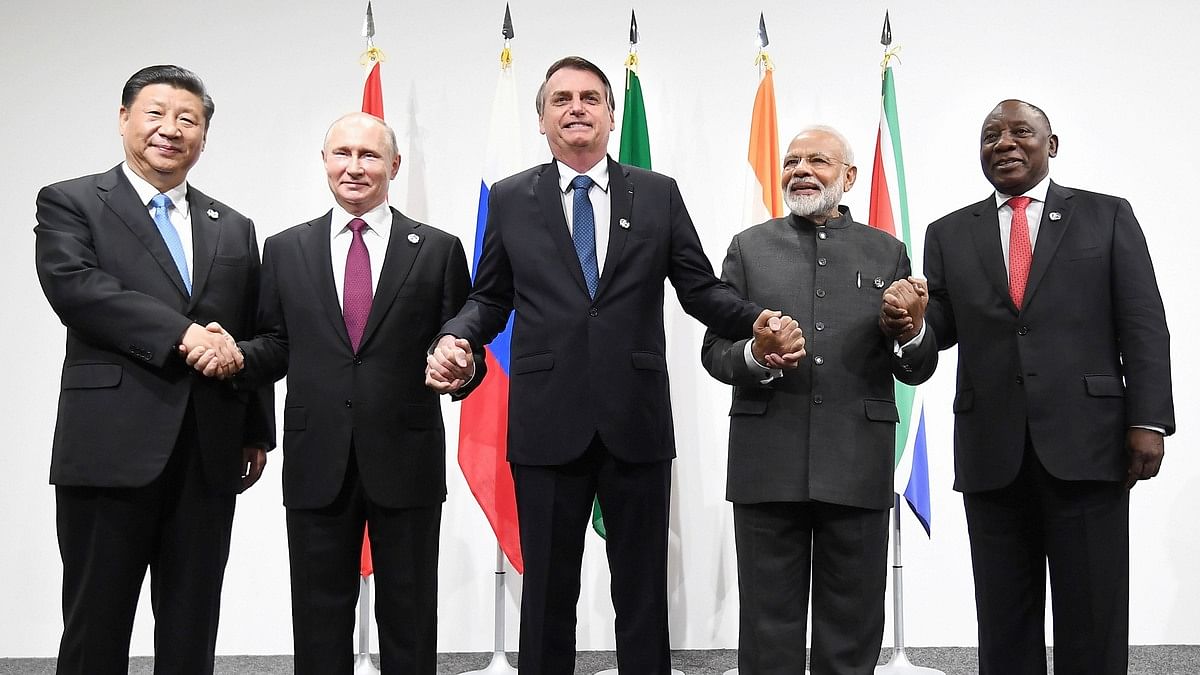
Iran and Saudi Arabia would like to join the BRICS alliance between Brazil, Russia, India, China, and South Africa. If the two nations join, all major energy exporters will be within this alliance. BRICS currently contains 42% of the global population and over a quarter of the global economy. There would be absolutely no need for Western interference, and the threat of sanctions would hold little meaning. Saudi Arabia has already begun settling some oil transactions in the yuan instead of the dollar. Iran has been aggressively trading with the bloc; non-oil trade between BRICS and Iran reached $38.43 billion in the 2022-2023 fiscal year, marking a 14% year-on-year increase. China is Iran’s top trading partner in the BRICs alliance, with $30.32 billion of the aforementioned funds going directly to Beijing. An alliance could mean economic domination.

China seems to have done the unthinkable by brokering a peace treaty between the two nations. Opening an embassy signals that the countries are now ready to begin diplomatic relations once again. The BRICS alliance is growing stronger by the day, and there are rumors of the UAE, Egypt, Algeria, Bahrain, and even Turkey requesting to join. As our models have been warning, China is posturing itself to claim the throne of the financial capital of the world by 2032.

Peace in the Middle East – China Brokers Saudi Arabia-Iran Peace Treaty


Armstrong Economics Blog/Politics Re-Posted Mar 27, 2023 by Martin Armstrong

China accomplished a once unthinkable feat — a peace treaty between Iran and Saudi Arabia. The two countries have been sworn enemies since the beginning of time, representing conflicting Shiite and Sunni Muslim groups that have been battling since their religion was founded. The two nations have been fighting a proxy war in Yemen that has led to over 150,000 deaths, which is another major story not covered by the mainstream media. This story has only received negative attention in the Western media because it is a major win for China who is now seen as the adult in the room on the international stage.

The press release issued by Saudi Arabia is astonishing, given the deep hatred it had for Iran. Saudi Arabia is now keen on “developing good neighborly relations…in light of their brotherly ties.”

“The three countries announce that an agreement has been reached between the Kingdom of Saudi Arabia and the Islamic Republic of Iran, that includes an agreement to resume diplomatic relations between them and re-open their embassies and missions within a period not exceeding two months, and the agreement includes their affirmation of the respect for the sovereignty of states and the non-interference in internal affairs of states. They also agreed that the ministers of foreign affairs of both countries shall meet to implement this, arrange for the return of their ambassadors, and discuss means of enhancing bilateral relations. They also agreed to implement the Security Cooperation Agreement.”

Rumors are swirling about what this peace treaty could entail. Saudi Arabia and Iran could join BRICs, the alliance between Brazil, Russia, India, and China. If the two nations join, all major energy exporters will be within this alliance. Half of the world’s population would be under this alliance as well. There would be absolutely no need for Western interference in this situation.

The dollar’s dominance would be at risk. The Saudis are already discussing settling oil transactions in the yuan instead of the dollar. This will seriously damage the dollar’s ability to remain the standard reserve currency. China’s rise to becoming the financial capital of the world is happening right before our eyes.

Huge – Iran and Saudi Arabia Agree to Resume Diplomatic and Trade Relations During Talks Negotiated by China


Posted originally on the CTH on March 10, 2023 | Sundance


This is huge in the geopolitical world.  China operated as a broker in the structurally unstable relationship between Iran and Saudi Arabia.

  • From the Iranian perspective – With a visibly weak U.S. president, and a strengthening Chinese Chairman Xi Jinping forming a close bond with Saudi Arabia, it makes sense for Iran to move toward diplomatic relations.
  • From the Saudi Arabia perspective – With a visibly weak U.S. president, the prior assurances from Washington DC diminish, trust is tenuous, and a stronger hedge-based relationship with Chairman Xi is formed.
  • From the Chinese perspective – With a visibly weak U.S. president, and a western alliance intended to destroy itself to fulfill the desires of the WEF climate change and cultural agenda, the opportunity to expand influence is teed up.

It will be intensely interesting to see how Israel positions itself w/ this new dynamic.

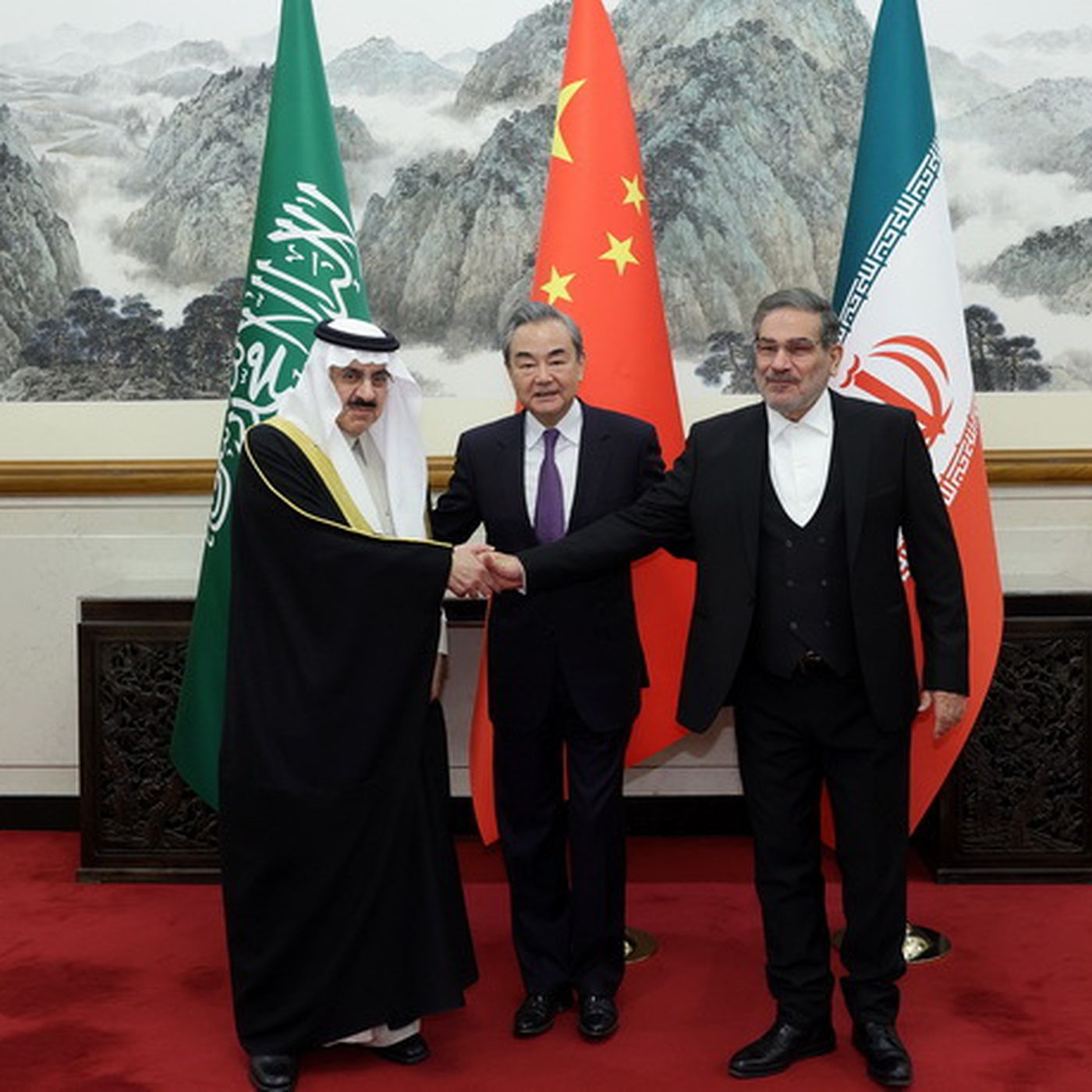
BEIRUT — Saudi Arabia and Iran announced an agreement in China on Friday to resume relations more than seven years after severing ties, a major breakthrough in a bitter rivalry that has long divided the Middle East.

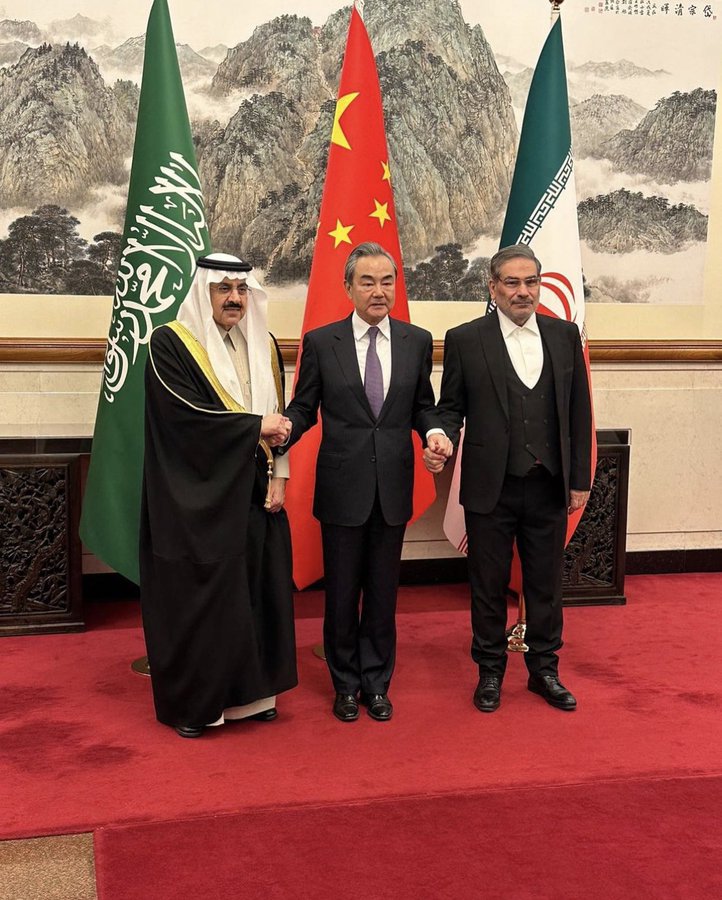
The agreement was a result of talks in Beijing that began Monday as part of an initiative by Chinese President Xi Jinping aimed at “developing good neighborly relations” between Iran and Saudi Arabia, the three countries said in a joint statement. The agreement, which was signed by top Iranian security official Ali Shamkhani and Saudi national security adviser Musaed bin Mohammed al-Aiban, said embassies would be reopened within two months.

Saudi Arabia cut diplomatic ties with Iran in 2016 after the Saudi Embassy in Tehran was attacked and burned by Iranian protesters, angered by the kingdom’s execution of prominent Shiite cleric Sheikh Nimr Baqr al-Nimr. The cleric had emerged as a leading figure in protests in Saudi Arabia’s Eastern Province, a Shiite-majority region in the Sunni-majority nation.

[…] On Friday, John Kirby, a spokesman for the National Security Council, said the United States welcomed the agreement but noted that Washington was not “directly involved.”

Kirby said it was too early to tell whether the deal would hold. “It really does remain to be seen whether the Iranians are going to honor their side,” he said. “This is not a regime that typically does honor its word. So we hope that they do. We’d like to see this war in Yemen end.”

Yemen has enjoyed a rare reprieve from fighting since April, when a truce sponsored by the United Nations went into effect. (more)

With the western alliance nations destroying their economies while simultaneously meddling around in European cultural and political affairs, the dynamic of the BRICS economic alliance also opens up within a Saudi-Iran peace process.  Economics is the oil that lubricates against geopolitical friction.

China is gaining influence, and Russia is gaining breathing room from WEF sanctions.

This will be very interesting to keep watching.

White House Swaps Arms Dealer Viktor Bout for WNBA Player Brittany Griner – MbS Was Intermediary


Posted originally on the CTH on December 8, 2022 | Sundance 

Brittany Griner (32) was held in Russian prison after a conviction for drug possession.  Viktor Bout (55) was held in American prison after a conviction for illegal arms sales, supporting terrorists and money laundering.  In a prisoner exchange that took place in the United Arab Emirates (UAE) at Abu Dhabi airport, WNBA player Brittany Griner and Russian dealer Viktor Bout walked past each other on the tarmac.

NOTE: Saudi Arabia Crown Prince Mohammed bin Salman (MbS) negotiated the deal.  Yesterday, in federal court the U.S. dropped a lawsuit against MbS for the Khoshoggi killing.  The case was dismissed.  The timing is transparent.

The Biden administration gets a popular transvestite hero of the LGBTQ+ community, while Vladimir Putin gets a Russian born global arms dealer nicknamed “the merchant of death.”  All things considered, the exchange priorities sound about right.

(Joe Biden) – “Moments ago, standing together with her wife, Cherelle, in the Oval Office, I spoke with Brittney Griner.  She’s safe.  She’s on a plane.  She’s on her way home.

After months of being unjustly detained in Russia, held under intolerable circumstances, Brittney will soon be back in the arms of her loved ones, and she should have been there all along.  This is a day we’ve worked toward for a long time.  We never stopped pushing for her release.

It took painstaking and intense negotiations, and I want to thank all the hardworking public servants across my administration who worked tirelessly to secure her release.” (read more)

Video Below.

.

(Reuters) – […]  Saudi Arabia and the UAE, both traditional U.S. allies, are members of the OPEC+ oil producers alliance that includes Russia and have resisted Western pressure to help isolate Moscow over its invasion of Ukraine.

Their mediation reflects efforts to show their ties with Russia are of benefit to Washington, which had accused Gulf oil producers of siding with Russia when OPEC+ agreed in October to cut oil output targets over U.S. objections. (more)

“And then I told him he had to stand on the tarmac and hit a three-point shot to save his johnson”… 

Davos in the Desert


Armstrong Economics Blog/World Trade Re-Posted Oct 27, 2022 by Martin Armstrong

Some of the biggest players have gathered in Riyadh, Saudi Arabia, for the annual Future Investment Initiative (FII). The conference is often referred to as “Davos in the Desert,” as they are competing with the World Economic Forum to be the largest economic conference of the year. Washington’s relationship with Saudi Arabia is at a standstill, but that is not preventing Wall Street’s chief names from attending.

“American companies will make their own decisions about their presence and where to invest, taking into account a range of factors including legal constraints, the business environment, and reputational concerns that can arise from public policy choices made by host countries,” said Karine Jean-Pierre, the White House press secretary.

Former Treasury Secretary Mnuchin and Trump’s son-in-law Jared Kushner, who both run private funds backed by the Saudis, were in attendance. JPMorgan’s Jamie Dimon and Goldman’s David Solomon spoke at the event along with Blackstone’s Stephen Schwarzman and investor Ray Dalio. FTX CEO Sam Bankman-Fried also spoke at the event. No one associated with the Biden Administration was in attendance as Washington is re-evaluating its relationship with Saudi Arabia.

Saudi Arabia’s economy is rapidly growing. The event is Prince Mohammed’s opportunity to show that the kingdom is ready to be seen as a financial powerhouse beyond its energy sector. The private sector is making it known that they are willing to invest in Saudi Arabia despite Washington’s reluctance.

South Africa Confirms Likelihood of Saudi Arabia Joining BRICS Economic Alliance


Posted originally on the conservative tree house on October 17, 2022 | Sundance

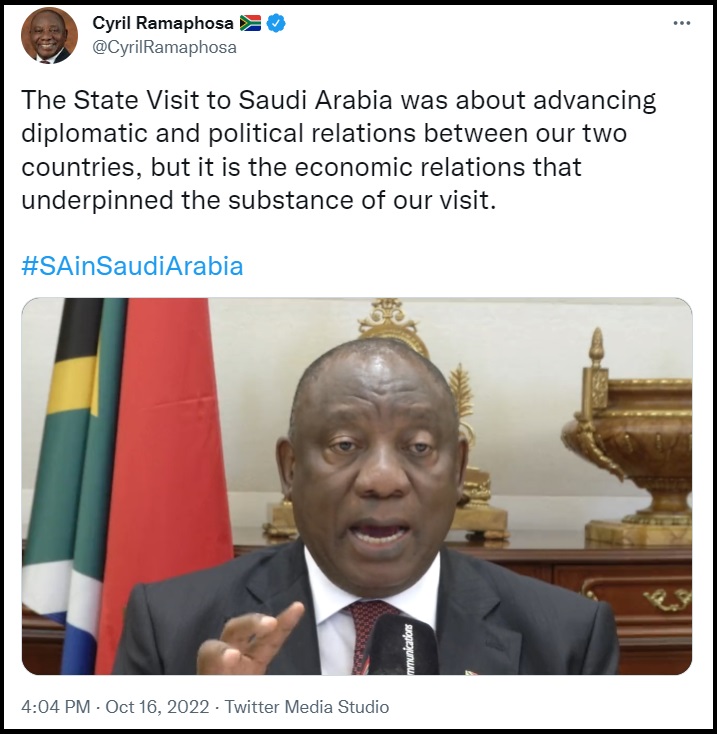
South African President Cyril Ramaphosa held a two-day summit with Saudi Arabia on mostly economic matters.

At the conclusion of the summit, he confirmed the intent of Saudi Arabia to join the BRICS economic coalition, which should not come as a surprise given the previous statements by Saudi leader and Crown Prince Mohamed Bin Salman (MbS).

(MSM) Ramaphosa confirms Saudi Arabia wants to join Brics family.  This was revealed by President Cyril Ramaphosa during his two-day state visit to the kingdom on Sunday.

“The Crown Prince (prime minister Mohammad bin Salman bin Abdulaziz al Saud) did express Saudi Arabia’s desire to be part of Brics and they are not the only country,” said Ramaphosa. He confirmed this on Sunday during an engagement with the media.

Brics held its first summit in 2009, with SA joining the following year. The bloc has generally been seen as an alternative to the dominance of the western economies.

“We did say that Brics having a summit next year under the chairship of South Africa in SA and the matter is going to be under consideration.

“A number of countries are making approaches to Brics members, and we have given them the same answer that it will be discussed by the Brics partners and thereafter a decision will be made.” (read more)

Since the outset of the Western Alliance sanctions against Russia, we have been predicting an increased geopolitical influence from the BRICS team.  A global financial and economic cleaving is underway created by the western nations chasing ideological climate change energy policy, while the rest of the world remains pragmatic toward oil, coal and natural gas as energy resources.

We have been closely monitoring the signs of a global cleaving around the energy sector taking place.  Essentially, western governments’ following the “Build Back Better” climate change agenda which stops using coal, oil and gas to power their economic engine, while the rest of the growing economic world continues using the more efficient and traditional forms of energy to power their economies.

(July 2022) […] “This accession, if Saudi joins it, will balance the world economic system, especially since the Kingdom of Saudi Arabia is the largest exporter of oil in the world, and it’s in the G20,” Hamed said. “If it happens, this will support any economic movement and development in the world trade and economy, and record remarkable progress in social and economic aspects as Saudi Arabia should have partnerships with every country in the world.” (read more)

That would essentially be the end of the petrodollar, and -in even more consequential terms- the end of the United States ability to use the weight of the international trade currency to manipulate foreign government.  The global economic system would have an alternative.  The fracturing of the world, created as an outcome of energy development, would be guaranteed.

Keep in mind, in early June Federal reserve Chairman Jerome Powell stated, “rapid changes are taking place in the global monetary system that may affect the international role of the dollar.”  {LINK}

The western alliance (yellow) would be chasing climate change energy policy to power their economies.  The rest of the world (grey) would be using traditional and more efficient energy development.  The global cleaving around energy use would be complete.

This is not some grand conspiracy, ‘out there‘ deep geopolitical possibility, or foreboding likelihood as an outcome of short-sighted western emotion.  No, this is just a predictable outcome from western created events that pushed specific countries to a natural conclusion based on their best interests.

You can debate the motives of the western leaders who structured the sanctions against Russia, and whether they knew the outcome would happen as a consequence of their effort, but the outcome was never really in doubt.  Personally, I believe this outcome is what the west intended. The people inside the World Economic Forum are not stupid – ideological, yes, but not stupid. They knew this global cleaving would happen.

For a deep dive on BRICS, as predicted by CTH, {SEE HERE}.  The bottom line is – the 2022 punitive economic and financial sanctions by the western nations’ alliance against Russia was exactly the reason why BRICS assembled in the first place.

Multinational corporations in control of government are what the BRICS assembly foresaw when they first assembled during the Obama administration.  When multinational corporations run the policy of western government, there is going to be a problem.

In the bigger picture, the BRICS assembly are essentially leaders who do not want corporations and multinational banks running their government. BRICS leaders want their government running their government; and yes, that means whatever form of government that exists in their nation, even if it is communist.

BRICS leaders are aligned as anti-corporatist.  That doesn’t necessarily make those government leaders better stewards, it simply means they want to make the decisions, and they do not want corporations to become more powerful than they are.  As a result, if you really boil it down to the common denominator, what you find is the BRICS group are the opposing element to the World Economic Forum assembly.

The BRICS team intend to create an alternative option for all the other nations. An alternative to the current western trade and financial platforms operated on the use of the dollar as a currency.  Perhaps many nations will use both financial mechanisms depending on their need.

The objective of the BRICS group is simply to present an alternative trade mechanism that permits them to conduct business regardless of the opinion of the multinational corporations in the ‘western alliance.’

The BRICS team, especially if Saudi Arabia, Iran and Argentina are added creating BRICS+, would indeed be a counterbalance to the control of western trade and finance.  This global cleaving is moving from a possibility to a likelihood.  If Saudi Arabia joins BRICS the fracture becomes almost certain.