Meet Schwab’s Successor – Peter Brabeck-Letmathe


Posted originally on Apr 25, 2025 by Martin Armstrong 
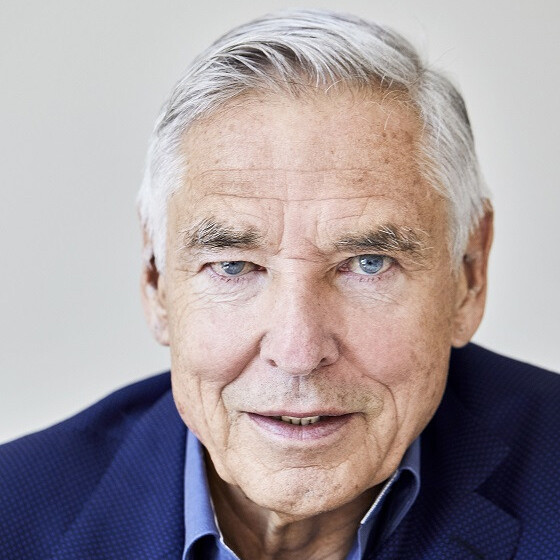
Peter Brabeck Letmathe

Peter Brabeck-Letmathe has replaced Klaus Schwab as the acting CEO of the World Economic Forum in what appears to be a stage coup. The 80-year-old Austrian businessman spent his career working for Nestle, moving through the ranks from 1968 to 1997 when he was appointed CEO, a position he held until 2008. He remained at Nestle as a chairman until 2017, when he was appointed as Chairman Emeritus.

Brabeck-Letmathe held board memberships with Credit Suisse, Roche, Exxon Mobil, L’Oréal, and Salt Mobile SA. He was the founder and chairman of the 2030 Water Resources Group (WRG), a public-private partnership within the World Bank.

The 2030 Water Resources Group (2030 WRG) is a global multi-stakeholder partnership that brings together governments, the private sector, and civil society to address the growing challenges of water scarcity and water management worldwide. This program was first launched at the WEF’s Davos in 2008, and naturally, Nestle is a major partner as well. Demand for water will outweigh supply by 2030, the group insists, and its goal is to manage the world’s water supply.

The one opinion, which I think is extreme, is represented by the NGOs, who bang on about declaring water a public right. That means that as a human being you should have a right to water. That’s an extreme solution,” Brabeck-Letmathe stated in a 2005 documentary entitled “We Feed the World.” He believes that everyone should have access to water, but only for essential needs, which he believes amounts to 50-100 liters of clean water per day.

Nestle extracts free-flowing water, bottles it up in plastic containers, and marks it up for a profit. The company has acquired water extraction rights across North America, permitting it to extract large volumes of water from public lands, springs, and aquifers, often siphoning far more than the law permits. The company effectively found a way to privatize access to water. Many communities have gone without water due to the company’s control over the water supply. The company has no concern for the environment or human rights, and this is merely the tip of the iceberg in terms of their corrupt practices.

What better way to control the masses than to control the water supply? Remember, the World Economic Forum has strongly advocated banning independent farming and gardening. Everything they ban is under the premise of protecting the climate, but as you can see, the new WEF CEO has never cared about the environment.

The WEF partnered with the United Nations to encourage “global policy coherence” and increased investment to manage the world’s water supply. It is no conspiracy – globalist entities are scheming ways to manage our water usage. These unelected entities believe they can deem what constitutes essential and non-essential water usage. Brabeck-Letmathe believes 98.5% of freshwater used for farming and agriculture should be classified as an economic good that is priced according to reduce waste. Controlling the water supply will permit them to also control the food supply.

Peter Brabeck-Letmathe has spent a lifetime studying methods for privatizing water. In the video above, Brabeck-Letmathe said that Klaus Schwab asked him why he wanted to focus on water over CO2 and the Earth’s warming. “I think our real problem is more urgent—it’s on the water side.” He later noted that governments must first believe that they have a water crisis and then partner with the private sector to solve this new problem. Agenda 2030 did not die with Schwab’s departure. There is a new leader at the helm and a new focus to usurp ultimate control over the global population.
There has been a Coup at the WEF for nefarious Reasons,, which we will discuss separately on the weekend

112 Year Cycle of Progressivism In Canada As Well


Posted Apr 23, 2025 by Martin Armstrong 

Canada future-lives-social-mobility-en

The fragmentation of Canada is bubbling beneath the surface, as we see in the United States as well as in Europe. There is a huge divide between LEFT and RIGHT politics, and never since the late 19th Century to the 1920 period has there ever been such a stark political divide.

Progressive Party

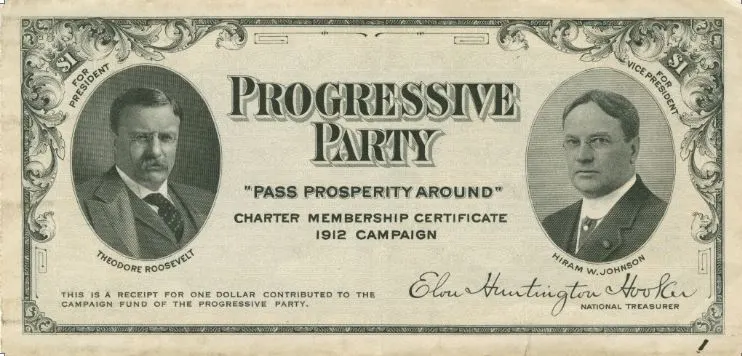
There was such a rise in Progressive Socialism that Teddy Roosevelt abandoned the Republican Party, splitting off to create the Progressive Party, also known as the Bull Moose Party, in 1912 following a split within the Republican Party.

There was an ideological split with President William Howard Taft, and these ideas led to the Income Tax in 1913. Roosevelt, a progressive Republican, grew disillusioned with Taft’s conservative policies, such as his support for the Payne-Aldrich Tariff (which raised rates and angered progressives) and his handling of the Ballinger-Pinchot Affair (a dispute over conservation that portrayed Taft as anti-environmental). Roosevelt believed Taft had abandoned progressive reforms

Roosevelt sought the Republican presidential nomination in 1912 but lost to Taft at a contentious convention. Alleging corruption and delegate theft, Roosevelt and his supporters walked out, forming the Progressive Party to continue his Marxist-style agenda. His Progressive Platform was called the “New Nationalism” platform, advocating for:

    • Strong federal regulation of corporations and monopolies.
    • Women’s suffrage.
    • Workers’ rights (minimum wage, workers’ compensation).
    • Direct election of senators.
    • Primary elections to reduce political corruption, with candidates selected as in Parliamentary systems.
    • Social welfare programs (e.g., pensions, child labor laws).
1912 Progressive Convention R

The party aimed to unify reformers and address growing public demand for economic fairness and government accountability during the Progressive Era. It was launched in August 1912 at the Chicago convention, where Roosevelt was nominated for president. The split in Republican votes between Roosevelt (27%) and Taft (23%) handed victory to Democrat Woodrow Wilson, who signed the income tax into law in 1913. Despite losing, the Progressive Party’s ideas influenced later reforms, such as the New Deal and Progressive Era amendments (e.g., direct Senate elections, income tax).

The party dissolved by 1916, but its platform left a lasting mark on U.S. progressive politics. Roosevelt’s campaign highlighted the power of third-party movements to shift national discourse, even in defeat.

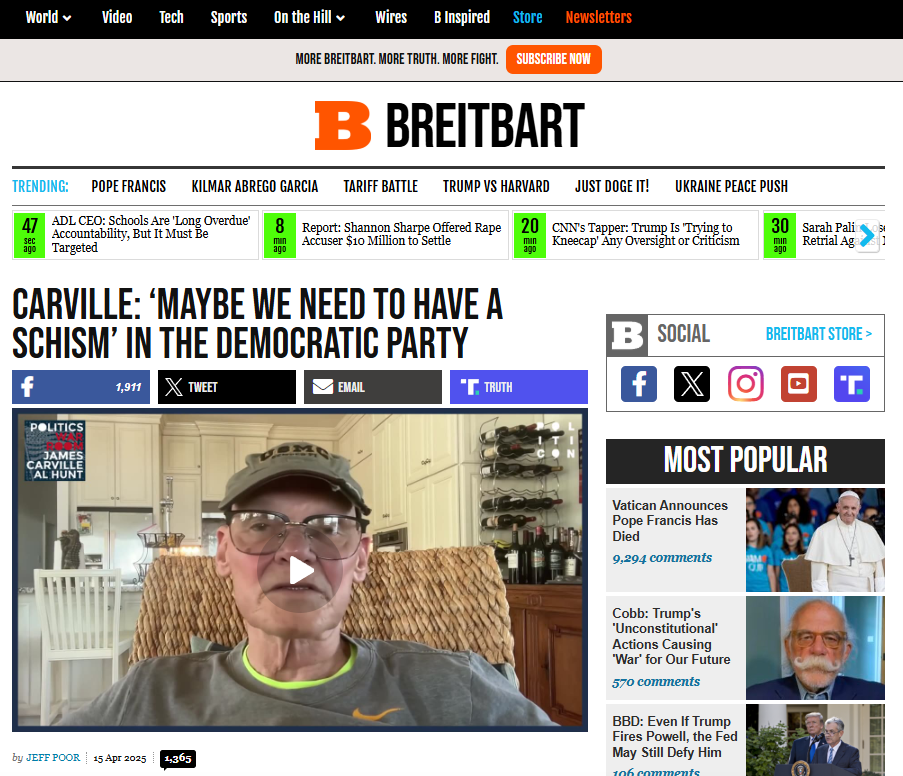
Carville_Maybe_We_Need_to_Have_a_Schism_in_the_Democratic_Party

We have reached the critical 112-year half-cycle of FAR-LEFT Progressiveness. It is going crazy everywhere. Now, the famous Democratic Advisor James Carville has come out and said the Democratic Party should split. They lost as Teddy Roosevelt lost, and they are taking the Democratic Party with them. We see the same in Canada with Carney. Europe has also gone extreme to the left, censoring free speech to maintain its ideas.

Throughout History – it is ALWAYS the Left that Destroys Civilization

Institutional Report on the Europe – All Countries


Posted originally on Apr 14, 2025 by Martin Armstrong 

Europe Institutional Report 2025

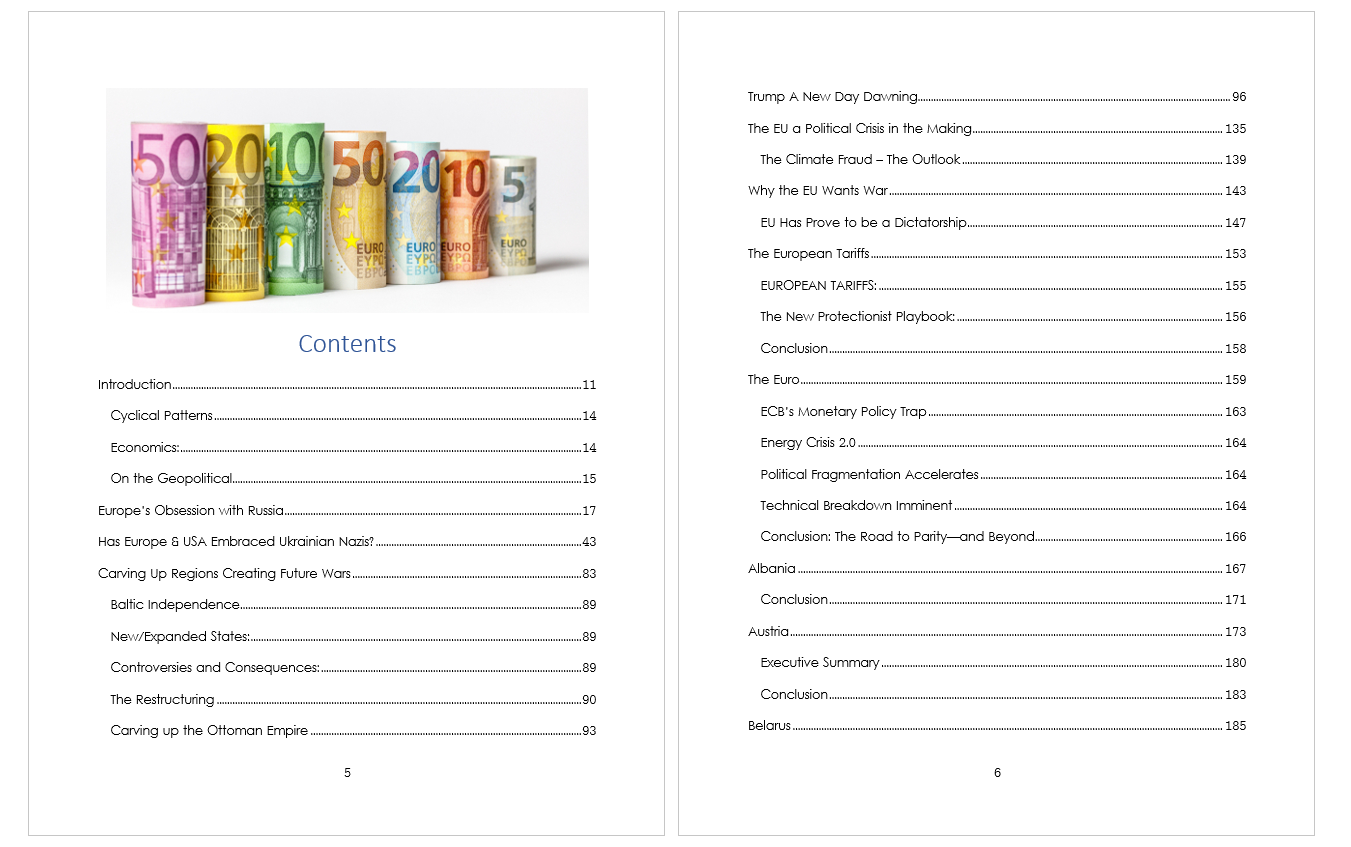
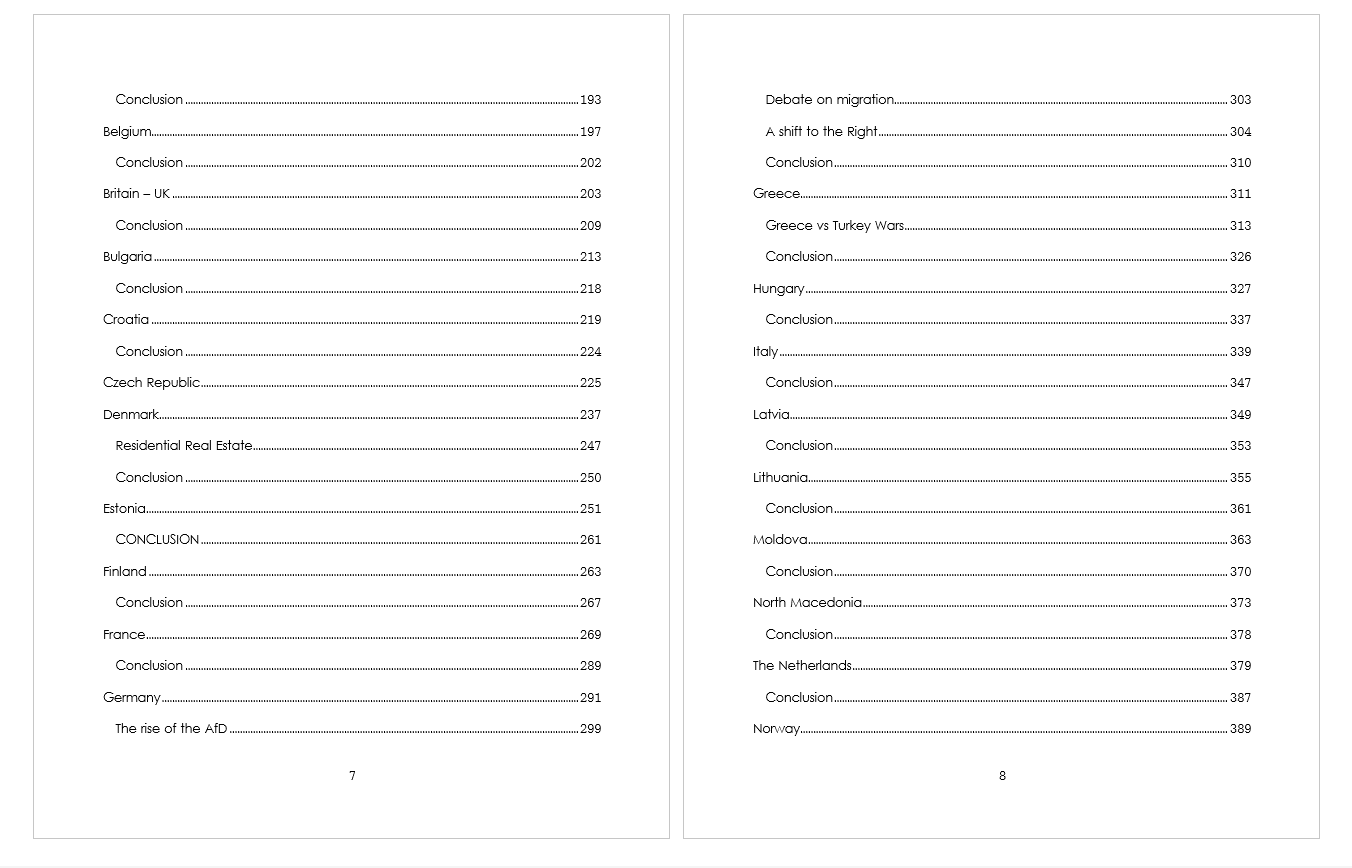
Our Institutional Report covering Europe’s countries with their forecasts generally out to 2032 has been a monumental effort. We greatly appreciate your patience, but this is vital for the decision-making for future investment in Europe. Things are certainly different from the past. Countries like Sweden and Switzerland, which had been neutral during previous world wars, have surrendered their neutrality and will not prove a safe harbor for capital during this conflict. Sweden has joined NATO and even sent jets to Poland. Switzerland gave up all foreigners with accounts and seized over $8 billion of accounts belonging to Russians, abandoning its historic traditions.

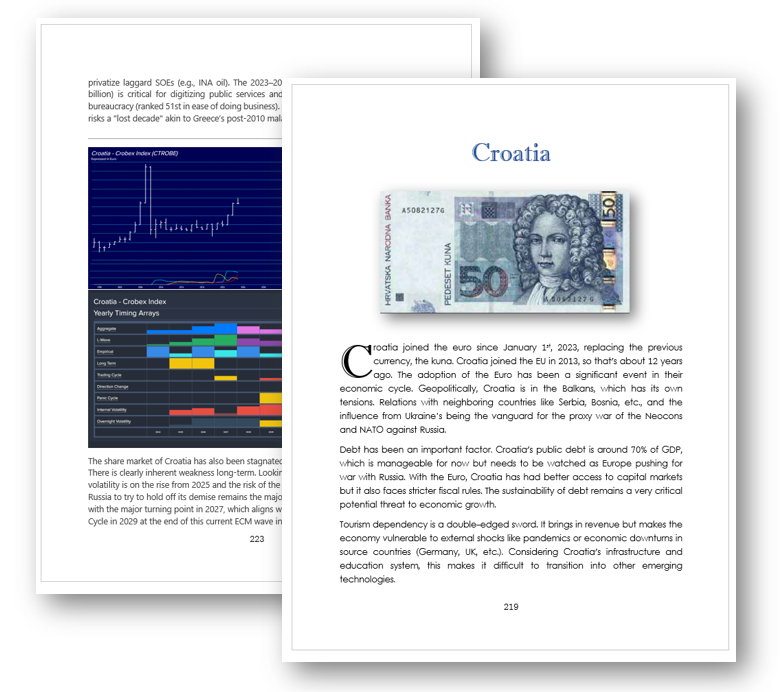
Europe Institutional Report 2025 Croatia

This report covers countries that nobody else even covers.

This also addresses the War with Russia & The eventual breakup of the EU itself

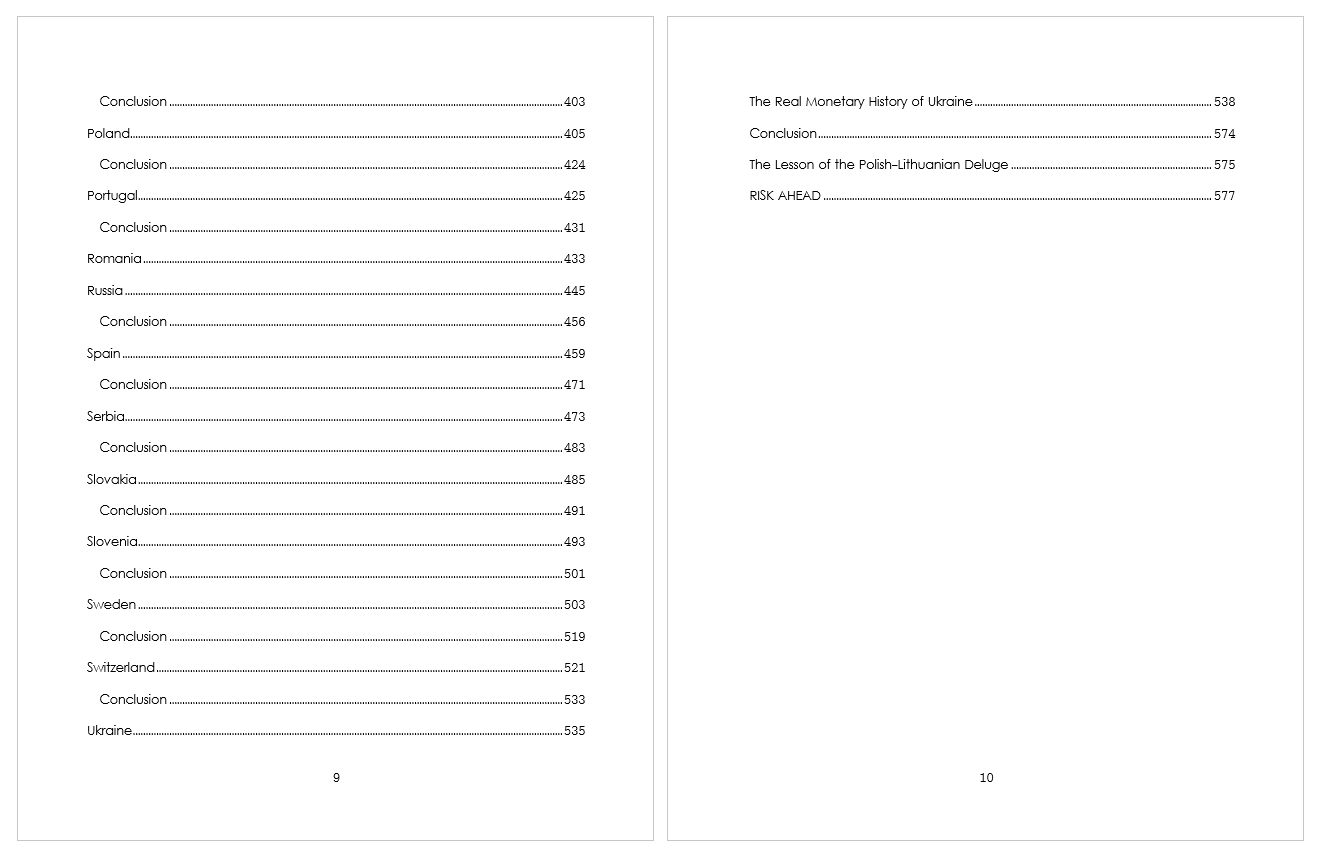
577 Pages fully illustrated with Charts and Arrays Per County, covering Currency and share markets

This Report is massive, and the price is $10,000 per institution.

(Please email to let us know how many reports you may need)


Europe Institutional Report 2025 Index 1
Europe Institutional Report 2025 Index 2
Europe Institutional Report 2025 Index 3

Commission President von der Leyen Coordinates EU Tariff Response with China


Posted originally on CTH on April 8, 2025 | Sundance

After previously saying her number one concern about President Trump’s tariff program was Beijing dumping all their excess products into the EU at a discount, EU Commission President Ursula von der Leyen announces she is coordinating the tariff response with China.

Apparently, the EU recognizes the ideological alignment of support from Canada just isn’t going to be enough to pressure President Trump and retain leverage into the U.S. market.  This is quite a remarkable admission from von der Leyen all things considered.  [STATEMENT]

President von der Leyen held today a phone call with Premier Li Qiang to discuss the state of EU-China relations, as 2025 marks the 50th anniversary of diplomatic ties.

The two leaders held a constructive discussion during which they took stock of bilateral and global issues.

The President underscored the vital importance of stability and predictability for the global economy. In response to the widespread disruption caused by the US tariffs, President von der Leyen stressed the responsibility of Europe and China, as two of world’s largest markets, to support a strong reformed trading system, free, fair and founded on a level playing field.

The President called for a negotiated resolution to the current situation, emphasising the need to avoid further escalation.

President von der Leyen emphasised China’s critical role in addressing possible trade diversion caused by tariffs, especially in sectors already affected by global overcapacity. The leaders discussed setting up a mechanism for tracking possible trade diversion and ensuring any developments are duly addressed. (more)

In the 2017 – 2019 version of the same dynamic, the EU was slow to realize the Trump impact to the Chinese economy would lead to less industrial purchases from Beijing.  This dynamic pushed the EU toward recession. In 2025 von der Leyen is trying to proactively mitigate that outcome.

This coordination of response between Brussels and Beijing is happening simultaneous to the Chinese central bank beginning a rapid devaluation of their currency.  Direct subsidies and currency manipulation are the first two approaches taken by any economy dependent on access to the U.S. market.

The difference this time is the scale of the tariffs President Trump is delivering.  There’s no way to subsidize and lower currency value at a rate significant enough to mitigate a near 50% tariff impact across all sectors.  China and the EU will subsidize and devalue, but they cannot repeat their prior defensive programs to this scale.

The key takeaway from this public admission by the EU President is to note how consequential the tariffs are to their parasitic endeavors.

The EU is directly working with Beijing against American interests.

Let that alignment settle in for a few moments.

Prime Minister Carney Declares Canada’s “Relationship with America is Over”


Posted originally on CTH onMarch 28, 2025 | Sundance

Canada Prime Minister Mark Carney delivers a speech to the nation notifying the Canadian people that the era of an economic and military collaborative relationship between the United States and Canada is over.

As the majority of Canadians cheer, the Prime Minister said that Canada as a free independent and sovereign nation will now embrace its connections to the United Kingdon and European Union and seek to replace their national dependency on the United States by severing ties in North America and entering a new era of close relations with Great Britain and Europe.

When questioned if Canada would join the European Union, a seemingly natural fit for the ideologically aligned country, Prime Minister Carney said, “nothing is off the table.”   In a rather remarkable end to the confrontation, the Carney says the economic and military ties between the USA and Canada are officially declared severed.  WATCH:

“We as Canadians, have agency”… What does that even mean?

.

President Trump asked Prime Minister Trudeau and the Canadian government to close the border to narcotraffickers and shutdown the pipeline of Chinese fentanyl.  The Canadian govt chose not to and Prime Minister Mark Carney continues the refusal.

The entire Canadian border enforcement system, agents, support personnel, the entire operation for 5,000-mile border consists of 300 people.  Not exactly a strong commitment to border security.

President Trump asked the Canadian government to remove trade tariffs, remove non-tariff trade barriers, and initiate reciprocal trade. The Canadian govt chose not to.

President Trump asked the Canadian govt to stop being a pass-through for Chinese goods that violates the USMCA. The Canadian govt chose not to.

President Trump asked the Canadian govt to open access to U.S. banks and financial services. The Canadian govt said no.

President Trump asked the Canadian govt to live up to the NATO commitment of 2.5% GDP spending on military defense. The Canadian govt said no, you will defend us free of charge and just accept it.

Now, members of the Canadian government are saying they want to “inflict the maximum amount of pain on Americans possible.”

Canada destroyed most of their heavy industry and chases the climate change hoax in all economic policies. Canada is destroying itself, no help from the UK or EU is needed.

Canada imported Steel and Aluminum from China, then shipped it into the USA, undercutting U.S. industry and trying to weaken U.S. heavy industry to match their own level of dependence.  Eventually, President Trump said ENOUGH!

Installed Prime Minister Mark Carney Schedules Canadian SNAP Election for April 28th


Posted originally on CTH on March 24, 2025 | Sundance

Interim installed Canadian Prime Minister Mark Carney has confirmed the snap election for Canada is scheduled for April 28, 2025.

Given that Conservative Leader Pierre Poilievre generally sealed his fate with criticism of President Trump while aligning himself with a surging patriotic-leftist movement, it is now expected that Mark Carney will win the election.

Politico has an article about the dynamic underway, and the following quotes are noteworthy:

CANADA – […] Trump has even taken credit for turning the Liberals’ fortunes around.

“Before I got involved and totally changed the election — which I don’t care about, probably, it’s our advantage, actually — but the Conservative was leading against, I call him Governor Trudeau. The conservative was leading by 35 points,” he said Friday, while exaggerating the polls.

“I think Canada is a place, like a lot of other places, if you have a good candidate, the candidate is going to work,” Trump said.

[…] Canadians have responded to Trump’s intimidation tactics with an outburst of patriotism. They are canceling spring break plans, buying made-in-Canada products, damaging Teslas and booing “The Star Spangled Banner” at professional sporting events.

Carney’s campaign slogan is “Canada Strong” while Poilievre’s is “Canada First.”

[…] In a recent interview with Fox News, the president was asked about how his recent treatment toward Canada appears to be helping the Liberal party.

I don’t care,” he said. “I think it’s easier to deal, actually, with a liberal and maybe they’re going to win, but I don’t really care.

Trump went on to say Poilievre “is stupidly no friend of mine” because of the “negative things” he has said about the president.

Poilievre has tried to frame the comments as proof that Trump is endorsing Carney, while the Conservative leader attempts to revamp his strategy to meet the moment. (read more)

From the perspective of President Trump, the main asset in the arsenal of the Canadian tariffs is “energy.”  As a consequence, having a strong “climate change” prime minister up there will mitigate any use of the energy sector and help the strategic North American economic strategy of President Trump.

{GO DEEP}

Boycotts by Canadians are generally welcomed in the U.S. hospitality industry, not coincidentally an industry of great familiarity to President Trump.   Canada simply doesn’t have any tariff weapons in their arsenal for countervailing duties.

The latest strategy by the Canadian government is to rent billboards in various red states, trying to convince Americans they need Canada more than they need Donald Trump’s reciprocity tariffs.  It is a dubious proposition at best, and a little funny all things considered.  But hey, the feels. [Prompted]

Canadians Boycott US Travel


Posted originally on Mar 17, 2025 by Martin Armstrong 

airplan air travel airtravel

Canadians are outraged at US President Donald Trump’s repeated threats to annex Canada. Canadian consumers began boycotting American products and are now boycotting America in general as tourism sank by nearly a quarter this February. Statistics Canada reported a 23% decline in trips via car from the US this February, marking the second consecutive monthly decline, while trips to the US by air declined 2.4%.

Based on personal conversations with Canadian friends, I do not believe this decline is simply correlated with the falling Canadian dollar or unfavorable exchange rate. The US was the top travel destination for Canadian tourists, and many state and local economies depend on those tourism dollars. Canadian license tags nearly equate to US tags in the spring and summer months down here in Florida. Yet, Canadians are genuinely outraged by Trump’s comments on their nation becoming a US state and want to boycott the US and anything manufactured here. I have even heard of companies canceling conferences in the US due to tensions.

Hotel reservations near the Canadian border have seen notable decreases as well. Niagara Falls, New York, reported a 8.1% decline in Saturday night bookings and Bellingham, Washinton, recently saw a 10.8% dip. Canadian travel agency Flight Centre rang the alarm that booking to the US in February plummeted an alarming 40% YoY.

There were over 20.4 million visits to the US from Canada in 2024, aiding in $20.5 billion in spending. The US Travel Association believes a 10% decline in Canadian tourism could shed $2.1 billion from the US economy and cost up to 14,000 jobs. The association noted that if the current trend continues, the US economy will lose at least $4 billion in tourism. Tourism states like Florida, New York, Nevada, Texas, and California will experience the worst repercussions of this travel boycott.

Canada is a sovereign nation, and the people wish to keep it that way. We had an excellent relationship with our neighbors to the north despite political warfare. Now, it seems as if anti-American sentiments are growing across Canada since President Trump has been keen on potentially annexing it.

For our Canadian readers— as you know with Trudeau and now Carney, our leaders do not always speak on behalf of those they claim to represent. Americans have no desire to annex Canada. In fact, the majority on both sides of the political spectrum thought Trump was simply mocking Trudeau when he proposed making Canada a state. The majority of Americans respect Canada’s sovereignty and wish we could lay this topic to rest already.

Monetary History ofCanada


Posted originally by Martin Armstrong on March 12


Early 1600s: Beaver pelts are the one universally accepted medium of exchange, though wheat and moose skins are also legal tender

Mid 1600s: Wampum, or strings and belts made from shell beads, becomes legal tender in colonial New England. Eight white beads or four purple beads buy one penny.

Canada Playcard Money - 3

June 8, 1685: The first issue of card money occurs, which is printed on playing cards. The practice is criticized because it’s easy to counterfeit.

1722: Copper coins are introduced, though merchants didn’t like them; they continued to let people buy goods based on their own credit standing.

Eighteenth century: The lack of a standard currency and the differences in ratings given to the many coins in circulation in the colonies, “undoubtedly hindered trade and was a major source of economic inefficiency.”

Canada 1819 First Bank Note

1817: The Montreal Bank (subsequently the Bank of Montreal) issued the first bank notes in Canada after its establishment in 1817. Other banks soon followed suit. The notes were well received and became the main means of payment in British North America.

Canada 1911 $500

1854 – 1914: The Dominion of Canada is under the gold standard. The value of the Canadian dollar was fixed in terms of gold and valued at par with the U.S. currency. Both U.S. and British gold coins are legal tender in Canada.

July 11, 1864: The greenback sinks to less than 36 cents (Canadian), an all-time peak for the Canadian dollar, from close to parity in early 1862. It subsequently recovers through the decade and the currencies trade around par until the outbreak of the First World War.

Canada 1954 $1000

Mid-1950: Canadian dollar depreciates. The federal government cancels fixed parity, putting it at odds with the International Monetary Fund, and the Canadian currency appreciates.

Aug. 20, 1957: The Canadian dollar hits a peak of $1.06 (U.S.).

May 2, 1962: The government establishes a new par for the Canadian dollar, fixing it at 92.50 cents (U.S.) with a fluctuation band of 1 per cent.

May 31, 1970: The government floats the Canadian dollar amid a growing budget surplus and rising inflation.

April 25, 1974: The dollar hits a high of $1.04 (U.S.) against the greenback as global demand boosts the price of raw materials. The strength sparked fear about Canada’s export industries at a time when the unemployment rate was already high.

Nov. 15, 1976: The Parti Québécois is elected, causing markets to “make a major reassessment of the Canadian dollar’s prospects.” At the same time, commodity prices start to soften, inflation picks up. By 1979, the currency slides to 84 cents (U.S.).

August, 1981: The Bank of Canada’s key rate hits 21.2 per cent. By 1982, the dollar traded below 77 cents (U.S.).

Feb. 4, 1986: The Canadian dollar hits a record low of 69.13 cents (U.S.) as falling commodity prices hurt the economy.

1988-1989: The currency rebounds somewhat to close the decade at 86 cents (U.S.).

1990s: The currency weakens again, closing the decade at 69.29 cents (U.S.). Inflation and interest rates fall and commodity prices soften.

1998: The international crisis in emerging markets such as Russia and Latin America causes the dollar to slide as low as 63.11 cents (U.S.).

2002: The currency hits a record low of 61.98 cents (U.S.) on Jan. 18, 2002.

2006: The loonie tops 90 cents (U.S.), prompting calls for parity. It then weakens for much of the balance of the year.

2007: The loonie takes flight again. On May 31, it topped 94 cents (U.S.) – the highest level in 30 years. Later that year it hit parity in September. That fall the loonie hit its modern-day intra-day high of $1.10 (U.S.), and hit its highest closing price of $1.08 (U.S.) on Nov. 6, 2007.

2008: The loonie continued to trade near parity until it dipped below that level on July 21, 2008.

2009: The Canadian dollar closed at a recent low of 76 cents U.S. on March 9, 2009, before restarting a rapid ascent higher against a basket of international currencies.

2010: The loonie touches parity for the first time in 20 months on April 6, 2010.

3.9.25: Strategic Crypto Reserve, COMEX Silver contract, plus extra info on P!ZS0G@TE, PRAY!


Posted originally on Rumble By And We Know on: March 9, 2025 at 2:00 am EST

Dems Want Taxes on Tips and Overtime


Posted originally on Mar 5, 2025 by Martin Armstrong 

Tax Robbery

The party of war voted in unison against ending taxes on tips and overtime work. Only one Republican voted against these measures, with 217 in favor. The Democrats are NOT the party of the working class and have been actively working to undermine the people for years.

Ending taxes on tips and overtime was one of Trump’s campaign promises, which is precisely why the Democrats struck down the bill. Laughably, the opponents stated they were concerned that losing $2 trillion in tax breaks over the next decade would hurt the national debt. The very people who have never seen a social program they did not want to fund are suddenly concerned about the national debt.

Franklin Taxes

Kamala Harris was in favor of these policies and had the backing of her party. Her feigned support was an effort to win over the people, no different from the failed promise of ending student loans. “It is my promise to everyone here, when I am president, we will continue to fight for working families, including to raise the minimum wage and eliminate taxes on tips for service and hospitality workers,” Harris told a crowd at the University of Nevada in August 2024.

The Democrats want everyone to be equally poor and dependent upon the government. Some lawmakers say eliminating tip taxes would be unfair to workers in states with a lower minimum wage. Under that line of thinking, should we penalize those who work in cities where, say, a meal is 5X the price as it would be elsewhere? Why should anyone out earn another in this fantasy socialist utopia? Minimum wage is a short-sighted political move that ignores the fundamental laws of supply and demand. Politicians always assume they can simply legislate prosperity, but history proves otherwise. Forcing businesses to pay higher wages does not magically create wealth—it destroys jobs, accelerates automation, and puts small businesses out of business.

Wages rise naturally in a real economic expansion when businesses compete for workers. That is how a free market functions. But when governments artificially raise wages, businesses respond logically—by cutting jobs, reducing hours, or passing the costs onto consumers through inflation. The very people politicians claim to be helping end up worse off, as their cost of living rises and entry-level jobs disappear.

Tipping culture is completely out of control in America. There is an expectation for consumers to pay a minimum of 20% in addition to inflated services, regardless of the quality of their service. Kiosks and self-checkout payment systems often ask for a tip. Consumers are less likely to go out when money is tight and the initial service has already risen due to inflation. Then, the government wants to take a portion of these tips AND the initial salary in most states. Whatever we must buy is then taxed; whatever we save is then taxed. Government greed knows no bounds. They’re too incompetent to manage funds, so they continue to squeeze our pockets, but it is never enough.

Taxing overtime pay is just another example of how clueless politicians are when it comes to economics. The entire purpose of overtime is to compensate workers for putting in extra hours beyond a normal workweek. Yet, instead of rewarding hard work, governments see it as another opportunity to grab more revenue. Why would the government disincentivize people from working? We are eager to keep our hospitals staffed, ports flowing, trucks moving, etc. but are discouraging a productive workforce by dipping into their earnings.

Do the Dems who voted against these policies hate the American people, Trump, or both? No one is buying their feigned concern for the national debt. If policymakers had any real understanding of economics, they would eliminate taxes on overtime and tips entirely. If you want a strong economy, you incentivize productivity, not penalize it.