CPI Report – Inflation on Food, Fuel, Home Heating and Essentials Continues Growing – Overall Inflation Moderation Now Claimed as Calendar Cycles


Posted originally on the conservative tree house on November 10, 2022 | Sundance

The Bureau of Labor and Statistics (BLS) provides the latest data on consumer prices (inflation) [DATA HERE].  We explained in 2021 how inflation would grow on a month-over-month and year-over-year basis until the calendar became more friendly and the government officials could claim “diminished inflation growth.”  Well, we are now entering that phase of economic parseltongue.
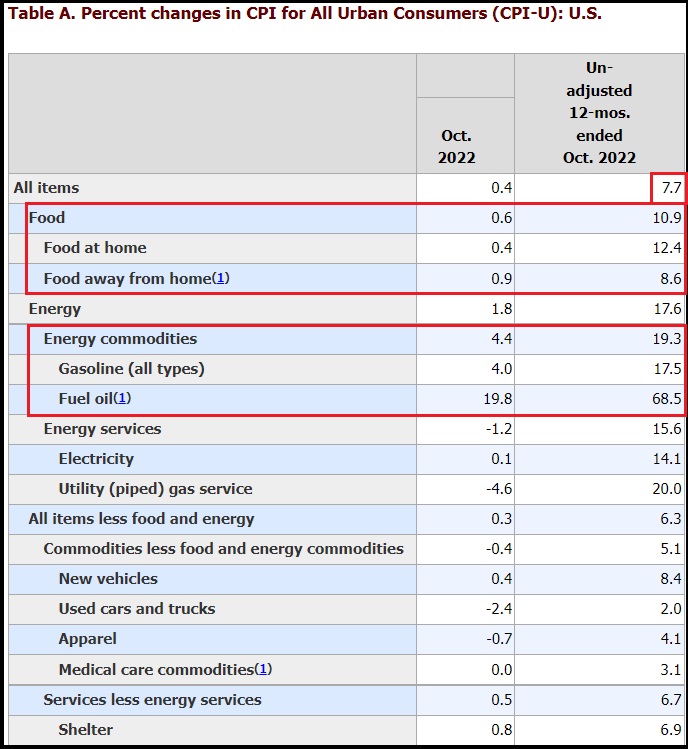
October consumer prices increased 0.4% over September.  However, we are now comparing year-over-year (Y0Y) inflation to the period where last year’s prices had already skyrocketed, so YoY inflation seems to be moderating at 7.7%, it’s a false premise. {Go Deep}

As expected, the energy-driven consumer inflation in the food sector has arrived.  The proverbial field inflation is arriving at the fork, and the October CPI now shows the third wave of food price increases we had previously discussed.

Table 2 Details: Egg prices increased +10.1% last month and now 43% higher than last year.  Butter +1.9% last month, 26.7% for year.  Margarine +1.3% for month, 47.1% for year.  Coffee +1.3% for the month, 15.6% for the year.

Heading into baking season we find flour +0.2% for the month, +24.6% for year.  Essentially, as expected, all of the holiday foodstuffs are now rising in price as the increased field and commodity prices hit the store shelves.

Some row crops are starting to moderate in price growth, while dairy products continue rising throughout the fall season.  It is going to be painful on the checkbook grocery shopping this holiday season.

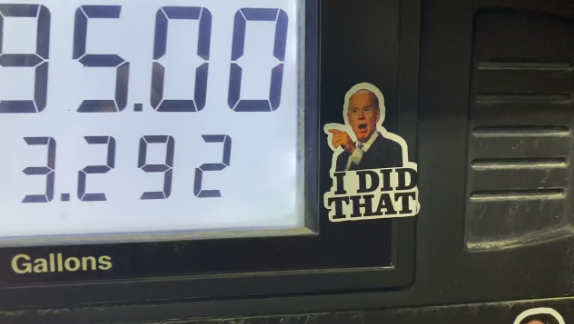
On the energy front, home heating oil increased 19.8% in October and is now a whopping 68.5% higher than last October.  Unleaded gasoline increased another 3.5% and now is now 20.9% higher than last year (Oct ’21), which was already 40% higher than January 2021.

Food, fuel, electricity, home heating and housing costs continue growing monthly, but give the illusion of moderating when compared to last year.

Food away from home (restaurants etc.) are starting to show the cumulative price impacts for restaurants, hotels and cafeterias.  Additionally, as the kids returned to school the lunchroom prices have skyrocketed a jaw-dropping +3.8% for October and +95% compared to last year [Table 2].  Packing lunches for kids is going to become an even more important aspect for the family food budget.

The stock market is happy with the news because the lowered 7.7% (YoY) inflation number, a product of the calendar and nothing else, gives optimism the Fed may moderate the increased federal reserve rate hikes.  However, don’t count on it because inflation is easily identified as embedded now.  Lemons at the grocery store are now $0.99/each.

Think about that.  $1 for a single lemon and roughly 50¢ per egg at the supermarket.  A full shopping cart of groceries now easily exceeding $200.  This is devastating for those on fixed incomes and blue-collar workers.

Wages are nowhere near keeping up with this level of price increase.

(CNBC) The consumer price index rose less than expected in October, an indication that while inflation is still a threat to the U.S. economy, pressures could be starting to cool.

The index, a broad-based measure of goods and services costs, increased 0.4% for the month and 7.7% from a year ago, according to a Bureau of Labor Statistics release Thursday. Respective estimates from Dow Jones were for rises of 0.6% and 7.9%.

Excluding volatile food and energy costs, so-called core CPI increased 0.3% for the month and 6.3% on an annual basis, compared with respective estimates of 0.5% and 6.5%.

A 2.4% decline in used vehicle prices helped bring down the inflation figures. Apparel prices fell 0.7% and medical care services were lower by 0.6%.

“The report overstates the case that inflation is coming in, but it makes a case inflation is coming in,” said Mark Zandi, chief economist at Moody’s Analytics. “It’s pretty clear that inflation has definitely peaked and is rolling over. All the trend lines suggest that it will continue to moderate going forward, assuming that nothing goes off the rails.” (read more)

The Biden energy policy is the root of the consumer inflation. Nothing will happen to moderate overall consumer inflation on Main Street until energy policy changes.

Additionally, with the 2022 election in the rear-view mirror, we should start to see layoffs and unemployment increasing now.  The bureaucrats will now let the recession become evident.
Big Picture, 2022 Midterm Elections Highlight the Distinct Difference Between Ballots and Votes


Posted originally on the conservative tree house on November 9, 2022 | Sundance 

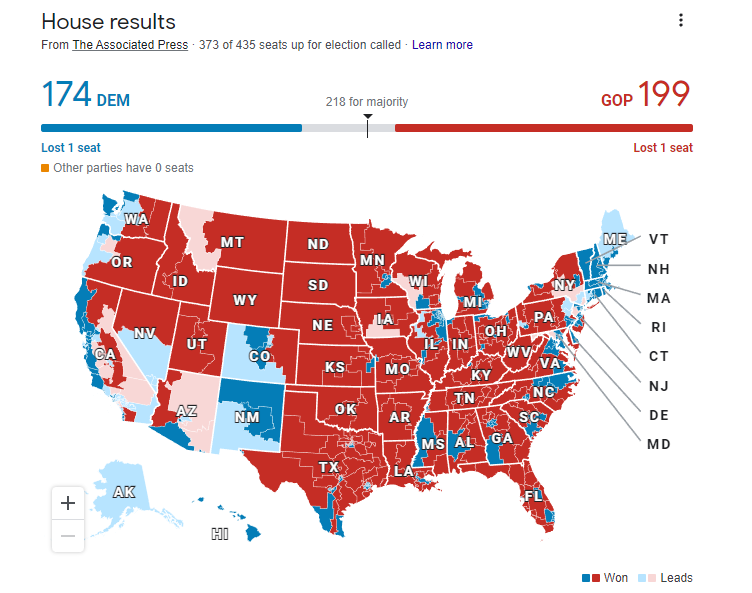
As the political discussion centers on the 2022 wins and losses from the midterm election, one thing that stands out in similarity to the 2020 general election is the difference between ballots and votes.  It appears in some states this is the ‘new normal.’

Where votes were the focus, the Biden administration suffered losses.  Where ballots were the focus, the Biden administration won.

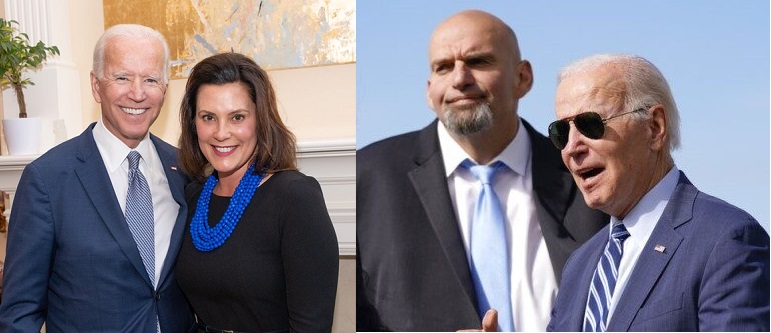
Perhaps the two states most reflective of ‘ballots’ being more important than ‘votes’ are Michigan and Pennsylvania.  Despite negative polling and public opinion toward two specific candidates in those states, Michigan Governor Gretchen Whitmer and Pennsylvania Senate candidate John Fetterman achieved victories.

Whitmer and Fetterman were not campaigning for votes, that is old school. Instead, the machinery behind both candidates focused on the modern path. The Democrat machines in both states focused on ballot collection and ignored the irrelevant votes as cast.

Since the advent of ballot centric focus through mail-in and collection drop-off processes, votes have become increasingly less valuable amid the organizers who wish to control election outcomes.  As a direct and specific result, ballot collection has become the key to Democrat party success.

The effort to attain votes for candidates is less important than the strategy of collecting ballots.

It should be emphasized; these are two distinctly different election systems.

The system of ballot distribution and collection is far more susceptible to control than the traditional system of votes cast at precincts.

A vote cannot be cast by a person who is no longer alive, or no longer lives in the area.  However, a ballot can be sent, completed and returned regardless of the status of the initially attributed and/or registered individual.

While ballots and votes originate in two totally different processes, the end result of both “ballots” and “votes,” weighing on the presented election outcome, is identical.

While initially the ballot form of election control was tested in Deep Blue states, through the process of mail-in returns under the guise and justification of “expanding democracy,” a useful tool for those who are vested in the distinction, I think we are now starting to see what happens on a national level when the process is expanded.

The controversial 2020 election showed the result of making ‘ballots’ the strategy for electoral success.  Under the justification of COVID-19 mitigation, mail-in ballots took center stage.  Ballot harvesting by Democrat operations was one term for the outcome.

Democrat party officials and political activist groups knew how to exploit the opportunities within the new system of ballot distribution and collection, and when you combine that with a massive legal pressure campaign to accept any and all forms of ballots, well, you can see how they are dependent.

Now that ballot collection has been shown to be a much more effective way to maintain political power, Democrats in a general sense are less focused on winning votes and more focused on gathering ballots.

When ‘ballot organization’ becomes more important than ‘vote winning,’ you modify your electoral campaign approaches accordingly.  It might sound simplistic, but inside the distinct difference between ballots and votes you will find why refusing debates is a successful strategy.

If you are trying to win votes you could never fathom campaign success by refusing to debate an opponent.  However, if your focus is centered around ballot collection, the debate is essentially irrelevant.

It’s time for voters to start seeing the difference between elections decided by ballots and elections decided by votes.  Perhaps the 2022 midterm election will awaken people to the two completely different election systems.

You can vote at any scale you want, but when ballots are more important than votes – the election will always favor the former.

Michigan and Pennsylvania voters are likely very unhappy today, while Michigan and Pennsylvania ballot providers are smiling.

If Democrats had to win individual ‘votes’ to gain election success, they would be at a disadvantage.  As long as Democrats only need to gather ‘ballots’, they have a path to winning elections.  The processes of electioneering are all modified accordingly.

Campaigning, advertising, promoting, debating, hand-shaking, crowd attendance and venues for rallies, along with physically meeting people and convincing them of your worth, are only important if you are trying to win votes.

Fortunately for Democrats, modern electioneering does not require these arcane efforts. So, in the larger picture of what you see in elections, they have stopped wasting time and doing them.  Haven’t you noticed? It really is that simple.

2022 WEC: In the Dollar We Trust


Armstrong Economics Blog/World Economic Conference Re-Posted Nov 8, 2022 by Martin Armstrong

At the World Economic Conference in 2021, the Armstrong Socrates model predicted that 2022 was going to be volatile and chaotic featuring a strong US dollar, a huge move in interest rates, a major bond market decline, fertilizer and food shortages, as well as escalating geopolitical tensions in Ukraine.

What now? Socrates forecast that 2023 will be more volatile and chaotic, featuring violent moves across all markets as monetary and geopolitical tensions and debt problems intensify.

At this year’s World Economic Conference, November 11-13, Martin Armstrong will talk about what’s next for the US dollar and other currencies, the liquidity/credit crisis, as well as price targets for oil, gold, stocks, bonds/interest rates, and stocks.

Give yourself an “unfair” advantage over the markets by joining us at this year’s conference remotely or in person. Meet Martin Armstrong – have your questions answered and get the best roadmap for 2023 and beyond in the investment business.

Biden’s IRS Army in Jeopardy


Armstrong Economics Blog/The Hunt for Taxes Re-Posted Nov 8, 2022 by Martin Armstrong

Biden’s IRS army of 87,000 new armed recruits is coming under fire by the Republican party. Sen. Chuck Grassley (R-Iowa) and Sen. Jon Thune (R-SD) are working on a bill that would require Congress to approve IRS spending. Both men also sit on the House-Senate Joint Committee on Taxation. Biden would like to spend $80 billion on his IRS army over the next decade to shake down American taxpayers.

Our bill will ensure that the IRS is answerable to the American people in how it uses this money and will force it to forfeit funds every day it’s not in compliance,” Grassley said. “If our bill becomes law, the Biden administration’s IRS would have to answer to the American people, not Washington bureaucrats,” Thune added. The American people fund the IRS, and it is only right that they vote on how their money is spent. In fact, they should vote on whether there is a need for the IRS at all.

If the bill passes, the IRS must explain how they use their money every year. Funding to the IRS would be withheld if they failed to comply. If Congress turns red this November, this measure is likely to pass. This would be a great first step in a long overdue overhaul of the entire US tax system, which is designed to be as complex as possible so that the government can squeeze funds out of every citizen.

Elon Musk Recommends Voters Choose a Republican Congress Tomorrow


Posted originally on the conservative tree house on November 7, 2022 | sundance

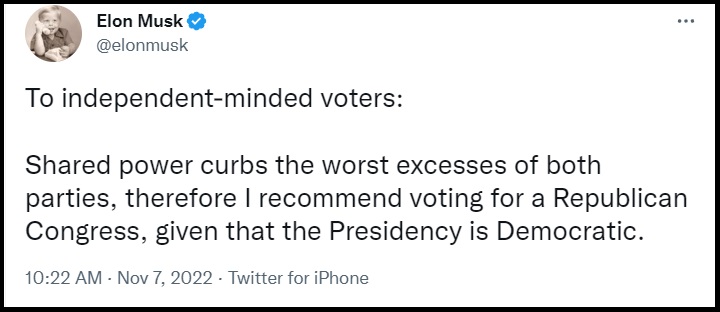
At 10:22am today, billionaire businessman and new Owner/CEO of Twitter, Elon Musk, has recommended that voters choose republican candidates for congress this midterm election cycle.  [Source]

Democrats and left-wing political activist groups are going bananas.