Posted originally on the CTH on January 31, 2023 | Sundance
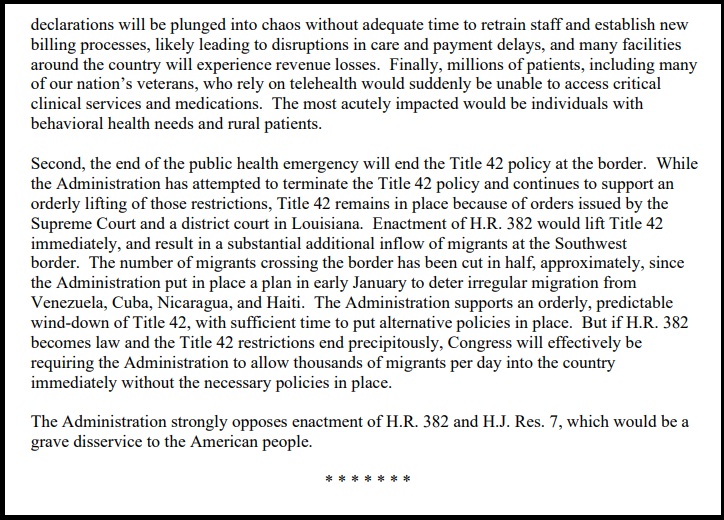
On the literal eve of a House vote to end the COVID emergency through legislation, the White House announced they would end the COVID-19 Emergency Declaration on May 11th. [pdf here]
The managers of Biden knew they would face a bipartisan vote to end the power of the dictatorial fiat known as the COVID emergency, so they quickly rushed to give Democrats in congress cover for voting against the legislative end.
In the end this is all a matter of pure politics and posturing for narrative control, because the Democrat controlled Senate is not going to take up the House bills.
WASHINGTON DC – […] The two bills – the Pandemic is Over Act and the Freedom for Health Care Workers Act – were planned by Republicans last week; and late Monday, the White House announced that it will terminate the national COVID emergency on May 11. The White House also announced its opposition to the two bills up for a vote today.
But Republicans pressed ahead anyway and easily passed both measures despite the GOP’s narrow majority in the House.
The Pandemic is Over Act, which would end the public health emergency, passed 220-210 in a vote that saw every Republican vote for it and every Democrat vote against it. But the Freedom for Health Care Workers Act, which would end the vaccination requirement for federal health care workers, passed 227-203 with help from seven Democrats.
Those Democrat votes came even though Democrat leaders on the House floor argued against both bills. Rep. Frank Pallone, D-N.J., said he opposes the Pandemic is Over Act because it would “abruptly and irresponsibly end the COVID-19 public health emergency virtually overnight,” and Democrats on the floor similarly argued against the bill to end the vaccine requirement. (read more)
Predictably the White House is claiming that if the COVID-19 emergency is over, then Title-42 immigration restrictions -which are based on the emergency- should end. This means even more illegal aliens crossing the U.S. southern border, an outcome the Biden team embrace.
Posted originally on the CTH on January 25, 2023 | Sundance
If you have followed the management and branding efforts of the team around Florida Governor Ron DeSantis, the protestations today by campaign official and registered foreign agent Christina Pushaw are quite bizarre.
The Daily Beast wrote an article [SEE HERE] about how Ms. Pushaw organized an astroturf campaign of support for Florida Governor Ron DeSantis, which included the recruitment of several conservative influencers. The substance of the article is generally well known.
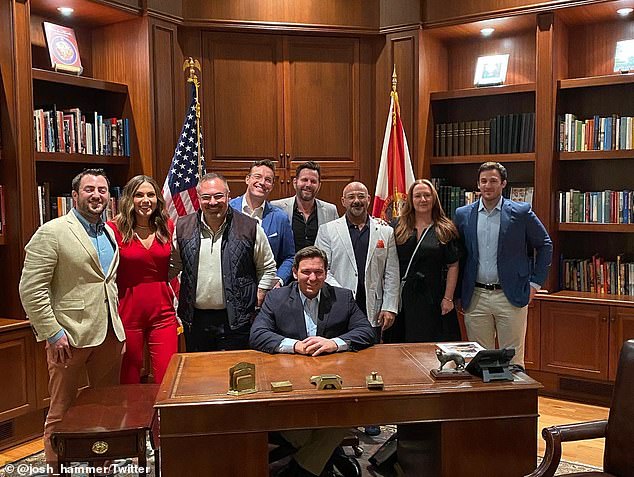
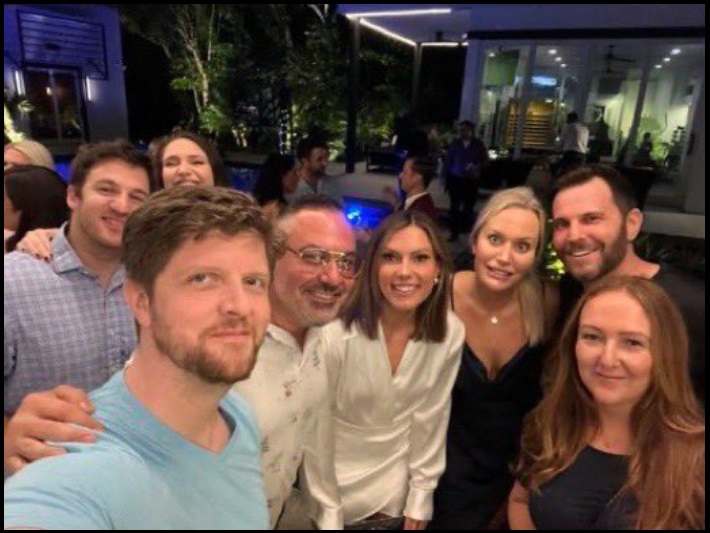
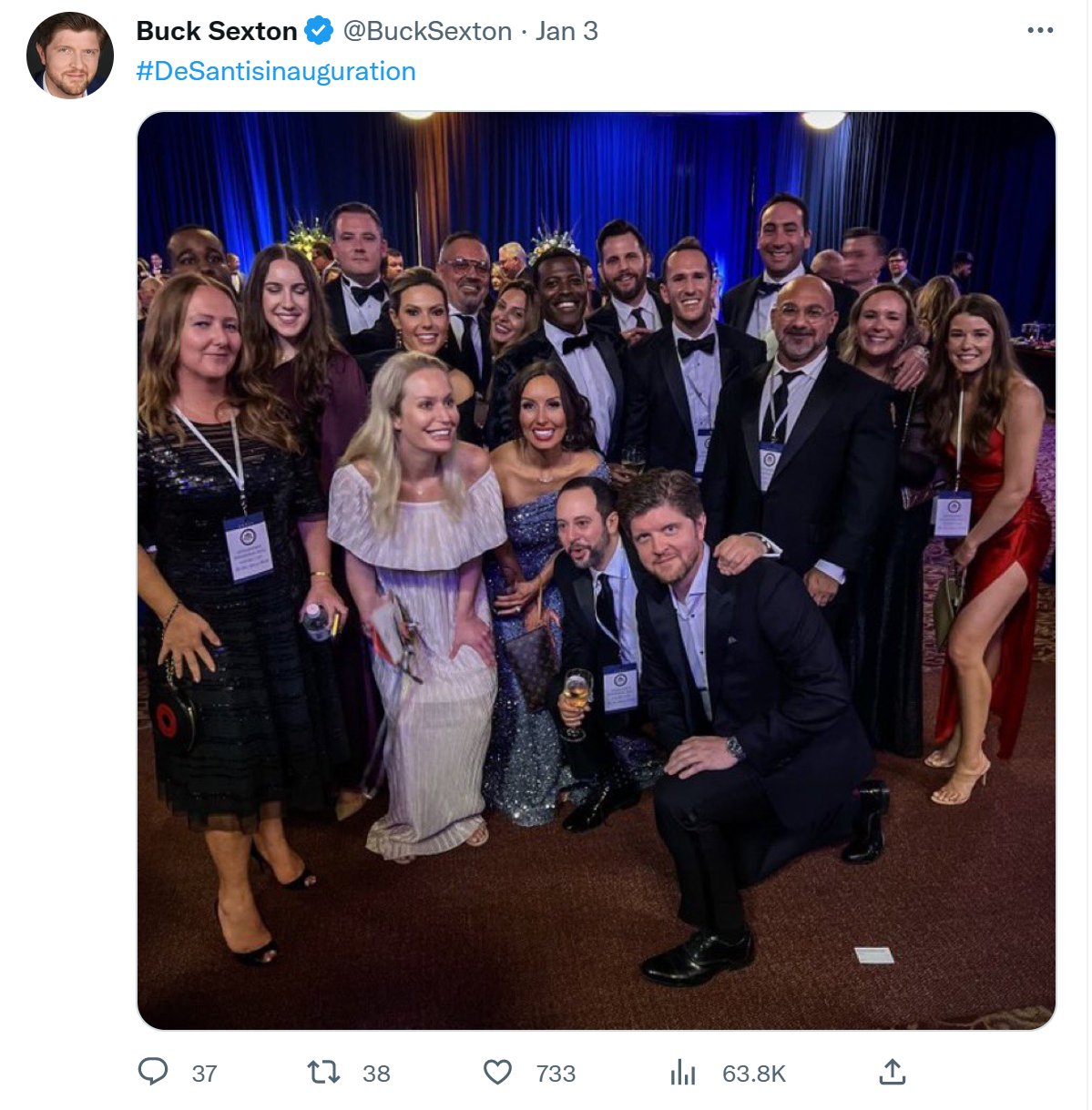
In late 2021, early 2022, Ms. Pushaw invited a group of “influencers” to spend time with Governor DeSantis. It’s not a debatable event. Factually, the collective group took gleeful pictures of their first visit on January 6, 2022, and continued to post frequent pictures on their social media of events throughout last year. The group went to the reelection celebration and inauguration of DeSantis earlier this month.
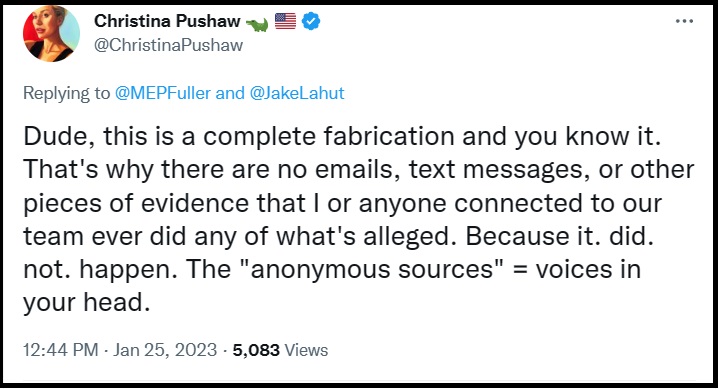
However, for some odd reason, likely more concerned about people realizing the ‘organized‘ nature of the creation, in a bizarre turn of events, Ms Christina Pushaw is now denying she ever organized the assembly and stating that without any documentary evidence, saying she organized the group is just a conspiracy theory. [Tweet Link]
If Ms. Pushaw is to be believed, the random group of Florida conservative “influencers” just happened to show up at the Governor’s office on January 6, 2022, without any invitation, organization or coordination on her part.
Even lacking the invitation details, hanging your defense on the absence of a paper trail under these circumstances, seems like a very odd position to take.
Why does the DeSantis team fear sunlight on the origin of how this outreach and subsequent meetings took place? Very odd.
I sincerely doubt this group just randomly showed up at Ron DeSantis office on January 6, 2022, without an invitation or organizing.
The same group then continued meeting throughout the year….
.
Nothing about their recruitment, continued meet-ups and aggressive promotion of Ron DeSantis for the GOP nomination in 2024 would be that interesting or even noteworthy if Ms. Christina Pushaw didn’t paint them all into a box by denying she ever organized their first assembly.
And there’s the rub… Why is Christina Pushaw denying that she first organized them on behalf of the political aspirations of her boss, Ron DeSantis?
The only logical reason to make such an outlandish and transparently false claim, is if that original assembly was intended as seed material to use the “influencers” for another purpose, like a 2024 presidential bid. Yet, Ron DeSantis hasn’t announced a 2024 presidential bid…. so that issue is a nonstarter, unless that announcement is eventually going to come forth.
If Ron DeSantis is going to announce his candidacy for the GOP nomination, then suddenly all these background moves look like proactive steps on behalf of the management team. The January 6, 2022, meeting would then infer the presidential aspirations as far back as December 2021.
In combination with the $200+ million in Wall Street money assembled by DeSantis, perhaps that 2024 plan is the risk necessitating the absurd denial.
Posted originally on the conservative tree house on January 25, 2023 | Sundance
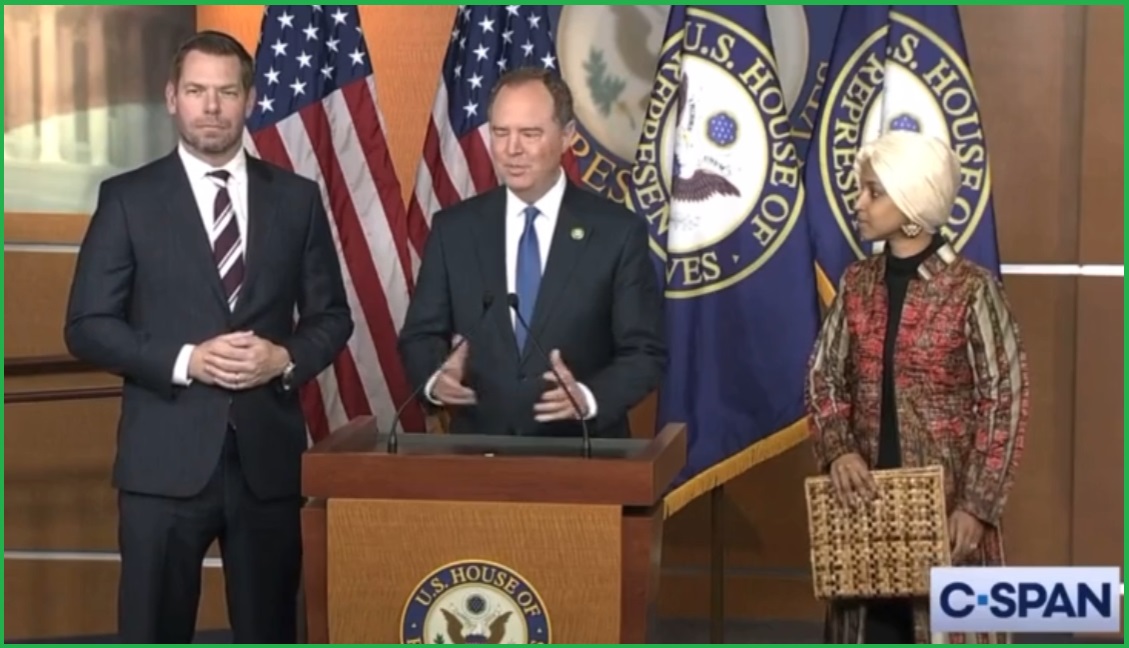
While these remarks are cast against the backdrop of House Speaker Kevin McCarthy refusing to seat Adam Schiff (D-CA) and Eric Swalwell (D-CA) on the House Permanent Select Committee on Intelligence (HPSCI), the larger point within his remarks about the intelligence community need to be emphasized. {Direct Rumble Link}
While claiming McCarthy has no right to stop himself or Swalwell from participating in the 118th Congress HPSCI, Schiff claims the larger intelligence community will no longer share information about national security matters with the committee if he is not present. Essentially, without Schiff in attendance to politicize the intelligence information, the larger intelligence community will not cooperate.
Additionally, and somewhat in direct alignment with CTH predictions about the House Subcommittee on the Weaponization of Government, Schiff declares the intelligence agencies of the United States government will not cooperate with the subcommittee. Again, as the argument is made, if democrats are not positioned to defend the Deep State, the Deep State will not cooperate. WATCH:
Nothing within these remarks should come as a surprise to CTH readers; however, the open hostility within the prediction by Adam Schiff should serve as a stark underline for the challenge the House subcommittee will face.
There are some who are claiming that the revision of the CPI is to help the Federal Reserve stop fighting inflation. This is typical for Americans who only watch the Fed and nothing else. The formula for the CPI has been routinely altered. Real Estate used to be included but when that was rising too much, they replaced that with rents. When rents started rising, they replaced them with controlled rents.
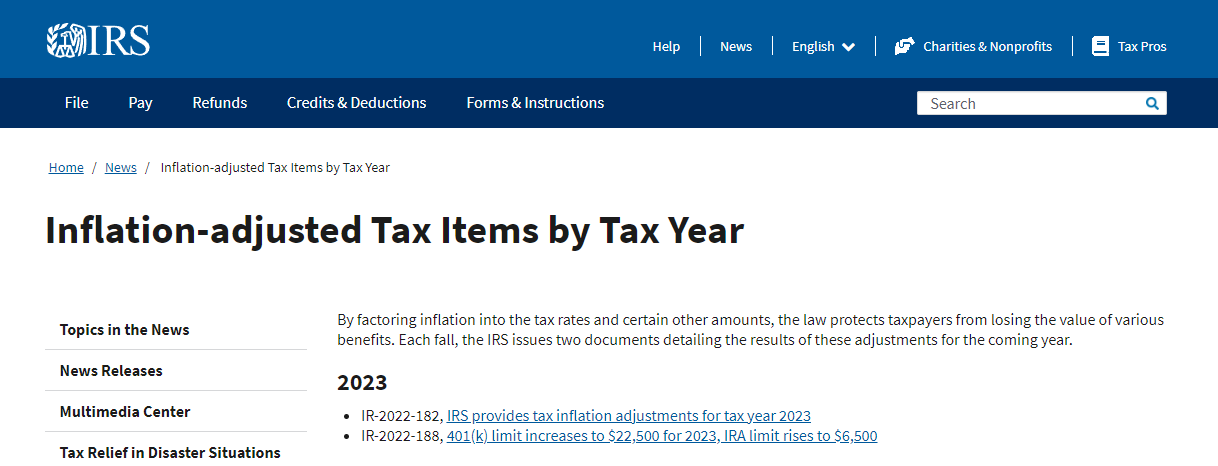
This is NOT about helping the Fed to lower rates or stop raising rates as the majority seem to be touting. Powell is not that stupid and this will have ZERO impact on Fed decisions going forward. This is all about government spending which is a far greater problem than worrying about the pressure on the Fed. Virtually EVERY government program is automatically INDEXED to CPI. Thus, agencies’ budgets are automatically increased each year based on the CPI. Your taxes are indexed to the CPI. By reducing the CPI, they collect more taxes! There is NOBODY in Congress or at the Bureau of Labor Statistics that gives the Fed a second thought.
Even if we look at inflation using the pre-1980 formulas, the CPI is approaching 10%! When we calculate inflation by eliminating everything that is really irrelevant and focusing on food, energy, transportation, and taxation, which they do not consider at all, the reality of our number came in at 32% for 2022. That is a far cry from the official number. This is simply calculated by Socrates from an unbiased perspective.
What a new wonderful world the Biden Administration has created. Thank you, COVID & the Russian Sanctions. The largest increase we found was obvious fuel between gasoline and diesel used in trucking and homes averaging 65%+ Turning to basic food, eggs were up nearly 50%, flour rose by 25%, cooking oil 23%, butter was up 35%, Chicken by 14%, and Rice by 18%. If we throw in toothpicks, paperclips, etc, then the more we can include the lower the inflation rate. We do not include rent or real estate. Our number is far more accurate to the daily living expenses than the near 10% level of the government. They also do not include sales taxes. The national average rise in rental rates was 7.8%, in Florida it was 8.5%, and in NYC 1.5% when controlled.
When I would buy a desktop IBM XT during the 1980s, it was always about $7,000 for a top-of-the-line. Today, that cost has come down significantly. Obviously, we do not buy computers every week. Should that really be part of a formula? The BLS has made so many revisions to the CPI over the decades it is really a political tool these days.
Back in the ’90s, our staff was dissecting every statistic. We discovered that they were overstating economic growth because they counted government employees twice. The total all personal income, and then government spending. I called the head of the BLS and asked surely this had to be backed out somewhere for hiring government employees to increase GDP rather than the private sector. They reviewed it and finally just said – no comment.
The idea that this latest revision of using one year as a weight instead of two will allow the Fed to stop tightening is really the rantings of people who only look at the Fed for everything as their guidance. There is a lot more incentive behind this revision and the Fed was not a consideration.
Posted originally on the CTH on January 24, 2023 | Sundance
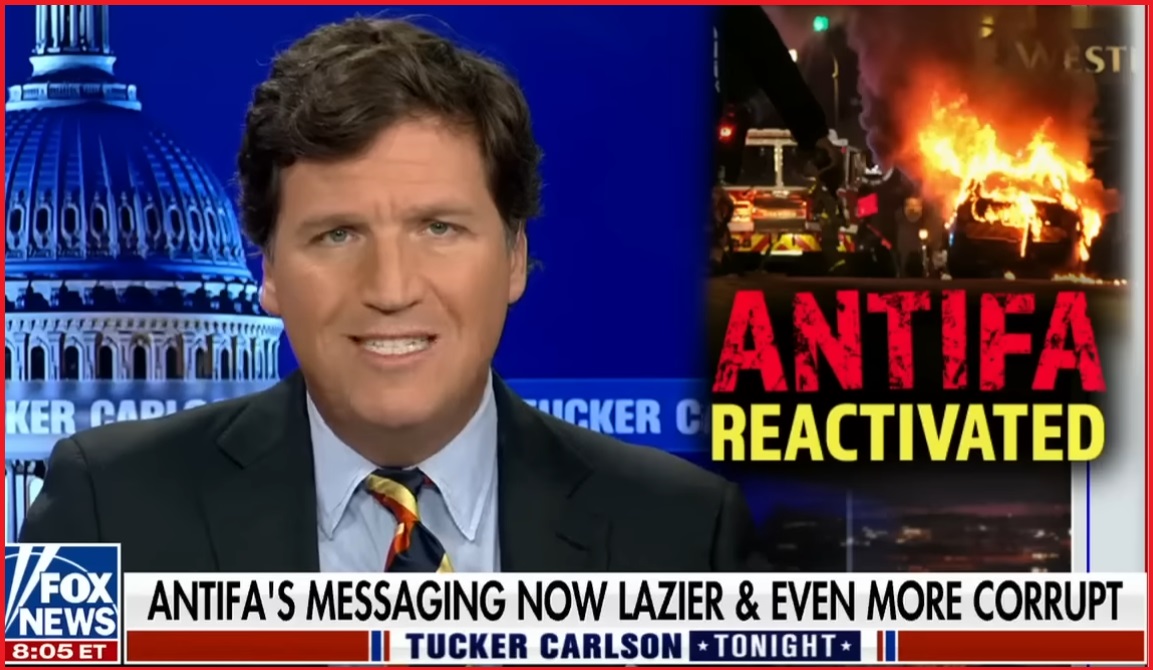
Intellectually honest observers have long realized that Antifa, as an organized domestic violence movement in the United States, could not exist if it was not supported directly or with willful blindness by the FBI. Sometimes you just have to accept things as they are, and not as you would wish them to be.
If the FBI did not support Antifa, it would be simple to target their financial mechanisms, fundraising platforms and social media networks that showcase their communications. If the FBI didn’t support Antifa, they would simply target the networks and arrest the participants for domestic terror related activity. It is not that difficult to see the FBI doesn’t do this because the FBI/DOJ support the violence.
During his opening monologue Monday night, Fox News host Tucker Carlson outlines exactly this issue. WATCH:
.
RevCom (Revolutionary Communists), Occupy Wall Street, Black Lives Matter, Antifa etc. it’s all one long continuum of the same participants. However, in order to accept the ideology that surrounds it, the complicit media and U.S. justice system must pretend not to know things.
Posted originally on the conservative tree house on January 19, 2023 | Sundance
Lots of people are talking about U.S. FBI Director Christopher Wray discussing the agencies “partnership with the private sector” as it relates to modern FBI activity. However, I’m just that random oddball in the crowd who just wants to point out something, well, kind of a big picture issue.
I notice in all of the discussions surrounding the FBI activity, and there are a lot of discussions – including admissions and outlines from the FBI itself, there appears to be an element of the subject matter being overlooked. Here’s a segment from Wray at the World Economic Forum {Direct Rumble Link} as a precursor to what few are noticing. WATCH:
The FBI is a criminal investigative agency. Meaning, a crime is committed, and the FBI mission is to investigate it, solve it, and bring the information to the justice department for pursuit. At least that was the customary role of the FBI as it was/is commonly discussed.
However, please note that in Director Wray’s remarks, every element of the FBI mission is framed around “prevention” of criminal activity, or what we would call pre-crimes.
Stop for a moment and rewatch it if needed, you’ll see what I am talking about.
Um, please excuse my interruption.
While it might seem like an unusual thing to notice, this is not a small issue.
In the era following the 9-11 attacks, there was public outcry around the issue of “how” and “why” did law enforcement, specifically the FBI, not PREVENT the attack. In just about every conversation following the attack every framework was about how to prevent an attack.
The 9-11 commission itself was focused on learning lessons from the attack; thereby the direct and implicit message was to construct systems to prevent another attack from happening. Essentially to move the FBI from a reactive footing in the aftermath of a crime, to a proactive footing to prevent crime.
Now, what I am asking readers to do is to realize when the fundamental mission of an investigative agency changes from investigating the aftermath of criminal activity, to the prevention of criminal activity, we as a society open ourselves up to having severe restrictions on our liberty. After all, just about everything that we now see as an infringement on freedom, is some form of a proactive action by government.
Change the mission from the investigation of crime to the prevention of crime, and the entire apparatus of the mission fundamentally changes.
Criminals are no longer the target when you are preventing crimes. Criminals are only targets in the aftermath of crime. When you are preventing crime, everyone that could commit a crime is the new mission target. Everyone, regardless of their connection to – or association with – criminal activity, is now a potential criminal. Potential criminals must be monitored.
Potential criminals are now the target. You are a potential criminal. As a result of your potential ability, you are a target for pre-crime investigation. Within the process of pre-crime investigation, your archaic views of freedom and liberty are dispatched.
The office of the Director of National Intelligence was created to turn the terrorist radar internally. Every American is now a potential “domestic terrorist.” Thus, you see FBI Director Christopher Wray sitting on a stage and openly admitting the FBI partnerships with the private sector are key to the mission; a mission of pre-crime targeting.
Can you see how this rolls along?…
As soon as the FBI changes from investigating the aftermath of a crime committed to intercepting the potential criminal conduct, things get very opaque, sketchy and weird. When the FBI is investigating crimes, you have rights. When the FBI is preventing crimes, those rights are impediments.
Our entire legal system is structured around criminal accountability. An event takes place, and we hold the criminal accountable. Judges, lawyers, courts, systems, processes, protections, rights of the accused, fourth amendment, fifth amendment, etc. etc. Hundreds of years of rules and regulations within a criminal justice system.
We do not have a “pre-crime” justice system.
The current FBI mission is pre-crime enforcement.
Think about the ramifications; it shouldn’t be hard, because we are living them.
Posted originally on the CTH on January 9, 2023 | sundance
I get a lot of flak for saying Texas is the next Georgia when it comes to professional politics and the ideological shift from Red to Blue. However, the grief matters not, because the reality of Texas turning left is very real even if Texans don’t want to admit it; here’s yet another datapoint. The only two GOP congressmen who did not support the reformed rules package were both from Texas. Representative Tony Gonzales voted against it, and Rep. Dan Crenshaw, did not vote.
Overall, the House of Representatives passed the rules package Monday night 220-213 with relatively little drama. It was the first order of business for House Speaker Kevin McCarthy’s new majority on the first day of the 118th legislative session. The 55-page package includes most of the concessions McCarthy made to the conservative caucus.
The new rules include the motion to vacate provision, allowing just one member to make a motion to remove the House speaker – one of the top conservative demands that will keep McCarthy in check.
WASHINGTON DC – The House rules plan that amounted to Speaker Kevin McCarthy’s first legislative victory on Monday night brings much bigger consequences than 55 pages suggest — it will shape the chamber’s operations and what bills can win approval over the next two years.
Adoption of the rules package is a routine step in setting up any new Congress, but what is traditionally seen as a “housekeeping” issue will effectively determine how Republicans can govern the chamber. That’s why the rules measure was the centerpiece of high-stakes negotiations between McCarthy and the crop of rebellious conservatives who kept from the gavel for much of last week, talks that started just after the House was called for Republicans in November.
[…] At the heart of the rules push by rank-and-file conservatives, including many in the Freedom Caucus, is a desire to shape a more inclusive legislative process that concentrates less power with leadership. To that end, they have secured promises from leaders that aren’t formally written down in the rules, such as allowing more amendments to be considered on the floor and more widely distributing committee positions. (more)
We have a few more election cycles to stop the arc of history from repeating itself. However, it is best to be prepared just in case…. Because if the slow descent into controlled chaos and big government dependency continues, the more self-sufficient you are – the longer you will be able to retain a freedom lifestyle of familiar reference.
Stay gray and remember, the potato alliance grows underground and gains multiple eyes in sunlight.
Posted originally on the CTH on January 9, 2023 | sundance
The House of Representatives is in current session to debate and confirm the new House rules package. The rules were a point of contention for some conservative House members, who initially refused to vote for Rep. Kevin McCarthy as speaker until the California Republican made concessions in order to win the gavel. [Livestream Video Below]
Dr. Aaron Kheriaty: Self-Spreading Vaccines, Transhumanist Ideology, and Government Gag Orders—The New Technocracy Threatening Hippocratic Medicine and the Nuremberg Code
I have created this site to help people have fun in the kitchen. I write about enjoying life both in and out of my kitchen. Life is short! Make the most of it and enjoy!
This is a library of News Events not reported by the Main Stream Media documenting & connecting the dots on How the Obama Marxist Liberal agenda is destroying America












 Centinel2012