The biggest potential scandal that would take place is the consistent cover-up of the way New York courts have been used to strip any competitor in the financial industry outside of New York so whatever business they created is usurped by New York. The Michael Milkin of Drexel Burnham scandal of insider trading resulted in the destruction of one of the oldest brokerage houses in the nation that was based in Philadelphia which use to be the financial capital of the United States until J.P. Morgan moved it to New York City at the start of the 20th century.
They destroyed the biggest futures broker REFCO which was located in Chicago. It had been Chicago where futures really began for that was the marketplace of commodities. REFCO was charged in New York courts and destroyed. The business was largely absorbed by M.F. Global which went bust and was protected because it was New York. The head of MF Global was former Goldman Sachs who was never prosecuted for his illegal trading. If you are from outside New York, you go to prison and the company is always absorbed by New York. If you are from New York, you walk away like Corzine did untouched. He only paid a fine of $5 million when clients lost hundreds of millions.
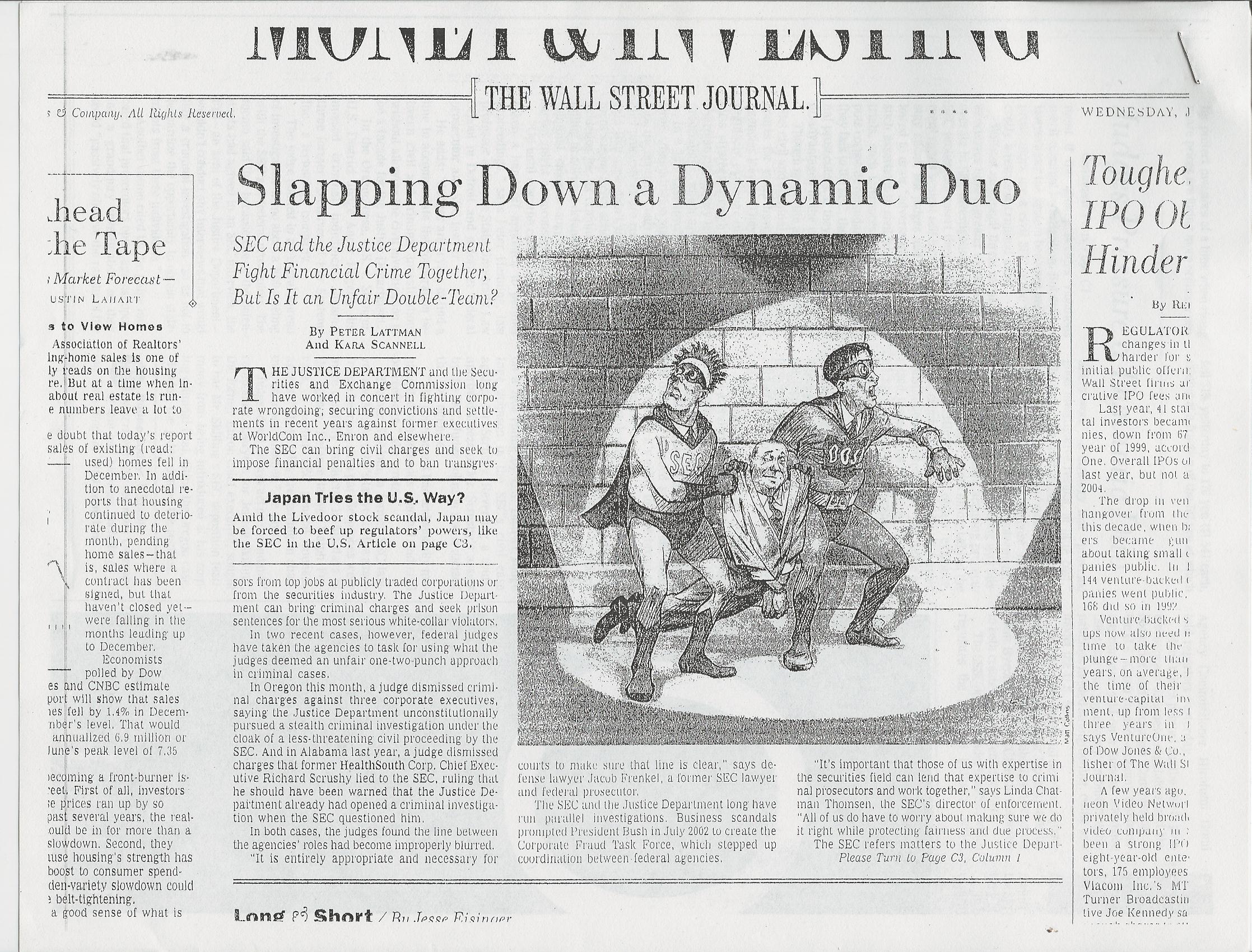
Then there was Frank Quattrone of First Boston was an American technology investment banker who started technology sector franchises. He helped bring dozens of technology companies public during the 1990s tech boom, including Netscape, Cisco, and Amazon.com. He too was hauled to New York and charged criminally for a single email that simply read “clean up your files” which New York used as obstruction of justice. The Department of Justice (DOJ) routinely uses the SEC and CFTC to create multiple prosecutions simultaneously using the different rules between Civil and Criminal procedure to make sure nobody wins.
Yet the corruption runs really deep and since it involves the government itself, there is NOBODY who will even investigate. The DOJ, SEC, and CFTC will prosecute anyone they can get their hands on whose business competes with New York or the New York bankers want for themselves. This is why there are only prosecutions of anyone other than a New York banker for they are simply off limits. Oh yes, there was Madoff. But he walked on water until everything failed. The SEC was told many times about his scheme and did nothing because he was a New Yorker. Why? A New York lawyer laughed and said simply that the policy in New York is: “You don’t shit where you eat!” The NY boys effectively bribe government prosecutors by offering them big paying jobs. Anyone else in the private sector has to sign non-competitive agreements. But when it comes to prosecutors, the bankers simply hire the people who would prosecute them so they will walk on water.
The government lawyers are more interested in protecting the main players to get one of those special jobs from the NY boys as a reward for their protection. Many articles have appeared about the “revolving door” at the SEC. The WSJ, Huffington Post, CNBC, all have reported that this “revolving door” prevents enforcement. Firms routinely hire from the SEC and CFTC and that makes them mindful that you cannot bring a case against the big houses or your career is toast. No law firm will hire someone who has prosecuted a major client. This is just how the regulators are kept in check. Back in 2010, they claimed to be investigating this “revolving door” but of course nothing has ever taken place since 2010. These people can destroy the entire world economy with their shenanigans and there is nobody who will ever investigate. This is why no New York banker ever goes to jail.
Jay Clayton was nominated to chair the U.S. Securities and Exchange Commission on January 20, 2017, by President Donald Trump and sworn in on May 4, 2017. Since joining the Commission, Chairman Clayton has focused he claims on the long-term interests of America’s retail investors while protecting his former clients as always. Clayton came from the law firm who represents the New York Bankers – Sullivan & Cromwell. He joined that firm back in 1995 rising to a partner 2001. At Sullivan & Cromwell, he became a member of the firm’s management committee. He advised numerous companies regarding issues related to the SEC, Federal Reserve, Department of Justice, and other agencies including the New York banks. He brought with him Alan Cohen of Goldman Sachs who was in charge of global compliance. In that role, Cohen would have had the final say on the approval of Malaysia, and Greek deals to just mention a few.
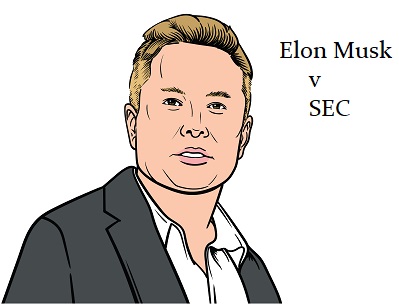
There appears to be an all-out assault against Elon Musk that is spreading between agencies. I have written about the SEC who is demanding Musk be removed as a director of Tesla. They did not seek such sanctions EVER against any of the bankers who really did screw up the entire world or caused the global meltdown in 2007. When the five NY banks were finally charged criminally, no individuals were put in jail and the SEC then exempted them from losing their license. Anyone outside of New York is ground into the dust.
Now the Pentagon has joined in and is reviewing his security clearance because of a pot-smoking incident. Whenever you see agencies starting to gang up on one company and individual, there is something going on behind the curtain. Someone in New York has an eye of Musk and clearly want’s him removed as a competitor. Pay attention to this for in the end, the SEC will demand he be removed to destroy Tesla which will then be absorbed by someone with New York connections. You will see! It is always the same game.
There is a real crisis in the fertility rate which has fallen to such a low level that all the socialism going forward will simply collapse. What used to be the Baby Boom is now being called the “Baby Bust,” which means that in all first-world countries there is a real crisis for they have insufficient children to maintain their population size. This has been one excuse for allowing the refugees into Europe. As the population dwindles, all the social programs are collapsing for they were NEVER designed properly from the outset. They are based on a Ponzi scheme where they rely on taxing a growing younger population to service the benefits of the older generation. This was the entire scheme behind Obamacare. Force the youth to buy insurance they do not need to reduce the cost for the elderly.
These findings were a huge surprise to those in government. They did not think it was even possible. The joke is that we will have more grandparents than grandchildren. A study published in the Lancet followed trends in every country from 1950 to 2017. During 1950, women were having an average of 4.7 children in their lifetime. The fertility rate all but halved to 2.4 children per woman by last year. They compared countries in Africa, such as Niger, where the fertility rate was 7:1 compared to countries like Cyprus where couples had just one child meaning that would be a 50% decline in population.
Even in Britain, the fertility rate has dropped to 1.7, which is similar to most Western European countries. Anything below 2 children per couple means a net population decline. This data clearly warns that the Ponzi scheme set up first in the New Deal of the Great Depression is no longer sustainable. The cost of childcare has skyrocketed and the rise in taxation has forced women to work, making childcare mandatory, but not affordable for 2 or more children. This creates an unsustainable future for taxation.
This is a video of every SpaceX landing or landing attempt of which a video was taken. I tried to edit it down as much as possible but it still ended up pretty long, mainly due to including Grasshopper and F9R flights (I didn’t feel I could use the word “every” if I didn’t). I made this because I couldn’t find any such compilations on Youtube. Most videos are from SpaceX’s Youtube Channel. Thanks for watching and thanks to SpaceX for all the excitement. Here is the full list of all launches that I used as my notes while putting this together: 1. 9-21-2012 Grasshopper Hop 2. 11-01-2012 Grasshopper 2 story 3. 12-17-2012 Grasshopper 12 story 4. 03-07-2013 Grasshopper 24 story 5. 04-17-2012 Grasshopper 250m 6. 06-14-2013 Grasshopper 325m Full Precision Sensor Suite 7. 08-13-2013 Grasshopper 250m, 100m Lateral Divert 8x. 09-29-2013 Falcon 9 Cassiope, Failure, Aerodynamically unstable, video of reentry burn here: https://youtu.be/RtDbDMRG3q8?t=128 9. 10-07-2013 Grasshopper 744m Final Flight 10. 04-17-2014 Falcon 9R 250m 11x. 04-18-2014 Falcon 9 CRS-3 Ocean Landing, Link to vid: https://www.youtube.com/watch?v=CjZ33… 12. 05-01-2014 Falcon 9R 1000m 13. 06-17-2014 Falcon 9R 1000m Grid Fins 14. 07-14-2014 Falcon 9 Orbcomm-1 Ocean Landing 15x. 08-01-2014 Falcon 9R ??? No Vid 16. 08-22-2014 Falcon 9R Failure, Aborted 17. 09-21-2014 Falcon 9 CRS-4 Infrared Reentry Burn 18. 01-10-2015 Falcon 9 CRS-5, ASDS, Failure, Hydraulic Fluid for Grid Fins 19x. 02-11-2015 Falcon 9 DSCOVR Ocean Landing, No Vid 20. 04-15-2015 Falcon 9 CRS-6, ASDS, Failure, Sticky Throttle 21. 06-28-2015 Falcon 9 CRS-7, Launch Failure, Stupid strut 22. 12-22-2015 Falcon 9 Orbcomm-2 LZ1 SUCCESS 23. 01-17-2016 Falcon 9 Jason-3, ASDS Failure, Leg Lockout 24. 03-04-2016 Falcon 9 SES-9, ASDS Failure 25. 04-08-2016 Falcon 9 CRS-8 ASDS SUCCESS
May 5 (Bloomberg) — Bloomberg’s “The Next Space Race” is a journey through the booming business of space exploration. The International Space Station is a near zero-gravity laboratory dedicated to scientific research. The end of NASA’s shuttle program in 2011 left the world with only one way to get there, buy a seat from the Russians. NASA is holding a competition challenging private enterprise to build America’s next spacecraft. Boeing, SpaceX, and Sierra Nevada are all multi-billion dollar aerospace companies competing to win the NASA contract that could cement dominance in the emerging space industry. Bloomberg gets rare access to these space pioneers, including a tour of SpaceX with CEO Elon Musk. (Source: Bloomberg) — Subscribe to Bloomberg on YouTube: http://www.youtube.com/Bloomberg Bloomberg Television offers extensive coverage and analysis of international business news and stories of global importance. It is available in more than 310 million households worldwide and reaches the most affluent and influential viewers in terms of household income, asset value and education levels. With production hubs in London, New York and Hong Kong, the network provides 24-hour continuous coverage of the people, companies and ideas that move the markets.
Bill Whittle and Scott Ott, both active in the early days of the Tea Party movement, reflect on its 10th anniversary. What did it mean at the start? What did it accomplish? Where do we go from here? And would Donald Trump be President of the United States without the Tea Party? Bill Whittle Now is a production of the Members of http://BillWhittle.com
It does not appear accidental that each time Justin from Canada starts finding himself in trouble, serious trouble; the same person happens to show up. In June 2017, Justin was being challenged with a new NAFTA trade agreement… and former President Obama showed up while delivering a speech to the Board of Trade in Montreal.
Fast forward to today… March 2019 – the Canadian economy has halted; Justin from Canada is embroiled in a growing bribery, corruption and obstruction of justice scandal around SNC-Lavin; and immediately after he loses two cabinet ministers… former President Obama shows up to deliver a speech to the Board of Trade in Vancouver:
During a question and answer session with Vancouver Board of Trade President Iain Black at the Vancouver Convention Centre in Canada, Obama went into a diatribe about the dangers of rising populism amid national politics. [LINK]
Serendipitous domestic timing for an Obama visit, as the ideological political-wagons are circling to defend Justin from Canada.
Coincidentally, nudge-nudge/wink-wink/say-no-more… say no more… after a coaching/not-coaching session, Justin from Canada has agreed to a heavily controlled press conference on the obstruction scandal tomorrow at 8:00am.
OTTAWA (Reuters) – A former top aide to Canadian Prime Minister Justin Trudeau denied on Wednesday inappropriately pressuring a Cabinet member to help a major company as Trudeau planned to address a scandal that is threatening his prospects in an October election.
Allegations that Gerald Butts, who resigned last month as Trudeau’s principal private secretary, and other officials tried to help construction company SNC-Lavalin Group Inc avoid a corruption trial are fueling the crisis that has cost the Liberal government two senior Cabinet ministers.
Some nervous Liberal lawmakers complain Trudeau’s office has taken too long to respond to a scandal that deepened last week when former Justice Minister Jody Wilson-Raybould said she and her staff had been subjected to persistent pressure.
Trudeau will take questions about the matter at an 8 a.m. (1300 GMT) news conference in Ottawa on Thursday. “He will speak directly to the issues,” spokeswoman Eleanore Catenaro said, giving no details of what Trudeau might say.
Butts told the House of Commons justice committee he had one short conversation on Dec. 5 with Wilson-Raybould about SNC-Lavalin.
“I did not and I do not see how our brief discussion on that file constituted pressure of any kind,” Butts said. (read more)
Curiouser, and curiouser….
CTH would be remiss if we did not note the prior timing.
Immediately following Obama’s 2017 meeting with Justin from Canada (pictured above), the Prime Minister and Foreign Minister Chrystia Freeland began making NAFTA demands for “gender equity” and a domestic trade position allowing Canada to continue their prior arrangements with China for imported component goods.
Three months later U.S. Trade Representative Robert Lighthizer finally had enough. The U.S. broke off trilateral negotiations with Canada and started the process for creating the USMCA through bilateral talks with Mexico. The 2018 success therein obviously frustrated the ideological Wall Street handlers behind both Justin and Barack.
The global-ideological money behind Obama is the same global-ideological money behind Trudeau. Now external to the political reigns of power, Obama is diminished to the role of messenger. Obviously Justin is in trouble. The controller’s message is to protect their investments…
Earlier today President Donald Trump participated in a meeting of the American Workforce Policy Advisory Board at the White House. [Video and Transcript below]
.
[Transcript] – State Dining Room – 4:17 P.M. EST – MS. TRUMP: Mr. President, Mr. Vice President, on behalf of my co-chair, Secretary Ross, and the entire American Workforce Policy Advisory Board, it’s an honor to have here for today’s inaugural board meeting. We have spent the last several hours in excellent discussion with the objective of advancing a national workforce strategy.
Our collective aim is to ensure that all Americans can benefit from the nation’s historic economic boom and record low unemployment rates. This board of industry, education, government, and non-profit leaders are deeply passionate about bringing more Americans off the sidelines and into the workforce. We are seeking to increase the country’s workforce participation rates by connecting workers with good-paying jobs.
We must also focus on helping those most vulnerable to having their jobs displaced due to the rapid pace of technological change, and work together to assist them in learning a new skill so they can continue to provide for themselves and for their families.
Today, we discussed in detail the four goals that are the mandate of this specific council. First is to develop a robust campaign to promote multiple pathways to good-paying jobs, dispelling the myth that there is only one path to a successful career.
Second, improving the availability of high-quality, transparent, and timely data to better inform students and educators, as well as match American workers to American jobs.
Third, modernizing candidate recruitment and training practices to expand the pool of job applicants employers are looking to hire.
And finally, measuring and encouraging employer-led training and investments. We are championing and seeking to further private-sector leadership and investment in workforce development.
As we look to the future, this Board will also influence our legislative agenda to mobilize our higher education system and help us be more responsive to today’s students and job creators. And this is something that we’re optimistic can be done in this Congress.
I’d like to thank you, Mr. President, for being here, and for your steadfast commitment to a pro-growth economic agenda that is creating tremendous opportunity for all Americans. Just this past quarter, a remarkable 73 percent of people who started out work had been out of the workforce the previous month, rather than being unemployed. That’s the highest share of people entering the labor force from the sidelines since we started tracking this metric decades ago.
With record low unemployment rates across all demographics, we will continue to focus on fostering inclusive growth that lifts up all of our citizens. We have an extraordinary opportunity, and this extraordinary group around the table — titans of industry, education innovators, and pillars of our community — will help us make a difference in the lives of millions of our fellow citizens.
We are taking advantage of this incredible moment to ensure America retains its leadership role.
And, now, Mr. President, I turn the floor over to you.
THE PRESIDENT: She’s so formal. (Laughter.)
A special person. And she’s worked so hard, as you all know. And I want to thank you, Ivanka, for your devotion to the America workers — our great workers. And nobody has workers like we do. So I just want to thank you, honey, because — great job. Really great job. (Applause.)
She works very hard on this, I will say. And she’s created a lot of happy families. Because you’re going to be up to close to 7 million people pretty soon that you are very responsible, along with many of the people at this table.
And I’m going to ask, I think, for you — maybe before I even speak — to go around the table, because this is such a distinguished group, and just introduce yourself. We have a few of the media back there, and just a small group.
You know, Tim, sometimes you have to see some of these groups. It’s pretty amazing what they do. They break down the walls and the windows and everything else in order to get in. But we have great representative media back.
And I thought you should really take some of the credit for what you’ve done. And I’d maybe like to start with Tim Cook who has done such an incredible job at Apple. He’s become a friend of mine. And he’s a friend because he does a great job. I mean, we want to get things done. Employs so many people. Brought a lot of money back into our country because of the new tax law, and he’s spending that money very wisely. And just done an incredible job.
So, Tim, maybe you could just start. Please.
MR. COOK: Sure. Thank you, Mr. President. It’s an honor to serve on this council. I’ve always thought that America is so special in so many ways, but at the heart of all of it is people. And that, to me, is what this group is about.
For — our company, as you know, was founded by a college drop-out.
THE PRESIDENT: Right.
MR. COOK: So we’ve never really thought that a college degree was the thing that you had to have to do well. We’ve always tried to expand our horizons.
And so that degree — about half of our U.S. employment last year were people that did not have a four-year degree. And we’re very proud of that, but we want to go further.
And so to that end, as we’ve looked at the — sort of, the mismatch between the skills that are coming out of colleges and what the skills are that we believe we need in the future, and many other businesses do, we’ve identified coding as a very key one.
And we believe strongly that it should be a requirement in the United States for every kid to have coding before they graduate from K-12, and become somewhat proficient at it.
And so we’ve provided a — we’ve done a curriculum now and provided it to all schools in the United States. Four thousand have picked it up. Now, we have a lot further to go because there’s a lot more than 4,000 schools in America, but that is a start.
We’ve also done that with 80 community colleges. And we’re really proud of that, particularly with the work that we’re doing in Austin, and providing coding education there.
There’s an enormous deficit in the number of jobs versus the number of candidates. And so we’re — we are proud to take part and to help to get this alignment much better between education and private sector. We realize that in something this large, it takes government, private sector, and education all kind of oaring in the same direction, and we’re very proud to be a part of it.
THE PRESIDENT: Well, thank you, Tim. Great job you’re doing.
MR. COOK: Thank you. Thank you.
THE PRESIDENT: Thank you very much. Kim?
GOVERNOR REYNOLDS: Well, I too want to echo my appreciation for having the opportunity to serve on this Board. I’m excited about what’s happening across this country. Iowa has the lowest unemployment rate the nation at 2.4 percent. Our economy is growing. We’ve had four straight quarters of wage growth in Iowa. We are no different than other states. We have jobs looking for people.
So I’m anxious to work. And public-private partnership is the answer. That is how it’s going to work. We have an initiative, Future Ready Iowa, that has a goal of having 70 percent of Iowans in the workforce to have education or training beyond high school by the year 2025. And we’re at about 58 percent right now, but set the goals high, right? —
THE PRESIDENT: Right.
GOVERNOR REYNOLDS: — and work hard to get it.
And we’re doing that through registered apprenticeship programs. And we just — we’ll be launching an initiative, Computer Science is Elementary, that will launch six computer-science elementaries in the state that will target high-poverty, high-needs areas so we can help produce a capable, ready workforce.
Most importantly, though — and then I’ll pass it — is to make sure that our students and that Iowans know that there are multiple paths to great careers and those careers exist in Iowa. Thank you.
THE PRESIDENT: Well, thank you. And, Kim, just had a great victory — Governor of Iowa. She just defeated somebody who spent unlimited money. It was unlimited. And it’s called “talent.” You’ve done a great job. Thank you very much, Kim. Great job.
MAYOR LYLES: Mr. President, thank you for the opportunity to be here today. I’m Vi Lyles, from the city of Charlotte. And what I’d like to say is that we’re a city where we want everyone to have the ability to participate in the economic opportunity. And we are the second largest banking center now in the country. That may be good or bad. But nonetheless, when we look at that, we also have to weigh it against those that haven’t had a chance.
And this opportunity, I think, will provide us pathways, innovations, collaborations to accomplish that, so that people left out can get in a great home, a place — safe place to live, and a job that they can be proud of.
THE PRESIDENT: Thank you very much. And we have our big convention in your city, as you know.
MAYOR LYLES: That’s true. We’re getting ready for it.
THE PRESIDENT: And you worked very hard. And a lot of people wanted it and you got it. So congratulations, and I’ll see you soon. Thank you.
MR. MCGARVEY: Mr. President, Sean McGarvey with North America’s Building and Trades Unions. And I too want to thank you for the opportunity to work with terrific co-chairs and colleagues around this table on issues that are really important to the building trades.
And I want to let you know that we made a commitment to you last year of 250,000 new apprentices over the next five years, and 56,000 of those last year were registered with the Department of Labor. So we’re following through on our commitment. Thank you.
THE PRESIDENT: Thank you very much.
MR. BOX: Mr. President, Jay Box from the great state — the great commonwealth of Kentucky, representing 4.3 million people, and more particularly, representing the 16 comprehensive community colleges and our 73 campuses around the state.
And in Kentucky, we are committed to speeding the time to a degree and a credential because we know the workforce needs us to turn out our workers faster.
And so, we like to say: Instead of a career pathway, a career freeway, with many onramps and exit ramps so that students can come into our institutions at any time and exit once they get a credential and right into the workforce. And later on they can come right back in for further skill training.
THE PRESIDENT: Great job. Thank you very much.
MR. BOX: Thank you.
MR. DONOHUE: Mr. President, nice to see you. I’m very pleased to be here. This project addresses itself to the two fundamental challenges we face in the business community and in our society. That is people without jobs and massive numbers of jobs without people. And I believe the work that will take place here immediately, just with people working with one another, will add to the solution of both of those challenges.
Thank you very much.
THE PRESIDENT: Thank you very much.
MR. SANDERS: Thank you Mr. President. Scott Sanders, National Association of State Workforce Agencies. It’s been great to be around this table with employers, educators, and others. We’ve already started talking with Tom about how we can help across all the states — help pull those together that are unemployed, under-skilled, and they’re out of the workforce — and how do we get them back in and help fill those 7.3 million jobs.
So, honored to be here. Thank you.
THE PRESIDENT: Thank you very much. Thank you.
MS. UTASH: Mr. President, Sheree Utash, President of Wichita State University Applied Sciences and Technology in Wichita, Kansas, “The Air Capital of the World.”
THE PRESIDENT: Right.
MS. UTASH: And very happy to be here. Very honored to be serving on this. And wonderful that we have this issue to deal with and to find solutions for. So thank you for all your efforts towards that.
You know, we say, at our college, “Hope has a face,” and it’s face of our students. And we know from education — from higher education — that we have to be innovative and disruptive in order to be in line and aligned with business and industry.
And so we’re doing a lot of that and hope to continue to do that. And I can assure you, from the two-year sector, along with Dr. Bumphus, we’re doing everything we can to create the workforce for the future.
THE PRESIDENT: Thank you very much. Thank you.
MS. WANAMAKER: Mr. President, I’m Marianne Wanamaker. I’m a labor economist at the University of Tennessee. I think, really, the administration should be applauded for putting a spotlight on our — using federal data to solve some of our biggest challenges. And this is one of those places where we really have a lot of assets at our disposal. I’m excited to help the board think through those issues.
THE PRESIDENT: Thank you very much.
DR. BUMPHUS: Good afternoon, Mr. President. Good to see you again. It was about a year ago, I think, when we were here with the Expanding Apprenticeships Task Force. And I join my colleague here in saying the administration should be applauded and commended for the focus and spotlight you put on this very, very important issue.
And I would be remiss, as I think all of my colleagues would agree, if we didn’t also commend Ivanka and Secretary Ross for the leadership they provided too. I think there’s going to be some outstanding work we’re going to do together.
So again, thank you for your leadership, sir.
THE PRESIDENT: Thank you very much.
Governor?
GOVERNOR HOLCOMB: Mr. President, let me pile on the praise for your administration’s — and the entire administration, for that matter — just a laser focus on this topic. It is going to — whether we like it around this table or not, it’s going to define our nation. It’s going to define our states, our organizations, our companies, and the legacy that we leave behind us when we get this right. And you are.
So I just want to express another debt of gratitude for trusting us. Last year, your administration, the Department of Labor, granted us a waiver that enabled us to cut our workforce council in the state of Indiana about in half. And it allowed us to operate at the speed of this table and the businesses that are around it. And that has made all the difference in the world.
So as you continue to trust us, the states, to own it and to prove it, we will show America what works and what doesn’t. And that will take us to the next level. Thank you, sir.
THE PRESIDENT: That’s great. Thank you, Eric. Great.
MS. HEWSON: Mr. President, Marillyn Hewson, Lockheed Martin. I just, again, wanted to tell you how honored I am to serve on this advisory board but also to commend you and your administration for your focus on getting American workers prepared for the future and advanced economy that we’re in.
It’s not just about today’s mismatch and things we might work on today, but it’s getting us prepared for continued economic growth. What you’ve done to enable us with tax reform, with regulatory reform has helped us to reinvest in our businesses, to reinvest in our workforce. And we thank you for that and commend you for that. Thank you.
THE PRESIDENT: Thank you, Marillyn. How is the F-35 doing?
MS. HEWSON: It’s doing great, sir. (Laughter.)
THE PRESIDENT: Because I spoke to some of your competitor countries, and they say, “We have a problem with it. You can’t see it.” I say, “How do you do with your plane compared to this one?” They say, “Well, this one you can’t see.” So I would say they have a pretty big — our pilots have a pretty big advantage with the F-35. So that’s great. Great job you’ve done.
MS. HEWSON: Thank you.
THE PRESIDENT: And it’s a great plane. Everybody loves it.
Wilbur?
SECRETARY ROSS: Thank you, Mr. President, for making the American workforce one of your top priorities as President. Thank you also for putting in place the economic policies that are dedicated to the preposition that American workers form the backbone of our economy.
Thank you, too, to the members of the new Workforce Advisory Board for such an insightful and high-energy discussion. Now the real work begins.
In the next 12 months, between now and, actually, July of 2020, this Advisory Board will develop recommendations under the four major points that we discussed this afternoon. And those recommendations will go the National Council for the American Worker, which Ivanka and I co-chair with Secretary Acosta and Domestic Policy Council Director, Joe Grogan.
So we’re looking forward to the implementation phase, which, as you know, execution is the key to everything.
THE PRESIDENT: Thank you, Wilbur.
Mike? Mike Pence.
THE VICE PRESIDENT: Mr. President, I would just — I want to commend Ivanka and the Secretary for implementing your vision of workforce innovation in this country. And I want to thank Governor Reynolds, Governor Holcomb, and Tim and Marillyn, and Ginni and Al. It’s an extraordinary group of industry leaders —
THE PRESIDENT: It’s true.
THE VICE PRESIDENT: — that you brought together. And I just want to assure you — one of the very first conversations the President and I had when he was considering me for this positon, back in the campaign of 2016, was about workforce; about his passion for what we call “vocational and technical education.”
And I just want to assure you, as you’ll hear firsthand again from the President today, that this is an enormously high priority for this administration. We’re very grateful to each and every one of you for engaging and bringing best practices and best ideas forward.
THE PRESIDENT: Thanks, Mike.
MR. KELLY: Mr. President and Mr. Vice President, Ivanka started the meeting today — actually, twice — (laughter) — talking about the strength of the economy. And I think that I applaud any organization — in this particular case, the U.S. government and your administration — for actually planning for the future when things are actually strong. And I think that’s a really, really smart thing and very, very good leadership. And so we’re excited about doing everything we can to be part of it. So thank you.
THE PRESIDENT: Thank you very much, Al. Great job you’re doing. Thank you.
MS. HUMPTON: Mr. President, Barbara Humpton, CEO of Siemens USA. And it’s such an honor to be included with this brilliant group.
Siemens comes to the table just with open to sharing and open to learning from our colleagues. And I’ve got a special focus on this fourth objective: the idea that what gets measured gets done, and the idea that we can use our measurements and track progress to encourage others to get engaged in these initiatives.
Thank you.
THE PRESIDENT: Well, thank you. And really a great job. In fact, specifically, Ivanka wanted me to point you out and say, “Dad” — I’ll tell you, she said, “Dad, she’s done a great job.” I appreciate it. Thank you, Barbara. Great job.
MS. HUMPTON: Thank you so much. And thank you, Ivanka.
MS. TRUMP: Thank you.
MR. CLARK: Good. Jim Clark, the President of Boys & Girls Clubs of America. And thank you for hosting our Youth of the Year — five of them — this morning at your office, with the Vice President. They enjoyed the opportunity to interact with you.
Thank you for including Boys & Girls Clubs in this important endeavor. Out-of-school time matters. Kids spend more time out of school than in school. And our focus is on that pathway to success and a great future instilling essential skills as well as critical job-readiness skills, like STEM education and other important factors.
So thank you for including Boys & Girls Club.
THE PRESIDENT: Thanks, Jim.
MR. PIWOWAR: Mr. President, Mike Piwowar from the Milken Institute. And I know you know the work of the institute very well. But for others, we are a non-partisan, non-profit think tank dedicated to building meaningful lives. I’m the Executive Director of the Center for Financial Markets, and our mission is to use the power of financial markets to improve access to capital, job creation, and improved health.
I’m so excited to be part of this effort to — what I think of is building a virtuous cycle of investing in the American Dream by investing in each other. So thank you.
THE PRESIDENT: Thank you very much.
MS. GOETTL: Mr. President, Elizabeth Goettl, Cristo Rey Network. Thirty-five private schools exclusively serving low-income students through a special agreement with the United States Department of Labor. Every single student works day a week in an entry-level professional job: law firms, engineering firms, the technology industry, and the like. And in so doing, developing these transferable soft skills that will take them into any job in the workforce: persistence, communication, and a strong work ethic.
Thanks for the opportunity to be here.
THE PRESIDENT: Thank you very much. Thank you.
MR. TIMMONS: Mr. President, Jay Timmons with the National Association of Manufacturers. I had the great fortune yesterday of being able to announce the results of our first quarter 2019 Survey of Manufacturers with the Vice President present at our Board of Directors meeting. And as you know, that survey has been going on for 20 years. I was able to announce that we have had nine consecutive quarters of record optimism —
THE PRESIDENT: Great.
MR. TIMMONS: — for manufacturers. 91.8 percent. And that’s no accident. That is because of the tools we’ve been given to invest, to hire, to raise wages on benefits through tax reform, through regulatory certainty. And that’s created a bit of a challenge for us because now we have 428,000 jobs open in manufacturing. Our Manufacturing Institute predicts that that number will increase to 2.4 million in the next 10 years.
So this Board, this Advisory Board, it’s perfect timing. Thank you for taking this on. Thank you to Ivanka for your passion on this issue. It really is going to matter for America’s future. It’s going to matter for our success in the global economy.
THE PRESIDENT: Thank you, Jay. And if you remember from past years, others said that manufacturing was not going to happen; those jobs were never coming back. And they are coming back. We have 600,000 —
MR. TIMMONS: Well, they’re coming roaring back.
THE PRESIDENT: Right, they’re roaring back. We have 600,000, and it’ll be a lot higher than that when the next report comes out. And it’s really been something, the manufacturing jobs. We’re going to be up to — getting close to record numbers. Nobody thought they were coming back. And I said, “How does that not happen?” Right? If manufacturing jobs come back, does the country come back? And we’re doing really well.
And I think you’re also, in your numbers, it was the biggest increase in the history of your chart. And that’s something that made me very happy. Your initial jump. Not you last jump, but your initial jump.
MR. TIMMONS: Yeah, it went from 56 percent, I believe, to 93 percent.
THE PRESIDENT: Yeah.
MR. TIMMONS: It was a huge jump.
THE PRESIDENT: That’s right. That’s what I had heard. I had to bring that up because, to me, that was — that was the initial one. The last one was a nice jump, but, you know, we were competing against ourselves. But the intial, yeah, it went from like 56 to 93.
MR. TIMMONS: That’s right.
THE PRESIDENT: So that was a pretty big jump. That shows optimism, which is a big part of what we’re doing.
Thank you very much, Jay. Great job.
MR. TIMMONS: Thank you for your leadership.
THE PRESIDENT: Thank you. Keep it up.
MR. LIDDELL: Mr. President, thank you for your focus on this area. I have the benefit of spending a lot of time with you, and I know your passion for the area. So thank you for the leadership.
We have an extraordinary group around the table, and we’re coming up with some really practical and implemental action. So, thank you.
THE PRESIDENT: Thanks, Chris. Thanks. Great job.
MR. PULSIPHER: Mr. President, Mr. Vice President, Scott Pulsipher. I’m the President of Western Governors University. Ivanka, Secretary Ross, thank you for the honor and the opportunity to be here.
WGU was founded very simply on the premise and the purpose to change the lives of individuals and families. And we believe education is the single biggest catalyst to do so. We believe it’s the surest path to opportunity in the form of a great job and a prominent life. We surely have a mission to expand access to high-quality education with great outcomes. We need more accessible, more affordable, more aligned pathways in education that lead to the workforce of the future.
And so it’s a great opportunity to be here and work together with these colleagues.
THE PRESIDENT: Thank you, Scott.
MR. PULSIPHER: Thank you.
THE PRESIDENT: Very nice. Thank you.
MS. DUGGAN: Mr. President, Juanita Duggan, NFIB, the National Federation of Independent Business. And we’ve been representing hundreds of thousands of small businesses across America for 75 years.
And thanks to you and the last Congress, you gave us the largest tax cut in history for America’s small business, and the small-business economy has been on fire.
You also broke records for optimism in small business over the last two years. And for years, taxes and regulations were the biggest problems facing small business. The Vice President knows this as well. And now those are not the problems, but finding qualified labor is the biggest problem for small business.
Record numbers of small-business owners declared that they can’t find any applicants for their open jobs. So this is becoming a crisis. And as good as the economy is for small business, it’s not sustainable if we can’t fix this serious labor shortage.
THE PRESIDENT: Right. I agree.
MS. DUGGAN: So thank you very much. It’s an honor to serve on this committee. And thank you also for the whole administration’s focus on small business over the last two years.
THE PRESIDENT: Thank you very much.
MS. DUGGAN: It’s been extraordinary. Thank you, Mr. President.
THE PRESIDENT: And I agree with what you just said. Thank you very much, Juanita.
MR. MENEAR: Mr. President, Mr. Vice President, Craig Menear from the Home Depot. It is a privilege to serve the American workers here with the esteemed colleagues around this table. So I thank you for the opportunity.
We’re passionate at Home Depot about helping our associates grow their careers. And to run a retailer the scale of Home Depot, you need everything from engineering, to data science, to folks who have outstanding people skills and a passion for customer service.
And we’re privileged to serve on this committee to help drive this forward and continue to grow this economy. Thank you.
THE PRESIDENT: Thank you very much. Great job you’re doing.
MS. ROMETTY: Mr. President and Mr. Vice President, I, like everyone, am very honored to be on this committee. And I have to add just two other comments to those already made.
So to both Secretary Ross and Ivanka, I would add the word “unwavering” leadership. Because for as long as you’ve been in office, I can remember this has been a top issue. And it has been unwavering, through thick and thin, their support on this, and yours.
And I also am very optimistic about this in that I think we have a chance to not only say this is a very strong economy; it will be an inclusive economy. Because I think as a result of all this work, we have a chance to employ so many more people, and not always with a college degree. Less than a four-year degree will get a very good-paying job in the new economy.
And so, to me, that would be just a really wonderful contribution — both a strong and an inclusive economy. So thank you for the opportunity.
THE PRESIDENT: Thank you very much, Ginni.
MR. TAYLOR: Mr. President, Johnny Taylor from the Society for Human Resource Management, SHRM. Three-hundred thousand members across the globe. And I got to tell you, we share something, a common passion, and that’s for workforce.
When I hear the Vice President say that — I know Ivanka is living it — it means a lot to our profession. You’ve created a different problem for us, though. We often — now businesses are telling us they don’t have a problem accessing financial capital; they have a problem accessing human capital. That’s a high-class problem. The human resources profession is committed to resolving it. But thank you for that opportunity.
THE PRESIDENT: Well, thank you very much, Johnny. And we’re going to be opening up the labor forces, because we have to. We have so many companies coming. People like Tim, you’re expanding all over and doing things that I really wanted you to right from the beginning. I used to say, “Tim, you got to start doing it over here.” And you really have. I mean, you’ve really put a big investment in our country. We appreciate it very much, Tim — Apple.
But we’re opening it up. We have to bring people in. We want them to be people based on merit, and we want them to come in legally.
You see what’s going on at the border. And we’re doing a great job, whether it’s Border Patrol, ICE, law enforcement, generally. We’re all working together. We have our military sent to the border. We have 8,000 military personnel right now at the border. We are doing an amazing job considering it’s really an onslaught very much. I call it “invasion.” They always get upset when I say “an invasion.” But it really is somewhat of an invasion.
And we’re stopping drugs at a record level, but a record number of drugs are pouring up and coming up. And we’re getting it done. Human trafficking is a disaster. Nobody knew too much about it until recently. It’s been going on for a million years, actually. It’s been going on for a long time. But we’ve seen it. We’ve spotted it. It’s being slowed down, but we can’t slow it down unless we have a very strong and powerful separation between us and whoever it is it may be. And in this case, it happens to be Mexico. And Mexico has helped us, but Mexico has a record number of murders this year — a number that’s so large, it’s actually hard to believe.
And we’re working very hard on doing — actually having one of the safest we’ve ever been. We have some of the best numbers we’ve ever had, from the standpoint of crime, murders, killings included. One of our best years ever was last year. And we’re down 6 percent from last year, so that’s very important.
But we want to have a very strong border, but we’re going to have a lot of people coming in. A lot of people don’t understand that. They think we’re shutting it out. We’re not shutting it out. We want people to come in, but they have to come in through a process. So we have a process that’s really moving along rapidly. Last year, we took in a large number of highly qualified, wonderful people. And they’re — for the most part, they’re working already in your companies.
But we also have a lot of companies coming in. I was with Prime Minister Abe the other day, and he said — we spoke the other day. And he said that Japan is going to be sending about seven — at least seven more big factories into this country. And it’s got to do more than that; we have too big a deficit with Japan. We have for a long time.
But they’re going to — you saw a couple of openings — big openings in Michigan. Chrysler Fiat just announced that they’re going to spend $4.5 billion in Michigan around the Detroit area. We have a tremendous number of not only car companies coming in; we have a lot of car companies coming in. They’re coming in, they’re building new, but they’re also expanding. And they’re going to Pennsylvania. They’re going to Ohio. Very heavy in Michigan. South Carolina, North Carolina — all over.
We have — we have companies coming into this country at a record pace, and really at a pace that nobody thought possible because nobody thought you’d ever see these particular companies again. Many of them are coming back. They want to be where the action is. They’re coming back. They left years ago — I used to talk about it as a civilian. But they left years ago, and now they’re coming back, and they’re coming back in numbers that nobody believes.
So we’re going to let a lot of people come in because we need workers. We have to have workers. Unemployment at 3.7, 3.6, probably. These are low numbers. And, in one way, I love it. But, in another way, I don’t want to make it hard for you to get those companies rolling with really great people. Because without the great people, it doesn’t work. All of these wonderful things we talk about are nice, but you need the great — as you discussed, Juanita, you need the people and you need really good people. And we have great people. And we have the best in the world, in my opinion. And we are having other people come into our country that you’re going to be very proud of and the job they do.
One of the things that has happened — and people don’t talk about it — but because of the great economy, we have a prison population that, for the first time ever, is getting a shot at working. When they got out of prison, they had a stigma, and it was a tough stigma. And, in many cases, there was not much they could do; they couldn’t get a job. They couldn’t — no matter what, they couldn’t get a job. And now they’re getting jobs because our economy is so strong because you want workers.
And I’ve spoken to at least six big employers, and they are loving what they see. They cannot even believe how good some of these people are. Not in all cases, I guess, but you can say that about everybody — but how great they have been. And it’s very nice to hear. First time ever. The first time that’s ever happened. And to a large extent, it’s because we take some credit because of the economy.
But it’s an incredible thing what’s happening with respect to the prison population. They’re getting out, they’re getting jobs, and they’re doing a fantastic job. And it’s really beautiful to see.
I just want to — and many of you are friends — I just want to thank you all for what you’ve done. I also want to thank Doug McMillon, the CEO of WalMart. They have been fantastic, Ivanka, I know that — because they’ve just hired tremendous amounts of people. And William McDermott of SAP. They have really stood out. And they — they’re very special people. And I just want to thank them, in addition to the folks around the table.
And again, thank you all for being here. Thanks for the incredible job you’ve done. We appreciate it very much. And, Tim, thank you very much.
MR. COOK: Thank you, Mr. President.
THE PRESIDENT: And thank you very much, everybody. Thank you. Thank you. Press, thank you. Appreciate it.
Q Mr. President, how much more immigration would you like to see in this (inaudible)?
THE PRESIDENT: Well, we’re going to have a lot of people coming into the country. We want a lot of people coming in. And we need it. It’s not a question of do we want it. These folks are going to have to, sort of, not expand too much. And if you tell them — these are very ambitious people around this table. They don’t like the concept of not expanding. Would you say that’s right, Barbara? Barbara is not into non-expansion.
So we want to have the companies grow. And the only way they’re going to grow is if we give them the workers. And the only way we’re going to have the workers is to do exactly what we’re doing.
Thank you all very much. Appreciate it. Thank you. Please.
Q Can you comment on the T-Mobile-Sprint merger, sir?
DNC President Tom Perez announced today that Fox News will not host, nor will they be even allowed to broadcast, a Democrat primary debate for the 2020 presidential race.
The DNC is anticipating more than a dozen debates and they will not allow Fox News to broadcast any of them.
In response, President Trump announced he is considering applying the same standard to the left-wing media for the general election:
I have created this site to help people have fun in the kitchen. I write about enjoying life both in and out of my kitchen. Life is short! Make the most of it and enjoy!
This is a library of News Events not reported by the Main Stream Media documenting & connecting the dots on How the Obama Marxist Liberal agenda is destroying America





 Centinel2012