Wow, Europe Household Electric Bills Estimated to Jump by $2 Trillion Next Year, That’s 12% of Their GDP


Posted originally on the conservative tree house on September 6, 2022 | Sundance

What is predicted to happen in Europe is just stunning, literally stunning.

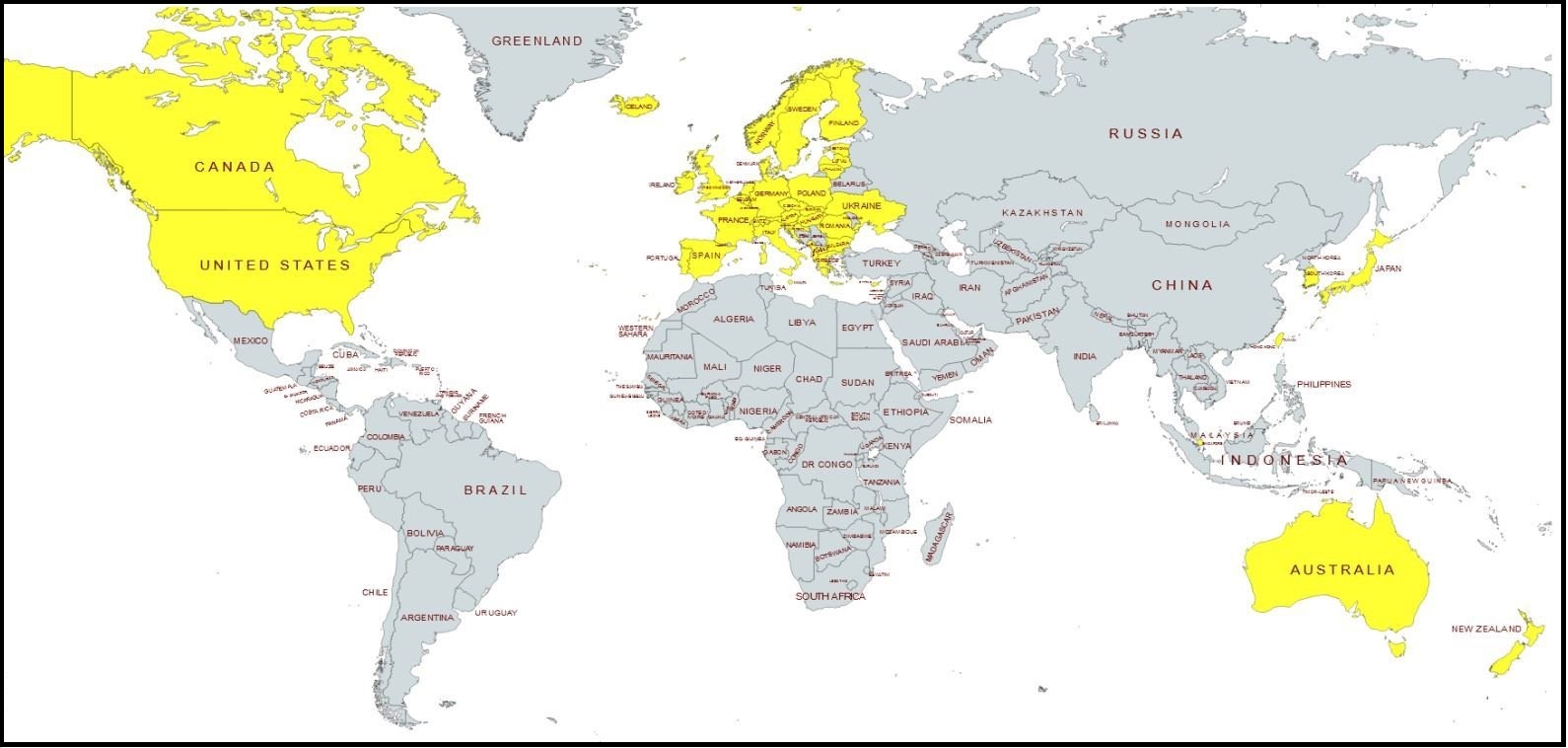
♦Context – According to official data from the World Bank, the combined Gross Domestic Product (GDP) of the European Union was just over $17 trillion US dollars in 2021. That is the last calculated measure.  The combined GDP value of European Union represents roughly 12.78 percent of the world economy.

According to analysts for Goldman Sachs, the current energy crisis in Europe has increased electricity prices at a rate that is increasing almost daily.  Within the data it is now estimated that households within the EU will pay an additional $2 trillion for electricity in the next year.

Put that $2 trillion into context with their GDP, and that scale of energy cost would be wiping out 12% of the purchasing strength within the total EU economy.  Forget about buying anything else, if this analysis is correct Europeans will be buying food and energy, nothing else.

If you consider what that means, it is bordering on full economic collapse of western Europe.

What is being described above is what we posited when we outlined the impact of the “Energy Economy” {Go Deep}.  When you suck 12% of the purchasing power out of an economic engine simply to maintain the status of current energy use, everything else starts to collapse.

Also keep in mind we are only talking about the direct impact of $2 trillion in electricity cost.  The downstream consequence is far greater because everything created, produced, or manufactured, including food, is dependent on electricity – which will drive the final cost to produce of all those products even higher.

The damage is almost unimaginable in scale.

[Fortune] – European households should brace for an expensive winter owing to the continent’s deepening energy crisis that will likely send electricity and heating bills soaring.

Energy affordability in Europe is reaching a “tipping point” that could peak next year, with total spending on bills across the continent growing by 2 trillion euros ($2 trillion), a Goldman Sachs research team, led by Alberto Gandolfi and Mafalda Pombeiro, said in a note published Sunday.

Many European households are already feeling the bite of a steadily worsening energy crisis, brought on by Russian natural gas producers intermittently pausing flows along the critical Nord Stream pipeline following Western sanctions this year.

Energy bills at some restaurants and coffee shops have already more than tripled this year, but with threats looming that natural gas supply from Russia could become even tighter as the Ukraine War rages on, analysts warn that Europe’s coming struggles are set to rival some of the worst energy crises on record.

“The market continues to underestimate the depth, the breadth, and the structural repercussions of the crisis,” the Goldman Sachs analysts wrote. “We believe these will be even deeper than the 1970s oil crisis.” (read more)

The economic contagion will not be isolated to Europe.

The impacts to the social fabric are also almost unquantifiable in scale.

Example: What happens to migration patterns when economic migrants are now considered a threat to scarce resources?

While the US is not quite in the same level of energy desperation, what we were discussing last week is an example of the problem we too may face.

Let’s say you are an average USA Main Street household with an income around $100,000/yr, and you now face an increase in electricity rates from $300 to $500 due to Joe Biden’s new national energy policy known as the Green New Deal.  That’s $200 more per month for this initial economic/energy “transition” moment.

That extra $200/month equates to $2,400 per year.

That $2,400 per year is static economic activity.  Meaning nothing additional was created, and nothing additional was generated.  The captured $2,400 is simply an increase in the price of a preexisting expense.

Take that expense and expand it to your community of 100 friends and family households.  The $2,400 now becomes $240,000 in cost that doesn’t generate anything.  $240,000 is removed from the community economy.  $240,000 is no longer available for purchasing other goods or services within this community of 100 households.

The economic purchasing power of the 100-household community is reduced by $240,000 per year.

Take that expense and expand it to your county of 10,000 households.  Now you are reducing the county economic activity by $24 million.  In this county of 10,000 households, $24 million in economic transactions have been wiped out.  Meals at restaurants, purchases of goods and services, or any other spending of the $24 million within the county of 10,000 households (approximately 25,000 residents) has been lost.

Now expand that expense to a larger county, quantified as a mid-size county, of 50,000 households.  The mid-sized county has lost $120 million in household economic activity, simply to sustain the status quo on electricity rates.  Nothing extra has been generated. $120 million is lost.  The activity within the county of 50,000 households shrinks by $120 million.

Expand that expense to a large county of 100,000 households, and the lost economic activity is $240 million.

Expand that expense to a small state of 1 million households (2.5 million residents), and the lost economic activity is $2.4 billion.

Expand that expense to a state with 5 million households (approximately 12 million residents) and the economic cost is $12 billion in lost economic activity unrelated to the expense of maintaining the status-quo on electricity use.   This state loses $12 billion in purchases of goods and services, just to retain current energy use.

These examples only touch on household expenses.  The community, county and state business expenses for offices, supermarkets, stores, etc. are in addition to the households quoted.

Meanwhile the Gross Domestic Product (GDP) of the community, county and state, remains static because the GDP is calculated on the total value of goods and services generated in dollar terms.  The appearance of a static GDP is artificial.  In real Main Street terms, $12 billion in economic activity is lost, but the price or increased value of electricity hides the drop created by the absence of goods and services purchased.

Fewer goods and services are purchased and consumed.  However, statistically the inflated price of electricity gives the illusion of a status quo economy.

Now expand that perspective to a national level and you can see our current economic condition.

All of this is being done under the justification of “climate change.”

Previously I would have said this level of economic impact in Europe would lead to a total revolt against the government.  However, with the backdrop of the recent COVID lockdowns and government control mechanisms in mind, and looking at the citizen compliance that took place in response to those government mandates, it is now more likely the citizens in Europe will simply bow to the energy control mechanisms of the governing authority.

It’s almost as if the COVID compliance effort was the test…
Three More Minutes of Succinct Sunlight from Mike Davis on the Fabrications of a Politically Motivated DOJ


Posted originally on the conservative tree house on August 31, 2022 | Sundance

Using the references of current events, attorney and former Constitutional Law Clerk for Justice Gorsuch, Mike Davis, once again astutely and succinctly summarizes and deconstructs the nonsense within the fabricated and political DOJ case against President Trump.  {Direct Rumble Link}

Mr. Davis walks through the claims and deconstructs the political arguments with citations to the constitution, lawful and applicable precedent, along with a direct hit on the motive of the DOJ and FBI effort.  In three minutes, Davis nails the top-line issues soup to nuts, WATCH:

.

Does the US Want War with China?


Armstrong Economics Blog/Politics Re-Posted Aug 30, 2022 by Martin Armstrong

China does not want a war with the US. The US, however, is continually provoking China by using Taiwan as its scapegoat. The US Navy announced that two warships will be traveling through the Taiwan Strait. The reasoning? The military aims to demonstrate freedom of movement through international waters. In other words, they deliberately want to anger China.

Nancy Pelosi began the subtle attack on China when she visited Taiwan and disregarded warnings from every intelligence agency. China repeatedly warned America not to interfere in its One China policy. Yet, Pelosi said she wants Taiwan to liberate Taiwan.

“We take this trip at a time when the world faces a choice between autocracy and democracy,” Pelosi said. “We cannot stand by as the CCP proceeds to threaten Taiwan — and democracy itself,” Pelosi said in a statement. “Our congressional delegation’s visit should be seen as an unequivocal statement that America stands with Taiwan, our democratic partner, as it defends itself and its freedom.”

China flexed its military power as soon as Pelosi left by performing almost a mock invasion through the skies and sea. As of this week, Taiwan reported 23 Chinese aircrafts and eight ships around Taiwan. Russia was provoked by NATO and backed into a corner before invading Ukraine. Beijing is increasingly feeling the pressure as the US is not actively abiding by its One China policy. Between the current recession, proxy war in Ukraine, and surmounting debt, the US is simply stretched too thin to enter a war with China.

Our models warn that geopolitical tensions will rise going into 2023. China is selling off US debt, which is another sign of coming geopolitical problems.

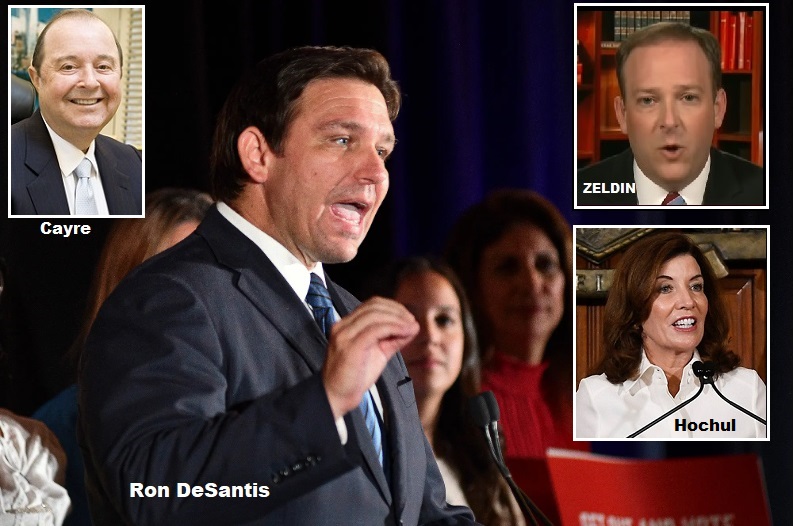
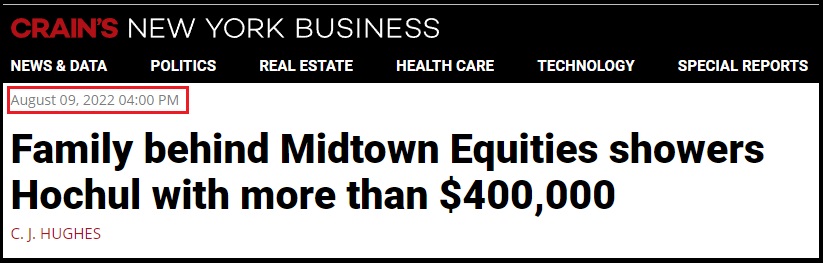
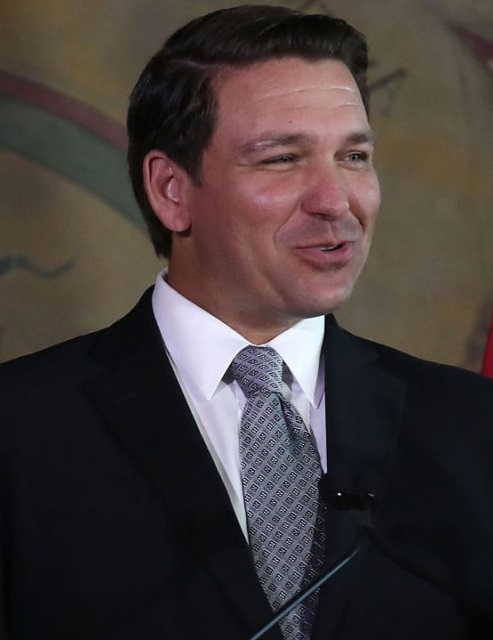
DeSantis Pulls Out of Lee Zeldin Fundraiser After Meeting with Billionaire Donor Who Just Gave More Than $400,000 to Kathy Hochul


Posted originally on the conservative tree house on August 30, 2022 | Sundance 

On Sunday evening the New York Post reported, “An unforeseen tragedy forced Governor DeSantis to reschedule his trip to New York,” Zeldin spokeswoman Katie Vincentz said, declining to elaborate. “While we’re rescheduling with Governor DeSantis for a later date, tonight’s fundraiser will proceed and is expected to raise almost a million dollars.” (link)

Monday afternoon the New York Post identified the “unforeseen tragedy“:

Florida Gov. Ron DeSantis backed out of a fundraiser for New York gubernatorial candidate Lee Zeldin to attend a Monday memorial service for a member of his security detail who died in the line of duty, sources told The Post.

Florida Department of Law Enforcement Special Agent Jose Perez was responding to a call in an unmarked cruiser on Aug. 2 when he was struck by Javier Sandoval, 35, in Miami.  Perez was rushed to the hospital with serious injuries and died on Aug. 20. […] While unable to attend the evening event, DeSantis was in Deal, New Jersey, earlier in the day at the home of Jay Cayre, head of Midtown Equities, sources told The Post. (link)

Despite Officer Perez passing away eight days earlier, apparently, Governor DeSantis was unaware of the Monday funeral plans when he flew the governor’s jet to New Jersey to meet with billionaire real estate mogul Joseph ‘Jay’ Cayre on Sunday, forcing him to cancel the Zeldin fundraiser a few hours later in New York, or so the story is told.

However, the background looks really bad.  Billionaire Joseph Cayre of Midtown Equities just gave New York Governor Kathy Hochul “more than” $400,000 for her campaign against Lee Zeldin, right before DeSantis showed up. [LINK]

[Source Link]

Ron DeSantis flies to New Jersey/ New York on Sunday, meets with billionaire developer Joseph Cyre, who just donated $400k+ to Democrat candidate Kathy Hochul. Immediately following the meeting, DeSantis cancels the fundraiser with Hochul’s opponent, Republican Lee Zeldin, and returns to Florida.   Apply Occam’s Razor here.

The funeral was announced the 26th [CITATION].  Governor DeSantis knew the date/time for the funeral (29th) before he got on the plane (28th).

[Source Link]

So, what changed?  Horrible unforeseen circumstances, or a request from a Big Club donor?   The timing and circumstances look terrible.

The team behind DeSantis has promised to reschedule with Zeldin.

Also, in positive Florida news:

Florida Governor Ron DeSantis announced a leading investment in clean energy for Florida today with a $68 million award for 227 electric transit buses, and an unknown secondary distribution from the Dept of Environmental Protection for 218 electric school buses.  [Details Here]

TALLAHASSEE, Fla. — Today, Governor Ron DeSantis celebrated another step in the state’s efforts to modernize public transit and reduce air pollutants caused by diesel emissions. Through the Volkswagen settlement, the Department of Environmental Protection (DEP) is awarding more than $68 million that will secure 227 electric transit buses in 13 counties statewide that will replace existing diesel transit buses in Alachua, Broward, Duval, Escambia, Hillsborough, Leon, Marion, Miami-Dade, Monroe, Orange, Palm Beach, Pasco, and Pinellas counties.

“This funding will help lower emissions while also bringing our transit bus fleets to more modern standards,” said Governor Ron DeSantis. “This is a win-win for air quality and advancing the state’s efforts to bolster growing electric vehicle usage.”

In addition to today’s announced electric transit bus grant awards, DEP has also awarded grants to seven school districts to purchase a total of 218 electric school buses in Broward, Manatee, Miami-Dade, Orange, Palm Beach, Pinellas, and Sarasota counties. Introducing electric buses is an important and effective way to reduce harmful emissions, especially in highly populated areas where mobile sources are the largest sources of air pollution. As more and more electric vehicles are deployed, emissions of air pollutants will be reduced, which will continue to improve Florida’s air quality. (read more)

Democrats discuss hunger problem in US


One America News Network Published originally on Rumble on August 24, 2022

House Speaker Nancy Pelosi and others gathered in San Francisco to discuss the issue of hunger in the US. One America’s James Meyers has more.

Treehouse Tips


Posted originally on the conservative tree house on August 24, 2022 | sundance

**Bumped, 8/23/22 8:30pm ET**

My jaw came near the floor when I opened July’s electricity bill to find a notification of a 28% increase in electricity rates, effective immediately.  An increase of 28%…. just like that. This month, August, even higher with less use.

After the initial shock wore off, I started thinking about what this means to the working-class people in my community.

Already struggling with a doubling of gas prices, massive food price increases at the grocery store and the pain of all costs for goods far outpacing any rate of wage increase, this type of uncontrollable increase in price of electricity is going to hit hard.

In the past we have used CTH threads to spotlight the smart thinking and resourcefulness of Treepers from all walks of life.  A discussion thread where people can share tips, things that can actually be done, to help offset the financial pressures during severe economic times.  I think we may all benefit from starting a series of post like that again.

Let us share our wisdom and experience again.  There are many thousand who will benefit, as I have always done, from reading your smart tips and suggestions.

What ideas, tips and suggestions do you have to help people save money on ordinary life and living expenses?

These are painful economic times and the stress that is caused by financial worry is some of the most horrific family stress that people can face.  Let us come together with tips as a community to help each other.   No suggestion is too small.  What advice do you have that can help people save money on monthly expenses?

During one of our previous discussions someone gave a tip about putting a clean dry towel in the clothes dryer as a way of cutting down drying time and energy used.  I tried it and jumping ju-ju-bones it worked fantastically.  Simply putting a dry towel into the dryer when you add the wet clothes from the washer reduces laundry drying time by around 25%.  Not only does that save time, but it also saves money – and it was so simple.

So, what suggestions do you have?   Tips about anything and everything that might lower the monthly cost of ordinary life. No tip is too small. No suggestion is too odd.  Your advice can/will make a difference.

Please use the comments section to drop your advice.

Thanks again for being part of our fellowship.

Love to all.

Sunday Talks, Representative Scott Perry Discusses His Encounter with a Tyranical DOJ


Posted originally on the conservative tree house on August 14, 2022 | sundance

Representative Scott Perry, R-Penn., appears with Maria Baritomo to discuss his experience with the FBI after agents confiscated his cell phone. Additionally, Mr Perry discusses the Biden administration’s handling of national security issues including China, Iran and the U.S-Mexico border. {Direct Youtube Link}

.

US National Debt to Surpass 185% of GDP


Armstrong Economics Blog/Sovereign Debt Crisis Re-Posted Aug 2, 2022 by Martin Armstrong

The Congressional Budget Office warned that US federal debt is expected to rise 185% within the next 30 years. Total debt holdings could double the size of US GDP by 2051. No politician or spender of this debt cares as they have no intention of paying it off. The Congressional Budget Office is calling this an optimistic forecast, given the previous estimate of debt soaring to 202% of GDP by 2051. The fact of the matter is that no one can foresee how much money politicians will continue to spend. Servicing the debt will become more expensive over time, expected to reach 10% of GDP by 2051, 7.4% in 2042, and 5.1% in 2032.

Most do not realize that the national debt is already at monumental levels. US gross federal debt to GDP reached 100% by 2012. The ratio remained somewhat stagnant until capitalism became sick with COVID in 2020, and the GDP to debt ratio rose to 128.1%. The figure stood at 137.2% by December of 2021 and has continued to increase.

China no longer wants US debt and has begun to sell off its holdings. As other currencies decline relative to the dollar, US debt, and all government debt in general, no longer seems like a smart investment. We have reached a point where Congress can continue to pass bills and bribe voters with socialistic promises from their latest puppets because no one cares about the future of America. The US will be the last to fold but expect the inevitable as countries, city-states, and governments are all temporary in the eyes of father time.

Sunday Talks, Fed Chief Kashkari Says High Inflation Spreading More Broadly Throughout Entire Economy


Posted originally on the conservative tree house July 31, 2022 | Sundance

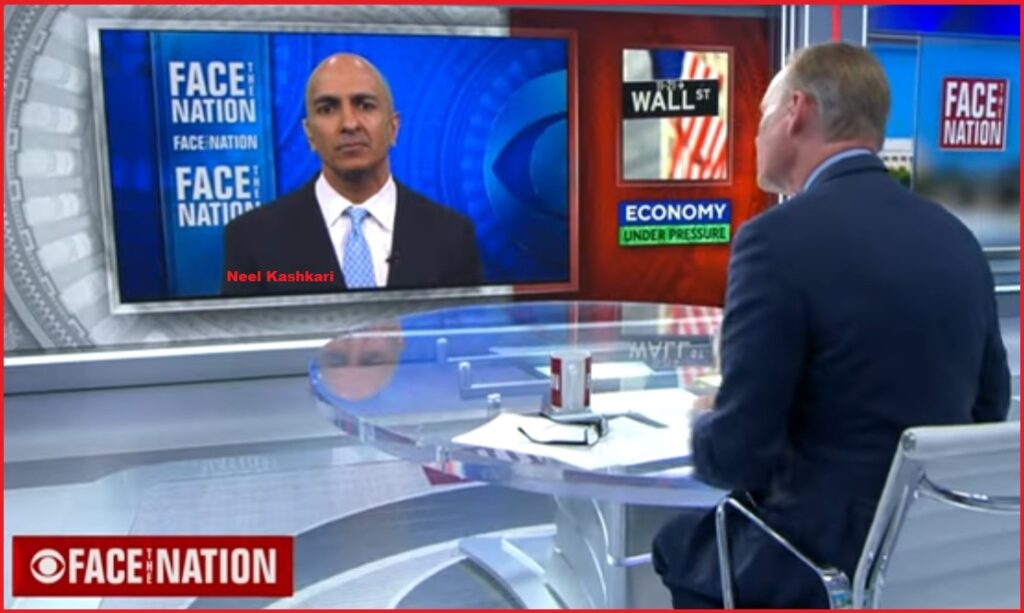
The pretending from the federal reserve chairs continues.  In this interview, Neel Kashkari, the head of the Federal Reserve Bank of Minneapolis, says “we keep getting surprised” by data on inflation, which continues to be “higher than we expect, across the broad range of the economy.”  Yet, notice that Kashkari refuses to outline the single cause of the broad inflation is the intentional lack of energy production. [Transcript]

Kashkari continues the selling point that demand side inflation is being targeted because demand still exceeds supply.  That’s essentially true, however, it is the supply of energy that is fundamentally disrupted by Joe Biden energy policy.  It is not consumer demand for goods and services, it is the structural need for consumers to have consistent, affordable energy resources.

The collapse of energy production from domestic coal, oil and gas development is the problem.  Everything else is ancillary to the origination problem.  However, in order to support the climate agenda, the Federal Reserve must pretend not to know this. WATCH:

Kashkari notes a serious problem can arise when wage inflation starts to catch up with inflation overall.  THAT just happened last month.  The combination of wage inflation to match the high consumer inflation then drives an even higher cost for goods and services.  This is the inflation storm that leads to hyper-inflation, structurally high inflation that cannot be controlled by any monetary measure, and unfortunately, we just entered the first outer bands of this inflation hurricane last month.

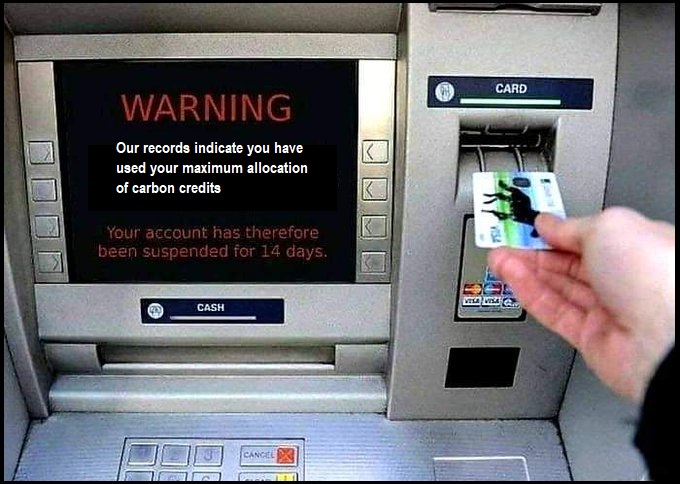
A personal sidenote: when we were going through the pandemic crisis and response in 2020/2021, CTH took heat for saying the real objective at the end of the pandemic path was the global climate change agenda.  Well, here we are.  At the end of this climate change path is full control over human activity using digital currency.  Hunger games.

[Transcript] – JOHN DICKERSON: We turn now to the president of the Minneapolis Federal Reserve, Neel Kashkari. Good morning, Neel. Inflation–

PRESIDENT OF THE FEDERAL RESERVE BANK OF MINNEAPOLIS NEEL KASHKARI: –John, thanks for having me.

JOHN DICKERSON: Thank you for being here. Okay. Everybody wants to know inflation, still hot? What is it? What does it look like to you?

KASHKARI: It’s very concerning, you know, we keep getting inflation readings, new data that comes in, and as recently as this past week, and we keep getting surprised. It’s higher than we expect. And it’s not just a few categories. It’s spreading out more broadly, across the economy. And that’s why the Federal Reserve is acting with such urgency to get it under control and bring it back down.

JOHN DICKERSON: Wages within that, what does the wage picture look like in two different ways, we measure it, both just on its own, and then relative to inflation?

KASHKARI: For most Americans, their wages are going up, but they’re not going up as fast as inflation. So most Americans, real wages, real incomes are going down. That’s why families are finding it increasingly hard to make ends meet. When they go to the grocery store, when they buy necessities, they’re not able to buy as much because they’re getting a real wage cut, because inflation is growing so quickly. I mean, typically we think about wage driven inflation, where wages grow quickly. And then that leads to higher prices in a self fulfilling spiral. That is not yet happening. High prices and wages are now trying to catch up to those high prices. Those high prices are being driven by supply chains and the war in Ukraine, among other factors. And so we need to get the economy back into balance before this really does become a wage driven inflation story.

JOHN DICKERSON: Let me ask you about a figure that people may not know as much about, everybody knows about the consumer price index and inflation, the economic cost index came out this week. And some economists look at that as a signal for inflation. Tell me what you saw in the economic cost index this week.

KASHKARI: Well, we have a lot of different measures, for example of wages, of what’s happening to wages. And ECI, as I call it, is one measure that it’s a- it’s a robust measure of what’s happening to wages and what’s happening to benefits, and wages continue to climb. And on one level, that’s a good thing. We want Americans to be making more money. But if wages are climbing, such that the economy shows that it’s overheating, that tells me that the Federal Reserve has more work to do to bring inflation down to bring the economy into balance just at its basic level. Inflation is when demand is outstripping supply. We know supply is low because of supply chains, because of the war in Ukraine, because of COVID. We hoped that supply would come online more quickly, that hasn’t happened. So we have to get demand down into balance. Now, I hope we get some help on the supply side. But that doesn’t change the fact that the Federal Reserve has its job to do, and we are committed to doing it.

JOHN DICKERSON: We have 30 seconds left. Help on the supply side, what does that mean?

KASHKARI: Well, I talked to a lot of global businesses who are trying to get their supply chain sorted out so that they can meet their customers’ needs and make sure that there are products on the shelves. They’re making some progress. There’s some signs, it’s getting better, but it’s taking a lot longer than they thought and that I thought and so that means we cannot wait till supply fully heals. We have to do our part with monetary policy.

JOHN DICKERSON: We’re gonna take a commercial, we’ll be back to continue this conversation with Neel Kashkari. Stick with us.

JOHN DICKERSON: Welcome back to Face The Nation. We continue our conversation with Minneapolis Federal Reserve’s Neel Kashkari. Neel, let’s pick up where you left off on this question of supply. When I was talking with two senators earlier there was this debate about whether taxation on companies that don’t pay a minimum level of taxation will have their supply hurt. So in other words, you tax- tax them supply goes down, that hurts with inflation. What’s your assessment of that?

KASHKARI: You know, long over the long term, that’s probably true. On the margin, people say that about raising interest rates, why raise interest rates, that’s going to make it more expensive for firms to invest. And that’s going to not help with the supply side. That’s true over the long-term. But over the short-term, the demand side effects totally swamped the supply side effects. And so when I look at a bill that’s being considered that your two senators talked about, my guess is over the next couple of years, it’s not going to have much of an impact on inflation. It’s not going to affect how I analyze inflation. Over the next few years, I think long term, it may have some effect. But over the near term, we have an acute mismatch between demand and supply. And it’s really up to the Federal Reserve to be able to bring that demand down, and we’re committed to doing what we need to do.

JOHN DICKERSON: Neel, help me understand recessions. There is a debate in Washington that’s full of political gamesmanship. So take us inside why it matters if America is in a recession, and what the component parts are, that are a part of that and how that helps us understand the health of the economy.

KASHKARI: Well, it really matters when Americans feel it, when Americans are, especially in the job market. That’s the most important part of the economy, so to speak, for Americans is their job. Do they have a decent place to work and earning decent wages? And typically, recessions are, they demonstrate why job loss is high unemployment, those are terrible for American families. And we’re not seeing anything like that. The labor market so far, is very strong, we are seeing some sectors like the tech sector start to shed workers or start to cool down in hiring. But fundamentally, the labor market appears to be very strong. While GDP, that the amount the economy is producing, appears to be shrinking. So we’re getting mixed signals out of the economy. From my perspective, in terms of getting inflation in check, whether we are technically in a recession or not, doesn’t change my analysis. I’m focused on the inflation data. I’m focused on the wage data. And so far, inflation continues to surprise us to the upside, wages continue to grow. So far, the labor market is very, very strong. And that means whether we are technically in a recession or not, doesn’t change the fact that the Federal Reserve has its own work to do. And we are committed to doing it.

JOHN DICKERSON: Last 20 seconds, Neel, on GDP when it goes down, isn’t that kind of what the Feds trying to do? Slow down growth? So is that a good number?

KASHKARI: Well, we definitely want to see some slowing. We don’t want to see the economy overheating. We would love it if we can transition to a sustainable economy without tipping the economy into recession. There’s not a great record of doing that. Typically when the economy slows down, it slows down by quite a bit, especially if it’s the central bank that is inducing the slowdown. So we’re going to do everything we can to try to avoid a recession. But we are committed to bringing inflation down and we’re going to do what we need to do. And we’re a long way away from achieving an economy that is back at 2% inflation and that’s where we need to get to.

JOHN DICKERSON: All right, Neel Kashkari. Thanks so much for being with us. And we’ll be back in a moment. (read more)

Domestic Exodus from US Cities


Armstrong Economics Blog/Real Estate Re-Posted Jul 28, 2022 by Martin Armstrong

The US Census Bureau reported that 8.4% of Americans moved in 2021, beneath the 9.3% who moved at the height of the pandemic panic in 2020. Numbers for 2022 may show an uptick in migration to the suburbs or rural areas. Our models indicate that overheating in the housing market will be less prevalent in less populated areas as we are not merely dealing with housing inflation but also mass domestic migration.

Housing may be cheaper in rural areas, but there are additional costs associated with living in the country. There is no public transportation, and people must travel longer distances for work, groceries, shopping, health care, and more. Energy prices are sky-high, and simple trips cost significantly more. Iowa State University professor Dave Peters, as reported by the AP, has been studying the impact inflation has had on rural America. Peters estimates that rural households pay $2,500 more per year for gas alone compared to those living in cities.

Still, prices for housing in the country v the city more than makeup for increased energy costs. Remote work has made rural living a prospect for many Americans. The National Association of Realtors found that rural areas saw a 54.6% uptick in inbound moves in 2021, followed by micropolitan areas (i.e., small towns) at 53.8%.

In January, the Association of Equipment Manufacturers (AEM) said that certain remote workers were enticed by rural life after pandemic burnout. They found that people were seeking to abandon the hustle and bustle of city living, citing lower living costs, safer environments, fewer people, no traffic, lower housing prices, different cultures, and politics.

Gone are the days of people flocking to the cities for opportunities. As long as there is an internet connection, the modern American can work from anywhere. As the average potential buyer is priced out from their hometown, the prospect of rural or small town life is increasingly enticing.