NBC Pushes Midterm Media Poll


Posted originally on the conservative tree house on October 23, 2022 | Sundance

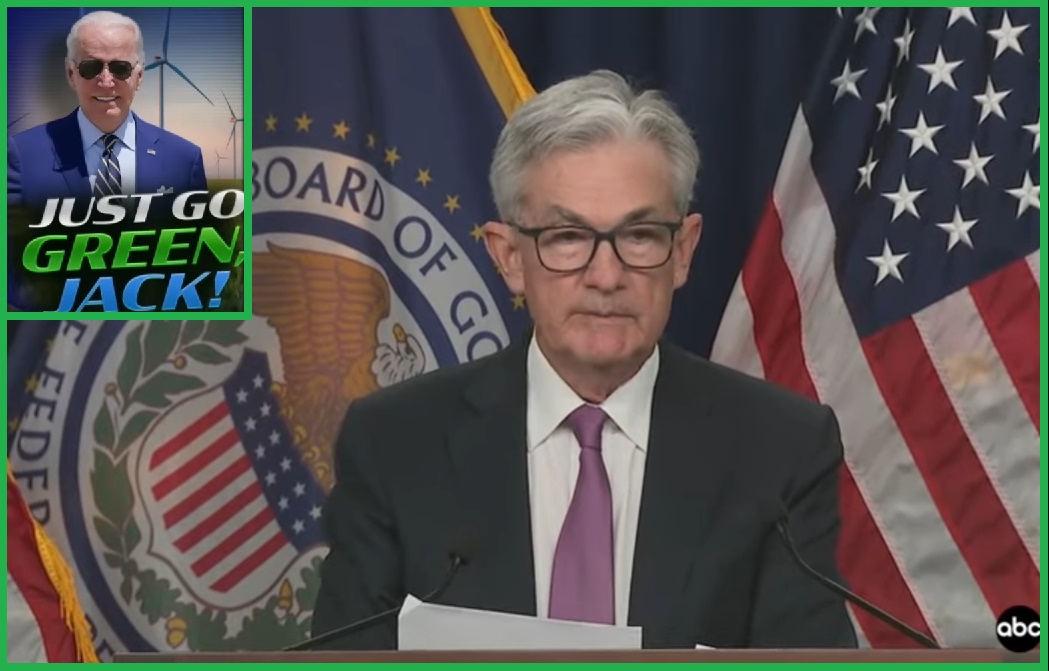
NBC’s Mark Murray {Eyeroll} produces a midterm media poll {DATA HERE} to frame the 2022 election and claim a tight race for both Democrats and Republicans.  Despite collapsing economic numbers, widespread inflation and disapproval on every category, NBC finds the #1 issue for all voters is “The Threat to Democracy.”

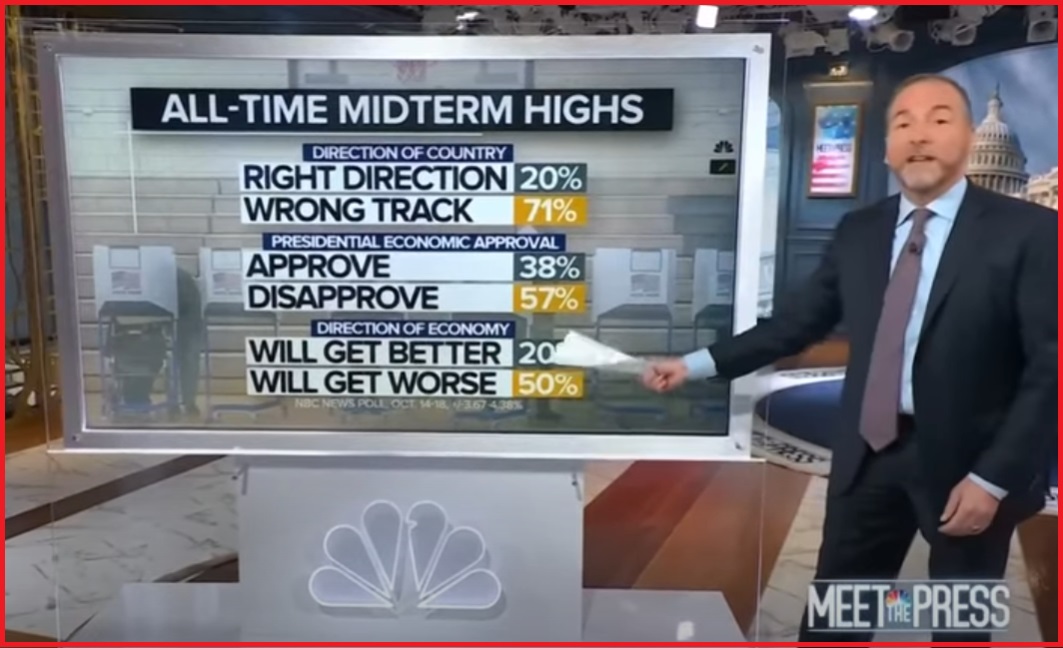
NBC’s Chuck Todd gives the spin on the outcome:

.

71% of the country say we are on the wrong track (20% approve).

57% of the country disapproves of the job Biden is doing with the economy (38% approve).

50% of the country says things will get worse (20% think will improve)….

…. But it’s a close election?…

…. And the #1 concern is “the threat to democracy?

It’s all propaganda.

New England Power Officials Warn of Pending Winter Crisis as Natual Gas Prices Skyrocket and Electricity is Likely to be Rationed


Posted originally on the conservative tree house on October 18, 2022 | Sundance

New England consists of six states in the US Northeast, Connecticut, Maine, Massachusetts, New Hampshire, Rhode Island, and Vermont.  The states have been warned by regional ISO electricity providers for several years about their vulnerability if the winter weather is harsh and there is a significant increase in demand for home heating.  Those warnings are now multiplied by the massive price increases for natural gas.

Keep in mind as all these natural gas and LNG issues surface, the U.S. has been exporting natural gas to Europe as part of the Biden effort to subsidize the NATO effort against Russia.  Prices for natural gas have skyrocketed, and now shortages of the fuel source for energy production may create even bigger problems for New England.

[Via Zero Hedge] – […] The region’s power mix changes have left it increasingly reliant on international NatGas spot markets. State governors have asked US Energy Secretary Jennifer Graholm to waive the Jones Act and allow foreign-owned tankers to ship LNG from the US Gulf region. 

All of this has led to New England residents facing some of the highest electricity bills in years. Heating season is already underway. 

New England ISO expects the grid will be stable if there’s a mild-to-moderate winter. However, if there’s an extreme cold spell across the Northeast, then grid chaos could unfold: “The grid overall is in a much tighter position.

“If we get a sustained cold period in New England this winter, we’ll be in a very similar position as California was this summer,” Nathan Hanson, a senior vice president of energy and commercial management of LS Power Development LLC, which has two NatGas power plants in New England, warned. (more)

According to the U.S. Energy Information Association (IEA), U.S. storage of Liquified Natural Gas (LNG) is 12% below the five-year average (LINK).  Additionally, the IEA is expecting the U.S. to export 11.7 billion cubic feet of LNG per day during the fourth quarter of 2022 — up 17% from the third quarter. The destination of that export is Europe.

Consider that 43% of U.S. households use natural gas for home heating, and power suppliers use natural gas to create electricity.  With the massive 2022 exports of LNG to Europe (+17% in fourth quarter alone), that means lower domestic supplies and increased prices here in the United States for electricity and home heating.  We are seeing and feeling these massive price increases right now.

Barrons – […]  If you need more evidence of the impact of natural gas exports on prices, just compare supply and demand fundamentals for the year leading up to February 2020 (the last pre-pandemic month) versus the year leading up to this May (the most recent month with full federal data). Annualized production rose over the period, while domestic consumption remained roughly flat. Yet LNG exports almost doubled—a surge that tightened U.S. gas markets and doubled the price that U.S. consumers pay for the fuel. 

The growth of global demand for U.S. LNG can be tied to many market forces, including the shortfalls in Europe due to Russia’s manipulation of European Union gas markets. Sustained high demand in wealthy Asian nations has contributed to export growth as well. And so has the U.S. gas industry’s dogged determination to ship its wares to the highest bidder, foreign or domestic. 

Russia’s role has been particularly critical in the rise of global LNG demand. As Russia choked off gas shipments to Europe, EU buyers have turned to global LNG markets to make up the shortfall. Global LNG prices rose in response, and U.S. LNG companies ramped up output, shipping more cargoes to Europe. But Russia responded by further clamping down on gas supplies to the EU—a vicious circle that has hurt Europe’s economy even more severely than it has harmed America’s.

There’s little sign that U.S. gas prices will ease in the coming years. Freeport’s demand will be back online soon enough, and there are three other massive LNG export projects under construction, with more than a dozen of others waiting for financing.

[…] Curiously, federal regulators have consistently found that the gas export projects are in the public interest—meaning they were in the economic interest of LNG companies and gas drillers. But now, exports are creating sky-high costs for U.S. consumers, and drillers are reluctant to boost gas output lest prices fall back to earth. So, it’s high time to consider whether soaring U.S. LNG exports are actually in America’s interest—or if, instead, runaway LNG exports are fueling energy inflation and undermining the nation’s economic competitiveness. (read more)

Not only are U.S. taxpayers directly paying for the majority of costs in Ukraine, but we are also subsidizing the European Union by exporting LNG and driving up the price for energy here at home.  Here’s the Wall Street Journal talking about the risks to New England:

[Via Wall Street Journal] – New England power producers are preparing for potential strain on the grid this winter as a surge in natural-gas demand abroad threatens to reduce supplies they need to generate electricity.

New England, which relies on natural-gas imports to bridge winter supply gaps, is now competing with European countries for shipments of liquefied natural gas, following Russia’s halt of most pipeline gas to the continent. Severe cold spells in the Northeast could reduce the amount of gas available to generate electricity as more of it is burned to heat homes.

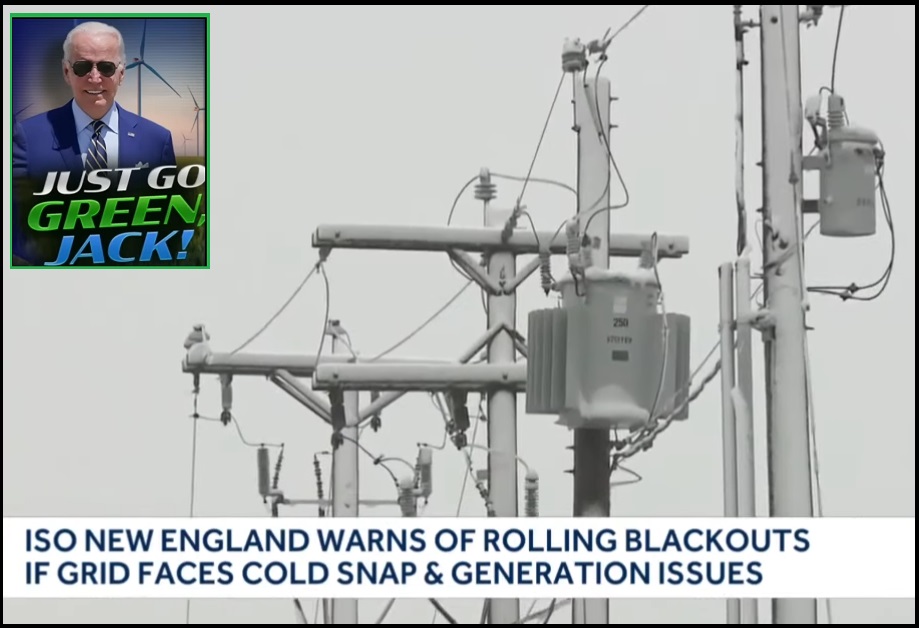
The region’s power-grid operator, ISO New England Inc., has warned that an extremely cold winter could strain the reliability of the grid and potentially result in the need for rolling blackouts to keep electricity supply and demand in balance. The warning comes as executives and analysts predict power producers could have to pay as much as several times more than last year for gas deliveries if severe weather creates urgent need for spot-market purchases.

“The most challenging aspect of this winter is what’s happening around the world and the extreme volatility in the markets,” said Vamsi Chadalavada, the grid operator’s chief operating officer. “If you are in the commercial sector, at what point do you buy fuel?”

Power producers in New England are limited in their ability to store fuel on site and face challenges in contracting for gas supplies, as most pipeline capacity is reserved by gas utilities serving homes and businesses. Most generators tend to procure only a portion of imports with fixed-price agreements and instead rely on the spot market, where gas prices have been volatile, to fill shortfalls. (more)

.

The Next Winter of Death


Armstrong Economics Blog/Corruption Re-Posted Oct 18, 2022 by Martin Armstrong

Remember when Biden publicly chastised the unvaccinated population last year? Do the “right thing,” and you will “get through this.” Those selfish enough to choose medical autonomy, the president stated, were “looking at a winter of severe illness and death for yourselves, your families, and the hospitals you may soon overwhelm.”

We have definitive proof that Pfizer did not test the vaccine against transmission. Governments globally pushed a false narrative, a blatant lie, to force people to take these vaccines. Biden’s memorable speech demonized a portion of the population. You will get sick because of them.

Now that the lie has finally been revealed, the White House is still pushing Americans to receive yet another booster. Headlines are appearing across the liberal news about the “temperatures dropping,” as if that is a factor. Look into it yourself, and you will notice the “temperatures dropping” fear-mongering in the media as if COVID and not the depletion of energy resources should be the catalyst for fear.

The White House expected between 13 and 15 million Americans over the age of 12 to receive another dangerous booster. That means only 5% of the eligible population is willing to play along with the COVID games. Washington and the CDC will unleash a marketing campaign to sell the toxins one way or another, but fewer will comply. Politico reported that they expect less than 30% of the population to receive the next shot.

The next winter will be one of death and destruction, but not because of COVID. The energy crisis will cause death and destruction, as will the war in Ukraine and every nation it “may soon overwhelm.”

The Great Economic Pretending Has Become Absurd, WSJ Economists Ignore Current Reality and Ponder Possibility of Recession in 2023


Posted originally on the conservative tree house on October 18, 2022 | Sundance 

I do not know how to describe this with the Through The Looking Glass absurdity it deserves.

The ability of financial media and national economists to suspend accepting current reality, while making claims about the possibilities for next year, is ridiculous. Ask me why this era of great economic pretending is underway, and I have no answer. The intellectual dishonesty is beyond my comprehension.

The first and second quarters of the U.S. economy showed negative Gross Domestic Product valuations (GDP). We just finished the third quarter (July, Aug, Sept) and the likelihood of another negative GDP is high. Production is down, demand is down, consumer spending is down, inventories are climbing, and the economy is contracting. We are in a literal, technical and structural recession. Considering the Q1 and Q2 outcomes, we have been in a recession all year.

The Wall Street Journal publishes an article citing several notable economists who are putting the likelihood of a 2023 recession at 63%.

(WSJ) – […] On average, economists put the probability of a recession in the next 12 months at 63%, up from 49% in July’s survey. It is the first time the survey pegged the probability above 50% since July 2020, in the wake of the last short but sharp recession.

Their forecasts for 2023 are increasingly gloomy. Economists now expect gross domestic product to contract in the first two quarters of the year, a downgrade from the last quarterly survey, whereby they penciled in mild growth.

[…] Forecasters have ratcheted up their expectations for a recession because they increasingly doubt the Fed can keep raising rates to cool inflation without inducing higher unemployment and an economic downturn. Some 58.9% of economists said they think the Fed will raise interest rates too much and cause unnecessary economic weakness, up from 45.6% in July. (read more)

They are analyzing a pending recession in 2023 without even admitting we are in a recession right now. AT THIS VERY MOMENT.  We have two consecutive negative quarters of economic growth behind us (another Q3 result pending), and these economists are discussing a recession “next year“?

I feel like I’m behind a mirror in a parallel universe looking at financial pundits and economists pretending our reality is something completely different from what it is.   This is madness.

♦ “Managing the transition,” is a phrase we have heard often – but what does it mean?

This is the only explanation I can fathom for this era of great pretending.

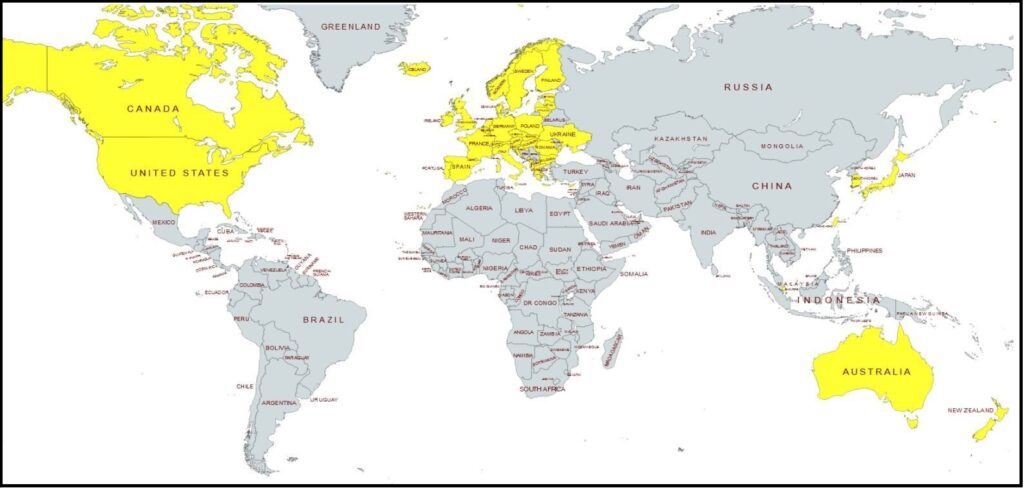
As you are well aware the various western nation central banks including the U.S. Federal Reserve, have raised interest rates into a global economic contraction, a drop in demand.  Raising interest rates into a contracting economy is counterintuitive, it runs against the expressed interest of government to grow economic conditions.  However, there is a purposeful design to the contradiction.  [A TLDR Version Here]

The central bankers are trying to support western government policy.  Unfortunately, the government policy they are under obligation to support is the fundamental shift in energy development, or what the World Economic Forum (Davos Group) has called the “Build Back Better” climate change agenda.

Monetary policy can only impact one side of the inflation challenge.  The western bankers (EU central bank, U.S. federal reserve bank, and various banking groups) are raising interest rates in order to “tame inflation” by “taming demand.”  However, as you know the global economic demand has been declining for several quarters.  There is no excess demand, and there hasn’t been demand side pressure all year.

Raising interest rates into an already contracting economy does one thing, it speeds up the rate of economic contraction.

Economic contraction is the lowering of economic activity.  Raise interest rates -in a general sense- and businesses invest less, borrowers borrow less, consumers purchase less, employers expand less, and the economy overall slows down. When the economy turns negative, meaning less products and services are produced, we enter a recession. Some businesses and employers do not survive a recession and subsequently unemployment rises.

During recessionary periods people buy less stuff, people have less income stability, and economic activity drops.  When the banks raise interest rates into an economy that is already stalled or contracting, unemployment and general pain on Main Street increases.  Workers are laid-off, incomes shrink, consumer spending drops and that leads to less employment.  Recessions are bad for middle-class and working-class people.   This is what the Wall Street Journal is describing for 2023.

“Employers are expected to respond to lower growth and weaker profits by cutting jobs in the second and third quarters. Economists believe that nonfarm payrolls will decline by 34,000 a month on average in the second quarter and 38,000 in the third quarter. According to the last survey, they expected employers to add about 65,000 jobs a month in those two quarters.” (link)

From the perspective of the western politicians and central banks, there is one benefit from a recession…. Energy use drops.

People travel less; businesses operate shorter work schedules; manufacturing stops; overall fewer goods are produced because less consumer spending is taking place.  From the perspective of the groups who want to see overall energy consumption drop, a recession is a good thing.

A recession also brings along a natural drop in energy prices as less overall energy is used inside an economy that is slowing, stalled or contracting.

Oil prices drop as less oil is needed for the manufacturing of goods.  Energy use in transportation also drops and generally gasoline prices drop because less transportation fuel is needed, because fewer goods are being transported.  When the economy goes into a recession, energy use and prices always drop.

Put these factors together and you start to see how the transition to a new western energy policy, the Build Back Better agenda, benefits from a recession.

This is the essential understanding needed to reconcile why central banks would intentionally create an economic contraction.  This is the great pretending. The bankers are supporting the governmental objective of transitioning the western economy into a new energy system away from oil, coal and natural gas.

The banks are supporting the policy makers.  However, the central banks cannot openly admit what they are doing to support the politicians and policy makers.

In this weird new era, the banks are being instructed to support the policy makers without actually admitting they have changed their monetary mission.  The central bankers will continue to say their job is to manage and/or balance employment and inflation.  However, what they will not admit is their unspoken agenda to support the political decisions.

Instead, almost all the central banks are saying their interest rate hikes are intended to cool inflation by lowering demand.

However, it is not excess demand that is driving inflation; it is the policy making behind the energy transition that is driving higher costs on everything.  The origin of inflation is on the supply side.

The supply-side of the inflation dynamic is being overwhelmed by massive increases in energy costs which are the results of intentional western policy.  Extreme increases in consumer prices are the outcome of these energy price increases.  The overwhelming majority of consumer price inflation is being caused by energy policy, not demand.

The various central banks and monetary policymakers know this.  In fact, they are lying about their motives.  They have to lie, because if they were to tell the truth there would be an uprising, and the success of the energy agenda would be put at risk.

In order to support the energy objectives of the various governments’, the central banks are trying -and succeeding- to lower economic activity.

Less economic activity means lower energy needs.  This is what they call “managing the transition” to the new economy based on “sustainable energy.”

The banks and policy makers are ultimately managing the economic decline in order to Build Back Better in the future.  This is why the originating charter of the central banks is being ignored, and the banks are raising interest rates into an already contracting economy.

None of this is being done accidentally.  All of this is being done with forethought and implicit intention.

Unfortunately, for the average person this means the banks and policy makers have entered a phase where it is in their interests to shrink the global economy.  They are trying to control the collapse of the various economies by working together.  This is what they mean by “managing the transition.”

Managing the transition means less jobs, less work, a lower standard of living, and a period of extreme financial pressure for the average person.

Eventually, we will reach a point where the government(s) will need to step in and fill the gap from the declined economic activity.  Bailouts and subsidies will be needed as they were in the COVID lockdowns.  Unemployed workers and the people being impacted by a prolonged economic recession will need subsidies in order to survive.

The government policy makers are planning to do just that, spend more.  They practiced during the COVID economic lockdowns, now they seem to be positioning to execute a similar policy path as they manage the energy transition.

We have only just entered the beginning phase of this Build Back Better agenda.  No one, including the banks and policy makers, have any idea how long this is going to take.

We could be in this period of severe economic contraction for several years, perhaps decades, until their grand design of a new energy future is complete.  This has been the discussion at the World Economic Forum (WEF), as the instructions were passed out.

The entire time the western government architects are doing this, they must keep the demand for traditional energy products like coal, oil and gas at the lowest level possible.  That is why the central banks and politicians must keep economic activity at the lowest -yet survivable- rate possible.

Financial analysts and economists are pretending not to know this is our reality.  All the pretending in the world will not change the reality on Main Street; pretending will only create a divide between those who admit and those who deny.

The next President will be the political leader who admits the reality and affirms the proper cause.

Major Merger Announced, Kroger and Albertsons Announce Merger Deal Worth $24.6 Billion


Posted originally on the conservative tree house on October 14, 2022 | Sundance 

Not that long ago, I would have said to allow the free market to decide if a merger or acquisition was valuable for the consumer.  However, in the era where massive multinational corporations, investment groups and financial institutions have now used corporatism to merge their interests with government, the massive multinationals need scrutiny.

Two major food retailers, Kroger and Albertsons, have announced their intent to merge into one massive company in a deal valued at $24.6 billion.  The majority stakeholders in Kroger are institutional investors Vanguard ($3.72 billion/11.29%) and Blackrock ($3.02 billion/ 9.17%).   The majority stakeholder in Albertsons is institutional investment group Cerberus ($3.90 billion/28.54%).

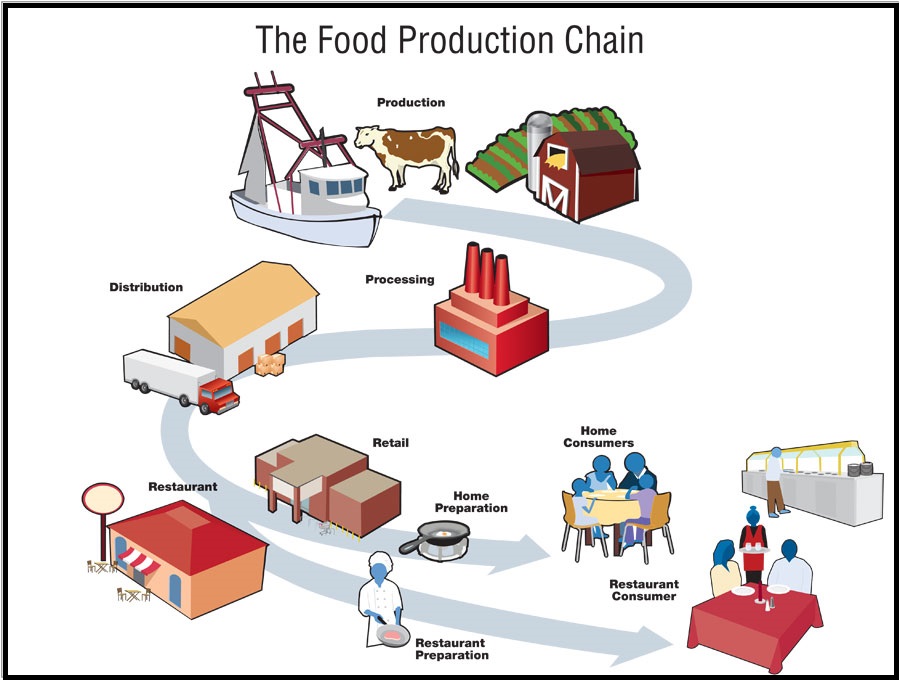
In the past few years, food has surfaced as a growing national security issue.  Foreign companies and large multinationals continue to expand their control over U.S. farm production and export U.S. farm products (Big Ag).  A major retail level move like the merger of Kroger and Albertsons creates a weaker competitive environment and gives a larger potential footprint to price control.

CBS – […] Together, the companies will have more than 710,000 workers and operate nearly 5,000 stores, along with roughly 4,000 pharmacies. Kroger, based in Cincinnati, Ohio, operates 2,800 stores in 35 states, including brands like Ralphs, Smith’s and Harris Teeter. Alberstons, based in Boise, Idaho, operates 2,220 stores in 34 states, including brands like Safeway, Jewel Osco and Shaw’s. 

“Albertsons Cos. brings a complementary footprint and operates in several parts of the country with very few or no Kroger stores,” Kroger CEO Rodney McMullen, who will lead the expanded company, said in a statement.

Kroger will pay $34.10 for each share of Albertsons stock, a 19% premium from the closing price on Thursday. As part of the purchase, Albertsons will issue a cash dividend of up to $4 billion to its shareholders, which the companies said is expected to be about $6.85 per share. (read more)

Sometimes bigger is just bigger and more controlling, not better.

That said, with economic volitivity continuing to increase, the food sector is a safe harbor for massive investment shifts.

The Advisory Committee on Racial Equity


Armstrong Economics Blog/Politics Re-Posted Oct 6, 2022 by Martin Armstrong

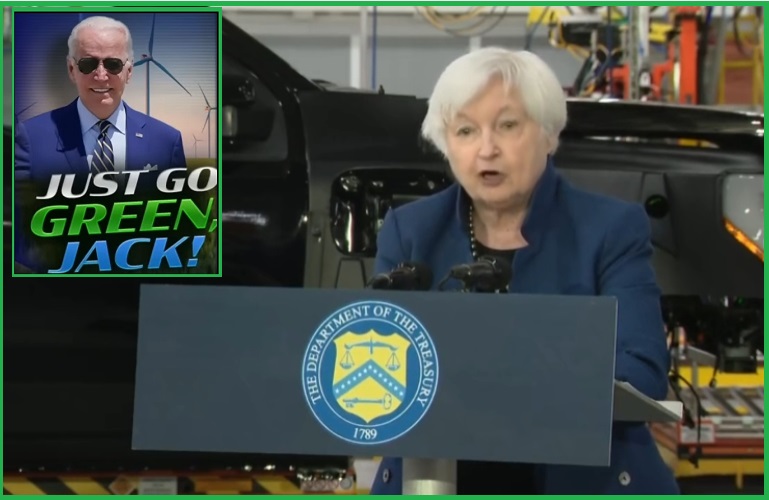
ALL AMERICANS ARE HURTING FINANCIALLY. But the Treasury Department plans to prioritize people based on the color of their skin. Secretary of the Treasury Janet Yellen announced the first “Treasury Advisory Committee on Racial Equity.”

From the Treasury’s website:

“[T]he Committee will identify, monitor, and review aspects of the domestic economy that have directly and indirectly resulted in unfavorable conditions for communities of color. The Committee plans to address topics including but not limited to: financial inclusion, access to capital, housing stability, federal supplier diversity, and economic development.”

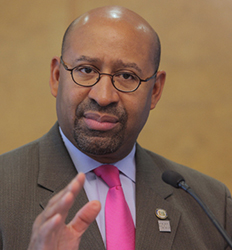
The 25 inaugural members are completely unqualified as many have no experience in finance. Former mayor of Philadelphia Michael Nutter will act as chairman. He was unable to manage his home city, let alone work for the Treasury. Vice chair Felicia Wong said they will make “racial equity central to the Treasury Department’s mission.” Wong has strong ties to George Soros.

Wong is part of the liberal megadonor foundation, Democracy Alliance. Wong argues that every policy has “racialized effects” and believes capitalism strengthens the patriarchy and white supremacy. Wong, the CEO of the Roosevelt Institute, penned many articles noting her radicalized view of the world with no basis in economics or logic.

“True equity means equity of outcome, and not accepting the promise of ‘opportunity’ within a system that continues to systematically exclude,” Wong wrote. “It demands redistribution of resources—especially when wealth for some has been extracted from many—and a redistribution of decision-making power.”

This is an absolute disaster as we are putting socialists in charge of a department of our Treasury. The Roosevelt Institute wants to “reimagine” capitalism and views everything as a form of racial inequality. Naturally, the Democrats are appointing this useless agency as a desperate attempt for votes. Discrimination is now legal against the majority.

Transpacific Shipping Drops 75% During Peak Season as Joe Biden Energy Inflation Bites and Consumer Spending Collapses


Posted originally on the conservative tree house on October 5, 2022 | Sundance 

The economic data coming in the past week is in alignment with prior forecasts.  Bottom line, energy driven inflation has collapsed consumer spending, inventories climbing, vendors are cancelling orders, and this is peak season for transpacific shipping- which has now recorded the most rapid drop in history.

A single transpacific container shipment cost $19,000 in 2021, then $14,500 in 2022 as the intentional slowdown began.  Now it’s only $3,900 as entire fleets of cargo shipments are cancelled due to lack of demand by U.S. purchasers.

Folks, get ready…. because it’s not going to get better.  Prior farm costs, an outcome of energy price increases, are now reaching the supply chain. Food costs will continue increasing throughout the holiday season.

(Wall Street Journal) […] Trans-Pacific shipping rates have plummeted roughly 75% from year-ago levels. The transportation industry is grappling with weaker demand as big retailers cancel orders with vendors and step up efforts to cut inventories. FedEx Corp. recently said it would cancel flights and park cargo planes because of a sharp drop in shipping volumes. On Thursday, Nike Inc. said it was sitting on 65% more inventory in North America than a year earlier and would resort to markdowns.

[…] One response to the melting demand has been to reduce sailing trips. In September, container capacity offered by ship operators in the Pacific was down 13%, dropping the equivalent of 21 ships that can each move 8,000 containers in a single voyage, from a year earlier, according to shipping-data providers Xeneta and Sea-Intelligence.

For the two weeks starting Oct. 3, a total of about 40 scheduled sailings to the U.S. West Coast from Asia and 21 sailings to the East Coast from Asia have been scrapped, according to the data companies as well as customer advisories viewed by The Wall Street Journal. Typically at this time of year, an average of two to four sailings a week are blanked, the industry’s term for canceled sailings.

[…] “In the first week of October, one-third of previously announced capacity will be blanked and for the second week, it will be around half,” said Peter Sand, chief analyst at Xeneta. “The downturn pace in recent weeks has been very fast and it looks like carriers misread the low volumes of a nonexistent peak season.”

The period between late summer and early fall typically is the busiest time of year for the largest carriers, as retailers and other importers build inventories ahead of the holiday shopping season. (more)

All of this has to do with the intentional destruction of the oil, coal and gas industry.  Western national economic collapse is a feature of the Build Back Better agenda.  The economy will continue to be lowered until it small enough to be replaced by “climate friendly” energy resources, windmills and solar farms.

The more consumers demand to keep their standard of living, the harder the central banks will squeeze to inflict the pain.  The western leaders and their banking benefactors do not want us owning things that require energy resources.  The economic pain will continue (in western nations) until citizens acquiesce to eating bugs and sustainable algae cakes, while taking mass transportation instead of personal vehicles.