People are simply not prepared for a sharp economic downturn. The Money and Pensions Serviceconducted a poll in the UK in which it found around 25% of adults have under £100 in savings. The 3,000-person survey found that 17% reported having absolutely nothing set aside. Around 5% reportedly had under £50, while 4% had between £50 and £100.
The drastically increased cost of living has many living paycheck to paycheck. The Building Societies Association (BSA), as reported by the BBC, conducted a separate survey that found that 35% of people in the UK simply stopped saving due to inflation. Around 36% said they are already dipping into their savings accounts to pay the bills.
The Bank of England is anticipating a long recession ahead. The central bank sees economic conditions contracting through the first half of 2024. The central bank’s prediction of five consecutive quarters of contraction would mark the longest recession in UK history. The people have not experienced the full effects of this recession, and most are simply not prepared for what lies ahead.
While the results are not final, where it stands now is unfortunately in line with what our computer has been projecting. The Senate will most likely remain in Democratic hands and the House may flip to the Republicans. Worse still, this will only embolden the Democrats and this Climate Change War along with unleashing World War III. However, this merely reaffirms what our computer has been projecting with serious civil unrest next year. The Democrats will push their radical agenda now in full force for they will not represent the country and the middle of the road, but their left-wing agenda. This will lead to dramatic civil unrest. You cannot have such a thin majority oppress the other side. We did not see this red wave that many were forecasting. The US is on schedule for a decline and fall by 2032. We needed a sharply divided nation to accomplish this end result. We got it!
This is why all the Greek philosophers from Socrates to Plato were against democracy. It allowed a thin majority to become tyrannical. This is what we are experiencing and it is why our computer is showing massive civil unrest next year. Republics, however, always die from suicide. Caesar was forced to cross the Rubicon because of the massive internal corruption. We will see the same fate that took down the Roman Republic. The collapse of the Roman Republic was also set in motion by a massive debt crisis. History always repeats.
Remember when America was energy independent? Gas was under $2 per gallon, the Strategic Petroleum Reserve was full, and our lawmakers did not have to grovel at the feet of our adversaries who are declining to help us anyway. The only reason America has an energy crisis is because Joe Biden eliminated domestic energy efforts on his first day of office. Now, he is assuring voters that the Biden Administration will keep energy prices inflated.
“No more drilling,” Biden said to a climate change protestor while campaigning for New York Governor Kathy Hochul. “There is no more drilling. I haven’t formed any new drilling,” Biden stated. When questioned about offshore drilling in the Gulf of Mexico, Biden said he planned to eliminate that project as it began before he took office.
A few days earlier, Biden promised to destroy America’s coal sector. Biden touted that wind and solar technology is cheaper, as he clearly does not realize they cannot replace coal at this time. “So it’s going to become a wind generation. And all they’re doing is it’s going to save them a hell of a lot of money, and using the same transmission line that they transmitted the coal-fired electric on,we’re going to be shutting these plants down all across America,” the president stated.
Biden is suggesting that coal miners simply become computer programmers. “Anybody who can go down 300-3,000 feet in a mine sure as hell can learn how to program as well,” Biden said at a campaign event. “But we don’t think of it that way. Anybody who can throw coal into furnace can learn how to program, for God’s sake.” The war on fossil fuels will continue under the Democrats.
At the World Economic Conference in 2021, the Armstrong Socrates model predicted that 2022 was going to be volatile and chaotic featuring a strong US dollar, a huge move in interest rates, a major bond market decline, fertilizer and food shortages, as well as escalating geopolitical tensions in Ukraine.
What now? Socrates forecast that 2023 will be more volatile and chaotic, featuring violent moves across all markets as monetary and geopolitical tensions and debt problems intensify.
At this year’s World Economic Conference, November 11-13, Martin Armstrong will talk about what’s next for the US dollar and other currencies, the liquidity/credit crisis, as well as price targets for oil, gold, stocks, bonds/interest rates, and stocks.
Posted originally on the conservative tree house on November 6, 2022 | Sundance
Using the outline of the previous global famine to trace a modern history of desperation and the Live Aid movement rallying of the public to feed the world, Neil Oliver contrasts the current cultural Green Agenda 40 years later and the pending energy crisis.
If millions were at risk in the 1980’s, how many are likely at risk today? Yet the same people, institutions and systems that rallied to save the hungry are right now the same people, institutions and systems willing to inflict more harm as they chase the false climate change agenda. It is an interesting and brutally honest perspective.
Oliver then walks through the looming and predictable consequences as he follows the process to its logical conclusion. WATCH:
Posted originally on the conservative tree house on November 4, 2022 | Sundance
Earlier today Joe Biden said he is confident in the midterm election next week because the American voters love the high inflation economic policies he has initiated.
BIDEN: “And I find that — that the thing that gives me the most confidence is the fact that the policies we’ve initiated, people care about. Now, they want more. They write to me, but I don’t know anybody who’s really opposed to us”…
Posted originally on the conservative tree house on November 4, 2022 | Sundance
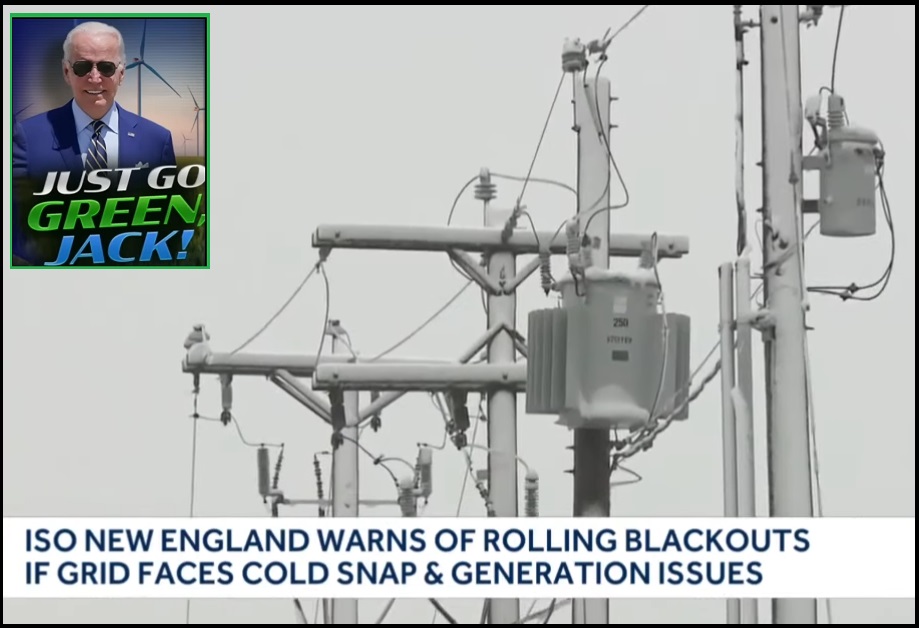
During a speech today, Joe Biden bragged about the example of his visit to a Massachusetts coal-fired plant that was forced to close due to regulation. However, what Biden didn’t mention was the energy provider telling customers to expect a 64% increase in electricity rates effective November 1st.
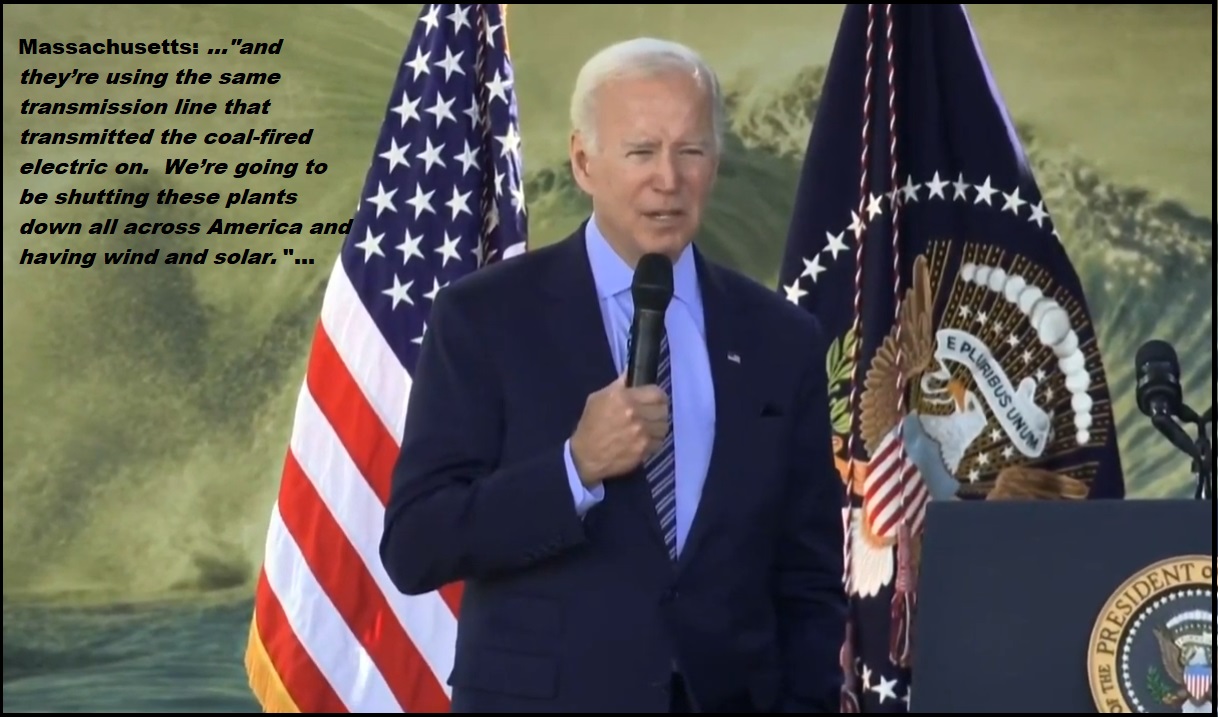
BIDEN: …”I was just — and so we can accommodate that transition. I was in Massachusetts about a month ago on the site of the largest old coal plant in America. Guess what? It cost them too much money. They can’t count. No one is building new coal plants because they can’t rely on it, even if they have all the coal guaranteed for the rest of their existence of the plant. So it’s going to become a wind generation.
And all they’re doing is — it’s going to save them a hell of a lot of money, and they’re using the same transmission line that transmitted the coal-fired electric on. We’re going to be shutting these plants down all across America and having wind and solar.”… (link)
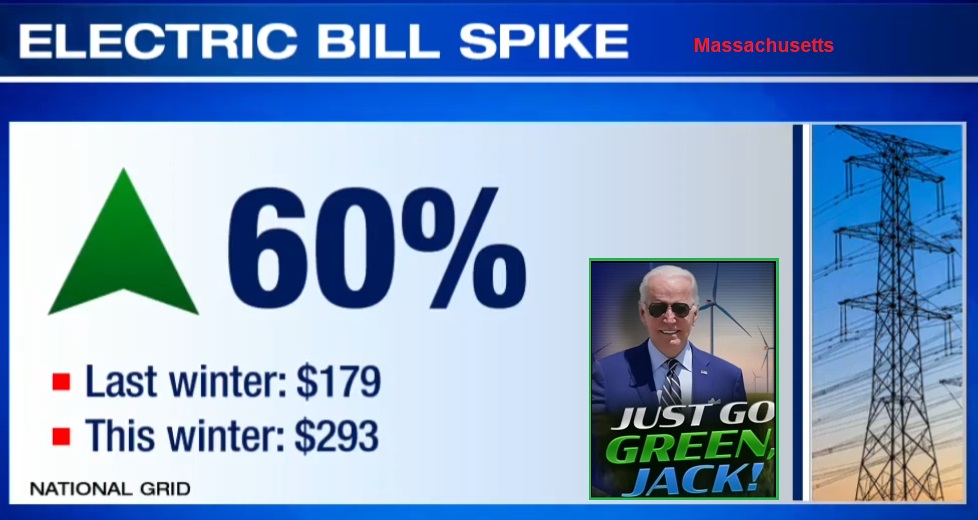
Massachusetts – […] National Grid said the monthly bill of a typical residential customer using 600 kilowatt-hours of electricity will increase from $179 last winter to about $293 this winter, an increase of about 64%. National Grid said the delivery portion of electric bills will basically remain flat.
“National Grid buys electricity on behalf of its customers from the wholesale power market through a regulatory approved process established 20 years ago. That process has served customers well over the years and provides flexibility for unforeseen events, like limited supplier response to solicitations. But things have fundamentally changed,” Helen Burt, the company’s chief customer officer, said in a statement. “Today, under a sustained, high market price environment, it is challenging to maintain affordable prices. Given that, we think it’s a good time to work with our regulators and other stakeholders to review the process and electricity supply dynamics in the region, with an eye toward reducing price volatility and maintaining a secure, reliable and resilient energy system for the future.”
The company also announced that its natural gas rates are expected to rise on Nov. 1. They said they have a pending proposal with the state Department of Public Utilities that would result in the monthly bill for an average Boston Gas residential heating customer using 115 therms per month of $278, an increase of $50, or 22%, compared to last winter’s rates.
Eversource did announce Wednesday that it has submitted a proposal to the Department of Public Utilities seeking to raise its natural gas rates. They said their average residential customer using 126 therms of gas a month would see an increase of about 38%, or $86 on their natural gas bill over last winter. Those rate increases would take effect Nov. 1. (read m0re)
China is losing business by implementing lockdowns that also prolong the global supply chain shortage. The Zhengzhou Airport Economy Zone in Henan province is currently under lockdown. This is where Apple’s largest manufacturing plant is located. The Chinese government said that the lockdown would last for only seven days, but we have seen their lockdowns expand numerous times. All it takes is one single case of COVID for the policy to change, and businesses cannot plan ahead.
Foxconn, the largest iPhone manufacturer, stated that they experienced a COVID outbreak in their factory. Foxconn already requires employees to take a COVID test within 24 hours of entering the building, and vaccinations are highly encouraged.
Apple’s earnings report released last week showed that the company remains strong. However, their iPhone revenue failed to meet expectations. Apple has been unable to provide fiscal guidance since 2020 due to uncertainty.
To avoid this uncertainty, Apple is moving around 5% of its global iPhone 14 production to India. Analysts at JPMorgan believe the company may produce a quarter of all iPhones in India by 2025. India also happens to be the second-largest smartphone market in the world, but Apple only secured 3.8% of the market last year as it competes with Xiaomi and Samsung.
“The new iPhone 14 lineup introduces groundbreaking new technologies and important safety capabilities. We’re excited to be manufacturing iPhone 14 in India,” the company stated in September, hinting at the global fear of the Chinese government using technology for intelligence purposes. The low cost of manufacturing items in China may not outweigh the revenue loss caused by abrupt and frequent lockdowns.
Posted originally on the conservative tree house on November 2, 2022 | Sundance
It’s all a ruse; an economic shell game being played for politics – nothing more.
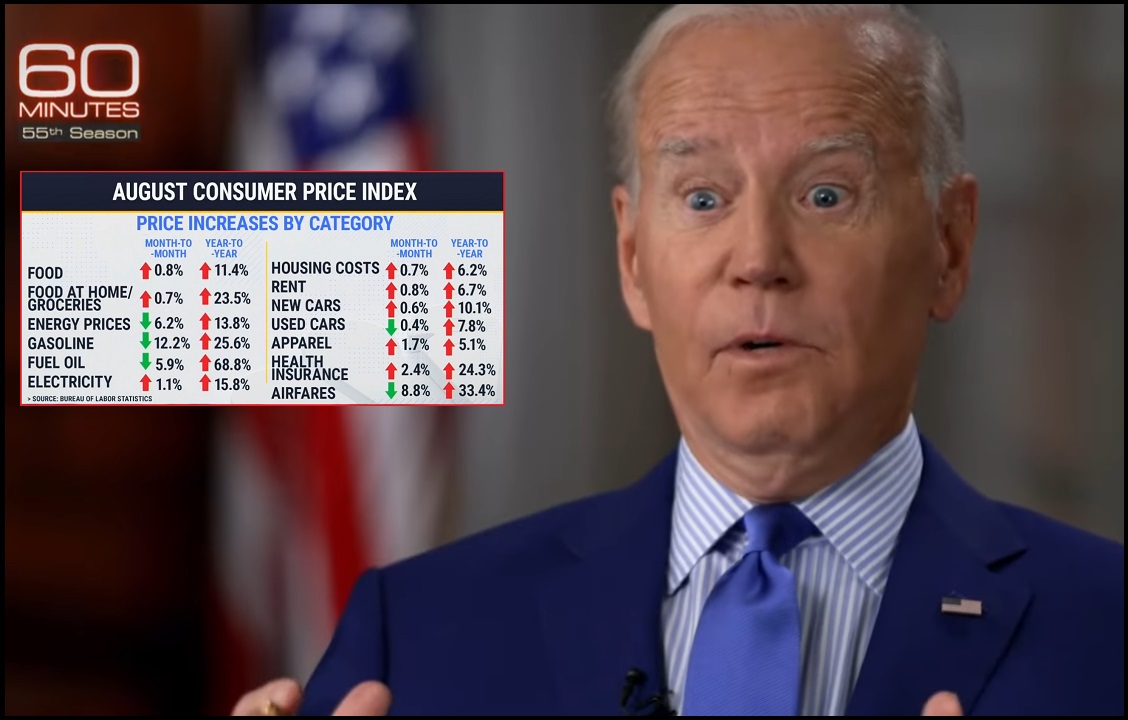
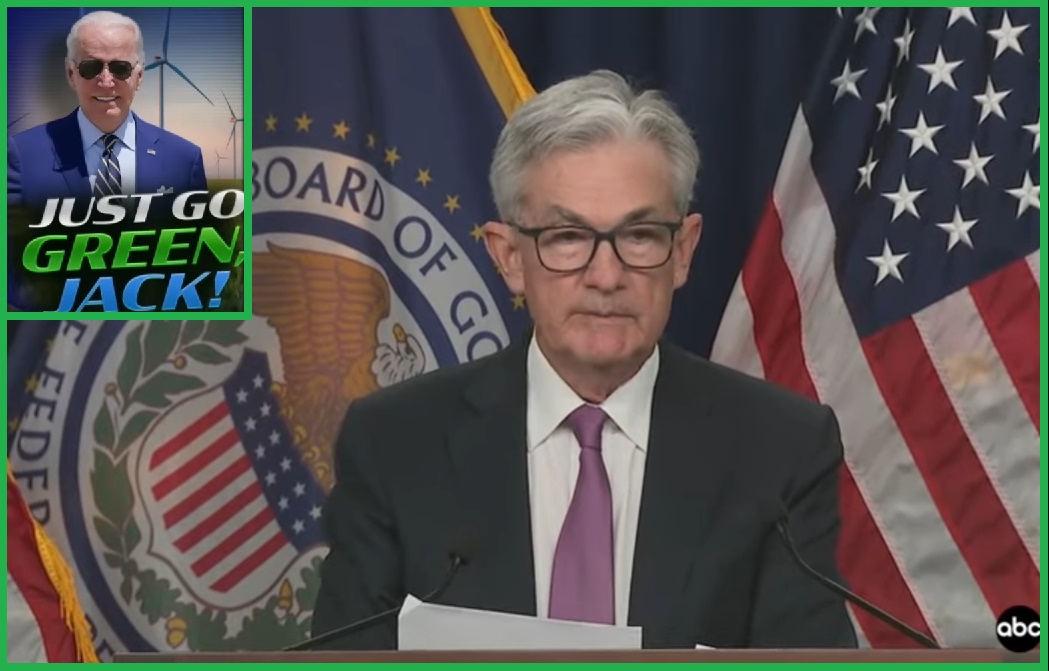
Consider this quote from Fed Chair Jerome Powell today, “Inflation remains well above our longer-run goal of 2 percent. Over the 12 months ending in September, total PCE prices rose 6.2 percent. Excluding the volatile food and energy categories core PCE prices rose 5.1 percent. And the recent inflation data again have come in higher than expected. Price pressures remain evident across a broad range of goods and services. Russia’s war against Ukraine has boosted prices for energy and food and has created additional upward pressure on inflation.” (source)
You can argue Powell’s points of demand side inflation all day long, it matters not. It’s nonsense. Take interest rates to 10%, or even eleventy percent, and that will not stop inflation because demand is not creating it. Current inflation is a supply side issue, driven by a radical change in energy policy. I have made this case for well over a year, sooner or later people are going to have to stop believing the demand side nonsense.
As Powell himself noted, “with today’s action, we’ve raised interest rates by 3 ¾ percentage points this year,” and yet inflation hasn’t flinched. Why? Because there was no excess consumer demand to tame all year. Demand for consumer goods has been in a freefall since the fall of 2021, while the prices of those goods have remained on an upward trajectory because costs associated with producing them continue rising. That’s a supply side inflation issue, not demand – but Powell cannot admit it.
Powell […] “Even so, we still have some ways to go. And incoming data since our last meeting suggests that the ultimate level of interest rates will be higher than previously expected. Our decisions will depend on the totality of incoming data and their implications for the outlook for economic activity and inflation. We will continue to make our decisions meeting by meeting and communicate our thinking as clearly as possible.
We’re taking forceful steps to moderate demand so that it comes into better alignment with supply. Our overarching focus is using our tools to bring inflation back down to our 2 percent goal and to keep longer-term inflation expectations well anchored.”
If you want to take the pretending out of the paragraph and make it truthful, insert the word energy:
“We’re taking forceful steps to moderate [energy] demand, so that it comes into better alignment with [policy driven energy] supply.”
There. THAT’S THE TRUTH !!
Ask yourself, or anyone else, this simple question:
...At what point in the process of raising interest rates does the price of gasoline, home heating, natural gas, electricity, diesel fuel or food start to drop?
How does a 15% federal interest rate lower food prices?
I have created this site to help people have fun in the kitchen. I write about enjoying life both in and out of my kitchen. Life is short! Make the most of it and enjoy!
This is a library of News Events not reported by the Main Stream Media documenting & connecting the dots on How the Obama Marxist Liberal agenda is destroying America








 Centinel2012