Financial Collapse – Brexit Is The EU’s Flu But Italexit Is ItsTerminal Cancer


Published on Mar 16, 2019

SUBSCRIBE 8.4K
The bad news keeps coming out of the EU concerning Italy . Not only is Italy in recession but Germany and France are teetering there as well. Italy’s sovereign debt crisis and its Non Performing Loan fiasco is going to blow the whole house down. I’d hate to think of all the credit default swaps out there … Hmmm could be like all those ‘bad’ MBS’s that brought the whole house down (figuratively speaking)in 2007/8. Italy’s politics is exacerbating the situation. The politicians might want all the ‘benefits’ of being in the Euro BUT if Italian debt crashes and the ECB can’t foot the bill (i.e. Germany), it’s arriva derci, sayonara and bye bye to the Euro and Italy will Italexit!

Macron Cracks Down on Yellow Vest Protests – Blocks Champs-Elysees Avenue, Replaces Police Chief…


Following a weekend of clashes, violence and stores burned in the city of Paris, French President Emmanuel Macron has replaced the police chief and announced blockades to keep yellow vest protesters away from key tourist destinations.

PARIS (AP) — France’s prime minister announced a ban Monday on yellow vest protests along the Champs-Elysees Avenue in Paris and in two other cities following riots on Saturday that left luxury stores ransacked and charred from arson fires.

Prime Minister Edouard Philippe said the ban will apply for an unspecified period in the neighborhoods that have been “the most impacted” in the cities of Paris, Bordeaux and Toulouse, where repeated destruction has occurred since the yellow vest protest movement began in November.

He also said Paris police chief Michel Delpuech will be replaced this week by prefect Didier Lallement.  Philippe announced the measures following a meeting with French President Emmanuel Macron and top security officials that sought to avoid a repeat of Saturday’s violence, in which rioters set life-threatening fires, ransacked luxury stores and attacked police around the Champs-Elysees. Many of those high-end boutiques remained closed on Monday, some of them charred from arson fires set.

He acknowledged “dysfunction” in French police operations on Saturday, rejecting “inappropriate” orders given to security forces to use fewer rubber bullets following a controversy about the numerous injuries they’ve caused at previous protests. (read more)

Recent National approval ratings amid G7 members:  Justin Trudeau, Canada; Emmanuel Macron, France; Angela Merkel, Germany; Theresa May, U.K.; Giuseppe Conte, Italy; and Shinzo Abe, Japan.

Wow – Canadian Government/Taxpayer Funded Media (CBC) Purchases Anti-Trump Billboards and Transit Signs…


Apparently Canadian media are taking their hatred for U.S. President Donald Trump to new levels of opposition.  The taxpayer funded CBC news media is purchasing billboards and transit advertisement throughout Canada to promote a campaign against the sitting U.S. President.

SOURCE: “”TRUMP BAD!” ads are appearing throughout Canada attacking him for wanting to secure the border with Mexico using a historically illiterate comparison to the Berlin Wall. I’ve seen these on Vancouver transit also” (link)

Even for the ultra-leftists within Canada, this antagonistic approach toward the United States is quite remarkable. [Former President Barack Obama was in Canada yesterday.]

D’oh Canada, this will not end well for the Canadian government…  Additionally, Prime Minister Justin Trudeau is up for reelection this year.

Cosmin Dzsurdzsa@cosminDZS

Looks like the CBC is spending taxpayer money wisely again…

“TRUMP BAD!” ads are appearing throughout Canada attacking him for wanting to secure the border with Mexico using a historically illiterate comparison to the Berlin Wall.

I’ve seen these on Vancouver transit also

389 people are talking about this

One would think that Canada would be more concerned about their collapsing economy.

Then again, it’s likely the Canadian government recognizes the economic and trade policies of U.S. President Donald Trump; policies that stop the exploitation of the U.S. market; is part of the reason for their current contraction.  [Learn More Here]

This short-sighted and vulgar political campaign against President Donald Trump would very well make matters worse within Canada.

Justin’s Troubles: Ezra Levant and Manny Montenegrino Discuss Growing SNC-Lavalin Crisis…


Rebel Media host Ezra Levant and legal analyst Manny Montenegrino discuss the ongoing Canadian political scandal now engulfing Justin from Canada. {Background Here} and {Update Here}.  On the surface the SNC-Lavalin bribery, corruption and political obstruction case may seem small, but the ramifications are huge.

Amid growing public sentiment that Justin Trudeau did indeed use his office for corrupt purposes; and with a second well-regarded cabinet minister leaving because she cannot support the Prime Minister’s Office (PMO); it was stunning to watch Trudeau’s political appeal to the Canadian electorate for support yesterday.

Prime Minister Trudeau pleaded with his political supporters to consider “the big picture” at stake.  Trudeau argued his political value in achieving the progressive agenda was worth more than the Canadian judicial system. There’s a full blown constitutional crisis.

[Understanding the BACKSTORY Here]


[Second Cabinet Minister Resigns HERE]

.

A Conservative motion in the House of Commons calls on Prime Minister Justin Trudeau to testify. Calgary Nose Hill MP Michelle Rempel lays out exactly what this is about and why it matters:

Advertisements

Ides of March – Scandal Surrounding Justin From Canada Deepens – Treasury Dept. President Resigns Cabinet…


Former Canadian Attorney General Wilson-Raybould shocked the systems of government last week when she gave detailed testimony outlining how Justin Trudeau’s government conducted a sustained campaign to influence her decision in a bribery and corruption case surrounding a company called SNC-Lavalin. [More Here]

Today the scandal deepened as another Cabinet Minister, Ms. Jane Philpott, resigned her Treasury position citing the political corruption within the SNC-Lavalin case and her inability to support the Prime Minister’s Office.

CANADA […] “In Canada, the constitutional convention of Cabinet solidarity means, among other things, that ministers are expected to defend all Cabinet decisions. A minister must always be prepared to defend other ministers publicly, and must speak in support of the government and its policies,” Philpott said in a resignation letter posted to her website on Monday afternoon. “Given this convention and the current circumstances, it is untenable for me to continue to serve as a Cabinet minister.”

With Philpott’s departure, the Liberals have lost a minister widely recognized as one of the government’s most competent. Her resignation deepens a crisis for a government that has been trying to project an image of unity since former attorney general Jody Wilson-Raybould’s explosive testimony before a parliamentary justice committee last week.

Philpott said evidence that politicians and officials pressured Wilson-Raybould to intervene in the prosecution of SNC-Lavalin has raised “serious concerns” for her. “The solemn principles at stake are the independence and integrity of our justice system,” she wrote. “Sadly, I have lost confidence in how the government has dealt with this matter and in how it has responded to the issues raised.”  (read more)

(Link to Website and letter)

Charlie Angus NDP

@CharlieAngusNDP

News that @janephilpott quit cabinet over interference by PMO in SNC prosecution is a watershed moment.
It is a sad day for Canada to lose a minister with such integrity.
Nobody in government has done more to push reconciliation than Ms. Philpott.
I have upmost respect for her.

186 people are talking about this

.

Canadian Economy Halts – GDP Growth Drops to 0.1 Percent, and No-One Is Talking About Why…


The Canadian government shocked the professional financial and economic media with their latest fourth quarter GDP release showing the economy has essentially come to a grinding halt at 0.1% growth.  [Compare to U.S. GDP growth of 3%]

The Canadian Q4 GDP growth isn’t one percent, it’s one-tenth of one percent: 0.1%, essentially halted; but everyone discussing this is missing something very important.

First, The Financial Post headline:

[FP] Canada’s economy practically came to a halt in the final three months of 2018, in a much deeper-than-expected slowdown that brings the underlying strength of the expansion into doubt.

The country’s economy grew by just 0.1 per cent in the fourth quarter, for an annualized pace of 0.4 per cent, Statistics Canada said Friday from Ottawa. That’s the worst quarterly performance in two and a half years, down from annualized 2 per cent in the third quarter and well below economist expectations for a 1 per cent annualized increase.

While a slowdown was widely expected in the final months of the year due to falling oil prices, it’s a much bleaker picture than anyone anticipated with weakness extending well beyond the energy sector. Consumption spending grew at the slowest pace in almost four years, housing fell by the most in a decade, business investment dropped sharply for a second straight quarter, and domestic demand posted its largest decline since 2015.  (read more)

The financial punditry go on to give multiple reasons for the drop and all of them are factually accurate.  However, there’s a key aspect that I cannot find discussed in any analysis of the data.

A very specific key aspect.

First, let me say CTH does not want to see the Canadian economy falter; not even a little bit.  By disposition CTH wants to see economic abundance for everyone, especially our close friends and allies.  But stand back, look at the bigger, BIG, picture, the media always avoid discussing…. you’ve got to ask yourself how can Canada be slowing down at the exact same time the USA economy is skyrocketing?…. There’s a connection.

Again, all of the currently expressed financial reasons for the slowdown are accurate; I am not disputing them. However, it’s what they are not discussing that really matters.

In the third paragraph of the FP article I highlighted a partial sentence: “business investment dropped sharply for a second straight quarter.”  That means sharp drops in business investment for Canada in the time-frame  July 2018 through December 2018.

Now pause, and reference the U.S. fourth quarter: “Consumer spending continued to grow solidly and, most encouragingly, business investment growth recovered sharply after a dip in the third quarter. Despite big external headwinds and financial market volatility in the fourth quarter, U.S. firms are not retrenching sharply on capex.”

Astute economic followers will note what the background is.

♦In July, August, September (Q3) of 2018 the new NAFTA negotiation was in the final stages. The U.S. and Mexico had already come to the terms; Canada was the outlier having to re-join an agreement in September where they previously abandoned negotiations.

♦On October 1st, 2018, the first day of Q4, the USMCA was unveiled. Now the U.S., Mexico and Canada were all committed.  Throughout the fourth quarter, all business interests had an opportunity to review the much anticipated USMCA outcome and details.

Multinational corporations, domestic corporations, U.S. and Canadian businesses were all looking for the same very specific detail:  What happened with the NAFTA loophole?

Within the new USMCA the critically important NAFTA loophole was closed.

Over the past three decades both Canada and Mexico structured key parts of their independent trade agreements to take advantage of their unique access to the U.S. market.  Under the existing NAFTA, Mexico and Canada generate billions in economic activity through exploiting the NAFTA loophole.

China, Asia (writ large), and the EU enter into trade agreements with Mexico and Canada as back-doors into the U.S. market.  So long as corporations can avoid U.S. tariffs (and rules of origin that pertain to those tariffs), by going through Canada and Mexico they would continue to exploit this approach.

By shipping parts to Mexico and/or Canada; and by deploying satellite assembly facilities in Canada and/or Mexico; China, Asia and to a lesser extent EU corporations exploited a NAFTA loophole for rules of origin on finished goods.

Through a process of building, assembling or partially manufacturing their products in Mexico/Canada those foreign corporations could skirt U.S. trade tariffs and direct U.S. trade agreements.  The finished foreign products entered the U.S. under NAFTA rules.

Why deal with the U.S. when you can just deal with Mexico, and use NAFTA rules to ship your product directly into the U.S. market?

This exploitative approach, a backdoor to the U.S. market, was the primary reason for massive foreign investment in Canada and Mexico; it was also the primary reason why candidate Donald Trump, now President Donald Trump, wanted to shut down that loophole and renegotiate NAFTA.

At the conclusion of Round #6, just before giving up on Chrystia Freeland for good, this was the direct issue at the heart of a very frustrated U.S.T.R. Lighthizer’s strongly worded response to Canada:

[…]  In another proposal, Canada reserved the right to treat the United States and Mexico even worse than other countries if they enter into future agreements. Those other countries may, in fact, even include China, if there is an agreement between China and [Canada]. This proposal, I think if the United States had made it, would be dubbed a “poison pill.” We did not make it, though. Obviously, this is unacceptable to us, and my guess is it is to the Mexican side also. (read full remarks)

This loophole was the primary reason U.S. manufacturers relocated operations to Mexico.  Corporations within the U.S. Auto-Sector could enhance profits by building in Mexico or Canada using cheap parts imported from Asia/China.  The labor factor was not as big a part of the overall cost consideration as cheaper machined parts and imported raw materials.

If the U.S. applied the same tariffs to Canada and Mexico we apply to all trade nations, then the benefit of using Canada and Mexico -by those trade nations- is lost.

Corporations will no longer have any advantage, and many are likely to just deal directly with the U.S. This was the reason Trump, Lighthizer and Ross to retained Steel and Aluminum tariffs on Canada and Mexico until they agreed to the new USMCA rules.

When Trump took away the flawed NAFTA market access; and when Trump removed the ability of Mexico and Canada to broker themselves for economic benefit; there was no longer a financial benefit behind corporations investing in Canada.  Under a binding trade pact between the USMCA partners, the NAFTA flaw is closed.

As a direct outcome billions of investment dollars are now being removed from any future consideration into Canada.

That’s the overarching reason for the Canadian GDP to halt.

Here’s the proverbial $64,000 question:  Can Canada re-engineer their economy and actually begin to “make” products again, not just simply “assemble” foreign products from other nations?

  • Can Canada reverse three-decades of specifically structured economic policy decisions that were centered around this “assembly” (brokered) economy?
  • Can the environmentalists be put back into a box while heavy manufacturing and raw material development are reconstituted?
  • Can the environmentalists allow natural resource development?  Oil development, mining operations, lowered overall energy costs, etc?
  • Can Canada somehow lower national energy costs so that Heavy manufacturing might consider restarting? (NOTE: heavy manufacturing requires massive energy use.)
  • Can Canada find any industrial development investors who would be willing to take a chance on all the above?

See the problem?

The Canadian economy is not likely going to get better without a radical shift in Canadian political perspectives and outlook(s).

Then again, perhaps that’s really why Justin and Chrystia were so damned set on protecting their “cultural industries” (ie. media) from competition.

Think about it.

European Tour – The Calm Before the Chaos?


I am writing from Frankfurt here for meetings ahead of the chaos awaiting the May elections. In Frankfurt, while the economy is clearly slowing, the financial capital is booming. New skyscrapers are rising to join those of Commerzbank, Deutsche Bank, DZ Bank, Helaba and others on Frankfurt’s skyline. This is another sign that there is a disparity between the financial world and the main street.

Nevertheless, behind the facade is a weakening banking sector that the ECB seems to be inspiring. Forcing negative interest rates where the banks must pay the ECB 0.4%, their rate of return on equity has fallen into a crash mode. The German banks’ average earnings have dwindled from once 4% back in 2010 to barely 1% into last year. Deutsche Bank, the biggest, tried to compete with Wall Street and paid the price. After four years of losses, finally, in 2018, Deutsche Bank made its first annual profit which was just a 0.4% return on equity.

As always, politics enters the game rather than logic. The German government wanted to see a Commerzbank and Deutsche Bank merge and offered some undisclosed assistance.  That assistance would most likely be writing off a portion of the 15% the German government still owns of Commerzbank, which is the legacy of a bail-out and a merger with the stricken Dresdner Bank back in 2008-2009. The government does not own shares in  Deutsche Bank.

The books of Commerzbank show the same problems as in Deutsche Bank so a merger between the two does not appear to solve any crisis. There are in addition rumors that Commerzbank is being considered by both French and Italian banks for a takeover. The prospects of a merger with Deutsche Bank from a non-German bank may be too ambitious politically speaking.

The German government is coming under great stress for the two biggest banks are not really very healthy at this moment and suitors are foreign – not German. Deutsche Bank could be merged with the French BNP, but that would be a loss of pride. Meanwhile,  the management at Deutsche Bank would prefer a deal with Switzerland’s UBS. A previous German bank, HVB of Munich, was taken over by Italy’s UniCredit. That was one embarrassment politicians seem reluctant to repeat. The bail-in policy was devised because politicians did not want to have to contribute to bank failures they saw as inevitable in Southern Europe. To have foreign banks eying up German banks, the pillar of the EU, somehow strike a deep blow into the political heart of the EU.

The ECB’s negative interest rate policy is seriously harming European banks yet they cannot figure out an alternative without having to admit there is a major flaw in the entire structural system in Europe. Forcing banks to pay the ECB to deposit reserves is really absurd.

What is most interesting is that the emotions are running high over issues such as BREXIT and the Euro Crisis. It appears that analysts from major institutions are not allowed to discuss anything to do with debt consolidation. This appears to be off the table for discussion. The proposals to create a Euro Bond are separate and distinct leaving the current national debts to be held by each member state. That hardly removes the threat of one member failure impacting the whole of the EU.

Meanwhile, there is a silent move to reduce exposure to Italian debt held by non-Italian institutions. There remains a concern that Italy could possibly follow Britain. There is growing respect that even the hint of such a possibility that Italy would withdraw from the Eurozone can result in a sharp decline in the value of Italian debt even if they never move to actually exit the Eurozone. Italy was one of the original founders of the Euro.

Overall, there appears to be a general consensus that everyone should just keep the Euro at all costs. However, without major structural reforms, it is hard to see how the problems will not take on a life of itself. The refusal to consider a debt consolidation leaves the Euro vulnerable to the politics of each member with rising popular trends in politics.

The Eurozone’s third-largest economy, Italy, already has debts of about €2.3 trillion euros, which is the equivalent to 132% of its GDP. However, it takes more than 4% of Italy’s GDP is now being used to service its debt load and this is with historically low interest rates. There are concerns behind the curtail that Italy can play a game of chicken. If they decide to leave the Eurozone, what about all the Italian debt held by the ECB? Who will lose? The Italians, Brussels or the financial markets as a whole?

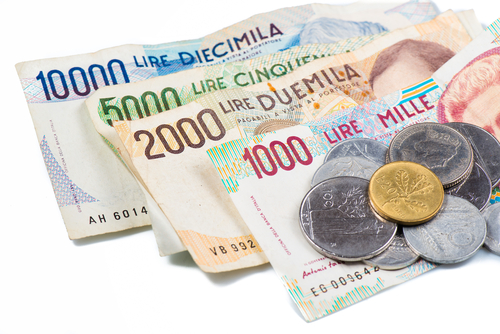
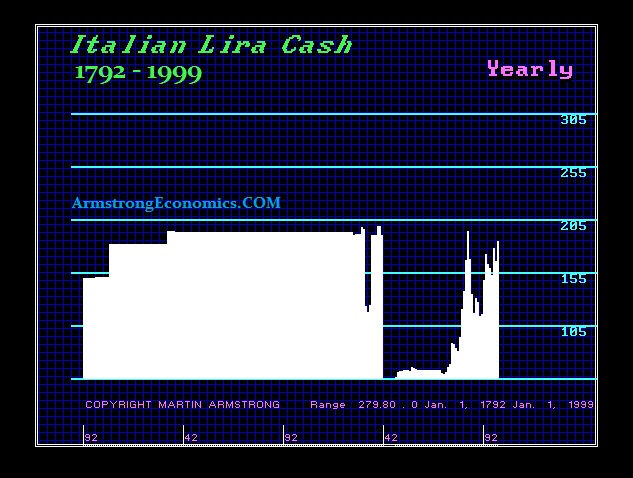
The lira was the official unit of currency in Italy until January 1, 1999, when it was replaced by the euro (euro coins and notes were not introduced until 2002). Old lira-denominated currency ceased to be legal tender on February 28, 2002. Beginning on January 1, 1999, all bonds and other forms of government debt by Eurozone nations were denominated in Euros. The value of the Euro, which started at USD 1.1686 on December 31st, 1998, rose during its first day of trading, Monday, January 4th, 1999, closing at approximately US$1.18. The Euro replaced the former European Currency Unit (ECU) at a ratio of 1:1 (US$1.1743).


Converting its national debt at 1.18, only resulted in economic chaos that devasted Italy. Whatever it owed previously in lira was suddenly now Euro. They experience their national debt doubling in real value the same as if you borrowed in Swiss franc for a mortgage that saw the Swiss franc double in value.  With the Euro trading in the 1.13 level, it is finally below the original conversion rate but even that ignores all the costs of services at high price levels.


By no means did Italy benefit from joining the Eurozone. To participate in the new currency, member states had to meet strict criteria such as a budget deficit of less than 3% of their GDP, a debt ratio of less than 60% of GDP, low inflation, and interest rates close to the EU average. Both France and Germany have been over that 60% level. France’s debt is currently at 97% of GDP while Germany is at 64% of GDP. Italy is 138% of GDP and Greece is at 178%. The Netherlands is at 56.7% of GDP, Austria is at 78.4%, Belgium is at 103% while Spain is at 98%. For comparison, the USA stands at 78%. This strict criterion has really failed to work and it was all mandatory simply because they refused to consolidate the national debts from the outset.

Greece failed to meet the criteria and was excluded from participating on January 1st, 1999. Eventually, Greece joined the Euro with the help of manipulations by Goldman Sachs on June 19th, 2000 when the drachma was fixed at 340.75.

This tour here in Europe is most interesting for the concerns are rising and there is a clear flight from Italian debt. Some of the most conservative portfolios in Europe have raised their exposure to the dollar from 5% to 30% which was attributed to the significant rally in the Dow since December. We even have central banks buying gold in search of diversification and a hedge against the uncertainty on the horizon come May. Needless to say, we have selected Rome for this year’s midterm WEC for this is the center of political attention behind the curtain.

Is a Separatist Movement in Alberta Inevitable?


While Alberta has been supporting Canada for decades, the rising tide of environmentalists has devastated its economy to the point that people no longer seek engineering degrees in energy or exploration. The separatist movement is rising and the coming commodity boom may push Alberta to separate when they are unable to participate in an economic boom due to regulation. The October federal election in Canada will also be critical going forward. If Trudeau retains his position, there will be little choice but to separate. It will all boil down to economics.

While the majority of Canadians do not yet support a separatist movement in Alberta, all it takes is economics to cause that change in attitude. When there is an economic boom in Toronto and the central bank raises rates to stop a speculative boom, they put farmers and miners into bankruptcy. One size does not fit all.

We are witnessing the rise of tensions around the globe and the US elections will lead to the same result regardless of who wins the White House in 2020. Neither side will accept a loss this time around

Justin From Canada is in Very Serious Legal Trouble – Former AG Testifies Against Prime Minister…


Justin from Canada is in very serious legal jeopardy after recent revelations that he interfered the Canadian Attorney General’s office regarding the prosecution of a Quebec engineering firm SNC-Lavalin surrounding bribes to Libyan government officials.

Canadian political pundit from Rebel MediaEzra Levant, tweeted out an excellent summary, and then provided a very well organized video to highlight stunning testimony from the former Canadian AG.  Here is Mr. Levant’s explanation:

For my American and British friends: Canada’s Justin Trudeau is done. He might try to fight on; I personally think he’s too damaged. He’s irreparably damaged. Here’s what happened in a few short tweets.

Trudeau was detonated today by his former Attorney General, Jody Wilson-Raybould, Canada’s first Aboriginal A-G. She just testified in Parliament, in meticulous detail, how Trudeau and his staff tried to get her to drop criminal charges against a corrupt company that he liked.

She refused to bend the law for Trudeau’s cronies. But they didn’t stop. Trudeau; his chief of staff; his principal secretary; even the finance minister. They met her ten times, phoned her ten more. trying to get the charges dropped. She wouldn’t. So Trudeau fired her as A-G.

The story leaked out earlier this month, but it was all anonymous sources. The former A-G herself didn’t say a word, saying she was bound by attorney-client privilege and cabinet confidences. She was effectively gagged; so Trudeau was the only one talking.

Trudeau took advantage of her enforced silence to claim she supported him and everything was fine. After all, when he fired her as A-G, he appointed her to the minor post of veterans minister.

When she heard him make that boast, she quit as veterans minister. He was shocked.

Then suddenly Gerald Butts, Trudeau’s right hand man — his best friend since college — resigned, claiming he had done nothing wrong. Which is odd. It looked like a compromise — Butts left, so Wilson-Raybould met with the cabinet and the caucus again.

Wilson-Raybould still didn’t say anything publicly. She hired a retired Supreme Court judge as her lawyer, to advise her on what she could say. Under pressure, the Liberal dominated Parliamentary committee invited her to testify, and Trudeau grudgingly waived some privilege.

So today she testified. In great detail. Exactly who pressured her. Exactly how. Exactly when. She named names. Including the prime minister himself. Here’s her statement: (LINK)

It’s against the law to pressure the Attorney General to obstruct a criminal prosecution. Here’s Canada’s Criminal Code. Section 139(2) is obstruction — it carries a 10-year prison term. (LINK)

Last detail. Jody Wilson-Raybould’s father was an Aboriginal activist who butted heads with Justin Trudeau’s father. Here they are bantering. Bill Wilson tells Pierre Trudeau that his daughter Jody wants to be PM one day. Maybe she will be?

Here’s a great video breakdown:

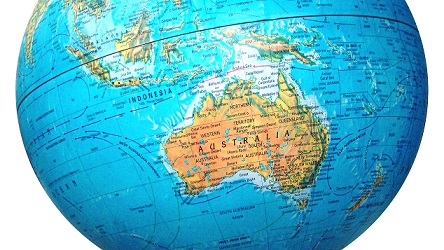
Australia: One Foot in Asia v the West


QUESTION: Hello Martin Armstrong,
Australia seems to have one foot in the West and one in the East. With the fall of the Western economies and then the rise of Asian economies, how does that affect the Australian economy? Does the real estate bubble collapse the Aussie economies and then the rise of China creates the opportunity to rebuild the economy after 2032?
Thanks for all the work you do.
J

ANSWER: The computer is projecting that Australia will first have to collapse with Western culture because it has become exceptionally left-wing. This is the collapse of socialism in general. We are collapsing just as communism did. It will be one Pi Cycle (31.4 years) from 1989, which brings us into this target of 2020/2021. We should expect serious political change on the horizon that will result in civil unrest.

Longer-term, however, with one foot in Asia, Australia will turn from the USA and Europe. As I have said, China is MUCH WISER than what we see in the West. While Europe is fighting over old economic models and clinging to theories that no longer work, China is investigating HOW the USA displaced Europe. It did so with LOW TAXES and regulation that built the American consumer market that the entire world has been dependent upon.

Germany’s economic model is still the old Mercantilist theory that national wealth is obtained by selling more stuff than you buy from others. The USA model has been internal rather than the Mercantilist external model. This is what China has realized and it is turning inward. Western society has not figured this out yet. Just look at BREXIT. The entire argument against it in Britain is that they will not be able to sell to Europe. That is really stupid and absurd.

Therefore, when the socialist model collapses in Australia, there will be a natural risk of a separatist movement. Western Australia will certainly find that, economically, they are more aligned with Asia than the East coast.