George Washington’s Prophetic Warnings About Enemies Within


What’s needed in the Trump battle plan is accelerated reform of the K-12 public school system, the universities and the media to ensure more balance and the upholding all the protections associated with the First Amendment.

Scott Powell image

Re-posted from the Canada Free Press By  —— Bio and ArchivesJune 15, 2020

George Washington’s Prophetic  Warnings About Enemies Within

President Trump just delivered the 2020 convocation speech at West Point, congratulating the cadet graduates and reminding the world that the U.S. has rebuilt its military forces with such high-tech capability as to have unchallenged superiority in any theatre.  While the President’s speech was entirely appropriate, it is ironic that it comes at a time when it’s wholly apparent to most observers that America’s greatest threat now is not external, but internal. And while the response to the recent urban chaos and violence requires more effective National Guard, police action and law enforcement tactics, strategically what is most important are soft power initiatives that invalidate false narratives and reduce misunderstanding and division in the country, which would in turn diminish issues and opportunities for exploitation by bad actors.

In addition to Antifa, Black Lives Matter (BLM), and the “swarms” of lesser known leftist and anarchist militants, many of the crazies in the streets are ignorant opportunistic hoodlums. The elected officials who have enabled the chaos created by the aforementioned in various municipalities are the product of higher education institutions that have failed to inculcate a basic appreciation of the American system and an understanding of the responsibilities required to protect freedom and rights in ways that maintain order, protect property and keep things working. Their views are reinforced and sustained by most of the media—in both traditional channels and the social media outlets—in ways that perpetuate politically correct narratives being accepted by a large portion of our population.

The chief problem in need of a solution is succinctly stated by Kyle Shideler,  the director for homeland security and counterterrorism at the Center for Security Policy:  “With the successful promulgation of the radical message [the narrative] of America as bastion of white supremacy by presidential candidates, cable news anchors, and generations of tenured professors, Antifa is unlikely to lack for recruits and support—rhetorical or otherwise—any time in the near future.”

One of the important goals of these narratives is to reinforce white-guilt and self-doubt, resulting in large sectors of society becoming demoralized and paralyzed. And this has serious consequences when in many urban localities, hostility and disrespect toward police undermines their morale and determination to do their job to enforce the law.  And when police can’t do their job, they too get demoralized, and resignations and early retirements go up. The outcome of all this is invariably diminished public safety and increased lawlessness, which is the radical left’s goal.

As it stands, leniency—after successfully neutralizing the police and committing horrendous destruction of property, ransacking big box retailers, upscale shopping districts, and looting the very stores and brands that symbolize the fruit of what law and order and capitalist success bring—empowers the left to do more and bigger things that advance their long-term goal, which is the total transformation of America.

Compounding the problem of bringing about a corrective and restoring balance is the fact that competing views and alternative narratives are being increasingly marginalized, censured and blocked. And we are now at a point when Americans who exercise their first amendment rights to express views that go against the dominant politically correct narratives are not just silenced through shaming and bullying, but increasingly they are being fired from corporate jobs, professional sports teams and other employers and venues.  The First Amendment that is at the heart of our Constitutional freedom and differentiates America from almost every other county is being progressively diminished.  And when that freedom is gone, surely others will soon follow.

Is it a coincidence that theCOVID-19 shutdown and attendant nullification of Americans’ Constitutional rights have been followed by an outbreak of urban warfare and assault on police and authority?  We can’t know, but it’s clear that the leaders of Antifa and BLM didn’t miss a beat in organizing immediately after the death of George Floyd, and in subsequent days, continued to work in a well-funded and highly coordinated fashion. They targeted cities, carried out the logistics of transporting people, arranging for the delivery of pallets of bricks, bats and gasoline to break windows and start fires, knowing that the energy levels of non-affiliated urban hoodlums and opportunists after nearly three months of pent-up frustration from sheltering and being cooped up would likely result in extreme violence, destruction and looting.  It succeeded.

What this period of urban chaos and destruction has revealed is that the narratives that have turned Americans against America have worked to increase both the number of street revolutionaries and the numbers who are passive in the face of the anti-law and order, anti-business and anti-American violence.  And we should assume that leaders of Antifa, BLM and other radical groups see this success as confirmation to move forward with next steps to seed the collapse of America and gain more power.

Washington’s Penetrating articulation of three threats to freedom and the republican form of American democracy

While they applaud concessions like shifting public spending and defunding the police, the radical left finds its greatest motivation in actions that move the country closer to the end game. A central part of that is to delegitimize American institutions of authority by erasing and deconstructing history, so as to further disorient and disconnect Americans from their heritage.  That’s why targeting the desecration, tearing down and removal of national monuments is an important next objective.

In Wilmington, Delaware city officials took the statue of Columbus down before anyone could dismember or destroy it.  In St. Paul, Minnesota and Richmond, Virginia statues of Columbus were toppled by radical activists.  In Boston, the statue of Columbus was beheaded, jihadi-style.  It matters not that Columbus was an evangelist and strong advocate of Christian kindness. Neither does it matter that he never saw nor set foot on the North American continent, and therefore never enslaved or abused any indigenous native Americans. With the white supremacist colonial narrative having long been established, Columbus is an easy target.  But make no mistake: toppling Columbus is just a stepping stone to desecrating and removal of even more high value targets such as the memorials and statues of founders George Washington and Thomas Jefferson, who were slave-holders.

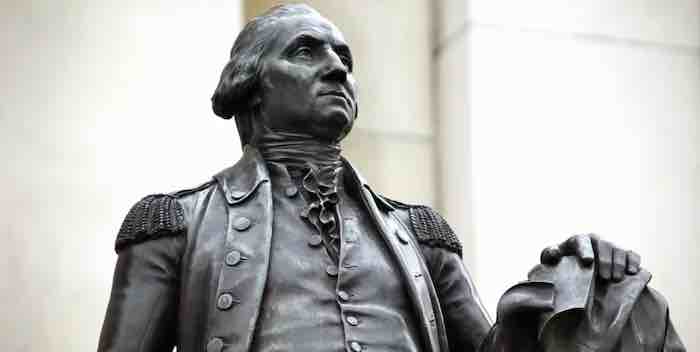
At his West Point address, President Trump paid tribute to George Washington, whose statue can be found on the campus, noting that Washington called West Point “the most important post in America.”  After serving two terms as the nation’s first president, Washington renounced serving a third term and left office with a “Farewell Address,” in which he stated his belief that the greatest threat to America would be internal and not a military threat from overseas.  President Trump would do well to develop a battle plan for victory against internal enemies around that Farewell Address—what Washington called “a warning from a departing friend.”

While prophetic in nature and reprinted more than the Declaration of Independence, the Farewell Address, was a penetrating articulation of three threats to freedom and the republican form of American democracy:

  • the failure of institutions to keep people informed and enlightened;
  • the problems of factions and hyper-partisanship;
  • and the decline of religious obligation and national morality.

Applied to today, what’s needed in the Trump battle plan is accelerated reform of the K-12 public school system, the universities and the media to ensure more balance and the upholding all the protections associated with the First Amendment. Obviously, this means individuals cannot be fired for exercising their free speech rights, but equally important it would help citizens and aspiring politicians develop critical faculties and become better informed and enlightened. Second, more can be done outside public policy initiatives to elevate the value of religious obligation and practice, which strengthen families, mitigate juvenile delinquency and crime, and provide a higher purpose and meaning in life where bigotry has no place and tolerance is more abundant. All of this over time would provide a more enlightened population from which leaders would arise and get elected better informed and equipped for bipartisan cooperation around policies that actually solve problems.

Is Socialism Dying?


QUESTION: Good day Marty. Thanks for your work and assistance at trying to remain sane during these times. Question; you’ve stated many times that socialism is dying. From where I sit it appears the opposite. Do you think these are the signs of an extinction burst, or do we expect even more insanity ultimately leading to the complete loss of freedom and liberty at the hands of these lunatics?

Thanks, be well and please live long!!

DA

ANSWER: It is dying because the social programs can no longer be funded from pensions to the size of government employment. Because this is dying, it also results in aggressive fighting back in the system to try to save it. In part, this has been the intense hatred of Trump, and the Democrats feel they must take the White House to save their agenda. Consequently, the rise in activity is the direct result of it declining. If nothing was at risk, there would be no need for this intense rise in resistance. So they are reacting ONLY because it is failing. We see this in Europe where they are moving to cancel all currency to force people back to the banks where they will be charged negative interest rates for daring to save.

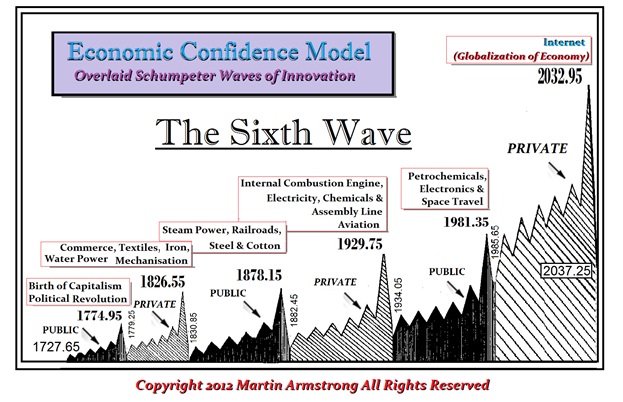
Unfortunately, we have the last twelve years left. Marxism never works. They have tried it so many times. It fails because they try desperately to change human nature. They constantly portray someone having more than they do as evil and unjust. We are all created equal in rights, but not in talents. Some people faint at the sight of blood and others can be doctors. Some are great athletes and others can’t run 20 yards. We should see the end of Marxism with the collapse of governments beginning in 2032 moving into 2037/2038.

Domestic Terrorists – Three New York Police Officers Poisoned By Shake Shack Employees…


According to the New York Police, three police officers were “intentionally poisoned by one or more workers at the Shake Shack at 200 Broadway in Manhattan. After tasting the milk shakes they purchased they became ill, making it necessary for them to go to an area hospital. Fortunately, our fellow officers were not seriously harmed.”  (LINK)

The Shake Shack corporation previously aligned themselves with the Black Lives Matter movement.  Specifically the corporation said they were we’re taking action “to become better allies, not only for our Black colleagues, but for the entire Black community.”

Thus current Shake Shack employees can argue their attacks against police was their collective expression of social justice in carrying out the interests of the organization.

SHAKE SHACK

@shakeshack

Black Lives Matter. We recognize our responsibility to stand up in the fight against systemic racism and know that words must be accompanied by action.

View image on Twitter
241 people are talking about this

SHAKE SHACK

@shakeshack

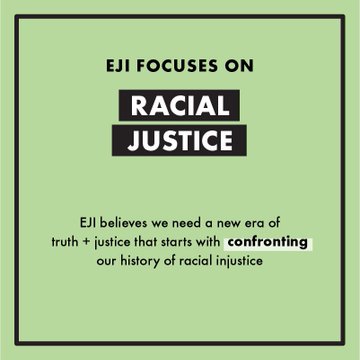
To learn more about Equal Justice Initiative, head to this link: http://eji.org  https://twitter.com/shakeshack/status/1270828664800845825 

View image on TwitterView image on TwitterView image on Twitter
SHAKE SHACK

@shakeshack

Last week, we shared the immediate actions we’re taking to become better allies, not only for our Black colleagues, but for the entire Black community. That included a $100K donation to @eji_org. We stand behind the important work Equal Justice Initiative does every day.

View image on Twitter
267 people are talking about this

New Flu – China Identifies New Coronavirus at Xinfadi Food Market…


Posted originally on The Conservative tree House on  by 

New coronavirus reports from Beijing are very sketchy. According to Chinese authorities they have identified a new strain of coronavirus at a massive wholesale food market in Beijing called the Xinfadi Market.  They are blaming “European Salmon”…

Beijing officials have reported 79 cases over the past four days, the biggest concentration of infections since February. The spate of new cases prompted officials in many parts of the city to swiftly bring back tough counter-epidemic measures, with at least three districts entering “war-time mode.”

Measures imposed included erecting round-the-clock security checkpoints, closing schools and sports venues, and reinstating temperature checks at malls, supermarkets and office buildings. CNBC REPORT:

There have been several economic reports that China’s manufacturing economy is contracting. Considering a desperate dragon…. It would not be out of place to consider that Beijing would react to losing an economic war, or even economic position, by trying to unleash a globally mitigating virus intended to target their geopolitical adversaries [Hong Kong, Taiwan and the U.S.]

This zero-sum outlook is EXACTLY how the Chinese red dragon thinks!

We have been engaged in an undeclared economic war.  Perhaps it’s time we made an official and public declaration; and strategically, openly, aligned all U.S. interests toward economic combat.

Trump Administration Outline Background of Tomorrow’s Executive Order on Police Reform…


The White House provided some background information to media in advance of tomorrow’s executive order on police reform.  Details Below:

[Transcript ] –  First of all, I want to thank everyone for being here. Tomorrow, we plan to do an executive order that the President has been working on for the last couple of weeks. This is not a new thing. We started our police commission a couple of months ago in the beginning of the year after we did criminal justice reform.

The President is a president of action and I’ll go through what this executive order is going to be talking about.

We developed this by talk- — working very closely with law enforcement professionals and their representatives, as well as with families of people who were killed by law enforcement and also their representatives.

The goal of this is to bring police closer together with the communities. We’re not looking to defund the police; we’re looking to invest more and incentivize best practices.

The executive order has three main components to it.

♦The first component is going to be about — it’s going to be about creating credentialing and certification. We’re looking to incentivize best practices. There are a lot of great standards for use of force throughout the country. However, a lot of the police departments that have had problems are not using the most modern standard. Whether you look at Minneapolis or if you look at Ferguson or if you look at Baltimore, a lot of their training materials and standards are outdated, and this is something that we want to incentivize people to get certified on their practices and hopefully that will encourage better training and action.

♦The next thing is going to be about information sharing. That gives us the ability to track people who have excessive use of force complaints so that people can’t leave one law enforcement department and then get hired at another. There should be a place for people to know about people’s backgrounds so we can keep bad cops out. And nobody hates bad cops more than good cops. And we want to make sure that we can track that and take action.

♦The last part, which is also going to be critical, is with regards to mental health and homelessness and addiction. We want to be able to have co-responder programs where we’re going to incentivize. A lot of the work that police officers are doing today deals with medical issues and homelessness. And we want to make sure that police officers can do policing and that they can implement best practices throughout the country to figure out how they can deal with a lot of the other issues that come up along the way.

We think that this will be something that both the law enforcement community, as well as the community advocates have been asking for. This is something that our law enforcement commission, the Attorney General, and all the people that we’ve been talking to feel like is a very necessary development now in law enforcement.

So we think that this is steps that will actually make a big difference. And again, the President is going to call on Congress to hopefully pass legislation that can make a difference. And we’re looking forward to tomorrow and for the President to have the opportunity to have a discussion where he has both police officers and police officer representatives in the room with families of people who were killed by police officers, to have the discussion that the country needs to have so that we can turn the anger in the country right now into action and hopefully bring some unification and some healing.

I will say that this President has been about solutions. A lot of the President’s policies have been addressed towards solving the problems in the inner cities, whether it’s for advocating better schools, whether it’s trying to bring access to capital and more investment into the poorest areas through Opportunity Zones, bringing more money to higher education in historically black colleges, or even addressing criminal justice reform, which he was able to do with the historic passage of the FIRST STEP Act and a lot of the work we’ve done on second chance hiring.

The President promised, when he ran for office, to work hard for the forgotten men and women of this country. And his actions today, his policy platform, have achieved great results. And this is just another example of how, working with law enforcement, the President has been able to make adjustments that are able to hopefully bring the country forward and bring law enforcement and communities closer together by promoting practices that are state of art for community policing.

I’ll pass it over to [senior administration official]. Maybe you want to finish up on that.

SENIOR ADMINISTRATION OFFICIAL: Sure. Thanks so much. And so, this reform is very impactful because it’s all focused on community policing. We know that, in certain areas, the police have been disincentivized to stay in the car and not walk the beat, and that’s made communities less safe. And so what we want to do is thread the needle on having more cops, community police, but at the same time, build trust with the community. And that’s what this reform effort is all focused on.

And so we had the opportunity to not only work with various different police groups, but several faith leaders and groups that represent families.

And so, one of the big reforms that everyone agrees on and that we think is going to be revolutionary in the way we do policing is the creation of co-respondent services, which focuses on bringing on social workers who will go on a response with police for nonviolent response calls, specifically focused on mental health, drug addiction, as well as homelessness issues.

We find that law enforcement finds themselves dealing with these issues more often than not. And in many cases, they’re not the best one to respond to these type of efforts. And so though we have a database, we also made sure that this database system accounted for privacy and due process for those officers because we want to be fair in how we set up this system. But again, as my colleague reiterated, most good cops — all good cops, the biggest thing they hate is bad cops. You know, and so they want to be able to have a system that they can trust and that no one can go around the system.

And then we also really want to focus on retention and recruitment — specifically, recruiting people from the communities that they live in. We want police officers who are in the police department to be a part of their community. And what better way than recruit directly from that community?

And so we look forward to tomorrow’s event. And I’ll sit back for any questions.

Q Hey, this is Franco Ordoñez with NPR. Thank you so much for doing this. I had a question about unions and accountability. One of the concerns was how difficult it is to have accountability for officers. Derek Chauvin of Minneapolis, he had, I understand, 17 number of complaints against him. How does this address the issue of accountability, particularly what some say are roadblocks from unions — police unions?

SENIOR ADMINISTRATION OFFICIAL: So there’s a lot of accountability in the credentialing process. Many of these local accountability (inaudible) is going to be put on local mayors who maybe not take the time to get their police department credentialed. And so we’re going to really need them to hold accountability for their local law department, local laws.

I mean, there’s so many different police departments around the country that could’ve done a better job if they just took the time on the front end with doing the credentialing. We’re, of course, going to put some incentive in place by rewarding police officers and police departments that do the right thing. But we think there is certainly some accountability from local leaders to help us do this.

You know, the federal government can only do so much, so we do need local partnerships. But we’re going to do all we can to use our platform to bring police and communities together.

Q Hey there, it’s Michael Moates. I’m with the America First Project. I just wanted to ask you: If you look at the numbers from the different leadership across, you know, Atlanta, Seattle, Minneapolis, obviously there is a lot of Democratic leadership there. Is there going to be withholding of grants? Are you all looking other options of discipline for those who don’t comply?

SENIOR ADMINISTRATION OFFICIAL: What we found is prioritizing funding really changes the way that people go around seeking funding from the federal government. And so you don’t necessarily have to demonize them or withdraw funds, but if you create an equal system based off of best practices, there’s going to be more so a race to create the best application to get access to the funding. And that’s usually how it works, which is why we’re prioritizing the funding, rather than trying to do anything that would seem like we’re trying to defund police departments.

SENIOR ADMINISTRATION OFFICIAL: And what we’re finding is that there is actually a fairly good ecosystem of standards and training behaviors. And, you know, some places do it great and others less sub-par. And, you know, what we want to be doing is incentivizing people to take on those best standards, and improve their training, and do the retention of good officers. And by doing that, that will be the way that you can hopefully start doing it.

But you’re never going to solve this problem by demonizing the police. You have to solve this problem by working with law enforcement and with the police to make progress together. And there’s a lot of willingness, and I believe that this executive order will have the support of all the major federal law enforcement groups in a very, very positive way.

Q Hi, it’s Andrew Feinberg with Breakfast Media. Thanks for doing the call. I have two questions. Shortly — shortly after the President took office, in 2017, the DOJ’s COPS Office stopped doing investigations and publishing reports into problems in local departments. And shortly before Jeff Sessions resigned as Attorney General, he issued a memorandum directing the Civil Rights Division to stop doing pattern-and-practice investigations and entering into consent decrees — making it harder to enter into consent decrees with police departments to stop civil rights abuses.

Those types of investigations and consent decrees were widely considered to be some of the strongest tools in the DOJ’s toolbox for dealing with abuse and misconduct in local police departments. Would the President consider directing the Attorney General to rescind that memorandum and allow these investigations and practices to start again? And if not, why not?

SENIOR ADMINISTRATION OFFICIAL: We’re focused on bringing the police and the community together. We think going in a certain direction may dis-incentivize police from going to high-crime areas. You can look at some localities, like Baltimore, that had consent decrees. And now, plenty of neighborhoods in Baltimore are being victimized, and crime is on the rise because police officers are afraid to do their job because there is no protection for police officers.

I think we have to think about this: Most people want to be able to call the police if they need them. Just because some bad apples don’t perform their job, that doesn’t mean you throw out the baby with the bath water.

And so what we’re trying to do is create a system which brings police and community together and focuses on public safety. With that public safety narrative, we have less of these bad interactions and more of the positive ones. And so that’s what we focused on.

Q Yes, hi, this is Carrie Sheffield with JusttheNews.com. I had a question about, specifically, what the executive order is going to include in terms of what pieces might there be that need to be passed through legislation. And, I guess, specifically, the three components that you mentioned, are these all going to be through DOJ? What’s the legal mechanism for how these will be enforced? And then, what, if anything, is not going to be included, in terms of executive power and your just making of the suggestion? If you could differentiate those two.

And then, a quick question for [senior administration official]. You mentioned that there are a lot of officers who are not from the community. Is there any steps — or evidence to say that this is a problem or it is more common, that it is — there’s results, in terms of seeing that it’s better to have officers from the community?

SENIOR ADMINISTRATION OFFICIAL: Yeah, let me start by saying that a lot of the law enforcement is local. Right? And so, at the federal level, there are certain things that we can impact and there are certain things we can’t impact. And so what we’ve been trying to do with this executive order is work with law enforcement to try to set some guiding principles and incentivize best behavior at the local level.

We’ve — you know, we launched the first — you know, we launched a commission earlier this year, right after we did criminal justice reform, to study improvements with modern technology and what could be done in policing now throughout the country.

Once this is signed, the Attorney General will then take the principles from the President and work to turn that into specific guidance. And then also, Congress is going to need to look at it, and we’ll call on them to work on different areas to see if they can both provide funding and legislation to put some of these programs into place.

And do you want to —

SENIOR ADMINISTRATION OFFICIAL: Yeah. I was just going to — I can just add to that, that there is a lot of — here that certainly can be put into statutory law. But the President wanted to act. He didn’t want to have to wait on Congress to act on it this issue, because bringing the community together now is extremely important, specifically for public safety. We’re speaking on behalf of many communities that want more law enforcement there to help protect them and keep them safe.

And so we’re always going to — the first business of the President is protect people. We’re always going to make sure that happens.

Insofar as the stats on community policing, that comes from my experience, but a number of community advocates have asked for more of that and also the police. And so that’s an area where everyone has had common ground.

Q Hi, this is Jeff Mason with Reuters. Thanks, everybody. The question I have, just as I’m thinking about how to write about this, is: What exactly — how exactly does the executive order fulfill these objectives that you’re talking about? When you say you want to incentivize best practices and information sharing, and the piece about mental health, does that mean the executive order will tie funding around the country to this or will mandate the funding — federal funding be tied to these things? Just connect the dots, if you can, for us about exactly how the order will work.

SENIOR ADMINISTRATION OFFICIAL: So it’s not tying; it’s incentivizing. I mentioned, earlier, priority points. It’s creating that ecosystem that rewards good behavior. One of those good behaviors: If I’m applying for a federal grant, maybe you want to look at accreditation that makes you more competitive. You got to understand that most of our discretionary money is competitive. So if you put in the ecosystem that we’re going to prioritize funding if you have this, then they’re going to do exactly what that is.

I mean, a lot of these police departments follow whatever the rules are to the T. And so we if we put that as the priority point, it’s going to change the way that they apply for this and they’ll do that accreditation.

Q Hi, this is Shannon Pettypiece with NBC. One of the issues that people have raised is the issue of racism in police forces or racial stereotypes among police officers. Is that something that the President is going to address tomorrow? And is that a concern that he sees needs to be dealt with?

SENIOR ADMINISTRATION OFFICIAL: So, look, I think that there was some misreporting out about this earlier. And tomorrow is about working with law enforcement and the families of those who have been killed, you know, unfortunately, and trying to bring people together with policy that will bring the country forward.

And I think that, you know, the President sees, you know, law enforcement as — vast, vast, vast majority — as great. They do a great job. They keep our communities safe. He stands with them. And he wants to figure out how to do things to eliminate situations where you have bad officers.

I think, you know, he was horrified and, you know, we were all horrified by the video that we saw with Mr. Floyd in Minneapolis. And we want to make sure that we can continue to give the resources to the local communities to get closer with the — with their police forces to do better, to build more trust.

But again, it goes back to the President’s full suite of policies that help the forgotten communities, where he’s looking to — where he’s looking to help people have opportunities to go to better schools and get better jobs and have access to capital. And hopefully that brings more opportunity to the community, which will lead to less crime and more safety.

But, [senior administration official], you may want to address that.

SENIOR ADMINISTRATION OFFICIAL: Sure. I think [senior administration official] hit the nail on the head. There is no one issue when it comes to the community. There are a lot of historic factors and disparities that’s brought us here today. Everything COVID did on shining the light on a lot of disparities such as access to capital and public health. And then we had the protest that came about.

But the President created infrastructure to help with the disparities long before any issues happened, because he was very proactive about giving everybody a chance at the American dream. And so it’s only allowed for us to bring more partners on the local level. We’ve had a hard time having local leadership lean into actually dealing with the problems of some of these communities. Hopefully, (inaudible) this executive order comes out, more of them will come to the table to partner with this President.

SENIOR ADMINISTRATION OFFICIAL: And what the President has been very clear on is he’s willing to work with anybody he wants to address the issues if they arise. And, again, if you look at the suite of actions that he’s taken over the last three and a half years, he has a big record of success of really focusing on forgotten communities and trying to deliver for people, regardless of their race, religion, creed.

SENIOR ADMINISTRATION OFFICIAL: Last question.

Q Hey guys. Thanks. This is Christian Datoc from Daily Caller. I’m just curious: If Congress were to pick up any of these components in future legislation, would the President sign that piece into law, even if it included provisions on qualified immunity? Kayleigh McEnany stated last week that that’s a non-starter for the White House. Just wondering if anything has changed on that front.

SENIOR ADMINISTRATION OFFICIAL: Yeah, I would — I think Kayleigh’s words still hold today. And again, the President is always flexible and he’ll look at what comes to him. But I think that would be a very — a very high hill to climb. I don’t see anything that has that in there passing Congress any time soon.

But, [senior administration official], do you want to just make a few final comments?

SENIOR ADMINISTRATION OFFICIAL: Yeah. I think the meat of this executive order is focusing on those certification bodies that will work on training people through de-escalation techniques, use of force standards, including those policies that prohibit chokeholds except in those situations where deadly force is allowed by law.

And we’re leveraging our ability to execute discretionary grants and prioritizing those police departments that take the time to get that credentialing. And so that’s the meat of this, and we think that goes a lot further than anything that anyone has put on the table right now.

SENIOR ADMINISTRATION OFFICIAL: All right, that’s it, everybody. Thanks so much for the call. The embargo is now lifted. Remember, this is on background and can be attributed to senior administration officials. Thanks so much for the time.

END 5:56 P.M. EDT


COVID Madness – Chicago Ministry of COVID Compliance Introduces “Social Distancing Ambassadors”…


Comrade Lightfoot explains why the Chicago Ministry of COVID Compliance needed to cancel the days-off for all police officers, and extend all shifts to 12 hrs per day.

According to the Chicago Mayor, the city will be deploying “Social Distancing Ambassadors” to help citizens accept their social responsibility.  The monitors will assist the public remaining disengaged from human contact as the Ministry begins permitting citizens to exit the confines of their homes.  Drone enforcement could likely assist.

No word on the specifics, but Chicago scientists have apparently identified a hybrid form of the virus that will attack outdoor residents who enter a six foot danger-zone in proximity to another person.  The ministry has determined Blue state residents are safe at distances exceeding 6 feet.  However, inside that zone, at 4 or 5 feet or less, the virus creates a rapid death spiral and attacks with increased ferocity.  It is currently unknown why the proximity strain of the virus responds differently in Red states.

Blue State proximity infection is dangerous. Unless, of course, the proximity variable is influenced by the third factor of vegetables or groceries; which have been identified as generating a safe zone as outlined in local supermarkets.  As a consequence, jogging without groceries requires the proximity police, aka “Social Distancing Ambassadors.”

According to city officials, these new exterior compliance officers should help reduce the influx of residents currently jogging in grocery stores.  Remember, we are all in this together; and to prove how critical this is to the fabric of our society, we must all stay apart.

The COVID-19 virus seems incapable of keeping up with the speed of passenger vehicles, buses, airplanes and trains.  However, once you exit your COVID compliant transportation, the Blue State virus can swoop down and attack you if you are in the proximity of a open-space park or beach. 

The Ministry appreciates our compliance in avoiding the dangerous virus freedom zones; and is thankful for compliant citizens who do not question the complex data analysis that goes into regional scientific tracking systems.

The Red State rebel alliance has noted the specifically random viral targeting appears much more prevalent in the regions where people formerly wore genitalia on their heads.  However, despite the obvious correlation, there is not enough conclusive scientific data assembled to quantify the merit of this claim.  Confirmation efforts remain ongoing.

The Unified Blue State Ministry would like to remind you the greatest danger is the type of purchasing you make.  Large box retailers with dense populations are safe-spaces.  Smaller business with less density are hazards; and houses of religious worship are death traps due to their propensity to promote the most critically dangerous activity of all, fellowship.

Advertisements

A Brilliant Mind – Young Black Voice Delivers Red Pill To Urban White Liberal…


According to people on the Twitter this young black woman is Beverly Beatty, and the conversation is in/around the occupied territory known as CHAZ.   That said, Ms. Beatty delivers a remarkably effective two minute elevator speech; to an urban white liberal.

What the video shows is an empowered delivery of Red Pill truth. WATCH:

.

There are many more people like Ms. Beverly Beatty than Democrats would ever admit. These empowered, articulate voices for conservative freedom -regardless of race- are antithetical to the political interests of the DNC.  Strong in the truth is this young lady.  Well done.

Supreme Court Votes 6-3 To Recognize “Gay” and “Transgender” Under 1964 Civil Rights Act Definition of “Sex”…


There is considerable conversation, on all sides of the issue, surrounding a 6-3 supreme court decision today recognizing “gay” and/or “transgender” persons as being protected by the 1964 civil rights act under the definition of “sex”.  Factually, the decision authored by Judge Gorsuch writes those terms into the legislative definition; that’s a problem.

However, that said, for all practical purposes and intents, sexual orientation has been a protected employment category -as viewed by the Dept. of Labor and EEOC- since the mid-90’s. So some of the over-the-top exclamations, in both directions, are moot amid the world of practical application.

As to the issue of SCOTUS usurping the legislative responsibility for the practical wording of law, yes, this ruling is an issue, and Judge Alito is absolutely correct in all corners of his dissent.  Justice Gorsuch has opened a can of worms for downstream consequences unrelated to employment eligibility; and a myriad of potential future cases based on gender orientation are likely to flow to the court; so the big picture is problematic.

All arguments surrounding the issue of SCOTUS writing legislation through the delivery of opinion are merited and worthy.  However, on the specific application of ‘gender’ to employment eligibility, today’s ruling was already in place.  Amy Howe has a good encapsulation at SCOTUS Blog:

“Today the Supreme Court, by a vote of 6-3, ruled that even if Congress may not have had discrimination based on sexual orientation or transgender status in mind when it enacted the landmark law over a half century ago, Title VII’s ban on discrimination protects gay, lesbian and transgender employees. Because fewer than half of the 50 states currently ban employment discrimination based on gender identity or sexual orientation, today’s decision is a major victory for LGBT employees.”

[…] Gorsuch framed the question before the court as a straightforward one: “Today,” he wrote, “we must decide whether an employer can fire someone simply for being homosexual or transgender.” The answer to that question, he continued, “is clear.” When an employer fires an employee “for being homosexual or transgender,” that employer “fires that person for traits or actions it would not have questioned in members of a different sex. Sex plays a necessary and undisguisable role in the decision, exactly what Title VII forbids.”

[…] Justice Samuel Alito filed a sharp dissent that was joined by Justice Clarence Thomas. While conceding that the result that the majority reached “no doubt arises from humane and generous impulses,” Alito stressed that there “is only one word for what the Court has done today: legislation.” He compared the majority’s opinion to a “pirate ship,” writing that although it sails “under a textualist flag” – that is, it purports to adhere to the text of Title VII – “what it actually represents is a theory of statutory interpretation that Justice Scalia excoriated—the theory that court should ‘update’ old statutes so that they better reflect the current values of society.” “If the Court finds it appropriate to adopt this theory,” Alito complained, “it should own up to what it is doing.”  (read more)

In the bigger picture, because Title VII as drafted does not protect gay and lesbian employees, nor does any honest review of the 1964 statute imply such a definition, the responsibility to amend Title VII belonged to congress and the president in the legislative process, not to the Supreme Court.  That’s the bigger problem with the SCOTUS decision.

Congress should be, and is, responsible for defining the term “because of sex” as it applies in the original legislation; as it was written to eliminate employment discrimination.  What the supreme court did today was textually, and arguably constitutionally, outside the parameters of their role.

The only modicum of upside optimism stems from reminding ourselves that practically speaking the ruling today was already, technically, in place. The executive branch already viewed sex-based employment discrimination as against EEOC rules.  However, the severe downside is further movement toward legislation being created by the courts.

I think Justice Alito is correct… The Supreme Court has just opened themselves up to a lot more work coming on their calendar.