
Posted originally on the conservative tree house on November 11, 2022 | Sundance
Perhaps a little focus on the foundation of the issue is in order.
Ever since the professional Republican apparatus decided to target, eliminate and destroy the grassroots movement known as the Tea Party, there was always going to come a time when the battle for the heart and soul of the GOP Club would take place.
CTH has been calling this battle ‘The Big Ugly‘ for around a decade.
The Big Ugly battle is essentially the fight between the grassroots working class base of MAGA voters and the professional political snobs in control of the Republican Club boardroom.
Some call it the ‘base’ -vs- the ‘establishment’. There are other names and catchphrases, but the essence of the dynamic is the same. A scruffy voting base, who, prior to Donald Trump, had no visible leader to represent their internal interests around the mahogany table.
Ordinary voters were in an abusive relationship with the people around the GOP boardroom. The Club needed our votes, and our money (less so after the Citizens United decision) but had no intention of ever actually delivering on the priorities of the voters. The Republican political establishment played Lucy with the football for years, and We The People always ended up flat on our backs, continually frustrated and feeling used.
In the same year the Tea Party rose up, the Supreme Court gave the GOP Club legal access to unlimited corporate money with the 2010 Citizens United decision. Mitch McConnell used the newly unrestrained campaign finance mechanism to further diminish the influence of the unwashed masses and eliminate the movement; it’s all well documented.
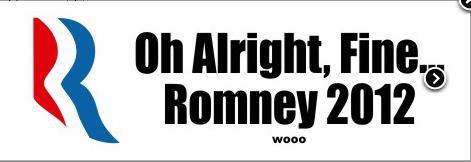
For the next several years we watched and participated in a political pantomime with highlights to include the 2012 installation of Club member Mitt Romney to represent our interests. Yeah, whatever…. It was a hot mess. Bumper Sticker:
The base voters watched the GOP Corporate Club do nothing to block Obamacare, even after we gave them the House in 2010 midterms. Obamacare was another Lucy and the football scenario, while the Senate wing of the Corporate Club created “comprehensive immigration reform,” including amnesty with Marco Rubio. Eventually, the bloom wore off the ruse, and we dispatched Virginia Club official Eric Cantor as a message to the Corporate Club to knock it off.
The Corporate Club didn’t and doesn’t care. Instead, while they sold out the working-class to the multinationals (TPA, TPP, Paris Climate, etc) they fought harder, gaslight more, and made even more promises they never intended to keep. Lucy had an unending supply of footballs.
Then in 2015 things changed. The voting base found a weapon for use against the Republican Club, the weapon’s name was Donald Trump. From the very first poll conducted after his 2015 announcement Trump was leading the charge, and that lead steamrolled 16 other Club approved candidates. The Club remained furious and vowed to remove the disrupter we sent into the boardroom.
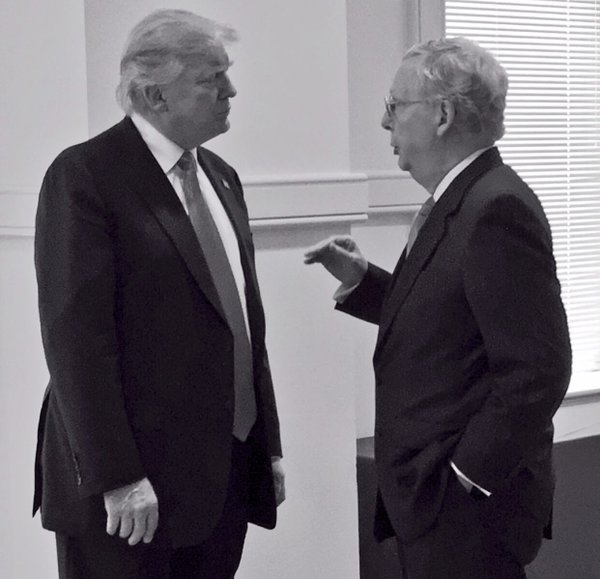
Candidate Trump and President Donald Trump tried to deal with them fair and square on our behalf, but they rebuked him and us.
The Club schemed against him, connived in their little corporate groups to get rid of him, joined with the communists in common cause to cleanse the Club boardroom of the smell from oil, tar and fuel oil, and wanted that vulgarian representative of the dirty fingernail working class eliminated. They want only the “approved Republican” presence.
So, it was always going to get ugly.
It was always going to get Big Ugly.
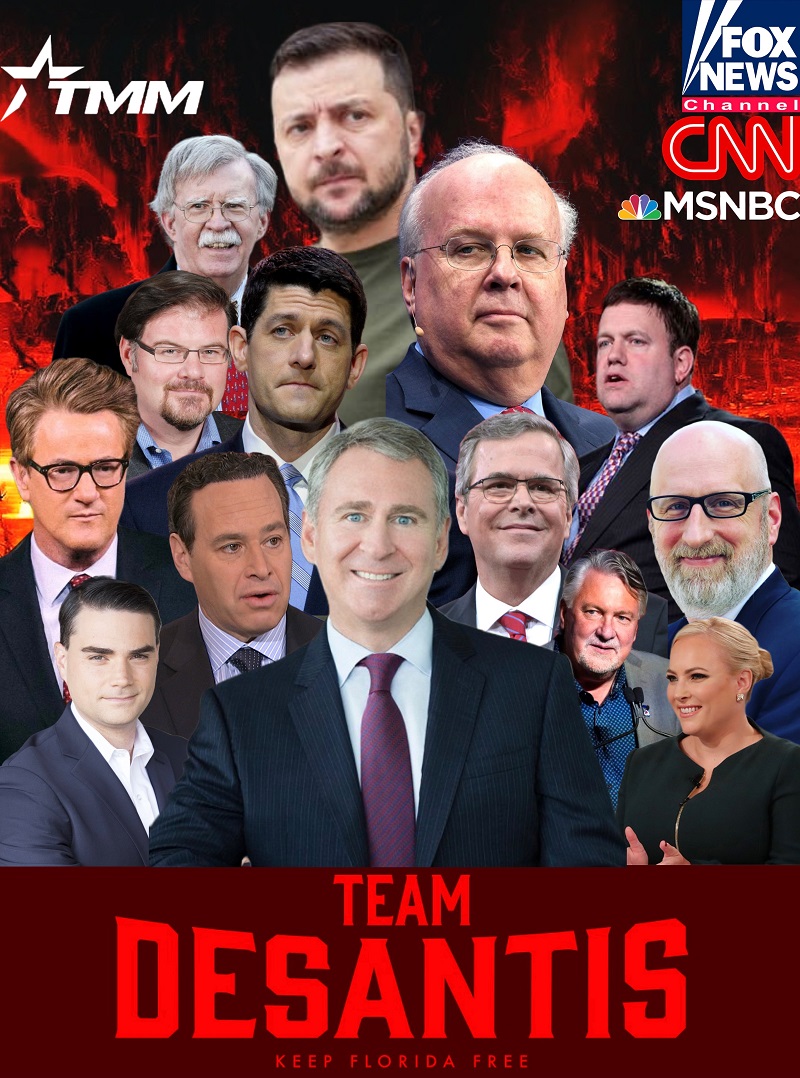
The Club’s enlistment of former TPP approving congressman Ron DeSantis as a foil against the MAGA leader is transparent. DeSantis, funded by massive contributions from the Wall Street approval committee, replaces the prior approved candidate, Jeb. This Big Ugly battle was always going to end up with vulgarian Trump -vs- the next Jeb. The Club has selected DeSantis as Jeb.
Now, let’s be clear. The Republican political establishment, which includes the entirety of the multinationals in/around it, hereafter just called ‘The Club’, doesn’t give a damn about actually winning the 2024 presidential race. The Club didn’t give a damn when Romney was used either.
What the Club wants is full control of the Club agenda, that’s where the money is. The color of the flag atop the Capitol Hill dome is irrelevant to the activity that takes place beneath it. To understand, remind yourself of: The 2017 Obamacare repeal vote, 2015 TPA and fast track approval, 2015 Corker-Cardin amendment for Obama’s Iran Deal, 2014 Gang-of-Eight amnesty bill, or more recently the 2022 unlimited Ukraine funding.
Under the Capitol Hill dome both Club wings of the UniParty apparatus feed the multinational corporate vulture, regardless of the color of the flag atop the spire.
The Republican Club has no interest in Ron DeSantis becoming President of the United States. The Republican Club has interest in Donald Trump NOT becoming President of the United States. Ron DeSantis is the foil, nothing more. It’s not about Ron DeSantis, it’s about the Club, the mechanism behind Ron DeSantis – the same mechanism that put $200 million into his campaign as enticement for his usefulness.
Florida Governor Ron DeSantis -vs- California Governor Gavin Newsom in 2024 is simply two clubs playing the illusion of choice game.
Ultimately, using history and modern politics as the perspective, if you really boil down the political sauce to its reduced state, what you find is… With DeSantis the DNC Club needs less ballot collection to defeat him. However, that’s irrelevant to the intent of his usefulness for the GOP club.
For the professional GOP Club, as openly expressed by the establishment politicians within it, the donors behind it and the media who promote it, the goal is to remove the populism within the club and bring back the multinational Club alignment with the corporations. That alignment was severely damaged by President Trump and the America First economic agenda.
The core of the Big Ugly battle is a Club motive based on money, power and boardroom affluence, in essence, GREED.
For ten plus years on these pages, I have written extensively about how there was always, always, going to be a point where the Big Ugly battle was going to have to be waged. We have waited and waited, looking at each moment, each conflict, each disparagement, each slight and snub, in hope the spark would ignite.
If the Big Ugly arrives in a contest between President Trump and Governor DeSantis, well, great; it needs to happen.
The bottom line is we need this Big Ugly fight. Not only does the future of the GOP reside in the outcome, the future of a constitutional republic free from corporatism is contingent upon it.
Yes, this fight is going to be big, and it’s going to be ugly… and in the aftermath, hopefully lots of free footballs.
Bring it!



 Centinel2012