Producer Price Index Sets New Record at 11.2 Percent Wholesale Inflation, Highest Rate Ever Recorded


Posted originally on the conservative tree house on April 13, 2022 | Sundance 

he “Producer Price Index” (PPI) is essentially the tracking of wholesale prices at three stages: Origination (commodity), Intermediate (processing), and then Final (to wholesale). Today, the Bureau of Labor and Statistics (BLS) released March price data [Available Here] showing a dramatic 11.2% increase year-over-year in Final Demand products at the wholesale level.  This is the fifth consecutive month with the highest rate of inflation the PPI ever recorded.

The single month increase in wholesale prices of 2.3% was driven by inflation built into the supply chain at every level that shows up in the final wholesale price.  Those price increases then get passed along to consumers along with the additional costs for warehousing, transportation and delivery.  I modified Table-A (FINAL DEMAND) to take out some of the noise.
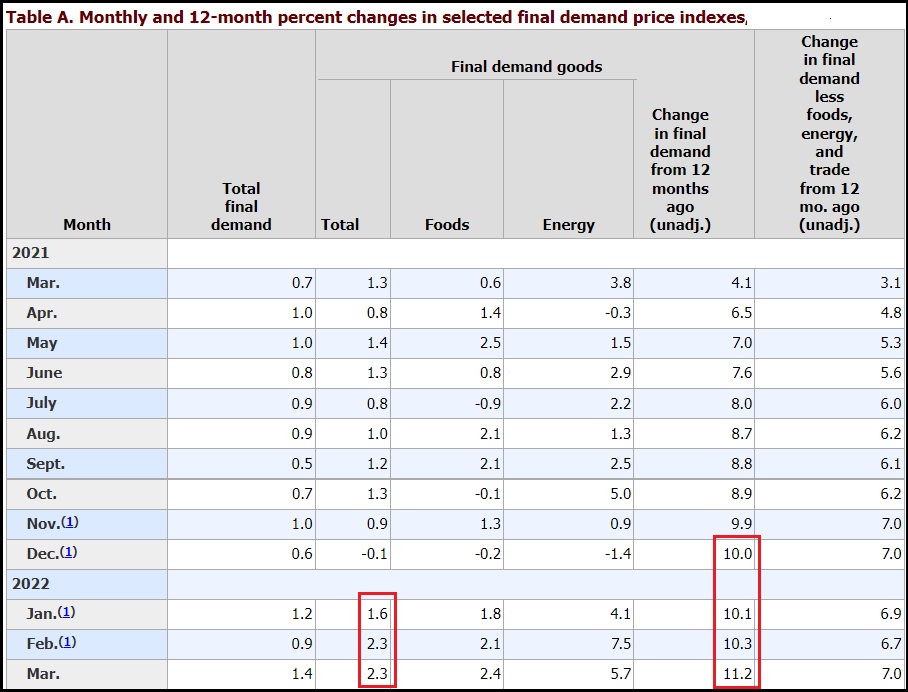
Wholesale prices of goods jumped 2.3 percent in March, and the wholesale price of food products jumped 2.4 percent.  The total demand inflation compared to last year is 11.2 percent, the highest rate ever recorded since the PPI tracking was first started.

The total final demand monthly calculation (1.4%) is lower than the final demand goods (2.3%), because final demand services are offsetting.  You may remember the discussion/analysis about prices beginning to stabilize after this month due to a contraction in demand for goods and services.  I see support for that thesis within this data.

The three phases of wholesale product creation: (1) origination, (2) intermediate, and (3) final, cycle through the economic analysis in reverse chronological order.  Roughly speaking, the flow of goods quantified is done in 30-day sequences.  Final demand this month is comparing to final demand in March 2021.  The intermediate demand goods this month will become final demand goods next month (April).

The rate of inflation behind this set of final demand goods is beginning to soften.  See Table B, Intermediate goods.  Again, modified to take out the noise:
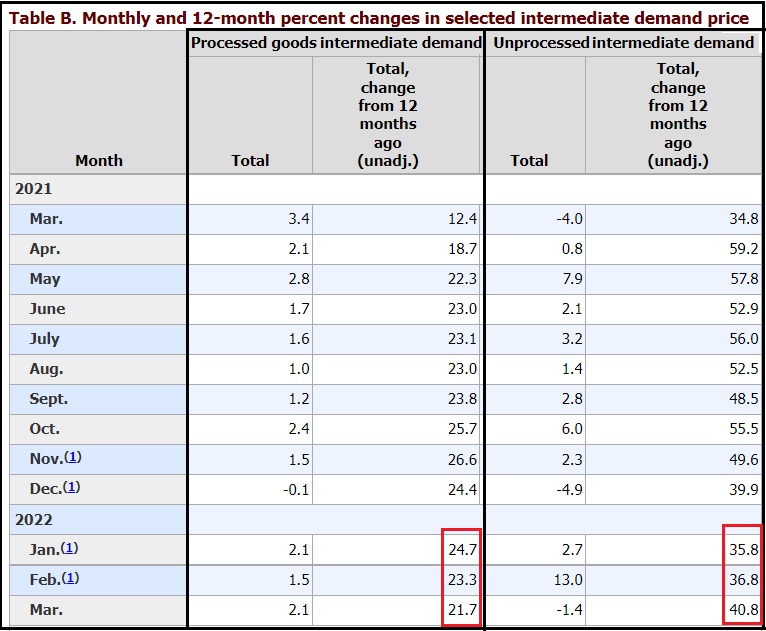
While the yearly comparison for both processed and unprocessed intermedia goods is eye dropping, in the unprocessed intermediate demand goods, we are starting to see a lessening of monthly price increases.

In essence, prices have been rising so fast and for such an extended period of time, that we are now cycling through the rate of increase and starting to compare it to last year when the rate of increase was originally going high.  As a consequence, the rate of price increase will likely lessen, even though the actual price may still keep climbing within the manufacturing process.

The price of raw materials, and the wholesale energy costs to process those materials into finished goods, are still rising.  In addition to the consumer prices reported yesterday, this wholesale price data is showing the most recent increases (March) in fuel and transportation costs.  For the next report these figures should now plateau.

♦ BOTTOM LINE – We have not yet reached PEAK INFLATION – However, the price increases from wholesalers to retailers are now at parity.  The increased price of things coming into the supply chain are now at similar rates of increase when compared to the stuff on the shelves.

Inflation from field to fork is now fully matriculated and embedded in the total economy as a result of two massive price waves (July to October 2021 and November to March 2022).  Those prices will never fall.

Highly consumable goods like food, fuel and energy will remain at approximately the price today for a period of around five months, then we will see the third wave kick in as the new higher harvest prices hit the processors in late summer.

The prices for non-essential durable goods, like cars, electronics, appliances etc. from this moment forth will now be determined by demand.   Highly sought after goods will increase in price as more customers chase fewer products.  However, ordinary or widely available durable goods will likely start to come down in price very soon as inventories climb because consumer spending has prioritized and dropped non essential goods from their shopping lists.

To put it more succinctly:  The stuff we need will cost more. The stuff we don’t need will cost less.

Let’s Go Brandon
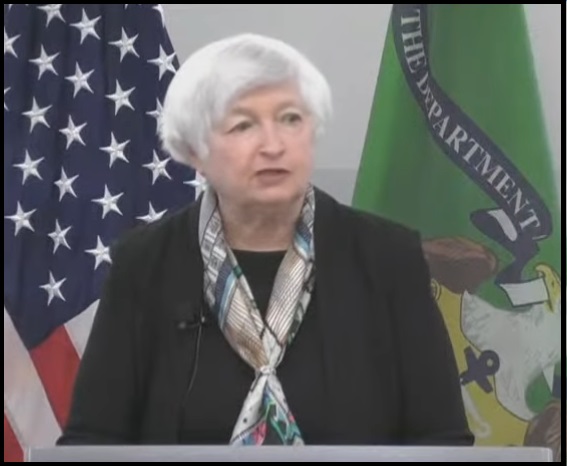
Treasury Secretary Janet Yellen Delivers Remarks Outlining “The future of Our International Order,” and Need to “Decarbonize Our Economies”


Posted originally on the conservative tree house April 13, 2022 | Sundance 

Treasury Secretary Janet Yellen delivered a remarkable speech today outlining “the future of the international order,” in the aftermath of the global pandemic and the current conflict in Ukraine.  Within the speech, Yellen outlines the priorities of the United States according to the current administration and the international financial mechanisms that she controls.

The speech is quite jaw-dropping when you consider the nature of her position, and the fact that she is an unelected bureaucrat within government.

As you read the speech {Transcript Here}, keep in mind she is not the President of the United States, or the commissioner of the New World Order, yet she presents herself as authorized to control the geopolitical constructs of the Biden administration.  The hubris is astounding.

Secretary Yellen: outlines the goals and objectives of the international order, predicts a concerning global famine, warns against the cleaving of financial mechanisms for international trade as an outcome of the Ukraine conflict, threatens any nation who does not support the western political alliance and outlines the need for decarbonization of the global economy.

Yellen expresses all of these powers from the position of a U.S. Treasury Secretary – the equivalent of a government financial minister.  Speech highlights with emphasis mine:

(Transcript) – […] “Russia’s horrific conduct has violated international law, including core tenets of the UN Charter—challenging countries to demonstrate where they stand with respect to the international order that has been built since World War II.  Therefore, when I speak about a changed global outlook, I’m not just talking about growth forecasts.  I’m also referring to our conception of international cooperation going forward.  

I will focus my remarks today on the significance of international cooperation in this current environment and for our future.

[…] With Attorney General Garland, I convened a novel taskforce of law enforcement and finance ministry leaders from G7 and partner countries to advance our efforts. […] Rest assured, until Putin ends his heinous war of choice, the Biden Administration will work with our partners to push Russia further towards economic, financial, and strategic isolation.

[…] When Russia made the decision to invade Ukraine, it predestined an exit from the global financial system.  Russian leaders knew that we would impose severe sanctions. […] We are now seeing higher commodity prices that have added to global inflationary pressures and are posing threats to energy and food security, trade flows, and external balances across many countries.  

[…] The ultimate outcome for the global economy of course depends on the path of the war.  Russia could end this unnecessary war and the near-term impact could be contained. 

[…] While many countries have taken a unified stand against Russia’s actions and many companies have quickly and voluntarily severed business relationships with Russia, some countries and companies have not.  Let me now say a few words to those countries who are currently sitting on the fence, perhaps seeing an opportunity to gain by preserving their relationship with Russia and backfilling the void left by others.  Such motivations are short-sighted.  The future of our international order, both for peaceful security and economic prosperity, is at stake.

[…] The Russian invasion of Ukraine has dramatically demonstrated the need for us to stand together to defend our international order and protect the peace and prosperity that it has conferred on advanced and developing countries alike. […] On some issues, like trade and competitiveness, this will involve bringing together partners that are committed to a set of core values and principles.

[…] we need to modernize the multilateral approach we have used to build trade integration.

[…] we should implement last year’s global tax deal.  Some 137 countries—representing nearly 95 percent of the world’s GDP—have agreed to rewrite the international tax rules to impose a global minimum tax on corporate foreign earnings and to partially reallocate taxing rights from countries where companies are headquartered to those where they sell goods and services.

[…] the economic and financial response to the global financial crisis in 2008-2009 was too timid and short-lived.  With inadequate global liquidity, the crisis caused lasting damage.  In response to the pandemic, the IMF acted creatively to support poorer countries.  […] Experts put the funding needs in the trillions, and we have so far been working in billions.  The irony of the situation is that while the world has been awash in savings—so much so that real interest rates have been falling for several decades—we have not been able to find the capital needed for investments in education, healthcare, and infrastructure. 

[…] We know we have not yet done enough in terms of mitigation, adaptation, green technology innovation and adoption, and funding for those efforts. […] We must redouble our efforts to decarbonize our economies, recognizing that countries will use a range of tools—including carbon pricing, regulation, and subsidies—to achieve needed emissions reductions.  Because those approaches will have quite different consequences for the costs of production, we will see differing impacts on trade competitiveness.  We will need to work together to avoid trade tensions and in time to coordinate and harmonize our approaches.

[…] Some may say that now is not the right time to think big.  Indeed, we are in the middle of Russia’s war in Ukraine, alongside the lingering fight against a global pandemic and a long list of other initiatives underway.  Yet, I see this as the right the time to work to address the gaps in our international financial system that we are witnessing in real time. […] we ought not wait for a new normal.  We should begin to shape a better future today.”  {Read Full Transcript}

Think carefully about what you just read, and then remember the previous warning:

[CTH March 23, 2022] A Build Back Better society, or “great reset”, is factually underway as triggered by the gateway of SARS-CoV-2 and the massive spending by western nations to subsidize the lockdowns, shut-downs, economic closures and forced unemployment.

Global inflation is being driven not only by the American spending spree, but also by the massive government spending programs of the EU, U.K, New Zealand, Australia, Canada and many western nations.

The bills for those subsidies and bailouts are due.  The labor of the citizens is going to have to pay those bills, while simultaneously we deal with inflation and massive debt balances on all nations’ balance sheets.

Into this mix comes the very real possibility of a declining U.S. trade dollar, as a result of geopolitical conflict between the west and Russia, China, Iran and OPEC in the geography of Ukraine.  The financial sanctions by NATO and western allies have factually created a rift in currency exchange valuations.

As the proverbial west hammers those sanctions even harder and more deliberately, what they are doing is creating a stronger and greater likelihood that the dollar will be removed as the global trade currency, and we will enter a phase where two sets of nations exist:

One set of nations will run their economy on oil, gas and fossil fuels.  The other set of nations will be focused on running their economic engine on the premise of sustainability, or renewable energy.

The sanctions toward Russia actually help to drive this chasm even wider.

To me, this looks entirely purposeful – done by specific intent and design.

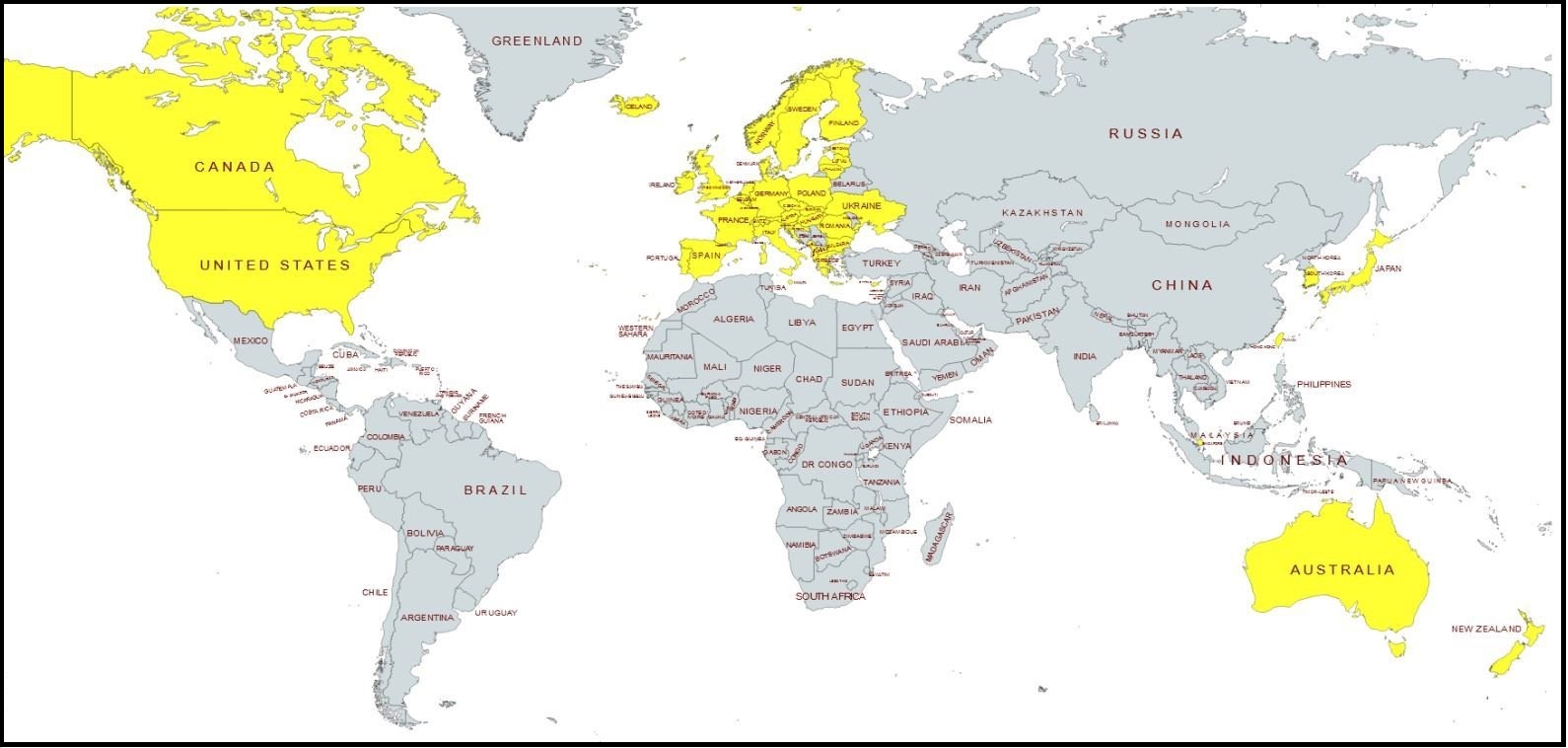
Two world groupings.  One group, oil-based energy (traditional) – let’s label them the RED GROUP; and one group GREEN energy (the build back better plan).  It is not accidental these two groups hold similar internal geopolitical views and perspectives.

♦ The important part to see is… there are going to be two sets of nations with two structurally different economies. A red group and a green group.

What Treasury Secretary Janet Yellen outlines in that speech is the geopolitics of this exact cleaving.  Also worth noting, We The People represent the carbon she seeks to eliminate.

Ukraine v Russian Empire


Armstrong Economics Blog/Ukraine Re-Posted Apr 13, 2022 by Martin Armstrong

QUESTION: We elected Zelensky who promised to end the civil war. It looks like the West is telling him not to compromise and let the Russian section go.

DH (from Ukraine)

ANSWER: On Sunday, CBS News program “60 Minutes” aired an interview with Zelensky. I believe Zelensky is still claiming evidence of Russian war crimes, saying: “We are defending the ability of a person to live in the modern world.” Despite what the press says, this is a Proxy War against Russia and the US, along with the EU and Britain. They are quite happy to use the Ukrainian people as cannon fodder. There is no possible way all of these countries would allow Zelensky to address their own people UNLESS this was a Proxy War.

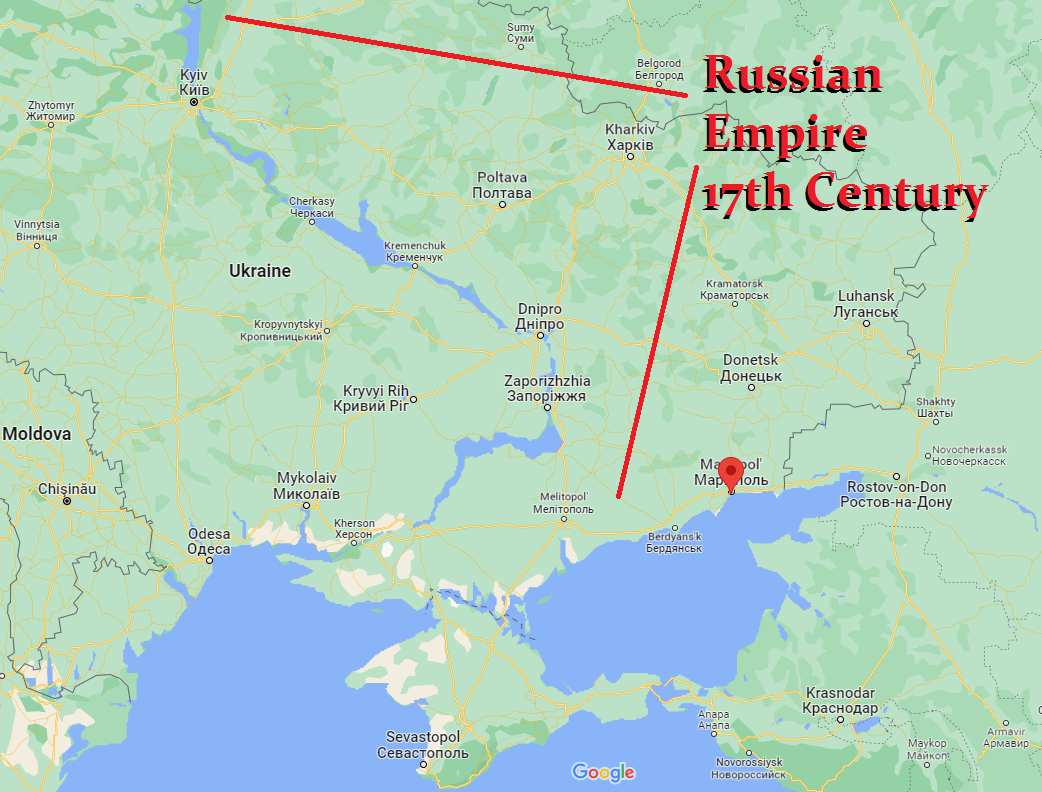
The Dnieper River which runs 1,423 miles and today is the border between Belarus and Russia, was also the border of Ukraine with Russia during the Tsarist Empire at the time of Mikhail I (1613-1645) of the Romanov Dynasty. Zelensky’s claims that Putin has invaded a sovereign nation are debatable. Eastern Ukraine today was assigned to it for administrative purposes during the USSR. It was never Ukrainian territory. It is very hard to see why it is worth killing your own people for a territory that has been occupied by Russians for centuries.

This is obviously a Proxy War, and despite whatever the press says, the West is using the Ukrainian people as the Vanguard in this battle against Russia. They cannot declare war on Russia legally, so they have used Ukraine. Zelensky seems happy to accommodate, blaming civilian deaths on Putin when he shared responsibility for this war.

In Crimea, the population is predominantly Russian and Tatars where there is a population of about 250,000, accounting for about 10% of the total.

Multiple Simultaneous Food Production Impacts Create Global Concern


Posted originally on the conservative tree house on April 12, 2022 | Sundance 

I want to be very careful here, because multiple people have sent me a version of this outline asking for opinion. Basically, is David Friedberg correct?

The discussion in this video surrounds farming as a construct of global caloric creation.  Meaning, with all that is taking place in the farming system on a global scale, will there be dramatic food shortages?  It is a complex issue.  In the larger picture what Friedberg, a former scientist within the Monsanto organization, explains is accurate; however, I would inject some nuanced dissension as it relates to U.S. farm production specifically.

The first four and a half minutes of the video are an accurate representation of the global state of farming, albeit with a little too much weight on the Ukraine-Russia aspect.  There was a preexisting issue long before Russia entered the picture. The price of fertilizer was already skyrocketing, Russia-Ukraine has made that already looming issue, worse.  WATCH First 04:30 minutes:

The problem described, about farmers deciding not to plant, is weighted more heavily in less developed countries where access to the financing for a future crop is not stable {AP Article Here}.  For most of the developed world farming will continue; it is the end product where prices will reflect the additional costs of bringing a harvest to market.  Bottom line, as the futures market is showing, crops will be more expensive.

There is going to be a problem in the same areas of the world where food stability and dependency is already an issue.  Yes, the convergence of current farm challenges will make those areas more vulnerable.  We do not know, to what extent.

The notation about a 90-day supply of food on a global basis (Northern Hemisphere) is slightly askew, as countries like the United States have a much deeper reserve and storage capacity.  We discussed this last year {Go Deep}.

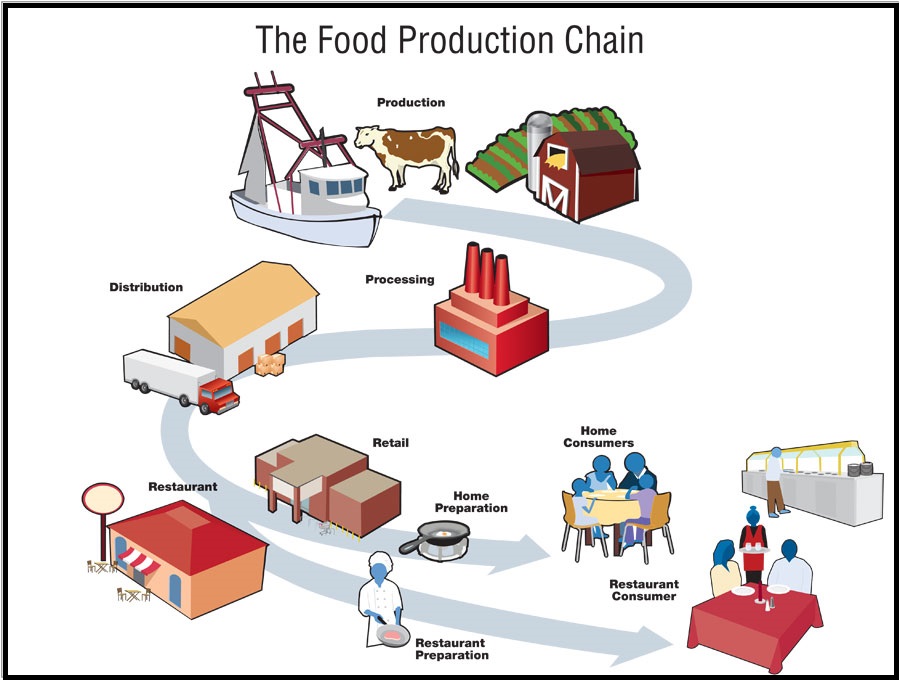
Essentially, in the U.S. we operate approximately one full harvest cycle ahead of demand.   However, our problem is the COVID lockdowns in 2020 and 2021 disrupted the two food delivery systems by shutting down restaurants, cafeterias, hotels, hospitality venues, entertainment, school lunchrooms etc and limiting capacity for six months.  The government intervention seriously messed up our food supply chain. {Go Deep}

In North America I do not foresee any major scarcity of total food availability, certainly not in the fresh food supply side.  There may be shortages on specific segments within the processed and manufactured food supply chain, but those would be nuanced based on specific ingredient issues.

What we will see is continued increases in price and a demand for U.S. agricultural products to fill the voids in global markets that result from less developed nations needing the products our North American farming experts can deliver.  There will be a higher demand for us to export food materials, and when combined with the already increased cost for the harvest, that means much higher prices still coming.

Our North American farmers are awesome in their ability to maximize yield, with the customary and appropriate qualifier that ultimately mother nature will determine success or failure.   Our U.S. and Canadian farmers and ranchers are the best of the best.  Their ability to feed our nation is a national and strategic advantage, unparalleled in any other region.  They know how to do it, if the government will just get out of the way and let them work.

If it was a priority for the U.S. government to ensure U.S. food stability, they could spend a few billion by securing fertilizer and reasonably priced energy (diesel) for our farmers, simply to offset the upfront and increased production costs.  Then, just turn North America loose, pray a little bit, and let them create as much product as possible for the overall market.  Let the market demand determine the crop, and get government out of their business.

Farmers in the U.S, Mexico and Canada have the capacity to drive higher yields.  Unfortunately, the politics of war, Wall Street – and the influence of the international banking system – takes a higher priority for DC than simple farming commonsense.   Unfortunately, as we saw today, turning corn into gasoline additive just exemplifies the stupidity of the DC mindset.

On one hand, we have serious people concerned about global famine. On the other hand, we have a narcissistic occupant of the oval office, and a tribe of DC idiots worried about gasoline prices and the mid-term election.  These issues do not have to be mutually exclusive, and there is a reasonable solution for both of them.  However, all that reasonableness evaporates once the people behind a fraudulently elected DC politician walk in the room.

Will there be a dangerous level of food shortage globally?  Yes

Will there be a dangerous level of food shortage in North America? No, but there may be some scarcity.

Will there be higher prices?  Absolutely.

Unleash the farmers and unleash the energy experts and all of this maddening anxiety ends.  Unfortunately, those actions are adverse to the Build Back Better agenda.

We are in an abusive relationship with our government.

California Republicans Aim to Make Theft Illegal


Armstrong Economics Blog/Crime Re-Posted Apr 11, 2022 by Martin Armstrong

In 2014, California basically decriminalized theft by permitting shoplifters to take what they please, as long as it was under $950. Prop 47, the Safe Neighborhoods and Schools Act, emboldened criminals to do as they please with no repercussions as they cannot be prosecuted for a felony charge. California does not aggregate robberies, so a criminal could target a store multiple times per week with limited repercussions as long as each robbery yielded under $950.

Republican lawmakers have introduced AB 1599 which would repeal most of Prop 47 and “make crime illegal again.” Republican Assembly member Kevin Kiley, an author of AB 1599, said, “[Prop 47] has essentially legalized theft and open drug use in California, culminating in these unbelievable smash-and-grab robberies.”

Smash and grab robberies have become an organized crime by low-level criminals. “You have people that will go into department stores and they’ll actually have a calculator on them,” Kiley said. “They’ll add up the value of what they’re stealing because they know as long as it’s under $950, they might as well wave at the security camera on the way out. They know there’s going to be no consequence for that.”

Rachel Michelin, president and CEO of California Retailers Association (CRA), noted that San Francisco and Oakland alone have lost $3.6 billion annually to organized retail crime. The National Retail Federation places estimates losses from organized crime at around 0.07% of total sales and believes the CRA is overestimating. Regardless, this is a preventable loss. Governor Gavin Newsom would need to approve of the measure, but has been consistent on his light on crime stance. Newsom has ignored pleas to crackdown on shoplifting, and simply told struggling store owners to use other existing laws to prosecute thieves. Independent store owners would be wise to leave California as the laws in place only protect criminals who have abused Prop 47.

Climate Change the Tool of Control


Armstrong Economics Blog/Uncategorized Re-Posted Apr 10, 2022 by Martin Armstrong

QUESTION: Dear Martin,
After reading many of your blog posts, there appears to be one question you might not have answered. Do the elitists who are trying to control the world truly believe climate change cycles are not natural, but instead are caused by humans? It would seem that any climate theory that doesn’t explain the coming and going of ice ages which our history books told us happened, is an incomplete theory.

H

ANSWER: I think anyone with 10% of a brain can’t believe this climate change is caused by CO2. The climate has always changed and they use data that starts only in 1850 to argue this is all fossil fuels. CO2 is also generated by burning wood and the pollution from diesel and wood is the type that you feel. I lived in London during the 1980s and the buses were all diesel. You had to hold your breath when walking by.

The first clean air act was passed in 535AD by Emperor Justinian I who proclaimed the importance of clean air as a birthright. “By the law of nature these things are common to mankind—the air, running water, the sea.”

See: https://twitter.com/GooseMumma/status/1512323263011119105

People are easily manipulated and those with a fully functioning brain are horrified by the stupidity of people who were told to hate Trump who now refuses to admit that Biden is a disaster because they would be compelled to acknowledge their own malleability to those who still wear masks even driving alone and rushed out to get every vaccine and booster possible. Now they are all about freedom, democracy, and anti-Russia so just kill them all because that is again what they are told.

I do not think that world leaders are that stupid. They are using this climate change for their own agenda. Even Obama and Bull Gates both bought houses on the beach and Obama has now bought a private island in the Caribbean. Hm. So much for their belief in rising sea levels and civilization.

This is all about control – we, the great unwashed. There is absolutely no way the world will end because of CO2 in 7 years. That is absolute nonsense to create fear and obedience. The climate has always changed – it is NEVER the same. Civilization expands during warming periods and it collapses during cold periods. France has had the coldest April since 1947. Yet Macron vows to “get France out of oil, gas, and coal” while Paris is freezing and needs heat. I woke up this morning to 50 degrees here in Florida. Obviously, we have way too many climate change zealots coming to Florida holding Séances for global cooling to save the planet.

Maybe Gates is correct – we just need to thin the herd of all stupidity before we can get our human rights back.

Sunday Talks, Fauci Warns of Potential Return of Indoor Mask Mandate


Posted originally on the conservative tree house on April 10, 2022

Appearing on ABC’s This Week to give his opinion on the current status of COVID-19, White House medical advisor Anthony Fauci warns the CDC may soon revert back to an indoor mask mandate.  This is additionally troublesome, because many people now define themselves by COVID-19.

There are many people who can only identify with other like-minded people fearful of COVID.  WATCH:

There are a significant portion of the American public who worship at the altar of COVID theatrics.  For them getting booster shots, following the CDC orders and participating in the mask theatrics is a profoundly religious experience that defines who they are in the modern world of pandemic fear.

Observing the behaviors of mask promoters, is almost like watching a livestream of unstable political expression.  It truly is one of the most bizarre new realities. Many of the Branch Covidians become mentally and emotionally unstable when they experience contact with a non-mask-wearing person.

Even after all of the ‘scientific evidence’ that shows masks provide no substantive benefit or lowering of infection risk, there are a great many people who cannot fathom not wearing one for the remainder of their lives.  The psychological training from two years of massively promoted COVID fear and the drumbeat of worry, has left a large portion of the American people in a permanent state of profound instability.

It is unnerving to realize how many people can be influenced to believe in something that lacks any logic or reason.  I’m not sure how long, if ever, this tear in the social fabric will last or take to repair.  Many of these COVID consequences have divided people permanently.  The full interview is below.

.

Cleveland Fed Chair Outlines Reasons Monetary Policy Cannot Lower Inflation When Energy Policy Is in Control


Posted originally on the conservative tree house on April 10, 2022 | sundance 

Loretta Mester, the president and CEO of the Federal Reserve Bank of Cleveland, appears on CBS Face the Nation to discuss inflation, the economy and monetary policy.  Ms Mester is in a tough place, because she cannot admit the influence of federal monetary policy is far outmatched in the era where Joe Biden energy policy is limiting oil and gas development and creating massive inflation.

Mester does admit the supply chain crisis will extend well into 2023, but blows hopeful unicorn wishes by projecting that price inflation will temper by the end of this year.  From the perspective that 20 to 50% price increases on critical goods (housing, food, fuel, energy) are unsustainable in repeated cycles, she is correct; the rate of inflation will lower. However, that’s only because the baseline prices will have increased so high the rate of increase measure falls.  WATCH:

A $4 item that gains a $2 increase holds a 50% rate of inflation.  The next year that $6 item again has a $2 increase, but the rate of inflation drops to 33%.  The price increase is the same, but the rate of inflation drops.  That’s what is going to happen in the second half of this year.  FUBAR

The White House is doing this on purpose in order to chase their ideological dreams of sustainable energy and climate change.  Energy prices underline the entire economy, because oil and gas prices touch everything.  Insofar as they continue the war against coal, oil and gasoline, there’s nothing monetary policy can do to combat inflation.  The Fed must however, pretend not to know things.

Zelenskyy Gives British Prime Minister Boris Johnson a Guided Tour of The Great Western Battle to Save Kyiv


Posted originally on the conservative tree house on April 9, 2022 | Sundance

To get a better context for the catastrophic and dangerous war zone that is Ukraine, yesterday European Commission President Ursula von der Leyen and European Commission Vice President Josep Borrell Fontelles visited President Zelenskyy in Kyiv {link}.  The primary purpose of the meeting was to affirm the intent of the EU to accept Zelenskyy into the Union.

Earlier today, British Prime Minister Boris Johnson also went into the war zone, toured the extreme chaos and battleground, and met with Zelenskyy (video below).

(Via MSM) – The UK is to send 120 armored vehicles and new anti-ship missile systems to Ukraine, Downing Street announced Saturday, after Prime Minister Boris Johnson paid an in-person visit to Ukrainian President Volodymyr Zelensky.

Johnson and Austria’s Chancellor Karl Nehammer made separate visits to Zelensky on Saturday, the latest in a string of leaders to travel to the country during the ongoing Russian invasion.

Johnson posted on Twitter that his visit to Kyiv was “a show of our unwavering support for the people of Ukraine” and announced a new package of financial and military aid.

“Ukraine has defied the odds and pushed back Russian forces from the gates of Kyiv, achieving the greatest feat of arms of the 21st century,” the UK PM said in a statement.

He praised Zelensky’s “resolute leadership” and the “invincible heroism and courage of the Ukrainian people,” adding that the UK “stands unwaveringly with them in this ongoing fight … we are in it for the long run.”  Later in his nightly address posted on social media, Zelensky thanked the UK and Johnson. (read more)

As seen in video promoted by the NATO alliance, Johnson and Zelenskyy ignored the threat of bombs, missiles and artillery that could be raining down upon them, and bravely walked without flak jackets, vests or even helmets despite the chaos.

Unfortunately, the cinematography produced by the western NATO alliance failed to capture the smell of burning diesel fuel from the aftermath of hundreds of tanks and weeks of street-to-street urban warfare.  However, it does appear that Johnson was prepared for hand-to-hand combat if any angry shopkeeper stepped out of line.   Courage is, as they say, contagious.  Footage below:

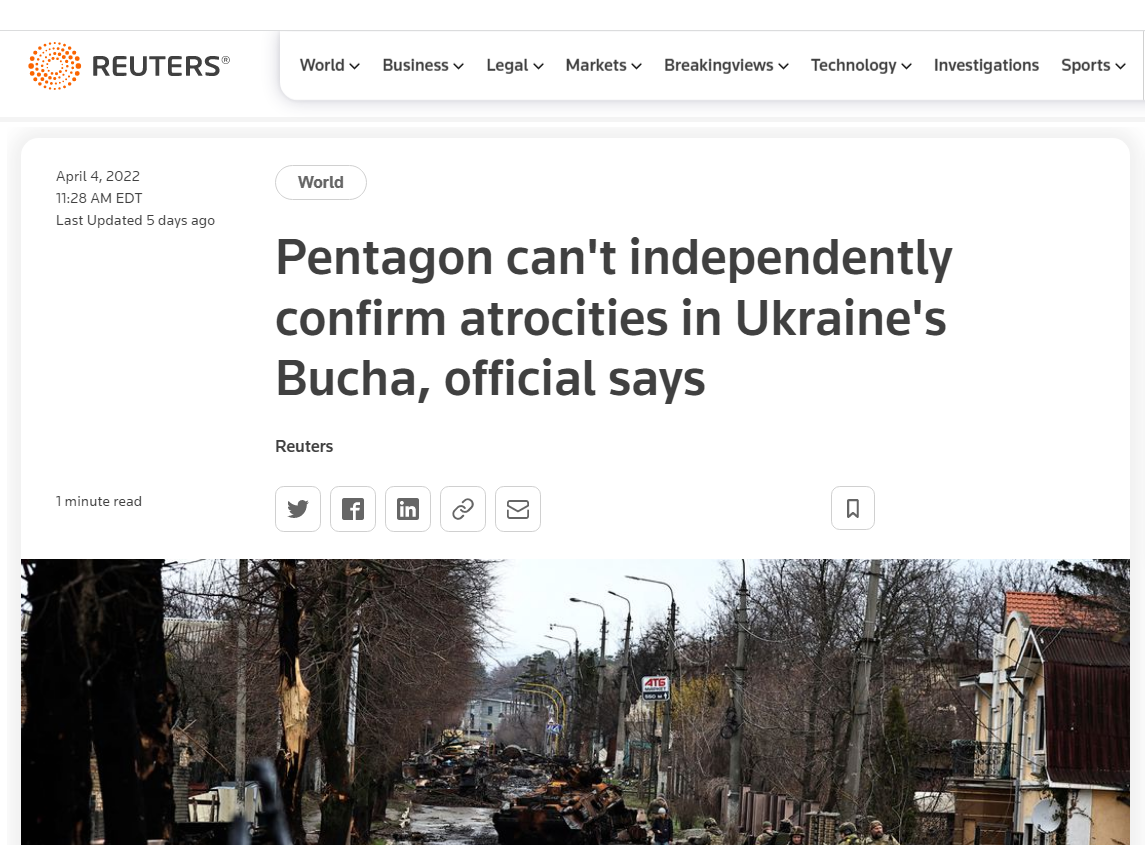
Pentagon Cannot Confirm Bucha Atrocity


Armstrong Economics on Blog/Ukraine Re-Posted Apr 10, 2022 by Martin Armstrong

QUESTION: So you think Russia did not do that in Bucha?

SJ

ANSWER: It is to the advantage of Zelensky who is appearing before every parliament he can ask for money. The US Pentagon has come out and even said that they CAN NOT independently verify what took place in Bucha. There is no way to verify anything in Bucha and there are videos that show people laying in the street pretending to be dead with no blood and then there are videos showing they get up when the camera passes.

If you want your family or someone else to rush over there and kill Russians to avenge Ukraine, you should go there and fight yourself. Don’t send others there to die for propaganda. Don’t worry. Congress just authorize handing all the weapons on the Christmas list of Zelensky so we will get your war that you so are eager to engulf the entire world. If you really think Ukraine can defeat Russia, please, volunteer for the vanguard.

know, Ukraine and you better count your fingers when shaking hands. The government there is texting me asking for money. There is ABSOLUTELY zero confirmation that ANY money being sent to Ukraine gets to the people and not the pockets of one of the most corrupt governments in the world. Only a fool will send money to Ukraine based on all of these solicitations. The ONLY people to send money to are the International Red Cross or Crescent.

There has been NOT a single war that ever began that was based on truth. Every war was sold with propaganda.