Turkey has little hope of coming out of this in one piece. The pretend President-Dictator, Tayyip Erdogan, has come out and denied on Saturday that Turkey is in a currency crisis. Exactly how he can even say that is shocking. Nevertheless, he called a 25% drop in the currency a plunge that is just ‘fluctuations’ that have nothing to do with economic fundamentals. He blamed the United States calling the collapse in the currency ‘missiles’ of an economic war waged against Turkey. Trump in raising the tariffs against Turkey is understandable since the currency declined and that would make their exports cheaper. However, he is stepping in the wrong direction here for the collapse in the currency reflects the collapse in the CONFIDENCE with regard to Erdogan.
We are looking at the usual response of a dictator in trouble. Blame someone else and that is ALWAYS external. What comes next is a break with the West and an alignment with the East. He is NOT about to surrender power NOR will he accept blame for the economic conditions in Turkey. His power is all that matters and the people are always wrong in his mind.
This past week was a Panic Cycle and this should start to subside a little but this is hardly over. Turkey is in serious economic trouble and Erdogan will blame the United States and Europe – never himself. I have warned before that NATO should have pulled all missiles out of Turkey. That is rapidly approaching the point of no return.
QUESTION: Dear Marty:
I have been reading you for over a decade. I notice a change in your attitude towards Bitcoin/Crypto. Initially, you were completely against it, now you seem to be neutral. Has something changed? We now have Futures, CBOE is coming out with an ETF, every major bank is thinking of entering the space. The G20 will soon come out with a supportive statement.
Thank you,
YA
ANSWER: No. I regard this as an ASSET CLASS for trading. That is distinct and separate from the claim it is a currency. Even Hyun Song Shin, the economic advisor and research director of the Swiss-based Bank for International Settlements (BIS), told Bloomberg that Bitcoin and other cryptocurrencies are “far from maintaining a monetary system” and “just pretend to be real currencies “. On that score, he is absolutely correct. This is like expecting Recep Tayyip Erdoğan of Turkey to stand up and say he is wrong and his policies have been disastrous for Turkey and he will put the good of the nation before himself, or the same in Venezuela, or the religious leadership in Iran. Currencies move into hyperinflation NOT because of the rise in the quantity, but because of the collapse in CONFIDENCE, that then forces the increase in the quantity of money to pay the bills. I suppose it’s the question which came first? The chicken or the egg?
You have to separate reality from fiction. That does not mean that Bitcoin is not an asset class. It just is not a currency that has any real footing within the economy. So there is NO POSSIBLE WAY any government will allow a PRIVATE cryptocurrency to replace a national currency. That will NEVER happen. However, I have previously stated that governments want to ELIMINATE cash for tax reasons. Only about 4% of transactions today are in paper currency, to begin with. The bulk of our monetary system is already digital currency that does not exist. The pitch that cryptocurrency will circumvent central banks and governments is just absurd. You have to separate PRIVATE from PUBLIC. That is the issue against Bitcoin.
The commercial banks that are looking at it are for non-currency issues of the blockchain. Goldman Sachs is looking to a custodian to hold money for cryptocurrencies to make money. But the sales-pitch that Bitcoin will become the reserve currency, replace central banks, and eliminate national currencies is really way out there. The FAX machine was invented by the Scottish inventor Alexander Bain who worked on chemical mechanical fax type devices. Back in 1846, he was able to reproduce graphic signs in laboratory experiments. He applied and received a British patent #9745 on May 27, 1843, for his “Electric Printing Telegraph”, but it took more than a 100 years to actually become usable. Yes, you can see the future and no doubt you could envision sending photographs around the world back in 1843. There is just a huge gap between technology and its implementation. Back in the 1960s when integrated circuit chips first appeared, it was obvious we would shrink a computer to fit on a desktop. The problem was trying to figure out what people would do within. Later Microsoft, Lotus, etc., figured out how to use it and the computer age began for the mainstream. We are NOT there yet in cryptocurrencies any time soon.
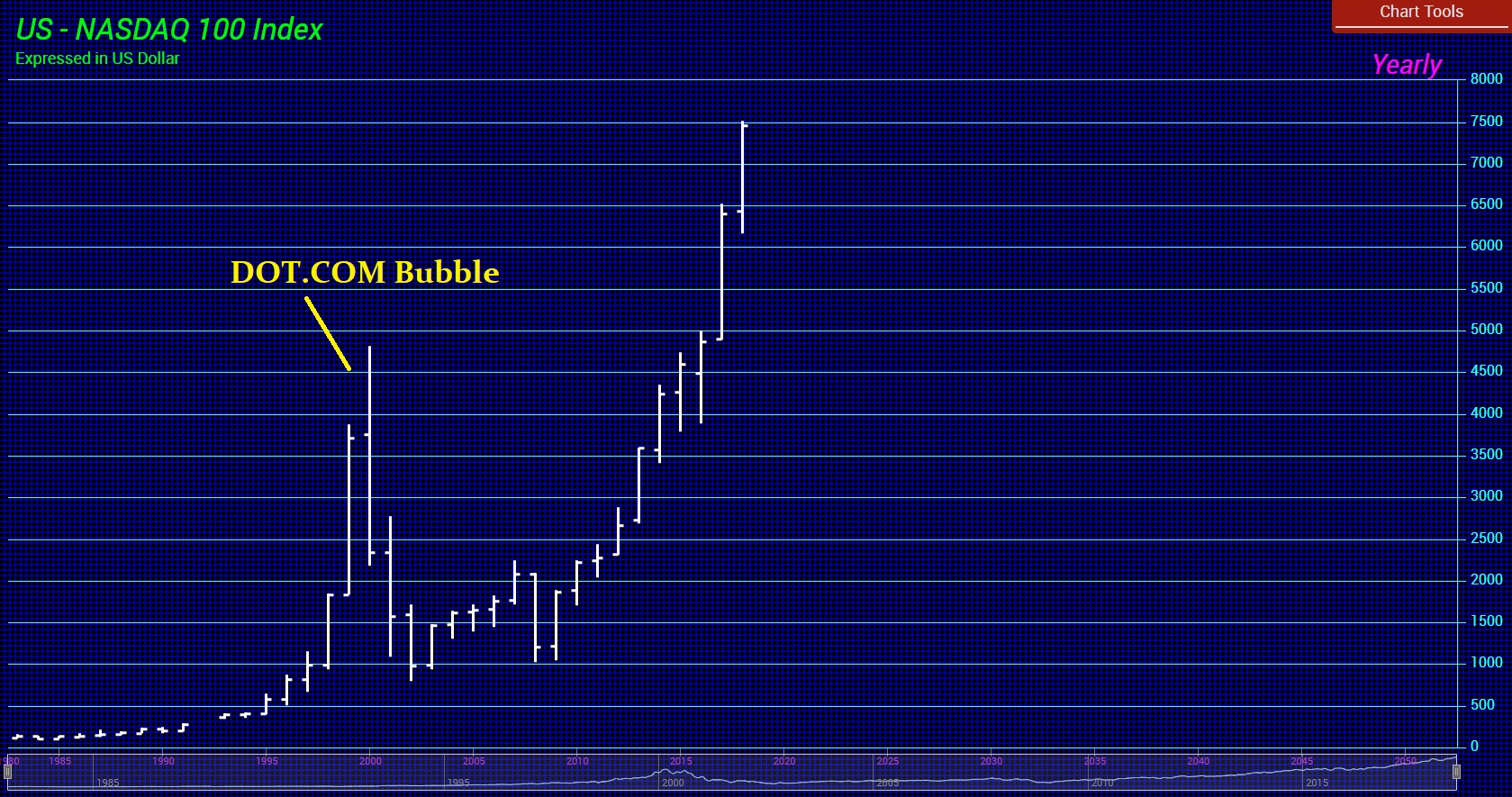
Can the economy move to purely electronic currency? The answer is NO – not yet. We may still be looking at that well AFTER 2032. India and Sweden have found it impossible to get away from paper money. There is a large segment of the population that do not bank no less own a computer or even a smart phone. The EU passed a law calling it everyone has a “right” to have a bank account, which was really a step to try to move closer to an electronic currency. You are looking at the basic requirement of a generational shift. As the older generation dies out, money will become completely digital, newspapers will see their last print, and paper books may be found only in a museum. Things always change – but not as fast as people think. The DOT.COM Bubble was all about the rage of how the internet would replace stores. The prices got ahead of the reality. Eventually, the technology changes the system. But it always takes time. Eventually, new higher were made and a more solid market emerged – with TIME!
Cryptocurrencies are an “asset class” meaning they are tradable with futures. However, that is a far cry away from being an actual currency that is legal tender accepted everywhere including taxes. We have included it in the markets analyzed by Socrates for that very reason. It is an instrument to trade. Just don’t marry the trade
A Revolution is brewing not just in Turkey, but also in Iran. More than 100,000 people have taken to the streets chanting death to the dictator. The currency has simply collapsed as it moves into hyperinflation. Once again, as we see this take place, CONFIDENCE in the government is collapsing. This is the key to revolution. Once the people lose CONFIDENCE, then the game changes. That does not mean in either the case of Turkey of Iran that the government will just go into the light voluntarily. In both cases, the governments are really dictatorships and they will NOT relinquish power willingly anymore that we see in Venezuela. As long as the police and the army support dictators, then regime change WILL NOT come peacefully. In both cases, they will even resort to creating wars as a distraction to retain power.
The more chaos that unfolds, the stronger the US dollar becomes. Capital will ALWAYS flee from wherever the war unfolds. In this case, do not consider that these governments will simply surrender power voluntarily. They will both turn toward Russia for help and portray their political crisis as a CIA plot. That is rather absurd but it will surface anyway. This is standard behavior whenever a currency moves into hyperinflation as the CONFIDENCE in the immediate government collapses. This is WHY the people need guns. Take the guns away from the people and there is never an ability to defend against a government which is desperately trying to retain power as we see in Venezuela
In an interesting set of tweets today President Trump highlights the institutions of the DOJ and FBI with separate and blunt emphasis.
Toward the DOJ, President trump notes the relationship between Deputy AG Bruce Ohr, his wife Nellie Ohr as a Fusion GPS contractor and Christopher Steele the author of the “phony and discredited Dossier”, also a Fusion GPS contractor. All of the entities were paid by Hillary Clinton through her legal representation.
Additionally, President Trump highlights the lack of DOJ leadership (specifically AG Jeff Sessions) to address the institutional corruption which led to “spygate” and a fraudulent application for an unlawful FISA application.
In the second set of tweets, President Trump noted how officials within the FBI are continuing to obstruct oversight and refuse to turn over evidence of institutional corruption. In a pointed question President Trump asks: “What are they hiding”?
The overall message delivered by President Trump highlights the ongoing institutional issues which are not being addressed by either AG Jeff Sessions and FBI Director Christopher Wray; both are acting as corruption monitors; neither are confronting it.
And within this dynamic we accept events as they appear:
•After the IG report on the Clinton investigation, Director Wray took no action to address the issues of the deeply political FBI; and no-one within the organization has been held accountable. With the single exception of McCabe, all former corrupt officials have been permitted to exit with full benefits and pensions intact.
•Additionally, there is no effort on behalf of the DOJ to follow-up on the IG criminal referral to charge former Asst. FBI Director Andrew McCabe for lying to the FBI, leaking information to the media and using his office/position to influence an official investigation.
•Worse yet, there is an ongoing and highly visible DOJ leadership effort to cover-up the gross criminal behavior of the head of the Senate Intelligence Committee Security staff, James Wolfe. Despite overwhelming evidence that James Wolfe leaked top secret and highly classified intelligence to the media, the DOJ has only charged Wolfe with one much lesser crime of lying to the FBI.
Initially, through 2017, CTH was optimistic that Attorney General Jeff Sessions and FBI Director Christopher Wray would take action to: (A) reveal the scale and scope of the prior DOJ/FBI activity; and (B) bring criminal charges against those officers who engaged in a conspiracy to influence the 2016 election and overthrow a duly elected President. However, in the face of overwhelming evidence highlighting the Sessions/Wray emphasis we now clearly see the only goal is preservation of the institutions.
Attorney General Jeff Sessions is willfully blind. FBI Director Christopher Wray is also demonstrably corrupt, and willfully blind. Both are working against the interests of justice in their efforts to protect Washington DC from sunlight. Both are allowing officials within their organizations to continue conspiring to protect their former colleagues.
If the MAGA community can all pull together and win the 2018 Mid-Term election; I am almost positive President Trump will fire the failing leadership of both the FBI and DOJ. President Trump’s personal efforts to win and hold position in the November elections is essentially a visible display of his intent toward that objective.
It is now clear that officials connected to the DOJ and FBI, or officials within Washington DC, cannot be used in any effort to eliminate the corruption within both organizations. It will take bold outside leadership with knowledge of the operations to dismantle it.
Therefore I would not be surprised to see President Trump go outside-the-box toward the Judicial Branch, and locate two federal judges, from outside DC., with a request to become heads of the DOJ (ex. Judge Andrew Hanen). Similarly I would not be surprised to see President Trump look for two former Governors to lead the same institutional reform effort within the FBI (ex. Bobby Jindal or similar).
The lessons of 2016, 2017 and 2018 have solidified our opinion that any/all corruption reform within DC institutions, simply cannot be dealt with by any leadership entity that has a network connected to Washington DC.
In what can only be described as the nonsensical rantings of an ideologue who refuses to even fathom the geopolitical Trump changes around him, Turkish President Recep Erdogan writes an op-ed in the New York Times to tell Americans POTUS Trump, and like-minded allies, are bullying/destroying the Turkish economy because his authoritarian regime has imprisoned an American pastor.
DUH!
This is not difficult to figure out. Release American pastor Andrew Brunson, and President Trump will consider stopping. Keep the U.S. citizen detained and President Trump will continue destroying the Turkish economy. This is not hard to figure out once you accept the United States is unapologetically going to target any nation that targets American citizens.
President Erdogan is finding out that Brunson is the most expensive hostage in the history of hostage taking; however, with POTUS Trump in command it’s the kidnappers paying the price…. funny how that happens.
Further into Erdogan’s diatribe he warns: “a failure to reverse this trend of unilateralism and disrespect will require us to start looking for new friends and allies.” Again hilarious.
DO IT. Please, DO IT. Leave NATO and the U.S./Europe is no longer constrained to confront the extremist duplicity of Turkey. Remember, when Turkey shot down the Russian fighter jet in November 2015?… then ran behind the skirt of NATO for protection against Russian retaliation. Remember that?
Recep Erdogan now threatens to form closer relationships with Russia as retaliation for the way the U.S. and NATO allies are confronting his duplicity. Hollow threats. Remember when the Russian Ambassador to Turkey was killed by a Turkish jihadist shouting allahu akbar?
Between extremist Turkey shooting down the SU-24 (’15 )and then extremist Turkey killing the Russian ambassador (’16), it’s not like Russia would not welcome the opportunity for greater, shall we say, “influence”, with an intended goal of retribution.
From the Op-Ed:
…[…] “In recent weeks, the United States has taken a series of steps to escalate tensions with Turkey, citing the arrest by the Turkish police of an American citizen, Andrew Brunson, on charges of aiding a terrorist organization. Instead of respecting the judicial process, as I urged President Trump to do in our many meetings and conversations, the United States issued blatant threats against a friendly nation and proceeded to impose sanctions on several members of my cabinet. This decision was unacceptable, irrational and ultimately detrimental to our longstanding friendship.” …
Embrace the pain Erdogan; it is not going to stop.
…”He’s horrid, just horrid; there’s no telling what that, that man, will do next…. and the mean tweets are, well, just too much…. Too much. But still… yet… it, his people seem to like him more than our own people seem to like us… how can this be? America this, America that, always with this America-First nonsense.. He’s horrible”… “Junker even got smashed this morning because he couldn’t calm his nerves again. Poor man”… “The beast just terrifies all of us” … “Shhhh, I think he’s coming”…
The story of an obviously unstable ground service agent at Seattle-Tacoma International Airport is terribly sad. According to most accounts 29-year-old Richard Russell stole a turboprop jet for just under an hour before eventually crashing and killing himself 30 miles away. There were no other passengers on board.
.
Our thoughts and prayers are with the family and friends of this young man; and also especially with the air traffic controller who remained calm and tried his earnest best to save the life of Mr. Russell. A person can well imagine the sadness felt by that Air Traffic Controller.
God our strength and our redeemer: you do not leave us in this life nor abandon us in death. Hear our prayer for those in despair, when days are full of darkness and the future empty of hope. Renew in them your sustaining strength for we believe that there is nothing in all creation that can separate us from your love in Christ Jesus our Lord.
While another phase of the White House remodel is underway, President Trump conducts national business from his residence in Bedminster, New Jersey.
[Transcript] Bedminister, New Jersey – THE PRESIDENT: Well, thank you very much, everybody, for being here in Bedminster. We’ve had a lot of work. We’ve done a lot of work. They’re renovating the White House. It’s a long-term project, and they approved it years ago. And I said, well, I guess this would be a good place to be in the meantime. So they’re doing a lot of work at the White House. I miss it. I would like to be there. But this is a good way of doing it.
We have some very outstanding people with us. And I’ll make a few remarks. This is largely about prison reform — and other subjects — but largely about prison reform.
So I want to thank the governors — Matt Bevin, Phil Bryant, Doug Burgum, Nathan Deal, and John Bel Edwards — for being here today. Been friends of mine. We’ve been, I could say, in wars, but we’ve been on the same side of the wars. That’s always good.
I want to thank you also to Attorney General Pam Bondi and Ken Paxton. And Ken just filed a very interesting lawsuit, which I think is going to be very successful. I hope it’s going to be successful. I also want to recognize Secretary Rick Perry and Secretary Alex Acosta. Thank you both. Rick, thank you very much.
We are doing some great things with healthcare, Alex.
SECRETARY ACOSTA: We are.
THE PRESIDENT: And you’re doing some wonderful things with energy. I hope that project comes along that we’re talking about. It’s going to help a lot of people. A lot of jobs are going to be created.
SECRETARY PERRY: Indeed.
THE PRESIDENT: So I know you’re working on it.
I look forward to hearing from each of you about your experiences with prison reform and the lessons that we’ve learned. I know how Matt, in particular, you have been working so hard. Phil, you’ve been working long and hard on it — harder than anyone would know. But I can tell you, my administration feels very, very strongly about it.
One of the single most important things we’re doing is to help former inmates in creating jobs. We’re creating so many jobs that former inmates, for the first time, are really getting a shot at it, because they’re weren’t sought and now they are being sought because our unemployment rate is so low — historically low — 50 years.
Now, our economy is booming. Businesses are hiring and recruiting workers that were previously overlooked. They’re being hired. It’s a great feeling. It’s a great thing that we’ve all accomplished. We’ve created a lot of jobs in the states. And I guess I’ve helped you a lot on a national basis.
We’ve created 3.9 million more jobs since Election Day — so almost 4 million jobs — which is unthinkable. If I would have said that during the campaign, only a few of the people around this table would have believed me. But they would have. 3.9 million jobs since Election Day. That’s pretty incredible.
We’ve added more than 400,000 manufacturing jobs since the election. Manufacturing employment is now growing faster than at any time than it has in three decades, over 30 years. Through the Pledge of America’s Workers, launched just last month, almost 5 million Americans will receive enhanced career training and opportunities.
And I want to thank Ivanka Trump for having done an incredible job on that. She’s really worked on it. It’s something very important to her.
I’ve really — and I’ve said it to a lot of people: Jared — I want to thank Jared for what’s happening on prison reform, because you’ve really been leading it. It’s something very close to your heart.
And as I’ve said before, we hire Americans. We want to hire and treat our Americans fairly. You know, for many years, jobs have been taken out of our country. We’ve lost our businesses. We’ve lost the hiring abilities that we had. Not anymore. Now those companies are coming back; they’re coming roaring back — to your state, to your state. They’re coming back faster than anyone thought even possible.
Our first duty is to our citizens, including those who have taken the wrong path but are seeking redemption and a new beginning. That’s people that have been in prison, and they come out and they’re having a hard time. They’re not having such a hard time anymore.
We’ve passed the First Step Act through the House, and we’re working very hard in the Senate to refine it and pass it into law. We think we’ll be successful in that regard. The bill expands vocational educational programs to eligible federal inmates so that more of them can learn a trade. And that’s what we’re doing. We’re teaching them trades. We’re teaching them different things that they can put into good use, and put into use to get jobs.
I recently met with Chairman Grassley and other members of Congress to discuss the bill. We also agreed that we must be tough on crime, especially on criminals and trafficking of drugs, and lots of other trafficking. We have a trafficking problem, including human trafficking. We’re very, very tough on that. And that’s going to remain tough, or even tougher.
We must strengthen community bonds with law enforcement, including cities like Chicago that have been an absolute and total disaster. We’ll be talking about Chicago today because that is something that, in terms of our nation, nobody would believe it could be happening. They had 63 incidents last weekend and 12 deaths.
That’s bad stuff happening, and probably, I guess, you have to take from the leadership. That’s called bad leadership. There’s no reason, in a million years, that something like that should be happening in Chicago.
We want every child to grow up in a safe neighborhood surrounded by families that are loving and helpful, and with a path to great education and a lifelong career.
I want to thank everybody for being here. And I think what we’ll do, while the media is here, maybe we’ll just go around the room real quickly and we’ll introduce yourselves. And these are people that have really worked hard on prison reform — and lots of other things, but on prison reform. And that’s largely what this meeting is about.
Governor? Please.
GOVERNOR DEAL: Well, thank you, Mr. President. I appreciate the opportunity to be here. We are very pleased with what’s happening in Georgia. We have seen, since I became Governor, a 10-percent decrease in violent crime in our state, a 20-percent overall decrease in crime. We have seen our African American percentage in our prison system drop significantly. Black American — black males has dropped almost 30 percent.
THE PRESIDENT: That’s great.
GOVERNOR DEAL: Black females dropped about 38.2 percent. Our African American commitments to our prison is at the lowest level it has been since 1987. And in states like ours, we have a disproportionate number of minorities in our prison versus our population as a whole.
We have found that reentry is a vital part of this. We find that — I did have a question I asked; I said, “What’s the most common characteristic of those in our prisons?” The answer was, 70 percent of them never graduated from high school.
So we immediately concentrated on that. We have significantly beefed up our GEDs. We’ve also brought a private charter school into our system to teach them, give them a real high school diploma. We found that if you give them a blue-collar skill, you reduce your recidivism rate by 24 percent. If you give them just the education of getting a high school diploma, it’s reduced by 19 percent.
So we have been very successful. We’re pleased about it. And we’re pleased to share whatever information we have that might be helpful.
THE PRESIDENT: Good. Thank you, again. Thank you very much.
Pam?
BONDI: President, Pam Bondi, Attorney General of Florida. Thank you for doing this. As a career prosecutor, you see people who go to prison and get out of prison, and can’t find a job. And how do we expect people to succeed without being able to get a job? And you were just in Tampa — thank you for that — Tampa Bay Tech, supporting jobs for young people.
And that’s what’s so important, is reentry and being able to get a job, and training people on how to be successful. And something we did in Florida shortly after I got elected was we decoupled — if you were a convicted felon, you couldn’t get an occupational license. So how do we expect you to succeed?
So thank you for everything you’re doing, Mr. President.
THE PRESIDENT: Good. Thank you, Pam. Thank you very much.
GOVERNOR EDWARDS: Mr. President, John Bel Edwards. And I will tell you, in Louisiana, we are proud of the work we’ve done. It’s been sentencing reform, prison reform, and a real focus on reentry. And for the first time in 20 years, I can tell you, Louisiana does not have the highest incarceration rate in the nation today.
THE PRESIDENT: Good. Good.
GOVERNOR EDWARDS: And it’s paying dividends for us, and we’re reinvesting the savings —
THE PRESIDENT: Who does?
GOVERNOR EDWARDS: Oklahoma.
THE PRESIDENT: Really?
GOVERNOR EDWARDS: Yes, sir. But we are reinvesting the savings into our reentry program and also into victim services. So we’re excited about what we’re doing, and we’re looking forward to sharing that with you.
THE PRESIDENT: Great. Great. Thank you very much. Thank you, John Bel.
Please, go ahead.
GOVERNOR BURGUM: Mr. President, Doug Burgum, Governor of North Dakota. Thank you for coming to North Dakota last month. Great to have you there.
THE PRESIDENT: Things are looking good, aren’t they?
GOVERNOR BURGUM: Things are looking great thanks to a lot of policies from this administration and the great Cabinet that you have.
As you know, you can’t really separate, today, prison reform and our prison situation from addiction. In North Dakota, 100 percent of the women that are incarcerated in our prison system have a disease of addiction. Eighty-five percent of the men in our prison have disease of addiction. And we can’t solve a healthcare — a chronic healthcare problem with punishment. We’ve got to solve it — treat it like a disease and solve it that way.
THE PRESIDENT: Right.
GOVERNOR BURGUM: And so I want to also thank you for the work that your administration is doing on the addiction front, because it ties directly back into this. And I think we’ve done a number of innovations we’ll be happy to share at this roundtable today. Thanks for inviting us.
THE PRESIDENT: Good. Good.
GOVERNOR BURGUM: But, you know, in the end, we’re trying to create better neighbors, not better prisoners. Ninety-eight-and-a-half percent of the people that go to prison in North Dakota end up coming back out. And so we have to — when they’re there, like the other governors have talked about it, it’s education, it’s career skills, it’s treatment. Those are the things we have to focus on. If we can do that, we can turn people’s lives around and add people to the workforce. We know we need that because we got so many jobs open in this country.
THE PRESIDENT: Thank you very much, Governor.
PAXTON: Ken Paxton, Texas Attorney General. Thank you, Mr. President. This is obviously an important issue to Texas. I think it’s an important issue to the nation. And, Jared, I appreciate your passion for this issue.
In 2007, under the leadership of, I think, the greatest governor in my lifetime, who’s now the Secretary of Energy — is that the right department? — (laughter) — and the president of our top public policy foundation, Brooke Rollins, we passed legislation similar to what Congress is now looking at that has had a dramatic impact on our own ability to take people from prison and live productive lives.
And, you know, I could cite many statistics, but we were facing — spending $2 billion, and we didn’t spend the money. We put $241 million into treatment and to helping people find jobs. We’ve expanded that since, but it’s made a tremendous difference. We have not built any more new prisons since then. We’ve actually closed eight prisons. So it’s really made a difference, and I think it can make a difference for the nation. So I look forward to continuing the discussion.
THE PRESIDENT: How are you doing with your recently filed case? How’s that looking?
PAXTON: Well, we had a hearing yesterday, and I think it went quite well. Let’s see what the judge says. But we know we’re right on the law and we’re right on the Constitution. And so we’re confident things are going to go in the right way.
THE PRESIDENT: It’s true. Okay. Thank you.
GOVERNOR BRYANT: Thank you, Mr. President. I’m Phil Bryant of Mississippi. In 2014, we began our “Right on Crime” program. We used all the things that Georgia has been successful with, and Texas. I called both of these governors and said, “Tell me how you did it.”
I’m a former law enforcement officer, and I worked undercover narcotics cases. I’ve been out there with the worst of the worst. I put a lot of people in jail, and some of it was difficult, particularly when I was state auditor and over 100 state-wide elected officials and government employees went to jail for white-collar crimes.
So we began a really strong program working with the PEW Institute of putting that workforce training program into effect, making sure we looked at addiction, mental health. Mental health challenges within the correctional facilities are obviously rampant. Also trying to make prisons a drug-free zone and a crime-free zone within that prison, so you can’t — your life can’t be threatened every day; you can’t be attacked in prison; you can’t have access to drugs and be rehabilitated.
And then finally, the faith-based organization. It takes a change of heart. I’ve been around a lot of people who are in jail, and if their hearts aren’t changed, their lives will not be changed. So prison ministries — all of those things that government doesn’t like to admit to that works —
THE PRESIDENT: Right.
GOVERNOR BRYANT: — works. And so, when we bring faith back into the prison system, prisoners have hope again. And that worked better for us than anything we could have done — another reentry program, getting them jobs, getting their driver’s license, keeping them connected with their families so that they have something to work towards when they’re getting out of prison.
And I can tell you, I had to call a lot of my Republicans into the governor’s office and convince them to vote for this bill. And they were worried it was soft on crime. They were hesitant about what they were going to tell their people back home. And I said, “You tell them to call me.” Because crime is down 6 percent. We have 3,000 less inmates. We saved $40 million since 2014. And you can do the same thing. And, Jared, thank you for your leadership.
KUSHNER: Thank you.
THE PRESIDENT: Thank you, Phil.
GOVERNOR BRYANT: Thank you, Mr. President.
THE PRESIDENT: Secretary?
SECRETARY ACOSTA: Mr. President, I’d like to make two key points. First, as you mentioned, the economy is doing incredibly well for the first time since we’ve been keeping records. We have more open jobs than we have people to fill these jobs.
THE PRESIDENT: Right.
SECRETARY ACOSTA: And so, these reentry programs are needed for the economy. We have jobs ready and waiting for individuals when they leave prison.
Second, I’d like to follow up on what some of you governors have said: These programs work. As you know, and others at the table know, I was U.S. attorney in Miami. And when you talk with the law enforcement communities, what they will tell you is that these programs foster public safety. When someone leaves prison, the best that could happen for them is for them to find a job. The best that can happen for society is for them to find a job and start contributing to society, rather than go back to the old ways of crime.
So this is very much a win-win for the individual, for the safety of the community, and for the economy of the nation. We have individuals that are going from a prison system, where the taxpayer is funding the system, to contributing members of society that are helping this economic growth.
And so we’re working with various governors. We put out a request for a proposal, and we got so many applications from various governors of programs that are very much outside the box, that — this fall, we intend to put out another request for proposals to fund another round of reentry efforts themselves.
I want to thank the governors, and I want to thank all that are working on this issue. It’s very important.
THE PRESIDENT: Well, you’ve been great, and your healthcare plan is going along beautifully. That is really doing something. It’s — are you surprised by the numbers you’re hearing?
SECRETARY ACOSTA: It is. Just this morning, I read an article mentioning a number of associations around the country — I believe one in Wisconsin, certainly one in Nevada — that are already forming these.
And just today, I was talking to some of the governors here about the various activity in their states. And so it’s moving very nicely.
THE PRESIDENT: It’s been great. Thank you, Alex, very much. Thank you.
Rick. Go ahead, Rick.
ROLLINS: Well —
SECRETARY PERRY: Why don’t you go, Brooke?
ROLLINS: I would be — thank you so much, Mr. President. We’re so happy to be here. I tell you, I am overwhelmed and so encouraged. These governors are real innovators, and they’re entrepreneurs.
And what they have done is this idea of the laboratories of democracy that, in the states, we have moved so many issues forward that now, at the federal level — which I’m so honored to become part of your team — but at the federal level, we can now see what happened in the states, what’s working, what is basically lifting people to a better life — the forgotten men and women of this country.
And having lived it, in Texas, beside these two great men for more than a decade, we’ve seen firsthand how this changes lives, how it gives people second chances, how it puts communities back together, and keeps families together. So thank you for the opportunity.
THE PRESIDENT: Thank you. Good job you’re doing.
ROLLINS: I’m glad to be here.
SECRETARY PERRY: Mr. President, thank you for bringing her onboard. I think you’re seeing, on a daily basis, what a talent she is dealing with these issues that are really important.
Two things that I want to share with the table and with you, and with the general public. And one is that it’s because of those tax policies, because of regulatory policies that you pushed through, we got more people working in America than ever before. (Applause.)
And you have to have that, because if these programs are to work when folks get out of prison, or if they don’t go to prison to begin with, then that’s our real goal.
And I want to share with these governors around here, every one of them are courageous. Because I heard it when we were doing this back in Texas, in the early and mid-2000s, that, you know, “Well, Perry, we thought you were tough on crime.” Nobody ever got me confused with being soft on crime. You know, I signed more execution orders than probably any governor in the history of this country. And that’s a sad thing, but it’s a fact.
So I’m not soft on crime. But I like to say we were smart on crime in Texas because we put these programs into place. And young people, whose lives would be destroyed if we sent them on to prison — and that’s where they really become professional criminals. And we never allowed that to happen; we gave them a second chance.
And so, Texans now really understand if we shut down eight prisons, saving some three-plus billion dollars a year in prison costs, and conservatives look at that now and go, “That was smart on crime.”
And, Pam, that’s what — that’s what people will say about you, Mr. President, is, number one, you’ve created this climate where people can have a job and have hope for the future.
And I’ll finish with this, is that you passed that piece of legislation that does — clearly reforms the prison system. And I will suggest to you, from my perspective, that sentencing reform is part of that as well.
And then you have the ability to show this country, and then these laboratories of innovation — you know, when Doug goes back up to North Dakota, and he’s puts in, for his state, the right programs, and it’s not top down, but you’ve sent the right message that, fellas, here’s the way to reform your prison system. We’re not going to be in the way. We’re not going to — we’re not going to be a hurdle for you, and you all figure out how to do it the rest of the way.
And this country can be incredibly proud of what they’re doing for the next generation of people to come along. And these governors are going to be a real key part of that.
THE PRESIDENT: Well, thank you, Rick. Very good. Thank you very much. How’s it going, energy-wise, would you say?
SECRETARY PERRY: I will tell you, I don’t know how it could be much better. (Laughter.) The people around the world, we’re selling LNG now into 30 countries on five continents.
GOVERNOR EDWARDS: A lot of it (inaudible).
SECRETARY PERRY: John, a lot out of Louisiana. Gas is headed to a lot of places.
THE PRESIDENT: That’s right.
SECRETARY PERRY: Doug, number-two oil producer in the world — or, I should say, in the United States, only behind the state of Texas. (Laughter.)
GOVERNOR BURGUM: We’re catching you.
SECRETARY PERRY: Yes, sir. (Laughter.) And we want you to. Come on. Give us your best shot.
But things are going good, sir. I mean, it is a — massive jobs being created. We got an opportunity to — you know, I don’t want to get us off track here, but oil and gas infrastructure, if there’s one thing that we, collectively — and these governors will tell you that as well — that we’ll produce it; getting it out of this country is the challenge right now.
THE PRESIDENT: Well, we’ve become, as you know, number one in the world over just the last short period of time. So we’ve made it a lot easier, and yet environmentally perfect. Environmentally, really good.
But we’ve become number one in the world, and we’re now a net exporter, which nobody thought they’d ever hear. And we’re doing a lot of good things for a lot of other countries too.
So thank you very much. You’ve done a great job. Thank you.
Matt.
GOVERNOR BEVIN: Mr. President, I just want to thank you again for convening this — not just once, not just twice, but on multiple occasions. I had a chance to meet a number of folks around this table. A comment was made early on, I think by you in your introductory comments, about the fact that this is a war where people can be lined up on the same side.
And the most powerful thing about this, and something I hope those of you in the media appreciate: I look at guys like John Bel Edwards in Louisiana. Represents a different party than I do in Kentucky, in terms of our political affiliation, but this is something that we’re very much of like mind on. And I think this transcends anything political.
And it’s — and again, I tip my hat to you for not only on this issue, but on others, bringing things to the political forefront that aren’t political, that have historically been ignored because they weren’t political and nobody got any points politically by doing them, but that they were the right thing to do.
And as some who have gone around this table have touched on, it isn’t just the fact that it’s smart on crime or that it’s financially prudent — because it is all those things — but it’s the right thing to do. Just the human dignity of giving people — this is a land of second chances and of opportunity to rebuild your life.
And you are giving us, through this conversation and the kind of things you’re pushing from the federal level, the encouragement from the bottom up to give millions and millions of Americans a chance at redemption. And it’s, I think, the greatest gift we can offer people.
And it’s something that, again, for all the economic reasons we’ve just mentioned, we desperately need. These are able-bodied men and women — 95 to 97 percent of the 2 million currently in prison are going to get out. And what are they going to do? Are we going to give them a path to stay out? Or are they going to go right back in?
And some of the things we’ve done in Kentucky is literally start training programs inside of the prison system. Because one of the things we do — I have two twins that are going off to college in the next couple of weeks — and every one of them, from the beginning they get to college, they have a guidance counselor that’s helping them chart their path.
I truly think it’s something we need to do within our prison system, because we’re spending just as much for every person in a prison system as we are for a kid in a college classroom. And why not give them a path for them personally to make sure they don’t come back to this place, but that they go out and become productive, tax-paying citizens who contribute and become good mothers and fathers and community members? These are the kind of things that this will afford us the chance to do.
And I — again, I truly appreciate this. It’s something, personally, that I have a passion for. And for you and your administration — and Jared, really, kudos to you, because you have done such a stellar job of bringing this to the forefront and gathering us together. And I’m grateful to the two of you for making this possible.
THE PRESIDENT: Well, thank you, Matt. And I have to say, we have tremendous political support. It a little bit surprises me. I thought that — when we started this journey about a year ago, I thought we would not have a lot of political support; we would have to convince people. We have great political support. You see what’s happening. People that I would least suspect are behind it 100 percent. So that’s a good thing.
Thank you all for being here. Thank you all very much. Thank you. Thank you very much.
Martin Armstrong – Rates are Going to Jump to 10% Instantaneously
Greg Hunter
Published on May 19, 2018
Where does renowned financial and geopolitical analyst Martin Armstrong see big trouble brewing? Look no further than the bond market. Armstrong explains, “The bond market is going down. . . . We’ve already started into it. . . .You have to understand both Japan and Europe have destroyed their bond markets. They have completely and utterly destroyed them. They are the buyers. That’s it. There is no pension fund that can buy 10-year paper at 1.3% when they need 8% to break even. They are locking in a 10 year loss. They can’t do it. We have been helping major funds shift into equities because it is the only place they can go. . . . Once you start seeing the cracks in Europe, you are going to see interest rates rise faster than you have ever contemplated in your life. There is nobody in their right mind that can buy an Italian bond at 1.3%. It’s just not going to happen. Once the ECB is forced to stop, those rates are going to jump to 10% instantaneously. Once it starts to crack, that’s it, it’s gone. What is going to make everyone know it is cracking is when you see rates going up dramatically, and the ECB is at a point it just can’t buy any more.”
Armstrong does not see a big War in the near term, but one is brewing in the Middle East. What Armstrong does see right now is “increasing civil unrest.”
On gold, Armstrong sees the yellow metal “fighting a stronger dollar” but predicts it will have its day sometime after 2020 to 2021.
Join Greg Hunter as he goes One-on-One with financial and geopolitical expert Martin Armstrong.
Bill Whittle
Published on Aug 10, 2018
The most damning indictment of socialism ever in 1948. An explanation of socialism in 1943. A call for socialism in 1937. Does reading Orwell backwards explain what draws people to it
I have created this site to help people have fun in the kitchen. I write about enjoying life both in and out of my kitchen. Life is short! Make the most of it and enjoy!
This is a library of News Events not reported by the Main Stream Media documenting & connecting the dots on How the Obama Marxist Liberal agenda is destroying America









 Centinel2012