Interview: Gold Surges Between War-Driven Inflation Dynamics


Posted originally on Jan 14, 2024 By Martin Armstrong |

Interview with GoldSeek Radio:

Head of Armstrong Economics, Martin Armstrong, reviews charts of the major indexes in real-time, noting “2024 could be a chaotic year.”

– Interest rates rise during boom periods.

“Yeah, I think people have to understand that the vast majority of analysis out there is all domestic. They’re just calling for the Fed and I think so many of them are talking about a major crash in 2024. What they never do is look outside the country. And honestly, if you look at the 3 indexes look at the Dow, the S&P, and then the NASDAQ, you’ll see the Dow leading.

And that is basically showing you that what’s going on here is international capital inflows. I mean, the more it’s getting crazy for wars just about everywhere. From Asia, you’re looking at the Middle East. You’re looking at Europe. We have probably more institutional clients than anybody in the world and they’re all starting to wake up a little bit and hedging their bets and they’re moving money to the States. That’s why the Dow has been rising, more so than you see. We have probably more institutional clients than anybody in the world and they’re all starting to wake up a little.

… but then again you have people just looking at the Fed and talking about ‘Oh, transparency.’ And is they only ever keep talking about old defense, going to ‘Lower rates, lower rates, lower rates.’

If you really look at it, objectively, interest rates always rise during boom periods, and they decline during recessions and depressions. We are looking at increased inflation, probably into 2028 caused by shortages and war. But you’re looking at a declining economic growth, so that ends up being more like the 1970s…and you’re looking there at what we call “Stagflation” where the inflation rate will be higher than economic growth.

– Increased inflation could erupt due to supply shortages and skirmishes.
– Stagflation similar to the 70’s could soon come to the domestic economy.

“That was basically caused by OPEC raising the price of oil dramatically and that created a cost-push inflation. So everybody’s costs were rising dramatically. Anything that had to do with plastic, went up dramatically and that created eventually the inflationary boom between 1976 going into 1980. As for gold rose to $875, etc…I think gold was about a $100 in 1976 and it rose to about $400 but that was by December 1979, the last six weeks of the rally, which peaked in 1980 on January 21st. So from December to January 21st, that’s when Russia invaded Afghanistan. So it was the geopolitical stuff that took gold from $400 to $875. So it’s important to understand inflation is not the major driving power but inflation when war is around – that’s what broke Bretton Woods…it was the Vietnam War.”

– Funds may be flowing into the blue-chip Dow Jones 30 stocks from global unrest.
– Geopolitical opinion and commentary.

Canada Limiting Oil and Gas Industry Emission


Posted originally on Dec 8, 2023 By Martin Armstrong 

Crude Oil Production

Canada has announced a plan to use a cap-and-trade system to impose greenhouse gas emission limits on its oil and gas industry. Under the “draft framework,” Canada will issue emissions allowances to oil and gas producers, which will be capped at levels between 35% and 38% below 2019 levels, beginning in 2030. The government will then continue to lower allowances in stages until the industry reaches net zero by 2050.

Ottawa plans to finish drafting regulations by next year, with a final plan in place by 2026. Environment Minister Steven Guilbeault called the plan “ambitious” but “practical.” “It considers the global demand for oil and gas, and the importance of the sector in Canada’s economy, and sets a limit that is strict, but achievable,” Guilbeault said. This is all part of Prime Minister Justin Trudeau’s plan for Canada to achieve net-zero emissions by 2050, which he announced during his election in 2021.

Critics state that the timeframe is simply not achievable for the world’s fourth-largest oil producer and fifth-largest natural gas producer. Federal Energy Minister Jonathan Wilkinson admitted that the government is uncertain how they will implement these measures without shutting down production entirely. A failed execution “would essentially make us poorer in Canada and make our American friends or folks in Saudi Arabia or elsewhere richer,” he stated.

Globalists everywhere are making lofty pledges on the heels of the COP28 summit. The only rush comes when attempting to meet these arbitrary targets. The only reason governments are targeting 2030 and 2050 is because they were directed to do so by Klaus Schwab and the globalists at the World Economic Forum. It will be interesting to see the final plans for this idea that sacrifices Canada’s economic health for the climate change psyops.

Bidenomics – Multiple Key Performance Indicators Spell Trouble Ahead


Posted originally on the CTH on August 10, 2023 | Sundance 

Several people have made queries about the current state of our national economic condition against the backdrop of disconnected data points that seemingly conflict. Here’s my review.

July and August are key months to gauge the prior six months of U.S consumer positioning.

Why?

Because all advance purchase orders for the U.S. holiday season are made in May, June and July for inventory builds and delivery schedules for September.  The decisions made by purchasing officers in late spring and early summer, reflect their predictive analysis for the holiday season.

Inventories are evaluated, critical financial discussions are held, and orders are placed for September arrival and distribution.  This predictive activity is what we see in the July and August data that flows from the global, multinational and shipping corporations who facilitate the transfer of the goods.  Check what is happening in distribution, and you can see what eventually creates the boxcar effect in the supply chain that ultimately leads to shuttered manufacturing.

Those who are involved in the business of shipping goods are signaling the flares around the state of the consumer economy and what will happen.  At the same time, the wording is almost hilarious in this era of great pretending.  Instead of saying ordinary words like “poor sales results for durable goods,” the parseltongue calls sales, “destocking.”  Example:  “CEO Vincent Clerc said he saw no sign that the destocking which has curbed global trade activity would end this year.”

Global shipping company Maersk is warning that shipping volume is low because warehouse inventories are high.  The goods are unsold.

(Reuters) – […] CEO Vincent Clerc said he saw no sign that the destocking which has curbed global trade activity would end this year.

“We had expected customers to draw down inventories around the middle of the year, but so far we see no signs of that happening. It may happen at the beginning of next year,” Clerc said at a media briefing.  “Consequently, the uptick in volumes we had expected in the second half of the year has not occurred,” he said. (read more)

The lack of shipping leads to a review of inventory status for the warehouses who would receive the goods.

Bulging Warehouses – […] A review of corporate statements and briefings shows more than 30 U.S. and European companies, including Hugo Boss, Heineken and A.P. Moller-Maersk, 3M Co and Stanley Black & Decker complained that destocking hurt their second-quarter performance.

Retailers particularly have struggled with stocks of clothing and footwear as consumers splurge on holidays rather than goods as they did during pandemic lockdowns.

The downbeat outlook comes amid low expectations for second-quarter results as China’s post-pandemic recovery slows. Refinitiv I/B/E/S data shows U.S. and European companies are expected to report their worst quarterly results in years.

Companies which stockpiled last year are finding it harder to shed inventories when higher borrowing costs and inflation crimp consumer demand, corporate executives and analysts said.

In the euro zone, stocks of finished products hit records in August last year and destocking only started in May, based on latest euro-zone manufacturing data.

In the U.S., an analysis of U.S. Bureau of Labor Statistics by CFRA Research showed business inventories soared by 20% in mid-2022, the biggest jump on record based on data that goes back to 1993. Retailers led the trend – raising inventories by a quarter from a year earlier.

The date in this next paragraph is key:

[…] The U.S. inventory-to-sales ratio was 1.4 in May, up from 1.33 a year ago, which means retailers, manufacturers and wholesalers have more inventory than they can sell at a higher rate than a year ago. (link)

When purchase order decisions for the holiday season of 2023 were being made, the inventory levels were higher than 2022.  This is KPI (Key Performance Indicator) data, because the holiday of 2022 was a total mess.

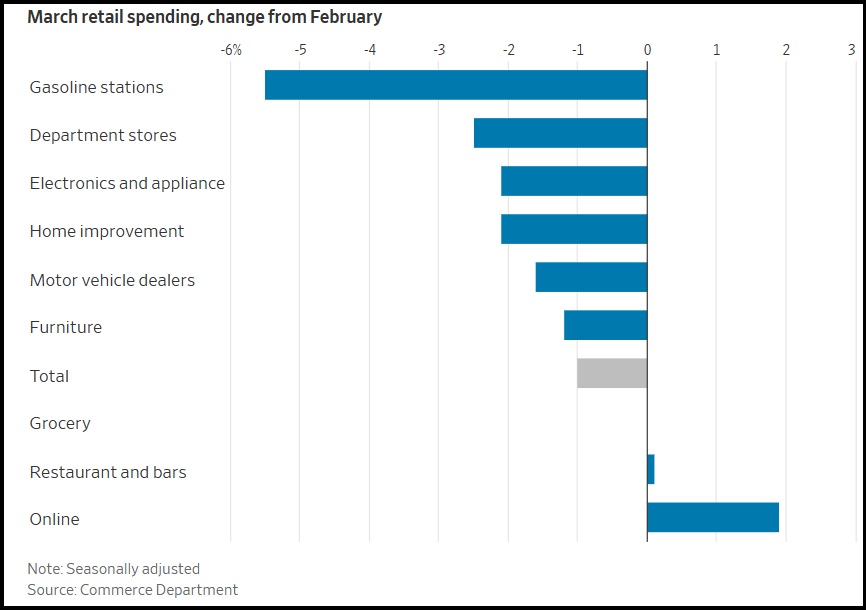
Holiday sales last year were exceptionally weak as wage earners were struggling to pay for higher prices in essential goods and services, fuel, oil, heating, energy, gasoline, food and shelter.  The lack of consumer purchasing for non-essential goods and/or luxury items resulted in poor sales last year, and the inventory levels are actually higher this year than last year when this year’s purchasing decisions were being made.  That reality drops purchase orders.  The dropped purchase orders lead to Maersk saying they are shipping less goods.

Now, let’s get USA domestic…. because it’s all connected.  For that let’s turn to the U.S. Postal Service:

USPS DATA – First-Class Mail revenue increased $221 million, or 4.0 percent, on a volume decline of 678 million pieces, or 5.9 percent, compared to the same quarter last year. Shipping and Packages revenue remained relatively flat while volume declined 41 million pieces, or 2.4 percent, compared to the same quarter last year.

Marketing Mail revenue decreased $333 million, or 8.8 percent, on a volume decline of 2.6 billion pieces, or 16.0 percent, compared to the same quarter last year. The Marketing Mail decreases were driven by the continued decline in advertising spending due to economic pressures experienced throughout most of the fiscal year, a higher inflationary environment affecting print media production costs. (link)

So, let’s put it all together….

Consumers did not buy stuff.  As a result, spring inventories were high.  Purchasing managers forecast weak sales. Summer purchase orders were very low.  Shipping companies reflect declines in shipping because the purchase orders were low. Advertising and marketing budgets were cut to meet the decrease in consumer spending.  Consumers are not forecast to spend this holiday season.

The economic pie is getting smaller.

Keep in mind, this is all intentional.  This is all part of the outcome from “managing the transition” to a new energy economy.

As you are well aware the various western nation central banks including the U.S. Federal Reserve, are raising interest rates into a global economic contraction, a drop in demand.  Raising interest rates into a contracting economy is counterintuitive, it runs against the expressed interest of government to grow economic conditions.  However, there is a purposeful design to the contradiction.  [A TLDR Version Here]

The central bankers are trying to support western government policy.  Unfortunately, the government policy they are under obligation to support is the fundamental energy shift, or what the World Economic Forum (Davos Group) has called the “Build Back Better” climate change agenda.

Monetary policy can only impact one side of the inflation challenge.  The western bankers (EU central bank, U.S. federal reserve bank, and various banking groups) are raising interest rates in order to “tame inflation” by “taming demand.”  However, as you know the global economic demand has been declining for several quarters.  Raising interest rates into an already contracting economy only does one thing, it speeds up the rate of economic contraction.

Economic contraction is the lowering of economic activity.  Raise interest rates -in a general sense- and businesses invest less, borrowers borrow less, consumers purchase less, employers expand less, and the economy overall slows down. When the economy turns negative, meaning less products and services are produced, we enter a recession. Some businesses and employers do not survive a recession and subsequently unemployment rises.

During recessionary periods people buy less stuff, people have less income stability, and economic activity drops.  When the banks raise interest rates into an economy that is already stalled or contracting, unemployment and general pain on Main Street increases.  Workers are laid-off, incomes shrink, consumer spending drops and that leads to less employment.  Recessions are bad for middle-class and working-class people.

However, that said, there is one benefit from a recession…. Energy use drops.

Crickets For Protein


Armstrong Economics Blog/Climate Re-Posted Jul 26, 2023 by Martin Armstrong

According to World Wild Life, they claim that the production of beef effects “climate change due to emissions of greenhouse gasses such as methane, nitrous oxide, and carbon dioxide. Research shows that ruminant livestock account for between 7% and 18% of global methane emissions from human related activities.” In February of this year, the US Forest Service had gotten approval to fly helicopters over land in southwestern NM to hunt down 150 cattle from the air and shoot them down. This was said to save the threatened habitats and other species. Cattle is supposedly ruining the environment from bodily gasses that are released and causing climate change but no worries- they have already figured out a solution: crickets.

Northern Italy, which holds the largest Cricket Farm in the country, has figured out how to integrate crickets into foods like pasta, bread, energy bars, and even sports drinks. This is a powder form which the process of this is to just freeze the crickets, boil, dry, and then pulverize. According to the Italian Cricket Farms’ website, “One third of the world’s land is used to produce beef. On average, 200m2 of surface area is used to produce 1kg of beef. For insects you only need 15m2 for the same amount.” You will mostly find this is western societies for now, but I wouldn’t doubt that it starts making its way here. The Climate Change zealots have done studies where “a single burp from a cow releases 220 pounds of methane which is shorter lived than carbon dioxide but 28 times more potent in warming the atmosphere” so we should watch out for the gasses coming from cattle. I wouldn’t be surprised if you found 50% crickets in your hamburger, soon they won’t leave us with much of a choice.

Nigel Farage – War on Cash


Armstrong Economics Blog/Cryptocurrency Re-Posted Jul 11, 2023 by Martin Armstrong

Strategic Lawfare at Work, They Didn’t Resign – Jack Smith Takes Down Two Trump Lawyers Using Compelled Testimony, Creating Witnesses Within Indictment


Posted originally on the CTH on June 9, 2023 | Sundance 

Good news, bad news and granular news..

First, the good news. The judge assigned to the Trump documents case is U.S. District Court Judge Aileen Cannon.  She is the same judge who handled the lawsuit last year after the FBI raided Trump’s Mar-a-Lago estate.   Judge Cannon was the judge who appointed the “special master” to review the documents the DOJ was claiming were classified, but Team Trump was contending that definition.

Now the bad news. The DOJ is no longer legally arguing that Donald Trump held any classified documents at Mar-a-Lago.  The DOJ is arguing that President Trump held documents vital to U.S. defense security.  It’s a farce but that’s their position.  The classification status of documents is moot, nonexistent, except to create the predicate for the proverbial FBI nose under the tent.

The DOJ-NSD (that’s Lisa Monaco) got a warrant to look for classified documents, but never intended to use classified documents as a case cornerstone because President Trump had full declassification authority.  The DOJ got a search warrant by convincing a judge they were looking for something that wasn’t even a violation of law. That’s why the DOJ would not reveal the probable cause affidavit.  The search was built upon a fraudulent pretense.  “Classified” is a snipe hunt.

You will notice Jack Smith never discussed “classified documents” in his remarks, and the issue of classified documents appears nowhere except in the indictment as a purposeful lawfare description of documents.  The DOJ is not legally charging anything relating to the classification status of the documents.  That’s the Lawfare and media banter to create a talking point.  The term “classified” is all over the indictment, but as a lawfare adjective only; it’s like using the word “stash”.

The special counsel legal framework is centered around documents the DOJ define as vital to “the defense security” of the United States.  EVERYTHING is predicated on 31 counts of an 18 U.S. Code § 793(e) violation.  The DOJ defines what is considered a defense document, and that intentionally has nothing to do with classification.

The granular news.  You might have heard that two of Trump’s lawyers, Jim Trusty and John Rowley, quit today.  The media wants to use their exit as a point to indicate Trump is in legal jeopardy; however, that’s not the case.

As soon as Trusty and Rowley saw their forced testimony was used in the indictment, they had no option except to exit the case.  Despite the lawyers providing no damaging information against Trump, the DOJ used language in the indictment to turn Trump’s lawyers into material witnesses. Weissmann’s Lawfare tactic create a conflict, forcing the two Trump lawyers to depart.

WASHINGTON DC – Two of Donald Trump’s top lawyers abruptly resigned from his defense team on Friday, just hours after news broke that he and a close aide were indicted on charges related to their handling of classified documents.

Jim Trusty and John Rowley, who helmed Trump’s Washington, D.C.-based legal team for months and were seen frequently at the federal courthouse, indicated they would no longer represent Trump in matters being investigated and prosecuted by special counsel Jack Smith, who is probing both the documents matter and efforts by Trump to subvert the 2020 election.

The resignations were shortly followed by an announcement from Trump himself confirming that a close aide, Walt Nauta, had also been indicted by federal prosecutors. Nauta, a Navy veteran, had served as the former president’s personal aide and was a ubiquitous presence during his post White House days.

In their place, Trump indicated that Todd Blanche — an attorney he recently retained to help fight unrelated felony charges brought by Manhattan district attorney Alvin Bragg in April — would lead his legal team, along with a firm to be named later. Trump and his team have liked Blanche, who is expected to play a more elevated, central role. (more)

Weissmann, Eisen and Smith are using lawfare in the indictment to put the interests of Trump and his aide Walt Nauta against each other.   Obviously, Nauta would not turn on Trump, so the prosecution made Nauta a target for a federal 1001 charge of lying to investigators and will pressure him throughout the case to take a plea in exchange for testimony against Trump.   Nauta is the baseline of the “Conspiracy Elements” which require two or more people.  Again, pure Lawfare.

Obviously, Jim Trusty was unaware last night that his forced testimony would be used in the indictment. WATCH:

The Rental Crisis


Armstrong Economics Blog/Real Estate Re-Posted May 11, 2023 by Martin Armstrong

I reported how BlackRock is now the largest landlord in the US. Institutions have purchased hundreds of billions in real estate across the nation and have no plans to sell because rentals are a lucrative venture. Inventory is at a historic low and people simply cannot find a place to live if they need to relocate. Rental price gouging has reached astronomical levels and demand far outweighs supply.

There are eight prospective renters for each available apartment in the US, and the average occupancy rate is 94.2%. Of those occupied leases, 60.7% chose to renew. New housing grew by a measly 0.43% as building costs have increased substantially. The high-density state of New Jersey has become the most competitive real estate market in the US. This is particularly true for the northern part of the state, which is no surprise as the average cost for rent in NYC is $5,186 monthly. That price tag makes places like Los Angeles look cheap, with an average rental price of $2,600. Miami, the new Wall Street of the south, has become the second most competitive market in the US. Apartments in Miami-Dade County last an average of 33 days on the market if a unit even becomes available.

Housing is completely unaffordable and people with good-paying jobs are struggling to find a place to live if they do not already own. Purchasing property was once the smart financial choice, but that is out of reach for the average person. In fact, over three million Americans earning over $150,000 annually still choose to rent as there is simply no alternative at this time.

Rentals across America are almost at total capacity. The typical person locks in a 12-month lease, but the landlord (in most states) can raise the price at the end of that term and there are little protections for residents. In fairness to the landlords, their costs have increased substantially as well in terms of taxes, insurance, and maintenance. The price of a renewal increase is typically lower than what it would cost to relocate, aiding in the decision for the majority to renew their leases.

Where I live, we also face seasonal rental price gauging. Off-season one-bedrooms in the Tampa Bay area are over $2,000 monthly and rising. But once the “snow birds” return during the winter months, prices increase substantially. There is a 13% tax here on short-term rentals as well, but finding a full 12-month lease is increasingly difficult.

Adding to this crisis is the mass influx of migrants as cities across the nation develop ways to house tens of thousands of people at the expense of taxpaying citizens. Landlords typically require renters to earn 3X the monthly rental price as well, forcing many to leave the cities and more desirable areas even if they earn a good living.

Shelter costs are unsustainably high for both buyers and renters. People cannot find a place to live. Those who rent often become stuck in a cycle of renting perpetually, unable to save as all their income goes toward shelter.

Thoughts on Tucker Carlson’s Firing


Posted originally on the CTH on April 24, 2023 | Sundance 

This is a context you won’t find elsewhere {smiles}. The phone has been blowing up….  Context and some details matter.

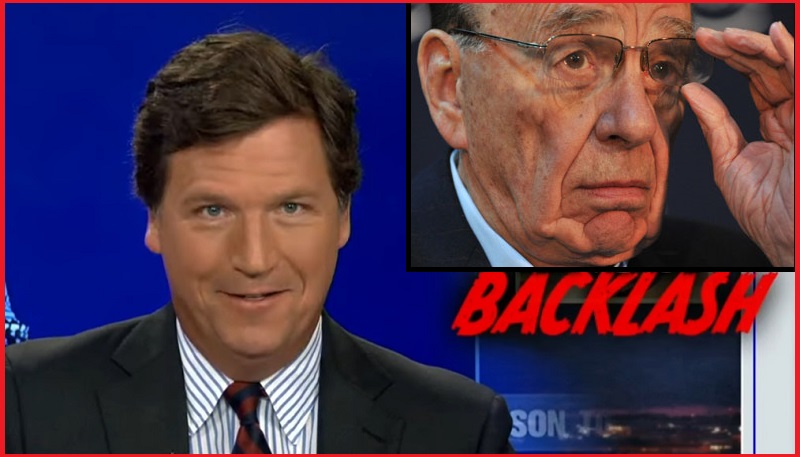
First, Carlson was being paid about $20 million a year by Murdoch.  He had about 3 years left on his contract and will be paid the full contract amount.  Carlson found out about 10 minutes before Fox Corp made the announcement.  They did not “part ways,” Tucker Carlson was fired.

(Via WSJ) – Mr. Carlson, whose contract was renewed in 2021, will be paid out for the rest of his contract, people familiar with the matter said. Mr. Carlson is paid about $20 million a year, one of the people said. Mr. Carlson found out he was being let go about 10 minutes before the network announced his departure, the people said. (link)

For financial context, remember Rupert Murdoch paid Megyn Kelly $15 million (Via Harper Collins) for the 2015/2016 operation against Donald Trump.  Paying $60 to $100 million to get rid of Carlson’s antagonistic voice is small money to Murdoch Inc. in the grand scheme of things. [Murdoch has also paid for Ron DeSantis to oppose Trump]

Carlson will not be asked to sign an NDA, is not bound by a “non-compete” clause following the contract nullification by Fox Corp, and will be free to do anything he wants in any venture.  Additionally, he will be free to say whatever he wants about the issues at Fox and speak freely, or not, without any legal or contractual constraints.  Keep all of that in mind.

Prior to 2021, Tucker Carlson was what you might call a Fox News loyalist.  He was very loyal to the organization.  During the COVID-19 era, Tucker Carlson moved his physical location away from Washington DC to his home in Maine.  Fox built him a studio, and Carlson manifest his own destiny free from most production constraints.

Over the past 18+/- months, viewers have watched Tucker Carlson essentially red pill himself each evening.  As he enjoyed the proximity freedom far away from the Eye of Sauron (DC’s control mechanism), Carlson’s eyes opened further to the reality of the situation that blankets our national consciousness.

Disconnected from the machine, free-range in his abilities, and with the intellectual curiosity of the average person, Tucker Carlson started to see the U.S. system as it is, not as media pretend it to be.  This is the increasing red pill absorption you have noted daily.  Along with that came a more pragmatic and brutally honest production quality to the content he shared.

Carlson’s influence grew as the audience grew; the more truth he spoke, the larger the audience.  That free-range influence became a liability to the system operators that hold power, including Rupert Murdoch who is a part of that control system.  In essence, and in the big picture, that’s what led to this event today.

Timing and Fox Digital.  Fox had just settled a lawsuit with Dominion Systems that has been widely reported.  The decision to fire Carlson had only one aspect connected to the Dominion settlement, financial timing.

Fox Corp is going to take a big hit in second quarter (Q2) earnings as part of the Dominion settlement.  If you are going to take a big financial hit, it’s better to go ahead and clear the decks of all financial hits at the same time.

Paying out Carlson simply gets all the big hits in the same quarter.

Digital is where the action is.  Digital subscriber services is where the future of all content is focused.   Understanding this reality gives you a scale of the darkness in the opposition elements facing our nation.  Fox News digital is Fox Nation.  Tucker Carlson and the show Tucker Carlson Today was the anchor of Fox Nation digital.

Fox Nation was struggling prior to Tucker Carlson’s long show broadcasts.  The entire Fox Corp digital streaming service, Fox Nation, was anchored around the Tucker Carlson Today digital streaming service.   Fox News has just torpedoed their anchor, shot their lead dog, destroyed the digital brand.  That gives you some scale and scope to how the elements viewed the threat of influence that Tucker Carlson had become.

Fox Corp, and Murdoch’s stenographers at the Wall Street Journal (SEE HERE), will try to frame the Carlson firing as something of a palate cleansing.  Claims of adversarial viewpoints, controversial views and conflicts with other Fox loyalists on the inside, will be used to frame the narrative.   However, all of those false frameworks are just that, false.  The source of the issue that led to the firing was 100% ideological.

During Tucker’s red pill absorption phase, he changed views on a variety of subjects from the FBI to the Fourth Branch of Government, to vaccination and COVID-19, to his views on Donald Trump as a disruption to an increasingly admitted corrupt political machine.

Context in the Tucker worldview expanded and he began to frame the conflict in a big picture of Good -vs- Evil.  Unfortunately for Carlson, this view was from inside a multinational corporate system spreading the darkness.   He had to be removed.

This is the reality of the situation as it unfolded.   Accept it or not, it matters not.  This is the Carlson reality.

Carlson was connecting the dots of manipulation beyond media, beyond social battles and constructs, and into the realm of finance, economics and ultimately behind the Potemkin Village of UniParty politics.  Blackrock has an increased stake in Fox Corp.

Talking about what happens behind the false front of the DC village is always a threat.   It is in the research and acceptance of the darkest pretending constructs that you realize how the illusions of choice are presented.

Tucker Carlson was no longer selling the illusions.

There are trillions at stake.

He was removed.

Tucker is free.

Welcome to the rebellion my friend!