Portland’s Homeless Crisis – A Tale of a Blue City


Armstrong Economics Blog/North America Re-Posted Nov 4, 2022 by Martin Armstrong

Oregon is a beautiful picturesque state. Mountains, waterfalls, and beautiful beaches – Oregon was once a desirable place to live. Portland was a promising metropolitan area before politicians completely destroyed the city with light-on-crime policies.

 The Portland Business Journal reported that high-earning residents relocated to areas like Deschutes County, Arizona, and Texas. As in all societies, the highest earners who have the ability to relocate are the first to flee crumbling cities. Multnomah County saw a decline of 2,000 taxpayers between 2019 and 2020, but more have likely fled.

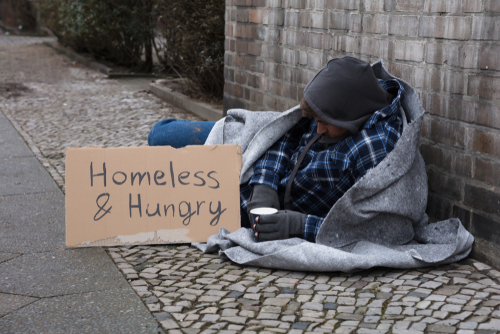
As of June, the average rent in Portland was $1,700, but many will tell you that estimate is low. This is not why homelessness has spiked. Over the past two years alone, the homeless population increased by 25%! Homeless camps have moved into the suburbs as people simply have nowhere to go. The city has attempted to authorize homeless encampment sites in certain areas, but there is not enough room. Portland Mayor Ted Wheeler (D) has done nothing to address the mental health and drug abuse crises at the root of the problem. This is an extremely sad situation, as no one should live in this manner.

The pandemic added to the crisis, but Portland declared a state of emergency back in 2015 due to the drastic number of unhoused people. Oregon legalized hard drugs in February 2021. People may legally carry heroin, cocaine, methadone, oxycodone, and even methamphetamine for personal use. Most users will only face a $100 fine. Drug overdoses rose by 41% in 2020 from the year prior.

As we have seen in many Democrat-run cities, theft is basically legal. The Organized Retail Crime Association of Oregon (ORCAOR) conducted a poll that found 95% of businesses are unhappy with the relaxed crime laws, and 80% admitted theft had risen significantly. “We’ve seen an increase in assaults, in drug use within the stores, threats, individuals threatening with weapons,” said Jeremy Girard, the president of ORCAOR, who conducted the survey in late spring. Around 80% said there was not an adequate police response, but that is because they voted to defund the police and urged them to turn a blind eye to crime.

Businesses are closing, and people are fleeing the city. The Oregon Mayors Association wants to spend $123.5 million annually to prolong the problem rather than address the causes. Another example of poor policies ruining a blue city and asking taxpayers for more funding to throw money at the problem.

Fake News – Misinformation or Just Political Bias/Hate Speech


Armstrong Economics Blog/Politics Re-Posted Nov 3, 2022 by Martin Armstrong

Spread the love

QUESTION: What Tucker said about Raskin, would you call that fake news or misinformation? Just curious.

HJ

ANSWER: That was Tucker’s “interpretation” of the implication of what Raskin said. It falls outside of both and would probably attribute that more to political bias. I would say “fake news” is more what we saw with COVID where it is just outright false that is not attributed to interpretations or bias. I would say the “misinformation” is probably just another label for fake news. Hillary calling Trump supporters deplorable is not fake news or misinformation, it is just political bias.

What Tucker said was not fake news nor misinformation, but simply this class of political bias. That is what is probably dividing the country more than anything. It is this demonizing an opponent and both sides are doing it today. The vaccine scam of hiding the side effects is more in the area of fake news and misinformation.

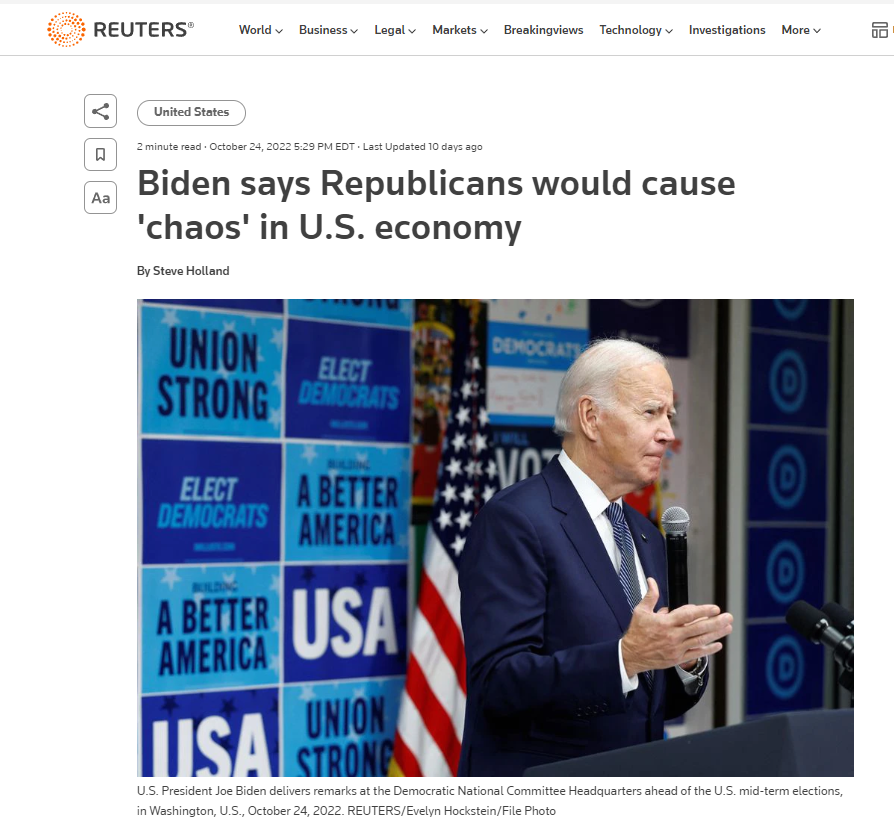
Biden is out there claiming a Republican victory will be chaos for the economy.  That is not Fake News or Misinformation, it is just political rhetoric that has become standard hate speech in politics.

Eurozone Inflation Reaches New High – Recession Incoming


Armstrong Economics Blog/European Union Re-Posted Nov 2, 2022 by Martin Armstrong

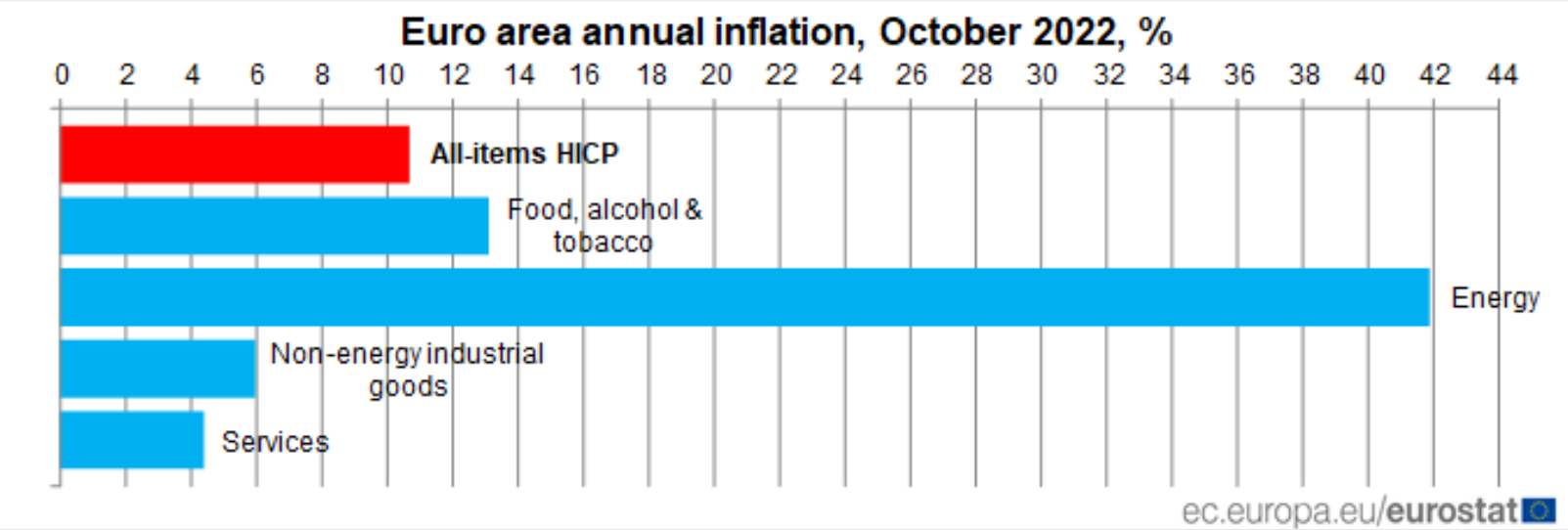
Inflation in the Eurozone hit a new record in October, according to Eurostat who reported a 10.7% rise. That marks an increase from September’s 9.9% posting and an all-time high since Eurostat began compiling Eurozone data in 1997. The European Central Bank (ECB) attempted to curb inflations with another 75 bps hike last week. The ECB knows that inflation is here to stay. They recently changed their annual inflation target for next year to 5.8% compared to the 3.6% they were predicting three months ago. They can’t release the actual figures without causing a panic.

Economic growth “slowed significantly in the third quarter of the year and we expect a further weakening in the remainder of this year and beginning of next year,” ECB head Christine Lagarde warned. Inflation is hitting some countries harder than others. Estonia (22.4%), Latvia (21.8%), and Lithuania (22%) all experienced nearly double the average inflation rate this October.

The downturn will not be equal across the Eurozone. The managing director of the International Monetary Fund (IMF), Kristalina Georgieva, is warning that half of the 19 countries in the bloc will fall into a recession. “Europe is affected more severely by the increase of energy prices. The heat on European economies is such that we actually expect half of the countries in the eurozone to experience at least two quarters of negative growth. In other words, a recession,” she said, without naming the countries,” Georgieva warned. She further stated that the IMF’s pre-pandemic projections compared to current projections differ by a loss of half a trillion euros.

“I am not going to sugar-coat it: 2023 will be tougher than 2022. Next winter for Europe may be even harsher than this winter,” she declared. “Why? Because European policymakers acted very swiftly to fill gas storage. If conditions remain as they are with Russia not providing gas to Europe, how is this gas storage going to be filled next year?”

Another question comes to light – can Europe remain untied amid a serious recession? The ECB will use the same strategy in an attempt to fix the broken system for the entirety of the Eurozone instead of looking at each individual economy. Let’s not forget that deeply indebted countries will only face higher costs that they likely will not be able to repay. The ECB dug its grave in 2014, and they do not have the tools to handle the current crisis. It is easy for Europe to appear as a united front when there is peace and prosperity. The real test will come when everything crashes down, and fairness goes out the window.

Halloween Spending Amid Inflation


Armstrong Economics Blog/USA Current Events Re-Posted Nov 1, 2022 by Martin Armstrong

Spread the love

The National Retail Federation estimated that 172 million Americans spent $10.6 billion on Halloween this year, or $100 per person. Around $1.2 billion went into costumes for children, not to be outdone by adults spending $1.7 billion on their own costumes. Around $710 million was spent on pet costumes as well. Around 67% of consumers handed out candy, 51% decorated, 47% wore a costume, 44% carved pumpkins, and 26% participated in a Halloween party. Halloween spending is back to pre-pandemic levels, but inflation is to blame.

Food, candy, pumpkins, décor – all of these items cost significantly more in 2022, but Americans are still willing to spend. Candy alone is up 13.1% from last year, surpassing food inflation at 11.2%.

This is foreshadowing for the Christmas season, which historically is the most lucrative time for retailers and a big boost for overall GDP. Around 25% of all retail spending occurs in November and December each year, but many have already begun holiday shopping as stores are forced to offer more appealing sales. Retailers who fail to profit in the remaining months of 2022 will be forced to downgrade their forecasts and re-evaluate their businesses in the current economy. Layoffs and store closures are likely, and many retailers have already halted hiring. Americans do not have more disposable income to spend on the holidays, but those who can are willing to pay inflated prices to participate in age-old traditions.

The Polls Are Crazy


Armstrong Economics Blog/Politics Re-Posted Nov 1, 2022 by Martin Armstrong

COMMENT: Marty: I received an email from Barack Obama today (subject line: “My promise to you”) letting me know that I have an opportunity to support the Democrats in the upcoming election. It also said, “You are receiving this email because you supported the DNC in the past.” I’m Canadian. I’ve always lived in Canada. And I have certainly never supported the DNC. Curious marketing strategy.

JH

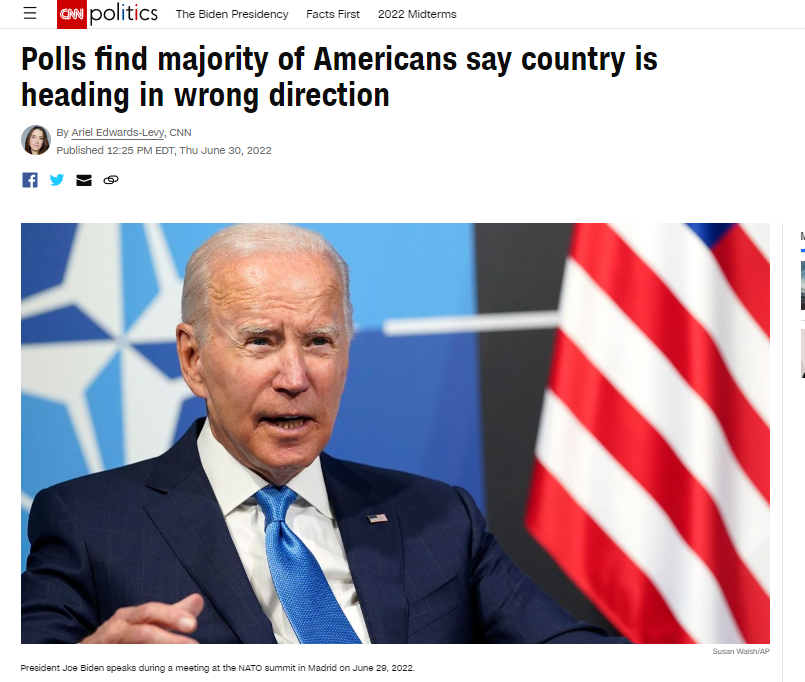
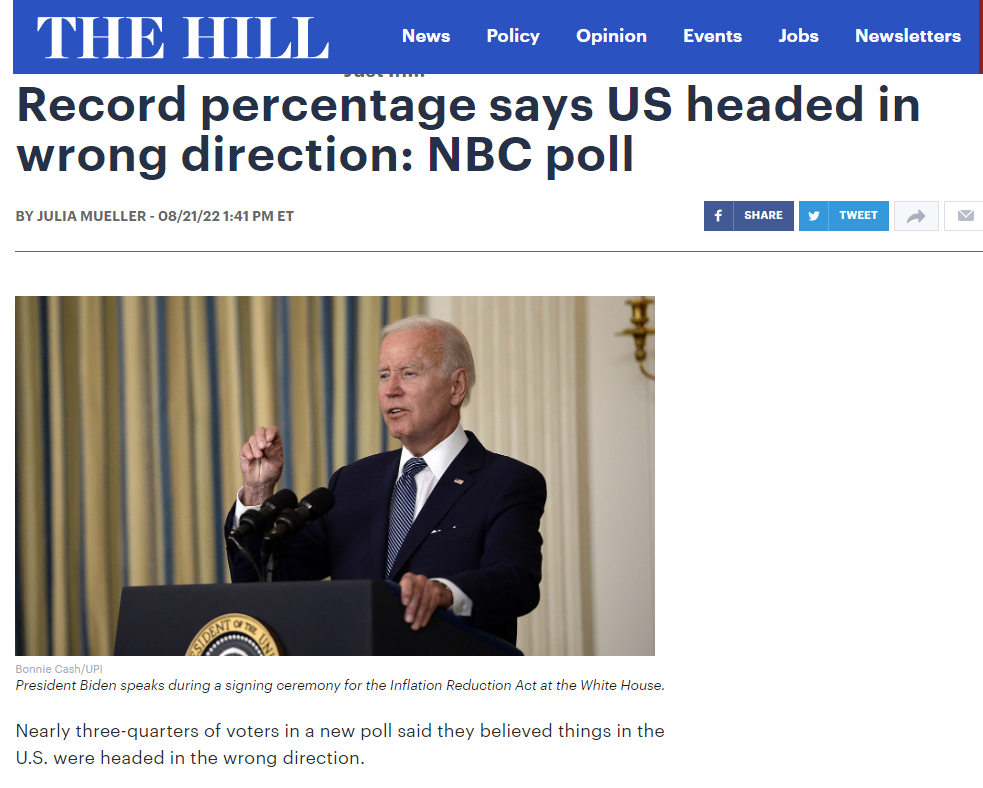
REPLY: I get them too. I was wondering if they hacked the Republicans, T-Party, or whoever got my email. This is not going to be an election that will ever be accepted regardless of who wins. With the polls showing still that over 70% of Americans think the country is headed in the wrong direction under the Biden Administration, it is hard to see how the Democrats could win anything. So, with the computer should massive civil unrest into 2023, I do not think we are headed into peace and tranquility.

Parents Gasp as Democrat Utters the Biggest Lie About School Closures | DM CLIPS | Rubin Report


The Rubin Report Published originally on Rumble on October 27, 2022

Dave Rubin of “The Rubin Report” shares a clip of Gretchen Whitmer seeming to confuse remote learning with in person learning with her blatant lie about school closures; and Tudor Dixon showing how to deal with the corporate press.