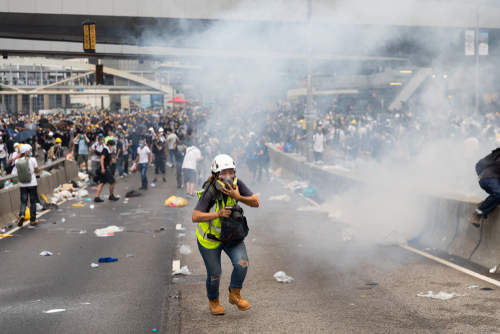
The protest in Hong Kong over remove all masks has a deeper concern which has sparked the most violent protests yet. China’s “social compliance ranking” is an AI system that is based on facial recognition software. The deep concern is that this new law is to identify who the people are and then arrest them quietly.
Two months ago in Vancouver, the local paper reported on what was going on with local Hong Kong protests. As many know, Vancouver has been the migration spot for Chinese after the British ceded HK. The Chinese-Canadians were traditionally pro-democracy. However, as China’s power has grown, so has a pro-homeland perspective among some expat Chinese.
Consequently, the pro-democracy protesters were met by the opposition who have been taking pictures of all the faces of the pro-democracy activists. This is what sparked the wearing of masks.
The five demands that the HK protesters had, may actually be eclipsed by the mask issue for that seems to be the real core of the concerns. Have governments gone too far is demanding to know what everyone says, does, and thinks?
As of December 1st, 2019, if you want a new phone number in China, you must submit to have your face scanned. Facial recognition is being used to identify every person.
Many are now saying that because privacy no longer exists, people will have to ban together and fight even harder. That’s an interesting take on the future. Are we watching a riot that is setting new standards that will emerge worldwide? The American Revolution set off a contagion of anti-monarchy. Even where monarchs retained the title, they lost the power as in Britain. Are we witnessing a contagion in the making?
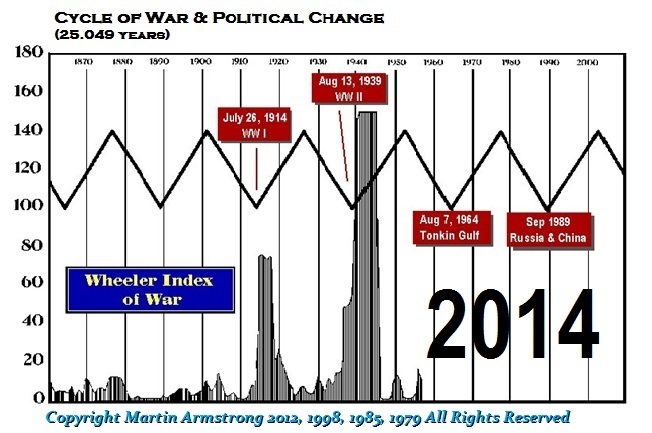
Is the only solution that all governments must realize that privacy should be restored? Is this what the War Cycle is really forecasting with the sharp rise in civil unrest on a global scale which turned up in 2014? Just maybe the HK Anti-Mask uprising is hitting on something we all never considered – the other side of no privacy.
We have a lot of clients on both sides of this issue. Here are other comments to be fair:
COMMENT: HONG KONG PROTESTS ERUPT OVER ANTI-MASK LAW
Martin, please tell your blog visitors who live in Honk Kong and/or China that the protesting youth are fighting a very needful fight and they are far more purposeful than just being out of control. They know what China’s rule is really like and they are scared s***less it will happen to them!
QUESTION: Dear Mr. Armstrong,
Thank you for touching upon the HK Madness right now.
Would you kindly also share some tips/opinion of what average Hkers can do to protect themselves? Besides from holding USD?
We are getting reports from clients in Hong Kong telling us that there is absolute chaos raging in the streets. People lining up at ATM machines pulling out cash. A 16yr old they are reporting was shot by police and a policeman was set on fire. The MTR has been closed, and they are saying that virtual Martial Law is in effect.
The riots tonight have been over the Hong Kong government’s ban on the wearing of facial masks. It was said to have been an emergency measure intended to curb the violent unrest. However, it has been taken as a further sign that the “failed leader Carrie Lamb” is out of touch with events.
COMMENT: Hi Marty, sincere thanks for your quick response. (Hong Kong Riots.) I submitted my suggestion here less than 12 hours ago and you already addressed it.
Tonight, Hong Kong braises for its darkest day in history. Indeed, a sea of black shirts just floated past my sister-in-law’s apartment window. I can share her video (only if you want it.) She calls them Dementors. I’m glad at least her usual sense of wit and humour is intact.
You mentioned the Five Demands. The government has offered to sit down and negotiate but didn’t get a bite. They already have hostages – all of Hong Kong – so what’s to negotiate? Mr. Armstrong, if THAT’S not the M.O. of terrorists – yield to demands in exchange for hostages – God didn’t make little green apples.
Universal Suffrage doesn’t mean a thing until Universal Suffering ends. Nothing justifies this much violence. Unless the activists agree to move on to the next step – meet and talk – I can’t see how this could end well. But I still hope and pray (with no HKD to avoid the risk.)
Thanks for the fine analyses over the years, and for lending an ear.
QUESTION: Hi Marty –
Thank you for the insight you provide as regards how the world really works. Spending 10 minutes reading your daily blog is equivalent to hours of reading the MSM propaganda and trying to discern the truth.
My question to you is in response to your 10/2/19 post >> Liquidity Crisis & the Pending European Banking Crisis. My mortgage is held by Santander bank, which I believe is headquartered in Spain despite being incorporated in Delaware. What can happen to my mortgage when the crisis is fully apparent to the world? I have minimal money in a savings account at Santander to meet their deposit requirements for a lower interest rate.
Would you re-finance to another US bank or credit union? Would you cash out some retirement savings to pay it off? I have a fair amount of money in retirement, but removing money with taxes and penalties would hurt and it would definitely put a dent in savings, which by the way is all held in mutual funds in US stocks only.
Thank you for your attention.
– STM
ANSWER: If you have a mortgage, as long as you are current, a bank failure will not impact your mortgage in the United States. Typically, assets of that nature are sold off to other banks. However, even a European bank operating in the USA is actually a different entity from Europe. They are under the regulation of the Federal Reserve and must be a member of FDIC.
Even if the parent went down in Europe, the US division would be subject to US rules and there would be considerable conflicts in law that would emerge. The US division would most likely have to be sold to another bank and the Fed may not allow a bail-in on US soil. The more likely scenario would be a shotgun wedding.
There is no question that the rioting in Hong Kong has been violent as protesters even set cars on fire. Business is very concerned for as this continues, it does threaten the shift of the financial hub to Singapore. We have clients on every side of this issue over here as we have three offices in Asia. So we have the concerns from all sides. There is a fear that if China is forced to send in troops that this may break the peg and result in financial business moving to Singapore. So the stakes are rather high over here.
Tony Tsang, the 18-year-old Hong Kong student protester who was shot in the chest by police at close range as he fought an officer with a metal pipe on Tuesday. He was charged with rioting. He faces a maximum 10-year sentence for assaulting a police officer. Police have urged the government to impose curfews as the violence continues to escalate. China has increased its troop strength on the border and the Hong Kong economy has been taking a nosedive.
The extradition bill that began the protests has been withdrawn. However, that is only one of their five demands. The protesters have also demanded an independent probe into the use of force by police; amnesty for arrested protesters; a halt to categorizing the protests as riots; and the implementation of universal suffrage.
The Hong Kong dollar peg will either break or be allowed to readjust and the two targets appear to be November and January. The ideal targets seem to be 789 and 797. This is when the risk will be at its greatest. Keep in mind that it could come prematurely in October or December. The key weeks ahead for turning points appear to be 10/07, 11/04, 11/18, and 12/02.
The View from Business
COMMENT: Marty, you’ve always been vigilant against biased news from FNF (Fake News Factories.) So I’m hopeful I’ll get an audience in you. In your recent blog “Hong Kong & Risks in Asia” (9/27) you’ve finally used the word “violent” to describe the rioting in my hometown.
As usual, you were the first to call it as it is, but then you hastened to add that the police threw tear gas, as if that had precipitated the violence! I must assume you’ve been fed the same fake news that we get here in the west, even though you’re currently in Asia.
The picture the FNFs painted of Hong Kong is a lonely cry for help. However, the flip side they don’t show is the destruction, business closures, loss of jobs, and fear for life and limb that the rioters have brought upon the silent majority. They’ve set fire to cars, homes, and MTR, shut down the airport, beat up tourists and the elderly, even stormed government offices and destroyed everything inside!
Try that on the White House and watch them drop you like flies! If MY police is faulted for “excessive force” in protecting us the same way, then the only thing “excessive” is the taxes I paid the government. To be sure, most Hong Kong residents would welcome universal suffrage, but we denounce terrorism and wish to restore peace and order. However, with the biased media fanning the fire, I can see civil war within the city of Hong Kong by your 2020 ECM turning point.
In summary, may I point out that in the past 3 to 4 decades, Hong Kong has prospered incredibly with the rise of China, and did so without even a semblance of democracy, under the Brits or under China. But what we did have was peace and order. We really like to have that back now. So if the world honestly wants Hong Kong to have something it deserves but isn’t getting, please stop fanning the fire. Hot heads (on both sides) need time to cool.
REPLY: I am NOT suggesting that the police acted first with tear gas. That was a response to the riots.
President Donald Trump and Vice-President Mike Pence convened a meeting at the U.N. General Assembly of international leaders to discuss religious persecution and religious freedom. It is the first such discussion initiated by a U.S. President.
[Video and Transcript Below]
.
[Transcript] – PRESIDENT TRUMP: That’s very nice. Thank you very much. That’s very nice. And I want to thank Mike. Today, it’s a true honor to be the first President of the United States to host a meeting at the United Nations on religious freedom. And an honor it is. It’s long overdue. And I was shocked when I was given that statistic that I would be the first. That’s very sad, in many ways. And it’s great to be with you.
I want to thank Vice President Pence for the outstanding job he’s doing. He’s been a fantastic and valuable representative of our country.
Likewise, Secretary Mike Pompeo, Ambassador Kelly Craft, Secretary Ross, Secretary Mnuchin, Ambassador Sam Brownback all for joining us today. And we have other representatives of our Cabinet and the administration in the room. We’ve done a lot.
The Johnson Amendment doesn’t get spoken about enough, but I’m very proud to say that we’ve obliterated the Johnson Amendment within our country so that now we can listen to the people that we want to listen to — religious leaders — without recrimination against them. It’s a very important thing, and I said that at the beginning and I say it now: It’s something I’m very proud of.
We’re also grateful that U.N. Secretary-General António Guterres could be here, along with so many of his friends and my friends — world leaders. I’ve gotten to know a lot of them, and I would imagine you know all of them. I would imagine. If you don’t, you’re not doing your job. (Laughter.)
And also, I want to thank my daughter Ivanka for being here. She works so hard on all of the things that are very important to the people in this room. So, thank you, Ivanka, for being here. (Applause.)
The United States is founded on the principle that our rights do not come from government; they come from God. This immortal truth is proclaimed in our Declaration of Independence and enshrined in the First Amendment to our Constitution’s Bill of Rights. Our Founders understood that no right is more fundamental to a peaceful, prosperous, and virtuous society than the right to follow one’s religious convictions.
Regrettably, the religious freedom enjoyed by American citizens is rare in the world. Approximately 80 percent of the world’s population live in countries where religious liberty is threatened, restricted, or even banned. And when I heard that number, I said, “Please go back and check it because it can’t possibly be correct.” And, sadly, it was. Eighty percent.
As we speak, Jews, Christians, Muslims, Buddhists, Hindus, Sikhs, Yazidis, and many other people of faith are being jailed, sanctioned, tortured, and even murdered, often at the hands of their own government, simply for expressing their deeply held religious beliefs. So hard to believe.
Today, with one clear voice, the United States of America calls upon the nations of the world to end religious persecution. (Applause.)
To stop the crimes against people of faith, release prisoners of conscience, repeal laws restricting freedom of religion and belief, protect the vulnerable, the defenseless, and the oppressed, America stands with believers in every country who ask only for the freedom to live according to the faith that is within their own hearts.
As President, protecting religious freedom is one of my highest priorities and always has been. Last year, our Secretary of State, Mike Pompeo, hosted the first-ever Ministerial to Advance International Religious Freedom.
In this year’s ministerial, Secretary Pompeo announced plans to create the International Religious Freedom Alliance — an alliance of likeminded nations devoted to confronting religious persecution all around the world.
I’ve appointed a special envoy to monitor and combat anti-Semitism. We’re standing up for almost 250 million Christians around the world who are persecuted for their faith. It is estimated that 11 Christians are killed every day for the following — I mean, just think of this: Eleven Christians a day, for following the teachings of Christ. Who would even think that’s possible in this day and age? Who would think it’s possible?
With us today is Pastor Andrew Brunson, who was imprisoned in Turkey for a long period of time. Last year, my administration was thrilled to bring him back home after a very short and respectful negotiation with a very strong man — and a man who has become a friend of mine, fortunately — President Erdoğan of Turkey.
I called the President, and I said, “He’s an innocent man.” They’ve been trying to get Andrew out for a long time — previous administration. I don’t think they tried too hard, unfortunately.
But I want to thank President Erdoğan, and I want to thank you, Pastor, for being here with us today. Where is Andrew? Is he around someplace? Thank you, Andrew. (Applause.)
We did a good job with that negotiation, Andrew. You got back. It wasn’t easy. It wasn’t pretty. But you got back. And we’re proud of you. You have a great family. And the love — when Andrew came back, the love from so many people, it was — actually, I hadn’t seen anything quite like it.
So, congratulations. And I understand you’re doing fantastic work with your family. Thank you very much. Thank you, Andrew. (Applause.)
And I also want to thank Franklin Graham because he’s been so instrumental in everything we’re doing. He’s done such an incredible job in so many different ways, including floods and hurricanes. And every time I go, I see Franklin there. He’s always there before me. I don’t know how he gets there before me. I’m going to beat him one day. But he’s always at these places of — really, disaster areas. He’s right there with an incredible, large staff of volunteers that are just amazing. Thank you very much. And, CeCe, thank you very much. (Applause.) Thank you very much. And, Paula White, thank you very much.
In July, I met with survivors of religious persecution at the White House. And we’re honored that many of them could be here today as well. Some of these individuals suffered as a result of state-sponsored persecution; others, at the hands of terrorists and criminals. No matter the case, America will always be a voice for victims of religious persecution everywhere. No matter where you go, you have a place in the United States of America. Could I ask those folks to stand up, please? Please, stand up. (Applause.) Thank you. Thank you very much.
In recent times, the world has also witnessed devastating acts of violence in sacred places of worship. In 2016, an 85-year-old Catholic priest was viciously killed while celebrating mass in Normandy, France. In the past year, the United States endured horrifying anti-Semitic attacks against Jewish Americans at synagogues in Pennsylvania and California. In March, Muslims praying with their families were sadistically murdered in New Zealand. On Easter Sunday this year, terrorists bombed Christian churches in Sri Lanka, killing hundreds of faithful worshippers. Who would believe this is even possible?
These evil attacks are a wound on all humanity. We must all work together to protect communities of every faith. We’re also urging every nation to increase the prosecution and punishment of crimes against religious communities. There can be no greater crime than that. This includes measures to prevent the intentional destruction of religious sites and relics. Today, the Trump administration will dedicate an additional $25 million to protect religious freedom and religious sites and relics.
We’re also pleased to be joined today by many of the partners from the business community, as we announce a very critical initiative.
The United States is forming a coalition of U.S. businesses for the protection of religious freedom. This is the first time this has been done. This initiative will encourage the private sector to protect people of all faiths in the workplace. And the private sector has brilliant leadership. And that’s why some of the people in this room are among the most successful men and women on Earth. They know how things get done and they know how to take care of things. And they’re with us now for the first time, to this extent. First time, ever. And we’re really honored to have you in the room. Great business leaders, great people of strength.
Too often, people in positions of power preach diversity while silencing, shunning, or censoring the faithful. True tolerance means respecting the right of all people to express their deeply held religious beliefs.
Before I conclude, I want to once again thank all of the survivors in the room for their courage and resilience. You’re an inspiration to the world. You remind us that no force on Earth is stronger than the faith of religious believers. The United States of America will forever remain at your side and the side of all who seek religious freedom.
Today, I ask all nations to join us in this urgent moral duty. We ask the governments of the world to honor the eternal right of every person to follow their conscience, live by their faith, and give glory to God. The United States has a vital role in this critical mission.
Secretary-General Guterres will now share a few words on the U.N’s efforts to promote religious liberty for all. And he has been a champion of exactly what we’re in this room for.
So I want to thank everybody for being here. God bless you. God bless the faithful. And God bless America. Thank you very much. (Applause.) Thank you.
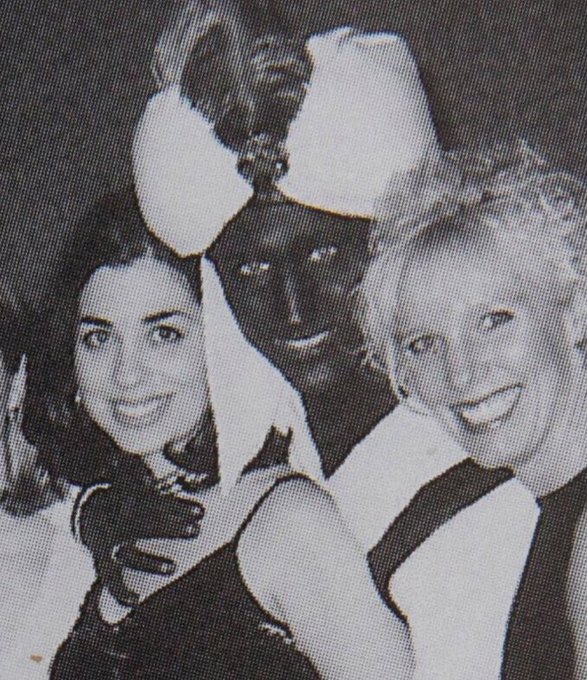
As more pictures of Justin from Canada begin to surface; and with at least three instances currently known by media; the Canadian prime minister said today he cannot remember how many times he wore blackface.
TheLastRefuge@TheLastRefuge2
Prim Minister @JustinTrudeau is the personification of the David Mamet Principle which says (in essence): In order for cultural progressives to force compliance with their ideological demands, they must also pretend not to know things…
Mercedes Stephenson from Global News has done some excellent follow-up coverage on the arrest of RCMP Intelligence Director Cameron Ortis. Mr. Ortis is facing seven serious charges of intelligence violations including obtaining information to pass to a “foreign entity.” The intelligence compromise is the biggest scandal in “a generation”.
New evidence shows the arrest was a result of a 2018 international intelligence operation that targeted the encrypted communications service known as “Phantom Secure”.
A man named Victor Ramos was the CEO of Phantom Secure, an enterprise that provided encrypted communication devices to criminal agents involved in drug smuggling, money laundering and human trafficking.
Ramos was arrested by United States FBI officials in Washington State. Ramos gave the FBI information about intelligence for sale that was coming from a source deep inside the Five-Eyes intelligence apparatus. That information led to RCMP Director Cameron Ortis.
The scale of the compromise is still being analyzed. Ortis was director general of the National Intelligence Coordination Centre in Canada. In essence, Ortis was the Canadian equivalent of the U.S. Director of National Intelligence (James Clapper/Dan Coats); and had access to the most sensitive intelligence information amid the entire Five-Eyes network that includes: Canada, The United States, The U.K. Australia and New Zealand.
(Global News) […] “By virtue of the positions he held, Mr. Ortis had access to information the Canadian intelligence community possessed. He also had access to intelligence coming from our allies both domestically and internationally,” RCMP Commissioner Brenda Lucki said Monday.
The charges have “shaken many people throughout the RCMP,” she said in a statement, adding the police force was “assessing the impacts of the alleged activities as information becomes available.”
“We are aware of the potential risk to agency operations of our partners in Canada and abroad and we thank them for their continued collaboration. We assure you that mitigation strategies are being put in place as required.”
[…] From his position as director general of intelligence in Ottawa, Ortis would have been able to access almost any sensitive information he wanted.
This could include the force’s blueprints for covert operations worldwide, as well as the identities of undercover officers, police agents working within transnational crime groups, officers from Five Eyes partners used in RCMP probes, and even witnesses relocated to other countries.
“He could have passed on our methodologies, our tactics, and our whole covert infrastructure,” Majcher said. “If it is true that he is dealing with some of the worst people in the world, they will be looking for what do the police know, how do they do stings on us?
“The damage he has potentially done could be quite massive and it could be generational.” (read more)
QUESTION: Marty; I am trying to understand your comments that the Canadian real estate has peaked in real terms. Does this mean it will still rise as the currency declines as a hedge against the government in your shift from public to private confidence?
HG
ANSWER: Canada will benefit from the capital inflows to North America which will not be as intense as those into the USA because of your government’s punitive actions against foreign investors and its sheer stupidity in understand international trends.
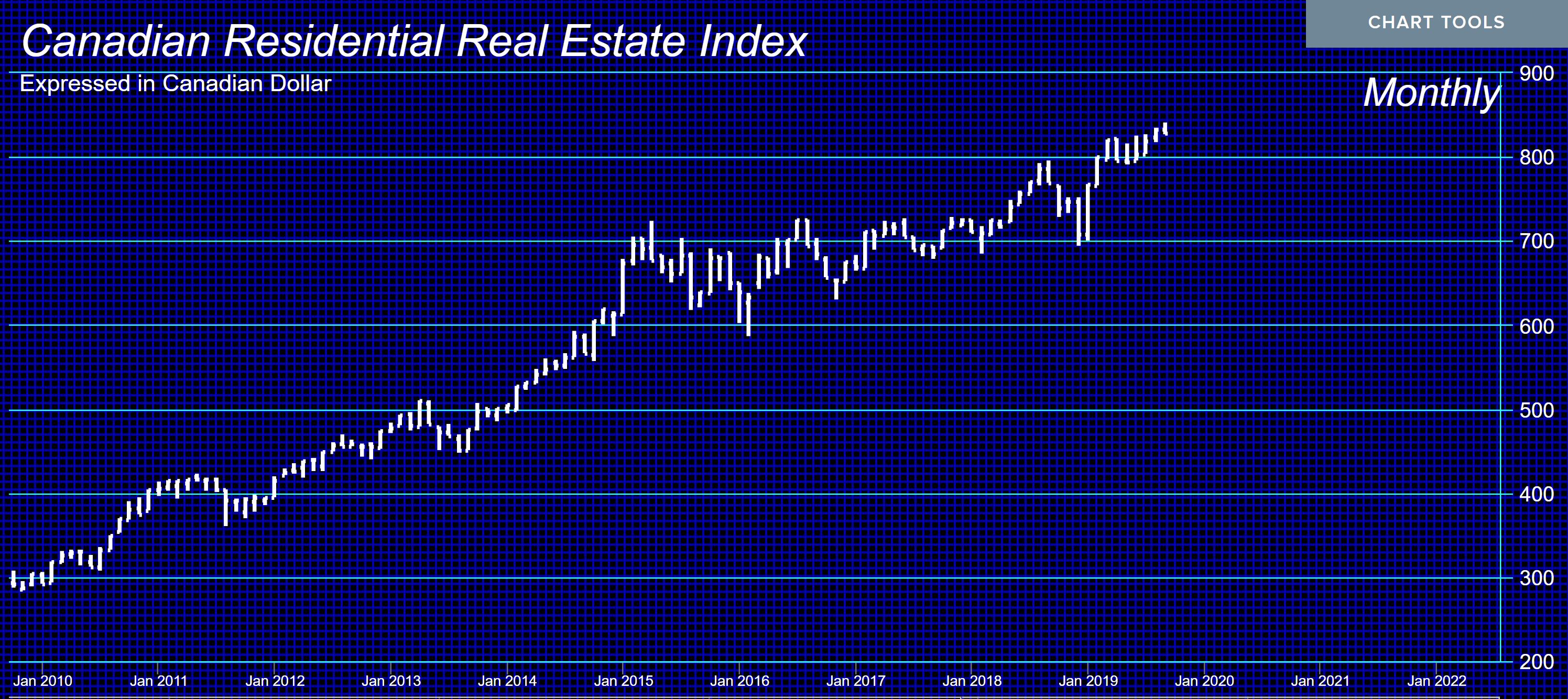
What I mean in “real terms” relates to the Canadian investor in terms of purchasing power. Here is an illustration of our Canadian Real Estate Index in both Canadian dollars and in Chinese yuan. You can see that from the Chinese perspective, Canadian real estate is still rising as a hedge against their currency. This means that the crazy laws being imposed against foreign investors and Justin Trudeau’s latest campaign promise to impose a 1% national 1% tax on foreigners owning property in Canada which he says will be applied to speculation and vacancy on applicable residential properties owned by “non-resident, non-Canadians.” Once he imposes the tax, you can bet it will rise rapidly from 1% because there is a complete misunderstanding of what is driving the real estate markets.
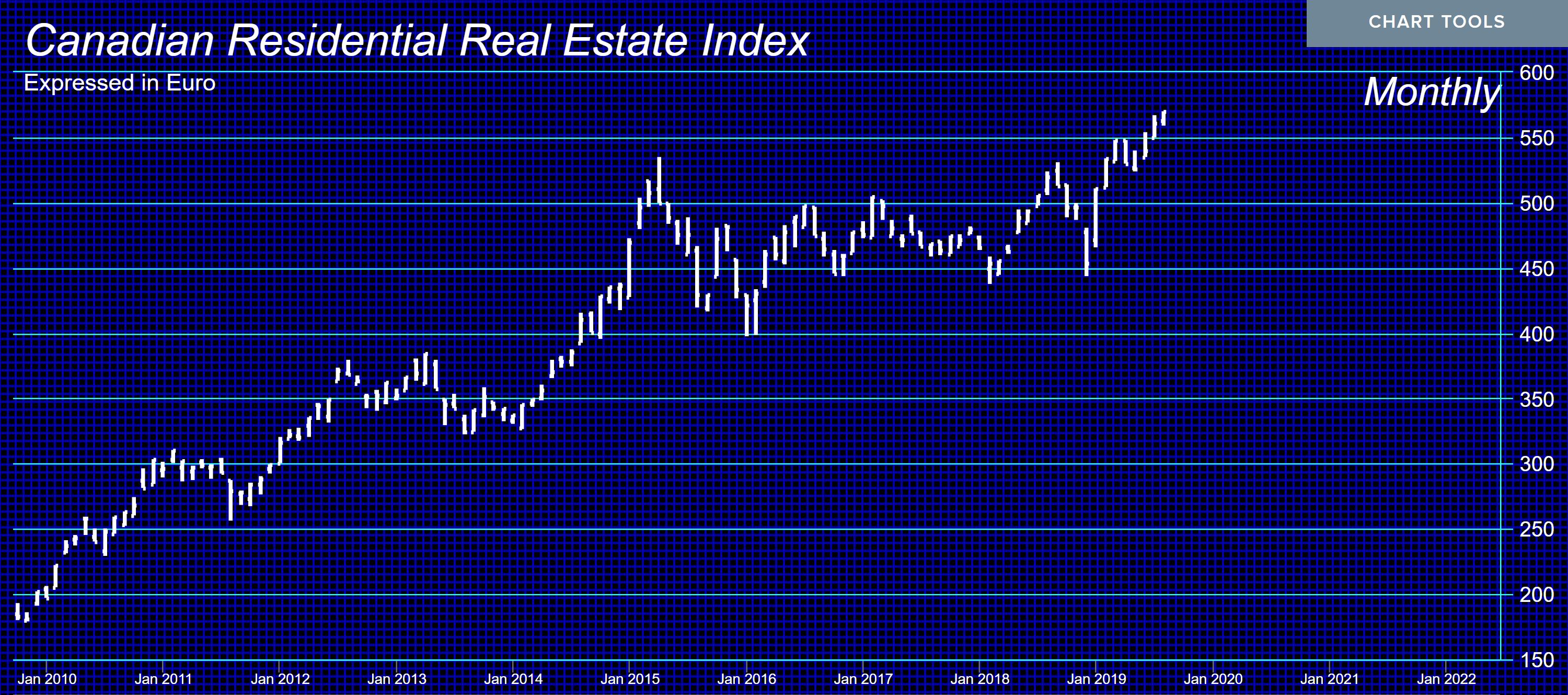
Here is the Canadian Real Estate Index in terms of Euro. Again, we are witnessing breakouts that are stronger in foreign currency than in Canadian. As we head into the Monetary Crisis Cycle, capital flight from Asia and Europe will continue and this will distort the profits they think they are making in real estate not understanding that they are playing the currencies.
Nevertheless, the is all part of the shift from Public to Private assets. While the “real terms” perspective of “value” may not be making new highs in purchasing power, this is still part of the shift from public assets. Some people will buy equities, others will go into real estate, and still others gold or other precious metals. The end game is to divest yourself of public assets and stay away from “fixed rate” investments where you are the creditor. Borrowers should be fixing their loans.
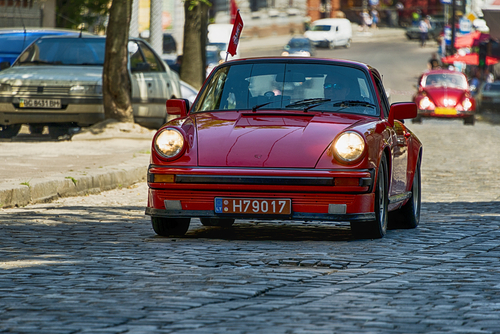
I worked with auto manufacturers in Japan and Germany. Their biggest problem was misunderstanding currency. A 911S Porsche in 1970 sold for $8,675 (31,579DM). In 1980, the same year the German automaker pulled its Turbo edition 911 in the United States, a new fifth-generation 911 cost $27,700 (46,507DM). The appreciation in dollars was 219% compared to an increase in Deuschemarks of only 47%. This created the image that German cars were better than American because they held their value. It was currency – not quality.
The majority of people just look at the price and do not understand that the currency swings can make a bad investment look good. You must always look at this from an international perspective.
Against the backdrop of Iranian attacks on Saudi oil fields, earlier today President Trump delivered remarks with Crown Prince Salman Bin Hamad Al-Khaifa of Bahrain in the oval office; and held an impromptu press conference. [Video and Transcript below]
.
[Transcript] PRESIDENT TRUMP: Well, thank you very much. It’s a great honor to be with the Crown Prince of Bahrain. He is a friend of mine, and the country is a friend of ours. We’re always going to be with them, and I know they’re always going to be with us. We have a tremendous relationship militarily, but we have also a tremendous economic relationship — trade. And we’re going to be discussing all of those things. We’ll certainly be discussing what took place over the last two days in Saudi Arabia.
CROWN PRINCE SALMAN: Absolutely.
PRESIDENT TRUMP: And we’ll be discussing the Middle East. But our relationship has never been stronger than it is right now. And I think that is largely based on the relationship that we have. So I look forward to having our discussion.
CROWN PRINCE SALMAN: Thank you, Mr. President. It’s a great pleasure to be here.
PRESIDENT TRUMP: Thank you. Thank you very much. Please. Would you like to say something?
CROWN PRINCE SALMAN: Well, I would like to say — thank the President for receiving me and my delegation here today. I’m here to convey the greetings of His Majesty and the people of Bahrain; to strengthen the relationship, which is based on shared values where they overlap, ideals.
We primarily, as the President said, are going to focus on discussions related to security enhancement and trade enhancement.
We signed today a agreement to purchase additional — or to purchase our first Patriot Missile Battery Systems.
PRESIDENT TRUMP: Right.
CROWN PRINCE SALMAN: And it couldn’t have come at a better time.
PRESIDENT TRUMP: Good timing.
CROWN PRINCE SALMAN: Absolutely. And we seek to strengthen America’s ability to trade with the world, and we have some concrete ideas on how we can do that.
PRESIDENT TRUMP: Well, thank you very much.
CROWN PRINCE SALMAN: Thank you, Mr. President.
PRESIDENT TRUMP: I look forward to the day and spending time with you.
And thank you all very much. I’ll be doing a news conference outside in a little while. Just part of the trip. We’re going to New Mexico and to other places for two and half days. And many of you will be with us, and I look forward to that. But in particular, I look forward to our meeting.
CROWN PRINCE SALMAN: Thank you.
PRESIDENT TRUMP: Thank you very much.
Q Mr. President, have you seen evidence, proof, that Iran was behind the attack in Saudi Arabia?
PRESIDENT TRUMP: Well, it’s looking that way. We’ll have some pretty good — we’re having some very strong studies done, but it’s certainly looking that way at this moment. And we’ll let you know. As soon as we find out definitively, we’ll let you know. But it does look that way.
Q Do you want war with Iran, Mr. President? Do you want war with Iran?
PRESIDENT TRUMP: Do I want war? I don’t want war with anybody. I’m somebody that would like not to have war. We have the strongest military in the world. We’ve spent more than a trillion and a half dollars in the last short period of time on our military. Nobody has even come close. We have the best equipment in the world. We have the best missiles. And as you say, you just bought the Patriot system.
CROWN PRINCE SALMAN: We did.
PRESIDENT TRUMP: There’s nothing even close.
But, no, I don’t want war with anybody. But we’re prepared more than anybody. Two and a half years ago, I will tell you, it was not the same thing. And with what we’ve done, we’ve totally rebuilt our military in so many different ways, but we’ve rebuilt it. And there’s nobody — it has the F-35. We have the best fighter jets, the best rockets, the best missiles, the best equipment. But with all of that being said, we’d certainly like to avoid it.
Q What are the options, Mr. President? What are the options if not a military (inaudible)?
PRESIDENT TRUMP: Well, we have a lot of options, but I’m not looking at options right now. We want to find definitively who did this. We’re dealing with Saudi Arabia. We’re dealing with the Crown Prince and so many other of your neighbors, and we’re all talking about it together. We’ll see what happens.
Q Mr. President, will you meet with President Rouhani in New York, as it was speculated that you might meet?
PRESIDENT TRUMP: Say it?
Q Will you still meet with President Rouhani in Iran? Is this — in New York, I mean.
PRESIDENT TRUMP: Well, I have no meeting scheduled. I know they want to meet. I know they’re not doing well as a country. Iran has got a lot of problems right now that two and a half years ago — and even a little bit more than that — when I came in — it’s hard to believe it’s almost three years — but two and half to three years ago, they were causing a lot of trouble. And we’ll see what happens.
But we’ll let you know definitively if there were — as you know, there are ways to see definitively where they came from, and we have all of those ways. And that’s being checked out right now.
Q Are you still willing to meet with the Iranians without preconditions? Still willing to meet with President Rouhani?
PRESIDENT TRUMP: Well, you know, there were always conditions, because the conditions — if you look at it, the sanctions are not going to be taken off. So if the sanctions — that’s a condition. So, you know, that’s why the press misreported it. The biggest thing you can talk about are the sanctions, and the sanctions are massive. There’s never been sanctions put on a country like that. And I think they have a tremendous future, but not the way they’re behaving.
We’ll see what happens in terms of this attack. Secretary Pompeo and others will be going over to Saudi Arabia at some point to discuss what — they feel they’re going to make a statement fairly soon. But they also know something that most people don’t know, as to where it came from, who did it. And we’ll be able to find that out. We’ll figure that out very quickly. We pretty much already know.
Q (Inaudible) prepared for war?
PRESIDENT TRUMP: Say it?
Q You said the United States is prepared for war.
PRESIDENT TRUMP: The United States is more prepared than any country in the history of — of — in any history, if we have to go that way. As to whether or not we go that way, we’ll see. We have to find out definitively who did it. We have to speak to Saudi Arabia. They have to have a lot of — they have to have a lot in the game also. And, you know, they’re willing to do that. I think everybody knows they’re willing to do that.
So we’ll be meeting with Saudi Arabia. We’ll be talking to Saudi Arabia. We’ll be talking to UAE and many of the neighbors out there that we’re very close friends with. We’re also talking to Europe, a lot of the countries that we’re dealing with — whether it’s France, Germany, et cetera. Talking to a lot of different folks. And we’re figuring out what they think.
But I will tell you, that was a very large attack and it could be met with an attack many, many times larger, very easily, by our country. But we’re going to find out who definitively did it, first.
Q Can you clarify, Mr. President? So you said that you think that Iran is responsible for the attack. Do you think that the attack —
PRESIDENT TRUMP: I didn’t say that. Why do you say that?
Q You said — you said that you think you might —
PRESIDENT TRUMP: I said that we think we know who it was, but I didn’t say anybody.
Q And then you said it was Iran.
PRESIDENT TRUMP: But, certainly, it would look to most like it was Iran, but I did not say it the way you said. Go.
Q So do you think it was launched from Iran, is the second question.
PRESIDENT TRUMP: You’re going to find out in great detail in the very near future. We have the exact locations of just about everything. You’re going to find out at the right time. But it’s too early to tell you that now.
Q Do you want to release the oil reserves to help cushion the oil prices that are rising now?
PRESIDENT TRUMP: Well, they haven’t risen very much. And we have the Strategic Oil Reserves, which are massive. And we can release a little bit of that. And other countries, including Bahrain — but other countries can be a little bit more generous with the oil, and you’d bring it right down.
So, no, that’s not a problem. It went up five dollars, and that is not a problem.
And you have to remember, we’re now the largest producer of oil and gas in the world. So a lot of people in the old days — and this happened over the last very short period of time. We’re number one in the world, by far.
CROWN PRINCE SALMAN: Yes, you are.
PRESIDENT TRUMP: By far. So I never want to be benefitted that way. But the fact is, there are those that say we benefit. I don’t view that as a benefit. But we are certainly — we take in more money than anybody else from energy. Not even close.
Q Mr. President, do you still think it’s the responsibility of the Saudis to defend themselves? Or should the United States be —
PRESIDENT TRUMP: I think it’s certainly the responsibility of them to do a big — a big deal of their defense, certainly. I also think it’s the responsibility of the Saudis to, if somebody like us — which are the ones — are going to help them, they, I know, that monetarily will be very much involved in paying for that.
This is something that’s much different than other Presidents would mention, Jon. But the fact is that the Saudis are going to have a lot of involvement in this if we decide to do something. They’ll be very much involved, and that includes payment. And they understand that fully.
But they’re going to be — look, they’re very upset. They’re very angry. They know pretty much what we know. They know pretty much where they came from. And we’re looking for the final checkpoints, and I think you won’t be surprised to see who did it.
Q Mr. President, will you discuss the Israeli-Palestinian peace plan with the Crown Prince, since Bahrain hosted the first —
PRESIDENT TRUMP: We’ll be discussing it, yeah. We’ll be discussing.
Q And (inaudible), is it soon — before or after the Israeli election?
PRESIDENT TRUMP: Well, we’re going to see. I mean, it’s — the election is on Tuesday.
CROWN PRINCE SALMAN: Tomorrow.
PRESIDENT TRUMP: So —
CROWN PRINCE SALMAN: It’s tomorrow.
PRESIDENT TRUMP: So you have an election tomorrow, so I would think it would be afterwards, okay? But we — you do have an election. Big election tomorrow in Israel. And that’ll be a very interesting outcome. It’s going to be close. It’s going to be a close election.
Q Did Chairman Kim invite you to North Korea in that (inaudible)?
PRESIDENT TRUMP: I don’t want to comment on that.
Q Okay.
PRESIDENT TRUMP: The relationship is very good, but I don’t want to comment on it.
Q Would you be willing to go there?
PRESIDENT TRUMP: I just don’t think it’s appropriate for me to comment.
Q Would you be willing to go to North Korea?
PRESIDENT TRUMP: Probably not. I don’t think it’s ready. I don’t think we’re ready for that. I would do it sometime at — sometime at a later future. And depending on what happens, I’m sure he’ll love coming to the United States also. But, no, I don’t think it’s ready for that. I think we have a ways to go yet.
Q Do you stand with the autoworkers in the strike against GM?
PRESIDENT TRUMP: Well, I have a great relationship with the autoworkers. I got tremendous numbers of votes from the autoworkers. I don’t want General Motors to be building plants outside of this country. As you know, they built many plants in China and Mexico, and I don’t like that at all.
My relationship has been very powerful with the autoworkers — not necessarily the top person or two, but the people that work doing automobiles. Nobody has ever brought more companies into the United States. You know, I have Japan and Germany, and many countries have been bringing car companies in and opening plants and expanding plants. And big things are happening in Ohio, including with Lordstown. Very positive things are happening.
We have many plants that are either being renovated or expanded or built new, right now, in the United States — many more than we’ve had for decades and decades. So nobody has been better to the autoworkers than me.
I’d like to see it work out, but I don’t want General Motors building plants in China and Mexico. This was before my watch. And I don’t think they’ll be doing that, I don’t think.
I had meetings with Mary Barra, the head of GM, and I don’t want them leaving our country. I don’t want them building in China. I don’t want to build them in other countries. I don’t want these big, massive auto plants built in other countries. And I don’t think they’ll be doing that anymore.
You know, General Motors makes most of its money in the United States, and it’s too bad they spent billions and billions of dollars outside of the United States, before I got here. One of the things very important in the USMCA, which we have to have approved for the — not only for the unions, for the autoworkers, but for the farmers and for the manufacturers — for everybody. Everybody wants USMCA. It’s very important, even more so now than it was two weeks ago. But people really want it.
I’m sad to see the strike. Hopefully, it’s going to be a quick one.
Q Mr. President, has diplomacy been exhausted when it comes to issues of Iran? Diplomacy — has it been exhausted?
PRESIDENT TRUMP: No. It’s never exhausted. In fact, the Crown Prince can tell you, especially in your part of the world, it’s never exhausted until the final 12 seconds. Is that right?
CROWN PRINCE SALMAN: That is correct.
PRESIDENT TRUMP: You never know what’s going to happen. No, it’s not exhausted. Nothing is exhausted. And we’ll see what happens.
I think they would like to make a deal. I know they’d like to make a deal. They’d like to do it, but they’d like to do it on certain terms and conditions, and we won’t do that. But at some point, it will work out, in my opinion.
The problem was, the deal that was signed by the previous administration was a disaster — which, by the way, would be expiring in a very short period of time also. So you really don’t have a deal. You know, that deal was a very short-term deal. So they made a deal, but it was for a very short period of time. So that deal would be expiring very soon.
Q Mr. President?
PRESIDENT TRUMP: Yes.
Q Sorry. Are you encouraging Israel and the Saudis to work together on this issue, particularly since they have a shared common goal?
PRESIDENT TRUMP: Always. I encourage everybody. I want everybody to work together. The Middle East is an interesting place. They, historically, have not been working together too well.
But, no, Israel is starting to work together with a lot of countries that you wouldn’t have thought possible two years ago.
Yes, Steve.
Q Have you promised the Saudis that the U.S. will protect them in this case?
PRESIDENT TRUMP: No, I haven’t. No, I haven’t. I haven’t promised the Saudis that. We have to sit down with the Saudis and work something out. And the Saudis want very much for us to protect them, but I say, well, we have to work. That was an attack on Saudi Arabia, and that wasn’t an attack on us.
But we would certainly help them. They’ve been a great ally. They spend $400 billion in our country over the last number of years. Four hundred billion dollars. That’s a million and a half jobs. And they’re not ones that, unlike some countries, where they want terms; they want terms and conditions. They want to say, “Can we borrow the money at zero percent for the next 400 years?” No. No. Saudi Arabia pays cash. They’ve helped us out from the standpoint of jobs and all of the other things. And they’ve actually helped us.
I would call and I would say, “Listen, our oil prices, our gasoline, is too high. You got to let more go.” You know that.
CROWN PRINCE SALMAN: Yeah.
PRESIDENT TRUMP: I would call the Crown Prince and I’d say, “You got to help us out. You got to get some more.” And, all of a sudden, the oil starts flowing and the gasoline prices are down. No other President can do that. No other President was able to do that, or maybe they didn’t try. But I’ve done it.
So now they’re under attack, and we will work something out with them. But they also know that — you know, I’m not looking to get into new conflict, but sometimes you have to.
Q Mr. President, what’s your message to Iran right now?
PRESIDENT TRUMP: Excuse me?
Q What’s your message to Iran right now?
PRESIDENT TRUMP: I think I’ll have a stronger message, or maybe no message at all, when we get the final results of what we’re looking at. But, right now, it’s too soon to say. There’s plenty of time. You know, there’s no rush. We’ll all be here a long time. There’s no rush.
But I’ll have a message — whether it’s a strong message or maybe no message at all, depending on the final results.
Q And how concerned are you about the risk of an all-out war in the Middle East?
PRESIDENT TRUMP: I’m not concerned at all.
Q You don’t think that we’re a step closer to that, given what Iran just did?
PRESIDENT TRUMP: No. I’m not. Personally, I’m not concerned at all. We have military power the likes of which the world has never seen. I’m not concerned at all. I’d like to avoid it.
You know, when I came here three years ago almost, General Mattis told me, “Sir, we’re very low on ammunition.” I said, “That’s a horrible thing to say.” I’m not blaming him; I’m not blaming anybody. But that’s what he told me. Because we were at a position where, with a certain country — I won’t say which one — we may have had conflict. And he said to me, “Sir, if you could, delay it, because we’re very low on ammunition.” And I said, “You know what, General? I never want to hear that again from another general.” No President should ever, ever hear that statement, “We’re low on ammunition.”
And we now have more ammunition, more missiles, more rockets, more tanks, more — we have more of everything than we’ve ever had before. More jet fighters. When I came here, 50 percent of our jet fighters didn’t fly. You know that. And they were in bad shape. And now we have the best fighters in the world. Everybody wants to buy them. Are you buying our jet fighters?
CROWN PRINCE SALMAN: We are, sir.
PRESIDENT TRUMP: Which one?
CROWN PRINCE SALMAN: The F-16.
PRESIDENT TRUMP: That’s great.
CROWN PRINCE SALMAN: Signed it here.
PRESIDENT TRUMP: You have good taste. (Laughter.)
CROWN PRINCE SALMAN: Thank you, sir.
PRESIDENT TRUMP: That’s a great one.
So, we are very high on ammunition now. That’s a story I’ve never told before. Breaking news. But we have — we were very low. I could even say it stronger. I don’t want to say, “No ammunition,” but that gets a lot closer.
I said, “I never want to hear that again. And I never want another President of the United States to hear that again.” Could you imagine, as President, when they say, “We’re very low on ammunition?” By the way, stronger than that, but I’m not going to go there. That was what I was told. And I said, “I never want to be in a position like that again.” And he said, “Could you delay if we do something, sir? Could you delay it as we fill up?” And that is what I inherited from the past administration. And, in all fairness, to President Obama, to administrations before President Obama. That’s what I got stuck with. And we fixed it, and we fixed it good.
The Crown Prince understands $700 billion; the next year, $718 billion; and the next year, which is right now, we just got approved, $738 billion. And that’s a lot of money even for Bahrain. Right?
CROWN PRINCE SALMAN: It’s a lot of money, sir.
PRESIDENT TRUMP: It’s a lot even for Bahrain.
CROWN PRINCE SALMAN: It’s a lot of money.
PRESIDENT TRUMP: And Bahrain has a lot of money. Okay?
Q You have the Israeli election coming up tomorrow. How does that affect the timing of your Middle East peace plan?
PRESIDENT TRUMP: Well, we’ll have to see what happens, Steve. I just don’t know. I can’t tell you what’s going to happen. I can make a prediction; I sort of have a feeling. But we’re going to have to see what happens. That’s a big election. That’s one we’re all going to be watching.
Q Do you think Netanyahu will pull it out?
PRESIDENT TRUMP: Well, certainly he has a good chance. But it’s a very — you know, it’s a 50/50 election. A lot of people, if you look at the polls and everything else, it’s going to be very close. So we’ll see what happens. Polls — polls are often wrong.
Q Netanyahu called for annexing all settlements in the West Bank. Is that something your government would (inaudible)?
PRESIDENT TRUMP: Yeah, I don’t want to talk about that, but certainly it’s something we were told about that they’d like to do. But, no, I don’t want to be talking about that. It’s too soon.
Q Mr. President, can you, kind of, elaborate a little bit on why the decision was taken yesterday to release the Strategic Reserves? Why did you decide right away to do that?
PRESIDENT TRUMP: Well, just in case we ran a little bit low on oil. We have so much with the Strategic Reserves. Plus, being the number one producer, we can fill them up very quickly. Very, very quickly.
And one of the things I’m doing also is I’m approving the pipelines in Texas. We have a tremendous pipeline system that’s being held up by various agencies for a very good reason, for it — going through the normal process.
And we’re going to have to avoid the normal process, because if we do that — Texas is a massive distributor, a massive producer of oil, far bigger than anybody would have even thought five years ago. So what I’m going to do is expedite the pipeline approvals. That will get us another 25 percent energy — additional energy.
I know this is exactly the opposite of the Democrats. They want to have wind, solar, and, I guess, make-believe would be the third alternative, right?
No, this is something we have to do. We have the greatest wealth in the world, and we want to be able to capitalize on it, especially when it comes to safety. Okay?
Thank you all very much. Thank you.
Q Just for one more second. You talked about an urban agenda when you ran for President the first time. You went to Baltimore last week. What are your plans for Baltimore and cities like Baltimore? Instead of pointing fingers, what are you trying to do to help the city rise up from the “rodent-infested place” that you say it is?
PRESIDENT TRUMP: Well, I think what I’ve done for the inner cities is more than any President has done for a long time. We’ve created Opportunity Zones. In fact, I did that with Tim Scott, who you know very well, who is, I think, a tremendous guy. It was his initiative. And he came to see me.
They’re having a tremendously positive impact on the inner cities, including Baltimore, including a lot of other cities that you wouldn’t necessarily think. Oakland, California, is an example. We’re having tremendous success in the inner cities because of the Opportunity Zones.
Criminal justice reform — I was the one that got it. Nobody else. I mean, we had people that helped, but a group of extremely liberal Democrats came to the office and they said, “We cannot get it.” President Obama was unable to get it, as you know. President Bush — they were all unable to get it, and I got it.
And I got it with some very conservative senators and people that wanted it to happen. And nobody else could have done it. And it’s sort of interesting, because they don’t like mentioning my name, although, I guess now people are understanding.
But we got it. We got it done. We formed a coalition with some very conservative people, as you know, and some people that are very far left. And we did a thing called, “criminal justice reform,” something that nobody thought. The Crown Prince has seen this. Nobody thought this could possibly happen. And I’m very proud of criminal justice reform. So, we did that. We did the Opportunity Zones and a lot of other things.
Our job numbers for African Americans are the best in history. You saw the new ones came out; they’re even better than they were two months ago. Hispanic, the best in history. Asian, the best in history. Overall, they’re phenomenal. The best in 51 years. And I think we’ll soon be historic on that one too.
The economy is doing great. And that’s the best thing I can do.
Q Did you look at Baltimore when you flew over? Did you see what you —
PRESIDENT TRUMP: No, when I drove through I looked at it. And we flew over. But we also — no, you have some sections that need a lot of help.
And, you know, what people don’t know — I had a great meeting with Elijah Cummings in this office very early in my tenure. And it was a meeting on drug prices. And I saw him get emotional talking about drug prices. Seriously emotional. And I was really impressed. He cared about it. And I would certainly be willing to meet with Elijah and other people, if they’d like.
But I saw the emotion and the feeling that he had for reducing drug prices. And we’ve worked hard, and we’ve actually had the first year in 51 years where prices went down. But we can get them down much further if we can get the help from Congress.
So I think we’re going to do much lower drug prices over the next year. And I think that if Elijah Cummings would want help, I am here. But I did see him at a moment that was actually, I thought, a very beautiful moment. I’ve talked about it often because I see the political rhetoric every once in a while. And I said, “That’s not the same guy I had in my office.” That was a very caring man that wanted to see drug prices lowered. And he wanted that for the community — for his community.
So, I look forward to working with Elijah, but I look forward to working with a lot of people. But I think Opportunity Zones have been tremendous for the inner cities.
And criminal justice reform is something we’re very proud of. Thank you all very much.
The dance with the dragon is a complex geopolitical relationship between two large economies. China’s view within the dynamic is shaped by their own internal ideology and outlook. The panda mask dynamic was/is strategic and has served them well for decades; but now President Trump -while engaging a structural confrontation- has used the panda strategy against Beiing’s interests. China is flummoxed.
Each of President Trump’s trade team members have a specific role; each member also has a specific opponent within the dance:
♦Peter Navarro is the blue-collar hawk. He focuses on the the administration’s Wall Street adversaries; and the U.S. multinationals -American companies- who have aligned their interests with Beijing. Navarro’s focus is internal to U.S. interests. Navarro confronts U.S. corporations, Wall Street interests, who are working against Main Street.
♦Treasury Secretary Steven Mnuchin carries the economic financial weapons (represents the dollar), and he faces toward global adversaries (IMF, World Bank, European Central Bank etc.) who have also aligned their interests with Beijing and the status quo.
♦Commerce Secretary Wilbur Ross, coordinates the punitive actions that keep Beijing in a position of compromise. Ross reviews prior agreements, trade legal specifics, searches through contractual obligations and ultimately controls the tariffs, if/when triggered by President Trump. Secretary Ross faces down the World Trade Organization (WTO).
♦U.S. Trade Representative Robert Lighthizer is the contract writer; the primary negotiator; and he is at the center of the trade group where the details are constructed. Lighthizer writes the terms based on the objectives of President Trump. Only POTUS approves the new agreements.
♦White House Economic Council Chairman Larry Kudlow is the explainer, the trade diplomat. The communication bridge between what is happening in the big picture and what the subsequent consequences mean. Chairman Kudlow is to remain affable, optimistic and approachable by any interests who have concerns. The PR guy.
“It must be remembered that there is nothing more difficult to plan, more doubtful of success, nor more dangerous to manage than a new system. For the initiator has the enmity of all who would profit by the preservation of the old institution and merely lukewarm defenders in those who gain by the new ones”
Navarro, Mnuchin, Ross and Lighthizer bear the economic teeth. After all, their job is serious… they have all the confrontational challenges… they face those who want to stop President Trump’s global trade reset. Their goal is to ‘change the status-quo‘ toward greater reciprocity for the U.S. and to stop the one-sided nature from decades of trade agreements which eroded the U.S. middle-class. Because their objective is change, they face the adversaries head-on. Their tasks make them targets. This group are hard men.
Kudlow is the soft-one. That’s his job. Be approachable by those who don’t like confrontation. Kudlow calms nerves and keeps the nellies‘ less nervous.
Within this dance, there is an important place where East/West negotiations require respect. The panda mask is part of the dynamic, perhaps the cunning and positioning part, but beyond the mask actual terms need respect from both parties.
Beijing violated that central component of respect in May, 2019, when they rebuked the terms of an agreement that were 80 percent negotiated and accepted by their own emissary. China is paying the price for that violation now. They likely did not anticipate the severity of punishment, now they are living with consequences.
President Trump has delivered punishment but continued to praise the opponent in hopes of encouraging Chairman Xi to rethink the dragon position.
There are many U.S. hawks celebrating the pain within China; and some of those same voices are calling for continued policy that will lead to the collapse of the central Chinese communist government. That ain’t going to happen.
If there are going to be terms, there needs to be a middle position. President Trump has always expressed hope that terms can be reached; however, he has also expressed pragmatically that successful terms likely involve too much loss for Beijing to accept.
President Trump has done all he can to encourage U.S. multinationals to think about the impossibility of structural change in Beijing against the severity of their own experiences. In essence President Trump has warned U.S. companies to plan for the worst, and get out.
The complaints from U.S. and allied interests about Chinese trade practices are not likely be fixed; the issue is structural. China will not change the structure of their totalitarian controlled economic model. They are communists.
However, that said, within this ongoing dance there needs to be panda dialogue – because the global downsides are severe…. Enter Michael Pillsbury:
I have created this site to help people have fun in the kitchen. I write about enjoying life both in and out of my kitchen. Life is short! Make the most of it and enjoy!
This is a library of News Events not reported by the Main Stream Media documenting & connecting the dots on How the Obama Marxist Liberal agenda is destroying America

 Two months ago in Vancouver, the local paper reported on what was going on with local Hong Kong protests. As many know, Vancouver has been the migration spot for Chinese after the British ceded HK. The Chinese-Canadians were traditionally pro-democracy. However, as China’s power has grown, so has a pro-homeland perspective among some expat Chinese.