Conversations with John Anderson: Jordan Peterson and Dave Rubin


Published on Mar 5, 2019

Jordan and Dave joined John Anderson at this private forum event to further examine their diagnoses of and prescriptions for our contemporary challenges. A conversation recorded in Sydney, February 2019 The original video can be found here: https://www.youtube.com/watch?v=kZBKm…


MAGA Irrelevant – Federal Reserve Cuts Rate Quarter Point, First Since ’08 – Why It Doesn’t Matter…


In 2015 CTH outlined how candidate Donald Trump’s proposals were in-line with those who had long argued for a return of “economic nationalism”.  We also outlined when those proposals (now policy) are implemented, Fed action would be essentially irrelevant.

The Federal Reserve is pegged to the Wall Street Economy.  President Trump’s policies are pegged to the Main Street Economy.  There is a disconnect; a new dimension in U.S. economics; and very few people understand what happens in this space between them.

Thirty-five years ago Fed monetary policy impacted the U.S. economy directly because almost all activity (durable good manufacturing) was within our borders.  The natural dynamic of inflation could be influenced by the Fed.  Rate changes could offset inflation and also enhance domestic investment etc.

However, as time progressed that manufacturing activity -the basic underpinning of middle-class jobs, wages etc- shifted overseas.  When monetary policy became controlled by multinationals (Wall Street influencers purchasing politicians), capital investment moved to generate purely higher profits.  Businesses, specifically manufacturing, went abroad.  As a consequence the determination of prices, ie ‘inflation’, was no longer influenced by the Fed because the actual economic activity was/is outside the U.S. borders.

We see this today.

President Trump’s middle-class policy, through tariffs, is intended to bring manufacturing back to the U.S.  China and the EU are trying to keep their manufacturing foothold by devaluing their currency and subsidizing their industries.

This action by China and the EU lowers the value of their currency, increases the value of the dollar, and simultaneously lowers the prices of their exports.  This offsets the U.S. tariffs, and the China/EU stuff costs less to import.  In essence, we import deflation.

No action by the U.S. Fed can change this pricing mechanism because the price determination is outside the reach of the Fed.  Hence, the disconnect.

NEW YORK (Reuters) – The U.S. dollar rose to two-year highs on Wednesday after Federal Reserve Chair Jerome Powell, having made the first cut to interest rates since 2008, signaled the move was not the start of a rate-cutting cycle.

[…] In a widely expected move, the U.S. central bank cut rates by 25 basis points to shore up the economy against risks including global weakness. But in the subsequent press conference, Powell said he viewed the cut as a “mid-cycle policy adjustment” rather than a broader loosening of monetary policy.

[…]  The statement upended expectations of some market participants who anticipated confirmation of further rate cuts. A day prior, traders had forecast at 35% chance of three cuts by the end of the year; on Wednesday afternoon that figure had fallen to 12%, according to CME Group’s FedWatch tool.

“They acknowledged strong labor markets, recent reasonable signs of moderate growth. It still leaves the playing field wide open as to what they’re going to do in future months,” said Tony Bedikian, head of global markets at Citizens Bank in Boston. (more)

♦RATE CHANGES –  Currently multinational investment is in a holding pattern, waiting to see what happens with President Trump’s global trade reset.  Manufacturing multinationals don’t know exactly where to put their investment money because they are waiting to see what happens with trade and tariffs.   They don’t want to invest in a new China factory only to see the end product become subject to POTUS Trump tariffs.

The Fed views those stalled investment dollars through the prism of a global economy, their historic reference.  Financial pundits have also been selling the global economy model for 35 years; so they too mistakenly view stalled (unappropriated) investment dollars as a sign the U.S. economy might be weakening.  It ain’t.

We are in the aforementioned flux space where Trump is favoring Main Street…. and all trade policy is shifted therein.

U.S. Federal Reserve lending rates won’t make the multinationals move their investment money until the geopolitical trade reset is worked out.  Ergo, lower Fed rates won’t currently help Wall Street…. Nor will lower Fed rates have much impact on Main Street because internal U.S. economic influences are larger and stronger than the Fed influence.

Because the Fed cannot influence prices of manufactured goods, the Fed cannot influence inflation.  The U.S. worker wage rates are stronger than any inflation; again the disconnect that CTH has noted for three years that will work in favor of the middle-class.

So long as the Fed is pegged to Wall Street, meaning has primary focus on lending to U.S. manufacturing multinationals; and as long as that lending (investment) is stalled pending the outcome of Trump’s trade and economic reset; the Fed is essentially irrelevant on the bigger dynamic.

If a variable rate mortgage loan goes up by $100/month, and simultaneously (outside of the Fed influence) the worker is getting a $300/month wage increase (currently 5.5% wage growth), there is no material negative impact.

If a variable rate mortgage loan goes down by $100/month, and the worker is still getting a $300/month wage increase, blue collar spending and savings jumps [current status], no substantive downside.   The blue-collar spending is a self-fulfilling prophecy. This is the reason why we noted in 2016 the Fed would essentially be irrelevant to Main Street.

The Fed remains pegged to Wall Street.

Trump policy remains pegged to Main Street.

We are in the space between.

Until this dynamic changes and the majority of the underlying economic activity is returned to the U.S action by the Fed is essentially moot to Main Street.

Once the U.S. economy rebalances; meaning once the trade policy brings more production based manufacturing and assembly back into the U.S; and once we reverse the 35-year Wall Street dynamic and become a more production-driven economy (where the best return on investment is inside the USA); then yes, Fed action will start to have influence.

When? Once the USMCA is ratified, President Trump will trigger tariffs on China. This will move all of the multinationals who are in a ‘holding pattern’ because they will see what areas are safe.  Capital investment will flow very fast.

Where? The China exodus will benefit North America (USMCA) and those ASEAN nations who have partnered with Trump and made proactive trade agreements.  That’s where the capital investment will flow.

The Crossover – China Views Lack of ‘Spygate’ Accountability as Evidence of Trump’s Weakness…


It was only a matter of time before someone explained how the Chinese advisors to Chairman Xi Jinping are using President Trump’s inability to hold the coup plotters accountable as evidence they can wait out the President.

This is the crossover, where a lack of accountability for “Spygate” now begins to negatively influence the geopolitical, economic and strategic position of President Trump.  However, there’s an upside to this dynamic….

In several interviews the president has noted his preference to keep the DOJ and FBI issues at a distance and deferred action to others. The economic reset is President Trump’s #1 priority.  If Trump identifies the lack of DOJ and FBI accountability as an impediment to the economic program, he may become much more engaged.

.

SHANGHAI—Plodding progress in trade negotiations between the U.S. and China this week is partly the result of a new tactic from Beijing, which increasingly thinks waiting may produce a more-favorable agreement.

U.S. and Chinese trade negotiators held four hours of talks Wednesday, after a dinner the night before, and then wrapped up their first face-to-face meeting since negotiations foundered more than two months ago. Both sides described the talks as constructive and said the next round will be held in September.

[…] “China can take it easy and wait patiently,” said Mei Xinyu, a researcher at a think tank under China’s Commerce Ministry. China’s economy is recovering, he said, while the U.S.’s is likely to slow: “The impact of the trade war falls in the early stage on China’s economy but in a later stage for the U.S. economy.” (read more – paywall)

David ShoelessJoe🇺🇸@yohiobaseball

.@TheLastRefuge2 Right Again! They think they can wait out Pres Trump, he needs to bring the pain!
“China can take it easy and wait patiently,” said Mei Xinyu, China’s economy is recovering, while the U.S.’s is likely to slow:https://www.wsj.com/articles/slow-progress-in-trade-talks-is-partly-a-result-of-chinas-new-tactic-to-wait-11564574957 

Slow Progress in Trade Talks Is Partly a Result of China’s New Tactic to Wait

Slow Progress in Trade Talks Is Partly a Result of China’s New Tactic to Wait

Plodding progress in trade negotiations between the U.S. and China this week is partly the result of a new tactic from Beijing, which increasingly thinks waiting may produce a more favorable agreem…

wsj.com

63 people are talking about this

…Every minute spent outraged at what Comey, McCabe or Muller did yesterday, is one minute less that Bill Barr is being held accountable for what he is not doing today…

Macron’s French Police Openly Attacking the People Seriously Injuring if not Trying to Kill Them


Unfortunately, as governments begin to collapse moving into 2021/2022 due to the complete failure of Socialism, they will not simply yield to the people and admit that their fiscal mismanagement is the cause of destroying everyone’s future. They will not go quietly into the light. Here we see French police acting no different than the police in Venezuela terrorizing and suppressing the people there as well.

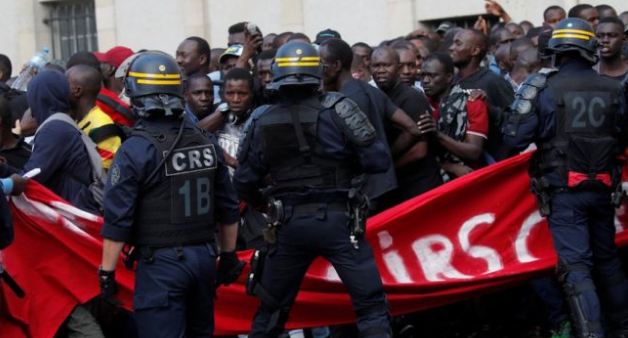
Black Vests Storm Paris


The Black Vests are rising up in France. This group is composed of undocumented Africans who are in France and demanding to stay. Hundreds of these undocumented migrants stormed the Panthéon in Paris and demanded the right to remain in France. They are primarily from West Africa and managed to get in pretending to be refugees from Syria. They call themselves the “black vests,” which is a reference to the yellow vest protest movement that spread through much of France earlier this year.


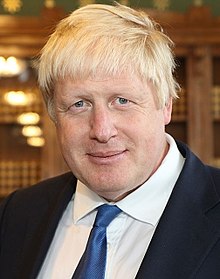
Boris Johnson Wins Britain Right on Target


Boris Johnson has been elected as the new Prime Minister of Britain and he has promised to take Britain out of the European Union “come what may.” Jeremy Corbyn says Labour will table a motion of no confidence, designed to force Boris Johnson from office “at a time of (their) choosing,” adding “it will be an interesting surprise for all of you.” That is the main concern that if Labor gets a hold of the government, Britain will see a massive exit of capital and Corbyn will single handedly destroy the British economy, which has been the concern behind in the decline in the pound sterling.

Boris Johnson beat Jeremy Hunt in the battle for the leadership of Britain’s governing Conservative Party winning 66% of the vote. Although the Conservatives’ working majority in Parliament is very small, it appears to be enough to ensure that Mr. Johnson will succeed Mrs. May as prime minister and Labor will not be able to stop that at this point in time.

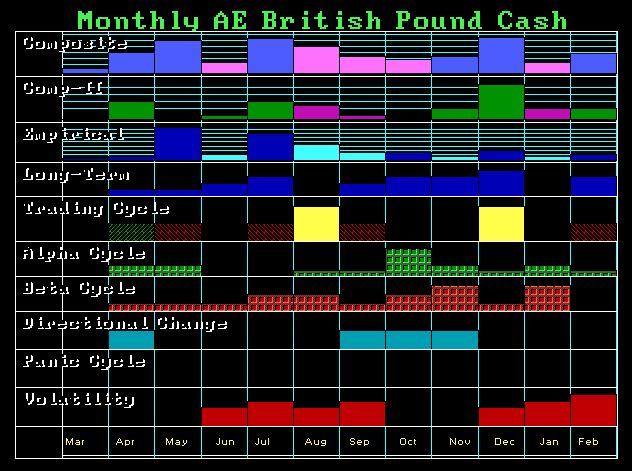
What is very interesting is that our computer gave us two targets — May and July 2019. Prime Minister Theresa May said she would step down as leader of the Conservative Party and then as prime minister after repeatedly failing to get her Brexit plan through Parliament on May 24th, 2019. The next target was July, and here we have Boris Johnson elected. Now we are looking at October and December going into year-end.

Boris Johnson Wins Party Vote Becomes Newest British Prime Minister…


Boris Johnson has succeeded in beating his nearest rival Jeremy Hunt for leadership of the conservative party in the U.K. thereby becoming the next Prime Minister. One of the priority challenges for Prime Minister Johnson will be navigating a successful Brexit.

A full three years after the British electorate voted to leave the European Union, the elites in Britain have continued to stymie the referendum in their effort to remain attached to the communal values of the collective society.  Thus gave rapid rise, recently, to the Brexit Party as a national force led by Nigel Farage.  It’s the UK version of ‘deplorables’ vs ‘elites’.

The British Parliament is filled with elected members who stand in opposition to the majority of the British citizenry.  It is amid this professionally political and elitist disconnect that Boris Johnson must now attempt to deliver Brexit, while the purchased politicians of both institutional parties will oppose his effort. [Sound familiar?]

London (AFP) – Boris Johnson won the race to become Britain’s next prime minister on Tuesday, heading straight into a confrontation over Brexit with Brussels and parliament, as well as a tense diplomatic stand-off with Iran.

The former London mayor easily beat his rival, Foreign Secretary Jeremy Hunt, in a vote of grassroots members of the governing Conservative Party.

He is expected to be confirmed as prime minister on Wednesday when Theresa May formally tenders her resignation to Queen Elizabeth II.

US President Donald Trump was the first world leader to offer his congratulations, saying: “He will be great!”

It is a triumph for a man who has always coveted the premiership. But Johnson, known for his jokes and bluster, is taking over at a time of immense political upheaval.

Three years after the referendum vote to leave the European Union, Britain remains a member amid continued wrangling in a divided parliament on how to proceed.

– ‘We’ll get Brexit done’ –

Johnson led the referendum “Leave” campaign and — after May delayed Brexit twice — insists the latest deadline must be met, with or without a divorce agreement with the EU.

“We’re going to get Brexit done on October 31,” he declared in a speech to party members in London, after winning 66 percent of almost 140,000 votes cast.  (read more)

Here is Johnson’s victory speech. [Prompted, just hit play]

Middle East Chaos


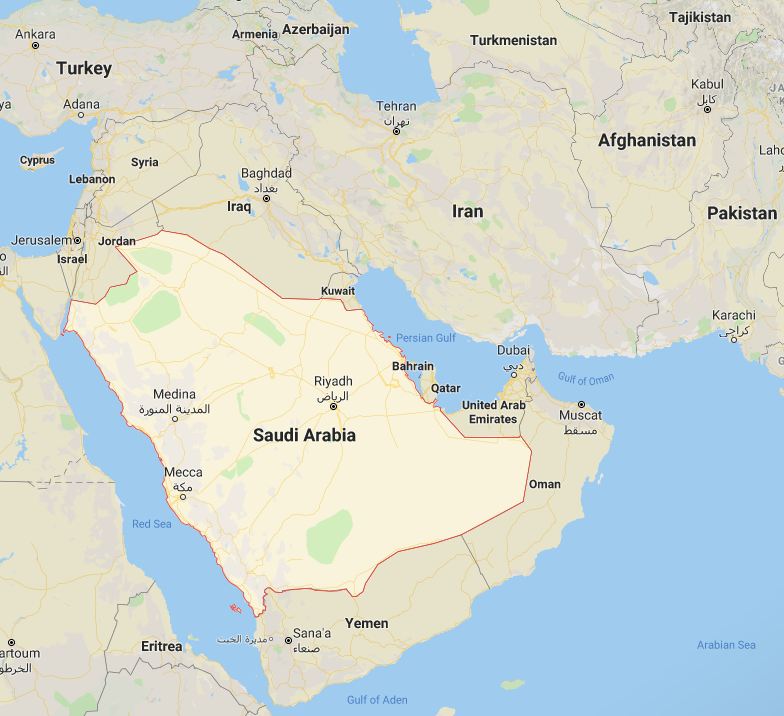
The Middle East has been in turmoil and Trump has stood his ground against the neo-cons. The UAE is trying to avoid involving its nation in the conflict with Iran and certainly sees no upside to turning its country into a battlefield between the US and Iran. Iran promised to talk to the Yemeni officials to avoid hitting targets in Dubai and Abu Dhabi, provided the UAE pulls out its forces from Yemen. The so-called “deal of the century” proposed by President Trump’s son-in-law Jared Kushner, which sought to deal with the Palestinian-Israeli conflict, was met with minimal interest. The $50 billion in aid to the Palestinians was view as just a bribe.

Meanwhile, Trump has been thwarting the neo-cons for he came out opposing their policies, stating with respect to Iran: “We’re not looking for regime change. We want them out of Yemen.” Those unfamiliar with the players in the Middle East should read our report on the region – The War Cycle.

Flashback: Former Secretary of State John Kerry Admits Giving Hostile Instructions to Iran to Undermine U.S. Interests…


With Iran now openly engaged in hostile efforts against western maritime navigation, and hijacking western oil tankers, I find it remarkable -albeit predictable- how U.S. media refuse to reference Former Secretary of State John Kerry’s instructions to Iran just a few short months ago. [Reference Article late 2018] [Reference article early 2018]

Reminder of Secretary of State Mike Pompeo’s anger:

.

There is a direct line, a direct connection, between former President Obama and former Secretary Kerry’s engagement with Iran -and the advice presented therein- only a few months ago, and the current hostile conflict Iran is attempting. Yet despite the connection, U.S. media are silent on the association.