Stunningly Low Prices – A Visit to an Average Russian Supermarket


Posted originally on the CTH on August 17, 2023 | Sundance 

I wouldn’t normally write a post like this, but WE ARE NOT going to find this level of ground reporting anywhere in U.S. media.   As you might be aware, I have been doing extensive research on the Russian economy specifically with the outcome of western sanctions.

In his video a Youtuber I follow visited a local supermarket, similar to a WalMart Super Center to share information for his USA followers.

Dima Dear, a remarkably nice young man, lives in St Petersburg, Russia (formerly Leningrad), and he shares various experiences with his audience at their request.  There is a lot of U.S interest as people following his story are starting to realize life in Russia is not what western media portray.

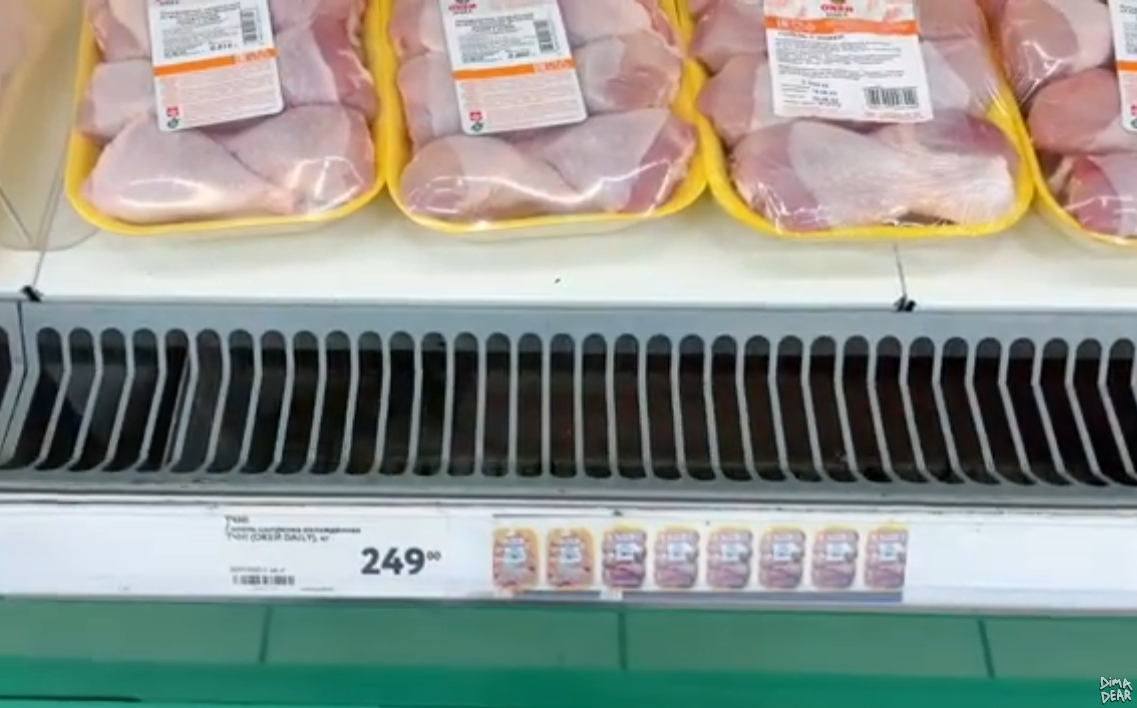
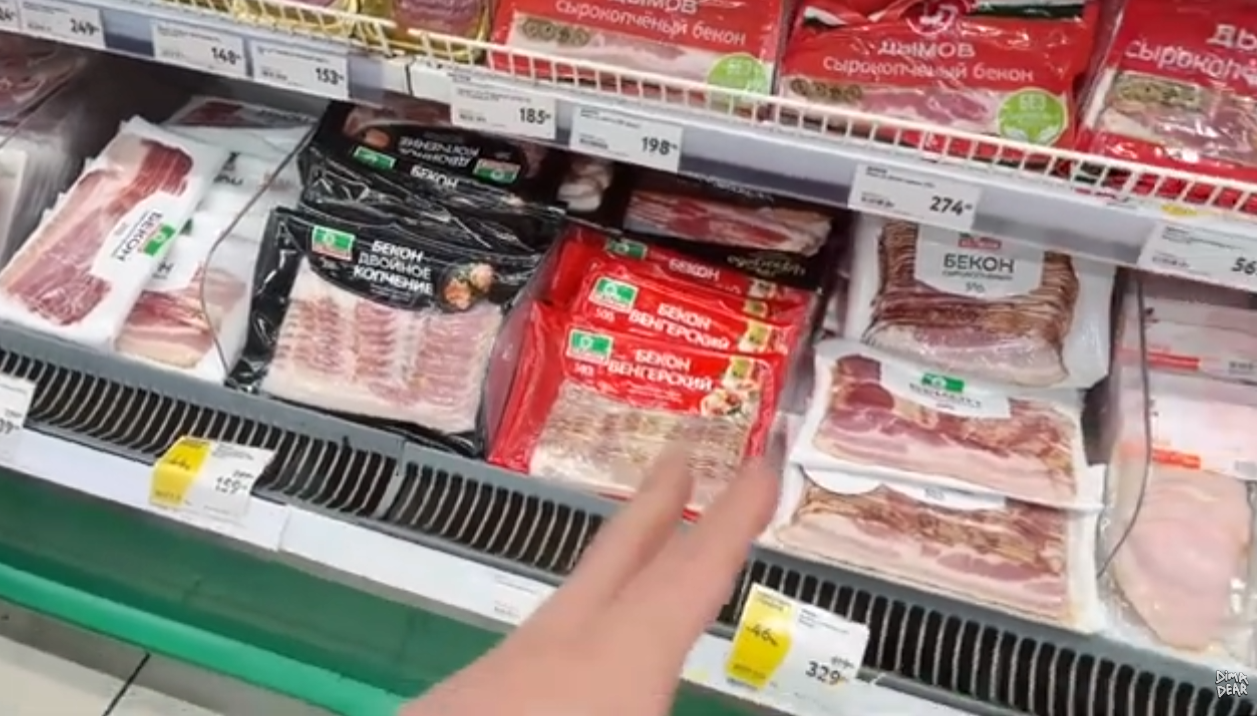
If you are familiar with USA grocery prices, what Dima shares in this ground report is stunning from a U.S. perspective.  If you watch this livestream, keep in mind that 100 rubles equals $1.00.  350 rubles is $3.50.  Additionally for weighted products 1kg equals 2.2 lbs.   So generally speaking, if something is 100 rubles/kg it is $1 for two pounds.

Example from the video:

•Lean ground beef at 329 rubles/kg is less than $1.65/lb.
•Bacon at 250 rubles/kg is less than $1.25/lb.
•20 eggs are 139 rubles or $1.39.
•Boneless skinless chicken breast $4 for 4lbs.
•Typical Bagged salad mixes .79¢ each. etc.

The wild part is that in Russia they are getting worried these prices are too high.  

The average rent for a nicely furnished 2-bedroom modern apartment in St Pete Russia is around $500/month.  Something akin to downtown Manhattan. Including rent, utilities, food, transportation, personal items and purchases, a Russian citizen can live very comfortably, remarkably comfortably, on an income of around $1,200 to $1,500/month.  In downtown St Pete which is considered a more expensive place to live.

Put that into a USA middle-class perspective and evaluate the impact of western sanctions against the average Russian cost of living.

100 rubles = $1.00

.
.

.
.

Japan Exports Fall in July, Driven by 14.3% Decline in Shipments to China


Posted originally on the CTH on August 17, 2023 | Sundance 

Some economic data released by the land of the rising sun points to a larger global weakness in manufacturing demand.   Within the data year-over-year exports from Japan fell in July by 0.3%, which is the first time since 2021 the contraction was noted.

Digging a little deeper, the weakness in Japanese exports is driven primarily by a decline in exports to China of 14.3% in July, which follows a 10.9% decline in June.  Japan is a component supplier to China, which would indicate the demand for Chinese products globally is substantially less than Beijing has previously admitted.

That said, Japan’s direct export of finished goods to the U.S. actually increased 13.5%, mostly driven by the export of electric vehicles.

However, 13.5% is identical to the overall decrease in Japanese imports.

Essentially, component parts to China are down, but completed finished goods to the U.S. are up.  Overall, the results from Japan point to a soft overall global economic status, the result of continued contraction of Western economic activity.

TOKYO, Aug 17 (Reuters) – Japan’s exports fell in July for the first time in nearly 2-1/2 years, dragged down by faltering demand for light oil and chip-making equipment, underlining concerns about a global recession as demand in key markets such as China weaken.

Japanese exports fell 0.3% in July year-on-year, Ministry of Finance (MOF) data showed on Thursday, compared with a 0.8% decrease expected by economists in a Reuters poll. It followed a 1.5% rise in the previous month.

[…] Japanese policymakers are counting on exports to shore up the world’s No. 3 economy and pick up the slack in private consumption that has suffered due to rising prices.

However, the spectre of a sharper global slowdown and faltering growth in Japan’s major market China have raised concerns about the outlook.

The World Bank has warned that higher interest rates and tighter credit will take a bigger toll on global growth in 2024. (read more)

Meanwhile, I would not bet against Michael Burry.

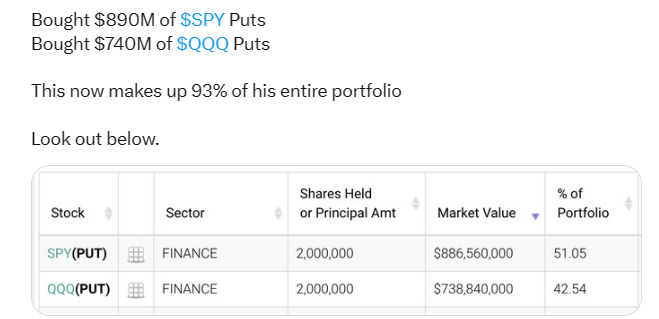
Burry is betting against the S&P 500 and Nasdaq 100 this week, according to his fund’s latest releases. Securities and Exchange Commission filings.  The filing shows that he is now holding options against the S&P 500, hedging $886.6 million against the index.

The filing also revealed that Burry sold his shares in Capitol One, First Republic, PacWest Bancorp, Wells Fargo and Western Alliance after betting on them earlier this year in Trying to make money from the regional banking crisis.  Burry also sold his stakes in Chinese e-commerce giants Alibaba and JD.com.

In addition, he bought $738.8 million in put options against the Invesco QQQ Trust ETF – a fund made up of popular high-tech Nasdaq companies, such as big tech companies Apple and Microsoft as well as Nvidia, Tesla and PepsiCo.

Burry has pulled money out of China investments and U.S. banks and is hedging against tech and the S&P.  He took these positions before the data from Japanese exports to China was released.

The Russia-Africa Summit


Armstrong Economics Blog/World Trade Re-Posted Aug 2, 2023 by Martin Armstrong

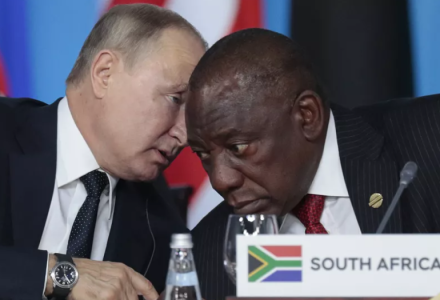
Putin invited numerous African leaders to St. Petersburg, where they discussed strengthening their alliance. The Russia-Africa summit gave Moscow a platform to show that it has not been isolated by all its allies. The biggest bargaining chip on the table was reimplementing of the grain deal. The UN has all but promised food shortages and famine in Africa caused by the war. Putin has now promised to begin shipping 25,000 to 50,000 tons of grain, free of charge, over the next three or four months.

Only 17 of 54 African leaders attended the conference, compared to the 43 who attended in 2019. The West is touting this as a win, but Moscow said many are afraid to enter the conflict. African nations simply want their people to prosper. Despite having valuable national resources, the continent is deeply indebted to the world. Russia agreed to cancel $23 billion in debt to African nations and hinted that their allies (i.e., India and China) may also offer aid.

South African President Cyril Ramaphosa said, “We are not here to plead for donations for the African continent.” Instead, they are looking to become a respected trading partner. President of Chad Mahamat called out Russia for failing to improve trade. “Putin vowed to double Russia’s trade with the continent within five years. Instead, it has stalled at around $18 billion a year,” he stated. African nations want a seat at the table, shedding its colonist past that still indebts their people.

Putin has promised that the grain harvest will exceed expectations this year. African countries have a large bargaining chip here. The West provides Africa with more aid than Russia, but at what cost? Africa receives the vast majority of its grain directly from Russia and would certainly face food shortages without their help. Putin will need to offer African nations an opportunity to become a valued trading partner and get his other main global allies on board with the idea too.

Trying to Make Heads or Tails about Recessions


Armstrong Economics Blog/Economics Re-Posted Jul 28, 2023 by Martin Armstrong

QUESTION: Looking at Socrates,  do you think that these people who were constantly calling for a recession because there were two quarters that declined with covid really need revision? Socrates was correct, no recession. But it is showing major turning points in 2024 which seem to align with your old ECM forecast calling for commodity inflation into 2024. How would you define a recession?

EJ

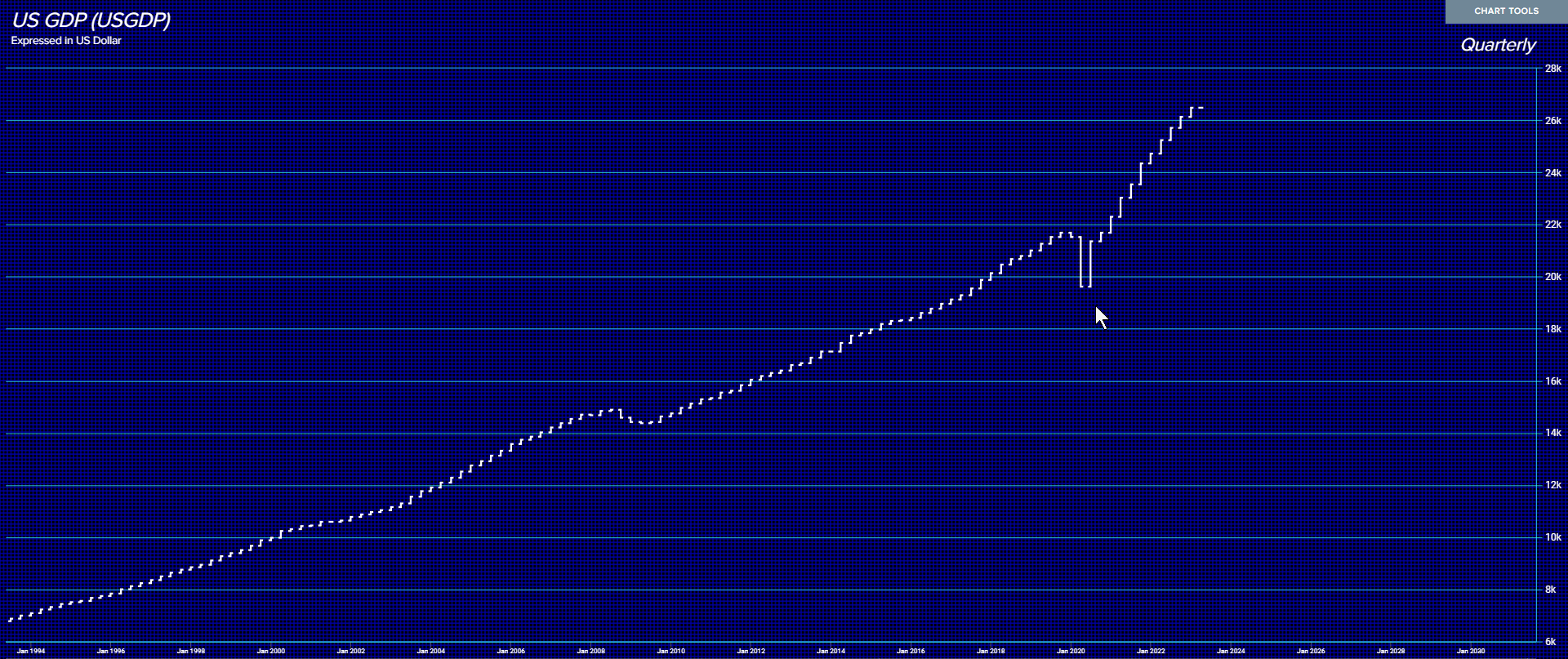
ANSWER: In trading, reactions are 1 to 3 time units. I believe that the same definition should be used for classifying a recession. They define a recession as two consecutive quarterly declines. If you look at the “Great Recession” of 2008-2009, you will see three consecutive quarterly declines and a rebound. If we look at the COVID recession caused by locking everyone down, that was just two consecutive quarterly declines.

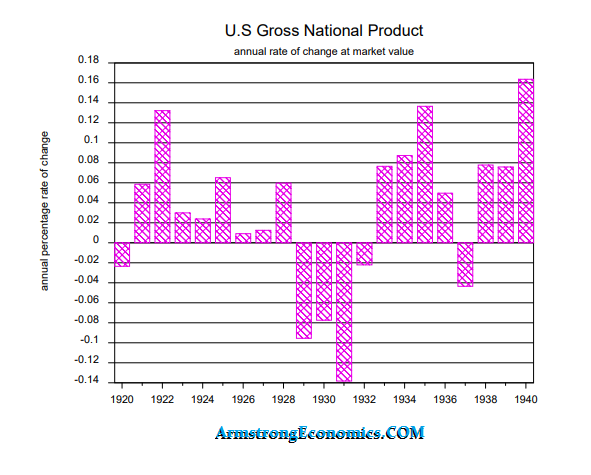
I personally would argue that a true economic recession MUST exceed three consecutive declines. Here is the chart of GNP from 1929 to 1940. There were three years of negative growth. I simply think that this definition of two quarters is wrong. You can have a slight decline of 1 to even 5%, but that does not suggest a recession. In the case of 1929, that was a decline of 9.5% in 1930 – the first year. Now look at the COVID Crash, which was also a decline of 9.53%. But the difference is that the COVID decline was forced and not natural. That is why it rebounded so quickly. Now the so-called “Great Recession” of 2008-2009 only saw a decline in GDP of 3.47%.

The “Great Recession” was not really so great. It wiped out real estate and bankers but did not fundamentally alter the economy. So who is right and who is wrong will always depend upon the definition. Yes, the AI Timing Arrays point to a recession starting Next Year by their definition. This will most likely be caused by the decline in confidence that will lead to UNCERTAINTY, and as such, the consumer will contract. Up to now, the continued expansion of the economy into 2024 has also been fueled by the shift in assets from public to private.

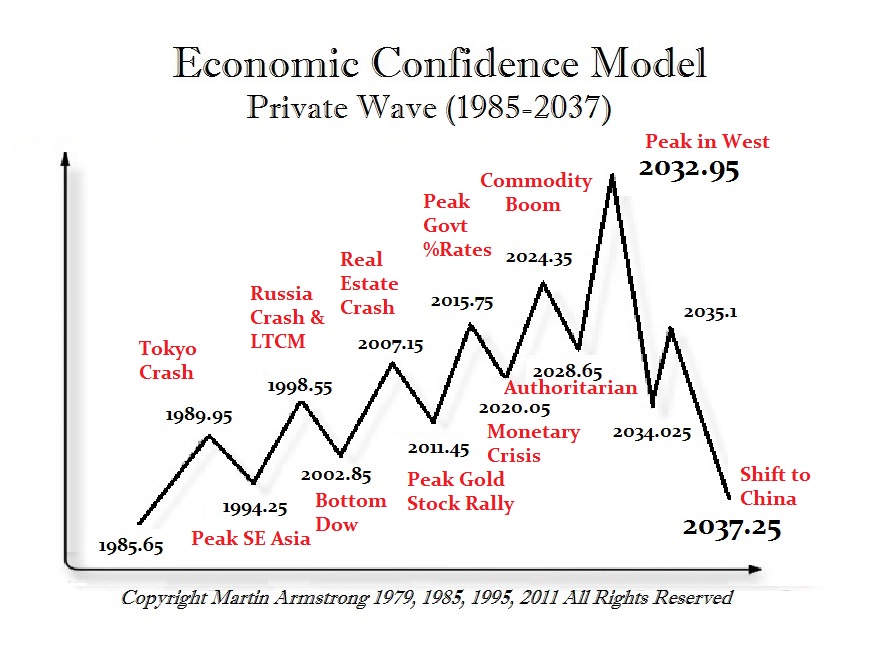
As originally forecast, we should have seen a commodity boom into 2023,

and we should expect a highly authoritarian attempt by 2028.

House Ways and Means Committee Press Conference Upon Release of Documents Showing DOJ Intervention to Protect Joe Biden Son


Posted originally on the CTH on June 23, 2023 | Sundance 

The House Ways and Means Committee held a press conference after a vote to release information from an IRS whistleblower that showed the U.S. Justice Department involved in an effort to protect Hunter Biden, the son of Joe Biden, from outcomes related to his illegal money laundering operation.

According to the accusations, the money laundering was done in an effort to hide Hunter and Joe Biden selling influence and accepting payments from foreign government sources.  The allegations include, the Dept of Justice and FBI led by AG Merrick Garland and Deputy AG Lisa Monaco, interfered in the investigation in order to protect the Biden administration.  WATCH:

“Today, the Ways and Means Committee voted to make public the testimony of IRS employees blowing the whistle on misconduct at the IRS and the Biden Department of Justice regarding unequal enforcement of tax law, interference and government abuse in the handling of investigations into criminal activity by President Biden’s son, Hunter Biden, and retaliation against IRS employees blowing the whistle on this abuse.”

Whistleblower #1 redacted transcript ~ Whistleblower #1 redacted affidavit ~ Whistleblower #2 redacted transcript ~ Whistleblower #2 redacted supplemental submission ~ June 7, 2023 letter ~

P

“BIGGEST DANGER TO MANKIND” | Bill Gates Funded Wuhan Lab? – #152 – Stay Free With Russell Brand


By Russell Brand Originally Posted on Rumble on: Jun 22, 12:00 pm EDT

May Jobs Report Show 339,000 Jobs Gained, Worked Hours Declines, Unemployment Rate Increases to 3.7%


June 2, 2023 | Sundance 

There is a strong divergence within the May jobs report as released by the Bureau of Labor and Statistics (BLS) [DATA HERE].  Payrolls increased 339,000 in May from April and previous months were revised up by 93,000. That is good news.  However, the household survey, from which the unemployment rate is derived, showed employment down 310,000 jobs and the unemployment rate increased to 3.7%.

One of the aspects driving higher payroll starts are the number of people taking on additional part-time jobs.  This aspect is noted in a decline for the number of hours in the average workweek. As more PT jobs are added, the number of hours in a workweek declines. As noted in the BLS data, “the average workweek for all employees on private nonfarm payrolls edged down by 0.1 hour to 34.3 hours in May.

There were 161.0 million people working in April.  There are 160.7 million people working in May.

There were 5.7 million people unemployed in April.  There are 6.1 million unemployed people in May.

The unemployment rate increased from 3.4% to 3.7%.

There are 310,000 fewer people working in May than were working in April.  However, payrolls increased by 339,000 over the same timeframe. See graph above for where those jobs were gained.

(NBC) – […] Job gains were broad-based last month with health care contributing 52,000 and leisure and hospitality adding 48,000. Food services and drinking places led the increase in the latter industry, which had been adding an average of 77,000 jobs per month over the prior 12 months.

Overall, the U.S. economy added 339,000 jobs for the month, much better than the 190,000 Dow Jones estimate and marking the 29th straight month of positive job growth.

The unemployment rate rose to 3.7% in May against the estimate for 3.5%. The jobless rate was the highest since October 2022, though still near the lowest since 1969.

Olu Sonola, head of U.S. regional economics at Fitch Ratings, said the jobs report is a mixed bag.

“The strength of the payroll survey is clearly a big surprise, largely on the back of robust job growth in the healthcare sector and the business and professional services sector,” said Sonola. “However, the 0.3% increase in the unemployment rate is the highest monthly increase since April 2020.” (more)

WAGES – As noted within the BLS report, “In May, average hourly earnings for all employees on private nonfarm payrolls rose by 11 cents, or 0.3 percent, to $33.44. Over the past 12 months, average hourly earnings have increased by 4.3 percent.” Wage growth still lags inflation; the middle class is getting poorer.  However, with the fed focused on wage growth as the leading indicator of their false pretenses to combat inflation, wage growth is too high (they want around 3.0%).

The Biden economic and monetary policies are delivering the results they want.  Higher energy prices, higher costs of living, lower real wages and increased middle class pressure. The serf model.

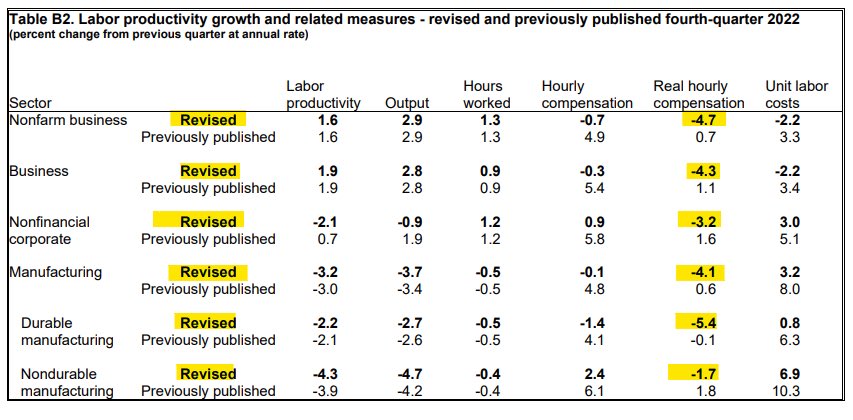
The BLS was forced to admit yesterday their Real Hourly Compensation growth was previously flawed.  [CHART DATA SOURCE]

That chart of revisions to real wages tells us a lot about the economic pain being felt by the working class in the U.S.  If it feels like you are working harder and going backwards in your ability to afford basic essentials, that’s because you are.

The prices for essential goods and services have risen at a much greater rate than the wages needed to afford them.  This is the result of Joe Biden’s energy policy, economic policy, and now magnifying monetary policy.

Our goods and housing costs are higher.  Our wages are not growing much.  The cost to borrow money to afford the gap is increasing.  This is unsustainable.

In my opinion, the economy overall – as a measure of units produced and sold – has been in a contracting position since the fourth quarter of 2021.  The appearance of economic growth, the value of goods and services, is an illusion that has been created by higher prices, ie. inflation.

Interview: Martin Armstrong on Why the CBDC Will Fail and a Great Depression is About to Begin


Armstrong Economics Blog/Armstrong in the Media Posted May 20, 2023 by Martin Armstrong

Rumble link Martin Armstrong on Why the CBDC Will Fail and a Great Depression is About to Begin

Interview: The Real Rate of Inflation


Armstrong Economics Blog/Armstrong in the Media Re-Posted May 13, 2023 by Martin Armstrong

The Gold Crash & Our Fate


Armstrong Economics Blog/ECM Re-Posted May 19, 2023 by Martin Armstrong

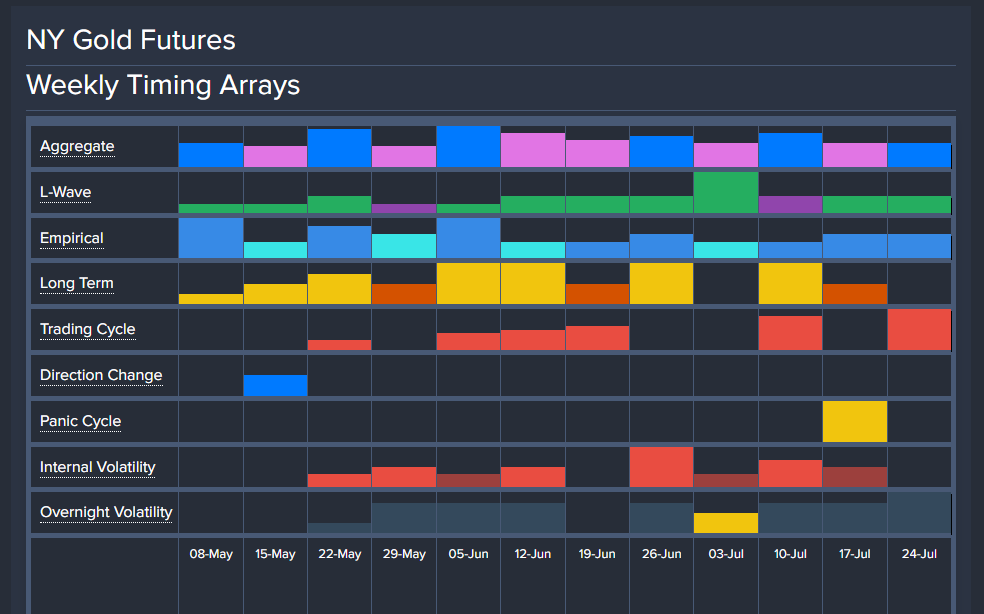
COMMENT: Marty; Socrates is absolutely amazing. At the start of the year, you showed April as a key turning point in gold followed by May June. The weekly array projected this was the week for the Directional Change. There is nobody with a system like this, which brings to mind its forecasts for war. Ukrainians are out of their mind to go against the trend. They never even considered what if they lose. It seems like a fool’s bet. This not about just occupying the Donbas which has always been Russian. This is about destroying Russia. They should listen to Socrates to save their own country.

Thank you so much for bringing Socrates to the public rather than just institutions.

HR

ANSWER:  I know. These forecasts are not my personal opinion. When you put the entire world together, the trend becomes obvious. Just as I said Ukraine needs to lose to save the world, I also know that we will not all escape the end conclusion. Just as a Serb assassinated the Archduke in Sariavo which began World War I, this entire region is notorious for personal grudges and hatreds that draw in the entire world.

Schwab may have taken our forecast for 2032 and rephrased it as his Great Reset and is hoping to push the falling tree into his direction, that too will fail. But between here and 2032, we are entering a phase of chaos and havoc. I wish I could prevent it, but that is just our fate.